
中式正餐

Search documents
贾国龙的反思与百日风波后的西贝
Di Yi Cai Jing Zi Xun· 2025-12-26 01:40
Core Insights - The crisis faced by Xibei, triggered by a public criticism from entrepreneur Luo Yonghao, has been described as the biggest challenge in its 37-year history, leading to a significant decline in customer traffic and revenue [1][2] - Xibei has initiated a comprehensive self-rescue plan, including product adjustments, price reductions, and enhanced food safety measures, to regain customer trust and stabilize operations [3][4][6] Company Response - Xibei's initial response involved a thorough review of its food preparation processes, leading to changes such as on-site cooking and improved food temperature management [1][2] - The company implemented a significant price reduction strategy, with an average decrease of approximately 20% on over 30 menu items, including core dishes like beef bones and lamb skewers [2][3] - A "sunshine kitchen" initiative was launched to enhance food safety, ensuring transparency in food preparation and allowing customers to observe the cooking process [3][4] - Xibei introduced various customer engagement strategies, including promotional offers and discounts, to attract customers back to its restaurants [4][6] - Employee compensation was increased, with a monthly allowance of 500 yuan for frontline staff, reflecting a commitment to staff welfare during the crisis [4][6] Industry Context - The challenges faced by Xibei are indicative of broader issues within the Chinese dining industry, including market demand fluctuations, rising costs, and intensified competition [11][12] - The crisis highlights a shift in consumer expectations towards fresh, made-to-order meals, contrasting with the previous focus on standardization and efficiency [9][10] - The industry is grappling with the balance between maintaining quality and managing costs, particularly as consumer spending becomes more cautious [9][10] - The need for a supportive business environment is emphasized, as a stable regulatory framework is crucial for the long-term health of the restaurant sector [11][12][13]

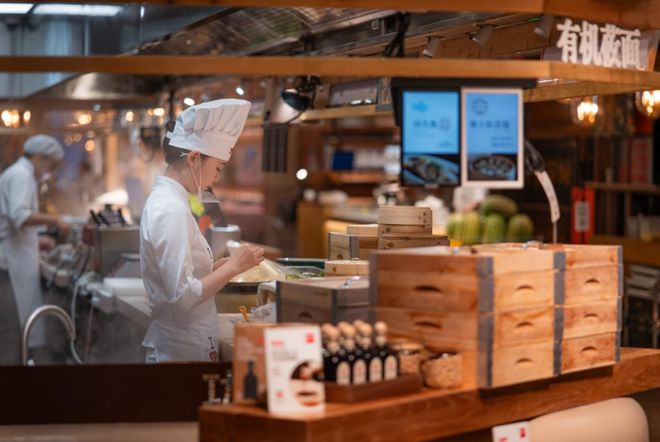
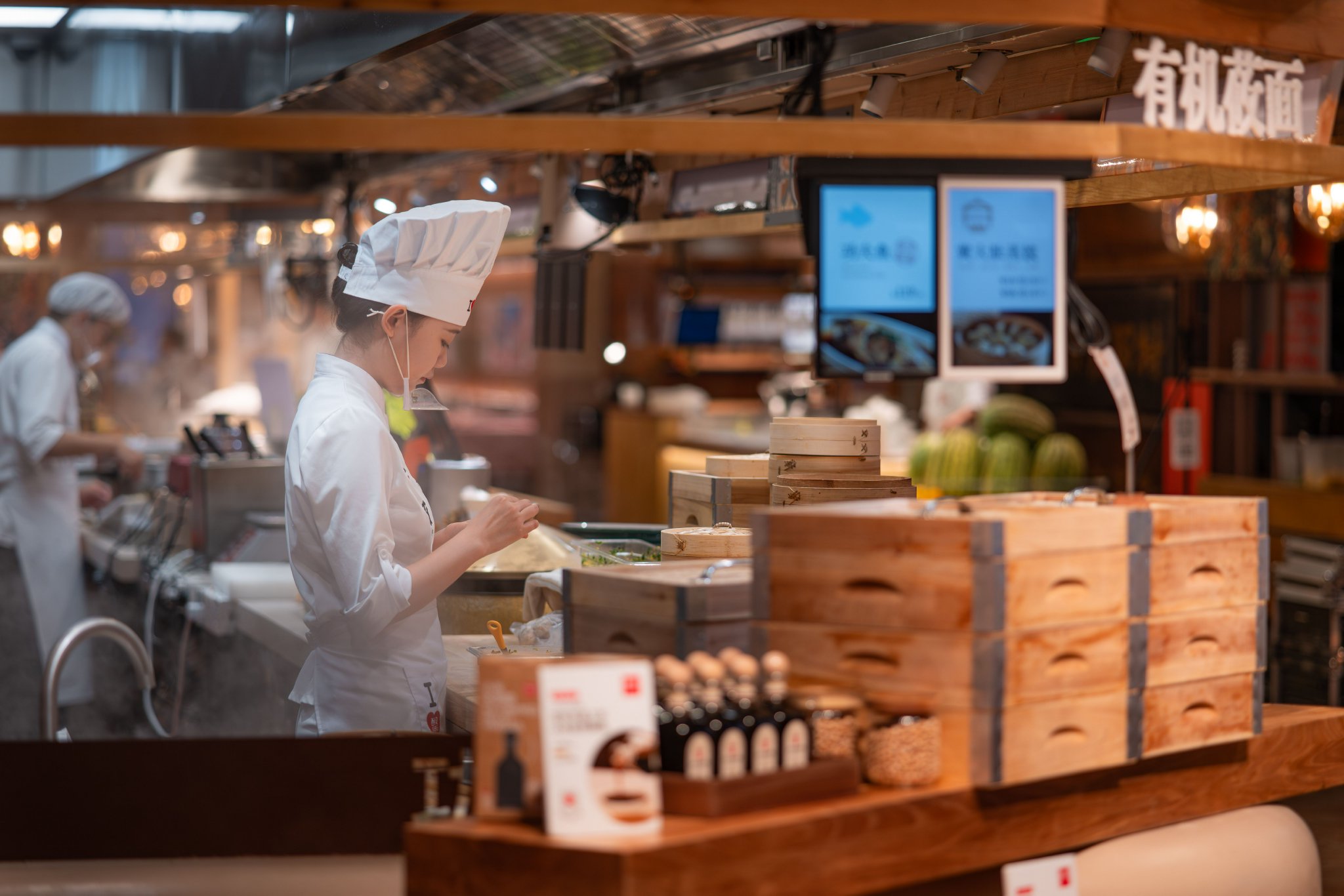
贾国龙的反思与正在经历黎明前黑暗的西贝
Di Yi Cai Jing· 2025-12-26 01:17
Core Viewpoint - The crisis faced by Xibei, triggered by a public criticism of its pre-made dishes, has led to significant operational and strategic changes within the company, marking a pivotal moment in its 37-year history [1][2][3] Company Response and Actions - Xibei initiated a comprehensive self-rescue campaign, which included product adjustments, significant price reductions, employee salary increases, and a focus on food safety [1][3][4] - The company implemented a "sunshine kitchen" initiative to enhance food safety transparency, allowing customers to observe food preparation processes [3][4][5] - A customer recall plan was launched, offering various incentives such as vouchers and discounts to regain customer trust [4][5][6] - Employee salaries were increased, with a monthly allowance of 500 yuan introduced for frontline staff, reflecting a commitment to employee welfare during the crisis [5][6][7] Financial Impact - Despite efforts to attract customers back, Xibei's operational costs increased, with labor costs rising from 25% to over 30% of revenue, leading to significant cash flow pressures [5][6][7] - The average price reduction of approximately 20% on over 30 menu items aimed to address customer complaints about high prices [3][4][5] Strategic Shift - The crisis prompted Xibei to reassess its growth strategy, moving away from aggressive expansion towards a focus on quality and customer experience [6][7][8] - The company is shifting from a scale-driven model to a more sustainable approach, prioritizing the health of individual stores and customer loyalty over rapid growth [6][7][8] - Xibei's previous vision of opening locations in every city has been abandoned in favor of becoming a "beautiful restaurant" rather than a large restaurant empire [6][7][8] Industry Context - The challenges faced by Xibei reflect broader issues within the Chinese dining industry, including rising costs, changing consumer preferences, and the need for a stable business environment [11][12][23] - The industry is experiencing a shift towards balancing standardization with emotional value, as consumers increasingly demand fresh, made-to-order meals [21][22] - The current market environment necessitates a focus on operational efficiency and customer satisfaction, as traditional dining models face pressure from fast-casual and delivery services [21][22][23]
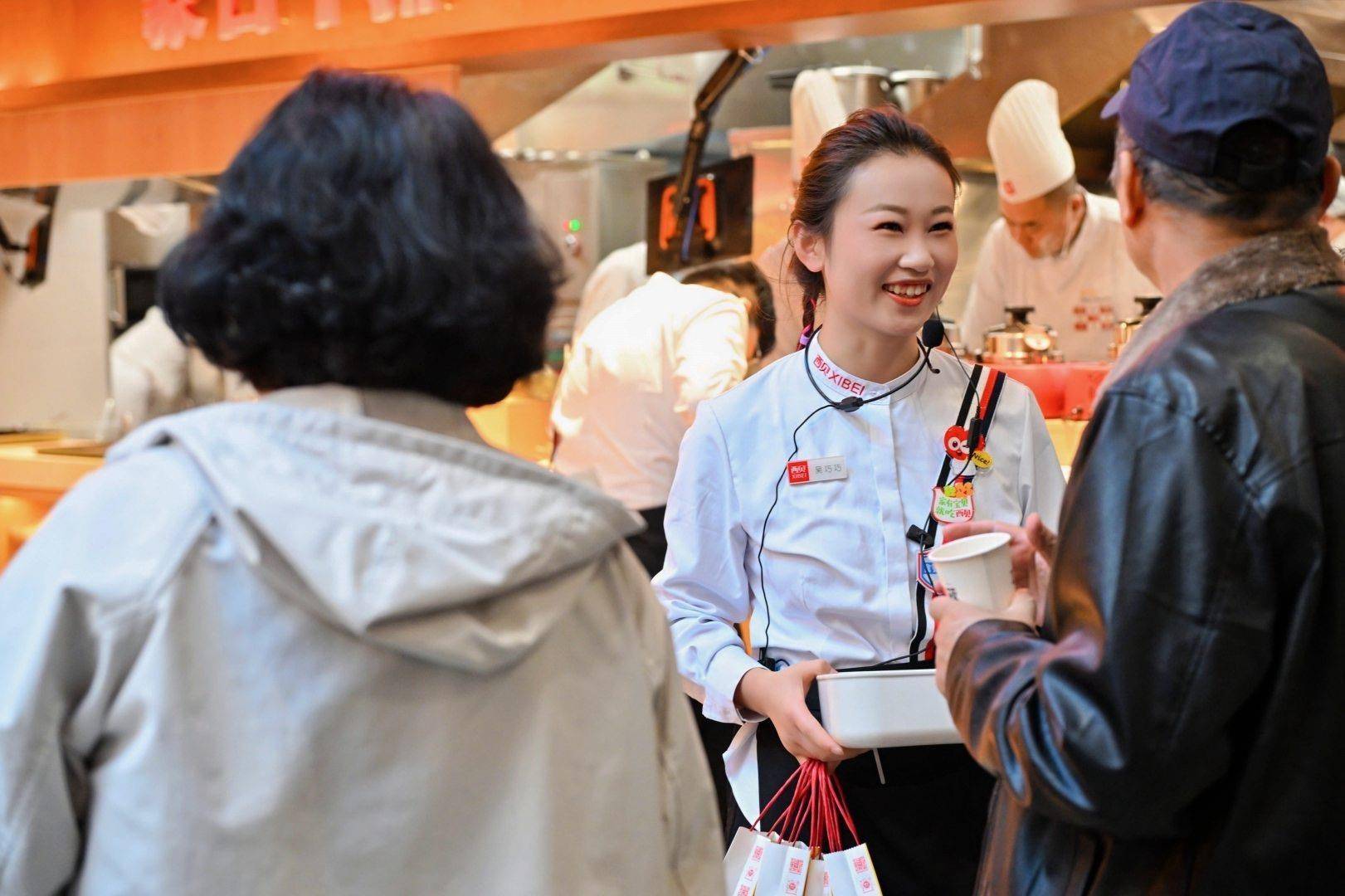
实探西贝新店开业:菜品全面降价,人均消费85元左右
Sou Hu Cai Jing· 2025-11-23 10:06
Core Insights - The opening of the Xibei Nanjing Shazhi Chuan store marks the brand's recovery efforts following a recent controversy, being one of eight new stores planned for nationwide expansion [1][4] - The store experienced significant customer traffic during peak hours, with approximately half of the patrons being families [3] - Xibei has implemented a notable price reduction across its menu, with average customer spending dropping to around 85 yuan, which is considered moderate in the Chinese casual dining sector [3][4] Pricing and Promotions - Key menu items such as roasted lamb chops, Mongolian beef bones, and lamb skewers have seen a significant price decrease, with an overall reduction of nearly 20% on over 30 dishes announced earlier [3][4] - A nationwide promotion offering a discount of 50 yuan on purchases over 50 yuan is applicable at the new store [3] Operational Changes - The new store features a commitment to fresh preparation, with most products being made on-site, and previous items have been adjusted to ensure they are also freshly made [3] - Employees at the new location confirmed that frontline staff received a special allowance ranging from 300 to 800 yuan, although this does not apply to store managers and head chefs [3] Brand Recovery Efforts - Following the controversy, Xibei has taken steps to restore its reputation through price cuts, promotional vouchers, and menu adjustments, which have been positively received by customers [4] - The company plans to continue enhancing its menu's value proposition by introducing new products, with training for these items already underway across all locations [4]
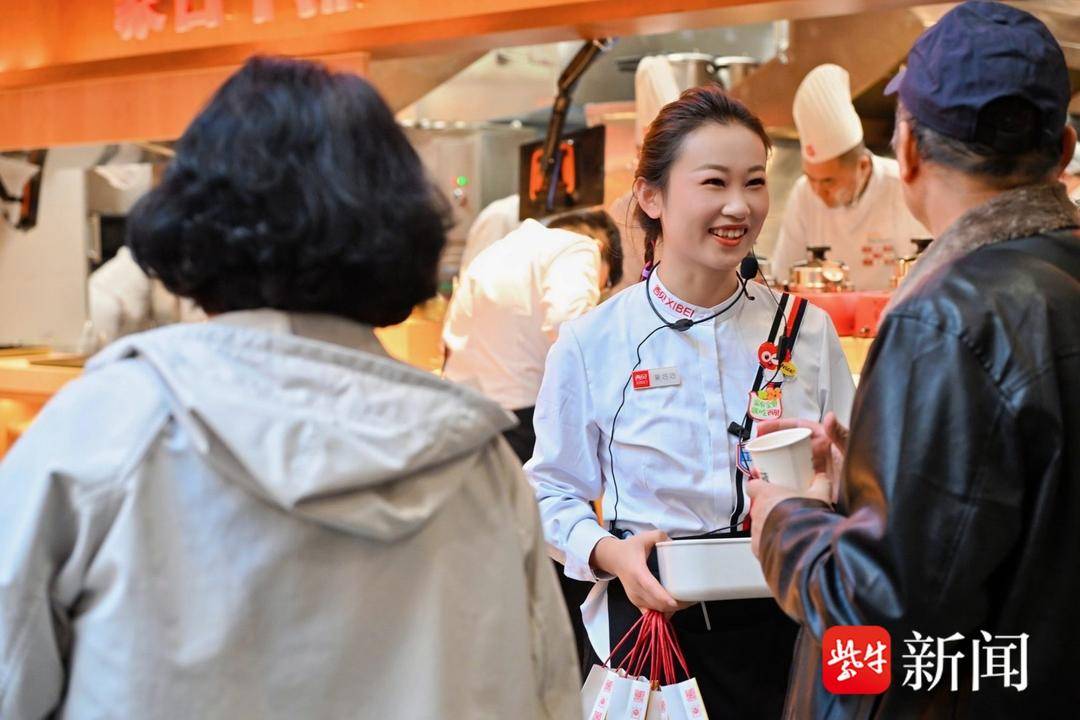
西贝风波后南京再开新店:菜品全面降价,一线员工涨薪
Yang Zi Wan Bao Wang· 2025-11-23 05:24
Core Insights - The company, Xibei, has opened a new store in Nanjing after a recent controversy, with plans to open eight additional locations this year [1] - The new store has seen significant customer turnout, with many families dining there, indicating a recovery in consumer interest [3] - Xibei has implemented price reductions across its menu, with the average customer spending now around 85 yuan, which is considered moderate in the Chinese casual dining sector [3] Group 1 - The new Nanjing store opened on November 22, following Xibei's announcement to open eight new locations this year [1] - The store experienced long queues from its opening time, with a notable portion of customers being families [3] - Xibei has reduced prices on over 30 menu items nationwide, with discounts reaching nearly 20% [3] Group 2 - The new store features a significant number of freshly prepared items, aligning with the company's commitment to quality [5] - Employees at the new store confirmed that a salary increase has been implemented, with additional allowances ranging from 300 to 800 yuan for certain staff [5] - Industry experts note that Xibei is gradually regaining consumer trust through price cuts, promotional activities, and menu adjustments [7] Group 3 - The company plans to introduce new products to enhance the value of its menu, with training for these new offerings being rolled out nationwide [7]
痛心!云海肴联创赵晗40岁心梗离世,曾获红杉、聚霖资本投资
Sou Hu Cai Jing· 2025-09-19 12:04
Core Points - The sudden passing of Zhao Han, co-founder of Yunhaiyao, at the age of 40 due to a heart attack has left the industry in shock and mourning [3][4][14] - Yunhaiyao, founded in 2014, has grown into a leading chain restaurant brand specializing in Yunnan cuisine, with 138 stores and annual sales exceeding 1 billion yuan [5][16] Company Overview - Yunhaiyao was established in 2014 and has become a prominent player in the Chinese dining market, known for its healthy and affordable Yunnan dishes [5][16] - The brand has expanded to 138 direct-operated stores across 29 cities, primarily located in major shopping centers [16] - Signature dishes include classic Yunnan specialties such as "Qiguo Chicken" and "Stir-fried Matsutake" [16] Leadership Transition - Following Zhao Han's death, Zhu Haiqin has taken over as the new chairman and CEO of Yunhaiyao, indicating a shift in leadership [9] - Zhao Han had been the legal representative of the company from April 2014 until December 2024, when the board was restructured [9] Financial Performance - Yunhaiyao has achieved significant financial milestones, with annual sales surpassing 1 billion yuan and a rapid expansion strategy that began in 2013 [15][16] - The company has received early-stage investments from notable firms such as Sequoia Capital and Julei Capital, although specific funding amounts have not been disclosed [16] Challenges and Controversies - The company faced a food safety scandal in 2024 when a mass food poisoning incident occurred in Singapore, leading to legal repercussions and a fine [18][20] - There have been multiple complaints regarding food safety, highlighting ongoing management challenges within the company [20][22] Industry Context - Zhao Han's unexpected death has raised awareness about health issues among entrepreneurs, with statistics indicating a concerning trend in cardiovascular diseases among business leaders in China [22]

知名餐饮品牌创始人去世,年仅40岁,CEO回应:事情发生得很突然,他一直承受很大压力
Sou Hu Cai Jing· 2025-09-19 10:27
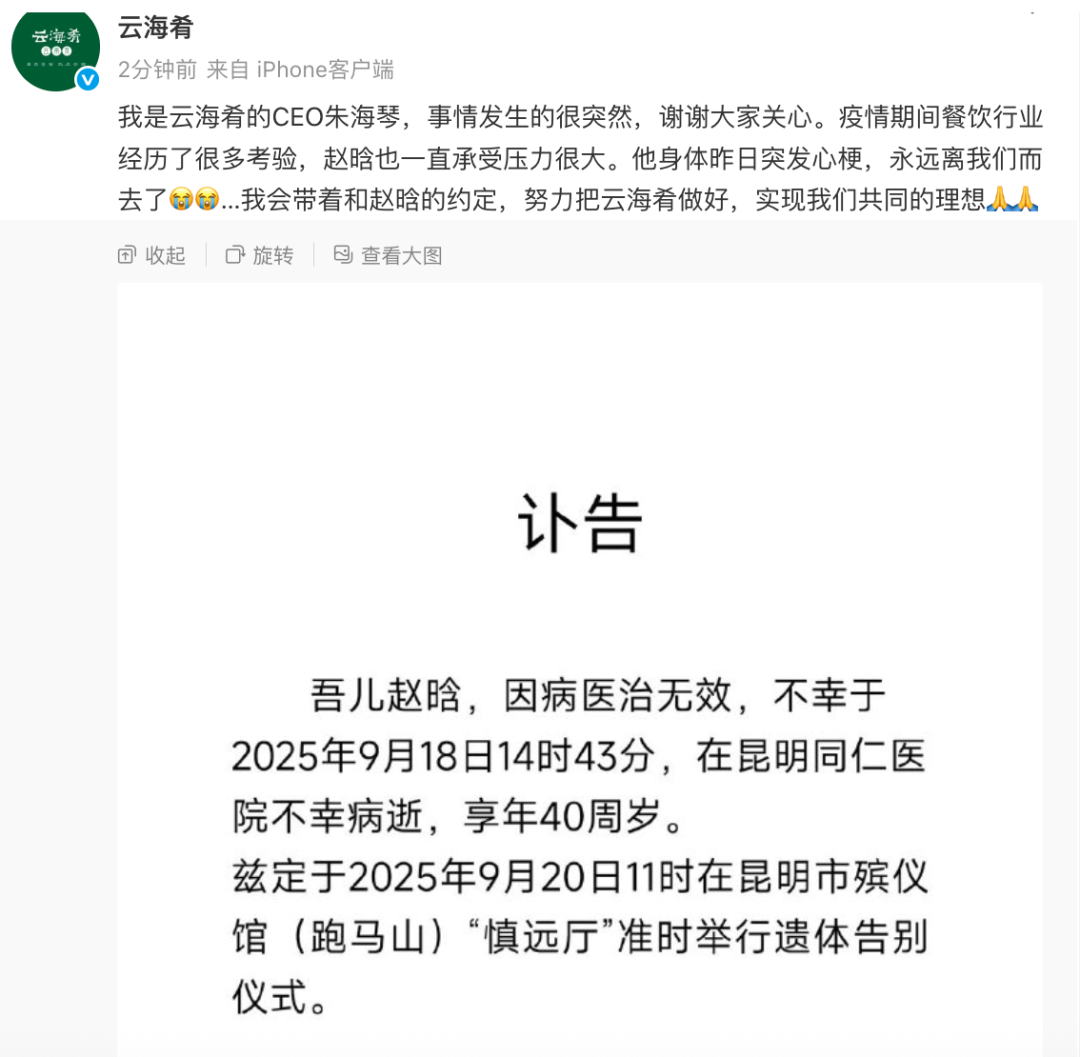
Core Points - Zhao Han, the founder of the well-known Yunnan cuisine brand "Yunhaiyao," passed away on September 18, 2025, at the age of 40 due to a sudden heart attack [10][11]. - His funeral service is scheduled for September 20, 2025, at 11 AM at the Kunming City Funeral Home [5][9]. - Zhao Han co-founded Yunhaiyao in 2009, aiming to promote Yunnan cuisine and culture across China, and the brand has since become a leading chain in the Yunnan cuisine sector [10][11]. Company Overview - Yunhaiyao is a Chinese restaurant chain under Yunnan Yunhaiyao Catering Management Co., Ltd., focusing on fresh Yunnan ingredients and diverse culinary culture, offering healthy, fashionable, and reasonably priced dishes [10]. - The company was established in 2009 by Zhao Han and his partners, who pooled their savings to open their first restaurant in Beijing [10][11]. - The brand expanded its market presence significantly, opening its first restaurant in Kunming in 2017 and entering the overseas market with a branch in Singapore in 2019 [11]. Leadership Changes - In February 2025, Zhao Han stepped down from his position as chairman and other roles within the company, with Zhu Haiqin taking over as chairman and CEO [11].

突发心梗!云海肴“85后”创始人赵晗去世,现任CEO:他一直承受压力很大
Sou Hu Cai Jing· 2025-09-19 08:32
Core Viewpoint - The sudden passing of Zhao Han, co-founder and chairman of the well-known restaurant chain Yunhaiyao, due to a heart attack, raises concerns about the future leadership and direction of the company [1][2]. Company Overview - Yunhaiyao is a Chinese restaurant chain that focuses on Yunnan cuisine, emphasizing fresh ingredients and diverse culinary culture, with characteristics of health, fashion, taste, and moderate pricing [4]. - The company was co-founded by Zhao Han and three other individuals in October 2009, with the first store opened in Beijing [4]. - The brand expanded its market presence by relocating its registration to Kunming in 2014 and opening its first restaurant in Yunnan in November 2017, followed by international expansion with a store in Singapore in 2019 [4]. Leadership Transition - Following Zhao Han's death, Zhu Haiqin, who became the chairman and CEO in February 2025, will now lead the company and is committed to fulfilling Zhao Han's vision for Yunhaiyao [1][7]. Industry Context - The restaurant industry, particularly in China, has faced significant challenges during the pandemic, impacting operations and financial performance [1]. - The increasing prevalence of cardiovascular diseases, including acute myocardial infarction, highlights health concerns that may affect industry stakeholders, including restaurant operators and employees [8].
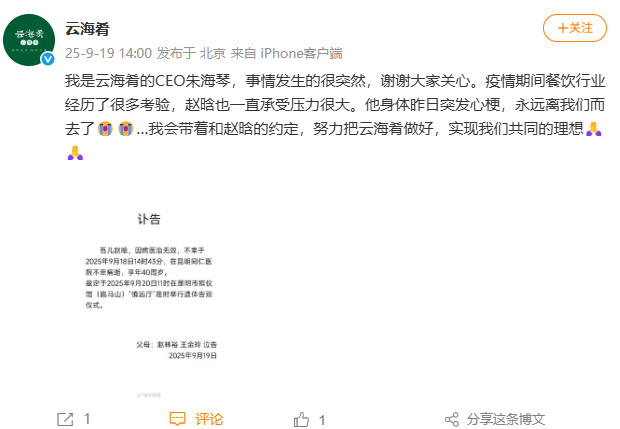
云海肴创始人赵晗去世,年仅40岁,公司刚刚发文回应:事情发生得很突然;他在中国人民大学读研期间创办了该品牌
Mei Ri Jing Ji Xin Wen· 2025-09-19 06:34
Core Viewpoint - The sudden passing of Zhao Han, co-founder of the well-known Yunnan cuisine brand "Yunhaiyao," has raised concerns about the future leadership and direction of the company, which he helped establish and grow into a national brand [1][4]. Company Overview - Yunhaiyao is a Chinese restaurant chain under Yunnan Yunhaiyao Restaurant Management Co., Ltd., focusing on fresh Yunnan ingredients and diverse culinary culture, offering healthy, fashionable, delicious, and reasonably priced dishes [6]. - The brand was co-founded in 2009 by Zhao Han, his cousin Lü Zhitang, and friend Zhu Haiqin, with the aim of promoting Yunnan cuisine beyond the province [4][6]. Leadership Changes - In February 2025, Zhao Han stepped down from his position as chairman and other roles within the board, with Zhu Haiqin taking over as chairman and CEO, responsible for company decisions and management [6]. - Zhao Han's contributions included the establishment of the first Yunhaiyao restaurant in Beijing, which was funded by pooling personal savings from family and friends [6]. Achievements and Recognition - Under Zhao Han's leadership, Yunhaiyao received several accolades, including being named a leading enterprise in Yunnan cuisine and winning various awards for brand influence and consumer popularity [8]. - The company expanded its market presence, including opening a restaurant in Singapore in 2019, marking its foray into international markets [6]. Recent Challenges - In July 2025, Yunhaiyao faced legal issues when it was fined 7,000 Singapore dollars (approximately 39,000 RMB) due to a food poisoning incident involving employees of ByteDance in Singapore [6].
进阶的云贵菜,正成为夏日餐饮新爆点
3 6 Ke· 2025-08-28 12:28
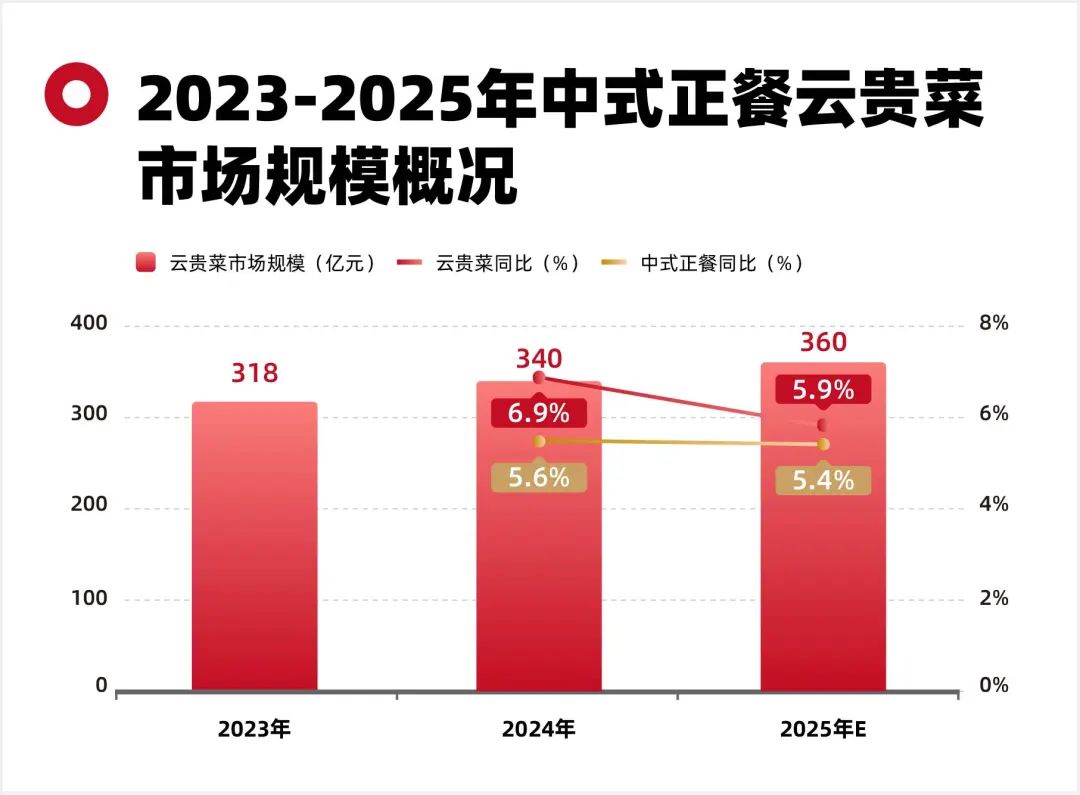
Core Insights - The cloud and Guizhou cuisine has gained significant popularity, with the number of related restaurants exceeding 42,000 by mid-2025, and a continuous rise in chain rate driving growth [1][3] - The market size for Chinese cuisine in the cloud and Guizhou category is projected to grow from 31.8 billion yuan in 2023 to 36 billion yuan in 2025, with year-on-year growth rates of 6.9% and 5.9% for 2024 and 2025, respectively, both surpassing the overall growth rate of Chinese cuisine [1] Restaurant Growth and Trends - The cloud and Guizhou cuisine sector is experiencing a surge in new brands, particularly in the hot pot category, with brands like 滇翁 and 芸山季 showing strong growth [3][6] - The presence of cloud and Guizhou cuisine on platforms like Douyin (TikTok) has significantly boosted visibility, with topics related to Yunnan and Guizhou cuisine surpassing 10 billion views [3][4] Consumer Engagement and Marketing - Douyin's short video and live streaming features have become crucial for restaurant marketing, with over 220,000 live sessions held in a year, leading to double-digit growth in daily order volumes [5][10] - The trend of "酸汤" (sour soup) has emerged as a key differentiator, with various dishes gaining immense popularity on Douyin, such as "酸汤鱼" with 4.48 billion views [7][10] Dining Experience and Social Media Influence - The concept of "漂亮饭" (beautiful food) is gaining traction, with over 1.73 billion views on Douyin, as consumers seek aesthetically pleasing dining experiences [11] - Cloud and Guizhou Bistro restaurants are blending ethnic elements with a relaxed atmosphere, enhancing the overall dining experience and social media appeal [12][13] Regional Market Dynamics - The cloud and Guizhou cuisine is expanding nationally, with a K-shaped development trend where first-tier cities focus on refinement while third and fourth-tier cities emphasize affordability and local flavors [16][18] - The marketing strategies differ by region, with first-tier cities requiring a more sophisticated approach to attract business clientele, while third and fourth-tier cities leverage local community engagement [18][19] Future Outlook - The integration of Douyin's platform with cloud and Guizhou cuisine is expected to continue driving growth, as restaurants adapt to online marketing trends and consumer preferences [21]
小菜园20250624
2025-06-24 15:30
Summary of the Conference Call for "小菜园" (Little Garden) Company Overview - **Industry**: Chinese Casual Dining - **Company Name**: 小菜园 (Little Garden) - **Positioning**: Focused on home-style dishes with an average customer spend of 50-60 RMB, lower than other listed dining brands. [2][3] Key Financials - **2024 Revenue**: 5.21 billion RMB - **Net Profit**: 580 million RMB - **Number of Stores**: 667 - **Average Revenue per Store**: 7.73 million RMB - **Gross Margin**: Approximately 69% - **Operating Profit Margin**: About 19% - **Net Profit Margin**: 18%-20% per new store [2][4][16] Expansion Strategy - **Store Growth**: Rapid expansion with over 120 new stores added annually since 2022, aiming for a total of 1,000 stores by 2026 and over 2,000 by 2030. [5][20] - **Investment per New Store**: Approximately 1.3 million RMB, with a payback period of about one year. [8][9] - **Market Expansion**: Currently focused on Jiangsu, Zhejiang, Shanghai, and Anhui, with plans to expand into North and South China. [3][5] Market Challenges and Responses - **Same-store Sales Decline**: Experienced a decline of 10%-12% in same-store sales in 2024, similar to other brands in the industry. [7][19] - **Cost Structure Optimization**: Reduced rental and labor costs to maintain competitiveness and customer loyalty. [7][18] - **Employee Compensation**: Improved employee compensation structure to enhance retention and performance. [11] Unique Selling Proposition - **Home-style Flavor and Value**: Emphasizes high cost-performance ratio and a diverse menu with 45-50 dishes, catering to various tastes. [3][6] - **Standardization Efforts**: Utilizes a self-built supply chain and central kitchen to address the challenges of standardizing Chinese cuisine. [4][12][13] Employee Incentives - **Incentive Mechanisms**: Includes growth, salary, and equity incentives, with 85% of total shares allocated to employee stock ownership plans. [11][21] Future Outlook - **Revenue Growth Projections**: Expected revenue growth of 15%-20% in 2025, with a profit target of 700 million RMB. [18][22] - **Valuation Potential**: Currently valued at 15 times earnings, with potential for increase to 20 times if market conditions improve. [22] Industry Context - **Overall Market Trends**: The restaurant industry is facing increased supply but declining costs, which may benefit companies that maintain market share and continue to expand. [23] Conclusion - **Investment Opportunity**: Little Garden presents a compelling investment opportunity due to its strong growth trajectory, effective cost management, and unique market positioning within the casual dining sector. [22]