
充换电服务

Search documents
11月全社会用电量同比增长6.2% 充换电服务业用电量增长60.2%
Ren Min Ri Bao· 2025-12-24 22:14
Core Insights - In November, the total electricity consumption in China reached 835.6 billion kilowatt-hours, marking a year-on-year growth of 6.2% [1] - Cumulatively, from January to November, the total electricity consumption was 9460.2 billion kilowatt-hours, with a year-on-year increase of 5.2% [1] Industry Breakdown - The primary industry consumed 11.3 billion kilowatt-hours in November, reflecting a year-on-year increase of 7.9% [1] - The secondary industry consumed 565.4 billion kilowatt-hours, with a year-on-year growth of 4.4%. Within this, industrial electricity consumption grew by 4.6%, and high-tech and equipment manufacturing sectors saw a 6.7% increase [1] - The tertiary industry consumed 153.2 billion kilowatt-hours, with a significant year-on-year growth of 10.3%. Notably, the charging and swapping service industry experienced a 60.2% increase, while the information transmission, software, and IT services sector grew by 18.9% [1] Growth Comparison - The growth rate of total electricity consumption in November improved by 3.4 percentage points compared to the same month last year [1] - The year-on-year growth rate of electricity consumption in high-tech and equipment manufacturing exceeded the average growth rate of the manufacturing sector by 2.5 percentage points [1]
11月份全社会用电量同比增长6.2% 各产业增速均较去年同期提高
Zheng Quan Ri Bao· 2025-12-24 16:03
Group 1 - In November, the total electricity consumption reached 835.6 billion kWh, a year-on-year increase of 6.2%, with a growth rate improvement of 3.4 percentage points compared to the same month last year [1] - For the first eleven months, total electricity consumption was approximately 9.46 trillion kWh, reflecting a year-on-year growth of 5.2% [2] - The electricity consumption in the primary industry grew by 7.9% year-on-year, with livestock power consumption increasing by 11.5% [1][2] Group 2 - The secondary industry saw a year-on-year electricity consumption increase of 4.4%, with high-tech and equipment manufacturing growing by 6.7%, surpassing the average manufacturing growth rate by 2.5 percentage points [1] - The tertiary industry experienced a significant year-on-year growth of 10.3%, with an increase of 5.6 percentage points compared to the previous year [1] - The contribution rates of the secondary and tertiary industries to the overall electricity consumption growth were 46.3% and 30.4%, respectively [2] Group 3 - The rapid growth of electricity consumption in the charging and swapping service industry indicates an accelerated adjustment in China's transportation energy structure [3] - Future developments in charging infrastructure, technology, and operational services are expected to drive sustained growth in the charging service sector [3] - This growth supports the establishment of a high-quality ecosystem for new energy vehicle consumption and charging infrastructure, contributing to a clean, low-carbon, safe, and efficient modern energy system [3]
前11月全社会用电量近9.5万亿千瓦时
Mei Ri Jing Ji Xin Wen· 2025-12-24 14:03
Core Viewpoint - The National Energy Administration reported that China's total electricity consumption reached 9.46 trillion kilowatt-hours from January to November, with a year-on-year growth of 5.2%, indicating a robust energy demand and a projected increase to over 10 trillion kilowatt-hours by 2025, surpassing the total consumption of the EU, Russia, India, and Japan combined in the previous year [1] Group 1: Electricity Consumption Data - From January to November, the total electricity consumption in the first industry was 1.374 trillion kilowatt-hours, growing by 10.3% year-on-year; the second industry consumed 60.436 trillion kilowatt-hours, with a growth of 3.7%; and the third industry consumed 1.8204 trillion kilowatt-hours, increasing by 8.5% [2] - The high-tech and equipment manufacturing sectors led the growth in electricity consumption, with a year-on-year increase of 6.4% from January to November, signaling the rise of new economic drivers [2] - In November, electricity consumption in high-tech and equipment manufacturing grew by 6.7%, exceeding the average growth rate of the manufacturing sector by 2.5 percentage points, with the automotive manufacturing sector seeing a growth rate of 10% [2] Group 2: Investment and Industrial Activity - Increased investment in equipment updates has led to a surge in orders for equipment manufacturing companies, resulting in higher operational activity and electricity consumption [3] - The government has approved over 8,400 projects in industrial and energy equipment sectors, driving total investments exceeding 1 trillion yuan [3] Group 3: Growth in Charging Services - The electricity consumption in the charging and swapping service industry grew significantly, with a year-on-year increase of 48.3% from January to November, and a notable 60.2% growth in November alone [4] - The rapid development of new infrastructure such as 5G, big data, and cloud computing has contributed to the substantial increase in electricity consumption in these sectors [4] - The average annual growth rate of electricity consumption in internet data services, driven by internet technology, was 28.0% from 2018 to 2023, with a projected growth of 30.9% in 2024 [4] Group 4: Electric Vehicle Market Impact - The increase in electric vehicle sales has driven the demand for charging infrastructure, with November sales of new energy vehicles reaching 1.823 million units, accounting for 53.2% of total vehicle sales [5] - As of November 2025, the total number of electric vehicle charging facilities reached 19.322 million, marking a 52% year-on-year increase [6] - The growth of charging infrastructure is also seen in heavy-duty electric trucks, particularly in logistics hubs, prompting a new wave of investment in grid upgrades [6]
前11月高技术及装备制造业合计用电量增速领先 中电联专家:11月汽车制造业用电量增速保持两位数增长
Mei Ri Jing Ji Xin Wen· 2025-12-24 09:20
Core Insights - The National Energy Administration reported that the total electricity consumption in China reached 9.46 trillion kilowatt-hours from January to November, marking a year-on-year growth of 5.2% [1] - In November alone, electricity consumption was 835.6 billion kilowatt-hours, with a year-on-year increase of 6.2%, which is 3.4 percentage points higher than the same month last year [1] - The 2026 National Energy Work Conference projected that total electricity consumption in China is expected to exceed 10 trillion kilowatt-hours by 2025, which is approximately double the total for 2015 [1] Industry Breakdown - The electricity consumption in the primary industry reached 137.4 billion kilowatt-hours, growing by 10.3% year-on-year; the secondary industry consumed 6,043.6 billion kilowatt-hours, with a growth of 3.7%; and the tertiary industry consumed 182.04 billion kilowatt-hours, increasing by 8.5% [2] - High-tech and equipment manufacturing industries saw a combined electricity consumption growth of 6.4% year-on-year, indicating a rise in new economic momentum [2] - In November, electricity consumption in high-tech and equipment manufacturing grew by 6.7%, surpassing the average growth rate of the manufacturing sector by 2.5 percentage points [2] Investment and Production - Increased investment is leading to a surge in orders for equipment manufacturing companies, which in turn drives up electricity consumption as factories operate more intensively [3] - The National Development and Reform Commission has approved over 8,400 projects to support equipment upgrades, leading to total investments exceeding 1 trillion yuan [2][3] Sector-Specific Growth - The electricity consumption for internet data services surged by 43.3% year-on-year from January to November, with November alone seeing a 43.1% increase [4] - The charging service industry experienced a 48.3% growth in electricity consumption, with November's growth rate reaching 60.2%, significantly higher than the previous year [4] - The rapid development of new infrastructure such as 5G networks, big data, and cloud computing has contributed to the substantial increase in electricity consumption in these sectors [4] Electric Vehicle Impact - The rise in electricity consumption in the charging service sector is closely linked to the rapid expansion of electric vehicle ownership and supporting infrastructure [5] - In November, 1.823 million electric vehicles were sold, accounting for 53.2% of total vehicle sales, indicating a significant shift towards electrification in the automotive market [5] - As of November 2025, the total number of electric vehicle charging facilities reached 19.322 million, a year-on-year increase of 52% [6]
我国用电量将首超10万亿千瓦时,意味着什么?
Zhong Guo Dian Li Bao· 2025-12-17 01:01
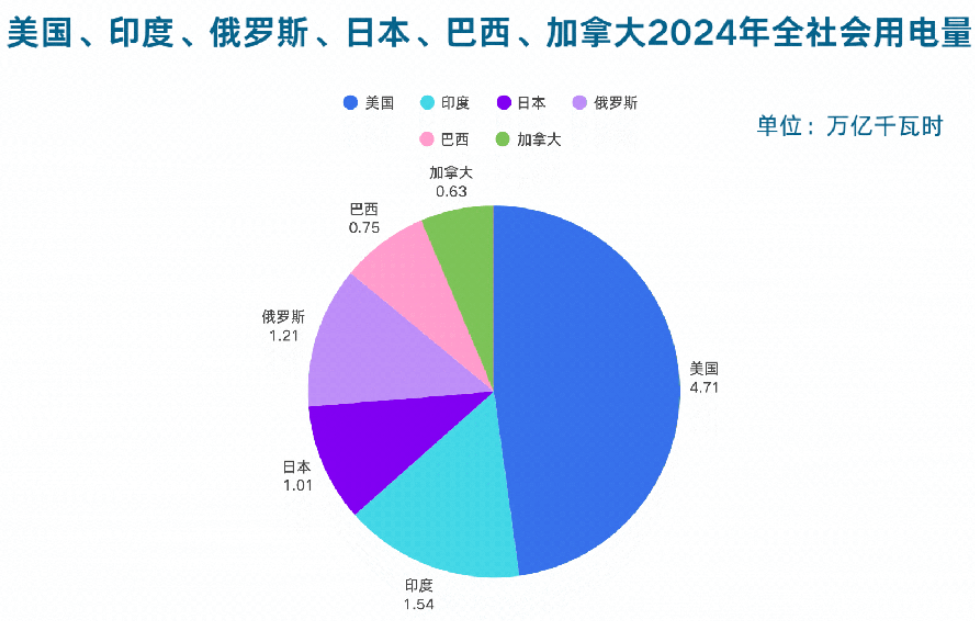
Core Viewpoint - The announcement of China's electricity consumption exceeding 10 trillion kilowatt-hours by 2025 marks a significant milestone, reflecting the robust growth and resilience of the Chinese economy, as well as the transition towards a greener energy structure [1][4][8]. Group 1: Electricity Consumption Milestones - In 2025, China's total electricity consumption is projected to surpass 10 trillion kilowatt-hours, equivalent to the combined annual electricity consumption of the USA, India, Russia, Japan, Brazil, and Canada [1]. - China experienced its first monthly electricity consumption exceeding 1 trillion kilowatt-hours in July and August of this year, showcasing the country's strong economic pulse and transition towards a greener economy [4]. - Historical milestones in electricity consumption include surpassing 1 trillion kilowatt-hours in 1996, 5 trillion in 2011, and 8 trillion in 2021 [4]. Group 2: Economic Growth Indicators - Multiple international institutions have raised their economic growth forecasts for China in 2025, with the World Bank, IMF, and ADB adjusting their predictions upward by 0.4, 0.2, and 0.1 percentage points respectively [8]. - In the first three quarters of this year, China's GDP growth rates were 5.4%, 5.2%, and 4.8%, indicating a sustained economic recovery that has driven an increase in electricity consumption [11]. Group 3: Sectoral Electricity Consumption Trends - The primary industry saw a 10.2% year-on-year increase in electricity consumption in the first three quarters, reflecting trends in agricultural modernization [15]. - The secondary industry contributed 51% to the overall electricity consumption growth, with a 5.1% increase in the third quarter, driven by high-tech and equipment manufacturing sectors [15]. - The internet and related services sector experienced a remarkable 29.8% year-on-year growth in electricity consumption, with specific regions like Guizhou showing a 72.92% increase [17]. Group 4: Power Supply Capacity - This summer, China's power load broke historical highs multiple times, demonstrating the resilience of the electricity supply system [18]. - China's power generation capacity accounts for one-third of the global total, with a projected increase to 3.8 billion kilowatts by 2025, reflecting a 14% year-on-year growth [21]. - The construction of large clean energy bases in western regions and the "West-to-East Power Transmission" initiative have significantly enhanced electricity supply capabilities [26]. Group 5: Energy Transition and Modernization - The electrification ratio of terminal energy use in China has reached approximately 30%, surpassing that of major developed economies [29]. - By the end of October this year, renewable energy capacity exceeded 2.2 billion kilowatts, accounting for nearly 60% of the total installed capacity, with wind and solar power installations surpassing thermal power [33]. - The development of new energy technologies, including advancements in solar and wind power, is accelerating, with significant reductions in costs and improvements in efficiency [39].

新纪录!2025年全国全社会用电量预计首超10万亿千瓦时
Xin Hua Wang· 2025-12-15 21:28
Group 1 - The total electricity consumption in China is expected to exceed 10 trillion kilowatt-hours for the first time in 2025, marking a significant milestone in the country's economic and energy development [1][3] - This consumption level is approximately double that of 2015 and surpasses the combined electricity consumption of the EU, Russia, India, and Japan in the previous year [1][3] - The growth in electricity consumption reflects the robust vitality of the Chinese economy, driven by high-tech and equipment manufacturing sectors, with predictions indicating over 20% and 30% growth in specific areas like new energy vehicle manufacturing and wind energy equipment manufacturing [3][4] Group 2 - The total installed power generation capacity in China is expected to exceed 3.8 billion kilowatts, supported by a diverse range of energy sources including coal, hydro, wind, and solar [4] - China's power grid features the highest voltage levels and longest ultra-high voltage transmission lines globally, with a supply reliability rate of 99.924% [4] - The integration of new energy sources is increasing, with new energy storage installations surpassing 10 million kilowatts and wind and solar power expected to account for approximately 22% of total electricity consumption [4]
中原证券晨会聚焦-20251210
Zhongyuan Securities· 2025-12-10 00:29
Group 1 - The report highlights that the Chinese economy is showing resilience despite pressures, with confidence in achieving annual development goals [5][8] - The commercial electronics sector is leading the A-share market's fluctuations, indicating a potential investment opportunity [5][11] - The average P/E ratios for the Shanghai Composite Index and the ChiNext Index are above their three-year median levels, suggesting a favorable environment for medium to long-term investments [11][12] Group 2 - The AI application in mobile devices is accelerating, with companies like DeepSeek increasing their pre-training scale, indicating growth potential in the AI sector [13][15] - The domestic power supply and demand situation is improving, with significant growth in electricity consumption in sectors like charging and information technology services [17][18] - The chemical industry is gradually entering a recovery phase, with demand rebounding and supply constraints expected to ease, presenting investment opportunities [21][22] Group 3 - The food and beverage industry is experiencing a slowdown in revenue growth, but segments like snacks and soft drinks are showing promising growth rates [27][29] - The photovoltaic industry is facing challenges with supply and demand, but ongoing capacity reduction efforts may lead to improved industry dynamics [31][34] - The media sector is benefiting from improved policy environments and accelerated AI applications, creating opportunities for growth in gaming, film, and advertising [37][38]

【宏观经济】一周要闻回顾(2025年11月19日-11月25日)
乘联分会· 2025-11-25 09:01
Core Viewpoint - The article highlights the positive impact of e-commerce in China from January to October 2025, emphasizing its role in boosting consumption, promoting modern industrial systems, and expanding high-level openness to the outside world [3][4]. E-commerce Development - In the first ten months of 2025, China's online retail sales increased by 9.6% year-on-year, driven by digital consumption and quality e-commerce [3]. - Smart products and online services saw significant growth, with smart wearables like AI glasses and smartwatches growing by 23.1%, and online service consumption increasing by 21% [4]. - Instant e-commerce also thrived, with sales rising by 24.3%, particularly in the restaurant sector where online coupons for in-store experiences grew by 25.1% [4]. Industrial E-commerce - Industrial e-commerce is facilitating the digital transformation of small and medium-sized enterprises, with over 400 matching events held by major e-commerce platforms [4]. - Key sectors such as textiles and pharmaceuticals experienced e-commerce transaction growth of 5.5% and 3.4%, respectively [4]. - Agricultural products and rural online retail sales grew by 9.5% and 7.5%, respectively, indicating a strong push for e-commerce to empower local agricultural products [4]. International Cooperation - The "Silk Road E-commerce" initiative is fostering high-quality cooperation along the Belt and Road, with 12 innovative practice cases being replicated nationwide [5]. - Activities promoting the Chinese market as a global opportunity included 36 events, with significant sales growth in imported goods, such as a 73.7% increase in Uzbek candy and a 39.9% increase in Thai mangosteen [5]. Foreign Investment - In the first ten months of 2025, China established 53,782 new foreign-invested enterprises, a year-on-year increase of 14.7%, while actual foreign investment amounted to 621.93 billion yuan, a decrease of 10.3% [11]. - The manufacturing sector attracted 161.91 billion yuan, while the service sector received 445.82 billion yuan in foreign investment [11]. - High-tech industries saw a significant increase in foreign investment, with e-commerce services growing by 173.1% [11].

国家能源局数据显示 截至10月底全国累计发电装机容量37.5亿千瓦
Zhong Guo Zheng Quan Bao· 2025-11-24 20:16
Core Insights - The National Energy Administration reported that as of the end of October, the total installed power generation capacity in China reached 3.75 billion kilowatts, representing a year-on-year growth of 17.3% [1] - Solar power generation capacity reached 1.14 billion kilowatts, with a significant year-on-year increase of 43.8%, while wind power capacity reached 590 million kilowatts, growing by 21.4% [1] - Total electricity consumption in China for the first ten months was 86,246 billion kilowatt-hours, reflecting a year-on-year increase of 5.1% [1] Installed Capacity - Total installed power generation capacity: 3.75 billion kilowatts, up 17.3% year-on-year [1] - Solar power capacity: 1.14 billion kilowatts, up 43.8% year-on-year [1] - Wind power capacity: 590 million kilowatts, up 21.4% year-on-year [1] Electricity Consumption - Total electricity consumption: 86,246 billion kilowatt-hours, up 5.1% year-on-year [1] - Electricity consumption by the primary industry: 1,262 billion kilowatt-hours, up 10.5% year-on-year [1] - Electricity consumption by the secondary industry: 54,781 billion kilowatt-hours, up 3.7% year-on-year, with industrial electricity consumption increasing by 3.9% [1] - Electricity consumption by the tertiary industry: 16,671 billion kilowatt-hours, up 8.4% year-on-year, with rapid growth in the charging and swapping service industry and information transmission, software, and IT services [1] Sector-Specific Insights - The charging and swapping service industry experienced a significant increase in electricity consumption, with the internet data service sector growing by 43.2% year-on-year [2] - The wholesale and retail sector's charging and swapping service industry saw a year-on-year increase of 47.0% in electricity consumption [2]
10月份全社会用电量同比增长10.4% 创今年以来月度用电量增速新高
Zhong Guo Zheng Quan Bao· 2025-11-21 22:32
Core Insights - In October, China's total electricity consumption reached 857.2 billion kilowatt-hours, marking a year-on-year increase of 10.4%, the highest monthly growth rate this year [1] - From January to October, total electricity consumption accumulated to 8.6246 trillion kilowatt-hours, with a year-on-year growth of 5.1%, indicating a positive trend in the national economy [1] Group 1: Factors Driving Electricity Consumption Growth - The significant increase in electricity consumption in October is attributed to multiple factors, including a low base from the previous year and the effective release of consumer potential during the overlapping National Day and Mid-Autumn Festival holidays [2] - The "autumn tiger" phenomenon, characterized by high temperatures in southern China, particularly in Jiangxi, Zhejiang, and Shanghai, led to a surge in residential cooling electricity usage, with increases of 65.9%, 63.2%, and 47.0% respectively [2] Group 2: Sectoral Electricity Consumption Analysis - The primary industry showed steady growth, with October electricity consumption at 12 billion kilowatt-hours, a year-on-year increase of 13.2% [3] - The secondary industry, as the main electricity consumer, recorded 568.8 billion kilowatt-hours in October, with industrial electricity consumption growing by 6.4% [3] - The high-tech and equipment manufacturing sectors performed notably well, with October electricity consumption increasing by 11%, particularly in the electrical machinery and automotive manufacturing sectors [3] Group 3: Tertiary Industry and Overall Economic Indicators - The tertiary industry emerged as one of the fastest-growing sectors, with October electricity consumption at 160.9 billion kilowatt-hours, a year-on-year increase of 17.1% [3] - The cumulative electricity consumption of the tertiary industry from January to October reached 1.67 trillion kilowatt-hours, reflecting a year-on-year growth of 8.4% [4] - The overall electricity consumption data indicates a positive trend in economic activity, consumer potential release, and industrial structure optimization in China [4]