农业食品

Search documents
聚焦智能机器人等产业前沿,第十八届欧洽会抢先看
Di Yi Cai Jing· 2025-11-12 05:48
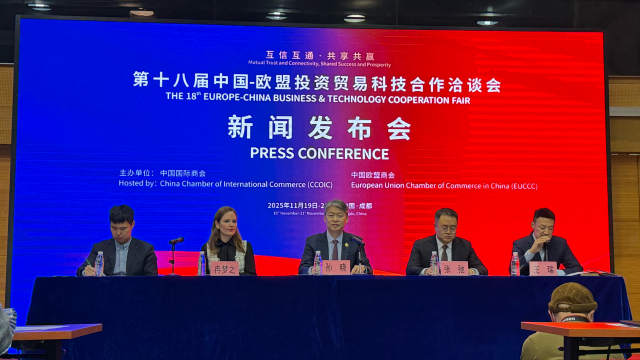
Core Insights - The 18th China-EU Investment Trade and Technology Cooperation Fair (EU Fair) is set to take place from November 19 to 21 in Chengdu, focusing on enhancing cooperation in trade, investment, and technology between China and the EU [1][2]. Group 1: Event Overview - The EU Fair has evolved into one of the largest platforms for China-EU economic and technological cooperation, with participation from over 1,200 companies and more than 29,000 business matching sessions since its inception in 2002 [1]. - The event is expected to attract over 600 attendees from the business and academic sectors of both China and Europe, including representatives from 19 European countries and major companies like Three Gorges Group, CATL, and AstraZeneca [1]. Group 2: Themes and Focus Areas - The theme of this year's fair is "Mutual Trust and Shared Benefits," emphasizing the economic complementarity and responsibilities of both parties in a rapidly changing world [2]. - The fair will feature five parallel industry matchmaking sessions focusing on energy and environmental protection, biomedicine, digital culture and creativity, agricultural products, and intelligent robotics [4][5]. Group 3: Economic Context - In the first ten months of this year, the total value of goods trade between China and the EU reached $680.17 billion, with a year-on-year growth rate of 4% [6]. - Both parties are committed to deepening mutually beneficial cooperation and exploring various economic agreements, including investment treaties, to enhance trade and investment liberalization [6].


“人民咖啡馆”致歉;海南离岛免税新政实施首周吸金超5亿元丨消费早参
Mei Ri Jing Ji Xin Wen· 2025-11-09 23:34
Group 1 - The "People's Cafe" has changed its signage to "Yaochao People's Cafe" following public criticism regarding the use of the term "People" [1] - The incident highlights the challenges brands face in balancing marketing innovation with compliance, emphasizing the need for a robust brand value system [1] Group 2 - Henkel showcased its first new product post-acquisition of Sassoon at the China International Import Expo, indicating successful integration and market strategy [2] - The introduction of high-quality products aligns with the current market trend of consumer upgrading, reinforcing Henkel's commitment to the Chinese market [2] Group 3 - Cargill signed over $3 billion in strategic procurement agreements at the China International Import Expo, reflecting strong demand resilience in China [3] - The company aims to build a more sustainable supply chain, aligning with China's dual carbon goals, which may enhance its market position and reduce volatility risks [3] Group 4 - The new duty-free policy in Hainan generated 506 million yuan in sales in its first week, marking a year-on-year increase of over 30% [4] - The policy has stimulated consumer spending and contributed to the recovery of the retail and tourism sectors in Hainan [4]
从仅生产零部件 到生产新品整机销往全球“进博红利”迸发 外企持续加仓江苏
Xin Hua Ri Bao· 2025-11-07 23:20
Core Insights - The article highlights the increasing investment and commitment of foreign companies in Jiangsu, China, particularly following the China International Import Expo (CIIE) [1][2][3][4][5][6][8] - It emphasizes the transformation of foreign enterprises from merely producing goods to establishing deep-rooted partnerships and ecosystems in Jiangsu, showcasing a shift in investment strategy [8] Group 1: Investment Growth - DuPont has significantly expanded its operations in Zhangjiagang, establishing an integrated production base for automotive adhesives, which began with an investment agreement at the first CIIE in 2018 [2] - Kärcher has invested 100 million yuan in Suzhou to create a global R&D center, focusing on innovations in battery and robotics, which commenced operations in 2023 [3] - AstraZeneca announced the expansion of its Qingdao base, complementing its existing facilities in Wuxi and Taizhou, solidifying its presence in China [3] Group 2: Innovation and Manufacturing - Zeiss has transitioned its Suzhou factory to produce high-end microscopes, becoming a crucial manufacturing hub for global distribution, reflecting a shift from basic to advanced manufacturing capabilities [4][5] - Schneider Electric's Wuxi factory achieved net-zero emissions ahead of schedule, highlighting the effectiveness of local manufacturing and innovation [5] - Cargill's capability development center in Nanjing has evolved over ten years into a key operational hub for its North Asia business [5] Group 3: Local Partnerships and Ecosystems - Siemens has intensified its collaboration with Jiangsu, focusing on open scenarios, talent development, and ecosystem co-creation, indicating a deeper commitment to local integration [6] - GE Aviation has invested an additional $8.5 million in its Suzhou facility to enhance production capabilities for civil aviation engine components, demonstrating a long-term strategy in the Chinese market [7] - Schott has established a new production line in Suzhou for automotive safety components, aiming to strengthen local supply chains and foster innovation [7] Group 4: Strategic Evolution - Foreign companies are evolving from a model of global business coordination to one of local ecosystem integration, with the CIIE acting as a catalyst for these strategic shifts [8]
上半年同比增长49%,中国对泰投资热度飙升
2 1 Shi Ji Jing Ji Bao Dao· 2025-11-04 13:51
Core Insights - In the first half of 2025, China's investment in Thailand reached 22 billion yuan, marking a 49% year-on-year increase, with key sectors including electronics, automotive, new materials, chemicals, and agricultural food [1][3] Group 1: Investment Trends - The investment promotion event highlighted the increasing interest of Chinese companies in Thailand, driven by favorable policies and strategic location [3] - The Thai government's BOI offers a combination of tax incentives and non-tax incentives, allowing 100% foreign ownership and up to 13 years of corporate income tax exemption, creating a low-risk and convenient business environment for Chinese investors [3] Group 2: RCEP Opportunities - The RCEP's "accumulation of origin rules" supports the "China R&D + Southeast Asia manufacturing + global sales" model, positioning Thailand as a geographical and industrial hub within RCEP [3] - Thailand's strategic location, with access to major ports and improved transport links, enhances its appeal for Chinese companies looking to establish manufacturing bases for broader market access [3] Group 3: Beijing's Outward Investment - Beijing's outward direct investment stock is projected to exceed 100 billion USD by 2024, with non-financial outward investment reaching 5.56 billion USD from January to August 2025, reflecting a 10.5% year-on-year growth [4] - Key sectors driving this investment include business services, information transmission/software and technology services, and high-end manufacturing [4]
中兴通讯韩晶昀:中拉智能经济合作潜力巨大
Zheng Zhou Ri Bao· 2025-11-04 02:26
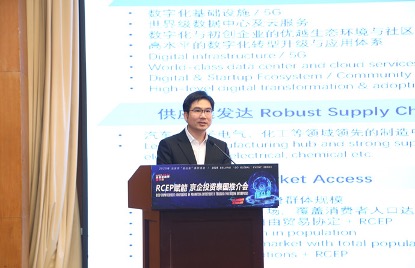
Core Points - The article discusses the deepening cooperation between China and Latin America in the field of communication infrastructure, highlighting the achievements and potential for future collaboration [1][2]. Group 1: Achievements in Cooperation - ZTE Corporation has established deep partnerships with over 70 operators and more than 20 government and enterprise clients across more than 20 countries in Latin America since entering the market in 1998, covering nearly 60% of the region's total population [1]. - The rapid development of fiber optic networks in Latin America, along with a significant demographic advantage where approximately 65% of the population is young, presents a high acceptance of new technologies [1]. Group 2: Potential and Opportunities - Latin America has a high proportion of clean energy generation, which can meet the high energy demands of AI data centers [1]. - A significant 86% of Latin American enterprises have begun implementing or exploring generative AI, particularly in sectors such as finance, telecommunications, energy, and healthcare [1]. Group 3: Challenges and Recommendations - The region faces challenges such as uneven infrastructure development, a lack of skilled professionals, and environmental and energy crises [2]. - To fully unleash development potential, Latin American countries need to increase investment in digital infrastructure, cultivate and attract AI talent, establish appropriate regulatory frameworks, and enhance regional and international cooperation [2].

卢浮宫失窃背后:一个“分裂的法国”与消费市场巨变
创业邦· 2025-10-23 00:10
Core Insights - The article discusses the recent theft at the Louvre Museum in Paris, highlighting the vulnerability of French museums and the broader implications for French society and governance [5][6][9]. - It examines the political instability in France, particularly surrounding pension reforms and the rise of extreme political parties, which reflects a deep societal divide and economic challenges [10][11][14][15]. - The article also explores changing consumer behaviors in France, particularly among different socio-economic groups, and the rise of low-cost brands like Temu amid economic pressures [20][19][21]. Group 1: Theft at the Louvre - The theft involved four suspects who used electric tools to break into the museum and stole eight valuable items, raising concerns about security in French cultural institutions [6][9]. - The incident has sparked political outrage, with leaders expressing disappointment and anger over the state of security and governance in France [6][10]. Group 2: Political and Economic Context - France is experiencing a government crisis, with a "hung parliament" situation leading to difficulties in passing legislation, which undermines President Macron's authority [10]. - The country's fiscal situation is dire, with a deficit of 5.8% of GDP and a national debt of 114% of GDP, prompting credit rating downgrades from major agencies [11]. - The rise of extreme political parties reflects a shift in public sentiment, with traditional parties losing influence amid growing economic inequality [14][15]. Group 3: Consumer Behavior and Market Trends - The article notes a significant increase in poverty rates, with 9.2 million people living below the poverty line, leading to changes in consumer habits towards lower-priced goods [19][20]. - Temu, a low-cost e-commerce platform, has gained traction in France, with a market penetration rate of 11.9%, appealing to cost-conscious consumers [20]. - The luxury goods market remains strong, with French brands dominating, but there is a growing trend among younger consumers towards sustainability and ethical consumption [18][32]. Group 4: Opportunities for Chinese Brands - The article highlights successful Chinese brands like Huawei and TCL in the French market, emphasizing the importance of local partnerships and brand image [29][30]. - There is potential for growth in the food and beverage sector, particularly with tea and vegetarian options, as French consumers show interest in diverse culinary experiences [32][33]. - The rise of outdoor living and camping culture in France presents new market opportunities for related products, with a projected market size of $11 billion by 2031 [28].

卢浮宫失窃背后:一个“分裂的法国”与消费市场巨变
虎嗅APP· 2025-10-22 10:12
Core Viewpoint - The recent theft at the Louvre Museum in Paris has raised significant concerns about security and governance in France, reflecting broader political and economic instability in the country [4][5][6]. Group 1: Theft Incident - Four suspects executed a brazen theft at the Louvre, stealing eight priceless items in just four minutes, highlighting vulnerabilities in museum security [4][6]. - The area where the theft occurred lacked CCTV surveillance in one-third of its rooms, raising questions about security measures in high-profile locations [4][6]. Group 2: Political Reactions - The theft has sparked strong political backlash, with President Macron and other political leaders expressing outrage and concern over the implications for national pride and security [5][6]. - The incident is seen as a reflection of France's ongoing political turmoil, including a fragmented parliament and a series of government crises [7][9]. Group 3: Economic Context - France is facing significant economic challenges, with a projected budget deficit of 5.8% of GDP and a national debt of 114% of GDP, raising concerns about fiscal stability [7]. - Recent downgrades by credit rating agencies, including S&P and Fitch, indicate growing international concern over France's economic governance and long-term growth prospects [7][8]. Group 4: Social Dynamics - The political and economic instability has led to a shift in consumer behavior, with rising poverty rates and changing consumption patterns among different social classes [11][12]. - The emergence of low-cost retail platforms like Temu reflects a growing preference for affordable goods among consumers facing economic pressures [12]. Group 5: Cultural and Ideological Shifts - The political landscape in France is increasingly polarized, with traditional parties losing influence to extreme political movements, reflecting deep societal divisions [9][10]. - The younger generation in France is leaning towards anti-consumerism and environmentalism, impacting their purchasing decisions and brand preferences [10][11].

中国—西班牙贸易投资对接会在马德里成功举办
Shang Wu Bu Wang Zhan· 2025-10-10 02:12
Core Points - The China-Spain Trade and Investment Matching Conference was held in Madrid, attended by over 300 representatives from Chinese and Spanish enterprises and business associations, highlighting the strong engagement and interest in bilateral trade [1][2] - The conference is a concrete measure to implement the important consensus reached by the leaders of China and Spain, showcasing the vitality and potential of economic cooperation between the two countries amidst rising protectionism and unilateralism [1] - This year marks the 20th anniversary of the establishment of a comprehensive strategic partnership between China and Spain, with both countries expanding cooperation in various fields and establishing resilient supply chain relationships [1] - China plans to increase the procurement of Spanish agricultural and food products, innovate trade formats, expand imports through cross-border e-commerce, and enhance bilateral investment [1] - Spain expresses confidence in the economic development prospects of China and aims to deepen trade and investment cooperation in renewable energy and digital economy sectors [1] - Both countries signed 9 trade and investment cooperation agreements across sectors such as agricultural products, green economy, advanced manufacturing, and service trade [2]
民富国际(08511.HK)拟收购农业食品生产设施及相关资产 提高农业食品科技及销售业务对集团长期贡献
Ge Long Hui· 2025-09-15 11:36
Core Viewpoint - Minfu International (08511.HK) has entered a non-binding memorandum of understanding to potentially acquire agricultural food production facilities and related assets, as well as lease a production plant in Hunan Province, marking a significant step in its agricultural food technology and sales business expansion [1] Group 1: Company Activities - The company primarily engages in smart manufacturing solutions and funeral service agency businesses in China [1] - The acquisition of Hunan Baisheng Biotechnology Co., which focuses on agricultural food technology and sales, was completed on August 11, 2025, allowing the company to officially commence its agricultural food technology and sales operations [1] Group 2: Strategic Developments - Following the initiation of agricultural food technology and sales operations, the company has been formulating appropriate business strategies to enhance the long-term contribution of this segment to the group [1] - The board of directors believes that entering into the memorandum of understanding is a crucial step for the group to hold valuable assets for operating its agricultural food technology and sales business, aligning with the overall interests of the company and its shareholders [1]
“文化+科创”双擎赋能,服贸会顺义展区300余款产品亮相
Xin Jing Bao· 2025-09-10 13:48
Group 1 - The Shunyi District showcased its "Quality Shunyi International New City" theme at the Service Trade Fair, featuring over 300 exhibits from 21 unique enterprises, including those from Inner Mongolia's Balinzuoqi [1][2] - The exhibition area is divided into three main sections: "Digital + Intangible Cultural Heritage," "Cultural Creation + Food," and "Music + Technology," highlighting the integration of cultural heritage with technological innovation [1] - The "living inheritance" of intangible cultural heritage is emphasized, with hands-on experiences allowing visitors to engage with traditional crafts, such as the "Fire Painting Gourd" technique [1][2] Group 2 - The "Shunyi Flavor" group presented local specialties, including products from Shunxin Agriculture and ecological hawthorn strips, alongside Inner Mongolia's specialty products like beef jerky and dairy items [2] - An interactive project titled "Encountering Mythical Beasts" provided a tech-driven experience, allowing visitors to interact with digital representations of ancient cultural elements [2] - The Shunyi District has implemented policies to support cultural and tourism industry development, resulting in a record high of 192 cultural enterprises as of June this year, with a 32.4% year-on-year revenue growth in cultural communication channels [3]