即时零售

Search documents
马云“跑了”,套现300亿!背后藏着什么秘密?
Sou Hu Cai Jing· 2026-02-10 16:00
Core Viewpoint - Alibaba is undergoing a strategic retreat by selling off non-core assets to focus on its primary business areas, particularly in instant retail and AI/cloud computing, rather than facing financial distress or "running away" [1][11]. Group 1: Asset Sales - Alibaba has sold various assets, including a portion of its stake in Sanjiang Shopping, realizing 2.52 billion yuan. Overall, it has recouped over 30 billion yuan through divestments from Intime Retail, a complete exit from RT-Mart, and other sales [1][3]. - The sold assets are characterized as heavy, slow-growing, and increasingly unprofitable traditional retail businesses, which are no longer aligned with Alibaba's core focus [3][5]. - Alibaba's Chairman, Cai Chongxin, stated that exiting these non-core businesses is a reasonable decision, indicating a shift from a "big and complete" empire to a "focused core" entity [3][5]. Group 2: Strategic Focus Areas - The 30 billion yuan raised from asset sales will be directed towards two main battles: instant retail and AI/cloud computing [5][10]. - In instant retail, Alibaba is investing heavily in delivery services, with initiatives like "one-hour delivery" and significant subsidies to compete against rivals like Meituan and JD.com. Instant retail revenue has shown rapid growth, with increases between 37% and 60% [5][10]. - For AI and cloud computing, Alibaba plans to invest 380 billion yuan over the next three years, which exceeds its total investment in these areas over the past decade. This investment aims to establish a foundational infrastructure for AI, positioning Alibaba as a key player in the future tech landscape [6][10]. Group 3: Leadership and Organizational Changes - The leadership structure at Alibaba has shifted, with power concentrated among three key figures: Cai Chongxin, Wu Yongming, and Jiang Fan, indicating a strong leadership drive for the new strategic direction [8][10]. - The partner committee has been streamlined from 26 to 17 members, reflecting a transition from a diverse expansion phase to a focused core strategy [8][10]. - Jiang Fan's return to a central role in overseeing e-commerce signifies a commitment to tackling the challenges in instant retail with experienced leadership [8][10]. Group 4: Lessons and Implications - The strategic shift at Alibaba serves as a lesson for businesses, emphasizing the need to adapt and evolve core competencies in response to changing market conditions [10][11]. - Focusing resources on high-value areas is crucial in the current economic landscape, where efficiency and technological advancement are paramount [10][11]. - Observing the capital flows of major companies like Alibaba, Tencent, and JD.com can provide insights into future economic trends, particularly in instant consumption and AI technology [10][11].


快消品产业最新年报出炉,2026年即时零售行业规模或破万亿元
证券时报· 2026-02-10 15:48
《2026中国快消品产业年度报告》发布。 "前瞻2026:第26届快消品高层年会"2月10日在沪举行。东方快消品中心在会上发布的《2026中国快消品产业年度报告》(以下简称《报告》)显示,据 调查,2025年营收增长的快消品企业占比为34.8%,28.2%的被调查企业表示2025年营收与上年同期基本持平,37%快消品企业2025年的营收少于上年同 期。总体上看,去年国内快消品行业呈现温和增长的态势。 《报告》提到,39.2%的受访快消品企业高管对2026年的发展保持乐观,47.1%的高管对2026年持中性谨慎态度,13.7%的高管对2026年行业预期不乐观。 许多受访高管认为,2026年将是快消品慢增长的一年,市场存在诸多挑战。 《报告》还提到,2026年即时零售行业规模或破万亿元,抖音入局使竞争升级为持久战,消费者需求从"快、省"转向"快、省、好"。零食集合店正以爆发 式态势成为快消品市场的重要增长渠道。以山姆、麦德龙、开市客为代表的会员店体系也增长迅速。 从流量驱动转向心智驱动 《报告》提出了2026中国快消品10大发展趋势,分别是:政策托底发力,增速稳中趋慢;产品聚焦健康和功能;"情价比"当道,解锁消费 ...
外卖大战后,一批闪电仓为何悄然退场?
3 6 Ke· 2026-02-10 13:16
Core Insights - The lightning warehouse industry is not a high-profit sector and requires careful management rather than blind entry [1][8][19] - The illusion created by subsidies has led many to mistakenly believe that lightning warehouses have low entry barriers and are easy to profit from [2][4] - The industry is undergoing a selection phase where only those with strong operational capabilities will survive [10][19] Industry Dynamics - The rapid increase in lightning warehouses during the subsidy period has not led to industry prosperity but has intensified competition, elongating the return cycle and increasing product homogeneity [2][10] - The reliance on subsidy-driven order volumes has distorted the perception of operational capability, leading to a misjudgment of business fundamentals [5][6][7] - As subsidies fade, businesses lacking foundational skills will struggle, revealing their weaknesses as order volumes increase [7][11] Business Model and Strategy - Lightning warehouses are characterized as a "hard business" that requires meticulous management and operational excellence [8][11] - The future of the industry will depend on the ability to create a robust supply chain and product offerings that meet diverse consumer needs [15][17] - Service quality and customer experience will become critical differentiators as supply becomes less scarce [16][17] Market Outlook - The instant retail market is projected to grow significantly, with estimates suggesting it will exceed 1 trillion yuan by 2026 and reach 2 trillion yuan by 2030 [12] - The differentiation in supply capabilities will become increasingly clear, with successful operators focusing on building systematic capabilities [14][19] - The industry is expected to mature, with weaker players being eliminated, leading to a focus on operational excellence and sustainable business practices [19][20]
即时零售“春节不打烊”,00后“年货主理人”引领消费新风向
Guo Ji Jin Rong Bao· 2026-02-10 12:12
Core Insights - The consumption market for New Year goods is heating up as the Spring Festival approaches, with significant growth in sales on platforms like Taobao, particularly in lower-tier cities [1] - The younger generation, particularly those born in the 1990s and 2000s, is becoming the main force in purchasing New Year goods, bringing new consumption concepts and reshaping traditional practices [2][4] Consumption Trends - Sales of New Year goods on Taobao's flash purchase platform have increased by over 347% year-on-year, with orders from third and fourth-tier cities rising by over 580% [1] - The younger generation is shifting the focus of New Year purchases from bulk buying to more flexible, immediate consumption scenarios, emphasizing health and practicality over traditional notions of gifting [2][4] Redefining New Year’s Eve Dinner - The New Year’s Eve dinner remains a core ritual, but younger consumers prioritize convenience, quality, and a sense of ceremony, leading to the introduction of various ready-to-cook meal options [5][8] - Companies like Dingdong Maicai are launching themed meal kits that cater to the tastes of younger consumers, making it easier for them to prepare festive meals [5][8] Supply Chain and Logistics - To meet the demand during the Spring Festival, multiple instant retail platforms have announced they will remain operational throughout the holiday, ensuring stable supply [9][10] - Dingdong Maicai has implemented a comprehensive Spring Festival guarantee plan, increasing inventory levels and ensuring delivery efficiency through a dual support system of fixed and flexible staffing [9] Employee Incentives - Various platforms are offering incentives for frontline employees during the holiday season, including special bonuses and subsidies for those who remain on duty [10][11] - Taobao Flash Purchase has invested nearly 2 billion yuan in operational reserves, with significant financial incentives for delivery personnel during the Spring Festival [10]

独家|小象烘焙开设线下店,巨头们沉迷在螺蛳壳里做道场
东京烘焙职业人· 2026-02-10 08:33
以下文章来源于超聚焦foci ,作者白墨 超聚焦foci . 聚焦科技创新,助力产业升级 巨头们开始抢小生意 超聚焦独家获悉,近日美团小象超市自有品牌"小象烘焙",在北京后沙峪和望京附近开始 试点线下店铺。 从美团的小象超市布局"手作烘焙",到去年9月朴朴超市悄然上线自营外卖"朴朴厨房", 再到同一时间京东继"小鲜厨房"后高调推出"七鲜咖啡",并计划三年开万店,一杯补贴后 低至4元的美式咖啡,搅动着本已白热化的咖啡市场。 从现烤面包、到三餐热食、再到提神咖啡,这些看似"蝇头小利"的生意,正在成为互联网 巨头们新的角斗场。当线上流量红利见顶,曾经追求规模与速度的巨头们,不约而同地放 慢脚步,沉下身子,开始在一枚小小的"螺蛳壳"里,精雕细琢地做起了道场。 这背后,究竟是流量焦虑下的无奈之举,还是通往更高利润、更强用户粘性的必经之路? 01 美团重燃线下零售野心 二是寻求更高毛利,相较于标准化的包装食品,现场制作的烘焙、熟食等3R产品(即烹、 即热、即食)拥有更高的毛利率。这是在即时零售利润微薄的现状下,提升单店盈利能力 的关键一步。 三是打造线下流量入口,一个高品质、高性价比的烘焙区,能有效吸引周边社区居民到店 ...


闪电仓大分化
3 6 Ke· 2026-02-09 23:57
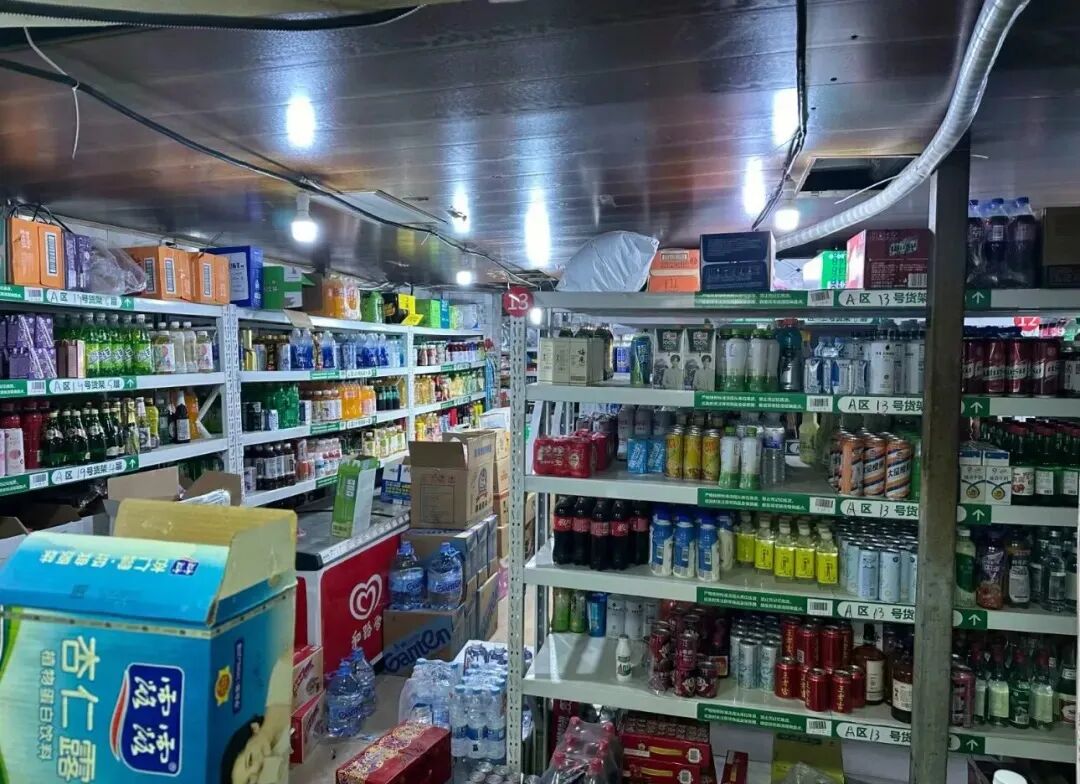
随着平台补贴退潮,受影响的不仅是一日八杯奶茶的羊毛党,一个原本隐秘的战场——闪电仓,也迎来一波出清与分化。 进入2026年,外卖大战的硝烟正逐渐散去,AI大战取而代之。 这个赛道被强行按下了快进键,大量零售小白怀揣财富自由之梦,企图冲进场内捡钱。 作为即时零售浪潮下的产物,闪电仓与外卖的区别是"送饭以外的一切",与电商区别是"半小时送达"。这种兼具供给广度与履约效率的零售模型,正成为 中国消费的新变量。 在2025年那场旷日持久的补贴混战中,闪电仓曾喜提各大平台倾斜资源。一时间,"万单神话"、"火速上车"、"开店即回本"等造富话术在抖音、小红书、 和加盟商微信群里病毒式蔓延。 然而熟悉大A的朋友都知道,开盘涨停背后往往紧跟着最大回撤。近段时间,大量闪电仓倒闭转让的消息频频登上新闻,人们发现: 闪电仓不是一张傻瓜式的彩票,它其实是一门极讲耐心,对零售基本功有高要求的"苦生意"。 机会与挑战 从表面看,闪电仓只是做线上超市。但在实际运营中,闪电仓的经营难度,不亚于螺狮壳里做道场。 它要对标超市的"多",外卖的"快",价格却最好贴近电商的"省"。 首先是超市的"多"。闪电仓对接高度碎片化,甚至可能有些"任性"的临时 ...
闪电仓大分化
远川研究所· 2026-02-09 13:05
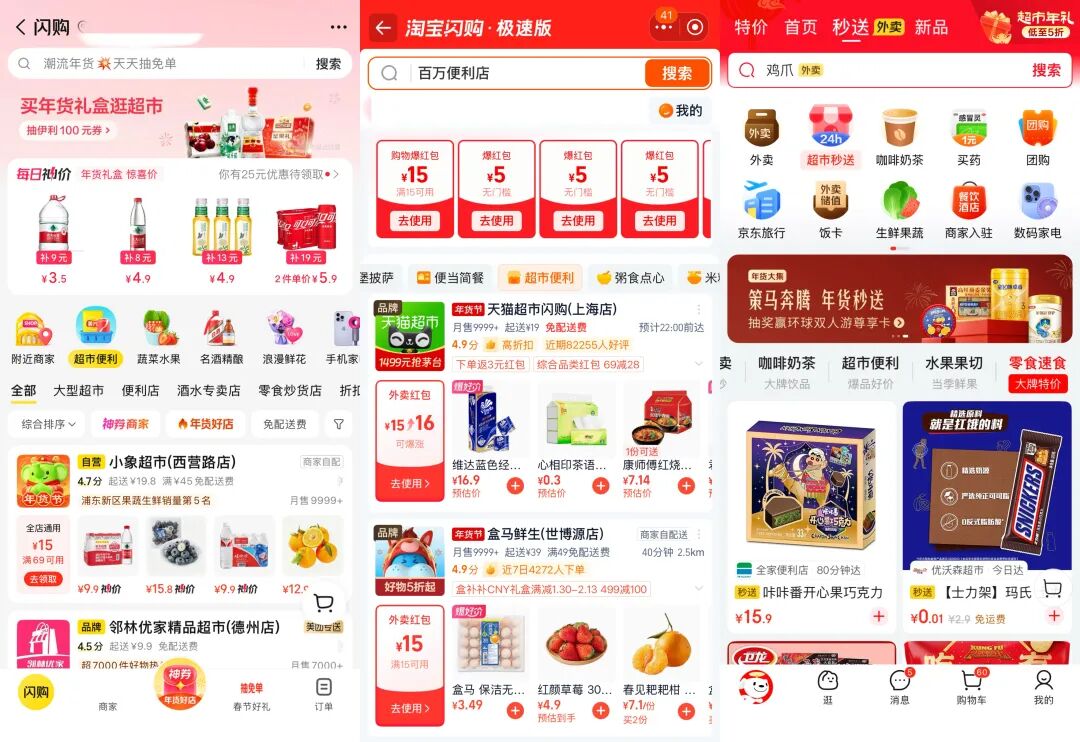
进入 2026 年,外卖大战的硝烟正逐渐散去, AI 大战取而代之。 随着平台补贴退潮,受影响的不仅是一日八杯奶茶的羊毛党,一个原本隐秘的战场 —— 闪电仓 ,也迎 来一波出清与分化。 作为即时零售浪潮下的产物,闪电仓与外卖的区别是 " 送饭以外的一切 " , 与电商区别是 " 半小时送 达 " 。这种兼具供给广度与履约效率的零售模型,正成为中国消费的新变量。 在 2025 年那场旷日持久的补贴混战中,闪电仓曾喜提各大平台倾斜资源。一时间, " 万单神话 " 、 " 火速上车 " 、 " 开店即回本 " 等造富话术在抖音、小红书、和加盟商微信群里病毒式蔓延。 这个赛道被强行按下了快进键,大量零售小白怀揣财富自由之梦,企图冲进场内捡钱。 然而熟悉大 A 的朋友都知道,开盘涨停背后往往紧跟着最大回撤。近段时间,大量闪电仓倒闭转让的 消息频频登上新闻,人们发现: 闪电仓不是一张傻瓜式的彩票,它其实是一门极讲耐心,对零售基本功有高要求的 " 苦生意 " 。 机会与挑战 从表面看,闪电仓只是做线上超市。但在实际运营中, 闪电仓的经营难度,不亚于螺狮壳里做道场。 它要对标超市的 " 多 " ,外卖的 " 快 " ,价格却 ...

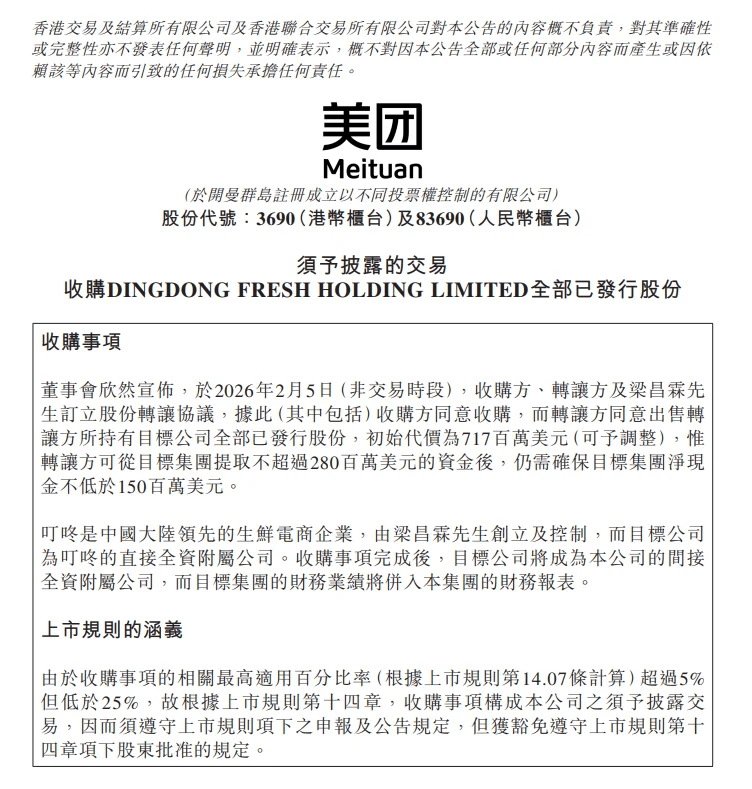
叮咚买菜壮士断腕 中国业务转售美团
BambooWorks· 2026-02-09 09:30
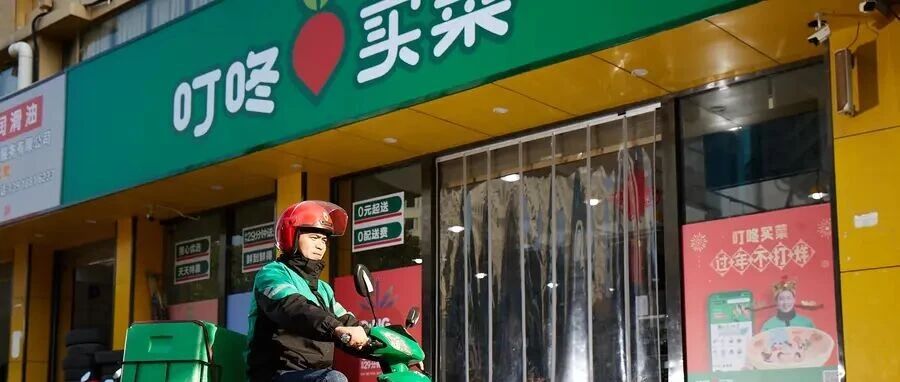
Core Viewpoint - Dingdong Maicai, one of China's earliest online fresh food platforms, is selling its core Chinese business to competitor Meituan for $717 million, marking one of the largest mergers in China's rapidly evolving instant retail market [1][2][3] Group 1: Transaction Details - The sale involves Dingdong Maicai's core Chinese operations, with 90% of the payment made immediately and the remaining 10% contingent on tax settlements [5][8] - Following the announcement, Dingdong Maicai's stock fell by 14%, bringing its market value to approximately $700 million, which aligns closely with the acquisition price [2][6] - The merger is expected to create a leading player in the industry, combining Dingdong Maicai's operations with Meituan's existing online fresh food business [7] Group 2: Market Context - The instant retail market in China has seen rapid growth, particularly with the entry of major e-commerce players like Alibaba and JD.com, which have expanded their delivery capabilities beyond fresh food to include a wide range of daily necessities [5][7] - The competition has intensified, with companies like Alibaba, JD.com, and Meituan subsidizing their instant retail operations, leading to significant financial losses for some, such as Meituan, which reported a loss of 18.6 billion yuan (approximately $2.68 billion) in the third quarter [5][7] - Dingdong Maicai's revenue growth has been limited, with a year-on-year increase of only 1.9% in the third quarter, highlighting the challenges faced by independent platforms in competing with larger players [7] Group 3: Future Implications - Dingdong Maicai retains its international business post-sale, which may lead to speculation about the future of the brand and its potential integration into Meituan's ecosystem [8] - The company holds $549 million in cash and short-term investments, which, combined with the sale proceeds, could exceed $1.2 billion, providing opportunities for future ventures or shareholder returns [8] - There is a possibility that the founder, Liang Changlin, may leverage this capital for new entrepreneurial endeavors, either domestically or internationally, rather than opting for significant shareholder dividends [8]
海外周报:美团宣布收购叮咚买菜,携程春节旅游预订单中亲子游占比过半
HUAXI Securities· 2026-02-09 04:25
Group 1: Meituan's Acquisition of Dingdong Maicai - Meituan announced the acquisition of Dingdong Maicai's China business for approximately $717 million (about 4.98 billion RMB) on February 5, 2026[1] - Dingdong Maicai's market value was $694 million (approximately 4.82 billion RMB) prior to the announcement[1] - Dingdong Maicai has achieved a historical high in revenue and GMV in Q3 2025, with revenue of 6.66 billion RMB and GMV of 7.27 billion RMB, marking seven consecutive quarters of GAAP profitability[1][11] Group 2: Ctrip's Spring Festival Travel Forecast - Ctrip's 2026 Spring Festival travel forecast indicates that family travel will account for over 50% of bookings, with Nanjing emerging as a popular destination during the holiday[2] - The number of pre-orders for travel to Shantou increased by 186% year-on-year, leading the list of emerging destinations[2][14] - The average price of family rooms is 9% higher than other room types, reflecting the growing demand for family-oriented travel[2][15] Group 3: Regulatory Standards for Prepared Dishes - The National Health Commission proposed a standard for prepared dishes, stating that the shelf life should not exceed 12 months and that preservatives are prohibited[3][22] - The standard aims to align with public consumption habits and ensure the safety and nutritional quality of prepared dishes[3][22] - The use of food additives should be minimized, and only those necessary for production should be allowed[3][23]
DCCI互联网研究院院长刘兴亮:美团收购叮咚买菜背后反映即时零售生态重构与巨头战略博弈
Sou Hu Cai Jing· 2026-02-09 04:21
2月5日,美团于香港联交所发布公告,将以约7.17亿美元的初始对价,完成对叮咚买菜中国业务100%股权的收购。根据协议,转让方有权在2026年8月31 日前从目标集团提取不超过2.8亿美元的资金。叮咚买菜海外业务则不在本次交易范围内,将在交割前完成剥离。 这一交易的市场价值评估是基于2026年1月31日的估值日期,按照市场法评估,目标集团股东全部权益的公允价值为10.06亿美元。交易通过分期支付方式 完成,并由美团的间接全资附属公司作为收购主体。 叮咚买菜2025年第三季度营收达66.6亿元,创历史季度最高,并已连续七个季度实现GAAP标准下的盈利。这笔交易将在美团的小象超市与叮咚买菜超过 1000个前置仓的网络之间搭建桥梁。美团选择在春节前出手,是否在准备来年的"大战"? ji K St reer with and with and and and the submitted in the submittee with and and the submittee and to the 葡萄 DCCI互联网研究院院长 郭 涛 董立标 知名天使投资人 杭州数字产业学院院长 庄 陈虎东 今母湖草洲歌歌歌歌歌曲曲曲 ...