汽车玻璃

Search documents
范波吴庆文会见福耀集团董事长曹晖一行
Su Zhou Ri Bao· 2026-02-10 23:40
Core Insights - The meeting between the Suzhou municipal leaders and Fuyao Glass Industry Group's chairman highlights the importance of collaboration between local government and industry for regional development [1] - Fuyao Glass is recognized as a benchmark enterprise in the global automotive glass sector, emphasizing its commitment to innovation and local investment in Suzhou [1] Group 1: Company Development - Fuyao Glass has expressed confidence in expanding its business operations in Suzhou, benefiting from the city's favorable business environment and comprehensive industrial system [1] - The company aims to deepen its investment in Suzhou by launching more projects, orders, and products, as well as establishing research and development centers [1] Group 2: Government Support - The Suzhou municipal government is actively promoting new industrialization and technological innovation to enhance the local economy and support enterprises like Fuyao Glass [1] - The government plans to implement a "three services" initiative to provide comprehensive support for enterprise innovation and development [1]

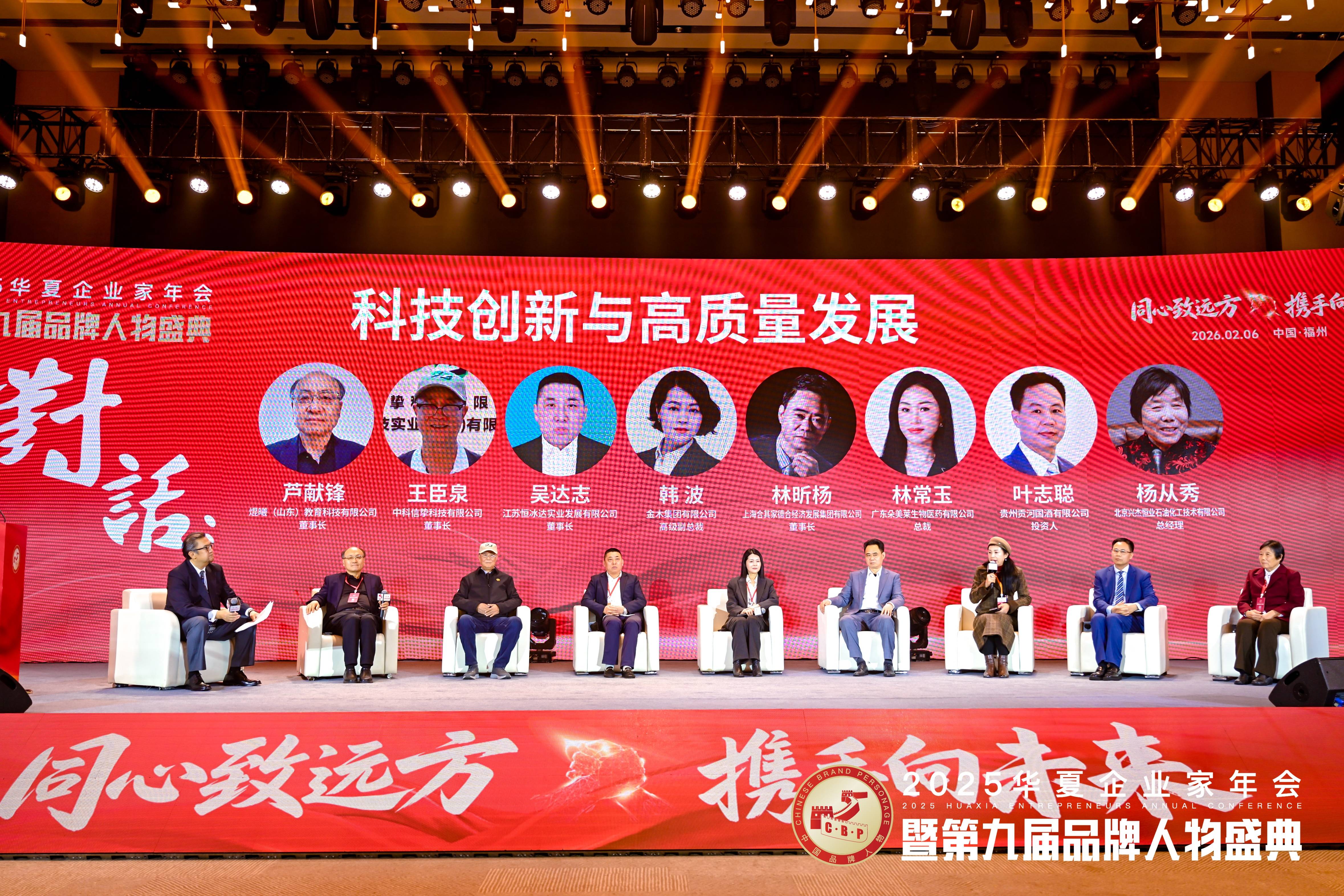
2025华夏企业家年会成功举办 叶志聪与贡河国酒斩获双项重磅荣誉
Sou Hu Cai Jing· 2026-02-09 05:20
Core Viewpoint - The 2025 Huaxia Entrepreneur Annual Conference and the 9th Brand Person Ceremony was held in Fuzhou, focusing on industry development trends and brand growth to empower high-quality development of the real economy [1][5]. Group 1: Event Overview - The event gathered elites from various sectors, including government, industry, and academia, marking it as an annual celebration of Chinese brand development [5]. - Notable attendees included industry leaders such as Cao Dewang from Fuyao Glass and Chen Guangbiao from Jiangsu Huangpu Resource Utilization Co., Ltd. [5]. Group 2: Awards and Recognition - The "2025 Top Ten Influential Brand Figures" and "2025 Top Ten Influential Brands" were announced, with Ye Zhichong receiving the former title for his leadership and brand strategy in the manufacturing sector [5][8]. - Ye Zhichong's investment in Gonghe Guojiao was recognized as a top brand, highlighting its cultural heritage and market reputation [5][8]. Group 3: Insights and Discussions - During a roundtable discussion on "Technological Innovation and High-Quality Development," Ye Zhichong emphasized the integration of technology and tradition in business [12]. - He pointed out that Chinese enterprises must possess technological authority and brand trust to succeed in global markets [12]. Group 4: Cultural and Brand Development - Ye Zhichong articulated the importance of brands as both corporate and societal wealth, advocating for a shift from mere commercial success to creating social value [12][16]. - Gonghe Guojiao, produced in the core area of Maotai Town, adheres to traditional brewing methods and aims to promote Chinese sauce liquor culture globally [16][19]. Group 5: Future Directions - Gonghe Guojiao plans to continue its commitment to "craft inheritance and cultural advancement," aiming to deepen the integration of "liquor culture+" and strengthen innovation [19].

Mitsubishi UFJ Financial Group, Inc.减持福耀玻璃(03606)14.44万股 每股作价约66.16港元
Zhi Tong Cai Jing· 2026-02-06 13:49
Core Viewpoint - Mitsubishi UFJ Financial Group, Inc. has reduced its stake in Fuyao Glass (03606) by selling 144,400 shares at a price of approximately HKD 66.16 per share, totaling around HKD 9.5535 million [1] Group 1 - The sale resulted in Mitsubishi UFJ Financial Group's remaining shareholding of 36,280,400 shares, which represents a holding percentage of 5.97% [1]
Mitsubishi UFJ Financial Group, Inc.减持福耀玻璃14.44万股 每股作价约66.16港元
Zhi Tong Cai Jing· 2026-02-06 13:42
Group 1 - Mitsubishi UFJ Financial Group, Inc. reduced its stake in Fuyao Glass (600660) by 144,400 shares at a price of HKD 66.1601 per share, totaling approximately HKD 9.5535 million [1] - After the reduction, Mitsubishi UFJ's latest holding is 36,280,400 shares, representing a holding percentage of 5.97% [1]
福建“豪门”,打响继承之战
创业家· 2026-02-04 10:35
Core Viewpoint - The article discusses the generational transition in family businesses, particularly among Fujian entrepreneurs, highlighting the challenges faced by the second generation as they take over their family enterprises amidst a changing economic landscape and societal expectations [5][8]. Group 1: Succession Battles - The transition of leadership is becoming a reality among Fujian private enterprises, with notable examples including Xu Yangyang taking over Dali Group and Cao Hui succeeding his father at Fuyao Group [7][8]. - The second generation faces dual pressures from familial expectations and societal reputation, often leading to comparisons with their predecessors [5][9]. - The traditional method of succession in Fujian remains focused on blood relations, with the eldest son often seen as the most suitable successor [9][11]. Group 2: Individual Case Studies - Xu Yangyang's journey at Dali Group began with her education and gradual rise through the ranks, ultimately leading to her role as president after her father's retirement [16][23]. - Cao Hui's path to leadership at Fuyao Group involved significant preparation, including international education and hands-on experience in the family business [12][26]. - Xu Lianjie of Hengan Group faced challenges in finding a successor, as his sons initially showed little interest in the family business, but eventually, his eldest son Xu Qingliu took over [13][16]. Group 3: Business Performance and Challenges - Dali Group's revenue peaked at 22.294 billion yuan in 2021 but has since declined, with 2023 revenue reported at 18.86 billion yuan [22][24]. - Hengan Group's paper towel business aims for significant growth, with Xu Qingliu setting ambitious targets despite industry challenges [26]. - Fuyao Group continues to experience growth, with a reported revenue of 21.45 billion yuan and a net profit exceeding 4.8 billion yuan in the first half of 2025 [26][27]. Group 4: Cultural and Strategic Adaptations - The article highlights the importance of adapting to changing consumer preferences, with younger generations needing to innovate beyond traditional business models [24][32]. - Fujian entrepreneurs are increasingly forming family offices to manage wealth and address succession issues, reflecting a blend of traditional and modern approaches to business continuity [30][31]. - Marriages between the second generation of Fujian entrepreneurs are seen as a strategy to strengthen business alliances and create a supportive network [28][29].


福耀玻璃:清阳下项目、安徽合肥项目已于2025年年底完成各300万套的产能建设
Mei Ri Jing Ji Xin Wen· 2026-02-02 09:21
Group 1 - The company exports products to Brazil and is exploring local manufacturing options [1] - The company employs financial instruments such as forward contracts and currency swaps to hedge against USD depreciation and foreign exchange risks [1] - The company’s new projects in Fuzhou and Hefei are expected to reach a total production capacity of 3 million sets each by the end of 2025, after which they will enter a ramp-up production phase [1]
福建「豪门」,打响继承之战
3 6 Ke· 2026-01-31 09:22
Core Insights - The article discusses the generational transition in family-owned businesses in Fujian, China, highlighting the challenges faced by the second generation as they take over leadership roles in a competitive and changing market environment [3][4][5]. Group 1: Leadership Transition - Xu Shihui, the founder of Dali Food Group, has retired, passing the presidency to his daughter Xu Yangyang, marking a significant leadership change in the company known for brands like "Dali Garden" and "Kebike" [3][4]. - Similarly, Cao Dewang, founder of Fuyao Group, has stepped down as chairman, with his son Cao Hui taking over, indicating a broader trend of leadership transitions among Fujian entrepreneurs [3][4]. - Other notable transitions include Xu Lianjie of Hengan Group handing over to his son Xu Qingliu, and Fu Guangming of Shennong Group passing control to his daughter Fu Fenfang [4]. Group 2: Challenges of Succession - The second generation faces intense pressure to meet the expectations set by their predecessors, often leading to comparisons in capability and performance [4][12]. - The decision to take over leadership roles is fraught with internal conflict, as many heirs express reluctance to step into their parents' shoes, preferring to pursue their own entrepreneurial paths [5][12]. - The article highlights the contrasting experiences of successors, with some like Cao Hui initially resisting the idea of taking over, while others like Xu Yangyang have been groomed for leadership from a young age [8][12]. Group 3: Market Dynamics and Performance - Dali Group's revenue peaked at 22.294 billion yuan in 2021 but has since declined, with 2023 revenue reported at 18.86 billion yuan, presenting a significant challenge for Xu Yangyang as she takes over [17][19]. - Hengan Group's Xu Qingliu aims to double the paper product business revenue target to 30 billion yuan, facing challenges such as raw material price fluctuations and industry competition [22]. - Fuyao Group, under Cao Hui's leadership, reported a revenue of 21.45 billion yuan in the first half of 2025, with a net profit exceeding 4.8 billion yuan, indicating a strong market position but also the need for continued innovation and growth [22]. Group 4: Cultural and Strategic Considerations - The article emphasizes the traditional approach of bloodline succession in Fujian businesses, where the eldest son is often seen as the most suitable successor [5][12]. - The concept of family alliances through marriage is highlighted as a strategy to strengthen business ties among Fujian entrepreneurs, reflecting a long-standing cultural practice [25][26]. - The establishment of family offices by Fujian businesses is noted as a modern approach to managing wealth and addressing succession issues, allowing for better risk management and strategic collaboration [26][28].

福耀玻璃:公司对欧洲业务采取“1+N”运营模式
Zheng Quan Ri Bao Zhi Sheng· 2026-01-21 12:38
Core Viewpoint - Fuyao Glass has adopted a "1+N" operational model for its European business, enhancing supply chain flexibility and customer service [1] Group 1: Operational Strategy - The company utilizes multiple domestic production bases near ports as a unified supply chain hub ("1") [1] - Products are exported to various overseas bases in Germany, Hungary, and others for glass post-processing and localization [1] - This model improves supply chain coordination and responsiveness, increasing customer loyalty in Europe [1]
创新突围看县域——县域经济高质量发展观察之一
Ren Min Ri Bao· 2026-01-16 13:23
Core Insights - The article emphasizes the importance of county-level economies in China's overall economic structure, highlighting their contribution to employment and domestic demand [10][12][21] - It discusses the innovative strategies adopted by various counties to enhance their economic performance, focusing on collaboration between government, academia, and enterprises [17][22][24] Group 1: County Economic Development - Jiangyin has 204 enterprises with leading products holding top three market shares domestically, with 96 at the forefront [11] - Cixi has 13 national manufacturing champions, with 9 recognized during the 14th Five-Year Plan period [12] - Fuqing produces about one-third of the global automotive glass market share despite lacking natural silica sand resources [12] Group 2: Innovation and Technology - Fuyao Group developed transparent antenna glass for smart vehicles, overcoming significant technical challenges through collaboration with universities and technology firms [15][16][17] - The fireworks industry in Liuyang is transitioning towards greener practices, with innovations aimed at reducing environmental impact while maintaining safety [18][19] Group 3: Talent Development - Cixi has implemented targeted talent recruitment strategies, attracting high-level professionals to foster local entrepreneurship [22][24] - Jiangyin has established talent innovation hubs in major cities to attract high-level talent flexibly [25] Group 4: Financial Innovation - Ningbo Qixi Electric Co. received a 10 million yuan credit loan based on data asset pledges, showcasing a shift in how data is valued in financing [28][29] - The establishment of the Global Smart Home Appliance Innovation Center in Cixi aims to enhance collaboration and innovation among local enterprises [30][31] Group 5: Collaborative Development - Jiangyin and Jingjiang have reduced their GDP per capita gap from 2.99 times to 1.35 times over 20 years, indicating improved economic collaboration [32] - The Jiangyin-Jingjiang Industrial Park facilitates resource sharing and industrial upgrades between the two regions, benefiting local enterprises [34][35][36]


创新突围看县域(人民眼·县域经济)
Ren Min Ri Bao· 2026-01-15 23:58
Core Viewpoint - The article emphasizes the importance of county-level economies in China's overall economic development, highlighting their contribution to employment, domestic demand, and innovation. It showcases successful examples of counties that have achieved high-quality economic growth through innovation and collaboration. Group 1: County Economic Development - County economies are fundamental units of the national economy, providing employment for over half of the population and enhancing living standards [10] - As of 2024, the total economic output of county economies reached 54 trillion yuan, accounting for nearly 40% of the national GDP [10] - The "14th Five-Year Plan" suggests developing distinctive county economies, with a focus on innovation-driven growth [14] Group 2: Innovation and Technology - Fujian Fuyou Group has developed transparent antenna glass for smart vehicles, addressing the need for multiple antennas in modern cars [15][17] - The company collaborated with universities and technology firms to overcome technical challenges in the production of this innovative product [16] - The glass industry in Fuzhou is projected to achieve an output value of 8.8 billion yuan by 2025, with a 9% year-on-year growth [17] Group 3: Talent Development - Cixi has implemented targeted talent recruitment strategies, attracting high-level professionals to foster local entrepreneurship [21][23] - The city has established partnerships with universities to cultivate talent that aligns with local industrial needs, resulting in the establishment of 17 large-scale talent enterprises [23][24] Group 4: Collaborative Development - Jiangyin and Jingjiang have reduced their GDP per capita gap from 2.99 times to 1.35 times over 20 years, showcasing successful regional collaboration [31] - The Jiangyin-Jingjiang Industrial Park facilitates the transfer of industrial capacity and resources between the two cities, enhancing competitiveness [33][34] - The park has attracted over 1,700 enterprises with a registered investment exceeding 200 billion yuan, creating over 660,000 jobs [35]