火箭发射

Search documents
国泰海通:天地一体化建设提速 关注卫星制造与火箭发射端龙头
智通财经网· 2026-01-13 13:29
Group 1 - The core point of the article highlights that China has submitted an application for 203,000 new satellites covering 14 constellations, marking a significant increase in satellite applications and indicating a new era in low Earth orbit (LEO) satellite construction [1][2] - The application includes two major constellations, CTC-1 and CTC-2, which account for nearly 193,000 satellites, reflecting a strategic intent to secure frequency resources for future 6G integrated networks [2][3] Group 2 - The entry of traditional telecom operators like China Mobile and China Telecom into the satellite sector signifies a shift from a single professional satellite operator model to a diversified structure involving national teams, commercial aerospace, and traditional operators [3] - This integration is expected to accelerate the commercial viability of satellite internet services, facilitating the Direct to Cell business model by leveraging the operators' extensive user base and ground infrastructure [3] Group 3 - The new satellite constellations face strict deployment timelines as per ITU regulations, requiring the first satellite to be launched within seven years and full deployment within 14 years, necessitating a significant increase in satellite manufacturing and rocket launch capabilities [4] - The industry must achieve an exponential increase in production capacity to meet the demand for launching thousands of satellites annually over the next decade [4]

中国新增超20万颗卫星申请,两融新开户创近10年新高 | 财经日日评
吴晓波频道· 2026-01-13 00:30
Group 1: Government Investment Fund Regulations - The article discusses the introduction of a systematic regulation for government investment funds by multiple departments, focusing on investment direction, methodology, and management [2][3] - The new regulations emphasize supporting major strategies and key areas, promoting technological and industrial innovation, and encouraging long-term investments in hard technology [2] - The regulations aim to optimize fund assessment systems by considering industry uncertainties and integrating the concept of "due diligence exemption" into government investment funds [2][3] Group 2: Satellite Applications - China has submitted an application for 203,000 new satellites to the International Telecommunication Union, marking the largest frequency and orbit resource application in the country's history [4][5] - The application includes various entities beyond traditional satellite operators, indicating a strategic reserve for future satellite deployment [4] - The need for a large-scale satellite network is highlighted, as low-orbit satellites require extensive deployment to provide continuous service [5] Group 3: Robotic Vacuum Market - Chinese brands dominate the global robotic vacuum market, accounting for nearly 70% of total shipments, with significant growth in emerging markets [6][7] - The rapid transformation in the industry is attributed to technological advancements and competitive pressures that have led to innovation and cost control [6] - The entry of various tech companies into the robotic vacuum sector indicates that market competition is far from over [7] Group 4: Smartphone Market Trends - Global smartphone shipments are projected to grow by 2% in 2025, with Apple leading the market share at 20% [8][9] - The demand in emerging markets is a key driver for this growth, while high-end smartphone models are gaining popularity [8] - The article notes potential challenges in the smartphone market due to rising chip prices and the emergence of alternative electronic products [9] Group 5: ETF Dividend Announcement - Huatai-PB Fund announced a record cash dividend for its CSI 300 ETF, marking the first time the dividend exceeds 1 yuan per 10 shares [10][11] - The total dividend amount could reach 11 billion yuan, reflecting the growing trend of index ETFs and their increasing scale [10] - The article explains that ETF dividends do not change total asset value but allow for early realization of profits for investors [11] Group 6: A-share Margin Trading - In 2025, new margin trading accounts in A-shares reached 1.5421 million, the highest in nearly a decade, indicating strong market interest [12][13] - The total margin balance increased significantly, reflecting a robust demand for leveraged trading amid a rising market [12] - The article warns that while margin trading has surged, it remains below the peak levels seen in 2015, and brokers are taking precautionary measures [13] Group 7: Gold Price Surge - Spot gold prices have surpassed $4,600 per ounce for the first time, driven by global uncertainties and rising geopolitical risks [14][15] - The article attributes the price increase to various factors, including rising fiscal deficits and central banks' ongoing gold purchases [14] - While short-term price fluctuations may occur, the long-term outlook for gold remains bullish, with expectations for new highs [15] Group 8: Stock Market Performance - The stock market experienced a significant rally, with major indices rising over 1%, and trading volume reaching a historical high [16][17] - The surge was driven by strong performances in AI applications and commercial aerospace sectors, attracting substantial market interest [16] - The article notes that extreme market emotions can lead to corrections, but the strong start to the year may validate previous expectations for market performance [17]


2025中国航天战报:全年92次发射创下新高,民营火箭亮出成绩单
Xin Lang Cai Jing· 2026-01-05 05:19
Core Insights - In 2025, global launch frequency reached 329 times, with China's share nearing 30%, indicating that approximately 1 in every 3 rockets launched globally originated from China [1] - China's total launches for the year amounted to 92, representing a 35.3% increase from 68 launches in 2024, with a high success rate of 97.8% [1] Launch Contributions - Multiple commercial rockets achieved significant launch results in 2025, contributing to the overall increase in launch volume [1] - Zhongke Aerospace's Lijian-1 completed 5 launches, placing 27 satellites into orbit with a total payload of about 6 tons, handling all external orders for commercial rockets [1] - Xinghe Power's Gushenxing-1 had 6 launches, successfully placing 27 satellites into orbit with a total payload of approximately 1 ton [1] - Blue Arrow Aerospace's improved Zhuque-2 had 2 launches, placing 6 satellites into orbit with nearly 1 ton of payload, while Zhuque-3 had its maiden flight without carrying any satellites [1] - Interstellar Glory's Hyperbola-1 completed 1 launch, placing 1 satellite into orbit with a payload of nearly 100 kilograms [1] - Dongfang Space's Gravitational-1 had 1 launch, successfully placing 3 satellites into orbit with a total payload of about 500 kilograms [1] Broader Achievements - Beyond rocket launches, China's aerospace sector made significant advancements in satellite constellation networking, commercial space investment and financing, rocket technology, and supporting infrastructure [1]
险资6000亿押注1月行情!机构紧急调仓至三大赛道
Sou Hu Cai Jing· 2026-01-03 06:17
Group 1 - The A-share market in January 2026 is experiencing a historical trend where the Shanghai Composite Index has a 50% probability of rising, while sectors like banking and defense have over 60% [1][5] - Northbound capital saw a net inflow of 65 billion yuan in December, indicating a significant internal migration of funds despite the index's stagnation [1][8] - The core logic of the market in January 2026 is driven by the resonance of "policy and long-term capital," with insurance funds expected to exceed 600 billion yuan in A-share investments [3][8] Group 2 - The sectors with a high probability of rising in January include banking (65%), defense (62%), and home appliances, with new variables like commercial aerospace, non-ferrous metals, and energy storage emerging as leading sectors [5][6] - The commercial aerospace sector is boosted by national policies, while non-ferrous metals benefit from a restructured supply-demand dynamic driven by AI data centers and electric vehicles [6][10] - Institutional funds are increasingly favoring high-dividend sectors like banking and insurance, while retail investors remain focused on short-term market fluctuations, creating a structural divergence in market behavior [8][10] Group 3 - The market is expected to see a "spring awakening" in January, with small-cap stocks likely to rebound post-Spring Festival, although uncertainties remain due to external factors like U.S. Federal Reserve interest rate policies [10] - Investment strategies are being adjusted, with recommendations for a "barbell strategy" that balances growth sectors like AI and commercial aerospace with defensive high-dividend assets [10]

SpaceX 募资材料
美股IPO· 2025-12-28 06:56
Core Viewpoint - The article emphasizes SpaceX's ambitious financial goals, aiming for $100 billion in revenue and $26 billion in net profit by 2035, highlighting its unique position in the space industry and the potential for significant growth in the coming years [1]. Investment Highlights Overview - SpaceX is positioned as a unique and scarce asset, aiming to capture the high ground of the space industry [6]. - The company has the potential to reshape human civilization with a growth potential of $10 trillion [6]. - Elon Musk is recognized as a leading entrepreneur with long-term investments in various technology ventures [6]. - SpaceX has a strong ecosystem supported by Tesla, xAI, Neuralink, and other ventures [6]. - The company has established a mature reusable rocket system, holding a relative monopoly in the launch market [6]. - SpaceX is building the largest low Earth orbit satellite constellation, Starlink, leveraging its first-mover advantage [6]. - The company possesses extreme industrial manufacturing capabilities and vertical integration efficiency, providing it with scale advantages [6]. Financial and Operational Data Forecast - SpaceX's projected total revenue is expected to reach $103.7 billion by 2030 and $141.9 billion by 2040, with a compound annual growth rate (CAGR) of 53.5% from 2023 to 2024 [66]. - The share of Starlink in total revenue is anticipated to increase from 51.1% in 2023 to 74.6% by 2040, while the launch business's share is expected to decrease from 48.9% to 25.4% over the same period [66]. - The company aims to achieve a total of 453 launches by 2030, with an average of 1.2 launches per day by 2035 [66]. - Starlink's total subscription user base is projected to grow significantly, reaching approximately 1,032 million by 2040 [66].
机构:火箭全面回收技术有望将发射成本降低至200万美元;全国首个开放式机器人租赁平台发布
Mei Ri Jing Ji Xin Wen· 2025-12-22 23:11
Group 1: Space Industry - SpaceX is shifting from partial rocket recovery to full recovery technology, driven by the increasing demand for satellite deployment in the Starlink constellation [1] - Traditional rocket manufacturers like Arianespace, Mitsubishi Heavy Industries, and China Aerospace Science and Technology Corporation (CASC) are significantly increasing their willingness to invest in first-stage rocket recovery technology [1] - The average launch cost for expendable rockets currently ranges from $110 million to $180 million, while partial recovery costs around $67 million; full recovery aims to reduce costs to between $2 million and $5 million [1] - The maturation of full recovery technology is expected to lower the barriers to entry in the space economy, leading to explosive growth in commercial and scientific activities such as satellite internet, space tourism, and deep space exploration [1] Group 2: Robotics Industry - The launch of "Qingtian Rental," China's first open robot rental platform, marks a shift from fragmented robot services to an ecosystem approach, covering over 50 core cities and more than 600 service providers [2] - Rental prices for robots range from 200 yuan to over 10,000 yuan, with plans to expand services to over 200 cities by 2026 [2] - The platform transforms high-cost robot usage scenarios into a convenient rental model, allowing businesses to pay on a daily or monthly basis instead of making a large upfront investment [2] - This development is expected to provide small and medium-sized enterprises with a low-cost path to automation and may lead to the emergence of new business models and service providers based on robotic capabilities [2] Group 3: Data Industry - The National Data Bureau is promoting the value of public data through the implementation of demonstration scenarios, having released 70 scenarios across four batches, with the latest batch including 30 new scenarios [3] - The approach to data supply is shifting from primarily "sharing" to a collaborative model of "sharing, opening, and authorized operation," with authorized operation becoming a significant method of data provision [3] - The success of authorized operation relies on establishing clear responsibilities, improving revenue distribution, and ensuring safety regulations, which could transform public data from a "resource" into a continuously valuable "asset" for the digital economy [3]


美股异动丨民营火箭公司Rocket Lab涨超7% 成功发射今年第21枚Electron运载火箭
Ge Long Hui· 2025-12-22 15:22
Core Viewpoint - Rocket Lab's stock continues to rise, increasing over 7% following the successful launch of its 21st Electron rocket this year, setting a new record for annual launches while maintaining a 100% success rate [1] Group 1 - The company successfully launched its 21st Electron rocket this year [1] - This launch marks a new record for the number of launches in a single year [1] - The company has achieved a 100% success rate for its launches this year [1]
突然大涨!史上最大IPO,新动向!
Xin Lang Cai Jing· 2025-12-17 12:10
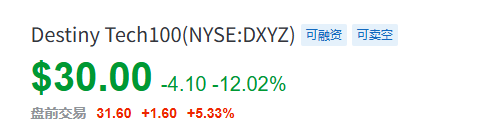
Core Viewpoint - SpaceX is entering a "regulatory quiet period," signaling the commencement of what could be the largest IPO in history, with an internal stock price set at $421 per share, leading to a valuation of $800 billion [1][3][6]. Group 1: Company Overview - SpaceX, founded by Elon Musk in 2002 and headquartered in Texas, aims to reduce space costs and enable human settlement on Mars [3][8]. - The company is currently the busiest rocket launch provider globally, frequently launching satellites with its Falcon 9 rocket and deploying its Starlink satellites into low Earth orbit [3][8]. Group 2: Financial Performance - SpaceX's internal stock pricing indicates a valuation of $800 billion, with aspirations from Musk to reach $1.5 trillion, potentially making him the world's first trillionaire [3][8]. - The company is projected to generate approximately $15.5 billion in revenue this year, with $1.1 billion expected from NASA, and its commercial revenue from space is likely to exceed NASA's entire annual budget next year [4][9]. - SpaceX has reportedly achieved positive free cash flow for several consecutive years [5][10]. Group 3: Market Impact - The successful IPO of SpaceX could significantly influence investment and financing in the global commercial aviation sector, similar to how Tesla impacted the electric vehicle industry [3][8]. - Following the IPO news, the closed-end fund Destiny Tech 100, which holds SpaceX stock, saw a pre-market increase of over 5% [2][7]. Group 4: Starlink System - The Starlink system has deployed over 9,000 satellites to provide high-speed satellite internet services, experiencing rapid business expansion in recent years [4][9].
火箭发射专场
2025-12-15 01:55
Summary of Key Points from the Conference Call Industry Overview - The demand for satellite networking in China is surging, with an expected number of satellites to be launched exceeding 2,000, and the bidding amount approaching 2,000 [2][3] - The rocket launch industry is facing a "more stars than rockets" challenge, with obstacles in technology, capital, and policy [2][4] - The successful launch of the Zhuque series has alleviated market concerns, and new rockets from companies like Xinghe Power, Tianbing Technology, and others are expected to enter the market [2][5] Core Insights and Arguments - The rocket is crucial in the commercial space industry chain, serving as a core constraint for large-scale low-orbit networking [2][6] - In 2024, the U.S. is projected to complete 154 orbital missions, while China is expected to complete only 66 [6][19] - The U.S. Falcon 9 has achieved a one-click launch of 28 satellites and is reusable, while China lacks similar capabilities [6][7] - The need for large liquid commercial launch vehicles in China is urgent, with a requirement for at least 150 new rockets to meet the demand for launching approximately 24,000 low-orbit satellites from 2025 to 2030 [4][20] Challenges and Solutions - The main challenges in the rocket launch sector include high costs, insufficient capacity, and resource wastage associated with current rockets like the Long March series [4][13] - New large-capacity reusable rockets are expected to alleviate the "more stars than rockets" dilemma and promote industry growth [5][6] - The development of reusable first-stage components can significantly reduce mission costs, with potential reductions of up to 50% after 10 uses [9] User Demand Characteristics - User groups are divided into small enterprises needing small solid launch vehicles and large enterprises requiring large thrust, recoverable liquid launch vehicles [8] - Different types of users must select appropriate models based on their needs to achieve optimal economic benefits [8] Investment Opportunities - The commercial space sector is expected to see significant investment opportunities starting in 2025, particularly in rockets [18] - The upcoming launches of reusable rockets like Long March 12 and Tianlong 3 are anticipated to address the rocket capacity bottleneck [18] Technological Advancements - The use of LNG rockets is expanding, capable of executing various missions, including small satellite launches and deep space exploration [10] - 3D printing technology is being increasingly applied in commercial space, enhancing manufacturing efficiency and reducing costs [22][23] Companies to Watch - Companies such as Feilihua, Shaanxi Huada, and Aerospace Electronics are expected to benefit from the favorable market environment [17] - Key players in the future commercial space market include those involved in rocket fuel development, such as Jiufeng Energy, and companies specializing in 3D printing technology [21][22]
马斯克带头,贝佐斯黄仁勋加入,美国科技圈突然“铺天盖地”讨论太空数据中心
Sou Hu Cai Jing· 2025-12-15 01:26
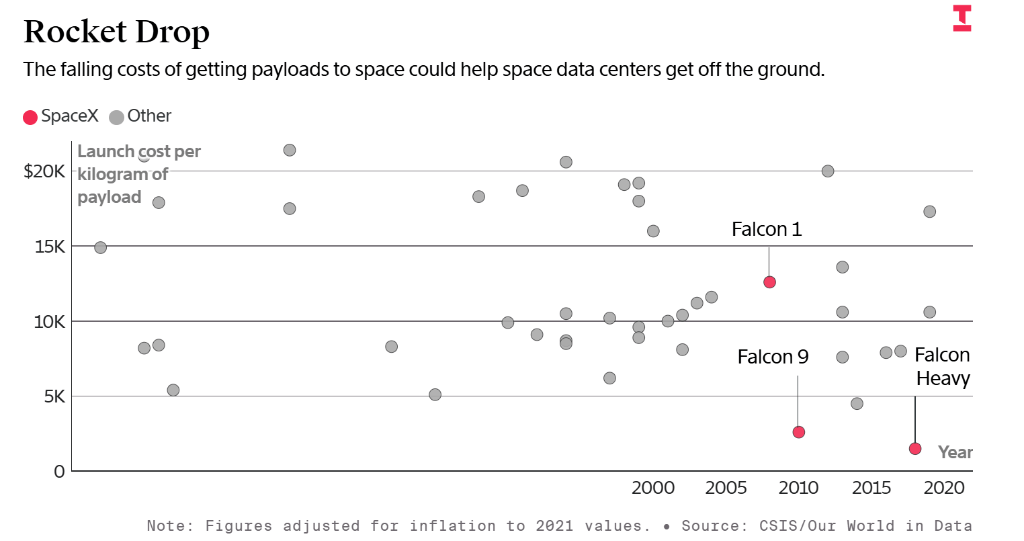
Core Viewpoint - The explosive growth in AI's demand for computing power is driving major US tech companies to explore the concept of "space data centers" as a solution to ground infrastructure bottlenecks [1][4]. Group 1: Industry Dynamics - Key figures like Elon Musk, Jeff Bezos, and Jensen Huang have publicly supported the idea of space data centers, shifting the narrative from theoretical to practical actions [1][4]. - Google plans to launch a prototype satellite by 2027 to test its AI chips in space, while startup Starcloud has successfully trained the first space large language model on a satellite equipped with NVIDIA GPUs [1] [4]. - The trend reflects a response to severe electricity shortages and regulatory hurdles faced by domestic data centers, with industry leaders advocating for the use of abundant solar energy and natural cooling in space [1][6]. Group 2: Economic Viability - The economic rationale for space data centers is strengthened by the availability of free, continuous solar energy and natural cooling, which could significantly reduce operational costs [6]. - The cost of launching payloads into orbit has decreased, with estimates suggesting that SpaceX's Falcon Heavy rocket currently costs about $1,500 per kilogram, potentially dropping to $100 per kilogram with the introduction of the Starship [6]. - Competition from Blue Origin and other rocket startups is further driving down launch prices, making the economic model for deploying GPUs and solar arrays in space more feasible [6]. Group 3: Ground Infrastructure Challenges - The surge in AI demand is expected to create a 20% electricity shortfall for US data centers in the coming years, according to a Morgan Stanley report [7]. - Community opposition, driven by the "NIMBY" (Not In My Backyard) effect, is increasingly hindering data center projects, with $64 billion worth of projects reportedly delayed or blocked [8]. - The time-consuming process of obtaining permits and ensuring power supply for ground data centers can take years, making space solutions an attractive alternative [8]. Group 4: Capital Narrative and Potential Risks - Despite the ambitious vision, concerns remain regarding space radiation damaging AI chips and the challenges of maintenance and hardware upgrades in space [11]. - The concept of space data centers is providing a compelling narrative for companies like SpaceX, which is considering an IPO in the next year, allowing it to tap into the current AI investment theme [11]. - By integrating the space data center concept, SpaceX aims to enhance its growth story, similar to how Tesla has emphasized its technological attributes through the Optimus robot [11].