
电动汽车电池

Search documents
理想汽车与欣旺达成立山东电池公司
Xin Lang Cai Jing· 2025-09-22 09:04
Group 1 - The core point of the article is the establishment of a joint venture between Li Auto and Xinwanda to produce lithium-ion batteries for electric vehicles [1] - The joint venture, named Shandong Li Auto Battery Co., Ltd., is equally owned by both companies, each holding 50% of the shares [1] - The company has completed registration with the Shanghai Market Supervision Administration and will focus on the production, manufacturing, and sales of electric vehicle batteries [1]


船舶、航空航天等领域领先 中国成为ISO参与度最高成员之一
Yang Shi Xin Wen Ke Hu Duan· 2025-09-18 00:17
Group 1 - China currently undertakes approximately 90 ISO technical committees, showcasing a significant level of participation and contribution to ISO's mission [2] - China is involved in 99% of ISO technical committees and subcommittees, indicating its high engagement in international standardization efforts [2] - The country is recognized as one of the highest participating members in ISO [2] Group 2 - China leads in various sectors such as electric vehicle batteries, solar panels, steel manufacturing, shipping, wind power, and aerospace, which is closely linked to its emphasis on standards and standardization [4] - The future development potential of China is considered immense, particularly in leading technological advancements in areas like artificial intelligence and quantum technology [4] - There is an expectation for China to play a significant role in the formulation of standards in artificial intelligence, quantum technology, and cybersecurity, with hopes for closer collaboration with relevant parties [4]

宁德时代在德国首发NP3.0技术平台;TikTok欧洲月活用户突破2亿|36氪出海·要闻回顾
3 6 Ke· 2025-09-14 13:47
Group 1 - CATL launched its NP3.0 technology platform in Germany, introducing the Shunxing Pro lithium iron phosphate battery, enhancing its overseas expansion efforts in Europe [2] - SVOLT achieved the highest growth rate in global battery installation, with a 97.1% year-on-year increase, and a remarkable 723% growth in overseas markets [2] - XPeng Motors opened its first European R&D center in Munich, aiming to deepen local user engagement and accelerate technological innovation [2] Group 2 - TikTok surpassed 200 million monthly active users in Europe, representing a significant increase from 175 million last year [3] - Lazada and Tmall established a project group for seamless integration, allowing Tmall merchants to easily access Southeast Asian markets [3] - QCraft announced its global strategy, including a partnership with Qualcomm and the establishment of its European headquarters in Germany [3] Group 3 - Pony.ai commenced Robotaxi road testing in Doha, Qatar, adapting its technology to local conditions [4] - Kingdee International Software Group launched its Qatar subsidiary, focusing on AI and management solutions [4] - X Square Robot secured nearly 1 billion yuan in financing, marking Alibaba Cloud's first investment in embodied intelligence [4] Group 4 - Aish Technology completed over $60 million in Series B financing, with a global user base exceeding 100 million [6] - Mainline Technology raised several hundred million yuan for its autonomous truck solutions, targeting international markets [6] - VITURE announced $100 million in Series B financing to support global retail expansion [6] Group 5 - Mexico plans to impose tariffs of 10% to 50% on approximately 1,400 products from countries without free trade agreements, including China [8] - The IFA 2025 showcased nearly 700 Chinese companies, highlighting the growing importance of the European market for Chinese consumer electronics [8] Group 6 - Nasdaq proposed changes to small IPO listing rules, including raising the minimum public float market value to $15 million [9] - The Ministry of Commerce aims to finalize the China-ASEAN Free Trade Area 3.0 agreement by the end of the year, focusing on digital economy and green trade [9] - The number of "A+H" listed companies increased to 161, driven by policy support and market demand [10]



海外布局迎重要进展!西典新能泰国子公司正式成立
Ju Chao Zi Xun· 2025-09-12 03:08
Core Insights - The establishment of WEST DEANE NEW POWER (THAILAND) CO.,LTD. marks a significant step in the company's strategic expansion in the Southeast Asian market [2][3] - The company aims to enhance its market competitiveness and business operations through the establishment of a production base in Thailand [2] Group 1: Company Developments - The registered capital of the Thai subsidiary is 5 million Thai Baht, with a shareholding structure of 90% held by WEST DEANE NEW POWER (SG) PTE.LTD. and 10% by WEST DEANE INTERNATIONAL LIMITED [3] - The operational scope of the Thai subsidiary includes manufacturing and assembly of electric vehicle battery products, research and design of power transmission and distribution equipment, and wholesale and retail of battery components [3] Group 2: Market Potential and Strategic Advantages - Thailand is recognized as a transportation hub and manufacturing base in Southeast Asia, providing a favorable investment environment and market potential [3] - The establishment of the production base in Thailand will allow the company to leverage local resources and policy advantages, reducing production costs and enhancing production efficiency [3] - The Thai subsidiary will also serve as a research and development center for electric vehicle batteries and related products, supporting the company's sustainable development through technological innovation [3]


超400亿!中创新航拿下电池大单!
鑫椤锂电· 2025-09-04 07:44
Core Viewpoint - Ashok Leyland, India's third-largest commercial vehicle manufacturer, plans to invest over 50 billion INR (approximately 4.05 billion CNY) in domestic electric vehicle battery production over the next 7-10 years [1] Group 1: Investment and Collaboration - The investment will support Ashok Leyland's electric vehicle division, Switch, and supply batteries to other automakers and for energy storage purposes [1] - Ashok Leyland will collaborate with CALB, a leading global electric vehicle battery manufacturer, to develop battery production [1] Group 2: Market Context - Currently, most Indian electric vehicle manufacturers rely on imported battery cells from China and South Korea, with battery costs typically accounting for 40% of the total vehicle cost [2] - Local production of batteries is expected to help reduce costs for electric vehicle manufacturers in India [2] Group 3: Competitive Landscape - Ashok Leyland joins Tata Motors and Ola Electric in plans to produce electric vehicle battery cells and packs domestically, creating competition with traditional battery manufacturers like Exide and Amara Raja [1]
李在明改革炸了!韩国财阀要栽?打破财阀垄断,股价剑指5000点!
Sou Hu Cai Jing· 2025-08-23 13:50
Group 1 - The core viewpoint is that the election of Lee Jae-myung as South Korea's president has led to a significant rebound in the stock market, with the KOSPI index rising from 2698.97 points to 3147.75 points, a 16.6% increase within two months, compared to lower growth rates in Japan and the US [1] - The "Korean discount" issue, where the market performance is significantly lower than the fundamental value of companies, is a major challenge for the South Korean stock market, with a price-to-book ratio of 0.98 compared to 1.5 in Japan and 2.3 in Taiwan [2] - The dominance of chaebols (large family-owned business conglomerates) in the economy leads to policies favoring founding families, resulting in a governance structure that often neglects the interests of minority shareholders [4] Group 2 - Recent cases, such as the Samsung Group's manipulation of stock prices for control transfer and LG Chem's IPO, highlight the weaknesses in corporate governance in South Korea, where family wealth increases at the expense of shareholder value [6][4] - The Lee Jae-myung government has proposed reforms to enhance corporate governance, including amendments to the Commercial Act that require boards to act in the interests of all shareholders, potentially changing investor sentiment and attracting more capital to the stock market [8] - Successful implementation of these reforms could alleviate pressure on the real estate market by redirecting investment from real estate to the stock market, which has seen significant price increases in recent years [10]
“要是不算上中国,全球进度为0…”
Guan Cha Zhe Wang· 2025-08-15 06:40
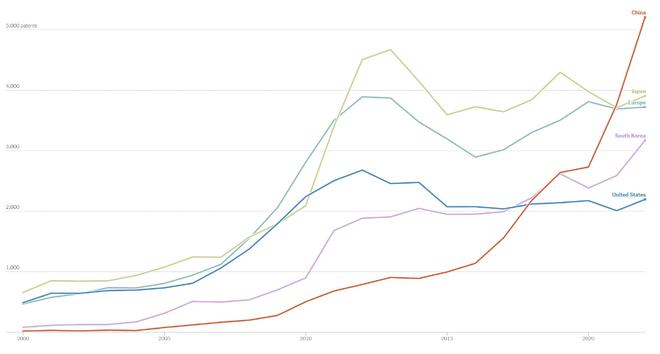
Core Insights - The global clean energy innovation has stagnated in recent years, particularly when excluding China's contributions, as highlighted by Ember's analysis of European Patent Office data [1] - China has seen a dramatic increase in competitive clean energy patent applications, from 18 in 2000 to over 5,000 in 2022, establishing its dominant position in the global clean energy sector [1][4] - High-quality patents, defined as those filed in two or more countries, have doubled in number for China compared to the U.S. in 2022, indicating a shift from being a "follower" to an "innovator" in clean energy technology [2][5] Patent Trends - The increase in high-quality patents is attributed to a mature academic research environment and strategic government initiatives that support industrial development [4][5] - China's "Made in China 2025" initiative aims for 80% domestic market share in key industries by 2025, a goal that has largely been achieved, particularly in clean energy [5] Technological Advancements - Chinese companies have not only followed but have innovated upon existing technologies, particularly in electric vehicle battery development, where they have adopted cost-effective lithium iron phosphate formulations instead of the nickel-cobalt approach favored by Western firms [6] - Companies like BYD and CATL have made significant advancements in battery technology, enhancing safety and performance while reducing costs [6][8] Research and Development - China leads in the number of widely cited research papers in battery technology, with 65.5% of such papers originating from Chinese researchers, compared to 12% from the U.S. [8][10] - The Chinese government is taking measures to prevent technology outflow, including restrictions on the export of key battery materials and technologies [10] Future Directions - The focus is shifting towards emerging technologies such as carbon capture, smart grids, and electrification of heavy industries, which are seen as the future frontiers of the clean energy sector [11]
稀土到了你死我活阶段,美国已经狗急跳墙,不惜动用暗棋了
Sou Hu Cai Jing· 2025-07-21 07:12
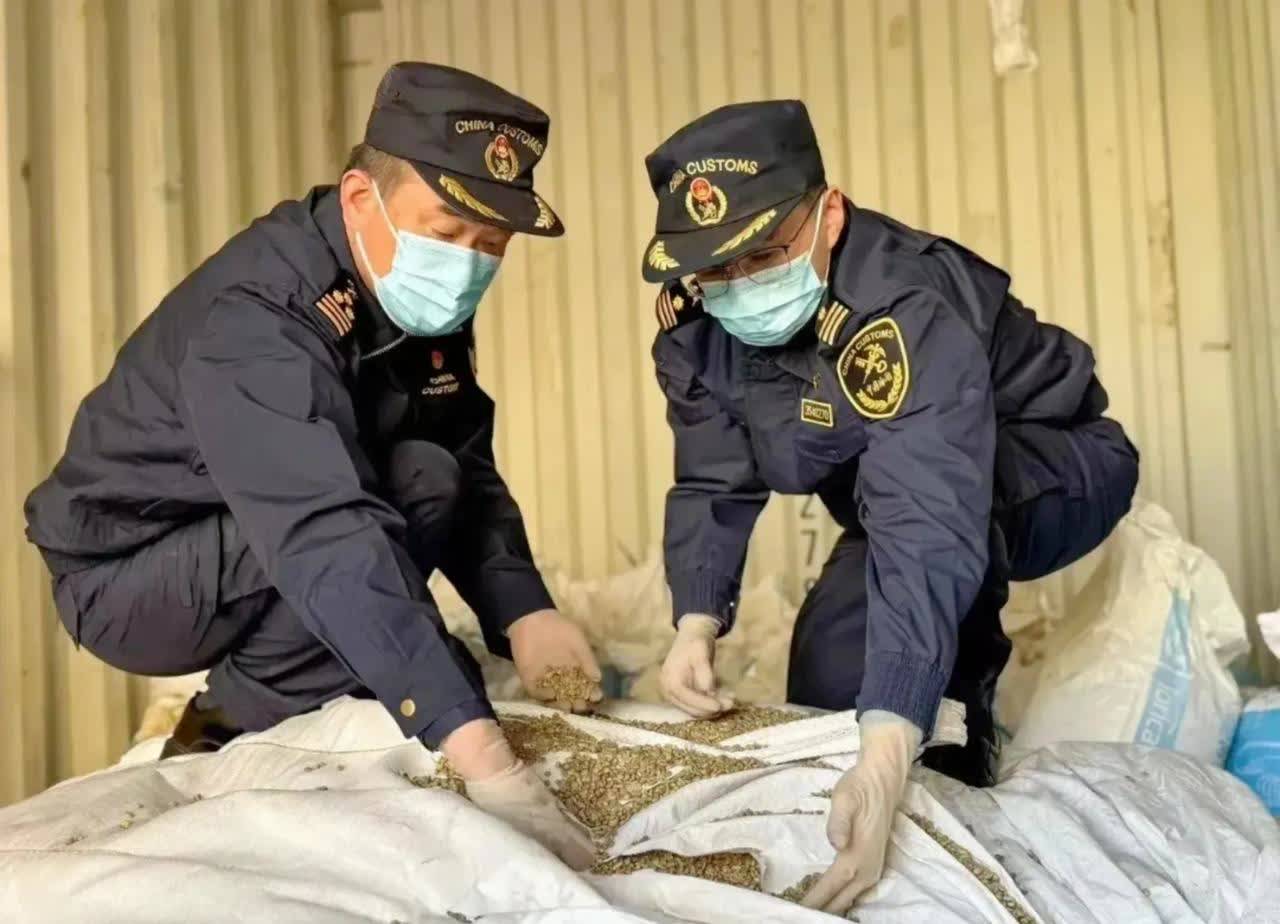
Group 1 - The article highlights concerns over foreign countries attempting to illegally acquire China's rare earth resources through various covert methods, including mislabeling and smuggling [1][3] - It indicates that the lack of domestic extraction and refining capabilities in certain countries has led them to resort to espionage and smuggling activities to secure these strategic resources [1][3] - The article suggests that the situation reflects a broader struggle over strategic supply chains, indicating that this is not merely a trade conflict but a life-and-death struggle [3] Group 2 - The U.S. is actively investing in rare earth mining to reduce dependence on China, as evidenced by the involvement of state officials in mining ceremonies [4] - Despite this, U.S. defense contractors remain skeptical, continuing to engage in smuggling activities, which indicates a lack of trust in the U.S. supply chain efforts [4] - The article emphasizes that the real challenge lies not in the availability of rare earth resources but in the lack of refining technology and the complexity of establishing a complete industrial chain [4] Group 3 - The U.S. is applying pressure on China to relax its rare earth export controls while simultaneously lifting some restrictions, indicating a strategic maneuver to gain access to these resources [6] - Western media has criticized China's "weaponization" of rare earths and raised environmental concerns, but the article argues that China's strict controls are also aimed at supporting environmental protection [6] - The need for China to manage its rare earth exports carefully is underscored, as it seeks to balance global demand with environmental considerations [6] Group 4 - China has implemented new restrictions on the transfer of electric vehicle battery manufacturing technology, requiring government approval for overseas transfers [8] - The article points out the hypocrisy of Western media complaints, given the long history of technology suppression against China [8] - It emphasizes the necessity for China to strengthen its technology export controls in response to systemic pressures from other countries [8]
刚拿了中国59亿投资,邻国突然变脸,要帮特朗普解决稀土难题
Sou Hu Cai Jing· 2025-07-05 02:20
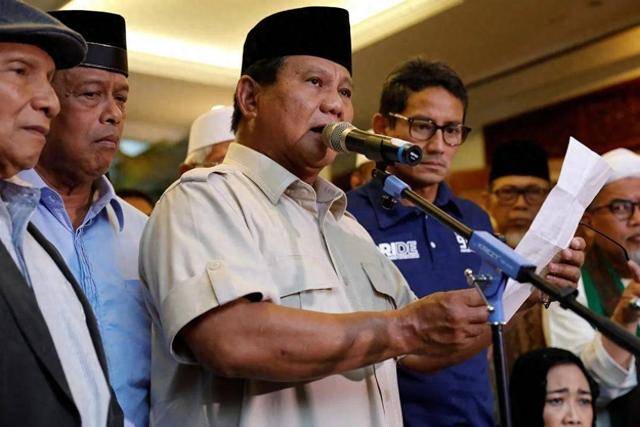
Group 1 - Indonesia is adopting a "balancing act" strategy, seeking investments from China for industrial upgrades while also proposing joint investment in key mineral projects to the U.S. to negotiate tariff relief [1][3][10] - The strategic cooperation between China and Indonesia on the electric vehicle battery ecosystem project marks the initiation of approximately $5.9 billion investment, crucial for Southeast Asia's battery supply chain [3][5] - Indonesia aims to transition from nickel ore exports to battery manufacturing, leveraging its vast nickel resources to enhance industrial value and secure long-term development [3][5][12] Group 2 - Indonesia's significant nickel reserves position it as a key supplier for China's electric vehicle battery production, reducing China's reliance on external markets [5][7] - The collaboration is expected to help Indonesia upgrade its industry while providing Chinese companies with broader market access and technology transfer opportunities [5][10] - The geopolitical significance of Indonesia is highlighted by its strategic location, which could enhance China's influence in the region through infrastructure and industrial cooperation [5][12] Group 3 - The U.S. has imposed high tariffs on Indonesia, with potential rates reaching 32%, creating pressure for Indonesia to negotiate [7][10] - Indonesia's proposal for joint investment in mineral projects is seen as a strategy to leverage its resource advantages in tariff negotiations with the U.S. [7][10][12] - The U.S. administration's focus on immediate trade benefits may not align with Indonesia's long-term industrial goals, complicating the negotiation dynamics [10][12]
市场消息:欧盟将向6个电动汽车电池项目拨款8.52亿欧元。
news flash· 2025-07-04 14:01
Core Viewpoint - The European Union is allocating €852 million to support six electric vehicle battery projects [1] Group 1 - The funding aims to enhance the development and production of electric vehicle batteries within the EU [1] - This initiative is part of the EU's broader strategy to promote sustainable transportation and reduce carbon emissions [1] - The investment is expected to strengthen the EU's position in the global electric vehicle market [1]