运动装备

Search documents
京东七鲜石家庄首店火爆开业;拼多多升级治理架构
Sou Hu Cai Jing· 2025-12-19 18:35
Group 1: JD and Dingdong Maicai Developments - JD's first Seven Fresh store in Shijiazhuang opened on December 19, featuring 24-hour fresh produce and a "1+N" delivery model, boosting local consumption [1] - Dingdong Maicai launched a dynamic evaluation standard for fish products in collaboration with Qingyu Hall and the China Quality Certification Center, leading to a 50% increase in sales in the first month of its "True Safe Fish" initiative [3] Group 2: Logistics and Retail Innovations - JD Logistics introduced a comprehensive logistics service for duty-free products in Hainan, supporting the high-quality development of the Hainan Free Trade Port with seven operational warehouses [5] - Anta officially joined Taobao Flash Sale, enabling rapid delivery of sports equipment from over 1,000 stores across major cities [8] Group 3: Corporate Governance and Strategic Focus - Pinduoduo announced a new governance structure with Zhao Jiazhen appointed as co-chairman, focusing on the Chinese supply chain as a core business strategy [7] - 1688 signed a partnership agreement with the China Council for the Promotion of International Trade to enhance cross-border supply chain capabilities for small and medium-sized enterprises [10] Group 4: Market Trends and Performance - Domestic TV brands are increasingly utilizing AliExpress for international sales, with a 300% year-on-year increase in sales on the platform [12] - Nike reported a revenue of $12.4 billion for Q2 of fiscal year 2026, with a 20% growth in its running segment and a 3% decrease in inventory [15] Group 5: Expansion and Sustainability Initiatives - McDonald's China surpassed 7,500 stores and will begin using bio-based packaging, aiming to reduce petroleum-based plastic usage by approximately 5,800 tons annually [17] - AEON confirmed the opening of three new supermarkets in Wuhan in Q1 2026, continuing its strategy of enhancing customer experience amid declining foot traffic [18] Group 6: International Expansion of Food Brands - Yuanji Cloud Dumplings opened its first store in Thailand, marking its commitment to local market integration [18] - Baoshifu announced the upcoming opening of its first North American store in New York City, following its successful entry into Singapore earlier this year [19] Group 7: Corporate Changes and Legal Developments - Budweiser Asia appointed a new CFO, Bernardo Novick, effective April 1, 2026, following Ignacio Lares' 18-year tenure [20] - Chongqing Beer is in discussions to settle a long-standing legal dispute with Jiawei Beer, potentially resolving an 18-year conflict involving a claim of 353 million yuan [20]






年终特别报道|这一年,经济运行总体平稳、稳中有进
Ren Min Ri Bao· 2025-12-10 03:57
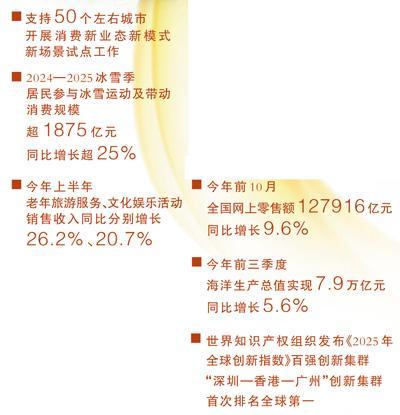
Group 1: Economic Development Trends - The year 2025 is significant for China's modernization process, with a focus on high-quality development and achieving major economic and social goals [2] - The Central Economic Work Conference highlighted the importance of developing new economic sectors such as the "first release economy," "ice and snow economy," "silver economy," and promoting healthy platform economy and county economy [3][4] Group 2: First Release Economy - The first release economy is gaining traction, with cities like Beijing, Shanghai, and Chengdu enhancing policy support to attract new brands and stores, becoming a key driver for domestic demand [3][6] - Chengdu has seen the establishment of 631 first stores in the first three quarters of the year, indicating a growing trend of "first release" becoming a lifestyle [8] Group 3: Ice and Snow Economy - The ice and snow economy is evolving from a seasonal focus to a year-round industry, with the market expected to exceed 1 trillion yuan by 2025 [3][9] - Harbin's Ice and Snow World is integrating technology and culture, offering diverse shopping and dining experiences to enhance consumer engagement [11] Group 4: Silver Economy - The silver economy is expanding with new service models for the elderly, including specialized travel services that cater to their needs, reflecting a shift in consumption patterns towards quality and personalization [12][13] - The elderly demographic is becoming a significant force in the tourism market, with over 80% of travelers on specialized trains being aged 60 and above [13] Group 5: Platform Economy - The platform economy is transitioning from a "what to sell" model to a "what is needed" approach, enhancing consumer experience through direct subsidies and one-stop services [14][15] - E-commerce platforms are driving growth in both domestic demand and foreign trade, with significant increases in sales and participation in global promotional events [16] Group 6: County Economy - The county economy is experiencing robust growth, with initiatives like "Hundred Villages, Thousand Stays" promoting eco-tourism and local industries, leading to increased income for local residents [17][18] - The integration of tourism and local agriculture is driving economic development, with significant increases in visitor numbers and revenue [18] Group 7: Marine Economy - The marine economy is focusing on green and low-carbon initiatives, with advancements in shipbuilding technology and sustainable practices [19][21] - The marine engineering sector is seeing growth, with a reported output value of 32.85 billion yuan in the first ten months of the year, reflecting a 16.9% increase [21] Group 8: Bay Area Economy - The Guangdong-Hong Kong-Macao Greater Bay Area is fostering innovation and collaboration, with companies leveraging regional strengths for technological advancements [22][24] - The synergy between Hong Kong's research capabilities and the manufacturing strengths of the Pearl River Delta is facilitating the commercialization of scientific innovations [24]
这一年,经济运行总体平稳、稳中有进
Ren Min Ri Bao· 2025-12-09 23:59
Economic Development - The year 2025 is significant for China's modernization process, with a focus on high-quality development and achieving major economic and social goals [1] - The Central Economic Work Conference has outlined systematic deployments for economic work in 2025, emphasizing the development of various economies such as the "first launch economy," "ice and snow economy," "silver economy," and others [1][2] First Launch Economy - The first launch economy is gaining traction, with cities like Beijing, Shanghai, and Chengdu enhancing policy support to attract new brands and stores, becoming a key driver for domestic demand [2] - Chengdu has seen the establishment of 631 first stores in the first three quarters of the year, indicating a growing trend towards first launches as a lifestyle choice [4][5] Ice and Snow Economy - The ice and snow economy is evolving from a seasonal focus to a year-round industry, with the scale expected to exceed 1 trillion yuan by 2025 [2] - Harbin's Ice and Snow World is under construction, featuring innovative attractions and a focus on diverse shopping and experiential dining to enhance consumer engagement [5][6] Silver Economy - The silver economy is expanding with new service models for the elderly, including specialized travel services that cater to their needs, reflecting a shift in consumption patterns towards quality and personalization [6][7] - In Yunnan, the elderly tourism market has seen significant growth, with over 80% of travelers being aged 60 and above [7] Platform Economy - The platform economy is transitioning from a "what to produce" model to a "what is needed" approach, enhancing consumer satisfaction through direct connections between platforms and manufacturers [8][9] - E-commerce platforms have facilitated significant growth in agricultural product sales, with rural online retail increasing by 7.5% year-on-year [9][10] County Economy - The county economy is thriving with initiatives like "Hundred Villages Thousand Lodgings," which promote eco-tourism and local agricultural products, leading to increased income for local residents [10][11] - In Luanchuan County, the integration of tourism and agriculture has resulted in a substantial rise in visitor numbers and revenue, with a focus on sustainable development [11] Marine Economy - The marine economy is advancing with innovations in shipbuilding and marine engineering, focusing on green technologies and zero-carbon emissions [12][13] - The Qingdao West Coast New Area has established a marine industry base that has seen a 16.9% increase in output value year-on-year [13] Bay Area Economy - The Guangdong-Hong Kong-Macao Greater Bay Area is fostering innovation and collaboration, with companies leveraging local resources for technological advancements [14] - The synergy between Hong Kong's research capabilities and the Pearl River Delta's industrial strengths is facilitating the commercialization of scientific achievements [14]
这一年 经济运行总体平稳、稳中有进(年终特别报道)
Ren Min Ri Bao· 2025-12-09 22:32
Economic Development - The year 2025 is significant for China's modernization process, with a focus on high-quality development and achieving major economic and social goals [1] - The Central Economic Work Conference has outlined systematic plans for 2025, emphasizing the development of various economies such as the "first release economy," "ice and snow economy," "silver-haired economy," "platform economy," "county economy," and "marine economy" [1][2] First Release Economy - The first release economy is gaining traction, with cities like Beijing, Shanghai, and Chengdu enhancing policy support to attract new brands and stores, thus tapping into domestic demand [1][3] - Chengdu has seen a significant increase in first stores, with 631 new stores established in the first three quarters of the year, making the concept of "catching the first release" a new lifestyle trend [5] Ice and Snow Economy - The ice and snow economy is evolving from a seasonal focus to year-round activities, with the industry expected to exceed 1 trillion yuan by 2025 [1][6] - Harbin is enhancing its ice and snow attractions with innovative features, including AI interactions and diverse shopping experiences, to boost consumer engagement during the ice and snow season [6][7] Silver-Haired Economy - The silver-haired economy is expanding, with tailored services for the elderly, such as specialized travel experiences and community engagement activities, reflecting a shift in consumption patterns towards quality and personalization [1][8] - In Yunnan, over 80% of tourists on specialized silver-haired travel trains are aged 60 and above, indicating the growing importance of this demographic in the tourism market [8][9] Platform Economy - The platform economy is transitioning from a "what to sell" model to a "what is needed" approach, enhancing consumer satisfaction through direct connections between platforms and manufacturers [1][10] - E-commerce platforms have significantly boosted domestic demand and facilitated foreign trade, with notable growth in agricultural product sales and a 5.5% increase in industry e-commerce transaction volumes [10][11] County Economy - The county economy is experiencing rapid growth, with initiatives like "Hundred Villages, Thousand Stays" promoting eco-tourism and local agricultural products, leading to increased income for rural communities [1][12] - In Luanchuan County, the integration of tourism and local agriculture has resulted in high occupancy rates for rural accommodations and significant revenue growth for local farmers [12][13] Marine Economy - The marine economy is advancing with a focus on green technologies, such as ammonia fuel for ships, aiming for zero carbon emissions in the shipping industry [1][14] - The marine engineering sector in Qingdao is witnessing robust growth, with a reported 16.9% increase in output value for the shipbuilding industry in the first ten months of the year [14][15] Bay Area Economy - The Guangdong-Hong Kong-Macau Greater Bay Area is fostering innovation and collaboration, with companies leveraging local resources for technological advancements and market expansion [1][16] - The synergy between Hong Kong's research capabilities and the manufacturing strengths of the Pearl River Delta is enhancing the commercialization of scientific innovations [16][17]
这一年,经济运行总体平稳、稳中有进(年终特别报道)
Ren Min Ri Bao· 2025-12-09 22:32
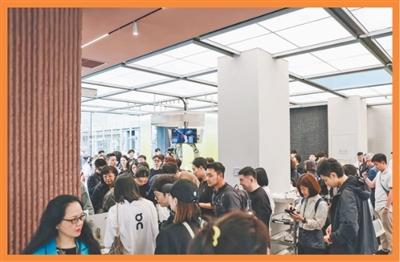
Group 1: Economic Development Trends - The year 2025 is significant for China's modernization process, with a focus on high-quality development and achieving major economic and social goals [10] - Key economic sectors highlighted include the "first launch economy," "ice and snow economy," "silver economy," platform economy, county economy, marine economy, and bay area economy, all of which are experiencing growth [11][12] Group 2: First Launch Economy - The first launch economy is gaining traction, with cities like Beijing, Shanghai, and Chengdu enhancing policy support to attract flagship stores and brands, becoming a vital driver for domestic demand [11] - Chengdu's first flagship store of the Swiss sports brand On opened in April, attracting significant customer traffic and showcasing a unique shopping experience [15][16] Group 3: Ice and Snow Economy - The construction of the Harbin Ice and Snow World is underway, with nearly 10,000 workers involved, and the park is set to cover 1.2 million square meters [17] - The ice and snow economy is evolving from a seasonal to a year-round industry, with projections indicating the industry scale will exceed 1 trillion yuan by 2025 [11][18] Group 4: Silver Economy - The silver economy is expanding, with tailored services for the elderly, such as the "Starry·Lanmei" themed tourist train, which caters to the needs of senior travelers [19] - The elderly demographic is becoming a significant force in the tourism market, with over 80% of travelers on certain routes being aged 60 and above [19][20] Group 5: Platform Economy - The platform economy is shifting from a "what to produce" model to a "what is needed" approach, enhancing consumer experience through direct subsidies and one-stop services [21][22] - E-commerce platforms are driving domestic demand growth and facilitating foreign trade transformation, with significant sales increases during promotional events [23] Group 6: County Economy - The county economy is thriving, with initiatives like "Hundred Villages, Thousand Lodgings" promoting rural tourism and local industries, leading to increased income for residents [24][25] - The county's tourism revenue reached 11.265 billion yuan, with over 15.45 million visitors recorded in the first ten months of the year [25] Group 7: Marine Economy - The marine economy is advancing with the delivery of the "Guoxin 1号2—2," a large smart fishing vessel, which will conduct year-round farming trials [26][27] - The focus on green and low-carbon initiatives is reshaping the shipping industry, with a significant portion of new vessels being designed for zero-carbon emissions [27] Group 8: Bay Area Economy - The Guangdong-Hong Kong-Macao Greater Bay Area is fostering innovation and collaboration, with companies leveraging regional strengths for technological advancements [29][30] - The integration of research and industry within the bay area is enhancing the commercialization of scientific achievements, creating a robust ecosystem for startups [30]
哈尔滨冰雪经济入冬升温:文旅热度催化多元业态
Zhong Guo Xin Wen Wang· 2025-12-03 10:21
Core Viewpoint - The winter tourism economy in Harbin is experiencing a significant boost, driven by the increasing popularity of ice and snow activities, leading to diverse business opportunities in the region [1]. Group 1: Ice and Snow Tourism - The indoor Dream Ice and Snow Pavilion is currently welcoming visitors, ensuring a seamless transition to the outdoor attractions that will open later in December [3]. - Since November, there has been a rapid increase in flight bookings to Harbin, indicating a growing interest in winter tourism [3]. - Hotel prices in Harbin are expected to remain relatively high from mid-December 2025 until the Spring Festival in 2026 [3]. Group 2: Creative Design and Cultural Products - Harbin's Creative Design Center is developing various ice and snow-themed cultural products, including smart temperature-controlled down jackets, which have garnered significant attention [5]. - The center's design service output is projected to reach nearly 100 million yuan by 2025, with several product lines achieving annual sales exceeding 30 million yuan [5]. - Collaborations with southern enterprises are being leveraged to enhance market reach and service offerings across various sectors [5]. Group 3: Sports Equipment Development - Qianmao Xuelong Sports Goods Co., Ltd. is manufacturing a full range of ice and snow sports equipment, covering 80% of China's ski resorts [6]. - The company’s snowboards utilize advanced aerospace composite materials, making them lightweight and durable, with prices significantly lower than imported alternatives [6]. - These products have been tested by the Chinese national ski team and are expected to be featured in the 2026 Milan Winter Olympics, with plans to expand into international markets [6].

你的钱,真的买到你想要的生活了吗?
虎嗅APP· 2025-11-24 09:58
Core Insights - The article discusses the evolving consumer behavior in 2025, emphasizing a shift from mere survival spending to investing in emotional resonance, lifestyle choices, and spiritual recognition [5][28] - A curated list of 32 products, titled "2025 Upward and New Product List," aims to guide consumers on how to enhance their lives through thoughtful spending [5][28] Group 1: Food Consumption - The focus has shifted from merely satisfying hunger to seeking quality and experience in food, with over 90% of consumers prioritizing food as a primary expenditure [6] - Consumers are now viewing meals as opportunities for self-expression and exploration, leading to a demand for products that offer both taste and experiential value [6] Group 2: Emotional Well-being - A significant 57.1% of consumers are willing to pay for emotional value, with products like blind boxes and aromatherapy becoming popular as emotional carriers [9] - The evaluation of products in this category emphasizes the authenticity and effectiveness of emotional benefits, avoiding those that create anxiety without real value [9] Group 3: Technology and AI - Consumers are increasingly seeking companionship and understanding from technology, with AI becoming an integral part of daily life, akin to utilities like water and electricity [20] - The article highlights the importance of products that serve as empathetic partners rather than mere tools, focusing on the emotional connection they provide [20] Group 4: Light Exercise - A new trend in fitness emphasizes enjoyment and comfort over intensity, with "light exercise" becoming a philosophy that integrates physical activity into daily life [24] - Products in this category are evaluated based on their ability to seamlessly blend into everyday routines while enhancing comfort and ease [24]
新消费派|携手12所高校成立体育公社 阿迪达斯连续出招拥抱中国“Z世代”
Xin Hua Cai Jing· 2025-11-22 09:49
Core Insights - Adidas has established a university sports community in collaboration with 12 prestigious Chinese universities to empower the younger generation through sports [1][3] - The Chinese market is recognized as a crucial growth engine for Adidas, with expectations for the sports consumption market to reach 2.8 trillion yuan by 2025 [2] - The company aims to deepen its connection with the "Z generation" by focusing on personalized and emotional engagement in its marketing strategies [2][5] Market Characteristics - The Chinese sports consumption market is projected to grow significantly, with the sports equipment market expected to reach 602.1 billion yuan [2] - The shift in consumer demand from functional satisfaction to personalization and emotional resonance presents opportunities for innovation in sports brands [2] - China's advanced supply chain and digital economy facilitate rapid product development and precise market reach [2] Strategic Initiatives - The establishment of the Adidas University Sports Community aims to support campus sports and resonate with young consumers [3] - Adidas has provided professional equipment support to various sports teams at Tsinghua University and other institutions to enhance their competitive levels [3][4] - The company is focusing on product innovation that aligns with the preferences of the younger demographic, such as specialized training apparel and pet-related products [4] Future Plans - Adidas plans to expand into emerging sports areas like street dance and hiking, creating social engagement opportunities for young consumers [5] - The company has achieved ten consecutive quarters of growth in the Greater China region, driven by localized operations and strategic resource allocation [5] - Future initiatives include leveraging the FIFA World Cup in 2026 to enhance its football offerings and expanding its presence in key regions like the Greater Bay Area [5]

从回归到进攻:耐克凭什么开启复苏新程?
36氪· 2025-11-10 13:30
Core Insights - The article explores Nike's innovative strategies and product developments that contribute to its brand revival and market positioning in China [1]. Group 1: Brand Heritage and Innovation - Phil Knight's journey and the founding of Nike are rooted in a quest for victory, symbolized by the brand's connection to the Greek goddess of victory [2][3]. - At the Shanghai Import Expo, Nike showcased a striking art installation of the "Goddess of Victory," reflecting modern athletic power and its connection to Chinese sports history [5][10]. - The introduction of the Nike Mind series shoes represents a significant innovation, focusing on enhancing the connection between the brain and body through advanced design and technology [15][19]. Group 2: Research and Development - The Nike Mind series is the result of over a decade of research, emphasizing the importance of sensory feedback in athletic performance [12][22]. - Nike's approach to innovation has shifted from merely enhancing physical performance to also addressing cognitive aspects, marking a new frontier in sports equipment [20][22]. - The company has established a dedicated mental science department to explore the intersection of neuroscience and athletic performance, indicating a commitment to pioneering research [21]. Group 3: Product Innovations - Nike's Air technology has evolved beyond footwear to apparel, exemplified by the Air Milano jacket, showcasing the brand's commitment to cross-category innovation [25]. - The "Breaking Four" gear set, designed for elite athletes, highlights Nike's focus on precision and performance optimization in its products [26]. - The integration of lightweight technology into outdoor apparel and the re-engineering of basketball shoes for enhanced performance demonstrate Nike's athlete-centric innovation strategy [28][29]. Group 4: Market Strategy in China - Nike's 45-year journey in China has transformed the market from a simple sales territory to a core engine for global innovation [37][38]. - The establishment of the Nike Sports Research Lab in Shanghai signifies a shift towards localized research and development, tailored to Chinese consumers' needs [39][40]. - The launch of the ICON. Shanghai creative center represents a strategic move to foster local creativity and innovation, further embedding Nike in the Chinese market [41]. Group 5: Future Outlook - Despite challenges, Nike's leadership expresses strong confidence in the recovery of the Chinese market, emphasizing a focus on sports to drive growth [42]. - The ongoing integration of innovation and local insights is expected to yield new products and experiences for consumers, reinforcing Nike's commitment to long-term growth in China [42].


直击进博会|未来生活,将这样改变
盐财经· 2025-11-10 10:02
Group 1: Samsung - Samsung showcased its AI Home solutions at the Expo, integrating Bespoke AI, Vision AI, and Galaxy AI to create a comprehensive smart ecosystem covering daily living, entertainment, mobile office, health management, and home security [3][5] - The company plans to apply Galaxy AI to 400 million devices by 2025, emphasizing its commitment to sustainable development through the use of recycled materials and energy optimization [5] Group 2: Dell Technologies - Dell Technologies presented a full-stack IT solution at the Expo, featuring new PowerEdge servers and PowerStore all-flash storage, aimed at enhancing data value for enterprises [8] - The company promotes sustainable practices by implementing innovative cooling solutions and using recyclable materials in its products [8] Group 3: GE Vernova - GE Vernova highlighted its low-carbon energy solutions at the Expo, showcasing products like the LM6000 VELOX gas turbine capable of 100% hydrogen power generation [11] - The company has a gas-fired power generation capacity of approximately 55 million kilowatts in China and aims to support the country's dual carbon goals [11] Group 4: ASICS - ASICS presented its product matrix and cutting-edge technology at the Expo, focusing on integrating sports into daily life with innovative footwear and apparel [14] - The company aims to promote national fitness and health through its products and initiatives [14] Group 5: Olympus - Olympus showcased its medical technology solutions at the Expo, including advanced endoscopic equipment designed to enhance early cancer detection [17] - The company emphasizes patient-centric solutions and aims to drive innovation in the healthcare sector in China [17] Group 6: IKEA - IKEA focused on sustainable practices at the Expo, highlighting its green operations and circular economy initiatives, including a digital service for furniture recycling [20] - The company has engaged in local collaborations to promote environmental protection and sustainable consumption [20] Group 7: GlaxoSmithKline (GSK) - GSK presented its health management approach at the Expo, emphasizing a lifecycle health management model that combines prevention and treatment [22][23] - The company plans to introduce approximately 18 new products and indications in China over the next three years [23] Group 8: Amgen - Amgen showcased innovative therapies for cardiovascular health, bone health, and rare diseases at the Expo, addressing the needs of China's aging population [25] - The company collaborates with local partners to enhance healthcare delivery and innovation in China [25] Group 9: a2 Milk - a2 Milk Company highlighted its strategic partnership with a Chinese company to expand its premium dairy product offerings in China [27] - The company focuses on providing nutritional solutions for families, emphasizing the benefits of A2 protein in its products [27] Group 10: Pigeon - Pigeon presented a range of new products aimed at enhancing parenting experiences at the Expo, showcasing innovations in baby care [30] - The company has established a strong presence in China, focusing on high-quality development in the maternal and infant care sector [30]