
医疗健康

Search documents
在关键时期争取更大主动
Zhong Guo Qing Nian Bao· 2025-10-24 23:19
Group 1: Economic Development Strategy - The core outcome of the 20th Central Committee's Fourth Plenary Session is the approval of the "Suggestions on Formulating the 15th Five-Year Plan for National Economic and Social Development" [1] - The "15th Five-Year" period is crucial for achieving socialist modernization, with a focus on solidifying foundations and breaking through bottlenecks [1][2] - The emphasis is on relying on the real economy for future growth, with a significant contribution from the "three new" economies, which accounted for over 18% of GDP in 2024 [2] Group 2: Industrial and Agricultural Modernization - The plan outlines 12 strategic tasks, with the first being the construction of a modern industrial system to strengthen the real economy [2][3] - Traditional industries, which account for about 80% of manufacturing value, will undergo quality upgrades, with an estimated market space increase of around 10 trillion yuan over the next five years [3] - Agricultural modernization is prioritized, with specific measures to enhance agricultural productivity and ensure rural revitalization [4][5] Group 3: Technological Innovation - Technological innovation is highlighted as a key driver for economic and social development, with R&D investment expected to exceed 3.6 trillion yuan in 2024, a 48% increase from 2020 [7][8] - The focus will be on integrating technology with industry to enhance productivity and foster new economic growth points, particularly in artificial intelligence and high-tech sectors [8] Group 4: Open Economy and Global Integration - The strategy aims to shift from a "follower" to a "leader" in global trade, with initiatives to expand autonomous openness and enhance trade innovation [10][11] - China aims to leverage its large market potential, with over 800 million people expected to join the middle-income group in the next decade, to boost consumption and attract foreign investment [11]
毅昌科技(002420) - 2025年10月24日投资者关系活动记录表
2025-10-24 10:00
Group 1: Company Overview and Strategy - The company focuses on R&D investments primarily in the automotive and new energy sectors, emphasizing breakthroughs in key core technologies [2] - In the automotive parts sector, the company aims to develop core products with dual technical and process barriers, including IML grilles, light fixtures, and rearview mirrors [2] - The company is currently developing lightweight products for automotive tailgates and front hoods, as well as liquid cooling plates for batteries in the new energy sector [2] Group 2: R&D Achievements and Production Capacity - The company has achieved mass production of several R&D outcomes, which are expected to ensure future profitability [3] - The company has the most comprehensive range of liquid cooling plates, including flat, direct, side, and bent tube types [2] Group 3: Investor Relations and Market Position - The company is committed to enhancing its market value through improved operational performance and long-term value return to investors [3] - The company has established a partnership with Guanggu Dongzhi and provides molds and related products for Xiaopeng Huitian [3] - The company supplies front and rear bumpers and side skirts for Zhijie Automotive, with sufficient production capacity to meet customer demands [3]

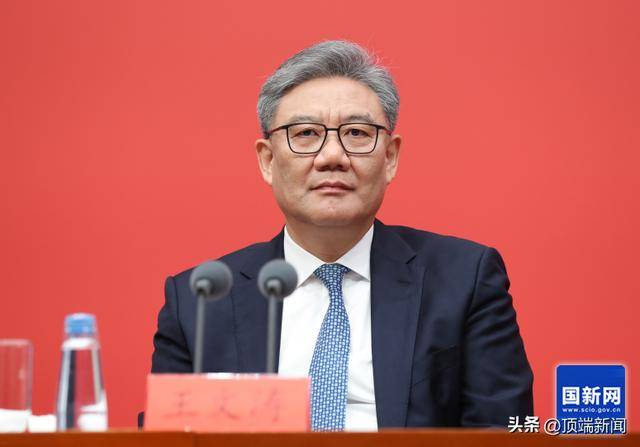
商务部部长王文涛:外企不是外来客,而是一家人|直击发布会
Sou Hu Cai Jing· 2025-10-24 05:50
Core Points - The Chinese government emphasizes that foreign enterprises are integral to the market, viewing them as part of the family rather than outsiders, highlighting the opportunities presented by China's vast market [5][3] - The actual use of foreign investment in China during the 14th Five-Year Plan period reached over $720 billion, with more than 240,000 new foreign enterprises established, maintaining China's status as a major investment destination [3][4] - High-tech industries accounted for over one-third of foreign investment, with significant projects in automotive, healthcare, and electronic information sectors [3][4] Investment Environment - China aims to boost consumption and create a "Buy in China" brand to stimulate both goods and services consumption [4] - The country plans to accelerate the development of new productive forces, particularly in artificial intelligence, biotechnology, and new energy, positioning itself as a global hub for innovation [4] - A high-standard market system will be established, focusing on market-oriented, legal, and international directions to create a world-class business environment [4] Future Plans - The government intends to lower market access barriers and prioritize the service sector for future openings, including expanding pilot programs for value-added telecommunications, biotechnology, and wholly foreign-owned hospitals [5][6] - Continuous optimization of services for foreign enterprises will be pursued, transforming companies' needs into service offerings to enhance the "Invest in China" brand [6] - China opposes decoupling and is committed to maintaining the stability of global supply chains, advocating for mutual respect and equal negotiation in Sino-U.S. economic relations [6]

市场点评报告:四中全会公报强化A股主线
Bank of China Securities· 2025-10-24 02:04
Group 1 - The report emphasizes that the 20th Central Committee's Fourth Plenary Session has set a directional tone for the "14th Five-Year Plan," focusing on structural optimization and high-quality development, indicating that the A-share market is expected to transition from policy support to a new starting point for structural upgrades [1][2] - The meeting's communiqué reiterates the principle of "seeking progress while maintaining stability," aiming for qualitative improvements and reasonable quantitative growth in the economy, with a focus on innovation-driven development and the construction of a domestic circulation system [2][4] - Key sectors identified for future policy resource allocation include advanced manufacturing, artificial intelligence, new energy, new materials, military industry, aerospace, and digital infrastructure, which are expected to benefit from the "14th Five-Year Plan" [2][4] Group 2 - The report highlights the importance of building a strong domestic market and suggests that consumption and service industry upgrades will become another significant policy focus, driven by improving livelihoods, promoting employment, and expanding the middle-income group [2][4] - The emphasis on green transformation and energy revolution indicates that sectors related to green electricity, energy storage, energy conservation, and carbon management may regain policy attention [2][4] - The report suggests that the core significance of the Fourth Plenary Session for the A-share market lies in clarifying medium- to long-term directions and reinforcing structural certainty, with macro policies expected to support an upward shift in the A-share market's operating center [2][4] Group 3 - The report anticipates that the subsequent rollout of the "14th Five-Year Plan" will reshape the investment themes and valuation systems in the capital market, with new productive forces represented by technological self-reliance, green transformation, and domestic demand upgrades becoming the main policy threads for the next five years [2][4] - It is suggested that long-term funds, particularly public funds, insurance capital, and state-owned funds, will increasingly concentrate on industries with strategic support value [2][4] - The report recommends maintaining a medium to high position in the portfolio, focusing on advanced manufacturing, technology hardware, green energy chains, and digital economy sectors in the short term, while also allocating to high-dividend, low-valuation sectors like finance, electricity, and public utilities to balance volatility and returns [2][4]
欧委会批准希腊第六笔复苏基金申请
Shang Wu Bu Wang Zhan· 2025-10-23 13:30
Core Insights - The European Commission has approved Greece's sixth funding request under the Recovery and Resilience Facility (RRF), amounting to €2.44 billion [1] - Greece has successfully met 32 milestones and 7 targets as outlined in the Council's decision, receiving a positive assessment from the Commission [1] Funding Allocation - Key measures funded include the establishment of a legal framework for renewable hydrogen and sustainable biogas, and the creation of a national digital health record database [1] - Plans also include increasing the number of general practitioners and equipping 36,000 classrooms with interactive learning systems [1] Additional Initiatives - The funding will support the establishment of a new taxpayer information platform and the creation of a judicial police force [1] - Installation of 12,200 solar panels for homes and farms, and connecting business online cash register systems to the Independent Public Revenue Authority to streamline processes are also part of the plan [1]
易周资讯2025(10.13—10.19)| 关注行业动态,掌握前沿资讯
Sou Hu Cai Jing· 2025-10-21 07:32
Key Points - The "14th Five-Year Plan" period has seen significant achievements in China's social security system, with 1.39 billion social security cardholders and over 1.1 billion electronic social security cards issued [2][4] - The Ministry of Human Resources and Social Security (MoHRSS) is focusing on four key areas to strengthen the skilled workforce, including large-scale vocational training and the promotion of a new skill certification system [2][4] - The 2025 autumn recruitment season has commenced, targeting 2026 graduates and unemployed graduates from previous years, with a focus on emerging industries [3][4] - By the end of 2025, all coordinated areas will implement instant settlement of medical insurance funds, with a target of 80% of local medical insurance funds being settled instantly by the end of 2026 [5][10] - The National Healthcare Security Administration has initiated adjustments to the disease-based payment system, which is crucial for enhancing the efficiency of medical insurance fund payments [5][11] - The new national standard for infectious disease disinfection will be implemented starting November 1, 2026, with significant updates in scope and quality control [6] - The user base for generative artificial intelligence in China reached 515 million by June 2025, reflecting a substantial increase in adoption [7][8] - Seven national digital economy innovation development pilot zones will introduce 158 reform measures aimed at enhancing the market-oriented allocation of data elements and fostering international competitiveness in digital industries [9][13] - The Ministry of Industry and Information Technology has launched a special action for "millisecond computing" to develop a high-speed, low-latency urban network by 2027 [10][13]

中金 | 三季报预览:哪些公司业绩有望超预期
中金点睛· 2025-10-19 23:59
Core Viewpoint - The article discusses the upcoming peak period for the disclosure of Q3 earnings reports for A-share listed companies, highlighting a potential marginal slowdown in domestic growth momentum and the focus on fundamentals amid market fluctuations [2][3]. Group 1: Earnings Performance - Q3 earnings growth for A-shares is expected to improve compared to Q2, with a projected year-on-year growth rate of 5.8% for overall A-shares and 8.2% for non-financial sectors [3][6]. - Retail sales growth has shown a marginal slowdown, with a year-on-year increase of 4.6% from January to August, down from 5.0% in the first half of the year [3][4]. - The CPI has seen a year-on-year decline of 0.23%, while the PPI has improved slightly with a year-on-year decrease of 2.9% [3][4]. Group 2: Sector Highlights - Non-bank financial sectors are expected to benefit from high market activity, while gold and technology hardware sectors are anticipated to be structural highlights [4][5]. - The energy and materials sector, particularly the non-ferrous metals segment, is expected to perform well due to rising demand and prices, with gold prices reaching new highs [5][6]. - The consumer sector is facing challenges, with mandatory consumption showing weak demand, while new consumption areas like beauty and trendy products are performing relatively well [5][6]. Group 3: Investment Themes - The article suggests focusing on sectors with structural highlights during the earnings disclosure phase, such as the gold sector and TMT sectors benefiting from AI trends [6][8]. - It emphasizes the importance of identifying high-growth opportunities that are less correlated with economic cycles and external risks, particularly in the AI industry and sectors with strong overseas market presence [6][8]. - The report highlights the potential for recovery in industries that have undergone supply-side adjustments, including industrial metals, lithium batteries, and commercial vehicles [6][8].

嘉定工业区企业“好感度”不断攀升 相识相知“老朋友”带来新项目
Jie Fang Ri Bao· 2025-10-17 01:25
Group 1 - JD Health's JD Express Pharmacy has opened over 30 stores in Shanghai, generating sales revenue exceeding 15 million yuan within three months [1] - The company plans to invest 200 million yuan in Shanghai, with projected sales reaching 1 billion yuan over the next three years [2] - The local government has established a task force to streamline the process for obtaining necessary licenses and permits for the pharmacy operations [2][3] Group 2 - Shanghai Normal University Tianhua College has initiated the establishment of an artificial intelligence college, aiming to integrate education with industry [4] - The college participated in a bidding process for a site to develop the Shanghai Tianhua Artificial Intelligence Innovation Park, successfully acquiring the land [4] - The industrial zone is enhancing its infrastructure to better accommodate research and production needs, addressing issues such as road widening and facility upgrades [5] Group 3 - The industrial zone is fostering a collaborative mechanism with Tianhua College to attract projects that align with industry needs [5] - A specialized and professional招商 team is being developed to enhance the effectiveness of attracting new businesses to the industrial zone [5]
江西邦峰健康产业发展有限公司成立 注册资本200万人民币
Sou Hu Cai Jing· 2025-10-16 18:48
天眼查App显示,近日,江西邦峰健康产业发展有限公司成立,法定代表人为吴能传,注册资本200万 人民币,经营范围为许可项目:消毒剂生产(不含危险化学品),卫生用品和一次性使用医疗用品生 产,第二类医疗器械生产,化妆品生产(依法须经批准的项目,经相关部门批准后在许可有效期内方可 开展经营活动,具体经营项目和许可期限以相关部门批准文件或许可证件为准)一般项目:医学研究和 试验发展,消毒剂销售(不含危险化学品),第一类医疗器械销售,日用百货销售,个人卫生用品销 售,化妆品批发,化妆品零售,卫生用品和一次性使用医疗用品销售,第二类医疗器械销售,第一类医 疗器械生产,日用品销售(除依法须经批准的项目外,凭营业执照依法自主开展经营活动)。 ...
美丽田园医疗健康(02373)10月16日斥资101.1万港元回购3万股
智通财经网· 2025-10-16 12:49
智通财经APP讯,美丽田园医疗健康(02373)发布公告,本公司于2025年10月16日于市场购回3万股本公 司股份,总交易金额约101.1万港元,交易平均价约每股33.701港元。自2025年10月15日至本公告日期止 期间,本公司已购回共8万股股份,总对价约270.58万港元。 ...