高端制造

Search documents
中国信通院:城市制造业高质量发展研究报告(2025年)
Xin Lang Cai Jing· 2025-12-19 12:44
Core Viewpoint - The report emphasizes the importance of high-quality development in urban manufacturing, highlighting the need for innovation, coordination, green practices, openness, and sharing as guiding principles for future growth in the sector [5][17]. Group 1: Opportunities and Challenges in Urban Manufacturing - Urban manufacturing is entering a new phase driven by innovation, with cities increasingly recognized as innovation hubs [13][14]. - The integration of smart, green, and collaborative practices is becoming a new direction for industrial upgrades, expanding growth opportunities in urban manufacturing [15]. - Urban manufacturing faces new challenges amid rapid transformation, including pressures to boost domestic demand and adapt to changing market conditions [16]. Group 2: Characteristics of Strong Manufacturing Cities - The distribution of strong manufacturing cities remains stable, with a notable concentration in the eastern region of China, while central regions are experiencing localized growth [22][25]. - Strong manufacturing cities are characterized by high-end, intelligent, and green development, leading to significant transformation outcomes [29][30]. - Technological innovation and industrial reform are driving forces, with strong cities concentrating innovation resources and achieving substantial advancements in key sectors [38][40]. Group 3: Issues in High-Quality Development - There are significant disparities in the quality of manufacturing development across regions, necessitating improved coordination and development levels [8][17]. - The efficiency of technology transfer and the proportion of basic research and original innovation remain relatively low, indicating areas for improvement [8][17]. - Structural contradictions in external openness and the need for enhanced effectiveness in foreign investment are evident [8][17]. Group 4: Outlook for Urban Manufacturing Development - Optimizing regional spatial layouts for manufacturing and focusing on collaborative development paths among key city clusters are essential for future growth [8][17]. - Building an integrated innovation ecosystem that connects industry, academia, research, finance, and application is crucial for enhancing the conversion of research outcomes [8][17]. - There is a strong emphasis on elevating levels of intelligence, greenness, and integration in manufacturing practices to drive deep industrial transformation [8][17].

摩根资管:中国资产长期价值重估仍持续,看好市场结构性机会
Bei Ke Cai Jing· 2025-12-19 11:55
Group 1 - Morgan Asset Management's China equity investment team shares insights on market opportunities for 2026, emphasizing the ongoing long-term value reassessment of Chinese assets [1] - The investment team highlights the importance of stable growth in industrial demand and sustainable cash flow as core logic for identifying quality assets in the current market [1] - The growth style in technology is expected to maintain relative advantages in the coming year, according to the equity growth team leader [2] Group 2 - Two key opportunities are identified: one in cyclical industries benefiting from supply constraints and improved structures with optimized cash flow, such as non-ferrous metals [1] - The second opportunity lies in high-end manufacturing that leverages China's supply chain and efficiency advantages while actively expanding into overseas markets [1] - The lithium battery and energy storage industry chain is viewed positively by the equity growth team manager [2] - The "barbell" investment strategy is noted to retain significant value looking ahead to 2026, as stated by the director of index and quantitative investment [2]
城市制造业高质量发展研究报告(2025年)
中国信通院· 2025-12-19 08:43
Group 1: Manufacturing Industry Development Overview - The manufacturing industry in China is transitioning to a high-quality development phase, emphasizing innovation and efficiency over mere expansion[8] - Major cities are identified as key innovation hubs, contributing significantly to technological advancements and industrial upgrades[9] - The average labor productivity of industrial enterprises in strong manufacturing cities increased by 21.7% compared to the previous year, with total profits accounting for 47.3% of the national total[10] Group 2: Regional Distribution and Characteristics - The distribution of strong manufacturing cities remains stable, with 36 in the eastern region, 10 in the central region, and only 2 each in the northeastern and western regions[26] - Strong manufacturing cities collectively completed an export total of 14.3 trillion yuan, representing 59.6% of the national total[11] - The number of national-level manufacturing innovation centers in strong manufacturing cities accounts for 69.7% of the national total, indicating a concentration of innovation resources[10] Group 3: Challenges and Opportunities - Despite achievements, challenges include widening development gaps, low efficiency in technology transfer, and structural contradictions in foreign trade[11] - The shift towards smart, green, and integrated manufacturing is seen as a new direction for industrial upgrades, expanding growth opportunities in urban areas[18] - The report highlights the need for cities to enhance their manufacturing capabilities and foster a collaborative ecosystem among enterprises, academia, and research institutions[11]
海南封关首日见闻:政策红利“有感可及”
Zhong Guo Xin Wen Wang· 2025-12-19 00:57
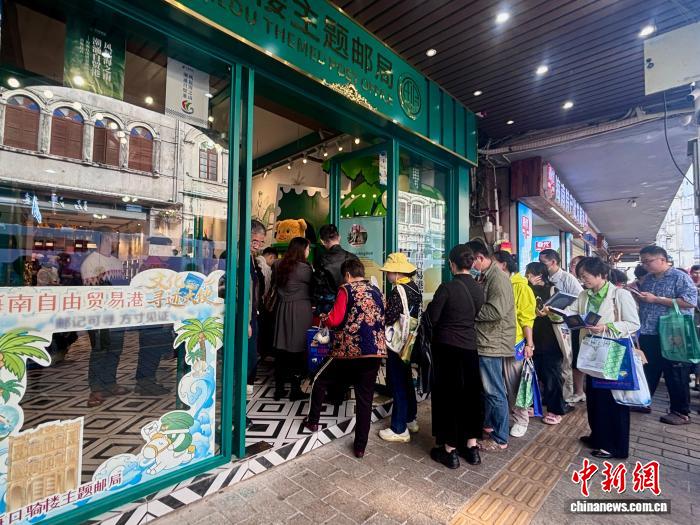
Core Viewpoint - The launch of the Hainan Free Trade Port's full closure on December 18 marks a significant milestone, bringing various policy benefits that are immediately felt by the local population and businesses [3][6]. Group 1: Policy Changes and Economic Impact - The new round of duty-free shopping policy in Hainan allows residents to purchase duty-free goods without limit as long as they have a record of leaving the island within the year, expanding the categories of duty-free items from 45 to 47, including pet supplies and portable musical instruments [3][4]. - The list of zero-tariff items has expanded from over 1,900 to approximately 6,600, increasing the proportion of zero-tariff items from 21% to 74% of all taxable goods [4]. Group 2: Consumer Sentiment and Employment Opportunities - Local residents express optimism about the increased variety and availability of duty-free products, with many noting that international products are now more accessible [3][6]. - The tourism revenue in Hainan has doubled from 95.016 billion yuan in 2018 to an expected 204.014 billion yuan in 2024, indicating a robust growth trajectory in the tourism sector [6]. - The closure is expected to enhance job opportunities, with local drivers reporting an increase in customer demand due to more tourists visiting the island [6][7]. Group 3: Infrastructure and Education Development - Improvements in public services, including education and healthcare, have been noted, with residents benefiting from enhanced access to international educational resources and medical services [6]. - Hainan is positioning itself as a hub for international medical tourism, attracting advanced medical technologies and practices to the region [6]. Group 4: Foreign Investment and Business Environment - Since 2020, over 9,600 foreign enterprises have been established in Hainan, with investors from more than 170 countries and regions, indicating a growing interest in the local market [7]. - The closure enhances Hainan's role as a headquarters base for foreign companies entering the Chinese market, supported by favorable tax policies and an improved entrepreneurial environment [7][8].
海南封关不只是“免税升级”!这6大深层意义,影响每个人的生活
Sou Hu Cai Jing· 2025-12-18 15:20
提到海南封关,很多人第一反应是"以后买进口货更便宜了""去海南旅游更爽了"。但其实封关远不止这些表面红利,它是中国改革 开放的"升级版试验田",是普通人的民生福利池,更是国家参与全球竞争的战略布局。咱们用大白话掰开揉碎了说,看看这场"封关 革命"到底藏着哪些重要意义。 首先得先纠正一个普遍误解:封关不是"关岛",不是不让进出了!内地居民去海南旅游、出差,还是凭身份证就行,飞机、轮渡和 以前没区别;海南也不是"孤岛",和内地的通讯、物流、人员流动照样畅通无阻。真正"封"的是关税壁垒,"开"的是全球资源的大 门,本质是把整个海南岛打造成"境内关外"的超级开放区,让货物、资金、人才、数据能更自由地流动,这才是封关的核心逻辑。 1. 普通人的"福利狂欢":购物、医疗、就业全升级 对咱们老百姓来说,封关带来的好处是最直接、最实在的,相当于把"全球免税店""国际医院""高薪工作机会"都搬到了家门口。 先说说购物,这是大家最关心的。封关前海南零关税商品只有1900个税目,现在直接扩到6600个,占了所有商品税目的74%,相当 于品类暴涨3倍多。以前只能在免税店抢化妆品、奢侈品,现在进口家电、手机、服装、日用品,甚至宠物用品 ...

海南封关启航:中国最大自贸港的三重跃迁
Jing Ji Guan Cha Wang· 2025-12-18 08:36
Core Viewpoint - The official launch of the Hainan Free Trade Port's closure operation marks a new phase in the comprehensive implementation of Hainan's free trade port construction, indicating a profound reshaping of China's opening-up landscape [1] Group 1: Trade Liberalization and Facilitation - The closure operation enhances the level of trade liberalization and facilitation, characterized by "one line open, two lines controlled, and free within the island" [2] - Hainan will become one of the most open customs special supervision areas in China, facilitating cheaper and more efficient imports of raw materials and high-end equipment for enterprises [2] - Consumers will benefit from a wider variety of imported goods and price advantages, with continued expansion of tourism shopping and duty-free policies [2] Group 2: Industrial Structure and Economic Development - The closure operation represents a deep restructuring of the economic structure, moving away from reliance on tourism and real estate towards modern service industries and high-tech sectors [4] - The advantages of "zero tariffs, low tax rates, and simplified tax systems" will stimulate research and production in high-end manufacturing, biomedicine, and artificial intelligence [4][5] - Hainan aims to transform into an international tourism consumption center, enhancing visitor experiences and diversifying consumption scenarios [4] Group 3: Institutional Opening and Governance Challenges - The closure operation tests the governance system and regulatory capabilities, requiring a transparent and efficient regulatory framework aligned with international standards [6] - There is a need for synchronized upgrades in legislation, enforcement, and risk prevention to convert closure benefits into tangible economic growth [6][7] - Hainan's exploration will serve as a testing ground for institutional opening, contributing to the construction of a unified national market and a higher-level open economy [7]
深入金融、能源等核心场景,360十大AI产业实践的价值验证
Zhong Guo Zheng Quan Bao· 2025-12-18 04:34
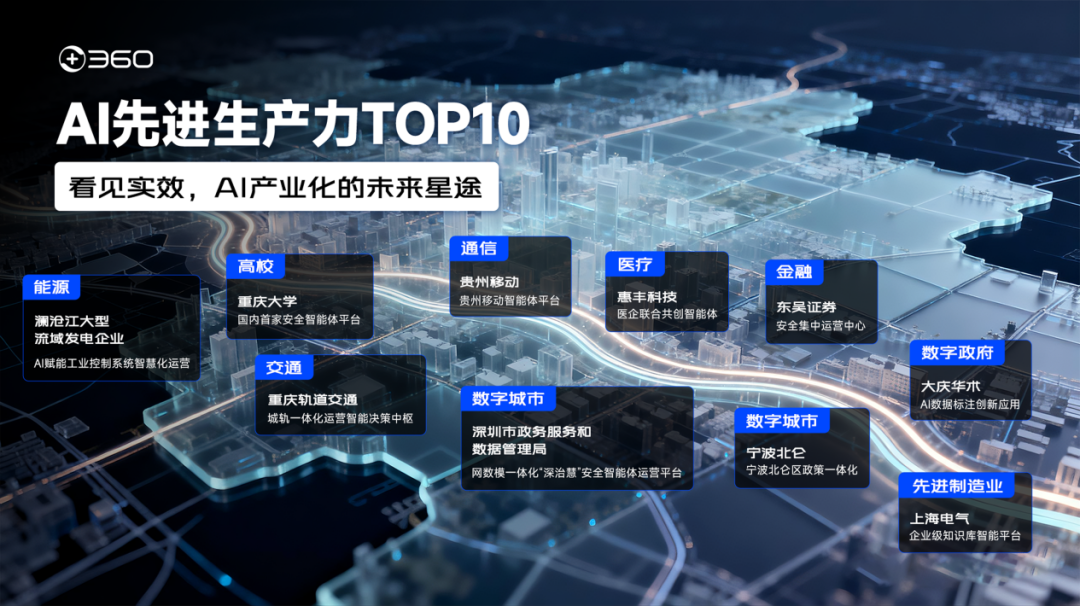
Core Insights - IDC predicts that by 2030, AI will create a total value of $22.3 trillion globally, accounting for 3.7% of global GDP, with value release being gradual and part of a long-term industrial evolution [1] Group 1: AI Strategy and Implementation - 360 Group has established an "All in Agent" strategy by 2025, focusing on creating "intelligent agents" that deeply integrate into specific business processes to address industry pain points [1] - The company has developed a multi-agent swarm system (L1-L4) to facilitate AI application across the entire value chain, ensuring technology is rooted in industry [1] Group 2: Demonstrated Value Creation - 360's recent release of the "Top 10 AI Advanced Productivity" cases showcases the practical application of its strategy across ten key industries, providing verifiable efficiency data that illustrates how AI can empower industrial value [2] - The cases highlight three dimensions of value creation: 1. Improvement in operational efficiency and cost optimization, with examples such as a hydropower company reducing operational costs by 30% and increasing automation processing capability to 90% [3] 2. Enhanced safety and risk management, particularly in sensitive sectors like finance and education, where 360's solutions improved incident response efficiency by 90% [4] 3. Business process reengineering and service model innovation, exemplified by a project that reduced application processing time from 3 days to 30 minutes [5] Group 3: Competitive Advantages - 360's approach is characterized by "scene deepening," which allows the company to build differentiated advantages by understanding industry-specific nuances and challenges [6] - The company's multi-agent swarm system enables collaborative efforts across various AI capabilities to address complex enterprise operations, demonstrating the feasibility of coordinated AI deployment [6] - The inherent "security gene" of 360, developed over two decades, provides a foundation of trust in critical sectors, enhancing the reliability of its solutions [7] Group 4: Market Position and Transformation - The ten cases span core areas of the national economy, marking 360's transition from a traditional cybersecurity company to an "AI + Security" enabler with clear growth paths in the B2B sector [8] - These cases validate a pragmatic approach to AI integration, focusing on solving specific issues related to efficiency, risk management, and service enhancement, which leads to clear commercial returns [8] - The shift from "technical concepts" to "commercial effectiveness" forms the basis for the company's value reassessment as it navigates deeper integration of AI into industry [8]
晶采观察丨透视11月数据 3个关键词锚定明年经济工作
Yang Guang Wang· 2025-12-18 02:16
Group 1 - The core focus of the article is on the three key areas that will drive China's economic development in the coming years: service consumption, quality improvement, and investment in people [1][4] - Service consumption is experiencing significant growth, with retail sales in the service sector increasing by 5.4% year-on-year from January to November, outpacing the growth of goods retail sales [1][2] - The central economic work conference emphasizes the importance of domestic demand and the development of a strong domestic market, with service consumption being a crucial factor in unlocking China's market potential [2][3] Group 2 - Quality improvement is highlighted as essential for economic growth, with digital technologies enhancing service delivery efficiency and promoting new business models like live e-commerce and instant retail [2][3] - Investment in people is identified as a foundational logic for the other two key areas, with a focus on enhancing education, healthcare, housing, and public services to meet the needs of the population [3][4] - The government is expected to continue increasing investments in social welfare sectors, which will support the development of new productive forces and ultimately drive economic growth [4]
海南自贸港封关运作启动,免税购物升级
Sou Hu Cai Jing· 2025-12-18 01:37
Group 1: Consumption and Lifestyle - The range of zero-tariff imported goods has expanded from 1,900 items to over 6,600, covering 74% of tax categories, with prices of cosmetics, luxury goods, and electronics generally 20%-50% lower than mainland prices [2] - Imported fruits and maternal and infant products are expected to see price reductions due to tariff exemptions, with Chilean cherries potentially decreasing by 20% [3] - Tourists can retain a duty-free quota of 100,000 yuan per year, and a new "buy now, pick up" model for items priced ≤20,000 yuan has been introduced [2] Group 2: Employment and Entrepreneurship - Individual income tax for residents living in Hainan for over 90 days is capped at 15%, significantly lower than the mainland's maximum of 45%, resulting in substantial tax savings [8] - Corporate income tax for encouraged industries has been reduced to 15%, alongside zero tariffs on imported equipment, leading to a 20% reduction in operational costs for businesses [8] - New high-paying job opportunities are emerging in cross-border e-commerce, international logistics, and biomedicine, with salary increases potentially exceeding 30% [8] Group 3: Business Benefits - "First-line" imported goods that meet conditions can be directly released, while "second-line" goods entering the mainland will be managed through classified channels [9] - Companies can freely allocate global funds through Hainan Free Trade Port accounts, enhancing offshore trade settlement efficiency, with offshore trade volume expected to reach $11.95 billion by 2024 [10] Group 4: Medical and Educational Internationalization - The Boao Lecheng International Medical Tourism Pilot Zone has introduced over 500 types of foreign new drugs and medical devices, with approval times reduced to 72 hours [5] - Twelve new international schools have been established in areas like Lingshui Li'an, offering international education programs such as the IB curriculum [6] Group 5: Challenges and Risks - The tourism peak season may lead to increased local prices for fruits and seafood, and there is a need to guard against "proxy purchasing" smuggling [11] - The influx of talent may raise employment thresholds, leading to intensified competition for high-end positions [12]

南海千帆渡 开放向未来——海南自由贸易港封关启新程
证券时报· 2025-12-18 00:00
Core Viewpoint - The official launch of the Hainan Free Trade Port marks a significant step in China's commitment to high-level opening-up and the construction of an open world economy, focusing on "zero tariffs, low tax rates, and simplified tax systems" [1] Group 1: Institutional Innovation - Institutional integrated innovation is the core engine of the Free Trade Port's construction, with Hainan cultivating 21 batches of 173 institutional innovation cases, 82 of which have been recognized by the state, and 37 promoted nationwide [2] - A series of groundbreaking measures have established a comprehensive open institutional system, laying a solid foundation for the port's operation [2] Group 2: Attracting Global Investment - From 2020 to 2024, Hainan is expected to attract actual foreign investment of 166.7 billion yuan, with an average annual growth of 15.8%, involving investments from 176 countries and regions [2] - The proportion of "zero tariff" goods has increased significantly from 21% to 74%, covering 6,637 tax items essential for enterprise production, further relaxing the threshold for tax-free policies on domestic sales with a value-added processing of 30% [2] - 54 companies have issued 129 related announcements within the year, reflecting strong confidence in the Free Trade Port's prospects [2] Group 3: Smart Regulation - The Haikou Customs has established a "smart regulation and credit regulation" system, utilizing big data risk control models for rapid customs clearance of three categories of goods [3] - The policy framework of "open at the front line, controlled at the second line, and free within the island" has effectively ensured the free flow of goods while reinforcing risk prevention measures [3] Group 4: Future Development - Hainan Free Trade Port aims to expand institutional opening-up and deepen reforms in key areas, creating a modern industrial system and a first-class business environment [3] - The port will leverage its closure operation as an opportunity to play a strategic hub role in the dual circulation pattern, exploring paths for high-level opening-up and accumulating experience for national economic cooperation [3]