科技行业

Search documents
Will the December Fed Decision Matter to Markets?
Youtube· 2025-11-28 14:41
More importantly, a look ahead into 2026 with Matt Kattner over at HSBC writing. The big concern with regard to that big AA trade is when CapEx starts to drop. Worries about higher tech debt.Outlook for productivity gains or monetization potential potential just too long term to matter for the near term. Max joins us right now to talk a little bit more about that. And Max, we talk about investor sentiment.Investor sentiment has gotten a big boost over the past few months because of the sustainability of tha ...


异动盘点1128 | 博彩股、黄金股普遍走高;感恩节翌日(11月28日)美股市场将提前3小时收市
贝塔投资智库· 2025-11-28 04:03
Group 1: Stock Movements - Emperor International (00163) rose nearly 6% after reaching an agreement with banks to restore existing loan arrangements based on previously agreed commercial terms [1] - Gaming stocks generally increased, with MGM China (02282) up 3.43%, Melco International Development (00200) up 2.24%, Sands China (01928) up 2.32%, and Galaxy Entertainment (00027) up 1.81%. Morgan Stanley reported that total gaming revenue for the first 23 days of the month was MOP 15.6 billion, averaging MOP 678 million per day [1] - Dongyue Group (00189) increased nearly 5% as PVDF market prices rose from CNY 49,000 per ton at the beginning of November to CNY 52,000 per ton as of November 20 [1] - UBTECH Robotics (09880) surged over 4% after announcing a successful bid for a humanoid robot data collection and training center project in Jiangxi, valued at CNY 143 million [1] Group 2: Strategic Partnerships and Collaborations - China Energy Storage Technology (02399) fell over 6% after announcing a non-binding memorandum of understanding for strategic cooperation with Guo Heng Group Pte. Ltd. [2] - Yujian Technology (02432) rose over 6% after signing a strategic cooperation framework agreement with Green Source Group (02451) to promote the application of 5,000 robotic dogs in smart store upgrades [2] - Junsheng Electronics (00699) and Hezhima Intelligent (02533) continued to rise, with Junsheng up 4.14% after announcing a strategic cooperation to jointly develop robot control systems and solutions [3] Group 3: Market Trends and Consumer Behavior - Gold stocks collectively rose, with Zhenfeng Gold (01815) up 5.8%, China Silver Group (00815) up 2.99%, Lingbao Gold (03330) up 4.66%, Chifeng Gold (06693) up 3.3%, and China Gold International (02099) up 5.38%. Recent comments from Federal Reserve officials and delayed economic data have supported expectations for interest rate cuts [2] - Mixue Group (02097) saw a nearly 3% increase amid speculation about launching a breakfast menu, with initial trials in select cities [3] - Pop Mart (09992) rose nearly 4% following a government initiative aimed at enhancing consumer goods supply and promoting diverse consumption [4]


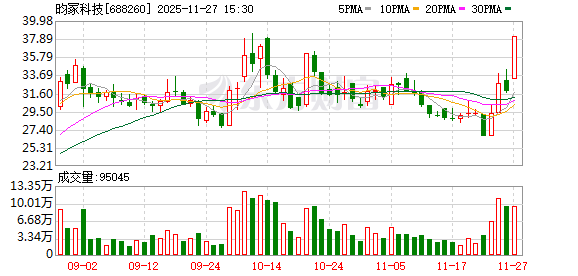
昀冢科技涨停 营业部龙虎榜净卖出604.14万元
Zheng Quan Shi Bao Wang· 2025-11-27 15:09
Group 1 - The closing price of Yunzhu Technology (688260) on November 27 was 38.24 yuan, reaching the daily limit with a trading volume of 3.53 billion yuan and a turnover rate of 7.92% [2] - The stock was listed on the daily trading list due to a price increase of 15% at the close [2] - The top five trading departments accounted for a total transaction amount of 158 million yuan, with a net selling of 604.14 million yuan [2] Group 2 - The main capital inflow for the stock was 58.72 million yuan throughout the day [3] - The largest buying department was Kaiyuan Securities, with a purchase amount of 30.24 million yuan [3] - The largest selling department was Ping An Securities, with a selling amount of 40.22 million yuan [3]

青岛啤酒拟使用最高100亿元认购理财 维珍妮上半财年盈利同比翻倍
Xin Lang Cai Jing· 2025-11-27 12:40
Performance Summary - Virginie (02199.HK) reported revenue of HKD 3.84 billion for the six months ending September 30, 2025, a decrease of 3.45% year-on-year; net profit increased by 114.25% to HKD 145 million [1] - Huagang United (01001.HK) achieved revenue of HKD 1.023 billion, up 3.34% year-on-year; profit decreased by 3.64% to HKD 52.9 million [1] - Disen Creation (00113.HK) reported revenue of HKD 973 million, a year-on-year increase of 1.2%; net profit rose by 14.02% to HKD 150 million [1] - Sanhe Construction Group (03822.HK) generated revenue of HKD 470 million from customer contracts, a 20.8% increase year-on-year; net profit surged by 1364.7% to HKD 47.41 million [1] - Bojun Education (01758.HK) reported revenue of HKD 379 million for the year ending August 31, 2025, a decrease of 11.9%; losses increased by 227.6% to HKD 130 million [1] - Jiahua Holdings (00064.HK) reported revenue of HKD 172 million, down 21.01% year-on-year; profit increased by 57.59% to HKD 49.51 million [2] - Tiande Real Estate (00266.HK) reported revenue of HKD 152 million, a decrease of 2.5%; losses narrowed by 72.9% to HKD 75.43 million [3] - Kairun International Hotel (00105.HK) reported revenue of HKD 148 million, down 2.34%; losses decreased by 69.77% to HKD 148 million [4] - Safe Warehouse (00237.HK) reported revenue of HKD 84.1 million, down 9.97%; the company recorded a loss of HKD 17.56 million, shifting from profit to loss [4] Company News - Xinchen Power (01148.HK) established a strategic alliance with Sichuan Hongpeng Aerospace Equipment Intelligent Manufacturing in the field of aviation piston engines [5] - Qingdao Beer Co., Ltd. (00168.HK) plans to engage in wealth management investment activities with a maximum single-day balance of RMB 10 billion over the next 12 months [5] - Junshi Biosciences (01877.HK) plans to use up to RMB 2.4 billion of temporarily idle raised funds for cash management [5] - China Anshun Energy (02399.HK) signed a memorandum of understanding with Guo Heng for further investment and participation in energy-related projects [6] - Yanzhou Coal Mining (01171.HK) subsidiary plans to acquire 100% equity of a high-end support company for HKD 345 million [7] - Beijing Qingniao Huanyu (08095.HK) intends to invest approximately HKD 130 million to acquire the remaining 30% equity of Shanghai Shengjin Venture Capital Co., Ltd., focusing on new materials, energy conservation, and high-end equipment manufacturing [7] Financing and Buyback Activities - China Smart Technology (00464.HK) completed the issuance of a total of 11.7 million shares, raising approximately HKD 10.3 million [8] - Tencent Holdings (00700.HK) repurchased 1.036 million shares for HKD 636 million, with repurchase prices ranging from HKD 609 to HKD 620 [9] - China Petroleum & Chemical Corporation (00386.HK) repurchased 9.01 million shares for HKD 40.2765 million, with repurchase prices between HKD 4.42 and HKD 4.52 [10] - China Feihe (06186.HK) repurchased 4 million shares for HKD 16.6763 million, with repurchase prices ranging from HKD 4.12 to HKD 4.23 [10]

万通发展(600246.SH):数渡科技存在持续亏损的风险 可能对公司持续经营产生不利影响
智通财经网· 2025-11-27 12:05
Core Viewpoint - The company is steadily advancing its transformation strategy by integrating Shudao Technology, aiming to align the interests of core talents with long-term development goals through a restricted stock incentive plan [1] Group 1: Company Strategy - The company announced a draft summary of the 2025 Restricted Stock Incentive Plan on November 18, 2025, which requires approval from the shareholders' meeting [1] - The initiative is designed to encourage employees to focus on long-term goals and reduce short-term behaviors, thereby enhancing the market share of Shudao Technology's core products [1] Group 2: Financial Performance - Shudao Technology reported net losses attributable to the parent company of -62.57 million yuan for 2023, -137.88 million yuan for 2024, and -78.09 million yuan for the first three quarters of 2025, indicating a continued loss status [1] - There are risks associated with Shudao Technology's products not meeting market demand and intensified industry competition, which could lead to lower sales revenue or profit levels [1]

为让美国放一马,欧盟提议联合抗中,遭美拒绝:联合可以,税照加
Sou Hu Cai Jing· 2025-11-27 09:40
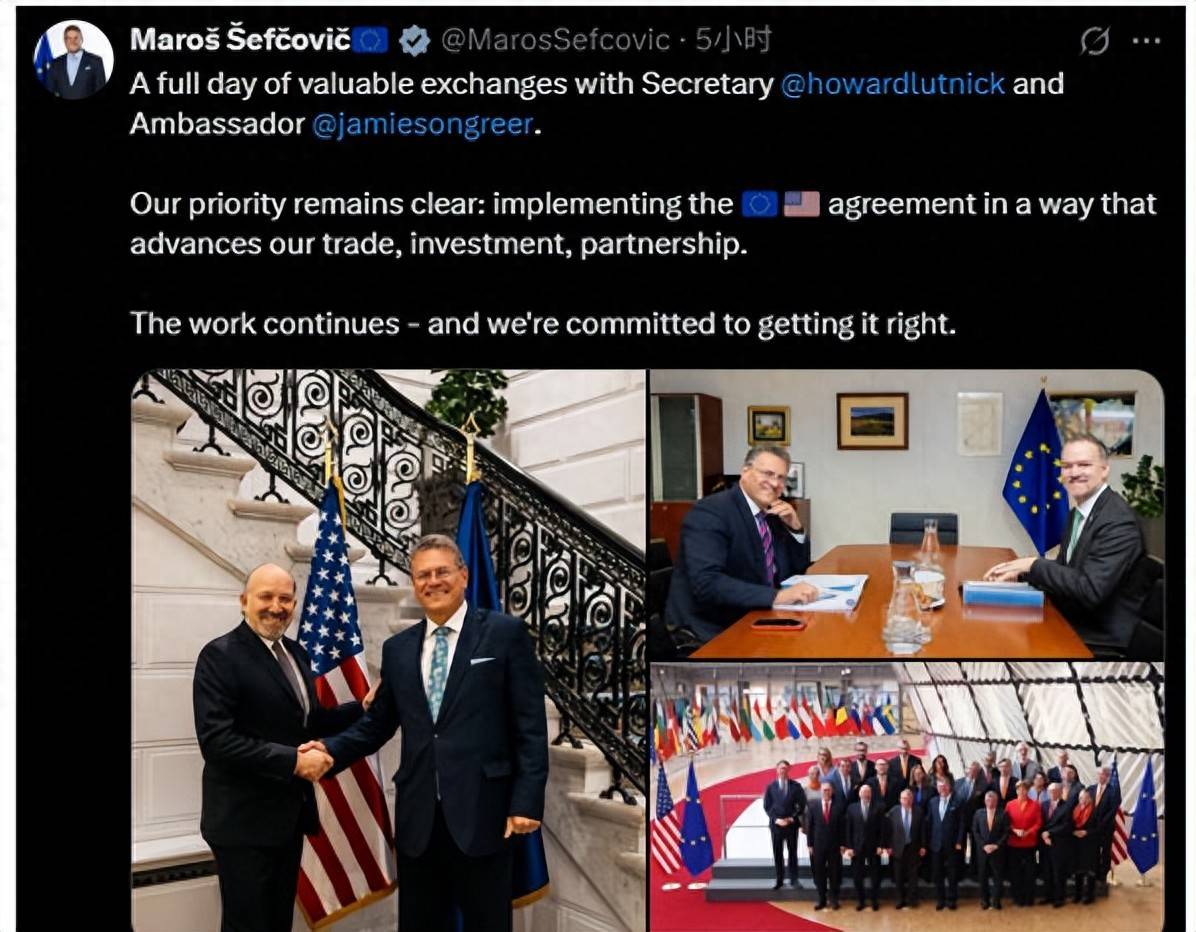
Core Points - The EU is seeking to negotiate with the US to lift the 50% tariffs on steel products in exchange for a united front against China, but the US has firmly rejected this proposal [1][4][5] - The EU's steel industry is significantly impacted by these tariffs, as countries like Germany, France, and Italy rely heavily on steel exports to the US [1][4] - The US is leveraging the steel tariffs to pressure the EU into making concessions in other areas, such as digital tax regulations, which the EU has implemented to protect its own market from US tech giants [4][5] Summary by Sections EU's Position - The EU believes that aligning with the US on China-related issues could improve relations and create conditions for tariff reductions [4] - The EU's proposal for a united front against China was met with a refusal from the US, which indicated that no concessions would be made regarding steel and aluminum tariffs [4][5] US's Strategy - The US is using the steel tariffs as a tool to compel the EU to compromise on digital tax and other trade issues, highlighting an imbalance in the US-EU relationship [5][7] - The US's insistence on maintaining tariffs while seeking cooperation on China reflects a strategy to protect its own economic interests and maintain global dominance [5][7] Implications for Global Trade - The ongoing trade tensions and the US's protectionist measures pose significant risks to global supply chains and economic stability [7] - The situation illustrates the complexities of international relations, where alliances may be tested by competing national interests, as seen in the EU's struggle to gain concessions from the US [7]
降息预期再获提振!美国9月零售增速放缓 市场焦点转向感恩节+黑五购物季
Sou Hu Cai Jing· 2025-11-25 15:12
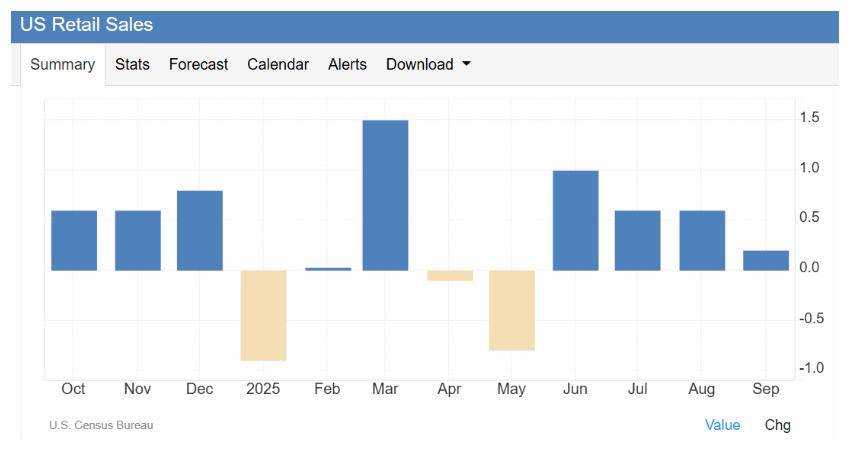
Core Viewpoint - The unexpected slowdown in U.S. retail sales growth highlights a decrease in consumer spending amid a weakening labor market and temporary inflation caused by tariffs, yet the resilience in retail sales supports the narrative of a "Goldilocks" economic environment in the U.S. [1] Retail Sales Data - In September, U.S. retail sales showed a modest increase of 0.2% month-over-month, falling short of the expected 0.4% growth, following a strong 0.6% increase in August. Excluding autos and gas, sales rose only 0.1% [5][6] - Among 13 categories, 8 recorded growth, primarily in gas stations and personal care stores, while auto sales declined for the first time in four months, and spending on electronics, clothing, and sports goods also decreased [6][8] Consumer Behavior - The data indicates that middle and low-income consumers are becoming more cautious due to rising inflation and employment challenges, leading to a pause in spending [5][7] - Retailers like Walmart and TJX have noted that shoppers are increasingly seeking discounts and essential goods, while Home Depot has warned of delayed large home purchases [7] Economic Outlook - Morgan Stanley economists predict that the OBBBA tax cuts from the Trump administration will significantly boost economic growth starting in 2026, alongside the temporary nature of inflation from tariffs and ongoing AI infrastructure investments by tech giants [1] - The NRF forecasts a record number of shoppers during the upcoming Thanksgiving and Black Friday shopping weekend, which could provide a significant boost to the U.S. economy in Q4 and 2026, as consumer spending accounts for 60%-70% of GDP [9][10] Federal Reserve and Interest Rates - Following the retail data release, expectations for a Federal Reserve rate cut in December have increased, with an 80% probability of a rate cut according to CME FedWatch Tool [3][4][7] - There is a notable division among Federal Reserve officials regarding the decision to cut rates, reflecting concerns over consumer affordability [7]
Markets Rebound For Thanksgiving Week As Fed Comments And Tech Giants Boost Sentiment
Seeking Alpha· 2025-11-24 21:30
Group 1 - Major US indexes experienced volatility, retesting and breaking below October lows [3] - Concerns over a hawkish Federal Reserve contributed to market fluctuations [3] - Key October reports were canceled, impacting market sentiment [3]

明星科技股盘前多数上涨 谷歌A(GOOGL.US)涨近4%
Zhi Tong Cai Jing· 2025-11-24 15:35
Core Viewpoint - Nasdaq 100 index futures rose nearly 1%, with major tech stocks mostly up in pre-market trading, indicating strong investor sentiment in the tech sector [1] Group 1: Company Performance - Google A (GOOGL.US) increased nearly 4%, poised to set a new historical high at the opening [1] - Tesla (TSLA.US) and Broadcom (AVGO.US) both rose over 2%, while Amazon (AMZN.US) and Meta (META.US) saw gains exceeding 1% [1] - Nvidia (NVDA.US) and Microsoft (MSFT.US) also turned positive, reflecting a broad recovery in tech stocks [1] Group 2: Industry Developments - Google's AI advancements, including the new image model NanoBanana Pro and the latest large model Gemini 3, have made significant impacts in the global AI technology sector [1] - OpenAI CEO Altman indicated that Google's Gemini could pose serious challenges for OpenAI, highlighting competitive pressures in the AI industry [1] Group 3: Economic Outlook - Federal Reserve Governor Waller expressed concerns about the labor market and advocated for interest rate cuts [1] - Goldman Sachs' latest report suggests that a rate cut by the Federal Reserve in December is highly likely, with no significant obstacles in the current schedule [1] - The report anticipates two rate cuts in March and June of the following year, driven by core PCE inflation nearing the 2% target and rising unemployment rates among recent college graduates, indicating increasing economic downside risks [1]



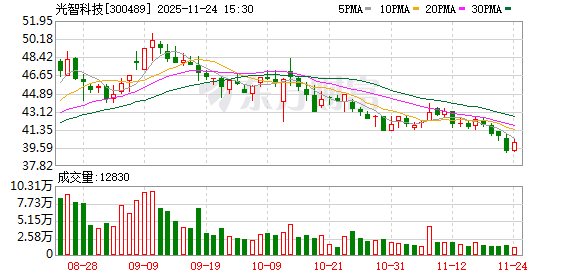
光智科技:关于部分股票期权注销完成的公告
Zheng Quan Ri Bao· 2025-11-24 12:43
(文章来源:证券日报) 证券日报网讯 11月24日晚间,光智科技发布公告称,根据《公司2024年股票期权激励计划(草案)》 (以下简称"本激励计划")《2024年股票期权激励计划考核管理办法》的相关规定及公司2024年第二次 临时股东大会的授权,本激励计划首次授予的股票期权第一个行权期因2024年度公司层面业绩考核未达 标,未满足行权条件及已经离职不再符合激励对象资格的股票期权共计437万份由公司注销,涉及激励 对象153人。截至本公告披露日,经中国证券登记结算有限责任公司深圳分公司审核确认,公司上述股 票期权注销事宜已办理完成。 ...