
具身智能

Search documents
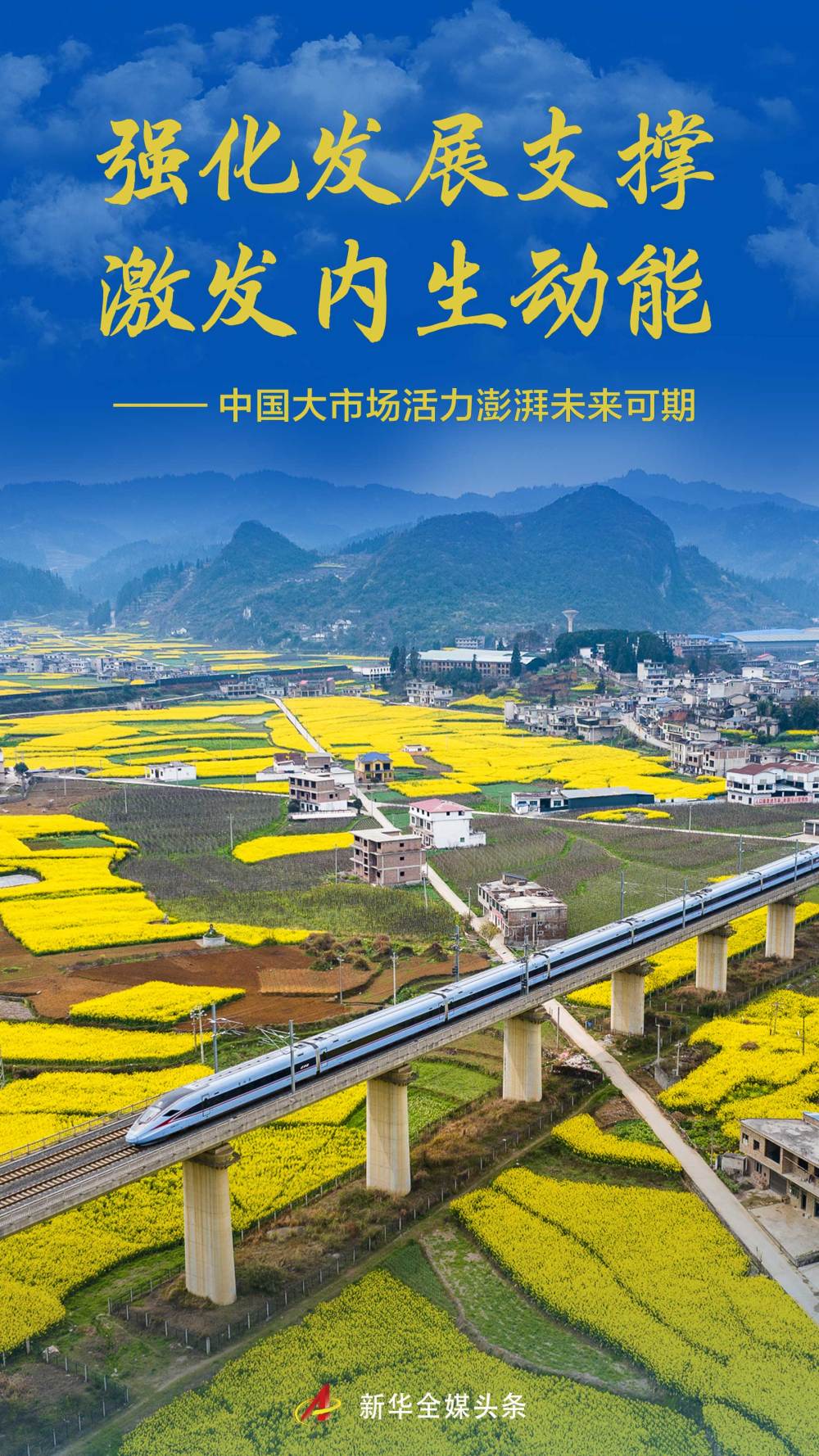
2025中国经济回眸|强化发展支撑 激发内生动能——中国大市场活力澎湃未来可期
Xin Hua Wang· 2025-12-05 15:06
Group 1 - China's economy is leveraging its vast domestic market to navigate external challenges, emphasizing the importance of resource allocation and market advantages [3][19][20] - The country has seen a significant increase in express delivery volume, surpassing 1.8 billion packages, reflecting the vitality of its large-scale market [4][6] - Consumer spending has contributed 53.5% to economic growth in the first three quarters, an increase of 9 percentage points compared to the previous year [7][9] Group 2 - Investment in fixed assets reached 40.89 trillion yuan from January to October, with notable growth in infrastructure and internet-related services [7][9] - The retail sector has shown resilience, with a 4.3% year-on-year increase in total retail sales of consumer goods, surpassing 40 trillion yuan in the first ten months [7][9] - The tourism sector is also thriving, with significant pre-sale figures for winter sports and a growing demand for senior travel services [10][12][13] Group 3 - The government is implementing policies to enhance consumer spending, including a 300 billion yuan special bond for consumption upgrades and a focus on service consumption [7][18] - The market is witnessing a shift towards high-quality supply and diverse consumer demands, with sectors like smart home appliances and digital consumption growing rapidly [16][26] - The potential for growth in the silver economy is substantial, with over 310 million people aged 60 and above, and projections indicating a market size exceeding 30 trillion yuan by 2035 [26]

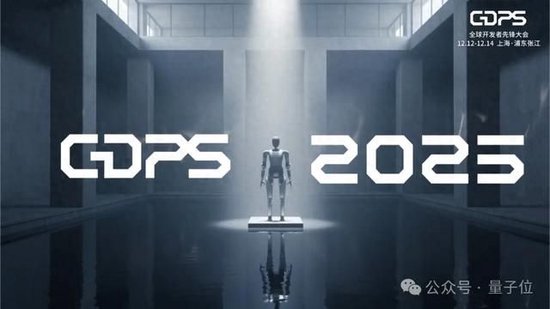
2025年的冬天,上海凭什么被称为“世界具身智能第一战场”?
Xin Lang Cai Jing· 2025-12-05 10:23
Core Insights - The article emphasizes the rapid advancement of the embodied intelligence industry in China, particularly in Shanghai, as it prepares for the GDPS 2025 Global Developer Pioneer Conference, which is seen as a pivotal moment for the industry [1][42]. Group 1: Industry Development - Shanghai is positioned as a leading city for developers, providing not just funding but also essential resources and pathways for innovation [3][44]. - The city has opened up over a hundred core scenarios for companies to test and implement embodied intelligence technologies, including high-end manufacturing and healthcare [4][45]. - The government acts as a "Chief Scenario Officer," facilitating market access for developers by providing valuable public resources [6][47]. Group 2: Technological Advancements - Shanghai has introduced a "computing voucher" policy, offering up to 40 million yuan per year to support companies, making high-level computing resources accessible to smaller teams [7][48]. - The city is also investing in the construction of a "physical world knowledge base" to break down data silos and enhance industry-wide data sharing [9][50]. - The physical proximity of various industry players in Zhangjiang has significantly reduced the hardware iteration cycle from months to weeks or even days, fostering a closed-loop ecosystem for embodied intelligence [10][52]. Group 3: Industry Achievements - Companies like Zhiyuan Robotics have set records, demonstrating the robustness of their humanoid robots, which can operate autonomously over long distances [13][54]. - Fourier Intelligence has developed advanced rehabilitation robots that excel in sensitivity and precision, marking a significant commercial leap from laboratory to delivery [14][57]. - The release of the "Qinglong" open-source humanoid robot by the National Earth Center is expected to advance the industry by at least 18 months, moving towards standardized industrial practices [17][58]. Group 4: Future Outlook - The GDPS event on December 12 is framed as a comprehensive demonstration of the capabilities of embodied intelligence technologies, with a focus on practical applications rather than theoretical presentations [30][71]. - The article concludes that the establishment of a complete ecosystem for embodied intelligence in Shanghai represents a significant milestone, enabling these technologies to evolve from mere tools to partners in various sectors [35][76].
科技金融专题跟踪报告:科技金融专题跟踪月报(2025.11)-20251204
Jianghai Securities· 2025-12-04 05:22
Investment Rating - The report provides a neutral investment rating for the technology finance sector, indicating a relative performance within -10% to 10% compared to the benchmark index [34]. Core Insights - The report emphasizes the importance of enhancing financial support for technology innovation, as outlined in the State Council's guidance on strengthening financial backing for achieving high-level technological self-reliance and building a strong technology nation [3]. - There is a notable trend of increasing financing activities in the technology sector, with significant records being set in various fields such as AI+AR glasses and Micro LED technology [12][13]. - The report highlights the performance of major indices in November 2025, noting a decline in A-share indices due to weak macroeconomic data and external market influences, while the communication and media sectors showed positive growth [19][29]. Summary by Sections 1. Financing News - Thunderbird Innovation completed a record financing round in the AI+AR glasses sector, marking the highest single financing amount in 2025 [8]. - JBD Shanghai completed over 1 billion RMB in B2 financing, setting a record in the Micro LED micro-display field [9]. - GAC High Domain's flying car project secured 200 million RMB in Pre-A financing, with total financing for the year reaching 500 million RMB [10]. - Dexmal, a company focused on embodied intelligence, announced several rounds of financing totaling nearly 10 billion RMB, indicating strong investor interest in advanced technology [11][12]. 2. Market Performance - In November 2025, major A-share indices experienced declines, with the Shanghai 50, ChiNext, and Sci-Tech 50 dropping by 1.39%, 4.23%, and 6.24% respectively [16]. - The technology growth sectors saw mixed results, with the communication and media industries recording positive growth, while other sectors such as machinery and pharmaceuticals faced declines [19]. 3. Loan Data - As of Q3 2025, the loan balance for technology SMEs reached 3.56 trillion RMB, reflecting a steady increase in financial support for this sector [21]. - The number of technology SMEs receiving loan support also rose, reaching 275,400 by Q3 2025 [24]. 4. IPO Activity - The report notes a stable number of IPOs in the domestic capital market, with the Hong Kong Stock Exchange seeing a peak of 15 IPOs in June 2025 [28]. 5. Overseas Financing - Sakana AI, a Japanese AI startup, raised approximately 20 billion JPY in B-round financing, achieving a post-financing valuation of about 400 billion JPY [13]. - Flexion, a US robotics startup, completed a 50 million USD financing round, with plans to expand its operations [13].
银河通用与爱博医疗打造具身智能落地应用新场景
Xin Hua Wang· 2025-12-04 03:30
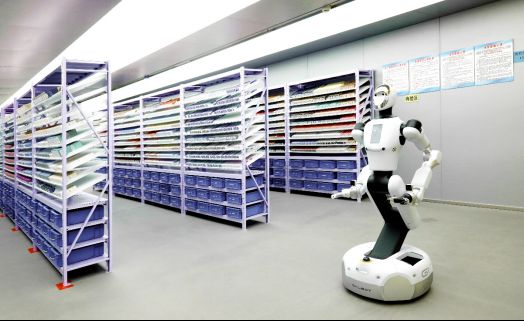
Core Insights - Aibono Medical's "Smart Medical Multi-Scene Project" has been recognized in the "2025 Key Application Scenario Project Support List" by Beijing's Science and Technology Commission, highlighting the company's innovative approach in the retail of contact lenses through 24-hour smart stores [1] - The introduction of humanoid robots in Aibono's stores has led to significant operational efficiency, automating the entire order process from receiving to delivery, thus enhancing the overall effectiveness of the business model [2] - Aibono Medical is expanding its presence with nearly 300 Toppop stores across China and plans to open more smart stores in cities like Suzhou and Chongqing, driven by the increasing demand for vision care products [3][5] Group 1: Technological Integration - The humanoid robots in the smart stores are capable of performing various tasks autonomously, which reduces the need for human intervention and allows staff to focus on inventory management [2] - The smart stores have demonstrated the commercial viability of embodied intelligence technology in the pharmaceutical retail sector, providing a new sales growth channel [5] Group 2: Strategic Partnerships - Aibono Medical has partnered with Galaxy General to integrate embodied intelligence technology into health retail, aiming to enhance productivity and service delivery [6] - The company has developed a comprehensive industrial layout covering R&D, production, and sales, with proprietary technologies that break the monopoly of international firms in the contact lens market [6] Group 3: Market Positioning - Aibono Medical's strategy combines medical and consumer needs, enhancing brand influence through efficient service delivery and a robust online and offline presence [3] - The company is committed to sustainable development in the industry, aligning with national strategic goals and expanding its network of smart stores nationwide [7]

奋楫“十五五”,资本与国策共创
Sou Hu Cai Jing· 2025-12-03 01:52
Core Insights - The focus of national development is shifting from "quantitative recovery" post-pandemic to "qualitative leap" in the "15th Five-Year Plan" [1] - The "15th Five-Year Plan" emphasizes "high-level technological self-reliance" and aims for a dual goal of "effective qualitative improvement and reasonable quantitative growth" [5][11] Group 1: Economic and Industrial Strategy - The national strategy is entering a new cycle centered on innovation efficiency, industrial structure, and regional collaboration, marking a shift from "policy following" to "system co-creation" [4] - The plan aims to build a modern industrial system with advanced manufacturing as the backbone, focusing on future industries like quantum technology, biomanufacturing, and hydrogen energy [11] - The transition from "incremental manufacturing" to "efficiency manufacturing" indicates a shift in focus from merely increasing production to optimizing resource allocation [12] Group 2: Investment Opportunities - Hard technology investment, including semiconductors and advanced materials, is positioned as a foundational logic for "systematic breakthroughs" [10] - Investment institutions are encouraged to engage in pre-financing and result transformation for national technology tasks, fostering capital co-creation [10] - The emphasis on "entrepreneurial investment + risk-sharing mechanisms" presents opportunities for investment firms to participate in national innovation initiatives [10] Group 3: Green Development - The "15th Five-Year Plan" elevates green development from a secondary goal to a structural institution, influencing all industrial allocations [17] - The integration of green issues into financial and market mechanisms signifies a shift in perspective, making green development a capital issue [17] - Sustainable investment opportunities in green infrastructure and carbon asset management are expected to grow [20] Group 4: Consumer and Market Dynamics - The plan positions consumption upgrade as a core driver of economic structural transformation, moving from recovery to quality enhancement [22] - The "silver economy" is recognized as a significant industrial opportunity, transforming aging issues into growth engines [22][25] - Investment opportunities in healthcare, elder care, and technology-assisted living are anticipated to rise due to demographic shifts [25] Group 5: Regional Development - The focus of regional policy is shifting from "development gradient" to "structural coordination," promoting a unified market and efficient resource allocation [27] - Investment institutions are encouraged to collaborate with local guiding funds to strengthen project foundations and facilitate new industry development in less developed regions [30] Group 6: Financial Market Reforms - The "15th Five-Year Plan" emphasizes structural improvements in capital markets, transitioning from a focus on financing to a comprehensive investment-funding-exit cycle [32] - Direct investment institutions are identified as key players in building a strong financial nation, with multiple exit pathways being developed [35] - The plan aims to enhance the inclusivity and adaptability of capital market systems, promoting direct financing methods [31] Strategic Summary - The "15th Five-Year Plan" outlines new engines for China's economic growth, including technological innovation and green transformation, while establishing a more inclusive capital market system [36] - Investment institutions are encouraged to align their strategies with national planning, leveraging professional judgment to identify promising sectors and companies for investment [36]

这6大未来产业,加快跑进现实(这些新提法,写入“十五五”规划建议④)
Ren Min Ri Bao Hai Wai Ban· 2025-12-02 22:46
Core Viewpoint - The article emphasizes the strategic importance of future industries in China's economy, highlighting the rapid development and application of technologies such as hydrogen energy, quantum technology, and embodied intelligence, which are expected to drive economic growth and innovation [4][5][7]. Group 1: Future Industries Overview - Future industries are a crucial part of China's "three new" economy, contributing over 18% to GDP last year [4]. - The "14th Five-Year Plan" identifies six key future industries, including quantum technology and biological manufacturing, which are at a critical stage of moving from laboratory to commercialization [5][6][10]. Group 2: Technological Advancements - China has achieved significant progress in hydrogen energy, with production capacity exceeding 50 million tons per year and over 600 renewable energy hydrogen production projects planned [8]. - In nuclear fusion, the EAST facility has set world records for plasma operation times, achieving 1 billion degrees Celsius for 1066 seconds [9][10]. - The development of the BEST facility aims for commercial nuclear fusion power generation by 2030, with a goal to light the first lamp by then [10]. Group 3: Market Potential and Applications - The market for brain-computer interfaces is expected to exceed 5.5 billion yuan, while the embodied intelligence market could surpass 400 billion yuan by 2030 [14]. - The application of embodied intelligence in various sectors, such as manufacturing and service industries, is being explored, with robots like NAVIAI demonstrating capabilities in tasks ranging from sewing to household chores [13][14]. Group 4: Policy and Support - The Chinese government is promoting the integration of technology and industry through policies aimed at fostering new application scenarios and supporting innovation [12][14]. - The focus on creating a supportive ecosystem for future industries includes investment in R&D and the establishment of platforms for biological manufacturing and brain-computer interfaces [14].
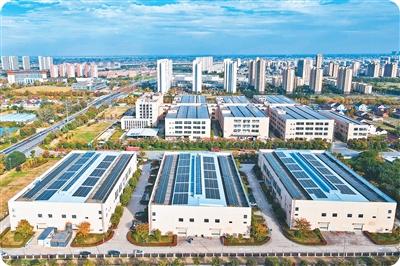
【关注“十五五”规划】前瞻布局未来产业 中国具备禀赋优势
Zheng Quan Shi Bao· 2025-12-01 18:12
Core Viewpoint - The Chinese government has outlined a strategic initiative to proactively layout future industries, focusing on six key areas: quantum technology, biomanufacturing, hydrogen energy and nuclear fusion, brain-computer interfaces, embodied intelligence, and sixth-generation mobile communication. This initiative aims to enhance the country's industrial structure and drive economic growth [1]. Group 1: Future Industry Layout - The strategic layout of future industries is expected to clarify the direction of China's industrial structure and serve as a new pillar for economic growth [1]. - The six core areas identified for future industry development are characterized by their strategic, leading, and disruptive features [1]. Group 2: Advantages of Development - China possesses three unique advantages for developing future industries: a new type of national system for resource concentration, a complete industrial system for technology commercialization, and a vast market for rapid application and iteration of new technologies [1]. - The country is also expected to leverage its technological innovation advantages to support these developments [1]. Group 3: Technological Advancements - In embodied intelligence, China is achieving breakthroughs in both "smart brains" and "strong bodies," with increasing levels of model generalization [2]. - The country has developed leading brain-computer interface technologies, including ultra-flexible, minimally invasive electrodes and dynamic electrodes that can navigate within animal brains [2]. - In biomanufacturing, China leads globally in CAR-T cell therapy and original drug production [2]. - Quantum technology advancements include the "Zuchongzhi No. 3" supercomputer, which is significantly faster than the world's fastest supercomputer, and the "Wukong" quantum computer, which has completed over 710,000 calculations globally [2]. Group 4: Innovation Rankings - According to the Global Innovation Index 2025, China has entered the top ten for the first time, achieving its highest ranking at fourth place [3]. - The Global Key and Emerging Technologies Index 2025 indicates that while the U.S. remains the leading technology power, China ranks second in key technology fields such as semiconductors and artificial intelligence [3]. - China has 24 of the world's top 100 innovation clusters, maintaining its position as the global leader for three consecutive years [3]. Group 5: Policy Initiatives - The National Development and Reform Commission and the Ministry of Industry and Information Technology have issued implementation opinions to promote innovation in future industries, including specific policies for brain-computer interfaces and biomanufacturing [4]. - The State Council has introduced measures to accelerate the cultivation of application scenarios across various fields, establishing a comprehensive ecosystem for future industries [4]. Group 6: Industry Growth - Approximately 350 companies related to brain-computer interfaces have emerged in China, creating a complete industrial chain from core components to end applications [5]. - China has established the largest solar panel and flat screen film production bases globally, along with 23 biomanufacturing bases [5]. - With over 300 billion yuan allocated to quantum technology and substantial local funding, major provinces are developing numerous quantum technology application scenarios [5]. - The country has built 4.55 million 5G base stations, indicating a strong push towards future industries characterized by national strategic guidance and large-scale market applications [5].
海南布局现代化产业体系 谋划五条新质生产力赛道
Zhong Guo Xin Wen Wang· 2025-12-01 13:22
Core Viewpoint - Hainan Province is planning to establish a modern industrial system with a "45432" framework, focusing on optimizing existing industries and fostering new productive forces to enhance economic development [1][2]. Group 1: Industrial Optimization - The four leading industries in Hainan, namely tourism, modern services, high-tech industries, and tropical efficient agriculture, currently account for over 67% of the province's GDP. The province aims to enhance these sectors through chain supplementation and optimization during the 14th Five-Year Plan period [2]. Group 2: New Productive Forces - Hainan will leverage its unique resources to develop five new productive force tracks, including creating a "Southern Seed Silicon Valley," establishing a core hub for deep-sea technology innovation, expanding aerospace-related industries, developing a low-altitude economy, and building a green and low-carbon industrial supply chain [2]. Group 3: Future Industries - The province will focus on four cutting-edge fields: biomanufacturing, hydrogen energy, brain-computer interfaces, and embodied intelligence, to cultivate new hotspots for future industries [2]. Group 4: Consumer Development - Hainan plans to enhance its duty-free shopping reputation, develop the Boao Lecheng Medical Special Zone, and strengthen the "Study in Hainan" brand to boost consumption [2]. Group 5: Talent and Innovation - The province will implement the "Million Talents to Prosper Hainan" initiative to create a hub for technological innovation, reform, and open cooperation [3].
读懂中国“十五五”规划,中国式现代化彰显共享发展机遇承诺
2 1 Shi Ji Jing Ji Bao Dao· 2025-12-01 12:00
Core Insights - The "Understanding China" International Conference is being held for the 12th year, focusing on the theme of "New Layout, New Development, New Choices - Chinese-style Modernization and the New Global Governance Pattern" [1] - The conference aims to discuss the significance of the 14th Five-Year Plan and its implications for global governance, emphasizing China's role in providing new opportunities for developing countries [2][3] Group 1: Conference Themes and Objectives - The conference introduces two new topics: understanding the 14th Five-Year Plan and the four global initiatives, including the Global Governance Initiative [2] - The 14th Five-Year Plan is seen as a departure from the notion that modernization equals Westernization, offering new choices for developing countries [2][6] - The conference serves as a platform for global South countries to learn from China's modernization experience and to promote the concept of a community with a shared future for mankind [3][7] Group 2: International Cooperation and China's Role - Former Italian Prime Minister Romano Prodi highlights China's increasing importance in international cooperation, contrasting it with the past U.S.-led initiatives [2] - The conference emphasizes the need for collaboration among nations, particularly in the context of global challenges [2][4] - The participation of representatives from 72 countries, with a significant portion from the global South, indicates the growing influence of the conference [3] Group 3: Economic Strategies and Development Plans - The 14th Five-Year Plan focuses on domestic demand and international cooperation as core components of China's modernization strategy [3][6] - The plan aims to integrate economic growth with global cooperation, emphasizing shared opportunities and mutual development [6][7] - The plan includes innovative strategies for technology and industry, aiming to establish new economic growth points [8][9] Group 4: Regional Development and Innovation - The conference discusses the development experiences of the Guangdong-Hong Kong-Macao Greater Bay Area and Hainan Free Trade Port, highlighting their roles in China's modernization [12][13] - The Greater Bay Area is viewed as a vibrant region with significant potential for economic development and innovation [12] - The Hainan Free Trade Port is set to enhance international trade and cooperation, marking a new phase of China's high-level opening up [13]
2025世界绿色发展投资贸易博览会在南昌举办
Xin Hua She· 2025-12-01 06:31
Core Viewpoint - The 2025 World Green Development Investment and Trade Expo, along with the China Green Food Expo, will be held from November 27 to 30 in Nanchang, Jiangxi, showcasing technology products from industries such as new energy, artificial intelligence, embodied intelligence, and low-altitude economy, as well as green food from various countries [1] Group 1 - The exhibition area of the expo is approximately 45,000 square meters [1] - The event will gather over 2,500 exhibitors from more than 60 countries and regions [1] - There will be 17 specialized investment promotion and economic exchange activities held concurrently, categorized by country and industry [1]