
即时零售

Search documents
饿了么正式更名,淘宝闪购摸着美团过河
Tai Mei Ti A P P· 2025-11-04 03:32
Core Insights - The rebranding of Ele.me to "Taobao Flash Purchase" signifies a complete transformation of the delivery platform, indicating its maturity and integration into Alibaba's ecosystem [1][2][3] - The merger of Taobao Flash Purchase with existing Ele.me operations is expected to enhance operational efficiency and streamline services [2] - The competition between Taobao Flash Purchase and Meituan is intensifying, particularly in the instant retail sector, as both companies launch new initiatives to capture market share [4][19] Group 1: Brand Transformation - The renaming of Ele.me to "Taobao Flash Purchase" reflects Alibaba's confidence in the brand's recognition among users, suggesting no confusion will arise from the change [2] - This rebranding is seen as a recognition of the efforts made by Ele.me employees over the past months [2] Group 2: Competitive Landscape - Meituan has announced its "Official Flag Flash Warehouse" initiative, aiming to collaborate with numerous brands to enhance its instant retail capabilities [4][5] - Taobao Flash Purchase is set to launch "Taobao Convenience Stores," targeting an upgrade of its existing supply chain and aiming to partner with over 30 brands, with plans to expand to 2,000 stores across 200 cities by next year [4][19] Group 3: Supply Chain Strategies - Meituan's "Official Flag Flash Warehouse" is designed to assist brands, particularly those lacking offline channels, in expanding their market reach [6][11] - The initiative is expected to attract brands that rely heavily on online sales, providing them with a more appealing option than establishing their own physical stores [8][11] Group 4: Operational Models - The operational models of "Taobao Convenience Stores" and Meituan's "Official Flag Flash Warehouse" differ significantly, with Taobao focusing on brand authorization and merchant selection, while Meituan handles more operational responsibilities [14][18] - The current market dynamics suggest that both models are necessary for the evolution of instant retail, addressing different stages of supply chain development [15][19] Group 5: Future Outlook - Alibaba aims to enhance its infrastructure to support the instant retail ecosystem, focusing on effective governance to maintain its market position [19] - The competition is expected to escalate as both companies strive to optimize their supply chains and improve service quality in the face of growing consumer demand [19]


“饿了么更名”冲上热搜,阿里在布什么棋局?
第一财经· 2025-11-04 03:02
Core Viewpoint - The rebranding of Ele.me to Taobao Flash Purchase signifies a strategic shift for Alibaba, emphasizing the integration of its instant retail businesses to enhance operational efficiency and market competitiveness [3][5]. Group 1: Business Integration - Ele.me and Taobao Flash Purchase are crucial components of Alibaba's instant retail strategy, with their integration becoming increasingly urgent [3][6]. - Taobao Flash Purchase was launched in April 2023 as an upgrade from the "Xiaoshida" service, initially available in 50 cities, indicating Alibaba's commitment to expanding its instant retail footprint [5][6]. - The collaboration between Ele.me and Taobao Flash Purchase includes shared resources and subsidies, which has significantly boosted the growth of the Flash Purchase business [6][7]. Group 2: Performance Metrics - As of August 2023, Taobao Flash Purchase achieved a peak daily order volume of 120 million, with a weekly average of 80 million orders, leading to a 200% increase in monthly active buyers compared to April [6][7]. - Alibaba's CEO of the China E-commerce Group, Jiang Fan, noted that Taobao Flash Purchase exceeded its initial scale and brand recognition goals, with plans to integrate offline stores into the platform [6][7]. Group 3: Strategic Outlook - The integration of Ele.me and Taobao Flash Purchase is seen as a foundation for Alibaba's broader strategy to combine online and offline retail, aiming for a seamless consumer experience [7]. - The upcoming Double 11 shopping festival is expected to highlight Alibaba's accelerated efforts in merging its online and offline retail strategies, with instant retail playing a key role in fulfilling new delivery tasks [7].

从双11首秀,看淘宝闪购以何锚定增长
Sou Hu Cai Jing· 2025-11-04 02:42
Core Insights - The integration of Taobao Flash Sale during the Double 11 event has significantly enhanced merchant service quality and consumer experience, creating a virtuous cycle of user experience optimization, user retention and repurchase, and sustained merchant revenue growth, leading to a Matthew effect where the strong get stronger [3][20]. Group 1: User Experience and Merchant Growth - Taobao Flash Sale's entry into the Double 11 event has transformed it into a more engaging experience, bridging traditional e-commerce and instant retail, thus addressing the shortcomings of traditional e-commerce in meeting immediate consumer needs [4][6]. - The collaboration between Taobao and Taobao Flash Sale allows access to high-value users and quality brand merchants, providing a significant business increment for merchants during the promotional period [9][11]. - The introduction of initiatives like "Hot Stores" during Double 11 has improved service quality and consumer experience, further converting traffic into retention and enhancing merchant revenue [20][16]. Group 2: Performance Metrics and User Engagement - On the opening night of Double 11, 39,622 restaurant brands and 2,215 non-restaurant brands achieved explosive sales on Taobao Flash Sale, with transaction volume increasing over 100% compared to the initial launch period [6][11]. - The 88VIP membership program has proven effective, with 53 million members contributing significantly to sales, as they spend nine times more annually than non-members, driving substantial order volume during the Double 11 event [11][9]. - The integration of 37,000 brands and 400,000 stores into Taobao Flash Sale has led to a 290% increase in transactions for categories like 3C digital products and personal care compared to the same period last year [13][20]. Group 3: Long-term Strategy and Market Positioning - The success of Taobao Flash Sale during Double 11 serves as a validation of its business model and strengthens its position in the market, showcasing the potential for sustained growth in the instant retail sector [23][25]. - The collaboration between e-commerce and instant retail is expected to create new consumption scenarios, enhancing customer lifetime value through extended services beyond one-time transactions [25][23]. - The strategic shift of Taobao towards becoming a comprehensive consumption platform is fostering a mixed ecosystem that blurs the lines between instant and planned purchases, as well as online and offline interactions [25][23].
饿了么将更名,回应来了
21世纪经济报道· 2025-11-04 02:17
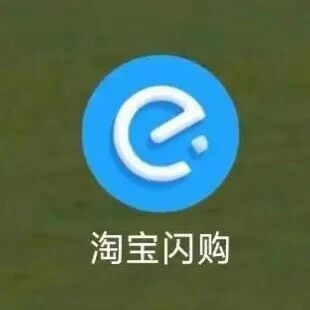
图源:AP P名称调整 对此 ,21 财经·南财快讯记者以消费者身份致电饿了么客服中心,接线工作人员表示, 此次 调整仅为名称变更,用户消费权益、数据隐私政策均保持不变,配送运力也正常运转 ,商家 数量以实际体验为准,目前暂无查询到有相关平台活动举行,"淘宝闪购也是属于饿了么旗下 的一个业务"。 据悉,此次更名核心在于战略定位调整: 饿了么从独立外卖平台转型为"即时零售"履约基础 设施,与淘宝流量入口深度协同,完成"30分钟送万物"目标。 灰度测试期间,用户可通过"淘 宝闪购"体验餐饮外卖、日用百货等即时配送服务 ,饿了么现有运力已全面承接相关订单,品 类覆盖进一步扩大。 公开信息显示,淘宝闪购是今年4月30日由淘宝"小时达"升级而来的即时零售品牌,饿了么全 程提供供给、运力及技术支撑。此次品牌统一后,淘宝闪购将首次参与"双11"。据了解,此次 整合被视为阿里应对美团、京东等对手的"即时零售"竞争举措,通过资源集中和品牌统一,提 升配送效率与用户体验。 记者丨 李益文 编辑丨 叶映橙 11月4日消息, 饿了么App最新的内测版本已更名为"淘宝闪购" ,版本号更新至12.0.1。此次 更新的"淘宝闪购"标语为" ...
传饿了么将正式更名为淘宝闪购
智通财经网· 2025-11-04 02:01
据了解,淘宝闪购为2025年4月30日淘宝推出的即时零售业务品牌,由淘宝"小时达"升级而来,饿了么 提供供给、运力及技术支撑。 同时,今年也将是淘宝闪购参与的第一个双11。10月16日,天猫总裁家洛在天猫"双11"发布会上宣布, 第17个天猫"双11"将是第一个淘宝闪购全面参与的"双11"。 智通财经APP获悉,据媒体11月3日消息,饿了么App最新的内测版本已更名为"淘宝闪购",版本号更新 至12.0.1。此次更新的"淘宝闪购"标语为"外卖放心点,美食准时达"。目前"淘宝闪购"正处于灰度测试 阶段,仅对部分用户开放体验。 灰度测试期间,部分用户可通过"淘宝闪购"体验餐饮外卖及日用百货等即时配送服务。目前,饿了么的 配送运力已全面承接淘宝闪购订单,覆盖更多品类。 此次整合被视为阿里应对对手的"即时零售"竞争举措,通过资源集中和品牌统一,提升配送效率与用户 体验。 ...
饿了么将正式更名为淘宝闪购
第一财经· 2025-11-04 01:51
Core Viewpoint - The article discusses the rebranding of Ele.me to "Taobao Flash Purchase," which is part of Alibaba Group's strategy to integrate its instant retail services and enhance brand positioning [3]. Group 1: Rebranding and Service Update - On November 3, users noticed that the Ele.me app was updated to version 12.0.1 and officially renamed to "Taobao Flash Purchase" [3]. - The new branding is currently in a gray testing phase, available to select users, with the slogan "Order with confidence, food delivered on time" [3]. - During the testing phase, users can experience instant delivery services for food and daily necessities, with Ele.me's delivery capacity fully supporting Taobao Flash Purchase orders [3]. Group 2: Strategic Integration - The rebranding is part of Alibaba Group's strategy to consolidate its instant retail services under a unified brand [3]. - According to previous reports, Cainiao will participate in the Taobao Flash Purchase business, providing hourly delivery services [3]. - Cainiao has already begun offering services in select areas of cities like Shanghai, Hangzhou, and Nanjing, with plans to expand to more key cities, covering categories such as 3C digital products, clothing, beauty, and food [3].
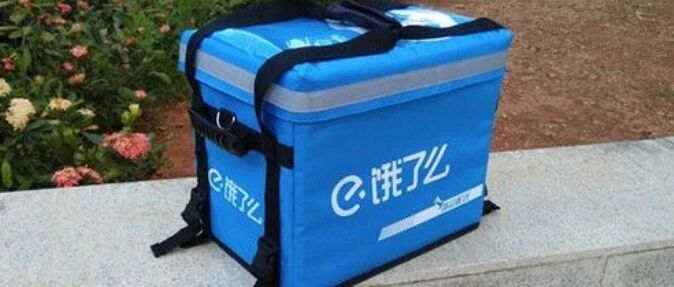
淘宝闪购、美团京东再次“狭路相逢” 万亿即时零售进入拐点
Nan Fang Du Shi Bao· 2025-11-03 13:30
Core Insights - The competition in instant retail has intensified, with major platforms like Taobao, Meituan, and JD.com focusing on supply chain infrastructure to enhance delivery efficiency and product availability [1][2][3] Group 1: Market Dynamics - Instant retail has reached a turning point, with increased consumer reliance and a significant rise in monthly consumption frequency [2] - The variety of consumption scenarios has expanded, moving from basic necessities to high-end products like the latest iPhone [2] - Nighttime orders have surged, with over 127 cities reporting a month-on-month growth exceeding 100% [2] Group 2: Challenges in the Industry - There is a growing issue of product homogeneity among instant retail warehouses, with 70% of products being similar across stores [3][4] - Merchants face challenges such as low brand recognition and weak digital capabilities, which hinder their competitiveness [3] Group 3: Strategic Initiatives - Taobao is investing in quality supply to create premium instant retail warehouses, aiming to address the brand recognition issue [3][4] - Meituan is collaborating with over 10,000 brands to build "official lightning warehouses," enhancing supply chain efficiency for well-known brands [4][6] Group 4: Supply Chain Innovations - The supply chain has become a critical battleground, with platforms like Taobao offering digital supply chain support and extended payment terms [6][7] - Taobao's new convenience store model aims to provide around 10,000 quality products, reducing operational costs and increasing profitability for merchants [6][7] Group 5: Operational Complexity - The complexity of operating physical stores involves various factors such as site selection, supply chain management, and cost control, which are significant challenges for instant retail [7][8]
零售“3.0”时代,小象超市如何为消费者锁鲜“高原菜”?
36氪未来消费· 2025-11-03 09:49
Core Viewpoint - The article emphasizes that user experience is the driving force behind the evolution of the instant retail industry, particularly in the context of fresh produce supply chains [2][15]. Group 1: Fresh Produce Supply Chain Innovations - Xiaoxiang Supermarket has developed a "reverse supply" model to address the challenge of providing fresh vegetables to northern regions during winter, utilizing high-altitude produce from Yunnan [3][5]. - The company has established a "48-hour low-temperature journey" for fresh produce, ensuring that vegetables can reach consumers in northern cities within this timeframe [9][11]. - By implementing advanced technologies such as vacuum pre-cooling and temperature-controlled logistics, Xiaoxiang Supermarket has significantly reduced customer complaints regarding the quality of leafy vegetables [11][12]. Group 2: Agricultural and Economic Impact - The integration of local farmers into the supply chain through order agriculture has not only improved the quality of produce but also enhanced the income of farmers in Yunnan [6][7]. - Xiaoxiang Supermarket's initiatives have led to a positive impact on local agricultural development, creating a model for rural revitalization and farmer support [6][7]. Group 3: User-Centric Business Model - The company's approach is a prime example of the "Retail 3.0" era, where user experience drives supply chain transformations, moving away from traditional inventory-heavy models [18][20]. - Xiaoxiang Supermarket focuses on direct sourcing, algorithmic replenishment, and flexible fulfillment to meet the increasing quality demands of consumers [18][19]. - The establishment of a comprehensive quality assurance system from source to consumer is a key differentiator for Xiaoxiang Supermarket, positioning it as a leader in the fresh retail sector [16][20].

松鼠动力获融资;OpenAI或明年启动IPO;Maison Margiela打造住宅
Sou Hu Cai Jing· 2025-11-02 14:30
Capital Dynamics - Smart electric RV company "Squirrel Power" completed Pre-A round financing led by a well-known industrial investment institution, with existing shareholders continuing to invest [3] - The company, founded in 2022 by former Anker Innovation product line general manager, aims to promote the mass production of its first product and expand into the North American market [3] IPO Dynamics - OpenAI completed a restructuring deal valued at $500 billion, laying the groundwork for an upcoming IPO [7] - During negotiations, OpenAI's valuation surged from $100 billion to $500 billion, with a potential maximum valuation of $1 trillion and fundraising exceeding $60 billion [8] Brand Dynamics - Meituan Flash Purchase announced plans to collaborate with over 10,000 brands to establish "official lightning warehouses," enhancing brand presence in instant retail [15] - PepsiCo unveiled a new global brand identity, including a refreshed logo and color scheme, aimed at emphasizing its commitment to sustainability and innovation [20]


美团闪购双11首日:近800个品牌、300类商品销量同比翻倍 上百个品牌官方旗舰店销量同比涨300%
Zheng Quan Ri Bao Wang· 2025-11-02 13:49
Core Insights - Meituan Flash Sale reported significant sales growth on the first day of the "Double 11" shopping festival, with nearly 800 brands seeing sales increase by over 100% year-on-year [1][2] - The new instant retail model, "Brand Official Flagship Lightning Warehouse," has contributed to the surge in sales, allowing consumers to purchase a wide range of products anytime and anywhere [1][2] Sales Performance - Major brands such as Apple, Moutai, and Meiji saw their sales increase by over 100% year-on-year within the first 24 hours of the promotion [1] - Specific product categories experienced remarkable growth: mobile phone sales doubled, while liquor sales increased fivefold [1] - Over 300 product categories, including mobile phones, liquor, and milk powder, reported sales growth exceeding 100% [1][2] Brand Engagement - Official flagship stores for brands like Sony PlayStation and Pampers opened with immediate high sales, indicating strong consumer demand [2] - Meituan Flash Sale is coordinating with brands to increase product supply to meet the high shopping demand [2] Retail Participation - Nearly one million offline stores participated in the Meituan Flash Sale for "Double 11," leading to a surge in customer traffic and sales across various brands [2] - In the 3C electronics category, brands such as Apple, Xiaomi, and OPPO saw sales growth exceeding 100% [2] Overall Market Impact - The overall sales from the lightning warehouses increased by over 100% year-on-year, reflecting the effectiveness of the 24-hour operation model in meeting consumer shopping needs [2]