
机器人制造

Search documents
港股收评:三大指数齐涨!半导体、机器人概念股强势,风电股低迷
Ge Long Hui· 2025-12-30 08:49
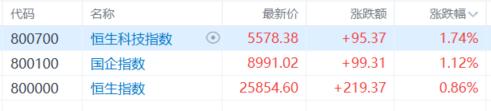
Market Overview - The Hong Kong stock market saw all three major indices rise, with the Hang Seng Technology Index increasing by 1.74%, the Hang Seng Index by 0.86%, and the National Enterprises Index by 1.12% [1][2]. Technology Sector - Major technology stocks collectively rose, with Baidu surging nearly 9%, and NetEase and Xiaomi both increasing over 2%. Other notable gains were seen in JD.com, Tencent, Alibaba, and Meituan [5][6]. - Semiconductor stocks also experienced significant gains, led by InnoCare, which rose over 15%, while major players like SMIC increased by over 4% [7][8]. New Listings - Six new stocks were listed on the Hong Kong market, with notable increases including InnoSilicon up 24.66%, and Wuyiyi Vision up 29.9% [3]. Energy Sector - Oil stocks strengthened, with CNOOC rising nearly 4% as international oil prices surged due to heightened geopolitical risks. WTI crude surpassed $58 per barrel, and Brent approached $62 per barrel [14]. Entertainment Sector - The film and entertainment sector was active, with Emperor Culture Industries rising nearly 9%. The 2025 box office has already surpassed 5.3 billion yuan, marking a new high in recent years [13]. Wind Power Sector - Wind power stocks fell sharply, with Goldwind Technology dropping nearly 11%, alongside declines in other related companies [16][17]. AI and Robotics Sector - AI application companies like MaiFusTech saw significant gains, rising over 11% after announcing strategic partnerships with major tech firms [18][21]. - Robotics stocks also performed well, with Sanhua Intelligent Control increasing over 12% [11]. Investment Outlook - Analysts suggest that the Hong Kong market may continue to trend upward due to supportive domestic policies and a weaker US dollar. There is a focus on technology growth and high dividend strategies as potential investment opportunities [23].





港股收评:午后涨幅扩大!恒指涨0.86%,科技股拉升,6只新股上市集体收涨
Ge Long Hui· 2025-12-30 08:20
Market Performance - The Hong Kong stock market indices saw significant gains in the afternoon, with the Hang Seng Tech Index rising by 1.74%, while the Hang Seng Index and the China Enterprises Index increased by 0.86% and 1.12% respectively, approaching the 26,000-point mark [1] Key Stocks and Sectors - Major technology stocks acted as market indicators, with Baidu surging nearly 9%, and other companies like NetEase and Xiaomi rising over 2%. JD.com, Tencent, Alibaba, and Meituan also experienced gains [1] - Semiconductor stocks strengthened due to favorable AI infrastructure news, with InnoCare Technologies leading the rise with over a 15% increase, and major player SMIC up over 4% [1] - Geopolitical risks led to a spike in international oil prices, benefiting the "Big Three" oil companies, with CNOOC rising nearly 4% [1] - The market is anticipating Tesla's Optimus project, with a potential U.S. robot executive order expected to be released in 2026, resulting in a noticeable rise in robotics stocks [1] - The National Development and Reform Commission encouraged major companies in the alumina sector to pursue mergers and acquisitions, leading to a rebound in aluminum and non-ferrous metal stocks [1] Underperforming Sectors - Wind power stocks declined sharply, with leading company Goldwind Technology falling nearly 11%. Nuclear power stocks also dropped, along with weak performances in aviation, building materials, cement, steel, insurance, and gaming sectors [1] New Listings - Six new stocks were listed on the Hong Kong market today, with notable performances including InnoCare Technologies up 24.66%, Meilian Holdings up 7.6%, Wuyi Vision up 29.9%, Linqingxuan up 9.3%, XunCe up 1%, and Woan Robotics closing flat [1]
富春染织:拟3000万元增资奇瑞旗下墨甲机器人
Zheng Quan Shi Bao Wang· 2025-12-30 08:20
Group 1 - The core point of the article is that Fuchun Dyeing and Weaving (stock code: 605189) has signed a capital increase agreement with Anhui Mojia Zhichuang Machinery Technology Co., Ltd., a subsidiary of Chery Automobile, to invest 30 million yuan to subscribe for 1.25 million newly issued shares [1] - After the completion of this investment, the company will hold a 1.2% stake in Mojia Robotics, which represents 1.6% of the company's audited net assets for the year 2024 [1] - The impact of this investment on the company's revenue and profit for 2025 is expected to be minimal [1]

浙海德曼:已有人形机器人订单 明年为五八智能规划至少1万台机器狗产能
Xin Lang Cai Jing· 2025-12-30 05:53
Core Viewpoint - Zhejiang Haideman is actively developing its machine tool business and humanoid robotics, with plans to produce at least 10,000 robotic dogs for Wuba Intelligent next year [1] Group 1: Company Developments - Haideman has been conducting in-depth research on robotic parts manufacturing processes and the development of high-end machine tools [1] - The company currently has a monthly production capacity of 500 machine tools, which can be adjusted to meet the demand for specialized equipment for robotic dogs [1] - Haideman has received orders for humanoid robots and is providing OEM manufacturing for partner companies [1] Group 2: Industry Trends - The company is actively promoting the application and sales of robots, indicating a growing focus on automation and robotics within the industry [1]

周红波在溧水区调研时强调
Nan Jing Ri Bao· 2025-12-30 01:48
Group 1 - The core focus is on the development of key industries in Lishui District, emphasizing the importance of high-quality growth in sectors such as new energy vehicles, new pharmaceuticals, intelligent manufacturing, and smart agriculture [1][2] - Nanjing Xinwangda New Energy Company achieved nearly 6 billion yuan in output last year, while Kaiwo New Energy Vehicle Group expects a 33% year-on-year growth in output this year [1] - Yika Intelligent Vehicle Technology Co., located in Lishui Economic Development Zone, has the capacity to produce 20,000 urban service robots annually after the first phase of its project is fully operational [2] Group 2 - The Nanjing Elderly Care Center is the largest continuous care retirement community in the city, highlighting the growing demand for health and wellness industries [2] - The Lishui District is identified as a significant growth area for the city, with a goal to achieve a trillion-level industrial cluster breakthrough in the next five years [2] - There is a strong emphasis on creating a favorable industrial ecosystem through reforms, optimizing the business environment, and enhancing the integration of industrial and supply chains [2]
融捷健康:子公司乐金环境的床面清洁机器人产品正进行模具开发、试制及性能优化,计划明年一季度上市销售
Mei Ri Jing Ji Xin Wen· 2025-12-30 01:28
Core Viewpoint - The company Rongjie Health (300247.SZ) is developing a floor cleaning robot through its subsidiary, Lejin Environment, with plans to launch the product in the first quarter of next year after completing mold development, trial production, and performance optimization [1]. Group 1 - The floor cleaning robot is currently undergoing mold development and trial production [1]. - The product is expected to be ready for mass production and market launch in the first quarter of next year [1]. - The company is responding to investor inquiries regarding the advantages of its product compared to similar products in the market, such as the Meow Wei robot [1].

专访|优必选周剑:相比表演秀 人形机器人更要进工厂干实事
2 1 Shi Ji Jing Ji Bao Dao· 2025-12-30 00:38
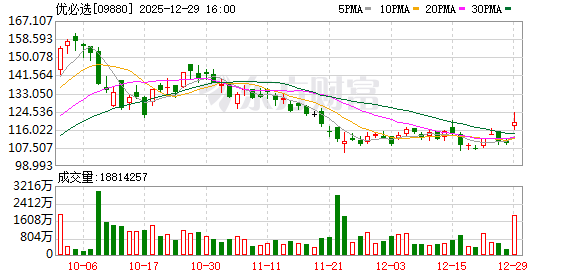
Core Viewpoint - UBTECH has successfully launched its 1000th industrial humanoid robot, Walker S2, marking a significant milestone in its production capabilities and commitment to practical applications in various industries [1][2]. Production and Delivery - The Walker S series has become the most widely adopted industrial humanoid robot in global automotive training, with an annual production capacity exceeding 1000 units and a delivery of over 500 units in 2025, aiming to scale to 10,000 units by 2026 [2][4]. - The company emphasizes real-world training and application, focusing on high-demand areas such as handling, sorting, and quality inspection, which are characterized by high employee turnover and repetitive tasks [3][8]. Market Strategy - UBTECH's strategy involves a phased approach: starting with industrial manufacturing, followed by commercial services, and eventually household applications, ensuring a sustainable business model that addresses real customer needs [5][11]. - The company has secured significant orders, including a record single bid of 264 million yuan, primarily from sectors like automotive manufacturing and smart logistics [4][6]. Technological Advancements - Continuous investment in humanoid robot technology, including hardware control, AI, and visual servo systems, has enabled the development of autonomous operational capabilities [5][12]. - The introduction of group intelligence technology allows for collaborative operation among humanoid robots, enhancing efficiency and adaptability in real-world scenarios [12][13]. Cost Management - UBTECH aims to reduce production costs by 20%-30% annually, targeting a unit cost of under $20,000 as production scales up, leveraging advancements in technology and supply chain integration [16][14]. - The company has achieved a 90% localization rate for core components, enhancing its competitive edge in the global market [15]. Industry Context - The humanoid robot industry is expected to face a talent shortage, with a projected demand gap of nearly 30 million workers in key manufacturing sectors by 2025, positioning humanoid robots as a viable solution [9][10]. - Despite the rapid advancements in the industry, UBTECH acknowledges that widespread adoption of humanoid robots in everyday life will take an estimated 5-10 years, necessitating ongoing investment and development [20].
21专访|优必选周剑:相比表演秀,人形机器人更要进工厂干实事
2 1 Shi Ji Jing Ji Bao Dao· 2025-12-30 00:17
Core Viewpoint - UBTECH has successfully launched its 1000th industrial humanoid robot, Walker S2, which will be deployed in key sectors such as automotive manufacturing, smart manufacturing, and logistics [2][3] Production and Delivery - The company has achieved an annual production capacity of over 1000 units and plans to increase this to 10,000 units by 2026, with over 500 units expected to be delivered in 2025 [2][3][5] - The Walker S series has become the most widely used humanoid robot in training across various automotive factories [2] Market Strategy - UBTECH focuses on practical applications in industrial settings, specifically targeting high turnover, high management difficulty, and repetitive tasks [3][8] - The company has adopted a three-step strategy: starting with industrial manufacturing, followed by commercial services, and finally home companionship [4] Order Acquisition - The company has secured several large orders, including a record single order of 264 million yuan, primarily from the automotive and smart manufacturing sectors [3][4] - The demand for humanoid robots is driven by labor shortages in repetitive and hazardous jobs, with a projected talent gap of nearly 30 million in China's manufacturing sector by 2025 [7] Technological Development - UBTECH has invested in a full-stack technology approach, including hardware control, AI, and visual servo systems, to enhance the capabilities of its robots [4][10] - The introduction of group intelligence technology allows for collaborative work among humanoid robots, significantly improving efficiency [10][11] Cost Management - The company anticipates a 20%-30% reduction in manufacturing costs annually, aiming to keep the cost per unit below $20,000 at scale [14] - UBTECH is focusing on optimizing design, manufacturing processes, and supply chain integration to achieve cost reductions [12][14] Industry Outlook - The humanoid robot industry is expected to see significant growth, with potential market sizes reaching hundreds of billions to trillions [17] - Despite rapid advancements, the widespread adoption of humanoid robots in everyday life is projected to take 5-10 years [17]
AI驱动中国智造跃升
Xin Lang Cai Jing· 2025-12-29 23:10
Core Insights - China's manufacturing industry is rapidly transitioning into a new era driven by artificial intelligence (AI), with significant advancements in smart manufacturing and industrial models [1][10] - The integration of AI is reshaping the manufacturing landscape, enhancing efficiency and enabling a shift from scale advantages to intelligent advantages [1][16] Group 1: Smart Manufacturing Developments - Over 35,000 basic-level, 7,000 advanced-level, and 230 excellent-level smart factories have been established in China since the start of the 14th Five-Year Plan [1][10] - Smart manufacturing is evolving from isolated production lines to comprehensive value chain integration, exemplified by Haier's COSMOPlat system that allows for large-scale personalized customization [2][11] Group 2: AI and Robotics Integration - Human-like robots are increasingly being utilized in factories, with significant advancements in their capabilities, such as precise handling and complex assembly tasks [13][14] - The application of robots in various manufacturing scenarios has led to notable improvements in production efficiency, such as a 20% increase in output and a 90% improvement in changeover efficiency [13][14] Group 3: Digital Transformation and Sustainability - The integration of digital technologies, including AI and 5G, is enhancing manufacturing flexibility and sustainability, with companies like Lenovo implementing zero-carbon factories [6][14] - The shift towards intelligent manufacturing is not only improving production efficiency but also contributing to sustainable development goals [6][14] Group 4: Global Integration and Policy Support - Chinese manufacturing is increasingly integrating into global supply chains, with companies establishing R&D centers abroad and adapting to local standards [7][15] - Continuous policy support from the Ministry of Industry and Information Technology is driving the digital transformation of the manufacturing sector, emphasizing the importance of AI in all aspects of production [16][17]
自2026年1月1日起 我国调整部分商品关税税率和税目
Qi Huo Ri Bao Wang· 2025-12-29 18:04
Group 1 - The State Council's tariff adjustment plan for 2026 aims to enhance the linkage between domestic and international markets by implementing provisional tariff rates lower than the most-favored-nation (MFN) rates on 935 items, promoting high-level technological self-reliance and modern industrial system construction [1] - The plan includes reducing import tariffs on key components and advanced materials, such as CNC hydraulic air cushions and composite joints, to support technological development and economic transformation [1] - The adjustment will also lower tariffs on medical products like artificial blood vessels and diagnostic kits to improve public health and welfare [1] Group 2 - The plan continues to implement preferential tariff rates for certain imported goods from 34 trade partners under 24 free trade agreements, promoting regional economic integration [2] - It maintains zero-tariff treatment for 100% of products from 43 least developed countries, reflecting China's commitment to supporting their development [2] - The tariff quota management for eight categories of imported goods, including wheat, remains unchanged, with a 1% provisional tariff rate on urea and other fertilizers, which is expected to stabilize agricultural production costs [2][3] Group 3 - The reduction in import tariffs is expected to lower costs for imported products, enhancing consumer purchasing power and stimulating domestic consumption [3] - The adjustment will impact corporate costs positively, allowing companies to reduce production costs and improve efficiency and product quality [3] - Increased competition from foreign imports may drive domestic companies to accelerate technological upgrades, facilitating industry transformation and upgrading [3]