
纺织服饰

Search documents
A股市场大势研判:大盘震荡走低,创业板指领跌
Dongguan Securities· 2025-09-04 23:31
Market Overview - The A-share market is experiencing a downward trend, with the ChiNext index leading the decline [1] - Major indices closed in the red, with the ChiNext index down by 4.25% and the Sci-Tech 50 index down over 6% [2][4] Sector Performance - The top-performing sectors include retail trade (up 1.63%), beauty care (up 1.19%), and banking (up 0.79%) [3] - Conversely, sectors such as telecommunications (down 8.48%), electronics (down 5.08%), and non-ferrous metals (down 3.65%) are underperforming [3][4] Market Trends - The market is characterized by a high number of declining stocks, with nearly 3,000 stocks falling [6] - The report indicates that the current liquidity remains a fundamental support for the market, despite short-term overbought pressures [6] Future Outlook - The report suggests three key areas to watch: 1. The second phase of the bull market with rapid sector rotation, focusing on sectors with low valuations and improving conditions [6] 2. Policy signals in response to economic pressures, particularly regarding PPI trends [6] 3. Potential interest rate cuts by the Federal Reserve, which could enhance liquidity and benefit sectors like non-ferrous metals [6] Policy Developments - The Ministry of Industry and Information Technology has issued a growth action plan for the electronic information manufacturing industry, targeting an average growth rate of around 7% for major sectors [5] - The plan emphasizes innovation in AI applications and the development of key components for 5G/6G technologies [5]
浙商早知道-20250905
ZHESHANG SECURITIES· 2025-09-04 23:31
Market Overview - The Shanghai Composite Index fell by 1.3%, the CSI 300 decreased by 2.1%, the STAR Market 50 dropped by 6.1%, the CSI 1000 declined by 2.3%, and the ChiNext Index decreased by 4.3%. In contrast, the Hang Seng Index rose by 1.1% [3][4] - The best-performing sectors on Thursday were retail (+1.6%), beauty and personal care (+1.2%), banking (+0.8%), social services (+0.7%), and textiles and apparel (+0.6%). The worst-performing sectors included telecommunications (-8.5%), electronics (-5.1%), comprehensive (-4.5%), non-ferrous metals (-3.7%), and defense and military industry (-3.3%) [3][4] - The total trading volume in the Shanghai and Shenzhen markets was 25,443 billion, with a net inflow of 706 million HKD from southbound funds [3][4] Important Insights Economic Outlook - The economic recovery in August maintained a weak trend, with growth momentum possibly having peaked, and the pace of endogenous recovery appearing relatively flat [5] - Market expectations indicate that the three driving forces of the economy show some weakness [5] - The core driving factor is the PMI data released by the National Bureau of Statistics for August [5] Household Savings and Market Dynamics - During the process of household savings moving into the stock market, "information leverage" will act as a confidence and market sentiment amplifier [6] - The rapid development and widespread penetration of smartphones and social media will lead to geometric rapid dissemination of information, termed "information leverage," which differs from traditional financial leverage and can enhance herd behavior among individual investors [6]
数据复盘丨通信、电力设备等行业走强 80股获主力资金净流入超1亿元
Zheng Quan Shi Bao Wang· 2025-09-03 10:34
Market Overview - The Shanghai Composite Index closed at 3813.56 points, down 1.16%, with a trading volume of 10123 billion yuan [1] - The Shenzhen Component Index closed at 12472.00 points, down 0.65%, with a trading volume of 13517.9 billion yuan [1] - The ChiNext Index closed at 2899.37 points, up 0.95%, with a trading volume of 6575.71 billion yuan [1] - The STAR Market 50 Index closed at 1306.48 points, down 1.64%, with a trading volume of 682 million yuan [1] - Total trading volume for both markets was 23640.9 billion yuan, a decrease of 5109.24 billion yuan from the previous trading day [1] Sector Performance - Communication and power equipment sectors showed strength, while defense, securities, insurance, and computer sectors experienced significant declines [3][4] - Among 31 primary sectors, 8 sectors saw net inflows of funds, with the power equipment sector leading at a net inflow of 2.63 billion yuan [5] - The defense industry had the highest net outflow of funds, totaling 7.43 billion yuan [5] Individual Stock Movements - A total of 777 stocks rose, while 4334 stocks fell, with 39 stocks hitting the daily limit up and 23 stocks hitting the limit down [3] - Tianpu Co. achieved a remarkable 9 consecutive limit-up days, leading the market in this regard [3] - 80 stocks received net inflows exceeding 1 billion yuan, with Yanshan Technology receiving the highest at 3.018 billion yuan [7] - 184 stocks experienced net outflows exceeding 1 billion yuan, with Dongfang Wealth seeing the largest outflow at 3.474 billion yuan [9] Institutional Activity - Institutions had a net buying of approximately 50.26 million yuan, with the highest net purchase in Chenxin Pharmaceutical at about 116 million yuan [10]

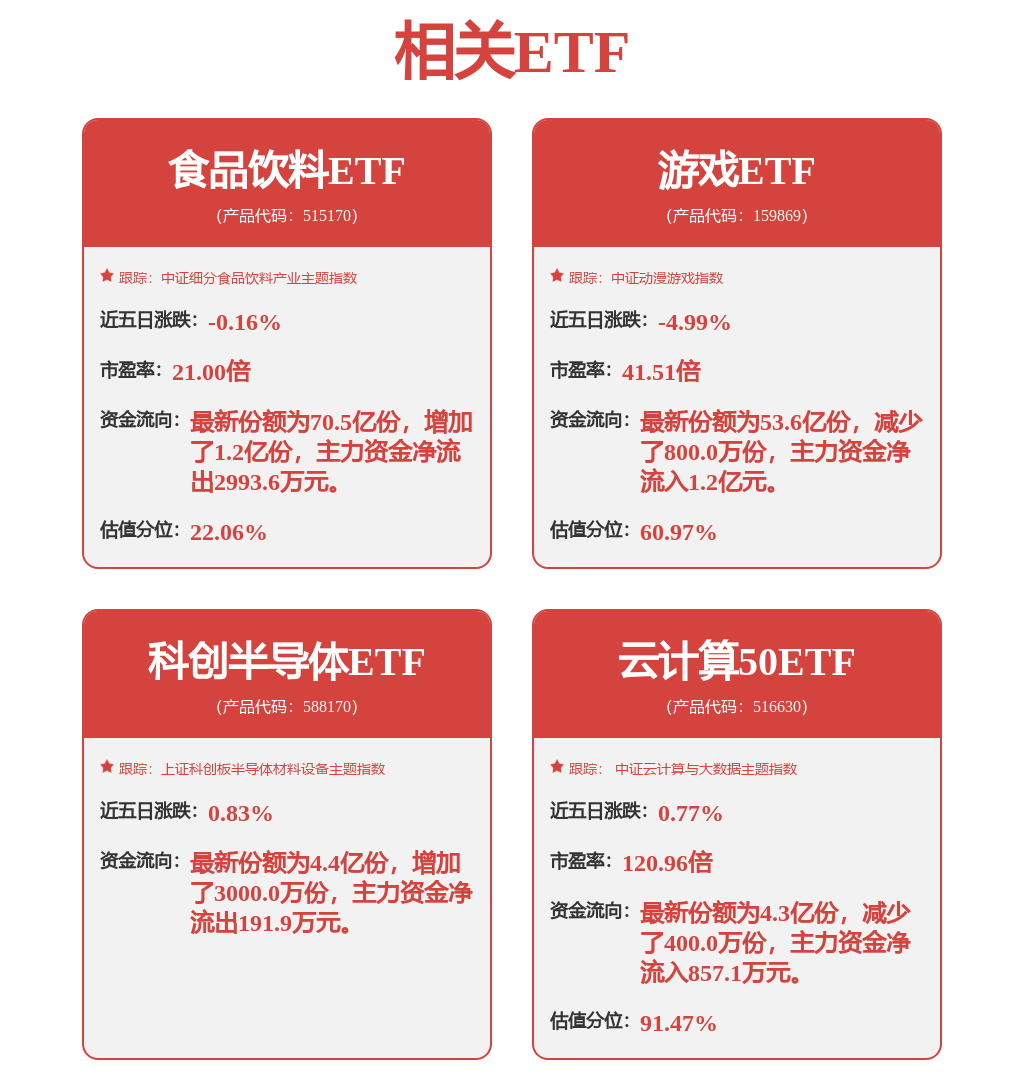
A股炒生肖行情再现,多只“马字辈”个股涨超5%
21世纪经济报道· 2025-09-03 09:58
Core Viewpoint - The recent surge in "Ma" stocks in the A-share market is primarily driven by speculative trading rather than fundamental changes in the companies' performance [4][5]. Group 1: Stock Performance - On September 3, the A-share market experienced significant fluctuations, but "Ma" stocks saw notable increases, with Feima International (002210.SZ) hitting the daily limit, and Yuma Technology (300993.SZ), Shenma Co., Ltd. (600810.SH), and Yema Battery (605378.SH) rising over 5% [1]. - The performance of "Ma" stocks includes: - Feima International: +9.90% - Yuma Technology: +6.88% - Shenma Co., Ltd.: +5.89% - Yema Battery: +5.26% - Tianma New Materials (838971.BJ): +4.12% - Haima Automobile (000572.SZ): +2.48% [2]. Group 2: Market Trends - The current "Ma" concept speculation is noted to have started nearly six months earlier than previous years, indicating a shift in market behavior [3]. - The "Ma" stocks span various industries, including environmental protection, electric power, textiles, and chemicals, showing a lack of correlation among them [3]. Group 3: Market Analysis - According to economist Song Qinghui, the rise in "Ma" stocks is a typical case of thematic speculation, driven by irrational associations with the zodiac rather than solid company fundamentals [4][5]. - This type of trading reflects a market environment where liquidity and speculative sentiment dominate, similar to previous trends seen with stocks linked to popular themes like the metaverse or ChatGPT [5]. - The recurrence of such speculative behavior suggests that the A-share market remains a battleground for emotions and capital, with investors frequently switching between different themes when substantial positive news is lacking [5].






纺织服饰行业今日跌1.17% 主力资金净流入2.22亿元
Zheng Quan Shi Bao Wang· 2025-09-03 09:14
Market Overview - The Shanghai Composite Index fell by 1.16% on September 3, with only three sectors rising: comprehensive, communication, and electric equipment, which increased by 1.64%, 1.61%, and 1.44% respectively [1] - The sectors with the largest declines were defense and military industry, and non-bank financials, which dropped by 5.83% and 3.05% respectively [1] Capital Flow Analysis - The main capital outflow from the two markets totaled 71.426 billion yuan, with only three sectors experiencing net inflows: electric equipment (2.958 billion yuan), textile and apparel (222 million yuan), and comprehensive (3.1066 million yuan) [1] - The non-bank financial sector had the largest net outflow, totaling 12.210 billion yuan, followed by the defense and military industry with a net outflow of 10.131 billion yuan [1] Textile and Apparel Sector Performance - The textile and apparel sector declined by 1.17%, with a net inflow of 222 million yuan. Out of 105 stocks in this sector, 24 rose, including three that hit the daily limit, while 79 fell [2] - The top three stocks with the highest net inflow were Meibang Fashion (205 million yuan), Wanlima (129 million yuan), and Tanshan (46.315 million yuan) [2] - The stocks with the largest net outflow included Jihua Group (78.477 million yuan), Nanshan Zhishang (46.579 million yuan), and China Gold (31.176 million yuan) [3]



310.66万元资金今日流入综合股
Zheng Quan Shi Bao Wang· 2025-09-03 09:12
Market Overview - The Shanghai Composite Index fell by 1.16% on September 3, with only three sectors showing gains: comprehensive, communication, and electric equipment, which rose by 1.64%, 1.61%, and 1.44% respectively [1] - The defense and military industry and non-bank financial sectors experienced the largest declines, with drops of 5.83% and 3.05% respectively [1] Capital Flow Analysis - The net outflow of capital from the two markets reached 71.426 billion yuan, with only three sectors seeing net inflows: electric equipment (2.958 billion yuan), textile and apparel (222 million yuan), and comprehensive (3.1066 million yuan) [1] - The non-bank financial sector had the highest net outflow, totaling 12.210 billion yuan, followed by the defense and military sector with a net outflow of 10.131 billion yuan [1] Comprehensive Sector Performance - The comprehensive sector saw a rise of 1.64% with a net inflow of 3.1066 million yuan, despite only one of its 16 constituent stocks rising [2] - The stock with the highest net inflow in the comprehensive sector was Dongyangguang, which attracted 105 million yuan, followed by Teli A and Hongmian Co., with inflows of 8.7395 million yuan and 5.0492 million yuan respectively [2] - The stocks with the largest net outflows included Yuegui Co., Zhangzhou Development, and Zongyi Co., with outflows of 65.8146 million yuan, 15.135 million yuan, and 13.3925 million yuan respectively [2]


北交所半年报出炉!
Zheng Quan Ri Bao· 2025-09-03 00:55
Overall Performance - In the first half of 2025, companies listed on the Beijing Stock Exchange achieved a total operating income of 92.064 billion yuan, with an average operating income of 336 million yuan, reflecting a year-on-year growth of 6.01% [2] - The total net profit attributable to shareholders was 5.909 billion yuan, with an average net profit of 21.5646 million yuan, showing a decline of 10.59%, although the decline rate has narrowed [2] - Over 60% of companies reported revenue growth, with 225 companies profitable, resulting in a profitability rate of 82.12% [2] - In Q2, companies reported a total operating income of 50.547 billion yuan, a quarter-on-quarter increase of 21.75%, and a net profit of 3.133 billion yuan, up 12.88% from the previous quarter [2] Industry Highlights - The automotive industry showed strong performance, with net profit growth of 23.63% in the first half of the year, driven by policies promoting vehicle upgrades [3] - Companies in the beauty and textile sectors also benefited from consumer trends, with net profit growth of 26.12% and 42.91%, respectively [3] - The equipment manufacturing sector maintained rapid growth, with net profit increasing by 15.95% [3] R&D Investment - Companies on the Beijing Stock Exchange increased R&D spending to 4.139 billion yuan, a year-on-year increase of 2.59%, with significant investments in information technology and biomedicine [4] - Eight companies had R&D expenditures exceeding 30% of their operating income, while four companies invested over 100 million yuan in R&D [4] - A total of 72 companies implemented equity incentive plans, covering 4,266 individuals, to attract and retain talent [4] Financing and M&A Activities - In 2025, 12 companies raised a total of 3.856 billion yuan through public offerings, while five companies announced targeted convertible bond issuances totaling 704 million yuan [5] - Eleven companies disclosed cash asset purchase announcements, with a total transaction amount of 2.650 billion yuan [6] - Significant mergers and acquisitions were noted, such as Xujie Technology's acquisition of a stake in a downstream photovoltaic power station investment and operation company [6] Investor Relations and Market Performance - Approximately 70% of listed companies implemented cash dividends, totaling 4.974 billion yuan, an increase of 5.35% year-on-year [7] - The number of qualified investors reached 8.6613 million, an increase of 675,600 from the previous year, with daily average trading participation of 343,700 investors [8] - The average daily trading volume was 29.625 billion yuan, with the market showing a positive trend following the launch of the Beijing Stock Exchange Specialized Index [8]
结构持续优化、创新动能增强 北交所公司上半年盈利面超八成 中小企业韧性强劲
Shang Hai Zheng Quan Bao· 2025-09-02 22:54
Group 1: Overall Performance - In the first half of 2025, companies listed on the Beijing Stock Exchange demonstrated resilience and growth potential, with total operating revenue reaching 92.064 billion yuan, an increase of 6.01% year-on-year [1] - The net profit attributable to shareholders was 5.909 billion yuan, with an average net profit of 21.5646 million yuan per company, reflecting a year-on-year decline of 10.59%, but the decline has narrowed compared to previous years [1] - Over 60% of companies reported revenue growth, with 225 companies profitable, resulting in a profitability rate of 82.12% [1] Group 2: Sector Highlights - The consumer sector showed policy-driven growth, particularly in the automotive industry, where companies like Kaitie achieved approximately 40% growth in both revenue and net profit [2] - The beauty and textile industries also thrived, with companies like Taihu Snow reporting a net profit increase of 69.77% [2] - Equipment manufacturing maintained rapid growth, exemplified by Wantong Hydraulic's net profit growth of 40.33% [2] Group 3: Innovation and Investment - Companies increased R&D investment, totaling 4.139 billion yuan, a year-on-year increase of 2.59%, with leading sectors being information technology and biomedicine [3] - Twelve companies completed public financing totaling 3.856 billion yuan, and five companies planned to issue a total of 704 million yuan in targeted convertible bonds [3] - Eleven companies disclosed cash acquisitions totaling 2.650 billion yuan, indicating active mergers and acquisitions for industry integration and transformation [3]
“期中”成绩单亮眼 创业板公司营收突破2万亿元 超七成盈利
Shang Hai Zheng Quan Bao· 2025-09-02 18:34
Core Insights - The overall performance of companies listed on the ChiNext board shows significant improvement, with revenue and net profit growth leading the A-share market in the first half of 2025 [1][2] Group 1: Overall Performance - In the first half of 2025, 1,384 ChiNext companies achieved a total revenue of 2.05 trillion yuan, with an average revenue of approximately 1.48 billion yuan, representing a year-on-year growth of 9.03% [1] - The net profit for these companies reached 150.54 billion yuan, with an average net profit of about 109 million yuan, marking a year-on-year increase of 11.18% [1] - The average operating cash inflow was 113 million yuan, showing a substantial year-on-year growth of 54.44% [1] Group 2: Profitability and Growth - Among the 1,384 companies, 1,028 reported profits, accounting for 74.28%, while 728 companies saw a year-on-year increase in net profit, representing 52.60% of the total [2] - 305 companies experienced a net profit growth exceeding 50%, and 173 companies had a growth rate over 100% [2] - The top 100 companies by market capitalization generated a total revenue of 937.23 billion yuan, with a year-on-year growth of 14.59%, and a net profit of 102.45 billion yuan, growing by 21.56% [2] Group 3: Sector Performance - Companies in advanced manufacturing, digital economy, and green low-carbon sectors collectively generated 1.34 trillion yuan in revenue, with a year-on-year growth of 9.87%, and net profits of 113.92 billion yuan, growing by 15.90% [3] - In the advanced manufacturing sector, 327 companies achieved a revenue of 461.13 billion yuan, with a year-on-year growth of 9.79% [3] - The digital economy sector saw over 300 companies generate 370.95 billion yuan in revenue, reflecting a year-on-year increase of 8.66% [3] Group 4: Green Low-Carbon Sector - The green low-carbon sector, comprising over 190 companies, reported a total revenue of 507.35 billion yuan, with a year-on-year growth of 10.85%, and net profits of 49.70 billion yuan, growing by 25.55% [4] - The renewable energy sector experienced significant growth, with revenue increasing by 22.66% and net profit soaring by 88.44% [4] Group 5: R&D Investment - ChiNext companies increased their R&D spending to a total of 94.99 billion yuan, reflecting a year-on-year growth of 5.35% [5] - In the second quarter of 2025, R&D expenditures reached 49.87 billion yuan, showing a quarter-on-quarter increase of 10.51% [6] - The overseas revenue of ChiNext companies grew significantly by 21.26%, driven by strong demand in the electronics and telecommunications sectors [6] Group 6: Long-term Investment - Long-term asset investments by ChiNext companies totaled 182.23 billion yuan, marking a year-on-year increase of 9.43% [6] - Investment in the electronics and power equipment sectors grew by 35.98% and 14.78%, respectively, reflecting a recovery in investment willingness [6]

营收超2万亿 净利润超1500亿!创业板上半年成绩单来了
Zhong Guo Ji Jin Bao· 2025-09-02 16:02
Core Insights - In the first half of 2025, companies on the ChiNext board achieved a total revenue of 2.05 trillion yuan and a net profit exceeding 150 billion yuan, with year-on-year growth rates of over 9% and 11% respectively, leading the A-share market [1][2] Revenue and Profit Growth - ChiNext companies reported a total revenue of 2.05 trillion yuan, with an average revenue of 1.48 billion yuan, marking a year-on-year increase of 9.03% [2] - The total net profit reached 1505.42 billion yuan, with an average net profit of 1.09 billion yuan, reflecting a year-on-year growth of 11.18% [2] - Over 70% of ChiNext companies were profitable, with more than half reporting a year-on-year increase in net profit, an increase of 4.86 percentage points compared to the previous year [2] - In Q2 2025, ChiNext companies achieved a total revenue of 1.10 trillion yuan, with a quarter-on-quarter growth of 14.95% [2] Key Growth Areas - The ChiNext board actively engaged in economic development, focusing on advanced manufacturing, digital economy, and green low-carbon sectors, with over 800 listed companies in these areas [3] - Companies in these three key sectors generated a total revenue of 1.34 trillion yuan, with a year-on-year growth of 9.87% and a net profit of 1139.19 billion yuan, growing 15.90% year-on-year [3] - The green low-carbon sector showed strong performance, with over 190 companies achieving a total revenue of 507.35 billion yuan, a year-on-year increase of 10.85% [3] Digital Economy and Advanced Manufacturing - The digital economy sector, comprising over 300 companies, reported a total revenue of 3709.48 billion yuan, growing 8.66% year-on-year, and a net profit of 292.15 billion yuan, increasing 40.03% [4] - The advanced manufacturing sector, with 327 companies, achieved a total revenue of 4611.34 billion yuan, reflecting a year-on-year growth of 9.79% [4] Highlights of Performance - The top 100 companies on the ChiNext board generated a total revenue of 937.23 billion yuan, with a year-on-year growth of 14.59% and a net profit of 1024.54 billion yuan, growing 21.56% [6] - Overseas revenue for ChiNext companies increased significantly by 21.26%, with notable growth in the electronics and communication sectors [6] - The consumer electronics, automotive, and small home appliance sectors saw net profit growth of 16.80%, 9.57%, and 21.94% respectively, driven by supportive policies [7] Investment and R&D Trends - ChiNext companies increased their R&D expenditures to a total of 949.89 billion yuan, a year-on-year growth of 5.35% [7] - Long-term asset investments by ChiNext companies totaled 182.23 billion yuan, reflecting a year-on-year increase of 9.43%, indicating a strong recovery in investment expansion intentions [7]