
具身智能

Search documents
中外采供对接会在苏州举行
Su Zhou Ri Bao· 2025-11-25 00:43
Core Insights - The "Chain Connecting the World, Intelligent Manufacturing for Prosperity" procurement matchmaking event took place in Suzhou, featuring nearly 50 overseas companies from over 20 countries and regions, engaging with more than 300 quality factories from the Yangtze River Delta [1][2] - The event utilized a "dual invitation model" focusing on key sectors such as medical devices, intelligent manufacturing, semiconductors, and automotive manufacturing, enhancing the efficiency of supply-demand matching [2] - Following the event, overseas buyers will visit 16 local Suzhou enterprises for on-site inspections, promoting deeper integration of "Suzhou Manufacturing" and "Suzhou Intelligent Manufacturing" with international markets [3] Group 1 - The event facilitated efficient and precise matchmaking, allowing participants to quickly establish initial intentions and exchange contact information [1] - Local suppliers in Suzhou reported significant benefits, with immediate agreements for factory visits following the event [2] - The event featured dedicated zones for overseas and domestic buyers, enabling orderly one-on-one and multi-party negotiations [1][2] Group 2 - Participants expressed satisfaction with the quality of Chinese suppliers, highlighting their advanced equipment and timely delivery [2] - The event's scale and professionalism exceeded expectations, prompting plans for continued participation in similar activities to further explore the Chinese market [2] - The event aimed to connect overseas buyers with certified suppliers in the Yangtze River Delta, addressing challenges in finding suitable manufacturers online [2]
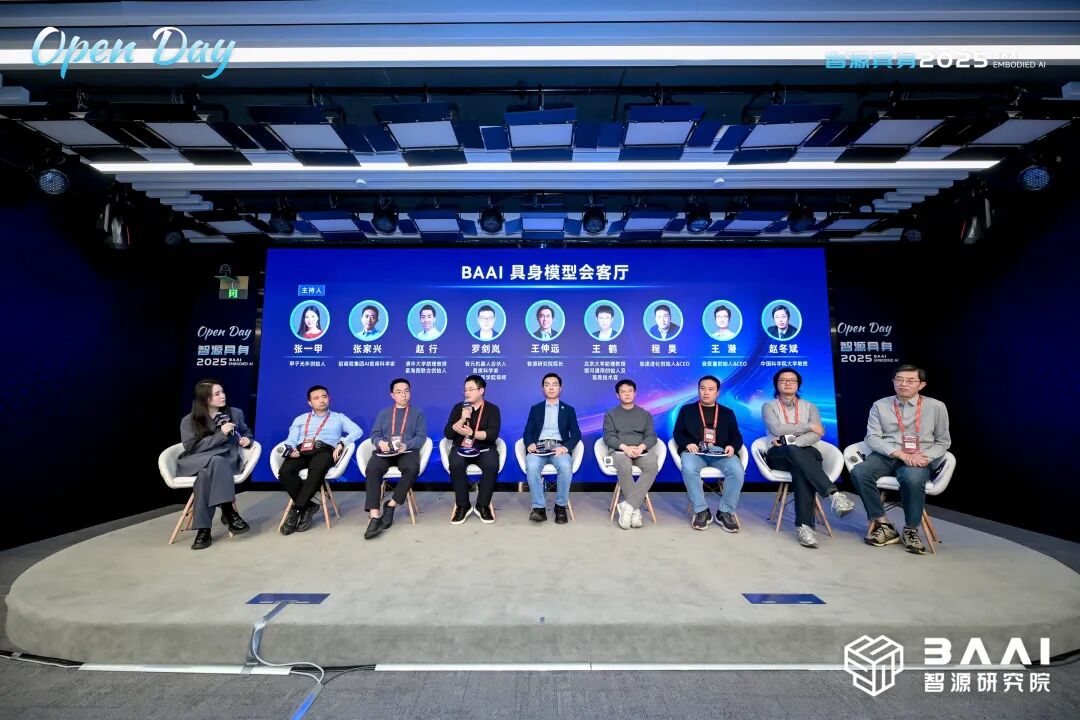
8位具身智能顶流聊起“非共识”:数据、世界模型、花钱之道
3 6 Ke· 2025-11-24 01:00
Core Viewpoint - The roundtable forum highlighted the importance of funding and data in advancing embodied intelligence, with participants discussing various strategies for utilizing a hypothetical budget of 10 billion yuan to drive development in the field [1][53]. Group 1: Funding and Investment Strategies - Participants expressed differing opinions on how to allocate 10 billion yuan for the advancement of embodied intelligence, with suggestions including investing in research institutions and building data engines [1][54][56]. - The CEO of Accelerated Evolution emphasized the need for collaboration, suggesting that 10 billion yuan may not be sufficient without partnerships [1][53]. - The focus on creating the largest self-evolving data flywheel was proposed as a key investment area [54]. Group 2: Data Challenges and Solutions - A significant discussion point was the scarcity of data, with varying opinions on the importance of real-world data versus synthetic data [2][29]. - The emphasis was placed on the necessity of high-quality, diverse data collected from real-world scenarios to enhance model training [30][32][36]. - The use of simulation data was also highlighted as a means to accelerate the development of embodied intelligence before sufficient real-world data can be gathered [43][44]. Group 3: World Models and Predictive Capabilities - The forum participants agreed on the critical role of world models in embodied intelligence, particularly in enabling robots to predict and plan actions based on future goals [5][12]. - There was a consensus that training data for these models should primarily come from the robots themselves to ensure relevance and effectiveness [5][12]. - The discussion included the potential for a unified architecture in embodied intelligence models, contrasting with the current fragmented approaches [7][15][27]. Group 4: First Principles and Decision-Making - Participants shared their foundational principles guiding decision-making in the development of embodied intelligence, emphasizing the importance of data scale and quality [48][49][51]. - The need for a physical world foundation model that accurately represents complex physical interactions was highlighted as essential for future advancements [26][27]. - The concept of a closed-loop model for embodied intelligence was proposed, contrasting with the open-loop nature of current language models [10][11].

专访中国社科院经济研究所原所长黄群慧:既要重视AI赋能千行百业,也要考量对就业的替代效应和带来的收入极化
Mei Ri Jing Ji Xin Wen· 2025-11-23 15:49
Core Viewpoint - The "15th Five-Year Plan" emphasizes the construction of a modern industrial system, reflecting a strategic shift in response to current domestic and international conditions, with a focus on both supply-side and demand-side policies [2][3][4]. Group 1: Modern Industrial System - The prioritization of "building a modern industrial system" signifies a need for new growth drivers, as traditional industries currently account for about 80% of the economy, with potential for significant market expansion through transformation [3][4]. - The modern industrial system is crucial for supporting the transformation of traditional industries and fostering new growth dynamics, highlighting the interdependence between technological innovation and industrial development [3][5]. Group 2: Policy Resource Allocation - The government should balance investments in traditional industries with those in strategic emerging and future industries, recognizing that traditional industries are essential for overall economic transformation [6][7]. - Different investment mechanisms are required for traditional, strategic emerging, and future industries, emphasizing the need for tailored policies to avoid pitfalls in resource allocation [8]. Group 3: Future Industries - The selection of six key future industries—quantum technology, biomanufacturing, hydrogen energy, nuclear fusion, brain-computer interfaces, and sixth-generation mobile communications—reflects a strategic focus on original innovation, market potential, and national security [9][10]. - The potential for these industries to achieve commercial viability within five years remains uncertain, with various factors influencing their market readiness and scalability [11][12]. Group 4: High-Tech Industry Growth - The goal of "doubling" the scale of high-tech industries over the next decade indicates a significant push for structural upgrades and the development of new high-tech sectors [14][15]. - Achieving breakthroughs in key areas like integrated circuits and industrial mother machines is critical for overcoming technological bottlenecks and enhancing national competitiveness [16]. Group 5: Artificial Intelligence Integration - The repeated emphasis on "artificial intelligence" in the plan indicates its role as a core driver for modern industrialization, aiming to empower various sectors of the economy [17][18]. - The social implications of AI, including its impact on employment and income distribution, must be considered in policy-making to ensure inclusive growth and address potential ethical concerns [18][19].
本周机构调研热度维持高位 锂电池与具身智能受重点关注
Ge Long Hui A P P· 2025-11-23 05:37
格隆汇11月23日|据中国基金报,本周(11月16日—11月21日)机构调研热度总体维持在高位,截至11月 21日17时,共有404家上市公司披露机构投资者调研记录。其中容百科技、蓝思科技接待百家以上的机 构。从调研内容来看,锂电池正极材料等相关领域布局进展,以及具身智能领域的产能情况,受到机构 投资者的重点关注。从赚钱效应看,本周接受机构调研的上市公司中,只有36家上市公司实现正收益, 涨幅排名前三的个股分别为深中华A(上涨32.24%)、大为股份(上涨16.87%)、同益股份(上涨16.51%)。 ...
人形机器人又融资了
Sou Hu Cai Jing· 2025-11-22 17:40
Financing Activities - 修实生物医药 completed nearly 100 million RMB Series A financing, focusing on overseas market expansion and R&D investment in peptide synthesis [2] - 百达信生物 successfully raised over 30 million RMB in Pre-A financing to accelerate the construction of a GMP production base for vaccine adjuvants [2] - 迈锐迪 announced the completion of several million RMB angel round financing to develop nuclear medicine projects [3] - 星动纪元 completed nearly 1 billion RMB A+ round financing, focusing on embodied intelligence technology [3] - 蓝点触控 secured over 100 million RMB in C round financing to enhance robot control technology [4] - 鲲石生物 raised 50 million RMB in Series A financing to advance macrophage drug innovation [5] - RockFlow completed several million USD in new financing led by Ant Group, focusing on AI-driven fintech solutions [5] - 中凯信网络 raised 8 million RMB in angel round financing to enhance AI technology integration [6] - 比利信息 completed several million RMB A+ round financing to accelerate the development of a new media platform for the travel industry [6] - 易思旋磁 secured several million RMB in seed round financing to support early-stage R&D in magnetic technology [6] - 融和医疗 completed nearly 100 million RMB in B round financing to promote innovative treatments for chronic obstructive pulmonary disease [7] - 爱鸥光学 raised several million RMB A+ round financing to enhance product development in the optical field [7] - 星尘智能 completed several hundred million RMB A++ round financing, focusing on AI robotics technology [8] - 中合基因 raised several million RMB Pre-A+ round financing to accelerate the commercialization of green DNA synthesis equipment [8] - 商汤医疗 completed several hundred million RMB in strategic financing to enhance medical AI models [9] - 博思芯宇 secured several million RMB angel+ round financing to develop sustainable computing solutions [9] - 灵宇宙 completed 200 million RMB Pre-A round financing to advance AI and consumer robotics [10] - 加速进化 completed over 100 million RMB financing to enhance humanoid robotics development [10] - 基流科技 raised nearly 100 million RMB in B round financing to strengthen AI computing cluster technology [11] - 耀石锂电 completed A round financing to accelerate solid-state battery technology commercialization [12] - 广汽高域 completed 200 million RMB Pre-A round financing to advance flying car technology [12] Investment Funds - 杭州热电 plans to invest 200 million RMB in establishing an industrial investment fund [14] - 恩威医药 announced a 20 million RMB investment in a joint fund focusing on early-stage enterprises [14] - 广东省人工智能与机器人产业投资基金 was established with a total investment of 1 billion RMB [14] - 杭州润苗基金 launched with an initial scale of 2 billion RMB, focusing on early-stage tech startups [14] - 安徽海螺新兴产业股权投资基金 was established with a total investment of 1 billion RMB [14] - 湖南高速 established a 6.5 billion RMB infrastructure investment fund [14] - 农银投资 and 浦东创投 launched a 3.334 billion RMB private equity fund [14] - 烟台夹河幸福新城城市发展母基金 was established with a total investment of 1 billion RMB [14] - 上海中移数字转型私募基金 increased its capital to 6.814 billion RMB, marking a 28% increase [14] - 四川高端能源装备子基金 was established with a scale of 1.5 billion RMB [14] - 市北高新 invested 40 million RMB in a joint investment fund [14]

十大券商首席拆解“十五五”投资机遇
Shang Hai Zheng Quan Bao· 2025-11-21 18:41
Core Viewpoint - The "15th Five-Year Plan" emphasizes the transformation of the economy towards high-quality development, focusing on new productive forces as the main engine for growth, with a shift in investment paradigms towards technology innovation and industrial upgrading [1][2]. Group 1: Economic Development and Investment Opportunities - The "15th Five-Year Plan" highlights the importance of expanding domestic demand and improving income distribution to drive consumption as a key growth engine [2]. - The plan aims to significantly enhance the level of technological self-reliance, focusing on critical areas such as semiconductor equipment and high-end materials, while also exploring future industries like quantum technology and brain-machine interfaces [2][4]. - Investment logic is shifting from short-term speculation to long-term value, with a focus on companies with technological barriers and continuous innovation capabilities, particularly in advanced manufacturing and hard technology sectors [3][4]. Group 2: Structural Upgrades and Industry Focus - The economic development during the "15th Five-Year Plan" will rely more on structural upgrades rather than scale expansion, with advanced manufacturing and strategic emerging industries as key targets [4][5]. - Investment opportunities are identified in artificial intelligence, quantum technology, biomanufacturing, and commercial aerospace, as well as in the transformation of traditional manufacturing towards smart and green practices [4][8]. - The importance of industry chain collaboration and full-chain layout is emphasized, with a focus on integrating technology, industry, and finance to enhance overall competitiveness [6][7]. Group 3: Capital Market Dynamics - The capital market is expected to evolve with a new valuation system that prioritizes R&D intensity, core patent numbers, and technology conversion efficiency over traditional financial metrics [6][7]. - Long-term capital mechanisms are being improved to support stable funding for technology enterprises, with an anticipated increase in direct financing and a more favorable environment for private enterprises with core technologies [3][6]. - The focus on new energy, new materials, and strategic emerging industries is expected to create significant investment potential as traditional industries undergo transformation [8][19]. Group 4: Policy and Strategic Directions - The "15th Five-Year Plan" sets a clear policy direction for supporting emerging industries while also upgrading traditional sectors, ensuring a balanced approach to economic development [16][19]. - The emphasis on technological innovation as a core strategic priority reflects a commitment to transitioning from a manufacturing powerhouse to a technology-driven economy [19][20]. - Education reforms are aligned with strategic needs to ensure a robust talent pipeline for future industries, particularly in high-demand fields like AI and engineering [20].
对话范浩强:10亿融资之前,我们手搓了5000元“丐版硬件”
量子位· 2025-11-21 09:00
Core Viewpoint - The article discusses the emergence of a new player in the field of embodied intelligence, highlighting the journey of the founding team from their previous experiences in AI to their current entrepreneurial venture, which focuses on practical applications in logistics and robotics [4][5][20]. Group 1: Company Formation and Background - The founding team of Yuanli Lingji consists of veterans from the AI 1.0 era, specifically from the company Megvii, bringing extensive experience in transitioning AI from laboratory settings to industrial applications [6][5]. - The initial inspiration for the startup came from the realization that many previously imported components for robotics are now available domestically, providing a solid material foundation for development [9][10]. - The company was officially established in March 2025 after a year of experimentation and prototype development [18][17]. Group 2: Business Focus and Strategy - Yuanli Lingji aims to penetrate the logistics sector, focusing on high-frequency, rule-based tasks such as sorting and distribution, leveraging their self-developed multimodal embodied intelligence model [20][21]. - The company has already demonstrated basic delivery capabilities and completed proof of concept (POC) in logistics scenarios within ten months of establishment [22][25]. - The founders emphasize the importance of hardware, AI, and application scenarios being equally critical for the success of robotics in industrial settings [26][60]. Group 3: Technological Development and Innovation - The company is developing its own hardware to meet industrial standards, focusing on reliability, consistency, and ease of maintenance, with plans to release a new generation of embodied robots [27][28]. - The founding team has a strong background in AI, having achieved significant milestones in various applications, which positions them well for the current AI 2.0 landscape [30][32]. - Yuanli Lingji has released several open-source tools and platforms to lower barriers for researchers and developers in the field of embodied intelligence, including Dexbotic and Robochallenge [38][44][50]. Group 4: Market Perspective and Future Outlook - The company acknowledges the current market's cautious approach, with potential industrial clients being in a phase of observation and exploratory investment [60][62]. - The founders believe that the development and application of technology will follow a long cycle, drawing from their experiences in the AI 1.0 era, and are committed to a patient and steady growth strategy [65][66]. - Yuanli Lingji aims to contribute to the standardization and open collaboration in the field of embodied intelligence, fostering a community that can innovate collectively [47][58].
展望“十五五” | 专访黄群慧:既要重视AI赋能千行百业,也要考量其对就业的替代效应和带来的收入极化
Mei Ri Jing Ji Xin Wen· 2025-11-20 07:04
Core Viewpoint - The "15th Five-Year Plan" emphasizes the construction of a modern industrial system, reflecting a strategic shift in China's economic development focus, particularly in response to current domestic and international challenges [2][3][4]. Group 1: Modern Industrial System - The prioritization of "building a modern industrial system" signifies a shift towards strengthening the real economy, which is essential for sustainable growth and resilience against external shocks [4][7]. - The plan aims to transform traditional industries, which currently account for about 80% of the economy, into new growth drivers, potentially creating a market worth trillions [4][8]. - The integration of technological innovation with industrial development is crucial, as it ensures that breakthroughs in technology can be effectively applied within the industrial framework [3][8]. Group 2: Future Industries - The plan outlines six key future industries: quantum technology, biomanufacturing, hydrogen energy, nuclear fusion, brain-computer interfaces, and sixth-generation mobile communications, chosen for their potential to drive economic growth and strategic importance [11][19]. - These industries are expected to contribute significantly to China's high-tech sector, with the goal of achieving a "doubling" of high-tech industries over the next decade [18][19]. - The selection of these industries considers their original innovation potential, market prospects, and alignment with national security needs [11][19]. Group 3: Policy and Investment Strategies - The government is advised to adopt a differentiated approach to funding and policy support for traditional, strategic emerging, and future industries, ensuring that resources are allocated effectively without neglecting any sector [9][10]. - The establishment of a guiding fund for future industries is recommended to attract private investment while managing risks associated with high uncertainty in these sectors [22][23]. - The focus on nurturing "unicorn" and "gazelle" companies is essential for fostering innovation and ensuring a dynamic ecosystem that supports both large enterprises and startups [24][23]. Group 4: Technological Innovation and Social Impact - The plan highlights the importance of integrating social considerations into technological innovation, particularly regarding the impact of artificial intelligence on employment and income distribution [31][37]. - A balanced approach is necessary to ensure that technological advancements do not exacerbate social inequalities, aligning with the broader goals of shared prosperity and sustainable development [37][38]. - The governance of artificial intelligence must evolve through interdisciplinary collaboration to address its societal implications effectively [38].

吉利资本领投,星动纪元完成近10亿元A+轮融资,订单额已超5亿元
Xin Lang Cai Jing· 2025-11-20 03:43
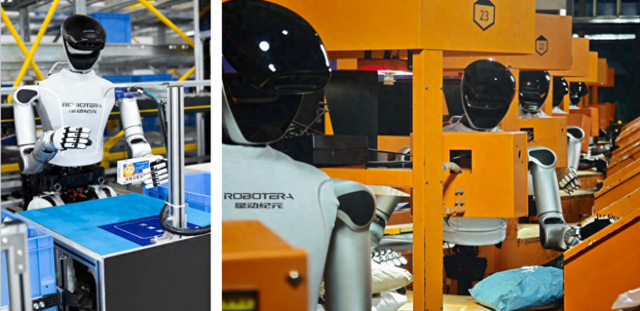
星动纪元业务国内主要聚焦具身智能行业解决方案应用,国外主攻开发者市场。其ERA-42大模型已在 物流、制造、商业服务等多个领域落地,部分场景效率当前已达到70%。同时,公司与吉利、雷诺、顺 丰、TCL、海尔、联想、世纪金源等企业达成深度合作,目前总订单额已超5亿元。 据介绍,星动纪元的海外业务占比50%,覆盖北美、欧洲、中东、日韩,全球市值前十科技巨头中9家 为公司客户,公司还与SKILD AI、字节跳动、MIT、斯坦福、清华、北大等全球顶尖机构形成深度合 作。(智通财经记者 秦盛) 11月20日,具身智能企业星动纪元完成近10亿元A+轮融资。本轮融资由吉利资本领投,北汽产投战略 投资,北京市人工智能产业投资基金及北京机器人产业发展投资基金联合注资。 星动纪元表示,此次融资将进一步支持端到端VLA具身大模型ERA-42的技术迭代及落地应用,吉利资 本及北汽产投的加入,也为产业应用进一步打开了战略协同发展空间。 ...
重构增长动能 - 2026年经济与市场展望
2025-11-20 02:16
Summary of Key Points from Conference Call Records Industry or Company Involved - The discussion primarily revolves around the **Chinese economy** and its future outlook, particularly in the context of the **15th Five-Year Plan**. Core Insights and Arguments 1. **High-Quality Development Focus**: The 15th Five-Year Plan emphasizes high-quality development, balancing effective qualitative improvements with reasonable quantitative growth, highlighting new productive forces, livelihood, and safety as key drivers for the next five years of economic development [1][3][4] 2. **Shift in Economic Strategy**: The future direction of China's economy is shifting from a single supply-side focus to a balanced approach addressing both supply and demand, with traditional industry upgrades and emerging industry growth occurring simultaneously [1][7] 3. **Investment Opportunities**: The concept of "investors" is highlighted, focusing on investments across the entire lifecycle of industries, with increased government spending in social employment, healthcare, and education to stimulate consumption potential [1][11] 4. **Economic Growth Expectations for 2026**: Five key highlights for 2026 include a potential easing of US-China tensions, strong export resilience, rising shares in emerging markets, increased innovation, and a focus on boosting domestic demand, with a GDP growth target of 5% [2][13][22] 5. **Emerging Industries**: The plan identifies several emerging industries such as low-altitude economy, embodied intelligence, hydrogen energy, and nuclear fusion, indicating a significant expansion of the strategic emerging industry framework [5] 6. **Risk Prevention Focus**: The focus of risk prevention has shifted from real estate and local government debt to external risks and domestic price pressures, with positive implications for anti-involution sectors and new infrastructure [8] 7. **Asset Allocation Recommendations**: Four main investment themes are identified: inflow of funds, technological innovation, institutional reform, and consumption upgrades, suggesting a positive outlook for the stock market [15][16] 8. **Bond Market Outlook**: A downward trend in government bond yields is anticipated due to a declining growth center and a sluggish real estate market, making government bonds a potentially attractive investment [18] 9. **Gold Market Dynamics**: Recent volatility in the gold market is attributed to supply-demand changes and geopolitical factors, with expectations of continued price support due to increased gold reserves by countries concerned about US debt risks [19] 10. **Commodity Market Outlook**: A bullish outlook is maintained for commodities, particularly gold and silver, with strategic and rare metals expected to enter an upward cycle, driven by high-quality and secure development needs [20] Other Important but Possibly Overlooked Content - The emphasis on "reasonable quantitative growth" aims to maintain GDP growth between 4.6% and 5% to achieve medium-developed country status by 2030 and 2035 [6] - The importance of safety in ensuring stable development is highlighted, alongside the need for high-level openness and the construction of a unified domestic market [4][9] - The ongoing governance of involution-style competition is crucial for improving market conditions and ensuring sustainable economic growth [12]