母婴

Search documents
生娃也有国补了,一孩3年可领1.08万
Di Yi Cai Jing· 2025-07-28 11:13
国家再放大招刺激生育。 7月28日,外界关注已久的国家《育儿补贴制度实施方案》正式公布。方案规定,自2025年1月1日起,对符合法律法规规定生育的3周岁以下婴幼儿发放育儿 补贴,每个婴幼儿最多可领取为期三年、总额1.08万元的补贴。 方案显示,育儿补贴按年发放,现阶段国家基础标准为每孩每年3600元,发放至婴幼儿年满3周岁。对于2025年1月1日之前出生且不满3周岁的婴幼儿,将按 其可享受补贴的月数折算计发。 根据规定,发放的育儿补贴免征个人所得税。在认定最低生活保障对象、特困人员等救助对象时,育儿补贴不计入家庭或个人收入。补贴由婴幼儿的父母一 方或其他监护人按规定向婴幼儿户籍所在地申领,主要通过育儿补贴信息管理系统线上申请,也可线下申请。 国家育儿补贴政策也是当前母婴、乳业等行业关注的重点。 呼和浩特市的生育补贴政策显示,2025年3月1日之后(含3月1日)合法生育的家庭:生育一孩一次性发放育儿补贴10000元;生育二孩发放育儿补贴50000 元,按每年10000元发放,直至孩子满5周岁;生育三孩及以上发放育儿补贴100000元,按每年10000元发放,直至孩子满10周岁。 乳业专家宋亮告诉第一财经记者,国 ...

ST金比:母婴业务是萎缩、跨界医美拖累业绩 破局需重铸内生力量
Xin Lang Zheng Quan· 2025-07-28 03:11
Core Viewpoint - The company, Jinfa Labi, once a leading player in the maternal and infant consumer market, is facing significant challenges as industry growth slows and competition intensifies, leading to a decline in its core business and market confidence [1][2]. Group 1: Business Performance - Jinfa Labi's core maternal and infant product business is experiencing an irreversible contraction due to intensified competition and changing consumer preferences, resulting in a diminishing advantage of offline channels [1]. - The decline in newborn numbers is shrinking the overall market, forcing the company into a battle for existing market share, while attempts to innovate through product extension and internet marketing have not yielded significant results [1]. Group 2: Strategic Shift - In search of a second growth curve, the company has turned to the medical beauty sector, proposing a "maternal and infant + medical beauty" synergy, but faces numerous challenges [2]. - Acquisitions of medical beauty institutions have not significantly contributed to revenue due to accounting standards, and integration issues have led to losses in some subsidiaries, which in turn have negatively impacted the parent company's financial health [2]. Group 3: Financial and Governance Issues - The company's financial performance is nearing the boundary of delisting risk, revealing deeper governance concerns, such as the timing of consolidating acquired companies and the pressure to meet revenue targets [2]. - The need for transparency in governance is highlighted, as some investors view the company's responses to subsidiary performance issues as passive and potentially damaging to its operational integrity [2]. Group 4: Future Outlook - To navigate its challenges, Jinfa Labi must focus on refining its core business, reducing inefficient product lines, and concentrating on high-potential categories to rebuild competitive barriers [3]. - The company should aim to genuinely integrate resources between maternal and infant sectors and medical beauty to avoid operational silos, while also fostering market trust through transparent communication and verifiable improvements in its core business [3].

inne交出行业首份临床实证“满分答卷”!CBME见证儿童营养“效果革命”
Jiang Nan Shi Bao· 2025-07-28 02:58
Core Insights - The 24th CBME International Baby, Maternity & Children Industry Expo in Shanghai showcased over 4,500 brands and attracted more than 100,000 professional visitors, marking a record scale for the event [1] - Inne, a German children's nutrition brand, highlighted its commitment to scientific nutrition through a groundbreaking academic conference focused on clinical evidence for calcium supplementation, shifting the industry towards evidence-based marketing [1][5] Group 1: Event Highlights - Inne's exhibition featured an immersive booth designed around the theme "Pinnacle Nutrition, Leading Growth," with a model of Mount Everest symbolizing the brand's pursuit of excellence [3] - The conference gathered industry experts and scholars, including notable figures from top hospitals, to discuss the importance of clinical evidence in advancing children's nutrition [5][6] Group 2: Product Innovations - Inne introduced upgraded products, including a liquid calcium supplement for children under 6 and a proprietary ingredient, Kidtal, aimed at enhancing bone growth during puberty, with research published in the journal "Nutrients" [4][6] - The company also presented clinically validated eye care products for children, which have shown effectiveness in alleviating visual fatigue and protecting against blue light damage [4][6] Group 3: Consumer Engagement - The exhibition attracted significant consumer interest, with interactive installations that allowed families to engage with the brand and learn about scientific nutrition [7] - Parents shared positive experiences with Inne products, emphasizing the brand's transparency in clinical research and its impact on children's health and growth [8] Group 4: Industry Impact - Inne's participation at CBME set a new benchmark for the industry by emphasizing the role of clinical evidence in driving high-quality development in children's nutrition [9] - The company plans to continue focusing on consumer needs and deepening clinical research to provide effective and transparent nutritional solutions for children's health [9]
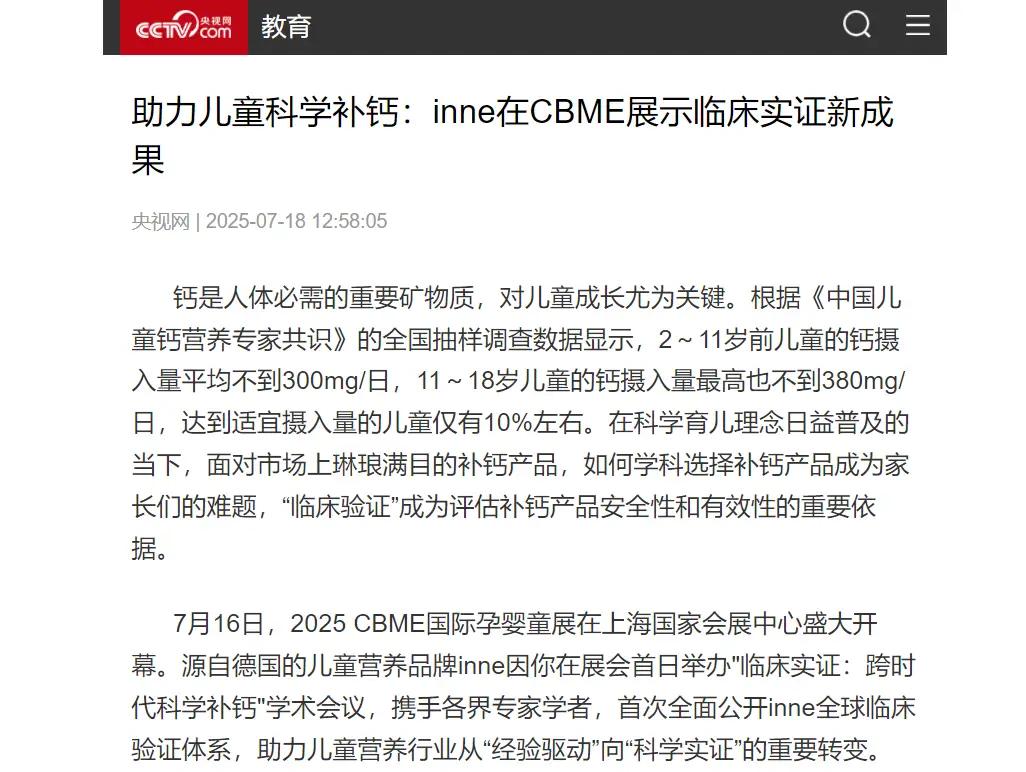
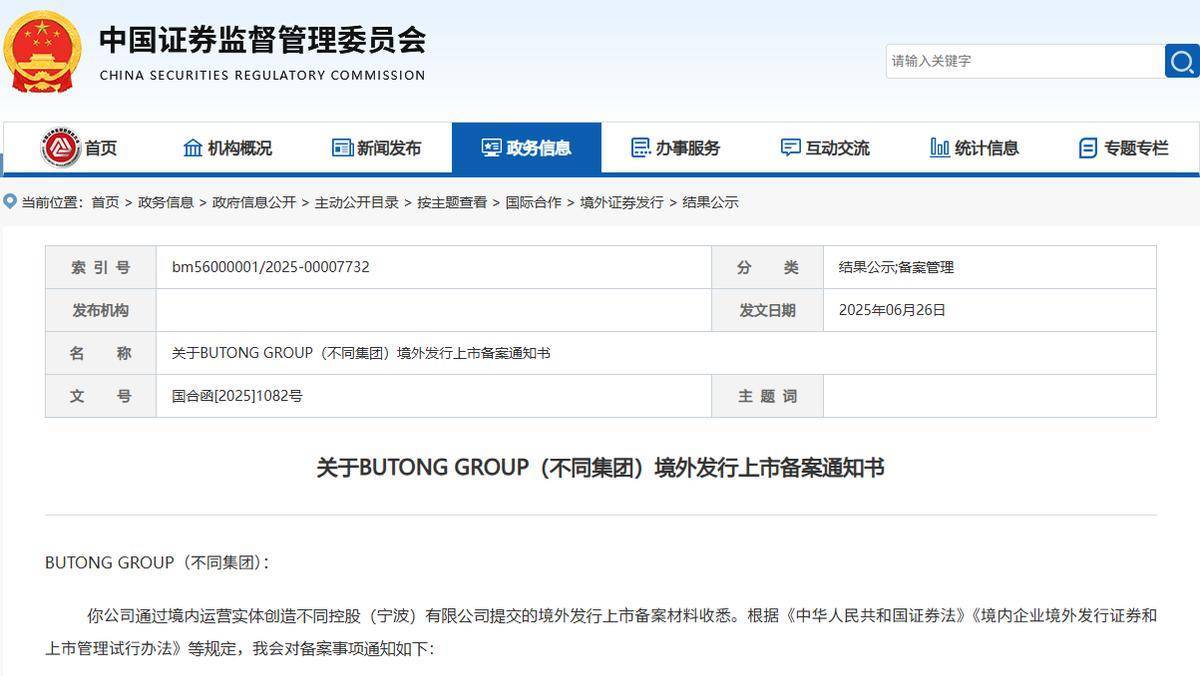
BeBeBus母公司不同集团备案通过,拟香港主板挂牌上市
Sou Hu Cai Jing· 2025-07-25 14:40
Core Viewpoint - BUTONG GROUP, the parent company of high-end parenting brand BeBeBus, has received approval for overseas listing, planning to issue up to 16.1886 million shares on the Hong Kong Stock Exchange, marking a significant milestone for the company's capital market development and injecting new momentum into the domestic maternal and infant industry [1][3]. Company Overview - BUTONG GROUP is an emerging family lifestyle product technology company founded in 2019, focusing on high-end parenting products. The BeBeBus brand strategically entered the high-end parenting market, initially offering four core products: baby strollers, child safety seats, cribs, and high chairs, and has since expanded into key areas such as parent-child travel, sleep, feeding, and hygiene care [3][5]. Financial Performance - The company has shown significant growth from 2022 to the first three quarters of 2024, with revenue increasing from 507 million yuan to 884 million yuan, and net profit turning from a loss of 21.229 million yuan to a profit of 46.421 million yuan. The gross margin has remained stable at around 50% [5][6]. - The financial data indicates that the revenue growth is attributed to a differentiated product strategy, leveraging design and functional innovation to create brand premium and enhance market competitiveness of core products [5][6]. Market Position - According to a report by Frost & Sullivan, the market size of China's high-end parenting products has grown from 25.4 billion yuan in 2019 to 31 billion yuan in 2023, with projections to reach 45.8 billion yuan by 2028. BeBeBus is recognized as the best-selling durable high-end parenting product brand in China, establishing a leading position alongside competitors like Goodbaby and Babycare [5][6]. Capital and Funding - BUTONG GROUP has completed three rounds of financing, with Tiantu Investment as the largest institutional shareholder, and other institutions like Gao Rong and Jingwei continuing to increase their stakes. The upcoming IPO in Hong Kong aims to raise net funds for enhancing production capacity, expanding overseas market influence, brand activities, sales network expansion, new product R&D, working capital, and general corporate purposes [7].
收入真实性、第三方回款存疑?孕婴世界遭北交所问询
Guan Cha Zhe Wang· 2025-07-23 10:14
Core Viewpoint - The company, Chengdu Yunyin World Co., Ltd., has received an inquiry letter from the Beijing Stock Exchange regarding its application for public stock issuance and listing, raising concerns about its business model, revenue authenticity, and compliance with regulations [1] Group 1: Business Model and Revenue - Yunyin World operates as a digital innovation-driven mother and baby chain enterprise, focusing on the sale of mother and baby products and providing services to upstream brand suppliers and downstream franchisees [2] - The company has achieved a significant scale in its franchise model, with over 80% of its total revenue coming from franchise sales and services [2] - The number of franchise stores has increased from over 1,300 in early 2022 to over 2,200 by the end of 2024, with terminal sales expected to exceed 3 billion yuan in 2024 [2][3] Group 2: Revenue Growth Amid Declining Birth Rates - Despite a declining birth rate in China, Yunyin World has reported substantial revenue growth, with main business revenues of 600 million yuan, 693 million yuan, and 999 million yuan in the reporting periods, reflecting year-on-year growth of 15.51% and 44.16% [4] - The company’s revenue growth contrasts with industry trends, as exemplified by competitor Kid King, which experienced fluctuating revenues and declining net profits over the same period [3][4] Group 3: Third-Party Payment Concerns - The Beijing Stock Exchange has raised concerns about the high proportion of third-party payments, which accounted for 41.37%, 33.44%, and 28.21% of total revenue in the reporting periods [6] - Yunyin World attributes the high third-party payment figures to the operational habits of its franchisees, who often use family members or associates for payment transactions [6][7] - The exchange has requested clarification on the relationships between payment parties and contract signers, as well as the necessity and reasonableness of these third-party payments [7] Group 4: Inventory and Compliance Issues - The company has been asked to explain its inventory valuation and the adequacy of its inventory impairment provisions, which are reportedly lower than industry averages [8] - Concerns have been raised regarding the company's accounting practices, including non-compliance with inventory management and documentation standards [8]

年销8亿元、推广费过亿,200万中产家庭“种草”的BeBeBus要上市了?
Sou Hu Cai Jing· 2025-07-22 22:57
Core Viewpoint - The company "不同集团" is advancing its IPO process in Hong Kong, driven by the popularity of its high-end parenting products like BeBeBus strollers and car seats, which have gained traction among "宝妈" on social media platforms like 小红书 [1][3] Group 1: IPO Progress - "不同集团" has completed the listing application for its IPO on the Hong Kong Stock Exchange, intending to issue up to 16,188,600 shares [3] - The company aims to use the raised funds to enhance production capacity, expand overseas market influence, and develop new products [3] - The IPO process faces challenges such as slowing revenue growth, high marketing expenses, and relatively low R&D investment [3][11] Group 2: Product Range and Pricing - BeBeBus has expanded its product line from core items like strollers and car seats to include sleep bags, pillows, bottles, diapers, and wipes, covering four main parenting scenarios [4][5] - The average transaction amount for core products has remained above 2,400 RMB, with stroller prices typically ranging from 2,000 to 3,000 RMB [6][8] - The company’s flagship products, such as the foldable crib priced at 3,280 RMB and the safety seat over 3,780 RMB, reflect its high-end positioning [6][8] Group 3: Revenue and Growth - Revenue from the travel segment, which includes strollers and car seats, was 3.25 billion RMB in 2022, 4.74 billion RMB in 2023, and 4.16 billion RMB in the first three quarters of 2024, showing a decline in growth rate [8][11] - The infant care segment has seen rapid growth, with revenue increasing from 420 million RMB in 2022 to 2.70 billion RMB in the first three quarters of 2024, accounting for 30.4% of total revenue [8][11] - Overall revenue for the company was 5.07 billion RMB in 2022, 8.52 billion RMB in 2023, and 8.84 billion RMB in the first three quarters of 2024, indicating a slowdown in growth [11][12] Group 4: Marketing and Expenses - The company has heavily invested in marketing, with sales and distribution expenses amounting to 1.89 billion RMB in 2022, 2.86 billion RMB in 2023, and 2.71 billion RMB in the first three quarters of 2024, representing over 30% of total revenue [16] - Despite high gross profits, net profits were negative in 2022 and only turned positive in 2023 due to high marketing costs [16][18] Group 5: Market Position and Competition - The overall market share of BeBeBus in the high-end durable goods segment is relatively low compared to competitors like 好孩子国际, which reported revenues nearly ten times higher [13] - The company relies on a limited number of suppliers, with the top five suppliers accounting for over 52% of procurement, raising concerns about quality control [20] Group 6: Consumer Sentiment and Challenges - There have been consumer complaints regarding product quality, including issues with strollers and diapers, leading to negative perceptions of the brand [21][20] - The company faces challenges from a declining birth rate in China and increasing consumer price sensitivity, which may impact future growth [27][28] Group 7: Industry Trends - The high-end parenting product market is experiencing a wave of IPOs, with several companies seeking to leverage capital for growth [32] - Despite the challenges, the overall consumer market is showing signs of recovery, which may benefit the parenting product sector [32]
跨时代突破,inne在CBME开启儿童营养“临床实证”元年,获央视聚焦
Zhong Guo Chan Ye Jing Ji Xin Xi Wang· 2025-07-22 02:58
Core Insights - The 24th CBME International Baby, Child & Maternity Industry Expo in Shanghai showcased over 4,500 brands and attracted more than 100,000 professional visitors, marking a new record in scale [1] - Inne's participation highlighted its commitment to clinical evidence in children's nutrition, launching a new standard for calcium supplementation based on scientific validation [4][5] - The brand's immersive exhibition theme "Peak Nutrition, Leading Growth" was visually represented by a model of Mount Everest, symbolizing its pursuit of excellence in research and product development [2] Company Highlights - Inne introduced upgraded products, including a liquid calcium supplement for children under 6 and a specialized calcium product for adolescents, both backed by clinical research published in the journal "Nutrients" [3][4] - The company hosted a significant academic conference on clinical evidence in calcium supplementation, featuring renowned experts and showcasing its global clinical validation system [4][5] - Inne's interactive exhibition attracted consumer engagement, with activities designed to promote scientific nutrition concepts among families [6][8] Industry Impact - The conference emphasized the importance of clinical evidence in driving high-quality development within the children's nutrition industry, setting a benchmark for future advancements [5][8] - Inne's approach to transparency in clinical research has resonated with consumers, enhancing trust and confidence in its products [7] - The brand aims to continue leading the industry by focusing on scientific research and addressing consumer needs, ensuring the health and growth of children globally [8]
整合异业联盟营销,博士茶馆哲宁老师营销兵法。
Sou Hu Cai Jing· 2025-07-20 12:19
Group 1: Integration of Communication Channels - The integration of online and offline channels is essential, where traditional offline channels like stores and outdoor advertising work in synergy with online platforms such as social media and e-commerce [2] - A case study of Uniqlo illustrates how offline stores showcase product quality and provide fitting experiences, while online platforms promote new products and offer convenient shopping services [2] Group 2: Integration of Marketing Content - Consistency in marketing content across various platforms is crucial, ensuring that product packaging, advertising, and public relations maintain a unified style and core message [5] - Coca-Cola exemplifies this by aligning its vibrant advertising with its brand philosophy of "refreshment and sharing," reinforcing consumer recognition and memory [5] Group 3: Integration of Target Audience - Precise segmentation of the audience based on factors like age, gender, region, and consumption habits enhances marketing efficiency [7] - Internet financial brands utilize big data analysis to create detailed audience profiles, tailoring product recommendations to different user segments [7] Group 4: Integration of Marketing Teams - Cross-department collaboration is necessary for effective marketing, involving market research, creative planning, advertising, and sales [10] - Breaking down departmental barriers facilitates information sharing and efficient collaboration, ensuring smooth marketing activities [11] Group 5: Utilization of External Resources - Integrating external professional resources, such as advertising and public relations firms, can enhance marketing effectiveness [11] - Companies can leverage external expertise to compensate for internal shortcomings, optimizing marketing strategies and improving overall performance [12]

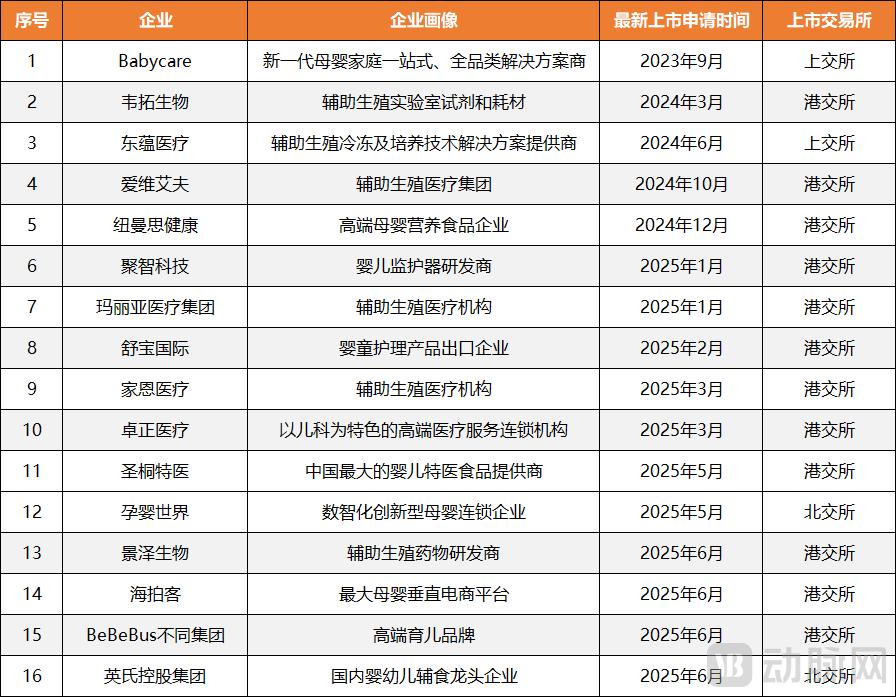
生育企业集体抢闸IPO,不上市就出局?
3 6 Ke· 2025-07-20 07:33
Core Viewpoint - The recent IPO of Saint Bella, known as the "Hermès" of confinement centers, saw a significant first-day increase of 33.74%, reaching a market capitalization of HKD 53.66 billion. However, industry experts view this listing as a desperate move due to the company's ongoing financial struggles, with a total loss of HKD 773 million and no net profit despite rising revenues [1][3]. Company Overview - Saint Bella's listing is part of a broader trend, with over 30 fertility-related companies currently seeking IPOs, including Babycare and Weituo Biotech, as they aim to capitalize on the market before potential downturns [2][3]. - The company has positioned itself at the intersection of maternity care and technology to support its valuation during the IPO process [1]. Financial Performance - Saint Bella reported a revenue increase of 42.6% to HKD 560 million, but still faced a net loss of HKD 420 million, marking a 103.43% increase in losses [9][10]. - Other companies in the sector, such as Newman Health and Haipai Ke, are also experiencing significant financial challenges, with losses and declining profits despite high revenues [7][10]. Market Dynamics - The fertility market in China is under pressure due to a declining birth rate, with 2024 projected to see only 9.54 million newborns, a significant drop from 14.65 million in 2019 [7][11]. - The low market penetration rate of 9.2% in assisted reproduction compared to around 30% in developed countries indicates substantial room for growth, but also highlights the challenges faced by domestic companies [11][12]. Challenges Faced by Companies - High operational costs and aggressive market expansion strategies have led to financial strain for many fertility companies, resulting in a cycle of increasing revenue without corresponding profit growth [16][17]. - Companies like Haipai Ke have reported significant losses, with cumulative losses reaching HKD 1.854 billion, despite high transaction volumes [7][10]. Future Outlook - The assisted reproduction market is expected to grow significantly, with projections indicating a market size of HKD 108.9 billion by 2029, driven by a compound annual growth rate of 12.9% from 2024 to 2029 [18]. - Companies are encouraged to target lower-income markets and innovate to reduce costs, while also considering international expansion to tap into global opportunities [18][20].
北交所或迎来“连锁加盟第一股”?
华尔街见闻· 2025-07-19 10:53
Core Viewpoint - Chengdu Pregnancy and Baby World Co., Ltd. has received acceptance for its application to the Beijing Stock Exchange, aiming to become the first chain franchise stock in the exchange's history, leveraging its unique business model focused on franchise stores for maternal and infant products [2][5][30]. Group 1: Business Model and Market Position - Pregnancy and Baby World operates a franchise model, selling various maternal and infant products through over 2,200 franchise stores, with revenue exceeding 1 billion yuan [4][6]. - The company primarily acts as a B2B intermediary, connecting numerous brand suppliers with franchisees, allowing it to benefit from scale advantages in procurement [15]. - The franchise model has enabled rapid expansion, with store numbers increasing from approximately 1,300 in early 2022 to over 2,200 by the end of 2024 [20]. Group 2: Financial Performance - For 2024, Pregnancy and Baby World projects revenues of 1.003 billion yuan and a net profit of 120 million yuan [6]. - The company's gross margin is significantly lower than competitors like Kidswant and Aiyingshi, with a gross margin of only 12% compared to over 20% for its competitors [15]. Group 3: Innovation and Compliance Challenges - The company has focused on software copyrights to demonstrate innovation, with over half of its 69 software copyrights registered in the past year [8][39]. - However, the rapid registration of software copyrights raises questions about the sustainability and depth of its innovation efforts, as the majority were registered in a short time frame [43][46]. - Pregnancy and Baby World's R&D expenses from 2022 to 2024 were below 1% of revenue, failing to meet the Beijing Stock Exchange's innovation investment requirements [38][34]. Group 4: Market Dynamics and Competition - The company is targeting the underdeveloped market segment, where the demand for maternal and infant products is growing, but it faces increasing competition from established players like Kidswant, which is also expanding into this market [32][28]. - The market for maternal and infant specialty stores in lower-tier cities is significantly underdeveloped, with a chain rate of only 30%, indicating potential for growth [27].