
科技

Search documents
AI成本焦虑重创亚洲科技股 市场情绪转向周期性板块
Ge Long Hui A P P· 2026-02-05 03:14
Group 1 - The core sentiment in the market is driven by concerns over rising investment costs in artificial intelligence, leading to a sluggish performance in Asian stock markets, particularly affecting the technology sector [1] - Investors are shifting funds from tech giants to cyclical stocks due to fears that AI may impact employment negatively [1] - A recent sell-off triggered by the launch of a legal tool by Anthropic's Claude model has resulted in a loss of approximately $830 billion in market capitalization for the technology sector since January 28 [1] Group 2 - The market is closely monitoring the upcoming earnings report from Amazon, as well as the policy meetings of the Bank of England and the European Central Bank, which are expected to maintain interest rates [1] - In the foreign exchange market, the Japanese yen has weakened for the fourth consecutive day, influenced by concerns over fiscal tightening following polls indicating a decisive victory for Prime Minister Kishida's expansionary fiscal policies [1]
资金“越跌越买”,港股科技30ETF(513160)本月累计“吸金”超3.15亿元
Mei Ri Jing Ji Xin Wen· 2026-02-05 02:50
Core Viewpoint - The Hong Kong technology sector is experiencing a downturn, with the Hang Seng China Technology Index dropping over 2.5% after five consecutive days of decline, despite ongoing capital inflows into related ETFs [1] Group 1: Market Performance - The Hong Kong Technology 30 ETF (513160) is under pressure but has seen a net inflow of over 315 million yuan since January 26, indicating continued investor interest [1] - The market is facing volatility due to the upcoming Chinese New Year, prompting some public funds to shift from high-valuation tech stocks to defensive assets [1] Group 2: Economic Indicators - A rebound in the US dollar index and rising US Treasury yields are negatively impacting the capital flow into Hong Kong stocks [1] - Despite these challenges, the appreciation of the Chinese yuan and stable earnings revisions for Hong Kong stocks lead to a positive outlook for the market [1] Group 3: Investment Strategy - For ordinary investors, direct investment in multiple Hong Kong tech stocks is complex and has high entry barriers; however, the Hong Kong Technology 30 ETF (513160) allows for a simplified investment in a basket of quality tech companies [1] - Investors can also consider connecting funds (Class A: 024037; Class C: 024038) for easier access to the market [1]
日经指数或上涨 受日元走软提振盈利预期
Xin Lang Cai Jing· 2026-02-04 23:52
Core Viewpoint - The Japanese stock market is expected to rise due to a weaker yen boosting profit growth expectations, although technology-related stocks may underperform the market following a decline in U.S. tech stocks [1][2]. Group 1: Market Performance - Nikkei index futures rose by 0.3% in Singapore, reaching 54,610 points [1][2]. - The USD/JPY exchange rate is at 156.84 yen, compared to 156.27 yen at the close of Tokyo's stock market on Wednesday [1][2]. - The Nikkei index fell by 0.8% on Wednesday, closing at 54,293.36 points [1][2]. Group 2: Company Focus - Investors are closely watching earnings reports, with Sony Group and NTT Inc. scheduled to announce their results later on Thursday [1][2].
智通港股早知道 | 港交所回应“港股IPO严控保荐质量” 马斯克旗下公司团队到访考察协鑫集团
Zhi Tong Cai Jing· 2026-02-04 23:45
Group 1 - The CEO of Hong Kong Stock Exchange (HKEX) welcomes the Hong Kong Securities and Futures Commission's (SFC) recent circular, emphasizing the importance of sponsor quality during the anticipated surge in IPO applications in 2025 [1] - The SFC's focus is on the quality of materials submitted by sponsors, rather than the applicants themselves, indicating a separation between the two [1] - HKEX aims to maintain high service levels and attract global investors by ensuring the quality of IPOs, especially in the context of a strong IPO application momentum [1] Group 2 - The Dow Jones Industrial Average rose by 260.31 points, or 0.53%, while the S&P 500 fell by 35.09 points, or 0.51%, and the Nasdaq Composite dropped by 350.61 points, or 1.51% [2] - Notable declines were observed in popular tech stocks, with AMD down over 17% and other major companies like Nvidia and Tesla falling by more than 3% [2] - The Nasdaq China Golden Dragon Index decreased by 1.95%, reflecting a broader downturn in Chinese concept stocks [2] Group 3 - Indonesia's largest coal companies have been exempted from production quota cuts, with a total of approximately 170 million tons of coal mining quotas granted [4] - Indonesia plans to reduce coal production by nearly a quarter to around 600 million tons to boost coal prices, which may impact China's coal imports significantly [4] - The coal sector in Hong Kong may be affected, with companies like Yanzhou Coal Mining and China Shenhua Energy being relevant players [4] Group 4 - CIMC has signed joint venture and gas supply agreements for a project in Indonesia, aiming for an annual production capacity of 180,000 tons of blue LNG and 100,000 tons of blue methanol [6] - The project is part of CIMC's strategy to expand its footprint in the energy sector [6] Group 5 - JD.com plans to implement an import doubling initiative, aiming to introduce over 1,000 overseas brands to the Chinese market over the next three years [8] - This strategy leverages JD's supply chain advantages to enhance its market presence [8] Group 6 - Shanghai Pharmaceuticals intends to publicly transfer a 30% stake in its subsidiary, with a minimum listing price of approximately 1.02 billion yuan [9] - The transaction is subject to public listing procedures and has received board approval [9] Group 7 - Evergrande Property is experiencing increased acquisition interest, with potential buyers including PAG and Guangdong Tourism Group [10] - The situation remains fluid, with no official comments from the involved parties as of the latest reports [10] Group 8 - Tianqi Lithium has adjusted the conversion price of its proposed 2.6 billion yuan convertible bonds to 51.85 HKD, up from an initial price of 49.56 HKD [11] Group 9 - Yum China forecasts an 11% increase in operating profit for 2025, reaching approximately 1.3 billion USD, with a 25% increase in Q4 operating profit [12] - The company plans to return 1.5 billion USD to shareholders by 2026 and increase dividends by 21% [12] Group 10 - Innovent Biologics anticipates a product revenue of approximately 11.9 billion yuan for 2025, reflecting a robust growth of about 45% [13] - The company reported a significant revenue increase of over 60% in Q4 2025 [13] Group 11 - Lee & Man Paper expects a profit of approximately 1.88 billion to 2 billion HKD for 2025, representing a year-on-year growth of 38% to 47% [14] - This growth is attributed to an increase in marginal profits [14]
华泰策略深度:港股IPO投资指南
Xin Lang Cai Jing· 2026-02-04 23:36
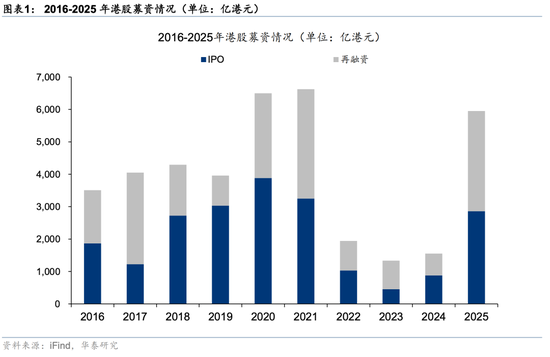
Core Viewpoint - The Hong Kong IPO market is experiencing a rapid recovery, driven by institutional optimization and liquidity easing, with a projected IPO financing scale of approximately HKD 310 billion in 2026 [2][16]. Group 1: Hong Kong IPO Market Recovery - In 2025, Hong Kong's IPO market saw 116 companies listed, raising nearly HKD 290 billion, marking a 320% increase from 2024 and the highest since 2021 [13][16]. - The average opening return for Hong Kong IPOs in 2025 was around 40%, with a historical low first-day loss rate of 28% [13][16]. - The market is characterized by a significant increase in cornerstone investors, with 77% of new listings having cornerstone investors in 2025, up from 70% in 2024 [13][16]. Group 2: IPO Participation Methods - There are three main participation methods for Hong Kong IPOs: cornerstone investment, anchor investment, and public offering, each with varying degrees of legal constraints and liquidity [4][47]. - Cornerstone investors engage early with legal agreements, ensuring allocation but facing a six-month lock-up period, making it suitable for long-term investors [4][48]. - Anchor investors have more flexibility without a lock-up period but face uncertainty in allocation, while public investors typically have lower allocation and less pricing power [4][50]. Group 3: IPO Project Selection - Key decision-making factors for cornerstone investments include market trends and company quality, with a focus on business synergy and asset scarcity [5][6]. - A quantitative model has been developed to help reduce the probability of investing in underperforming projects, showing a 15% higher return for selected projects compared to non-selected ones [5][6]. - Investors are advised to diversify their investments across multiple projects rather than concentrating on a few to enhance overall performance [6][7]. Group 4: Recommendations for Investors - Long-term investors should aim to participate as cornerstone investors to secure shares [6]. - Early engagement with issuers and intermediaries is recommended for anchor investors [6]. - Retail investors are encouraged to spread their investments across various feasible projects for better outcomes [6][7].

为何要促进贸易投资一体化
Jing Ji Ri Bao· 2026-02-04 22:12
Core Viewpoint - The integration of trade and investment is essential for optimizing resource allocation globally and enhancing China's competitive advantage, thereby promoting high-quality development of an open economy [1]. Group 1: Importance of Trade and Investment Integration - Trade and investment integration is based on industrial division of labor, primarily driven by multinational corporations, with short-term commercial interests and long-term core competitiveness as goals [1]. - Historical trends show that globalization, driven by industrial revolutions and technological advancements, has led to enhanced international trade and investment, benefiting multinational corporations significantly [2]. - The integration aims to enhance or maintain national competitiveness, requiring improvements in export quality, market diversification, and balanced development of imports and exports [3]. Group 2: Challenges and Considerations - The integration process must consider the balance between openness and security, as increased foreign investment may lead to potential import substitution issues in certain countries and industries [5]. - Over-competition from domestic enterprises can spill over into international markets, affecting profit margins and international competitiveness in technology, quality, and branding [5]. - There is a need to address the imbalance in service trade and investment, as the current focus is primarily on goods and manufacturing, necessitating an expansion of service sector openness and international competitiveness [5]. Group 3: Role of Enterprises - Enterprises are key participants in economic activities and must adhere to market, innovation, and development laws to effectively promote trade and investment integration [4]. - Continuous investment in research and development, innovation in production models, and optimization of global resource allocation are crucial for enhancing international competitiveness [4]. - Building world-class enterprise groups will further elevate China's competitiveness in technology, standards, branding, and services [4].
银行股普涨,科技股延续弱势,中概股低开低走,黄金强势反转
Ge Long Hui· 2026-02-04 14:34
Market Overview - The three major indices closed lower, with the Dow Jones down 0.345%, the Nasdaq down 1.43%, and the S&P 500 down 0.84% [1] Banking Sector - Bank stocks experienced a broad rally, with notable increases including US Bancorp up 2.32%, Zions Bank up 2.25%, JPMorgan Chase up 2.18%, and Union Bank up 2.11%. Other banks like Alliance West Bank and Citigroup also saw gains above 1% [3] - However, Morgan Stanley and Goldman Sachs faced declines, contrasting with the overall positive trend in the banking sector [3] Technology Sector - The technology sector continued to show weakness, with Qualcomm down 3.56%, Netflix down 3.41%, Nvidia down 2.84%, Microsoft down 2.87%, and META down 2.08%. Google and Amazon also experienced declines exceeding 1% [3] - Conversely, Tesla and Nvidia managed to post slight gains despite the overall sector downturn [3] Chinese Concept Stocks - Chinese concept stocks opened lower and continued to decline, with a mid-session drop of 2.4% and a closing decrease of 0.94%. Notable declines included Bilibili down 4.21%, Tencent Holdings down 3.33%, Baidu down 2.5%, and Alibaba down 2.81%. Beike fell by 2.17% [3] - Xpeng Motors, however, saw a significant increase of 4.06%, while Li Auto dropped by 2.9% [3] Gold Market - COMEX gold prices opened high and reversed strongly, closing up 6.19% at $4970.5 per ounce. The lowest price during the session was $4690.2, while the highest reached $5018.1 per ounce [3]

[2月4日]指数估值数据(红利类指数大涨;面对股市涨跌,如何调整自己的心态?)
银行螺丝钉· 2026-02-04 13:39
Core Viewpoint - The article discusses the recent performance of the A-share and Hong Kong stock markets, highlighting the strength of dividend and value styles, while noting the volatility and shifts in market trends over the past months [1][3][5][6][7][8]. Market Performance - The A-share market opened lower but rebounded to close positively, returning to a rating of 3.8 stars [1]. - The overall market showed strength, with large-cap stocks rising significantly while small-cap stocks experienced minor gains [4]. - The dividend and value styles were particularly strong today, with the Shanghai Dividend Index rising by 3% [5][6]. - The A-share market has seen a 50-60% increase since September 2024, with notable surges occurring in three distinct phases [18][20][22]. Market Trends - The first phase of the market surge occurred in the last two weeks of September 2024, with a rise of over 40%, marking the fastest increase in the last decade [20]. - The second phase saw significant growth in the growth style during the third quarter of 2025, with the ChiNext Index achieving a 50% increase in a single quarter [22][23]. - The third phase involved a rally in mid-cap stocks from December 2025 to January 2026, with the CSI 2000 and CSI 1000 indices reaching overvalued levels [26][27]. - Overall, the significant gains in the A-share market were concentrated in approximately 7% of trading days, which contributed to the majority of market returns [28][30]. Investment Philosophy - During periods of market volatility, investors may find it challenging to manage their emotions. The article emphasizes a value investment approach, suggesting that buying stocks equates to purchasing a company [32]. - The concept of holding a fund is likened to owning a "mini conglomerate," which generates profits without requiring active management from the investor [34][36]. - The article encourages investors to adopt a long-term perspective, particularly during bear markets, and to focus on companies that continue to operate and generate profits [40]. New Publication - A new book titled "Dividend Index Fund Investment Guide" has been released, which aims to help investors better understand dividend index funds, a rapidly growing category in recent years [41].
摩根大通冯兆邦:中国市场复苏分化中蕴藏机遇 逢低布局三大领域
2 1 Shi Ji Jing Ji Bao Dao· 2026-02-04 12:34
Group 1 - The core view is that despite a differentiated market recovery and uneven consumer momentum, there are significant structural opportunities in the Chinese market, suggesting a selective investment strategy [1] - The focus for investment should be on three types of assets: leading companies in technological innovation, high-dividend stocks that provide stable returns, and quality consumer stocks that have recently undergone deep adjustments and are now fairly valued [1] - The recent market rebound is primarily driven by valuation expansion rather than profit growth, leading to a cautious stance on chasing high prices, with a preference to wait for a 5% to 8% market correction before entering [1] Group 2 - In the context of AI competition among tech companies, the recent "red envelope war" signifies a necessary move for user acquisition, with limited long-term impact on profit margins, presenting potential buying opportunities for long-term investors [2] - There has been a shift in capital flows towards previously overlooked sectors like banking and insurance, indicating a diversification in investment strategies as funds seek value in the Chinese market [2] - Despite the risks and uncertainties surrounding AI investments, such as the unclear path to converting large investments into commercial returns, AI technology remains a crucial investment theme for Chinese tech stocks [2] Group 3 - The A-share market shows signs of stabilization due to policy support and improved expectations of the external environment, although the recovery in domestic demand is gradual and uneven [3] - Ongoing price pressures have weakened consumer willingness, with retail sales growth concentrated in a few online platforms, indicating a lack of broad-based recovery [3] - While the savings rate among residents continues to rise, providing a financial foundation for future consumption recovery, the wealth effect from the stock market has not yet significantly translated into consumer spending [3]

景顺长城基金旗下两只ETF完成更名
Zheng Quan Ri Bao Wang· 2026-02-04 12:11
Group 1 - The core viewpoint of the news is the recent wave of ETF renaming in the public fund industry to comply with the naming standardization requirements of the Shanghai and Shenzhen Stock Exchanges, aimed at enhancing investor experience [1][2] - On February 4, Invesco Great Wall Fund renamed its Nasdaq Technology ETF to "Nasdaq Technology ETF Invesco" and its ChiNext 50 ETF to "ChiNext 50 ETF Invesco," with no substantial impact on the rights of holders [1] - The Nasdaq Technology ETF Invesco is the only ETF in China tracking the Nasdaq Technology Market Capitalization Weighted Index, focusing on leading tech companies like Microsoft, Apple, Nvidia, and Google, with a fund size of 12.669 billion yuan and a one-year net value growth rate of 32.81% as of January 31 [1] - The ChiNext 50 ETF Invesco tracks the ChiNext 50 Index, covering leading companies in strategic emerging industries such as electronics, new energy, and pharmaceuticals, with a fund size of 4.879 billion yuan and a cumulative net value increase of 139.83% over the past two years [1] Group 2 - Invesco Great Wall Fund has been continuously deepening its efforts in the ETF sector, focusing on specialization and internationalization [2] - The company has developed a diverse ETF product line that includes broad-based, industry/theme, cross-border, and Smart Beta ETFs, covering A-shares, US stocks, and Hong Kong stocks [2] - The recent standardization of ETF naming is part of Invesco Great Wall Fund's ongoing efforts to enhance ETF support services and improve investor experience [2]