电子

Search documents
转债周度跟踪:新券和次新券估值连续2周压缩-20260307
Shenwan Hongyuan Securities· 2026-03-07 13:26
1. Report Industry Investment Rating No relevant content provided. 2. Core Viewpoints of the Report - The conflict between the US and Iran has disturbed the domestic risk appetite, causing the equity and convertible bond markets to decline simultaneously. However, the market shows some resilience due to the policy expectations of the Two Sessions. The convertible bond market focuses on new bond valuations and call risks. After last week's active valuation compression of high - parity convertible bonds, the decline in the valuation of high - parity convertible bonds has significantly narrowed this week, and the difference in valuation changes in the term distribution is more obvious. The valuations of new and sub - new bonds with a remaining term of more than 5 years have decreased significantly. Looking forward, the policy is positive, and the domestic equity market is expected to rise, but attention should be paid to avoiding call and near - maturity convertible bond risks [3][6]. 3. Summary by Directory 3.1 Week's Viewpoint and Outlook - The conflict between the US and Iran has affected the domestic risk appetite, leading to a decline in the equity and convertible bond markets. But the market shows resilience due to the Two Sessions' policy expectations. The convertible bond market focuses on new bond valuations and call risks. After last week's valuation compression of high - parity convertible bonds, the decline in their valuation has narrowed this week. The valuations of new and sub - new bonds with a remaining term of more than 5 years have decreased significantly. One reason is the unexpected call of Anji Convertible Bond and the general entry of sub - new bonds into the second round of call progress, increasing the expected call probability. The other is the poor performance of the equity market and the large retracement of the technology sector, which has led to a convergence of optimistic sentiment about the underlying stocks, causing the valuations of new and sub - new bonds to decline in line with the underlying stocks. The decline of new and sub - new bonds is greater than that of the whole market this week. In the future, the policy is positive, and the domestic equity market is expected to rise, with a focus on avoiding call and near - maturity convertible bond risks [3][6]. 3.2 Convertible Bond Valuation - The domestic equity and convertible bond markets are greatly affected by news. The risk appetite is still impacted by the US - Iran conflict, but the market shows some resilience due to the Two Sessions' policy expectations. The convertible bond valuation shows a weak and volatile performance. After removing outliers, the 100 - yuan premium rate has decreased by 0.4% to 32.3%, which is significantly lower than the 2 - standard - deviation level. - This week, the convertible bond valuation continues to show a structural compression feature, with more obvious differences in the term distribution. The valuations of new and sub - new bonds with a term of more than 5 years are still significantly compressed. The conversion premium rates in each parity range have generally decreased month - on - month. The valuation in the parity range above 140 yuan has decreased by 2.7%, and the decline has narrowed compared with last week, but the valuation compression of new and sub - new bonds is still large, with the valuation of new bonds with a term of more than 5.5 years compressed by more than 5%. - From the perspective of individual bonds, the valuations of new and sub - new bonds with a remaining term of more than 5 years have generally decreased. The bonds with a large month - on - month decline in valuation, such as Tianzhun, Weidao, Kaizhong, Shangtai, and Jin 25, have a decline of more than 10%, which is mostly related to the significant decline of the underlying stocks. In addition to new and sub - new bonds, the convertible bonds with a large month - on - month decline in valuation in the parity range above 120 yuan are mostly affected by call expectations, such as Liyang, Zhenhua, Zhongchong Zhuan 2, and Yong 02, and their latest conversion premium rates have been compressed to less than 10%, implying a strong call expectation. - As of the latest, in terms of parity, the valuation of the 90 - 110 yuan parity range is resilient, and the quantile is still close to 100%. The quantiles of other parity ranges have loosened significantly. In terms of term, the valuation quantiles of the 1 - 2 - year and 3 - 4 - year term ranges are close to 100%, while those of the 2 - 3 - year and less - than - 1 - year term ranges are relatively low [5][7][11]. 3.3 Clause Tracking 3.3.1 Redemption - This week, 3 convertible bonds, including Anji, Hengyi, and Zhonghuan Zhuan 2, announced redemptions, and 0 announced non - redemptions, with a call rate of 100%. Currently, there are 26 convertible bonds that have issued call or maturity redemption announcements but have not been delisted. Among the non - delisted convertible bonds, the potential conversion or maturity balance of call and maturity convertible bonds is 10.9 billion yuan. - Currently, there are 52 convertible bonds in the redemption progress. 17 are expected to meet the redemption conditions next week, and 18 are expected to issue announcements of potential redemption triggers. In addition, 10 convertible bonds are expected to enter the call counting period within the next month [21][22][25]. 3.3.2 Downward Revision - This week, 3 convertible bonds, including Wentai and Qiaoyin, proposed downward revisions, and Bairun Convertible Bond announced the downward revision result, with the revision reaching the bottom. As of the latest, 81 convertible bonds are in the non - downward - revision interval, 19 cannot be downward - revised due to net asset constraints, 0 have triggered the downward - revision condition but the stock price is still lower than the trigger price and no announcement has been made, 21 are accumulating downward - revision days, and 5 have issued downward - revision board plans but have not held a general meeting of shareholders [26]. 3.3.3 Put Option - No convertible bond issued a conditional put option announcement this week. As of the latest, 1 convertible bond has issued a put option announcement, and 3 are accumulating put - option trigger days, among which 1 is also accumulating downward - revision days, and 2 are in the non - downward - revision interval [29]. 3.4 Primary Issuance - As of the latest, there are 4 convertible bonds in the approval - registration progress, with a to - be - issued scale of 3.6 billion yuan; there are 9 convertible bonds in the listing - committee - approval process, with a to - be - issued scale of 8.8 billion yuan [31].
A股市场运行周报第82期:市场震荡成长背离,调结构、切大盘
ZHESHANG SECURITIES· 2026-03-07 10:50
Market Overview - The A-share market experienced wide fluctuations this week, with major indices showing signs of top divergence, including declines of 0.93% for the Shanghai Composite, 1.54% for the SSE 50, and 1.07% for the CSI 300[11] - Growth indices like the CSI 500, CSI 1000, and National CSI 2000 saw larger declines of 3.44%, 3.64%, and 3.53% respectively, indicating a bearish trend[11] - The ChiNext Index and STAR 50 also fell by 2.45% and 4.95% respectively, while the North Star 50 dropped 7.14%[11] Sector Performance - The energy sector showed strength, with traditional energy sources like oil and coal rising by 8.06% and 3.79% respectively, while new energy sources like electric equipment increased by 0.55%[12] - Technology sectors, particularly TMT-related industries, faced significant declines, with media, computer, and electronics down by 6.98%, 5.29%, and 5.07% respectively[12] Market Sentiment and Capital Flow - The average daily trading volume in the Shanghai and Shenzhen markets increased to 2.62 trillion yuan, indicating heightened market activity[19] - Margin trading balances slightly decreased to 2.65 trillion yuan, with the proportion of financing purchases rising to 10.28%[28] - Stock ETFs saw a net inflow of 135.6 billion yuan, with the most significant inflow in the metals sector[28] Future Outlook - The ongoing geopolitical tensions in the Middle East are expected to continue impacting market stability, with A and H shares likely to experience further adjustments in the near term[4] - The A-share weight indices are anticipated to stabilize after mid-March, while growth indices may not find stability until late April due to earnings pressure[4] - The banking index shows signs of sufficient adjustment and potential bottom divergence, making it a viable short-term hedge[44] Risk Factors - There are concerns regarding the domestic economic recovery not meeting expectations, alongside uncertainties in global geopolitical situations[45]
大类资产月度策略(2026.3):政策定调寻主线,资产博弈迎变阵-20260307
Guoxin Securities· 2026-03-07 09:52
Group 1 - The report indicates a sustained "wide monetary + wide credit" environment, with China's new social financing in January reaching 72,208 billion yuan, exceeding expectations, and new RMB loans at 47,100 billion yuan, also above forecasts, suggesting a low risk of tightening funds [1][13] - The asset price outlook suggests a convergence of styles, with a focus on low valuation and high-performance stocks as external uncertainties rise, indicating a shift from high-risk trading to assets with higher safety margins [2][19] - The report highlights the performance of various asset classes in February, with the stock market showing differentiation, the bond market strengthening, and commodities experiencing volatility, while the RMB appreciated against the USD [30][41] Group 2 - The report provides quantitative asset allocation recommendations, suggesting an aggressive allocation of 10% in stocks, 45% in bonds, 15% in oil, and 30% in gold under an optimistic scenario, while a conservative scenario suggests 10% in stocks, 85% in bonds, 1.7% in oil, and 3.3% in gold [5][22] - The report notes that the stock-bond valuation ratio has decreased, indicating a reduced attractiveness of stocks relative to bonds, with the stock risk premium showing a historical low [44][47] - The report emphasizes the importance of monitoring macroeconomic indicators and market sentiment through various indices, which can help investors make informed decisions regarding asset allocation [53][55]
A股市场运行周报第82期:市场震荡成长背离,调结构、切大盘-20260307
ZHESHANG SECURITIES· 2026-03-07 09:45
Core Insights - The market is experiencing wide fluctuations, with some indices showing signs of divergence. A and H shares are expected to undergo further adjustments due to the complex evolution of the Middle East situation and global asset price volatility. The A-share weighted index is gradually stabilizing after sufficient structural adjustments, while some growth indices may stabilize after April due to significant gains and earnings pressure from the reporting season [1][4][44] Weekly Market Overview - The market saw wide fluctuations from March 2 to March 6, with major indices mostly retreating. The Shanghai Composite Index, Shanghai 50, and CSI 300 fell by 0.93%, 1.54%, and 1.07% respectively. Growth indices like CSI 500, CSI 1000, and National CSI 2000 dropped by 3.44%, 3.64%, and 3.53%, showing daily MACD divergence [11][42] - The energy sector, both traditional and renewable, showed strong performance, while technology sectors faced declines. Traditional energy stocks like oil and coal rose by 8.06% and 3.79%, while renewable energy stocks like electric equipment increased by 0.55%. In contrast, technology-related sectors such as media, computing, and electronics saw declines of 6.98%, 5.29%, and 5.07% respectively [12][43] Market Sentiment - The average daily trading volume in the Shanghai and Shenzhen markets was 2.62 trillion yuan, showing an increase compared to the previous week. The main futures contracts were mostly in a state of contango, indicating a positive market sentiment [19][28] Fund Flows - As of March 5, the margin trading balance was 2.65 trillion yuan, slightly down from the previous week, with the proportion of financing purchases rising to 10.28%. The stock ETF saw a net inflow of 13.56 billion yuan, with the most significant inflow in the metals sector ETF [28][33] Valuation Insights - The dynamic valuation model indicates that the overall market index valuations are reasonable, while the ChiNext index is relatively undervalued. As of March 6, the PE-TTM for the Shanghai Composite Index was 17.12, at the 99.6 percentile, while the ChiNext index was at 41.71, at the 46.08 percentile [36][39]
全球滞胀预期升温
Orient Securities· 2026-03-07 09:38
Group 1 - The report highlights that the worsening situation in the Middle East has led to a significant rise in oil prices, with Brent crude exceeding $90 per barrel, marking a 22-year high, which has elevated inflation expectations and suppressed risk appetite globally [4][13]. - The report indicates a shift towards a stagflation scenario, characterized by downward revisions in growth expectations and upward adjustments in inflation expectations, resulting in increased yields on U.S. Treasury bonds and pressure on gold prices [4][13]. - Domestic equity markets have also experienced negative disturbances, with energy-related sectors such as oil and petrochemicals, coal, and public utilities performing well, while growth sectors like media, computing, and electronics have seen more significant adjustments [4][14]. Group 2 - The report anticipates three potential impacts from the ongoing Middle East situation: first, a possible easing of conflict could restore global equity markets; second, the end of conflict may lead to heightened inflation expectations and a reassessment of global policy easing; third, an increase in global risk assessment could position the domestic market as an attractive destination for global capital [4][16].
AH股市场周度观察(3月第1周)-20260307
ZHONGTAI SECURITIES· 2026-03-07 07:07
A-Share Market - The A-share market experienced an overall adjustment this week, with significant declines in small and mid-cap sectors. The CSI 1000, CSI 500, and CSI 2000 indices fell by 3.64%, 3.44%, and 3.00% respectively, while the NEEQ 50 led the decline with a drop of 7.14%. In contrast, large-cap indices like the Shanghai Composite Index decreased by only 0.93%, and the CSI 300 fell by 1.07% [5][6] - A notable style shift occurred in the A-share market, with cyclical sectors rising against the trend while technology growth sectors faced deep corrections. The oil and petrochemical sector surged by 7.18%, and coal prices increased by 3.50%, driven by heightened geopolitical tensions in the Middle East. International oil prices surpassed $80 per barrel, boosting the A-share oil and gas sector significantly [6][7] - Looking ahead, the market is expected to maintain a volatile adjustment pattern in the short term. The evolution of the Middle East geopolitical situation remains a core variable affecting cyclical sectors. If conflicts continue, there may be further opportunities in energy and chemical price increases. However, caution is advised regarding potential corrections if the situation stabilizes [7] Hong Kong Market - The Hong Kong market saw an overall decline this week, with major indices adjusting across the board. The Hang Seng Technology Index fell by 3.70%, the Hang Seng Index decreased by 3.28%, and the Hang Seng China Enterprises Index dropped by 2.61%. In terms of sectors, the energy sector rose by 3.74%, while materials and non-essential consumer sectors fell by 7.79% and 5.79% respectively [8][9] - The Hong Kong market faced downward pressure primarily due to tightening overseas liquidity expectations and rising geopolitical risks. As an offshore market, Hong Kong is highly sensitive to external liquidity changes, with major internet companies like Tencent and Alibaba experiencing significant pressure [8][9] - In the outlook, the Hong Kong market is expected to maintain a volatile pattern in the short term, but structural opportunities still exist. The timing of potential interest rate cuts by the Federal Reserve remains a key variable. If a rate cut cycle begins in the second half of the year, Hong Kong could see a return of foreign capital. The current valuation of the Hang Seng Technology Index presents a favorable long-term investment opportunity [9]
创业板改革将增设“第四套”标准,支持新型消费、现代服务业
第一财经· 2026-03-06 15:48
Core Viewpoint - The article discusses the latest updates on the reform of the ChiNext board, highlighting the introduction of a more precise and inclusive listing standard to support the development of new industries, new business models, and new technologies [3][6]. Group 1: ChiNext Board Reform - The reform plan for the ChiNext board is nearing completion and will be released after further refinement [3]. - A new set of listing standards will be introduced to better support innovative enterprises in new consumption and modern service industries [5][6]. - The current ChiNext board has three core listing standards, focusing on profitability, market valuation, and revenue, catering to different types of growth-oriented innovative enterprises [5]. Group 2: Market Expectations - Market participants are optimistic about the upcoming reforms, anticipating a broader development space for enterprises and a better capital market environment [8]. - Industry leaders emphasize that the ChiNext board will continue to serve high-growth and innovative companies, enhancing its unique advantages through institutional innovation [8][9]. - The reforms are expected to improve the financing environment for R&D-focused companies, particularly in sectors like biotechnology and pharmaceuticals [9].


量化行业配置:行业超预期轮动策略今年累计超额4.13%
SINOLINK SECURITIES· 2026-03-06 14:00
Market and Industry Overview - In the past month, major domestic market indices showed mixed performance, with the Guozheng 2000, Zhongzheng 1000, Zhongzheng 500, and Shanghai-Shenzhen 300 rising by 4.07%, 3.71%, 3.44%, and 0.09% respectively, while the Shanghai 50 fell by -0.88% [10] - Among the CITIC first-level industry indices, 22 sectors experienced gains, with the steel, building materials, machinery, coal, and defense industries leading the way. The steel industry had the highest monthly increase at 9.52%. Conversely, consumer services, non-bank financials, and media sectors lagged behind, with monthly declines of -3.37%, -3.48%, and -4.22% respectively [10][11] Industry Rotation Strategy Performance - In February, factor performance varied, with profitability and valuation momentum factors continuing to perform well, achieving IC values of 15.81% and 30.64% respectively. The analyst expectation factor had an IC value of 5.47% [18] - The long-short returns for profitability and valuation momentum were 2.74% and 9.53% respectively. For the year-to-date, the average IC values for profitability and valuation momentum factors were 33.94% and 36.14%, with long positions yielding returns of 1.91% and 6.63% respectively [18] - The February performance of the supernormal enhancement industry rotation strategy yielded a return of 6.86%, while the equal-weight benchmark return was 4.83%, resulting in an excess return of 2.03% [32] Current Industry Recommendations - The supernormal enhancement industry rotation strategy for March recommends the non-ferrous metals, basic chemicals, telecommunications, electronics, and machinery sectors. The strategy has removed media and defense industries from its holdings and added telecommunications and machinery [46] - The basic chemicals sector saw an increase in analyst expectation scores, ranking second among all sectors, while the telecommunications sector's supernormal factor score significantly improved, elevating its total ranking to third [46] - The basic chemicals, non-ferrous metals, steel, basic chemicals, and real estate sectors were recommended by the valuation industry rotation strategy, with the defense, steel, and real estate sectors not included in the supernormal enhancement strategy [46] Research Industry Selection Strategy - The research industry selection strategy for March includes telecommunications, home appliances, non-bank financials, electric power and public utilities, and electric equipment and new energy sectors. The research heat for telecommunications, home appliances, electric power and public utilities, and new energy sectors has increased, while the research crowding for telecommunications, home appliances, non-bank financials, and electric power and public utilities has decreased, leading to their recommendation [46][50]
【6日资金路线图】两市主力资金净流出超46亿元 基础化工等行业实现净流入
证券时报· 2026-03-06 12:59
Market Overview - On March 6, the A-share market saw an overall increase, with the Shanghai Composite Index closing at 4124.19 points, up 0.38%, the Shenzhen Component Index at 14172.63 points, up 0.59%, and the ChiNext Index at 3229.3 points, up 0.38% [1] - The total trading volume for both markets was 22001.49 billion, a decrease of 1898.89 billion compared to the previous trading day [1] Capital Flow - The net outflow of main funds from the Shanghai and Shenzhen markets exceeded 46 billion, with an opening net outflow of 112.88 billion and a closing net inflow of 12.02 billion [2] - The net outflow for the CSI 300 was 6.54 billion, while the ChiNext experienced a net outflow of 38.8 billion [4] Sector Performance - The basic chemical industry saw a net inflow of 103.76 billion, with a growth of 2.80%, while the biopharmaceutical sector had a net inflow of 96.28 billion, increasing by 2.56% [7] - Other sectors with significant net inflows included electrical equipment (61.69 billion, up 1.45%) and non-bank financials (57.42 billion, up 1.58%) [7] - Conversely, the non-ferrous metals sector experienced a net outflow of 60.70 billion, down 0.86%, and the telecommunications sector saw a net outflow of 45.41 billion, up 0.54% [7] Institutional Activity - The top stocks with net inflows from institutions included Fenghuo Communication (26,380.95 million), Lian Te Technology (13,446.31 million), and Jicheng Electronics (8,438.09 million) [11] - Notable stocks with significant institutional interest included Zhongmu Co. (target price 10, current price 8.01, potential upside 24.84%) and Hailianxun (target price 27, current price 24.93, potential upside 8.30%) [13]

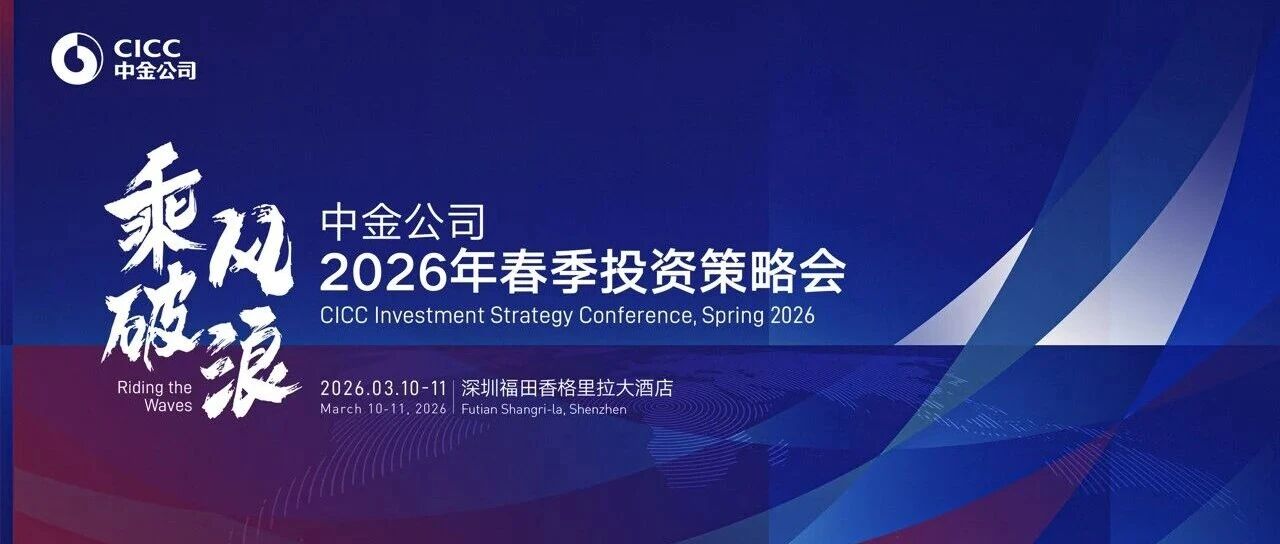
乘风破浪 | 中金公司2026年春季投资策略会
中金点睛· 2026-03-06 11:03
Core Insights - The article discusses the upcoming CICC Investment Strategy Conference scheduled for March 10-11, 2026, in Shenzhen, focusing on macroeconomic outlooks and investment opportunities across various sectors [2][3]. Group 1: Keynote Speakers and Topics - Notable speakers include Wei Lun Professor of Economics at The Chinese University of Hong Kong, the Chief Economist of CICC, and the Senior Managing Director & Chief Strategist of CICC [5][8][11]. - The conference will feature a keynote speech on the macroeconomic outlook for China and the United States, highlighting the global economic landscape [16]. Group 2: Market Outlook Sessions - Sessions will cover A-share market outlook, Hong Kong and overseas market perspectives, and major asset class forecasts [18]. - Specific discussions will address the real estate market trends, fixed income market developments, and the growth of multinational enterprises in a globalized context [19]. Group 3: Sector-Specific Discussions - The conference will include breakout sessions focusing on various sectors such as AI, telecommunications, consumer goods, and renewable energy [20][21][22]. - Topics will explore investment opportunities in the automotive industry, logistics, and the impact of AI on different sectors [21][22][31]. Group 4: Participating Companies - A range of companies from different sectors will participate, including banks, non-bank financial institutions, and technology firms [23][24][26]. - Notable participants include major banks like CITIC Bank and Minsheng Bank, as well as companies in the energy and materials sectors [23][24].