科技

Search documents
5 Monthly Dividend ETFs With Yields Over 6%—And Real Staying Power
Yahoo Finance· 2026-02-03 19:05
Core Insights - Many investors are increasingly turning to dividend exchange-traded funds (ETFs) for reliable income and capital preservation, but selecting the right ETF requires careful consideration beyond just high yields [2] - There are ETFs that combine high yields with strong performance and reliability, focusing on companies with solid financials and low fees, while also employing various income-generating strategies [3] ETF Analysis - The JPMorgan Equity Premium Income ETF (JEPI) offers income through investments in large-cap stocks and options selling, maintaining a yield of approximately 8.25% and a five-year return of over 5%, with net assets of $41.49 billion and a competitive expense ratio of 0.35% [5][6] - The JPMorgan Nasdaq Equity Premium Income ETF (JEPQ) boasts a high yield of over 10% and a five-year return exceeding 19%, focusing on the Nasdaq 100 index and benefiting from the tech industry's growth, particularly in artificial intelligence [7][8]
2月3日【中銀做客】:恆指、中移動、紫金礦業、紫金黃金國際、泡泡瑪特、小米集團
Ge Long Hui· 2026-02-03 18:37
Market Overview - The Hong Kong stock market has experienced significant volatility recently, with fluctuations of around 800 points impacting investor sentiment and market dynamics [1][2]. - Investors are advised to closely monitor market trends and utilize tools such as the Hang Seng Index bull and bear certificate distribution chart to gauge market sentiment [1][2]. Investment Strategies - A high percentage of investors (76%) are currently favoring bull certificates, indicating a strong interest in buying at lower levels following market declines [1][2]. - Caution is advised for investors entering the market during periods of high volatility, with recommendations to wait for signs of stabilization before attempting to capitalize on rebounds [2][3]. Individual Stock Analysis - China Mobile (00941) has seen fluctuations in its stock price, with recent adjustments attributed to an increase in the value-added tax rate from 6% to 9%, impacting market perceptions of revenue and profitability [4][5]. - Investors are showing interest in China Mobile's call options, particularly code 24413, which has a strike price of 88.88 HKD and a leverage of approximately 13 times [5]. Commodity Insights - The price of gold has surged nearly 30% in the past month, leading to increased caution among investors regarding potential corrections due to rapid price increases [6][7]. - For long-term investors, current market adjustments may present buying opportunities, while short-term trading is deemed risky due to high volatility [7][8]. Company-Specific Developments - Pop Mart (9992) is expanding its presence in the UK, planning to establish a European headquarters and open seven new stores, which has positively influenced its stock performance despite broader market declines [9][10]. - Xiaomi (01810) continues to struggle with its stock price, recently dropping to around 34.36 HKD, with investor sentiment mixed despite a planned buyback of 2.5 billion HKD in shares [11][12]. Contact Information - Investors are encouraged to utilize the hotline (00+852 3988 6909) for inquiries regarding market conditions and product offerings, especially during periods of heightened volatility [13][14].




[2月3日]指数估值数据(螺丝钉定投实盘第401期发车;养老指数估值表更新)
银行螺丝钉· 2026-02-03 14:17
Core Viewpoint - The market showed a rebound today, with the overall index rising after a previous decline, indicating a potential recovery phase in the market [1][4]. Market Performance - The market opened lower but closed higher, returning to a 3.9 star rating [2]. - The small and medium-cap indices, which had previously dropped significantly, saw a notable increase today [4]. - The value style had a strong performance in the past two weeks but has recently corrected, with a slight uptick today [6]. - Growth styles, such as the ChiNext, experienced gains today [7]. - The Hong Kong stock market also saw a slight increase, contrasting with the A-share market [8][9]. Investment Strategies - The active and index combination remains at normal valuation, leading to a pause in subscription [3]. - Some indices have reached high valuation levels, presenting potential profit-taking opportunities [19]. - The company has initiated a phased profit-taking strategy for certain funds, selling 10% of holdings weekly to gradually realize gains [20][22][24]. - Specific funds, such as the CSI 1000 and CSI 500 Low Volatility, have shown significant returns, with profit-taking executed at approximately 71% to 90% gains [22][24]. Fund Management - The company has introduced a new fee structure for advisory services, capping annual fees at 360 yuan regardless of the number of advisory combinations held [19]. - The company continues to promote personal pension fund investments, highlighting the importance of regular contributions for retirement planning [19][16]. Valuation Insights - A valuation table was provided, indicating various indices' price-to-earnings ratios, dividend yields, and return on equity, which can guide investment decisions [17][30]. - The valuation table categorizes indices into different investment stages, with green indicating undervalued, yellow for normal, and red for overvalued [34].
智通港股解盘 | 又是小作文扰动港股 情绪回暖资金重回商业航天
Zhi Tong Cai Jing· 2026-02-03 12:31
Market Overview - A-shares reached a low point but rebounded across the board, while Hong Kong stocks opened high but experienced a mid-day drop due to negative news, closing with a slight increase of 0.22% [1] - Gold stocks saw a rebound after a significant drop, with the expectation that the WanGuo Gold Group will report a profit of approximately 1.4 to 1.5 billion HKD for the fiscal year 2025, representing a year-on-year increase of about 143% to 161% [1] Industry Insights - The gaming industry faces potential tax rate adjustments, with rumors suggesting an increase from 6% to 32%, although experts indicate that such a high tax rate is not feasible under current VAT laws [2] - The release of Google's generative world model, Genie 3, has caused significant sell-offs in the gaming and advertising sectors, although experts believe it is premature to consider it a disruptive force in the gaming industry [2] Company Developments - Cambricon Technologies experienced a drop of over 14% due to negative reports, impacting the performance of the Sci-Tech 50 Index [3] - CIMC Group discussed its data center business, reporting over 1,000 MW of cumulative delivery and over 17,000 modules in various regions, with a focus on AI and cloud computing [4] - CIMC Group's stock rose nearly 15%, driven by its aerospace-related subsidiary, which also saw significant gains [4] Sector Performance - The storage industry saw a strong performance from major players like SanDisk and Micron, with SanDisk reporting a remarkable increase of 15.44% [5] - Macau's gaming revenue for January reached 22.633 billion MOP, a year-on-year increase of 24%, with expectations for further growth in February due to the Lunar New Year [5] - The engineering machinery sector is experiencing a strong demand for equipment replacement, with a projected need for approximately 200,000 excavators by 2026 [6] Technology Advancements - Apple reported a 16% year-on-year increase in revenue for Q1 of FY2026, driven by strong iPhone sales and recovery in the Chinese market [7] - The Zhejiang University unveiled a humanoid robot, Bolt, capable of reaching speeds of 10 m/s, marking a significant breakthrough in humanoid robotics [8] Corporate Expansion - China Merchants Port is expanding its overseas operations with new shipping routes, enhancing trade efficiency between North America and Europe [10] - The company operates 39 ports and 375 berths, with a focus on optimizing its overseas asset structure and expanding into emerging markets [11]
福建“十五五”三方面深化两岸融合发展
Zhong Guo Xin Wen Wang· 2026-02-03 08:52
Core Viewpoint - Fujian Province aims to deepen cross-strait integration in social, economic, and emotional aspects during the "14th Five-Year Plan" period, enhancing cooperation with Taiwanese compatriots and enterprises to share in the rejuvenation of the Chinese nation [1]. Group 1: Social and Economic Integration - Fujian will continue to enhance the welfare of Taiwanese compatriots by providing equal treatment in housing, elderly care, and emergency assistance, integrating them into the local housing security system [1]. - The province plans to expand rental and sale housing options for Taiwanese residents and improve digital service platforms for Taiwanese enterprises, exploring new tax service models [2]. Group 2: Economic Cooperation and Industrial Integration - Fujian will promote deep collaboration in cross-strait economic and trade relations, focusing on integrated circuit industry cooperation and upgrading industrial parks [2]. - The province aims to support Taiwanese enterprises in participating in modern infrastructure projects and enhance market access for Taiwanese investments, ensuring a secure and smooth development environment [2]. Group 3: Cultural Exchange and Consensus Building - Fujian will strengthen emotional ties through family and cultural exchanges, promoting historical projects and major cross-strait forums to enhance understanding and consensus [3]. - The establishment of cultural centers and youth exchange programs is intended to foster a shared cultural identity and encourage Taiwanese youth to engage in collaborative initiatives in Fujian [3].
'Devil in the details': India-U.S. deal raises hopes for a reset — but the fine print remains unclear
CNBC· 2026-02-03 07:54
Core Points - The U.S. and India have announced a trade deal aimed at improving bilateral relations after a period of tension [1] - The deal includes a reduction of U.S. tariffs on India from 25% to 18% and a commitment from India to purchase $500 billion in U.S. products [2][3] - There are concerns regarding the lack of details and a clear timeline for the implementation of the agreement [1][5] Trade Agreement Details - The U.S. will lower reciprocal tariffs on India to 18% from 25% and waive an additional 25% tariff on Indian oil purchases [2] - India is expected to eliminate tariffs and non-tariff barriers on U.S. goods to zero [2] - The total goods and services trade between the U.S. and India rose over 8% to $212.3 billion in 2024, with U.S. goods exports to India increasing by 3% to $41.5 billion and services exports surging 16% to $41.8 billion [6] Strategic Context - Relations between the U.S. and India deteriorated during Trump's second term due to various geopolitical tensions, including issues related to Pakistan and tariffs on Russian oil [4] - Experts express skepticism about India's commitment to the $500 billion target and the clarity of the Russian oil-related commitments [5]

黄金、白银暴跌前夕,但斌警示风险!旗下研究员却赚了十几亿?(附最新持仓)
私募排排网· 2026-02-03 07:00
Core Viewpoint - The international precious metals market recently experienced significant volatility, with gold futures dropping over 11% and silver futures plummeting by 31.37%, marking the worst single-day performance since March 1980. This decline followed a bullish trend in precious metals, prompting warnings from prominent investors about potential risks [2]. Group 1: Market Analysis - On January 28, a notable private equity figure, Dan Bin, warned of a potential market correction following a surge in prices, referencing historical data where gold and silver experienced drastic declines after reaching peak prices in 1980 and 2011, respectively [2]. - Dan Bin has been heavily invested in U.S. AI technology stocks and has shown little interest in gold stocks, leading to skepticism about his warnings regarding gold. He clarified that his lack of investment in gold does not influence his perspective [3]. Group 2: Performance Metrics - Dan Bin's management of 77 private equity products has yielded an average return of ***% for 2025, with a three-year average return of ***%, placing him at the top among private equity founders in the last three years [4]. - The latest disclosures of Dan Bin's fund, Dongfang Gangwan, revealed a total holding of 10 U.S. stocks valued at approximately $1.316 billion, equivalent to over 9.1 billion RMB, with Google surpassing Nvidia as the largest holding [5][6].



沃什若上任,将如何影响全球经济?
Sou Hu Cai Jing· 2026-02-03 06:54
Group 1: Overview of Kevin Walsh's Appointment - Kevin Walsh has been nominated as the next Federal Reserve Chairman, which has caused significant market reactions, including declines in U.S. stock indices and a sharp drop in precious metal prices [1] - Walsh's background as a former Federal Reserve governor and his dual characteristics of being hawkish yet pragmatic are expected to influence the Fed's policy direction significantly [2][3] Group 2: Walsh's Policy Orientation - Walsh's policy stance is characterized by a focus on inflation control, advocating for a return to the core mission of the Federal Reserve, and opposing the expansion into social issues [2] - He supports a unique approach of "concurrent rate cuts and balance sheet reduction," which aims to manage inflation risks while stimulating economic growth [2] - His regulatory stance seeks to balance innovation with risk management, emphasizing the need for coordination between the Fed and the Treasury to address the U.S. debt burden [2] Group 3: Impact on U.S. Economy and Financial Markets - In the short term, Walsh's policies are expected to support economic growth by lowering financing costs for businesses and easing consumer debt pressures [5] - However, medium to long-term uncertainties may arise due to the challenges of implementing concurrent rate cuts and balance sheet reductions, which could lead to liquidity tightening and inflation risks [6] - The stock market may experience short-term gains driven by rate cut expectations, but sectoral divergence is anticipated due to Walsh's hawkish stance [8] Group 4: Impact on China’s Economy and Financial Markets - Walsh's policies may enhance China's monetary policy autonomy by alleviating external constraints, allowing for potential interest rate cuts in China [9] - In the short term, capital inflows into China are expected to increase due to narrowing interest rate differentials, supporting the stability of Chinese equity and bond markets [10] - However, medium-term capital flow volatility is anticipated, influenced by Walsh's balance sheet reduction and the potential strengthening of the U.S. dollar [11] - The Chinese stock market may benefit from capital inflows, particularly in growth and technology sectors, but sectoral performance may diverge based on currency fluctuations and global interest rate changes [12]
前沿观察 | 美国推出“金库计划”,拟投120亿美元储备关键矿产
Sou Hu Cai Jing· 2026-02-03 06:49
Core Points - The U.S. government has launched a $12 billion critical mineral reserve program, named "Project Vault," aimed at establishing a national strategic reserve to mitigate supply chain risks [7][8] - The initiative is designed to reduce U.S. dependence on China for rare earths and other metals, which are essential for industries such as electric vehicles, semiconductors, and defense [7][8] - The project integrates $1.67 billion in private capital with $10 billion in loans from the U.S. Export-Import Bank to support manufacturers in procuring critical minerals [7][9] Industry Impact - The program highlights the U.S. government's commitment to securing critical mineral supplies across key sectors, including automotive, aerospace, and energy, reflecting a strategic shift to reduce reliance on Chinese supply chains [8][9] - Over a dozen companies, including General Motors, Boeing, Corning, and Google, have already participated in the project, indicating strong industry interest and collaboration [8][9] - The initiative is expected to stabilize market prices for critical minerals by allowing companies to procure minerals at fixed prices, thus mitigating the impact of price volatility [10] Operational Mechanism - Participating companies must commit to purchasing minerals at agreed prices and pay a prepayment fee, after which they can submit a priority procurement list to the program [9][10] - The program allows companies to withdraw minerals from the reserve but requires them to replenish their inventory, ensuring a continuous supply chain [10] - The design of the program aims to create a stabilizing effect on the market, helping to smooth out price fluctuations for critical minerals [10]



深度研究 | 港股IPO投资指南
Xin Lang Cai Jing· 2026-02-03 05:25
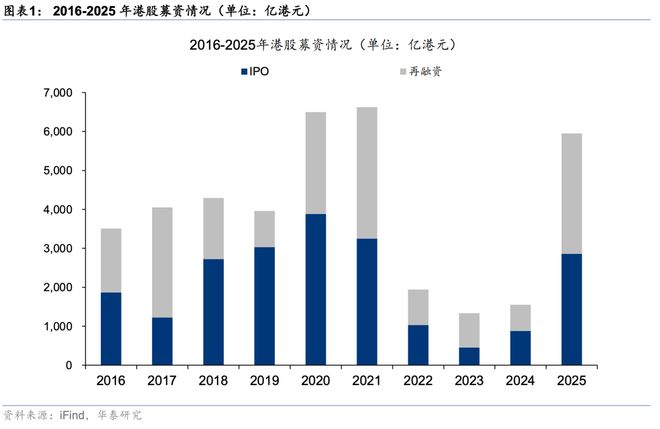
Core Viewpoint - The Hong Kong IPO market is expected to regain its position as the largest in the world by 2025, with an average first-day return of nearly 40%, making it an attractive option for investors [1][12]. Group 1: Market Recovery - The rapid recovery of the Hong Kong IPO market is attributed to institutional optimization and liquidity easing, with domestic companies still seeking financing [2][18]. - The "A+H" listing mechanism and the specialized technology enterprise channel have lowered the barriers for companies to list in Hong Kong, enhancing the listing willingness [2][18]. - The expected IPO financing scale for the main board in 2026 is around HKD 310 billion, reflecting a 10% increase from 2025 [27]. Group 2: IPO Characteristics - The Hong Kong IPO system operates under a registration-based model, typically taking six months to a year from preparation to listing [3][29]. - Unique mechanisms include international placement dominating the issuance structure, a mechanism to balance institutional and public demand, and green and red shoe mechanisms to stabilize the market and protect small investors [3][36][39]. Group 3: Participation Methods - There are three main ways to participate in Hong Kong IPOs: cornerstone, anchor, and public offerings, each with varying levels of legal protection, allocation certainty, and liquidity [4][48]. - Cornerstone investors engage early and have legally protected shares but face a lock-up period, making it suitable for long-term investors [4][48]. - Anchor investors have more flexibility without a lock-up period but face uncertainty in allocation, while public investors typically have the least allocation certainty [4][48][51]. Group 4: Project Selection - Key decision-making dimensions for cornerstone investments include market trend analysis and company quality assessment, with a focus on business synergy and asset scarcity [5][59]. - A quantitative model has been developed to help reduce the probability of investing in projects that may break even, with selected projects showing higher opening gains [5][12]. Group 5: Investor Recommendations - Long-term investors are advised to participate as cornerstone investors to secure shares [6]. - Anchor investors should engage early with issuers and intermediaries for better information access [8]. - Retail investors are encouraged to diversify their investments across multiple feasible projects rather than concentrating on a single IPO [9][10].