
债券

Search documents
胜遇利率周报:资金面平稳,利率债收益率继续上行-20260122
Si Lu Hai Yang· 2026-01-22 09:43
Report Summary 1. Report's Industry Investment Rating - Not mentioned in the report 2. Core Viewpoints - The capital market is stable, and the yields of interest - rate bonds continue to rise. The A - share market is expected to maintain a strong performance this week, while the bond market may show a weak and volatile pattern. The investment value of 10 - year treasury bonds at the 1.9% level is gradually emerging [6]. - Upcoming economic data is expected to remain at a low level without significant surprises, providing some support for the bond market. Overseas geopolitical events may also impact the capital market [7]. 3. Summary by Relevant Content Capital Market Conditions - This week, DR007 ranged from 1.43% to 1.47%, and DR001 ranged from 1.26% to 1.27%, with little change compared to the previous week [1]. - The yields of interest - rate bonds continued to rise overall. For treasury bonds, the 1 - year yield decreased by 4bp, while the 3 - year, 5 - year, 7 - year, and 10 - year yields increased by 8bp, 4bp, 3bp, and 4bp respectively. For CDB bonds, the 1 - year, 3 - year, 5 - year, 7 - year, and 10 - year yields increased by 3bp, 4bp, 4bp, 3bp, and 4bp respectively [1]. Market Performance Comparison - As of January 9, 2026, the 10 - 1Y term spread of treasury bonds was 58.95bp, and that of CDB bonds was 45.08bp, widening by 7.90bp and 1.71bp respectively compared to January 4 [4]. Other Market Conditions - The stock market has shown strong performance recently, achieving five consecutive positive days at the beginning of the year. The bond market has shown some independence, with the yield of 10 - year treasury bonds soaring first and then seeing bargain - hunting on Thursday and Friday [6]. - CPI was slightly higher than expected, mainly due to the rebound of fresh vegetable prices in food prices, while non - food prices, especially rent, declined significantly, indicating a weak inflation trend. PPI was basically in line with expectations [6]. - US non - farm payroll data shows a tight labor supply, with the probability of interest rate cuts remaining low. However, Powell's criminal case has led to market expectations of increased interest rate cuts, resulting in high risk sentiment in overseas markets [6].
2026年1月托管月报:保险抢配、资管户配债力量偏弱-20260122
Ping An Securities· 2026-01-22 09:28
Group 1: Report's Industry Investment Rating - There is no information provided about the industry investment rating in the report. Group 2: Report's Core View - In December 2025, the bond supply scale was at a relatively low level, with the bond custody balance's year - on - year growth rate dropping by 1.8 percentage points compared to November, and the monthly new custody scale being 819.2 billion yuan, a low level in 2025. The supply of credit bonds increased while that of inter - bank certificates of deposit decreased. In terms of institutions, asset management accounts had insufficient bond - allocation power, while insurance institutions increased their holdings. Looking ahead, the government bond issuance in Q1 may be fast, and banks are expected to be the main force in absorbing government bond supply. Insurance institutions' bond - allocation scale may be supported by high yields and supply, while the non - bank bond - allocation power of asset management accounts may be weak [3]. Group 3: Summary by Relevant Catalogs 1. Bond Supply in December 2025 - The bond custody balance's year - on - year growth rate in December 2025 was 11.6%, 1.8 percentage points lower than in November. The new custody scale was 819.2 billion yuan, a low level in 2025 [3][4]. 2. Bond Supply by Type - Treasury bonds, local government bonds, and inter - bank certificates of deposit had less - than - seasonal increases of 42.4 billion yuan, 175.9 billion yuan, and 1.3 trillion yuan respectively. Credit bonds and ABS had more - than - seasonal increases of 596.8 billion yuan and 165.5 billion yuan respectively. In December 2025, the new supply of treasury bonds was 358.2 billion yuan, and that of local bonds was 431 billion yuan, both at relatively low levels. The net supply of inter - bank certificates of deposit was - 622.4 billion yuan, at a low level in 2025, while the net supply of corporate credit bonds was 377.1 billion yuan, rising against the season [3][8][11]. 3. Bond - Allocation by Institutions in December 2025 - **Banks**: After adjustment for repurchase, the actual bond - buying scale was 385.6 billion yuan, in line with the season. They mainly increased their holdings of policy - financial bonds and treasury bonds. The adjusted government - bond - buying scale was 432.5 billion yuan, accounting for 55% of the new government - bond custody scale, indicating a seasonal weakening of bond - allocation power [23]. - **Insurance institutions**: They increased their holdings by 304.7 billion yuan, 204.6 billion yuan more than the season, mainly increasing their holdings of credit bonds and local government bonds, possibly due to low bond - allocation in November and year - end bond - grabbing [26]. - **Asset management accounts**: They increased their holdings by 221.3 billion yuan, 358.5 billion yuan less than the season, mainly reducing their holdings of inter - bank certificates of deposit and increasing their holdings of credit bonds, possibly due to the stock - bond seesaw effect and low issuance of debt - biased funds [29]. - **Foreign investors**: They reduced their holdings by 115.5 billion yuan, 147.3 billion yuan less than the season, mainly reducing their holdings of inter - bank certificates of deposit, possibly due to the unsustainability of risk - free carry - trade and insufficient new supply of inter - bank certificates of deposit [35]. - **Securities firms**: They reduced their holdings by 504 million yuan, 178.5 billion yuan less than the season, mainly reducing their holdings of credit bonds, possibly for year - end profit - taking [35]. 4. Outlook - **Bond supply**: With the front - loaded fiscal policy, the government bond issuance in Q1 may be fast, and the supply of local government bonds is expected to be higher than last year [38]. - **Banks**: They are expected to be the main force in absorbing government bond supply. With stable deposit growth and slowing loan growth, banks still have large bond - allocation space, but attention should be paid to the structural restrictions on bond - allocation caused by deposit transfer and activation [41]. - **Insurance institutions**: High yields and supply may support their bond - allocation scale. In January, they continued to have strong bond - allocation power, possibly affected by the premium "good start" effect. The wide spread between ultra - long - term local government bonds and insurance's predetermined interest rate is still attractive [44]. - **Asset management accounts**: Under the pressure of stock - market diversion, the non - bank bond - allocation power is expected to be weak. The bond - allocation power of wealth management products and debt funds has not increased significantly, possibly due to funds flowing into bank deposits, the equity market, and insufficient issuance of inter - bank certificates of deposit [46].

中加基金配置周报|央行下调再贷款利率,特朗普对欧洲提高关税
Xin Lang Cai Jing· 2026-01-22 08:23
Key Insights - The U.S. CPI for December 2025 increased by 2.7% year-on-year, with core CPI rising by 2.6%, both remaining stable compared to previous values. The prolonged government shutdown may reduce the data's predictive value for future Federal Reserve policy. Market expectations indicate a 95% probability that the Federal Reserve will remain unchanged in January 2026 [1][20] - China's foreign trade in 2025 reached 45.47 trillion yuan, a year-on-year increase of 3.8%, marking nine consecutive years of growth. In December, trade volume hit a record high of 4.26 trillion yuan, up 4.9% year-on-year. Rare earth exports surged by 32% to 4,392 tons in December, totaling 62,585 tons for the year [2][21] - The total social financing in China for 2025 amounted to 35.6 trillion yuan, an increase of 3.34 trillion yuan from the previous year. The total RMB loans rose by 16.27 trillion yuan, and RMB deposits increased by 26.41 trillion yuan. By the end of December 2025, the M2 money supply reached 340.29 trillion yuan, growing by 8.5% year-on-year, with a net cash injection of 1.31 trillion yuan for the year [3][21] Market Overview - The financing margin ratio for investors in the Shanghai and Shenzhen stock exchanges has been raised from 80% to 100% for new financing contracts, aimed at reducing leverage and protecting investor rights [4][21] - The central bank has implemented a series of measures to support high-quality economic development, including a 0.25 percentage point reduction in re-lending and rediscount rates, and an increase of 500 billion yuan in re-lending for small and micro enterprises [5][22] - The U.S. Department of Justice has initiated a criminal investigation into Federal Reserve Chairman Jerome Powell regarding the renovation of the Fed's headquarters, raising concerns about the Fed's independence and leading to increased demand for safe-haven assets like gold and silver [6][22] Stock Market Performance - The A-share market showed mixed performance, with the Shanghai 50 index declining by 1.74%, while the ChiNext index increased by 2.58%. The central bank's interest rate cuts and strong domestic export and loan data contributed to a positive market sentiment [7][28] - The Hang Seng Index rose by 2.34%, and the Hang Seng Technology Index increased by 2.37%, reflecting improved export and loan data [8][30] - U.S. stock markets experienced declines, with the Dow Jones Industrial Average down by 0.29%, amid rising geopolitical tensions and renewed trade war concerns [9][32] Bond Market Insights - In the bond market, long-term credit bonds saw a greater decline than short-term bonds, with the 5Y AA+ and AA- bonds dropping by 6 basis points. Overall, government bond rates also decreased, influenced by the central bank's policy adjustments [10][34] - U.S. Treasury yields increased, particularly the 3Y yield, which rose by 8 basis points, amid concerns regarding the Federal Reserve's independence following Powell's investigation [11][37] Economic Outlook - China's export resilience is evident, with December's export growth rising from 5.9% in November to 6.6%. Social financing data indicates a stabilization in RMB loan growth at 6.3% year-on-year [12][38] - The U.S. CPI remained stable at 2.7% year-on-year, suggesting limited changes in interest rate expectations, with a 4% probability of a rate cut in January 2026 [13][38]

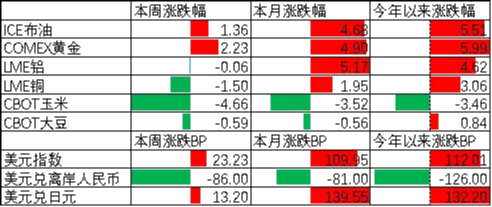
中加基金权益周报|结构性降息政策落地,债券配置力量增强
Xin Lang Cai Jing· 2026-01-22 08:23
Market Overview and Analysis - The issuance scale of government bonds, local government bonds, and policy financial bonds in the primary market last week was 207 billion, 74.8 billion, and 169.8 billion respectively, with net financing amounts of -299.2 billion, 65.6 billion, and 41.1 billion [1][8] - The total issuance scale of non-financial credit bonds was 278.6 billion, with a net financing amount of 49 billion [1][8] - Two new convertible bonds were issued, with an expected financing scale of 2.18 billion [1][8] Secondary Market Review - Last week, the yield on interest rate bonds decreased, with government bonds and perpetual bonds performing well, influenced by structural interest rate cuts, increased central bank injections, and stock market fluctuations [2][9] Liquidity Tracking - The net injection in the open market last week was 812.8 billion, with the central bank conducting a 6-month reverse repurchase operation exceeding 300 billion, indicating a loosening of funds [3][10] Policy and Fundamentals - The central bank lowered the interest rates on structural monetary policy tools, and the policy for tax refunds on housing purchases was postponed for the second time [4][11] - December's export and financial data exceeded expectations, but the M1 growth rate continued to decline [4][11] Overseas Market - The situation in the Middle East continues to evolve, with U.S. core inflation cooling and Powell stating he received a subpoena from the U.S. Department of Justice [5][12] - The U.S. dollar appreciated slightly last week, while U.S. stocks fell and bond yields rose [5][12] Equity Market - The A-share index experienced high volatility last week, with the Wind All A index rising by 0.49%. The electronics and non-ferrous sectors led the gains, with funds returning to performance and economic growth-oriented directions [6][13] - The average daily trading volume last week was 3.47 trillion, an increase of 613.11 billion from the previous week [6][13] - As of January 15, 2026, the total financing balance for the entire A-share market was 2.701216 trillion, a significant increase of 98.073 billion from January 8 [6][13] Bond Market Strategy Outlook - The policy support for the "14th Five-Year Plan" continues, with the current monetary policy focusing on the quantity and price adjustment of structural tools, suggesting a lower probability of total policy tools being implemented in the short term [7][14] - The current policy focus remains on maintaining reasonable liquidity to stabilize market expectations and keep overall interest rates relatively stable [7][14] - The bond market is expected to continue with limited downward space for long-term rates, while the short-term performance is more certain, with stable funding expectations potentially aiding in the trading of spread varieties [7][14] - The next phase will see a shift in policy focus from monetary policy to local two sessions, with attention on whether there are expectation differences in the economic growth targets set for 2026 and corresponding trading opportunities [7][14] - The convertible bond index is rising, and in the long term, convertible bonds are preferred for equity asset allocation, but short-term caution is advised against overheating trading and valuation bubble risks, especially around the end of January when financial report pre-disclosure windows may significantly amplify the volatility of small and mid-cap stocks [7][14]
债市日报:1月22日
Xin Hua Cai Jing· 2026-01-22 08:04
Core Viewpoint - The bond market showed slight weakness with all government bond futures closing down, while the interbank bond yield exhibited mixed trends, indicating a cautious outlook ahead of the Spring Festival and the Two Sessions [1][2]. Market Performance - Government bond futures closed lower across the board, with the 30-year main contract down 0.07% at 112.17, the 10-year main contract down 0.05% at 108.15, the 5-year main contract down 0.04% at 105.835, and the 2-year main contract down 0.02% at 102.408 [2]. - The interbank bond yield showed slight divergence, with the 30-year government bond yield down 0.45 basis points (bps) to 2.2565%, while the 10-year government bond yield increased by 0.05 bps to 1.834% [2]. Overseas Market Trends - In North America, U.S. Treasury yields collectively fell, with the 10-year yield down 5.16 bps to 4.241% [3]. - In Asia, Japanese government bond yields continued to decline, with the 10-year yield down 2.3 bps to 2.266% [3]. - In the Eurozone, yields on 10-year bonds increased, with French bonds up 1.7 bps to 3.541% [3]. Primary Market - The Export-Import Bank's financial bonds had a bid yield of 1.4226% for the 1.2521-year and 1.7028% for the 5.5041-year, with bid-to-cover ratios of 2.63 and 6.74 respectively [4]. - The China Development Bank's financial bonds had a bid yield of 1.6683% for the 3-year and 1.8772% for the 7-year, with bid-to-cover ratios of 2.85 and 3.83 respectively [4]. Liquidity Conditions - The central bank conducted a 7-day reverse repurchase operation with a total amount of 2102 billion yuan at an interest rate of 1.40%, resulting in a net injection of 309 billion yuan for the day [5]. - The Shibor rates showed mixed performance, with the overnight rate rising by 9.1 bps to 1.413% [5]. Institutional Insights - Huatai Securities suggests maintaining a configuration of medium to short-term credit bonds, with a focus on leveraging opportunities in the ultra-long end and government bonds [6]. - CITIC Securities notes that the central bank's balance sheet has expanded steadily, indicating a potential for government bond trading to influence yields [7]. - Guosheng Fixed Income emphasizes that current inflation is not indicative of a broad price increase, suggesting that monetary policy may remain stable or undergo minor adjustments [7].


欧洲抛售美债对美债有何影响
GUOTAI HAITONG SECURITIES· 2026-01-22 08:02
投资要点: | [Table_Authors] | 王一凡(分析师) | | --- | --- | | | 021-38031722 | | | wangyifan4@gtht.com | | 登记编号 | S0880524120001 | | | 唐元懋(分析师) | | | 0755-23976753 | | | tangyuanmao@gtht.com | | 登记编号 | S0880524040002 | 债券研究 /[Table_Date] 2026.01.22 欧洲抛售美债对美债有何影响 本报告导读: 美日债市联动暴跌,政治摩擦与财政叙事引爆期限溢价跳升,超长久期资产遭集中 抛售,风险外溢全球。 [Table_Report] 相关报告 财政金融促内需新政对债市有何影响 2026.01.21 躁动行情换挡,聚焦业绩成色 2026.01.20 基于银行微观数据,26 年存款重定价节奏怎么 看? 2025.12.29 震荡巩固,蓄力反弹 2025.12.22 把握跨年行情布局时机 2025.12.15 证 券 研 究 报 告 事 件 点 评 请务必阅读正文之后的免责条款部分 债 券 研 究 [Tabl ...
股债“跷跷板”效应料回归
Qi Huo Ri Bao· 2026-01-22 07:26
Group 1 - The core viewpoint of the articles indicates that the bond market is experiencing relatively small fluctuations compared to the equity market, with a notable "teeter-totter" effect between stocks and bonds becoming less pronounced [1] - The People's Bank of China (PBOC) has announced a reduction in structural monetary policy tool rates and an increase in re-lending quotas, indicating a focus on structural tools rather than broad monetary policy [2] - The fiscal policy for 2026 is set to be more proactive, with a commitment to maintain necessary levels of fiscal deficit, debt, and expenditure, ensuring that overall spending increases while key areas remain robust [3] Group 2 - Recent movements in overseas long-term yields, particularly in the US and Japan, have had limited direct impact on China's bond market, although they reflect broader economic concerns [4] - The reversal of yen carry trades may continue to disrupt markets, potentially benefiting safe-haven assets like gold, while the direct influence on China's bond market remains limited [5] - The overall macroeconomic environment remains unchanged, with the bond market under pressure and the "teeter-totter" effect between stocks and bonds expected to return, although short-term drivers for the bond market are limited [6]
日本国债为何“跌跌不休”?
2 1 Shi Ji Jing Ji Bao Dao· 2026-01-22 00:24
1月19日-20日,全球债券市场风云突变。本来只是受美国国债下跌影响而跟着下跌的日本国债突然暴 跌,短时间内迅速成为各国国债市场动荡的原因。 就在这两天里,日本10年期国债的回报率上升了19个基点(1个基点=0.01%),是2022年以来上升幅 度最大的记录。而日本30年期的国债回报率在1月20日一天之内就上升了26.5个基点,达到3.875%,40 年期国债的回报率更是上升了27个基点,达到了4.215%。上一次日本国债回报率超过4%还是1995年的 事。而在1月20日举办的20年期日本国债拍卖也遭遇冷场。 同时,日本股市保持了不断上涨的势头。实际上,这也是日本通过赤字国债的发行向市场提供资金的结 果。但是,如果货币供给没有带来日本企业生产率提升,反而会造成货币价值的低落,加剧通胀的压 力。如此,日元就会进一步贬值,而高物价问题则远远得不到解决。从目前的状况来看,日本经济很难 摆脱这样的处境。 国债市场这样的反应,实际上是明确地对日本政府当前的财政政策说"不"。接下来日本国债是跌是涨, 还要看今年2月的日本国会选举。 虽然日本国债的暴跌给全球市场带来了冲击,但美国国债下跌的主要原因还在于美国自身。根据新华社 ...
美股大幅下挫,美债价格暴跌,美金融市场经历“最惨烈一天”
Huan Qiu Shi Bao· 2026-01-21 22:37
Core Viewpoint - The article discusses a significant sell-off of U.S. assets, driven by rising tensions between President Trump and European leaders over Greenland, leading to a sharp decline in U.S. stock markets and a drop in the dollar index, marking the largest single-day losses since April of the previous year [1][2]. Group 1: Market Reactions - On the day of the sell-off, the Nasdaq Composite Index fell over 2.4%, the Dow Jones Industrial Average dropped 1.7%, and the S&P 500 Index decreased by approximately 2.1%, resulting in a market capitalization loss exceeding $1.2 trillion, erasing all gains for the year [1]. - The dollar index experienced a nearly 1% decline, the largest single-day drop since the implementation of significant tariffs by the Trump administration in April of the previous year [1]. Group 2: Bond Market and Gold Prices - The 10-year U.S. Treasury yield rose to its highest level since August of the previous year, increasing by 6.4 basis points, while the 30-year Treasury yield climbed 8.1 basis points to 4.920%, marking the largest single-day increase since July [2]. - Gold prices saw significant volatility, with both international gold futures and spot prices reaching new highs, briefly surpassing $4,800 per ounce [2]. Group 3: Investor Sentiment and Future Outlook - The sell-off is viewed as a response to increasing global risk aversion, with investors seeking to reduce their exposure to the volatile and unreliable U.S. market [2]. - Analysts suggest that unless there is a major economic boom, the market may have fully priced in expectations of "American exceptionalism," leading to a potential shift towards diversification in investment strategies [2]. - The long-term impact on the dollar and other U.S. assets could be severe if President Trump does not retract his plans or fails to reach a compromise [2].
机构配置需求支撑 30年期国债期货强势反弹
Shang Hai Zheng Quan Bao· 2026-01-21 18:12
在配置需求支撑和外资流入的共同作用下,国债期货市场近日明显走强,超长端品种表现尤为突出。30 年期国债期货主力合约大幅反弹,并创下开年以来新高,市场对人民币资产避险属性的关注度同步升 温。 不过,多家机构提示,随着政策预期趋稳、前期逻辑逐步消化,债券市场短期内难以形成单边趋势,后 续或更多以震荡运行、等待新的定价主线为主。 30年期国债期货强势反弹 ◎记者 张欣然 值得注意的是,近期人民币汇率走强,进一步提升了我国债券市场对境外资金的吸引力。多位机构人士 认为,近期债市的走强并非完全由境内因素驱动,境外避险资金的持续流入也是重要支撑。 从外部环境看,开年以来全球金融市场波动明显加大。特别是最近几个交易日,美国、欧洲等主要经济 体国债收益率出现较为明显的反弹,市场一度担忧海外利率上行可能通过比价效应对我国国债收益率形 成牵引。 不过,机构普遍认为,这一影响相对有限。华创证券资管团队在研报中认为,海外市场波动反而可能强 化"利率西升东落"的格局。在海外长端利率抬升、波动加大的背景下,中国利率中枢更可能呈现逐步寻 顶、趋于稳定的特征。 更重要的是,人民币资产的避险属性正在被市场重新定价。华创证券认为,2020年以来 ...