
信息软件

Search documents
北京向“五万亿之城”稳步迈进
Bei Jing Wan Bao· 2025-12-22 07:13
Group 1: Economic Performance - Beijing's economy is steadily progressing towards becoming a "five trillion city," with stable growth and a focus on high-end industrial structure [1] - From January to November, the total industrial output value of large-scale industries in Beijing exceeded 2.5 trillion yuan, with a year-on-year growth of 5.2% [2] - The added value of large-scale industries increased by 6.6% year-on-year, surpassing the national average growth rate by 0.6 percentage points [2] Group 2: Industrial Innovation - Beijing is witnessing a surge in "global firsts," including the world's first diabetes peripheral neuropathy patch and various advanced AI and drone technologies [2][3] - The production of new energy vehicles reached 624,000 units, a year-on-year increase of 150%, contributing to the overall growth of the automotive sector [3] - Key products such as integrated circuits and 5G smartphones saw production increases of 17.4% and 34.3% respectively [3] Group 3: Consumer and Cultural Integration - The integration of culture, commerce, and tourism is driving consumer spending, with service consumption growth reaching 4.8% in the first eleven months [5] - Major events, including concerts and esports competitions, have attracted millions of attendees, showcasing the city's vibrant cultural scene [6] - The development of new consumer spaces, such as parks and cultural exhibitions, has enhanced local engagement and spending [5][6] Group 4: Investment Trends - Fixed asset investment in Beijing grew by 5.8% from January to November, reflecting a focus on key infrastructure projects and high-tech industries [7] - High-tech industry investment surged by 43.2%, indicating a strong commitment to expanding production capabilities [7] Group 5: Public Services and Quality of Life - Beijing is enhancing public services, including the construction of new healthcare facilities and the improvement of elderly care services [8] - The city has implemented smart traffic management systems, improving urban governance and efficiency [9] - Educational infrastructure is being expanded, with the addition of new school capacities to address local needs [9]
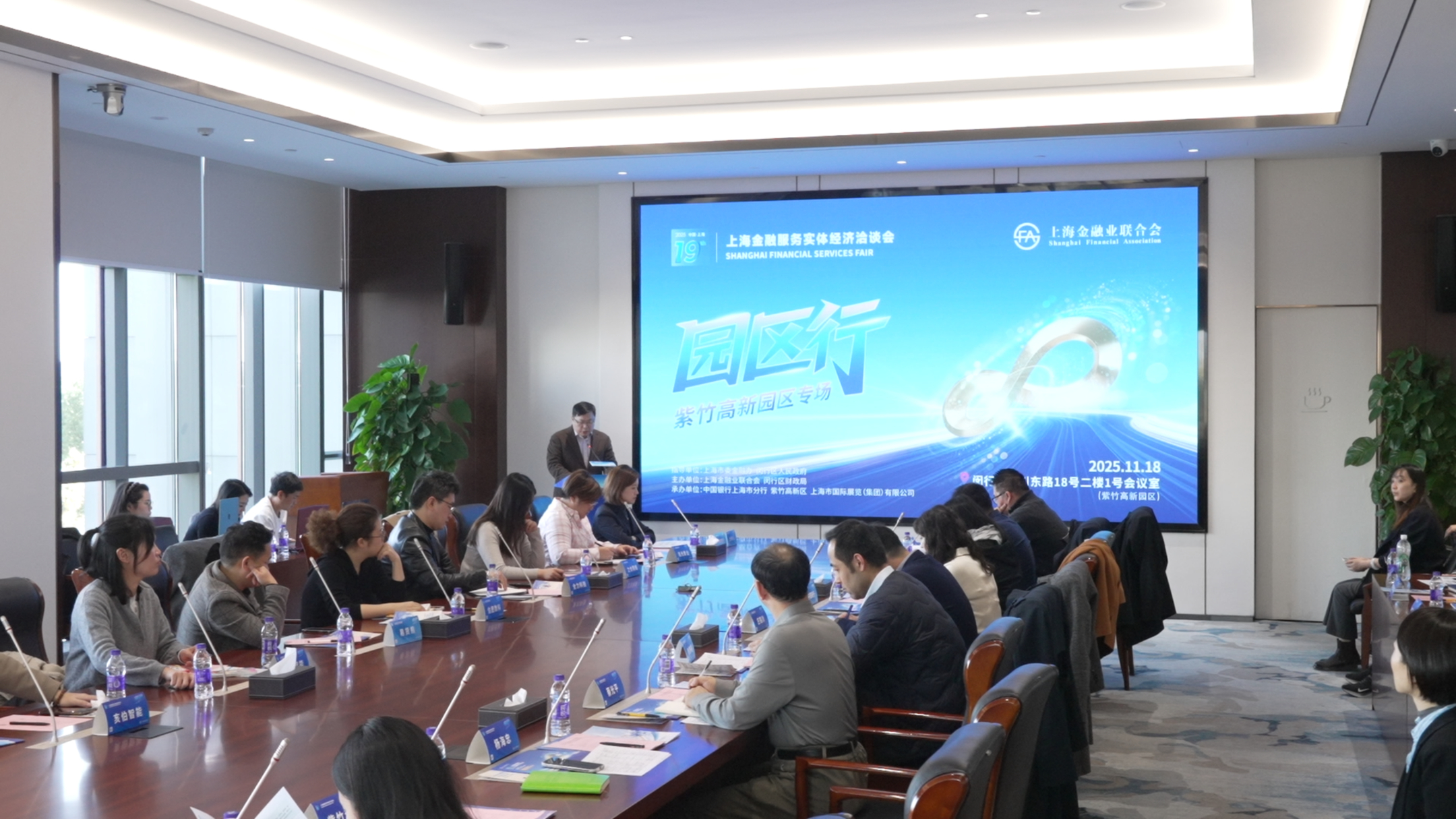
金洽会“园区行”深入紫竹高新园区,金融服务直连企业
Guo Ji Jin Rong Bao· 2025-11-19 11:39
Core Insights - The 19th Golden Fair's "Park Tour" event in Minhang Zizhu High-tech Park successfully concluded, focusing on the financial needs of the park and enhancing the connection between financial resources and the real economy, particularly technology innovation enterprises [1][3] Group 1: Event Overview - The event aimed to build an efficient communication bridge to promote deep integration between financial resources and the real economy [1] - The Zizhu High-tech Park, located in the southeast of Shanghai Minhang, is a hub for information software and intelligent manufacturing enterprises, playing a key role in Shanghai's innovation center construction [3] Group 2: Park Characteristics - The park covers a planned area of 13 square kilometers and follows a unique development model that integrates campuses, parks, and communities, fostering a collaborative innovation ecosystem [3] - The core philosophy of the park emphasizes "ecology, culture, and technology" [3] Group 3: Company Participation - Representative companies from the park, such as Yifang (Shanghai) Technology Service Co., Ltd. and Shanghai Vanadium and Titanium Technology Co., Ltd., showcased their technological advantages and development plans during the event [3] - These companies raised questions regarding financial support policies for startups and the use of insurance tools for risk protection in business collaborations [3] Group 4: Financial Advisory - Financial advisors from China Bank, Taikang Insurance, and Shenwan Hongyuan Securities provided tailored responses to the companies' financial challenges [3] - They suggested that startup technology companies could leverage personal guarantees for credit loans and apply for "technology innovation enterprise" labels to access specialized credit products [3] Group 5: Future Activities - The Golden Fair commenced on September 29 and will host over ten "Park Tour" events by the end of the year, with an online exhibition running until September 2026 [4] - The fair aims to enhance the quality of service by facilitating connections between financial institutions and real enterprises, reinforcing the commitment of Shanghai's financial sector to support the real economy [4]

稳坐“浙江第一” 杭州余杭三季度经济数据出炉
Sou Hu Cai Jing· 2025-10-27 07:10
Economic Performance - In the first three quarters, Yuhang District achieved a GDP of 271.32 billion yuan, with a year-on-year growth of 7.0% [1] - The total fiscal revenue reached 68.11 billion yuan, and general public budget revenue was 35.91 billion yuan, maintaining the top position in Zhejiang Province [1] Technological Innovation - Yuhang District has enhanced its technological innovation capabilities by focusing on "large scientific devices + major scientific plans + key laboratories + new R&D institutions" [2] - The core equipment of the supergravity centrifuge simulation and experimental device has been officially launched, providing critical technical support for major engineering and cutting-edge research [2] - The world's first brain-like computer with over 2 billion neurons has been successfully developed in the district, showcasing its advantages in the intersection of brain science and artificial intelligence [2] Technology Transfer and Service Industry - The district has accelerated the pace of technology transfer, with 120 technology transfer projects established this year [4] - The service industry, centered on information software, saw a value-added growth of 7.3%, ranking first in Hangzhou [4] - From January to August, the revenue of the above-scale service industry grew by 12.4% [4] - A total of 55,600 new market entities were registered this year, a year-on-year increase of 26.25%, leading in both total and incremental numbers in Hangzhou [4] Foreign Trade - Yuhang District's foreign trade demonstrated strong resilience, with total imports and exports growing by 15.1% in the first three quarters [5] - Exports increased by 11.2%, while imports surged by 70.2% [5] - Notable performances include Saturn Power's all-terrain vehicle, which attracted significant overseas interest, and Tanglian's dashcam products leading sales on Amazon in multiple countries [5] Industrial Development - The industrial sector maintained steady growth, with above-scale industrial value-added increasing by 6.3% [6] - Strategic emerging industries saw an 8.9% increase in value-added, while equipment manufacturing grew by 7.4% [6] Cultural and Tourism Integration - The Liangzhu 5000+ Art Creation Park has become a popular destination, featuring over 200 domestic and international cultural institutions and brands [7] - The district has promoted deep integration of culture, sports, and tourism, issuing 5 million yuan in consumption vouchers to stimulate related consumption [7] - Social retail sales increased by 11.0% year-on-year, with policies like trade-in programs driving over 12 billion yuan in related consumption [7] Cultural Industry Support - New support policies have been introduced to enhance cultural exports and the gaming and e-sports sectors, facilitating the deep integration of cultural industries with the digital economy [9] - Yuhang District is actively expanding new growth areas while stabilizing the service industry, laying a solid foundation for achieving annual economic and social development goals [9]

北京前三季度工业和信息软件业增加值超过1.3万亿元
Zhong Guo Jing Ying Bao· 2025-10-26 06:21
Core Insights - The industrial and information software sectors in Beijing have shown robust growth, contributing significantly to the city's GDP and economic development [1][2] Group 1: Economic Performance - In the first three quarters, the industrial and information software sectors achieved a combined added value of over 1.3 trillion yuan, accounting for 35.1% of the city's GDP and contributing 58.2% to the overall economic growth [1] - The scale of industrial output surpassed 2 trillion yuan, with an added value growth of 6.5%, exceeding the national average by 0.3 percentage points [1] - The information software sector's revenue growth accelerated, with revenues exceeding 2.3 trillion yuan from January to August, marking a year-on-year increase of 14.8%, outpacing the national average by 2.7 percentage points [1] Group 2: Investment Trends - Key industrial sectors completed investments of 708.8 billion yuan in the first three quarters, with high-tech manufacturing investments exceeding 80% of total manufacturing investments [2] - Investment in the information software sector surpassed 150 billion yuan, doubling year-on-year and contributing nearly 90% of the total increase in fixed asset investments across society [2] - Significant growth was observed in the automotive manufacturing and general equipment manufacturing sectors, with investments increasing by 45.4% and 37.9%, respectively [2] Group 3: Innovation and New Enterprises - From January to August, R&D expenditures for large and medium-sized industrial and information software enterprises grew by 10.5% and 5.0%, respectively, indicating a sustained increase in innovation investment [2] - The number of newly established enterprises in the industrial and information software sectors in Beijing increased by 18.2% and 65.0% year-on-year, injecting new vitality into the industry's steady development [2]
打造“人工智能第一城” 北京这些数据居全国首位!
2 1 Shi Ji Jing Ji Bao Dao· 2025-10-24 15:58
Core Insights - Beijing's industrial and information software sectors achieved a value-added of over 1.3 trillion yuan, accounting for 35.1% of the city's GDP and contributing 58.2% to overall economic growth [1][2] Economic Performance - The industrial sector's output surpassed 2 trillion yuan, with a year-on-year value-added growth of 6.5%, exceeding the national average by 0.3 percentage points [2] - The information software industry saw revenue growth of 14.8% year-on-year, leading the national average by 2.7 percentage points, with total profits reaching 431.57 billion yuan, a 21.3% increase [2] - The digital economy's value-added grew by 9.0%, with core industries increasing by 10.7% [3] Industrial Structure and Innovation - High-end manufacturing maintained rapid growth, with value-added in high-tech manufacturing and strategic emerging industries increasing by 9.9% and 17.9%, respectively [2] - The city is advancing towards intelligent manufacturing, with the establishment of 5 lighthouse factories and 19 excellent smart factories, alongside 161 national-level and 51 municipal-level green factories [2] Artificial Intelligence Development - Beijing is making significant strides in becoming the "Artificial Intelligence Capital," with a comprehensive policy framework covering computing power, data, models, and applications [3] - A total of 162 large models have been registered, representing nearly 30% of the national total, with the city leading in the number of large model clients [3] 5G Infrastructure - Beijing has built nearly 150,000 5G base stations, with a density of 69 stations per 10,000 people, ranking first in the country [4][5] - The city has initiated the construction of 5G industry private networks, with pilot projects underway to support low-latency and high-reliability data transmission [5][6] Future Directions - The city aims to enhance resource allocation and accelerate the integration of "5G + Industrial Internet" with high-quality industrial development [6]
第二座5万亿之城来了,中国城市格局怎么变
Feng Huang Wang· 2025-09-20 14:46
Core Insights - Beijing is set to become the second city in China to surpass a GDP of 5 trillion yuan, following Shanghai, marking a significant milestone in the urban economic landscape of China [1][3][13] - The achievement is attributed to Beijing's long-term commitment to high-quality development and continuous optimization of its economic structure [3][4] Economic Growth and Structure - In 2024, Beijing's GDP is projected to reach 49,843.1 billion yuan, with a year-on-year growth of 5.2%, and in the first half of 2025, it achieved a GDP of 25,029.2 billion yuan, reflecting a growth of 5.5% [3][12] - Over the past five years, Beijing's economic increment has been approximately 1.4 trillion yuan, equivalent to the economic total of a district like Haidian [3] - Key indicators such as energy consumption, water usage, and carbon emissions per unit GDP are among the best in the country, with energy efficiency being three times the national average [3][4] Industry Performance - The information service industry has become Beijing's largest pillar industry, consistently growing by at least 100 billion yuan annually, with a significant contribution to the city's GDP [4] - The financial sector in Beijing has assets exceeding 220 trillion yuan, accounting for about half of the national total, with a growth rate of 7.6% in 2024 [5] - Beijing is a national center for technological innovation, with over 2,400 AI companies and a core AI industry scale surpassing 300 billion yuan [5] Consumption and Investment - Consumer spending has been effectively stimulated, with expectations for total market consumption to exceed 3 trillion yuan by 2025 [6] - Fixed asset investment is projected to surpass 1 trillion yuan, indicating robust economic activity [6] Regional Development Strategy - The "Beijing-Tianjin-Hebei coordinated development" strategy has been pivotal in promoting regional economic growth, with significant reductions in non-capital functions to optimize space and resources [8][10] - Support for Xiong'an New Area has led to the establishment of over 4,000 enterprises from Beijing, enhancing the economic dynamism of the region [9] Competitive Landscape - The entry of Beijing and Shanghai into the "5 trillion club" is reshaping the competitive landscape of Chinese cities, with 27 cities now having a GDP of over 1 trillion yuan [13][14] - The focus is shifting from total GDP to quality of growth, emphasizing technological innovation, industrial upgrades, and regional collaboration as key competitive advantages [14]
山东加码服务业高质量发展,聚焦生产性领域培育新动能
Qi Lu Wan Bao· 2025-09-05 08:26
Group 1 - Shandong Province has introduced a new set of policies aimed at promoting economic stability and quality improvement, focusing on the service sector's role in economic growth [1][3] - The service sector's added value increased by 5.8% year-on-year, contributing significantly to overall economic growth, with major industries like wholesale and retail, transportation, and modern finance showing steady growth [3] - The number of large-scale service enterprises in Shandong has reached over 16,000, marking a 44% increase over the past three years, indicating robust sector expansion [3] Group 2 - Shandong is prioritizing the development of productive service industries, targeting 11 specific sub-sectors such as artificial intelligence, technology research and development, and modern logistics to enhance core competitiveness [3] - The provincial government plans to recognize 30 leading productive service enterprises and 20 service innovation centers by the end of the year, aiming to strengthen the integration of manufacturing and services [3] - A monitoring mechanism for service sector operations will be established to address trends and anomalies, with targeted measures and support for high-growth enterprises [3]
《北京市人工智能赋能新型工业化行动方案(2025年)》印发
机器人圈· 2025-05-28 10:37
Core Viewpoint - The article discusses the "Beijing Action Plan for AI Empowerment in New Industrialization (2025)", which includes 16 measures to support the integration of artificial intelligence with industrial development, aiming to enhance productivity and foster new production capabilities [1][2]. Group 1: Data and Model Development - The plan emphasizes the construction of high-quality industry data sets to support manufacturing enterprises and research institutions in data collection and processing, with rewards for data registration and transactions [2]. - It aims to improve public data governance services by establishing data governance platforms and supporting the creation of high-quality open-source data sets [2]. - Enterprises are encouraged to participate in model training using AI data sandboxes, ensuring data privacy and compliance, with free services for first-time users [2][3]. Group 2: AI Model and Ecosystem - The initiative supports the development of industry-leading large models by collaborating with key enterprises and software companies, providing up to 30 million yuan for those achieving top domestic or international standards [3]. - It promotes the creation of high-performance general intelligent agents that integrate industrial mechanisms and data, with financial support for projects that significantly enhance manufacturing efficiency [3]. - The plan encourages the establishment of a manufacturing intelligence ecosystem based on self-protocols, facilitating the integration of large models with external tools and data sources [3][4]. Group 3: Technological Advancements and Support - The action plan includes support for enterprises to build experimental scenarios around their technology centers, focusing on the deployment of AI models and the development of intelligent products with proprietary intellectual property [4]. - It aims to enhance simulation verification capabilities by developing proprietary industrial simulation software and platforms, with financial backing for key projects [4][5]. - The initiative also emphasizes the importance of intelligent safety measures, providing support for the establishment of model safety testing grounds and risk assessment systems [5]. Group 4: Equipment and Talent Development - The plan supports the enhancement of equipment intelligence across various stages of development and operation, with financial assistance for projects that demonstrate significant improvements [5][6]. - It promotes the establishment of intelligent factory benchmarks using advanced technologies like embodied intelligence and 5G, with funding for qualifying demonstration projects [6]. - The initiative includes training programs for cultivating interdisciplinary talent in AI and manufacturing, with support for effective course development and training bases [6][7]. Group 5: Financial Services and Promotion - The action plan encourages financial institutions to innovate financial tools like "AI Smart Manufacturing Loans" to support enterprises in their AI-driven manufacturing upgrades [7]. - It aims to promote successful AI empowerment cases through media and industry events, facilitating knowledge sharing and collaboration among manufacturing enterprises [7].
数实深度融合 北京工业经济增长喜人
Zhong Guo Chan Ye Jing Ji Xin Xi Wang· 2025-05-20 00:36
Core Insights - The industrial and information software sectors in Beijing are deeply interconnected, driving each other's growth and transformation [1] - In Q1, Beijing's GDP reached 12,159.9 billion yuan, with a year-on-year growth of 5.5%, surpassing the national average of 5.4% [1] - The combined added value of the industrial and information software sectors exceeded 4,000 billion yuan, accounting for over 35% of Beijing's GDP and contributing more than 50% to the city's economic growth [1] Industrial Economic Development - Beijing is focusing on developing new-generation information technology and healthcare industries, with significant projects in new displays and high-end medical equipment [2] - In Q1, the industrial added value of large-scale enterprises grew by 6.8%, exceeding the national level by 0.3 percentage points [2] - Investment in key industrial sectors reached 22.38 billion yuan in Q1, a year-on-year increase of 23.1% [2] - The profit of large-scale industrial enterprises increased by 6% in January-February, also above the national average [2] Consumption and Export Dynamics - The industrial sales rate improved by 1.4 percentage points year-on-year in Q1, driven by policies that stimulate domestic demand [3] - The added value in consumer electronics and display devices grew by 36.3% and 8.3%, respectively, with significant production increases in smartphones and gas water heaters [3] - Industrial exports reached 50.28 billion yuan in Q1, marking an 8.3% year-on-year increase, with automotive and electrical machinery sectors leading the growth [3] Investment in High-Tech Industries - Investment in high-tech industries and information software sectors grew by 23.1% and 1.8 times, respectively, in Q1 [4] - The focus for this year includes developing new-generation information technology and healthcare, as well as green energy initiatives [4] Software Industry Growth - The information software industry in Beijing has transitioned to a digital economy phase, with revenues surpassing 3 trillion yuan [6] - In Q1, the information software sector's investment reached 48.62 billion yuan, a year-on-year increase of 1.8 times [6] - The profit of large-scale information software enterprises grew by 37.5% in January-February, outpacing the national average [6] Artificial Intelligence Initiatives - The "Artificial Intelligence+" initiative aims to enhance the capabilities of information software companies in AI applications [7] - Specific policies under the "soft 8 measures" include financial support for AI service capabilities, with a focus on model services and open-source projects [7][8] Future Outlook - The industrial economy in Beijing is expected to maintain a stable upward trend, supported by robust policy frameworks and a strong industrial base [11] - Plans include developing a green energy industry cluster and supporting technological advancements in various sectors, including robotics and digital economy [12]
萧山撬动全域产业能级跃升
Hang Zhou Ri Bao· 2025-05-09 02:33
Group 1 - The core viewpoint of the news is that the recent signing of three major projects by Xiaoshan Economic and Technological Development Zone's Guokong Group reflects the successful transformation of state-owned enterprises from land developers to industrial operators, which has significantly boosted local industrial development [1][3] - The three signed projects include Gu Lian Medical, Zhongyuan Huichuang, and Muye Technology, indicating a strong preference for Xiaoshan due to its integrated reform in state-owned enterprise park (factory) construction and operation [1][2] - As of April 2023, Xiaoshan's state-owned enterprises have established 165 industrial projects, with 25 being external projects, generating a total revenue of 506 million yuan and tax revenue of 30.4 million yuan in the first quarter [1] Group 2 - The newly signed projects Zhongyuan Huichuang and Muye Technology will be located in the Information Port Phase VII, which has been recognized as the top-performing park in a recent reform competition [2] - Information Port Phase VII covers approximately 103 acres and has already launched a 240 million yuan micro-data manufacturing industrial base project, expected to generate 4.8 billion yuan in output value and nearly 100 million yuan in tax revenue over the next five years [2] - The project aims to leverage the research strengths and talent resources of four universities, creating a model for integrated reform in science and education [2] Group 3 - The implementation of the "Ten Ones" standardized operation system is a key aspect of the ongoing reform, providing a guiding path for the transition from "space leasing" to "value cultivation" in parks [3] - Xiaoshan has established a specialized 1 billion yuan industrial fund to support park development, along with two subsidiary funds to enhance operational capabilities [3] - The Purple Orange International Innovation Center, managed by Xiaoshan Ring Investment Group, has achieved an 80% occupancy rate, attracting over 100 digital enterprises and nurturing several high-potential companies [3] Group 4 - Collaboration among various local entities, including the Development and Reform Bureau and the Industrial Development Group, has led to significant investments in projects like the Membrane Materials Town, totaling approximately 2.43 billion yuan [4] - The cooperative efforts have also resulted in the successful scaling of companies like Chuan Yi Technology, which has attracted six upstream and downstream supporting enterprises to settle in the Infinite Park [4]