
食品制造

Search documents
阿洛酮糖获批半年静悄悄?生产商:2026年或是应用爆发年
Xin Lang Cai Jing· 2026-01-20 05:57
Core Viewpoint - The article discusses the rising interest and potential of D-allohexose (D-阿洛酮糖) as a sugar substitute in the food and beverage industry, highlighting its approval as a new food ingredient and the contrasting dynamics between production and consumer market adoption [1][5][21]. Production Dynamics - Major food and beverage companies are actively seeking to test D-allohexose, which is seen as a promising sugar alternative due to its low caloric content and ability to participate in the Maillard reaction [1][3]. - Following its approval on July 2, 2025, there was a significant surge in market interest, with a 4985% increase in the WeChat index for D-allohexose and notable stock price increases for related companies [1][3]. - Production capacity is rapidly expanding, with companies like Baolingbao and Jinhe Industrial planning to increase their annual production capacities to tens of thousands of tons [9][10][11]. Market Adoption - Despite the production enthusiasm, the consumer market remains relatively quiet, with only a few products incorporating D-allohexose, such as Naixue's tea and a probiotic drink from Youyi C [4][12]. - The slow market adoption is attributed to the lengthy process of product development and the high cost of D-allohexose compared to traditional sugars, which limits its immediate application in consumer products [14][15][21]. Cost and Production Challenges - The cost of D-allohexose remains a significant barrier, with prices ranging from 20,000 to 24,000 yuan per ton, compared to 6,000 yuan for white sugar [15][17]. - The production methods for D-allohexose, including fermentation and enzymatic conversion, present technical challenges that contribute to its higher costs [18][19]. Regulatory and Market Position - D-allohexose is classified as a new food ingredient rather than a food additive, allowing for broader applications across various food categories, unlike other sweeteners that are limited to specific uses [23][26]. - The article suggests that D-allohexose may find its initial applications in high-end markets where consumers are less price-sensitive and more focused on health benefits [21][22].





宝山打造“一联盟一中心一平台一专员” “四个一”工程助企从容出海
Jie Fang Ri Bao· 2026-01-18 01:58
Core Viewpoint - The article highlights the efforts of Baoshan District in Shanghai to support local businesses in expanding into international markets, particularly through the establishment of a collaborative support mechanism involving multiple government departments to address challenges faced by export-oriented companies [1][2]. Group 1: Government Support Initiatives - Baoshan District has launched an action plan titled "Action Plan for Accelerating the Creation of an International First-Class Business Environment (2026)" to assist export-oriented enterprises in overcoming challenges such as compliance costs and international regulations [1][2]. - The "Four Ones" initiative includes the establishment of "One Alliance, One Center, One Platform, and One Specialist" to provide comprehensive support for businesses looking to expand internationally [1][4]. Group 2: Case Study of Yuecaifang - Yuecaifang, a local food technology company, received a 2.2-ton mooncake order from Malaysia but faced challenges with export processes and compliance [1]. - With the help of Baoshan's service team, Yuecaifang successfully completed the export registration and shipped the mooncakes within 16 days, leading to further orders from Malaysia [2]. Group 3: Legal and Compliance Services - The establishment of the North Shanghai Foreign-related Legal Service Center aims to provide businesses with one-stop services for cross-border compliance and international arbitration, addressing the growing demand for foreign-related legal services in the region [3]. - This center is part of the "Four Ones" initiative and is designed to facilitate horizontal exchanges among businesses, allowing them to share experiences and avoid common pitfalls [3]. Group 4: Green and Low-Carbon Initiatives - Baoshan District is focusing on building a green low-carbon transformation model, providing services to small and medium-sized enterprises to address challenges in green exports, including carbon data accounting and certification [4]. - The "One Specialist" initiative includes customs service specialists to provide tailored support for businesses regarding classification and tax exemption policies [4].
广东制造爆款频出,董明珠们点赞“广货行天下”
Sou Hu Cai Jing· 2026-01-15 04:43
Core Viewpoint - The article emphasizes the importance of quality in both consumer and corporate life, highlighting the robust quality awareness ingrained in Guangdong's manufacturing culture [1]. Industry Overview - Guangdong produces one out of every three smartphones sold globally, with the Greater Bay Area's smart home appliance industry accounting for approximately 30% of the global market [2]. - By November 2025, Guangdong's home appliance exports are expected to represent nearly half of the national total [2]. Historical Context - The "Four Great Kings" of Guangdong, which include traditional products like "Pearl River Water, Guangdong Grain, Lingnan Clothing, and Cantonese Home Appliances," have evolved significantly since the 1980s [3]. Current Industry Developments - "Pearl River Water" now symbolizes Guangdong's extensive trade logistics, with cross-border e-commerce import and export volume increasing 66 times over nine years, holding over one-third of the national market share [4]. - The food industry in Guangdong aims to exceed 1.5 trillion yuan in output value by 2027, with Cantonese mooncakes accounting for 75% of national production and 90% of exports [4]. - Guangdong's clothing and home appliance sectors are innovating in smart wearables and smart home technologies, with 40% of global smartphones and 70% of consumer drones labeled as "Made in Guangdong" [5]. Ecosystem and Supply Chain - Guangdong's manufacturing ecosystem is characterized by deep collaboration and a complete industrial chain, enabling rapid product development and delivery [8]. - In the textile and apparel sector, a micro-ecosystem in Guangzhou allows for clothing production from design to delivery in as little as one day [8]. - The consumer electronics sector benefits from a "one-hour industrial circle" around Dongguan, facilitating efficient assembly of over 95% of smartphone components [8]. Innovation and Technology - The article discusses a transformation in Guangdong's manufacturing driven by AI and user experience, with companies like Gree and Skyworth leading the charge in smart technology integration [12][13]. - The shift in mindset from "what I can produce" to "how I can serve your needs" is highlighted as a key factor in enhancing product offerings [13]. Market Expansion Initiatives - The "Guangdong Goods Going Global" initiative aims to enhance market access for over 6,000 enterprises across various sectors, supported by major e-commerce platforms [15]. - The initiative employs a model of "government support, platform assistance, and enterprise participation," promoting products through cultural integration [15]. Future Outlook - Experts suggest that Guangdong's manufacturing must enhance its brand image and focus on high-value products to compete globally [20][22]. - The importance of leveraging traditional Lingnan culture for creative inspiration in product development is emphasized, alongside the need for technological innovation [22].

展十八般武艺!“广货行天下”春季行动明天启动
2 1 Shi Ji Jing Ji Bao Dao· 2026-01-14 01:45
Core Insights - Guangdong's manufacturing sector is showcasing its diverse capabilities, from smart home appliances to high-end mobile phones, fashion apparel, gourmet food, and modern agriculture, emphasizing innovation and quality development [1][2][6][9][21] Group 1: Food Industry - Guangdong's food industry is projected to achieve a revenue of 896.87 billion yuan in 2024, with soy sauce production accounting for over 60% of the national output and mooncake exports representing 90% of the total [2] - The food sector is characterized by a "smart brewing" approach, integrating traditional flavors with modern technology, leading to a "delicious revolution" driven by digitalization and biotechnology [2][3] - The province has established several billion-yuan sub-clusters in various food categories, including sauces, health foods, and traditional snacks, showcasing its strong industrial foundation [2] Group 2: Home Appliances - Guangdong's home appliance exports account for nearly 50% of the national total, with the Greater Bay Area's smart appliance industry representing about 30% of the global market [6][8] - The industry employs a "combination of strengths" strategy, integrating research, manufacturing, and branding while localizing production to penetrate global markets [6][8] - Major companies like Midea and Hisense are expanding their global footprint with numerous R&D centers and manufacturing bases, enhancing their competitiveness [6][8] Group 3: Agriculture - Guangdong's agricultural output is robust, with grain production capacity increasing from 12.38 million tons in 2021 to 12.98 million tons in 2025, achieving a record high in yield per unit area [9][10] - The province leads the nation in the production of lychees and pomelos, with the lychee industry alone generating over 9 billion yuan in value [12] - The agricultural sector is supported by a modernized marine ranching initiative, positioning Guangdong as a leader in fishery production and output [10][12] Group 4: Textile and Apparel - Guangdong's textile and apparel industry boasts the highest number of enterprises in the country, with 4,240 registered companies and a production output of 3.44 billion garments in 2024 [21][23] - The industry employs a "fast response and flexible attack" strategy, utilizing data-driven customization and intelligent production to enhance efficiency [21][23] - Significant advancements in digital transformation are evident, with companies adopting AI and big data to streamline operations and reduce production times [23][24] Group 5: Cultural and Tourism - Guangdong's cultural tourism sector is leveraging traditional customs and modern marketing strategies to attract visitors, particularly during the Spring Festival [17][19] - The "Please Come to Guangdong for the New Year" campaign aims to enhance the province's appeal as a travel destination through various cultural events and activities [19][20] - The integration of local culture, food, and entertainment is designed to create immersive experiences for tourists, showcasing Guangdong's rich heritage [17][21]




当年和中国对抗的韩国乐天,撤出中国市场3年后,发展如何?
Sou Hu Cai Jing· 2026-01-10 07:16
Core Viewpoint - The article discusses the impact of geopolitical events on business operations, specifically focusing on the case of Lotte Group in China, highlighting how external political factors can severely affect a company's market presence and performance [1][3]. Group 1: Lotte Group's Market Entry and Initial Success - Lotte Group, one of South Korea's major conglomerates, entered the Chinese market in 1994 and initially achieved significant success in the retail sector due to its brand recognition and diversified business operations [1][3]. - The company invested heavily in China, reflecting South Korea's confidence in the Chinese market, and expanded into various sectors beyond retail [1][3]. Group 2: The Impact of the THAAD Deployment - The deployment of the THAAD missile defense system in South Korea in February 2017 led to a strong backlash from Chinese consumers, who perceived it as a threat to national security, resulting in a boycott of South Korean products [2][3]. - Lotte Group became a target of this backlash due to its close ties with the South Korean government, leading to a dramatic decline in its supermarket sales in China [2][3]. Group 3: Consequences of the Boycott - Following the THAAD incident, Lotte's business in China suffered significantly, with a sharp drop in consumer traffic and sales, despite the company's attempts to increase investment to reverse the trend [2][3]. - By the end of 2018, Lotte's global ranking plummeted from the top 100 to 304, indicating severe losses attributed to its declining presence in the Chinese market [2][3]. - By 2019, Lotte had only three stores remaining in China, and its attempts to revive its operations, such as the reopening of Lotte World in Shenyang, failed to restore its previous success [2][3]. Group 4: Shift in Business Strategy - In response to the losses in China, Lotte Group has shifted its focus towards Southeast Asia, exploring new business opportunities such as duty-free retail to regain its footing [2][3]. - Despite these efforts, the company acknowledges that its current performance in Southeast Asia does not match the previous success it experienced in China [2][3].

都市农业强市的活力和蓝图
Zheng Zhou Ri Bao· 2026-01-08 00:59
Core Viewpoint - Zhengzhou is focusing on building a modern agricultural city, emphasizing food security, technological innovation, and industrial upgrading to promote high-quality agricultural development [2][3][9] Group 1: Food Security - Zhengzhou's grain production capacity has steadily improved, maintaining an annual grain output of over 1.5 million tons, with a projected increase to 1.518 million tons in 2024, reflecting a 1.2% annual growth since 2020 [3] - The city has stabilized its grain planting area at approximately 4.46 million acres, ensuring a total grain output of over 2.9 billion pounds [3] - During the 14th Five-Year Plan, the supply of vegetables, fruits, and meat products has remained stable, with annual vegetable production around 2 million tons and meat, egg, and milk production around 250,000 tons [3] Group 2: Technological Empowerment - Zhengzhou is enhancing agricultural support through technology, focusing on smart agriculture, facility agriculture, and efficient agriculture, establishing a collaborative innovation framework [4][5] - The city has seen the widespread application of advanced technologies such as irrigation robots and drones, with over 50 agricultural technology enterprises and several research centers established [5] - The agricultural sales revenue is projected to reach 5 billion yuan in 2024, driven by the implementation of the seed industry revitalization plan [5] Group 3: Agricultural Industry Chain Extension - The Central Plains Modern Food Industry Park is set to boost the pig industry, with an expected annual output of 2.8 million pigs upon full completion [6] - Zhengzhou is promoting agricultural industrialization clusters, enhancing deep processing of agricultural products, and aiming for an agricultural processing output value exceeding 180 billion yuan in 2024 [6][7] - The city is implementing a plan to support the growth of leading agricultural enterprises, targeting the cultivation of over 100 key enterprises by 2030 with a combined revenue exceeding 350 billion yuan [7] Group 4: Strengthening Specialty Agriculture - Zhengzhou is optimizing its agricultural specialty layout, focusing on developing green and organic product brands, with significant contributions from strawberry farming in Zhongmu [8] - The city is promoting rural tourism and integrating agriculture with tourism, with plans to develop over 400 beautiful rural areas and 12 premium leisure tourism routes by the end of 2025 [8][9] - The agricultural development strategy includes creating a vibrant agricultural landscape that supports farmer income and enhances rural living conditions [9]
湖北2025年消费品制造业营收或超2万亿
Chang Jiang Shang Bao· 2026-01-08 00:04
Core Insights - Hubei Province's consumer goods manufacturing industry is projected to exceed 2 trillion yuan in revenue by 2025, with durable goods like automobiles and home appliances generating over 1 trillion yuan, food exceeding 500 billion yuan, and clothing and daily necessities each surpassing 200 billion yuan [1] Group 1: Industry Overview - Hubei's consumer goods manufacturing system has been actively implementing policies to boost consumption, focusing on the "51020" advanced manufacturing cluster construction [1] - The supply of consumer goods in Hubei is characterized by diversity, completeness, and quality, covering four major categories: food, clothing, daily necessities, and durable goods, with 25 subcategories [1] - The reputation of Hubei manufacturing brands, such as Lantu Automobile and Pansheng Computer, is continuously improving, with five cities recognized as national-level demonstration cities for the "Three Products" strategy in consumer goods manufacturing [1] Group 2: Supply Chain and Market Adaptation - The next steps involve enhancing the quality of the supply system to better meet and create market demand, leveraging the Hubei Spring Consumption Season to strengthen supply-demand adaptation [2] - Continuous efforts will be made in demand adaptation by utilizing technologies like artificial intelligence and bio-manufacturing to innovate in emerging consumer fields such as smart connected vehicles and smart home products [2] - The production and sales adaptation will focus on flexible and customized production models, promoting the "Thousand Factories, Thousand Faces" transformation plan to support innovation in production modes [2] - The ecological adaptation will aim to rejuvenate industrial capacity and create new scenarios that integrate artificial intelligence with consumer products [2]

全面诊断 靶向治疗 长效巩固 辽宁沈阳大东区以知识产权“三阶疗法”赋能企业创新发展
Xin Lang Cai Jing· 2026-01-07 07:56
Core Viewpoint - The article discusses the implementation of a "three-stage therapy" approach by the Dadong District Market Supervision Administration in Shenyang, Liaoning Province, aimed at enhancing enterprises' innovation capabilities through targeted knowledge property empowerment initiatives [1][7]. Group 1: Diagnosis Phase - In the first half of 2025, the Dadong District Market Supervision Administration organized a special meeting to deploy the "Double Hundred Double Promotion" action plan, covering 74 industrial cluster innovation entities [2]. - The administration established a joint service team to provide a menu of 20 knowledge property services tailored to enterprises' needs, facilitating direct communication and support [2]. - By the end of June 2025, the administration had conducted visits to 45 innovative entities across various industries, collecting 86 requests related to knowledge property [2]. Group 2: Treatment Phase - From July to September 2025, the administration enhanced collaboration with knowledge property rights protection stations to address common issues through "order-based" training and personalized expert guidance [3][4]. - Specific training sessions were organized for different entities, such as a university focused on patent cultivation and a technology park addressing patent rights protection [3]. - The administration facilitated connections between enterprises and academic institutions to resolve technical bottlenecks, leading to successful patent licensing agreements [4][5]. Group 3: Consolidation Phase - The administration emphasized the importance of a comprehensive knowledge property development roadmap and a "three-in-one" protection system, assisting enterprises in planning their innovation strategies [6]. - A food company received a tailored knowledge property development roadmap, which helped them successfully launch a new product line and enhance their brand image [6]. - The administration also supported a leading automotive group in establishing a robust knowledge property framework, ensuring the protection of core technologies and brand advancement [6]. Group 4: Future Outlook - The Dadong District Market Supervision Administration plans to continuously optimize the "three-stage therapy" mechanism using big data analysis and third-party evaluations to provide comprehensive knowledge property assessments for enterprises [7].
2026 数字经济助力文旅融合新业态创新交流会举办
Xin Lang Cai Jing· 2026-01-05 04:16
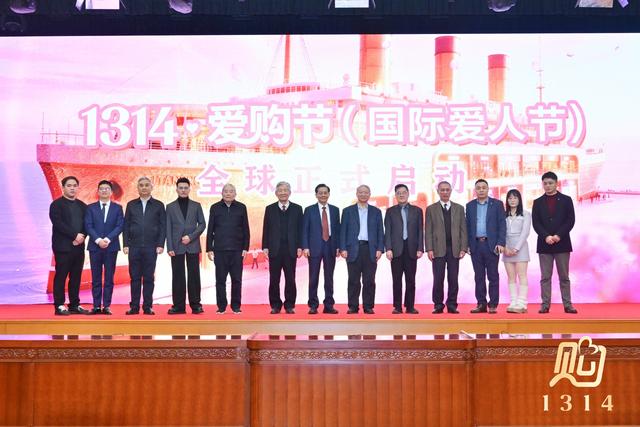
Core Insights - The "2026 Digital Economy Empowering Cultural Tourism Integration New Business Model Innovation Exchange Conference" was successfully held, focusing on the theme of "Enhancing New Quality Consumption and Innovative Business Scenarios" to explore the integration of "Digital Intelligence + Cultural Tourism + Emotional Consumption" for high-quality development in the cultural tourism industry [1][4] - The conference launched the International Lover's Day (1314 Love Shopping Festival), establishing a cultural milestone on January 3rd and 4th at 13:14, aiming to create a new model of "online intelligent consumption + offline immersive cultural tourism" [1][4] Group 1 - Experts discussed the transition of consumption from "material satisfaction" to "emotional resonance," highlighting the importance of emotional consumption in the current market [3] - The integration of digital economy and technology empowerment is emphasized as a key factor for upgrading cultural tourism business models [3] - Strategic partnerships were formed between Beijing 1314 Technology Co., Love Shopping Festival (Beijing) International Business Group, and various brands across food, beauty, and technology sectors, aiming to create a cross-industry integrated ecosystem [3] Group 2 - The 1314 Love Shopping Festival emotional IP aims to meet consumers' spiritual needs through emotional connections while optimizing cultural tourism consumption experiences with digital technology [4] - The conference served as a collaborative innovation platform for government, enterprises, and research institutions, promoting the integration of emotional IP with the cultural tourism industry [6] - The emotional anchor and technological engine of this new paradigm in cultural tourism are expected to continuously release consumption potential and contribute to high-quality economic development [6]
嘉宾专访丨陈璐琳:用互惠经济实现商业价值与社会价值的双向赋能
Sou Hu Cai Jing· 2025-12-30 12:56
Core Insights - The article discusses the concept of "Economics of Mutuality," which integrates social value innovation into core business strategies, providing a pathway for sustainable development amidst traditional business model challenges [3][5][12] - The approach emphasizes that businesses should not only pursue short-term financial returns but also create long-term value by addressing social issues through ecosystem building [5][11] Group 1: Concept and Origin - The "Economics of Mutuality" was developed by Mars, a century-old family business, in collaboration with Oxford University, challenging the traditional profit-maximization logic [5][6] - This model promotes a responsibility-driven business management approach, prioritizing "mutual benefit" and broader social responsibilities [3][5] Group 2: Cultural and Policy Integration in China - The mutuality concept resonates deeply with Chinese cultural values, such as "harmony" and "community," which align with the principles of relationship-oriented and long-term coexistence [5][6] - China's national strategies, including high-quality development and common prosperity, provide unprecedented policy support for the implementation of mutuality, facilitating corporate engagement in social issue resolution [6][12] Group 3: Practical Applications - The "Township Partner" project initiated by Mars China exemplifies the practical application of mutuality, aiming to empower local youth and address market access challenges in rural areas [7][8] - This project not only enhances the income and well-being of participants but also strengthens local economies and creates a resilient supply chain for Mars [9][10] Group 4: Evaluation Framework - A comprehensive evaluation framework has been established to assess the mutuality model, focusing on financial, human, social, and natural capital [11] - The framework includes both quantitative and qualitative metrics, such as income levels, skill enhancement, and community trust, to measure the long-term sustainability of projects [11] Group 5: Future Outlook - The mutuality model is expected to evolve from being a supplementary social responsibility initiative to becoming a core strategic innovation engine for businesses in the next 5-10 years [12][13] - The integration of technology and policy support is anticipated to further enhance the effectiveness of mutuality, positioning China as a leader in the fusion of commercial and social value [12][13]
