
玩具

Search documents
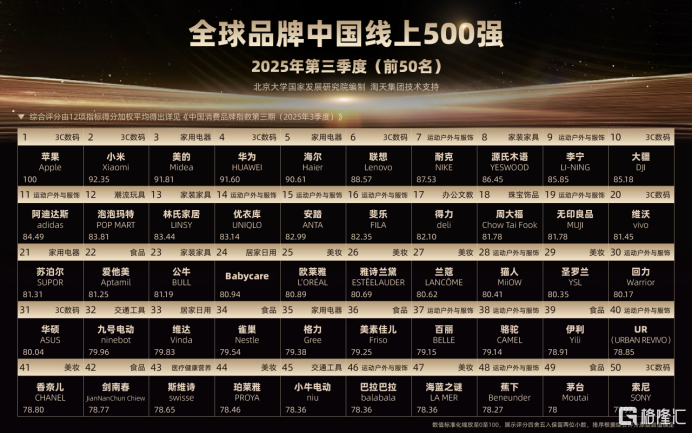
最新"全球品牌中国线上500强"季度榜单出炉,大疆首次进入前10、泡泡玛特上升显著
Ge Long Hui· 2025-12-25 06:54
Core Insights - The latest quarterly "China Online Consumption Brand Index" (CBI) and "Global Brand China Online Top 500" (CBI500) indicate a continued rise in consumer preference for brand goods, with the CBI reaching 62.65, a year-on-year increase of 0.92% [1] - DJI and Pop Mart have shown rapid growth, with DJI entering the top 10 of the CBI500 for the first time, and Pop Mart ranking 12th [1] Industry Trends - The CBI series indices reflect a macroeconomic trend of consumption recovery and a shift towards high-quality development, with a notable increase in the core CPI by 0.6% year-on-year in the first three quarters [1][4] - Significant growth in the CBI index was observed in sectors such as women's clothing, 3C smart products, daily beauty products, outdoor sports, pet supplies, men's clothing, and home furnishings, indicating a heightened consumer focus on quality and brand [4][5] - The women's clothing sector saw a notable increase of over 5 points in its index, driven by intensified competition and a focus on quality upgrades [4] Brand Performance - The top five brands in the CBI500 remain consistent with previous quarters: Apple, Xiaomi, Midea, Huawei, and Haier [6] - Brands like DJI and Pop Mart have improved their rankings significantly due to product innovation and seasonal demand, with DJI leveraging unique features in its products and Pop Mart capitalizing on its original IP [6][7] - New entrants in the food category, such as Guangzhou Restaurant and Crab Taotai, benefited from seasonal demand for mooncake gift boxes, while educational brands like Deli and Morning Glory also saw significant improvements [6] Consumer Behavior - The CBI500 rankings are based on real consumer purchasing behavior, utilizing 12 metrics including sales, price, search volume, and positive reviews to assess brand competitiveness [7] - The emphasis on quality and innovation is seen as a key driver for brand strength, moving away from cost-based competition towards a focus on quality, brand differentiation, and value [8]






下一代中国顶级企业,或许将诞生于数字文明大航海
Sou Hu Cai Jing· 2025-12-25 05:33
Core Insights - The article highlights the rapid globalization of Chinese brands, exemplified by companies like Pop Mart, Xiaomi, and Miniso, which have achieved significant overseas revenue growth in a short period, contrasting with the lengthy globalization processes of traditional giants like Coca-Cola and McDonald's [3][6]. Group 1: Company Expansion - Pop Mart established its overseas business center in 2018, and within seven years, overseas markets contributed approximately 50% of its sales, achieving the founder's goal [3]. - Xiaomi's overseas revenue surged from 4.06 billion yuan in 2015 to 74.9 billion yuan in the first half of 2025, marking an increase of over 17 times [3]. - Miniso opened its first overseas store in Singapore in 2015, and by June 2025, it had expanded to 3,307 overseas stores, with overseas revenue reaching 3.534 billion yuan, accounting for 40.9% of total revenue [3]. Group 2: Digital Transformation - The article discusses a fundamental change in the driving forces of globalization, emphasizing a shift from traditional linear growth models to data-driven business models that allow for exponential growth [4][7]. - Chinese companies leverage their inherent digital capabilities to replicate systems quickly in new markets, bypassing lengthy talent training periods [7]. Group 3: Challenges in Globalization - Chinese brands face challenges in overseas markets due to fragmented payment systems and regulatory environments, which hinder their ability to operate efficiently [5][12]. - The article notes that each country has its own dominant local payment methods, leading to high adaptation costs for Chinese companies [12]. - The lack of unified systems across different regions complicates operations, making it difficult for companies to maintain a cohesive global network [13]. Group 4: PingPong's Role - PingPong is positioned as a solution to the complexities of global financial and compliance challenges, offering services that simplify these processes for Chinese companies [14][15]. - The company has obtained over 60 payment licenses globally, allowing brands to access localized payment capabilities without the need for extensive negotiations [15]. - PingPong's system enhances operational efficiency by providing real-time visibility into global funds, enabling data-driven decision-making for brands [19]. Group 5: Future Outlook - The article concludes that the future of Chinese brands will rely on digital transformation to achieve global brand recognition, transitioning from "Made in China" to "Global Brands" [20][21].

Crybaby特展在上海“柔软”启幕,雅诗兰黛发布全新“胶原建模”精华|是日美好事物
Xin Lang Cai Jing· 2025-12-25 05:02
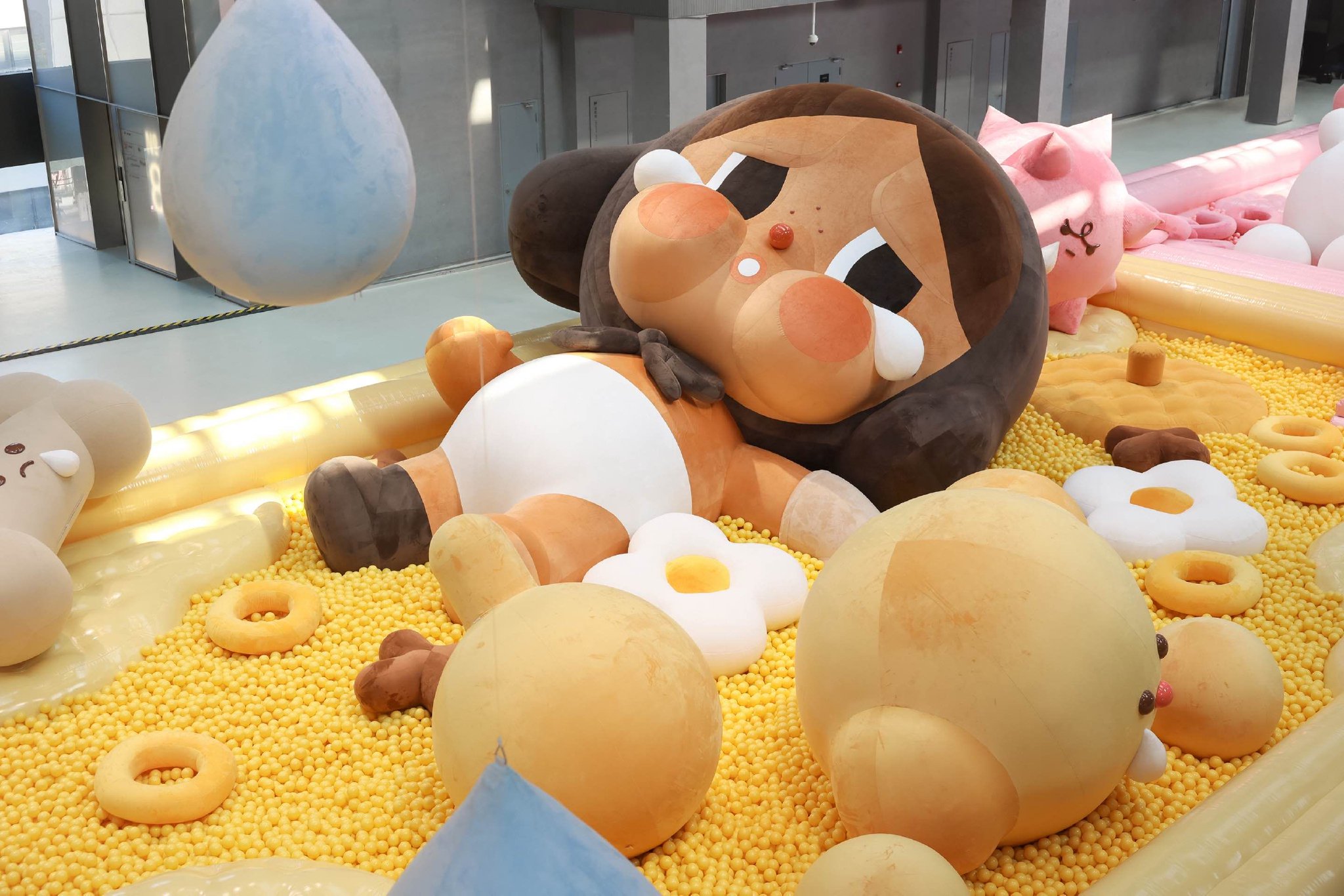
Group 1: Crybaby Exhibition - The "Letting Go... Holding On..." Crybaby exhibition, presented by Pop Mart and Molly Factory, officially opened on December 20, 2025, in Shanghai, marking Crybaby's first appearance in China and its largest exhibition to date [1] - The exhibition spans nearly 2,000 square meters, designed as a "soft world" that invites visitors to embark on an emotional journey centered around tears [1] - Key features include the "tear ball pool," which covers 864 square meters and connects three main pools, symbolizing a journey from overcoming obstacles to self-liberation [2] Group 2: Emotional Themes and Interactivity - The exhibition's design translates abstract emotions into tangible, interactive scenes, showcasing classic characters Crybaby, Crybunny, and Cryteddy [2] - Interactive elements such as finding "tear drop" lucky balls, lighting up emotional icons, and creating personalized Crybaby figures enhance the exploration and engagement of visitors [2]


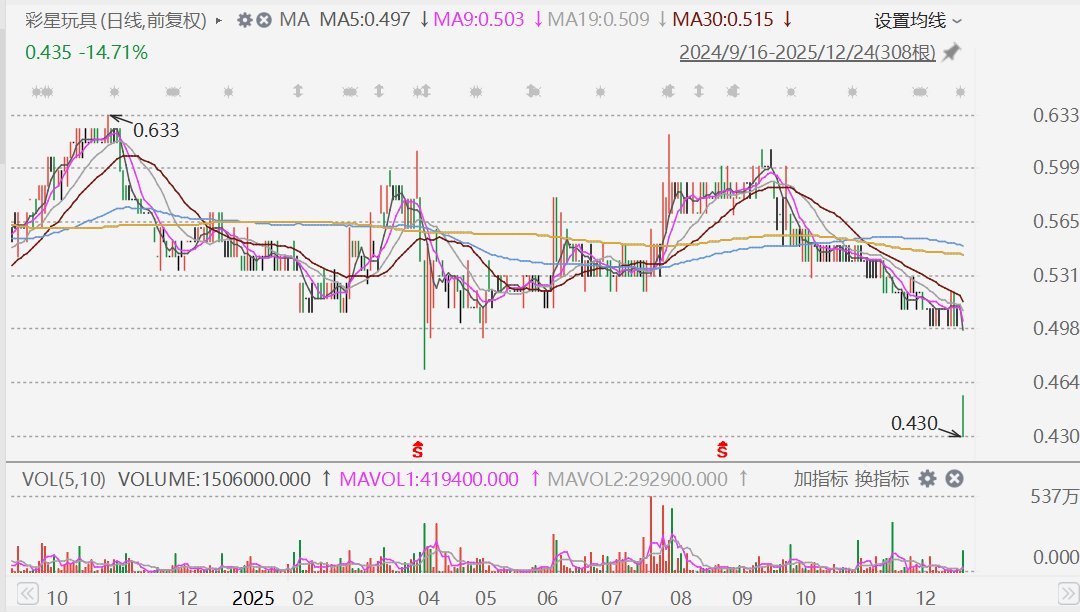
彩星玩具一度跌逾15%,与“忍者龟”特许权协议将于明年底终止
Xin Lang Cai Jing· 2025-12-24 04:25
Core Viewpoint - The stock of Hong Kong toy company Color Star Toys (00869.HK) experienced a significant decline, dropping over 15% during trading, closing at HKD 0.435 per share, with a total market capitalization of HKD 510 million [1] Group 1: Licensing Agreement Impact - Color Star Toys' subsidiary, Color Star Toys International Limited (PICL), has been granted rights to design, manufacture, distribute, and sell "Teenage Mutant Ninja Turtles" products under a licensing agreement with Viacom Media Networks [1] - The licensing agreement is set to expire on December 31, 2026, and will not be renewed, which will terminate PICL's rights to sell licensed products [1] - The sales revenue from licensed products accounted for approximately 8%, 13%, 77%, 47%, and 36% of the group's consolidated revenue for the years ending December 31, 2021, 2022, 2023, 2024, and the six months ending June 30, 2025, respectively [1]
港股最大优势是便宜?两大因素或提振港股!自带哑铃策略的——香港大盘30ETF(520560)近20日狂揽1.35亿元
Xin Lang Cai Jing· 2025-12-24 03:28
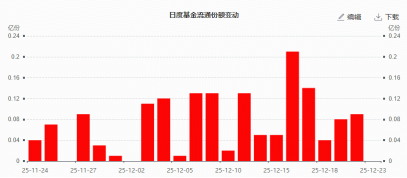
Group 1 - The core viewpoint of the article highlights the increasing interest in Hong Kong stocks, driven by their valuation advantages and strong corporate governance [3][10] - The Hong Kong market is currently at a low valuation, with major companies focusing on shareholder returns through dividends and buybacks, indicating a robust governance structure [10][11] - The Hong Kong market features a number of scarce industry leaders with lower prices and higher dividend rates, enhancing their investment appeal [10][11] Group 2 - The adjusted cost-performance ratio of Hong Kong stocks is more favorable, with opportunities in both technology and dividend sectors [11] - In the technology sector, attention is drawn to internet companies focusing on large model developments, where leading firms are establishing competitive barriers through funding and data advantages [11] - In the dividend sector, bank stocks are highlighted for their low valuations and stable dividend returns, attracting long-term institutional investors [11][12] Group 3 - Two factors are expected to further boost the Hong Kong market: the U.S. interest rate cut cycle, which may lead to a global capital influx, and the continued appreciation of the RMB, increasing the attractiveness of RMB-denominated assets [12] - The company Guangfa Securities recommends a "barbell strategy" for investment, suggesting a long-term allocation to stable value assets while maintaining exposure to growth assets in the Hong Kong market [12] - The Hong Kong Large Cap 30 ETF (520560) is presented as a suitable tool for long-term investment, combining high-growth technology stocks and stable dividend-paying stocks [5][12]




港股异动 | 彩星玩具(00869)跌超15% “忍者龟”产品特许权协议2027年起将不获续期
智通财经网· 2025-12-24 02:13
Core Viewpoint - The stock of Color Star Technology (00869) has dropped over 15%, currently trading at 0.435 HKD, following the announcement that its licensing agreement for "Teenage Mutant Ninja Turtles" products will not be renewed after December 31, 2024 [1] Group 1: Licensing Agreement Impact - Color Star's subsidiary, PICL, has been informed that the licensing agreement with Viacom Media Networks will expire on December 31, 2024, and will not be renewed [1] - The sales revenue from licensed products accounted for approximately 8%, 13%, 77%, 47%, and 36% of the group's total revenue for the years ending December 31, 2021, 2022, 2023, 2024, and the six months ending June 30, 2025, respectively [1] - After the expiration of the licensing agreement, PICL's rights to dispose of licensed product inventory will terminate 90 days thereafter [1] Group 2: Future Opportunities - The company plans to continue seeking and evaluating potential licensing opportunities that align with its strategic considerations after the current agreement ends [1]
港股异动丨彩星玩具大跌超15%,合作37年后“忍者龟”特许权协议自2027年起不再续期
Ge Long Hui· 2025-12-24 02:05
Core Viewpoint - The stock price of Color Star Technology (0869.HK) dropped over 15% to HKD 0.43, marking a new low since April 2023, following the announcement that the long-standing licensing agreement for the "Teenage Mutant Ninja Turtles" will not be renewed after 2027 [1] Group 1: Financial Impact - The "Teenage Mutant Ninja Turtles" products were a significant revenue source for the company, with sales revenue from these products increasing from 8% of total revenue in 2021 to 77% in 2022 [1] - The sales revenue contribution from "Teenage Mutant Ninja Turtles" products is projected to decline to 47% by December 31, 2024, and further to 36% by June 30, 2025 [1]
Z世代“拒绝长大”引爆玩具狂潮!泡泡玛特净利暴涨400%,Jellycat利润翻倍
Hua Er Jie Jian Wen· 2025-12-23 13:06
Core Insights - Generation Z is driving a global toy consumption boom, significantly boosting the performance of related companies [1] - The phenomenon is termed "happy economy," where adults seek emotional comfort and nostalgic experiences through consumption [1] Group 1: Company Performance - Pop Mart's revenue for the first half of 2025 reached 138.8 billion RMB (approximately 19.3 billion USD), with net profit surging nearly 400% [2] - Jellycat's revenue grew by 66% in 2024 to 333 million GBP, up from 200 million GBP in 2023, with pre-tax profit more than doubling from 67 million GBP to 139 million GBP [2] - The Labubu toy alone contributed approximately 423 million USD to Pop Mart's global revenue in 2024 [2] Group 2: Consumer Behavior - The "Peter Pan effect" describes adults' reluctance to grow up and take on responsibilities, leading them to seek comfort in childhood nostalgia [2] - Economic and geopolitical instability, along with rising living costs, have made traditional milestones like homeownership seem unattainable for many in Generation Z [3] - The phenomenon of "doomsday consumption" has emerged, where Generation Z seeks immediate comfort through small pleasures like travel and collectible toys [3] Group 3: Community and Belonging - A prevalent sense of loneliness among Generation Z influences their consumer choices, with toy purchasing and collecting serving as a means to seek community belonging [4] - A survey indicated that 85% of British Generation Z respondents often feel lonely, highlighting the emotional aspect of their consumption [4] - Jellycat has become the fastest-growing brand in sales at Selfridges, driven by the desire of Generation Z and millennials to integrate into communities through collecting [4]
彩星玩具:主要特许权协议自2027年起将不获续期
Zhi Tong Cai Jing· 2025-12-23 10:38
Core Viewpoint - 彩星玩具 (00869) will lose the rights to sell "Teenage Mutant Ninja Turtles" products after the current licensing agreement expires on December 31, 2026, which will significantly impact its revenue from these products [1] Group 1: Licensing Agreement Details - 彩星玩具国际有限公司 (PICL) has been granted rights to design, manufacture, distribute, and sell "Teenage Mutant Ninja Turtles" products under a licensing agreement with Viacom Media Networks [1] - The licensing agreement is set to expire on December 31, 2026, and PICL has been notified that it will not be renewed [1] - PICL's rights to dispose of inventory related to the licensed products will terminate 90 days after the agreement's expiration [1] Group 2: Revenue Impact - Sales revenue from licensed products accounted for approximately 8% of the group's total revenue for the year ending December 31, 2021, 13% for 2022, 77% for 2023, 47% for 2024, and 36% for the six months ending June 30, 2025 [1] Group 3: Future Opportunities - Following the expiration of the licensing agreement, the company will continue to seek and evaluate potential licensing opportunities that align with its strategic considerations [2] - The company remains committed to developing and managing its existing product lines, including "Power Rangers," "MonsterVerse," and "Winx" [2]
彩星玩具(00869):主要特许权协议自2027年起将不获续期
智通财经网· 2025-12-23 09:10
Core Viewpoint - The company, 彩星玩具, will lose its rights to sell "Ninja Turtles" products after December 31, 2026, as the current licensing agreement will not be renewed [1] Group 1: Licensing Agreement Details - 彩星玩具's subsidiary, 彩星玩具国际有限公司 (PICL), has been granted rights to design, manufacture, distribute, and sell "Ninja Turtles" products under a licensing agreement with Viacom Media Networks [1] - Negotiations for the renewal of the licensing agreement have been ongoing since October 2025, but PICL has received formal notification that the agreement will expire on December 31, 2026, without renewal [1] - The rights to dispose of inventory related to the licensed products will terminate 90 days after the agreement's expiration [1] Group 2: Financial Impact - Sales revenue from licensed products accounted for approximately 8%, 13%, 77%, 47%, and 36% of the company's consolidated revenue for the years ending December 31, 2021, December 31, 2022, December 31, 2023, December 31, 2024, and the six months ending June 30, 2025, respectively [1] Group 3: Future Opportunities - Following the expiration of the licensing agreement, the company will continue to seek and evaluate potential licensing opportunities that align with its strategic considerations [2] - The company remains committed to developing and managing its existing product lines, including "Power Rangers," "MonsterVerse," and "Winx" [2]