
装备制造

Search documents
2025 以实干镌刻新荣光
Xin Lang Cai Jing· 2026-01-21 22:36
Core Viewpoint - The government work report of Harbin City emphasizes the commitment to high-quality revitalization and development by 2025, focusing on industrial upgrades, improved public welfare, and enhanced urban vitality [7]. Group 1: Economic Development - The construction of "three bases, one barrier, and one highland" has made significant progress, with grain production reaching 25.775 billion jin, an increase of 753 million jin [9]. - The added value of large-scale equipment manufacturing increased by 19.6%, and the installed capacity of renewable energy reached 5.338 million kilowatts, accounting for 52.9% of the total installed capacity [9]. - Actual foreign investment grew by 18.1%, and total import and export volume increased by 4.1% [9]. Group 2: Policy Implementation - Major policies such as "two heavies" and "two new" have shown effectiveness, with 581 major construction projects and 56 equipment upgrade projects supported [9]. - Consumer incentives included 3.76 billion yuan in subsidies for replacing old consumer goods and 190 million yuan in consumer vouchers, stimulating consumption by 38.89 billion yuan [9]. - Industrial technology investment increased by 36.3%, and high-tech manufacturing investment grew by 10.8% [9]. Group 3: Tourism and Culture - Harbin successfully hosted events like the Harbin Summer Music Festival and the International Ice and Snow Festival, attracting 200 million tourists and generating a total tourism expenditure of 281.84 billion yuan, representing growth of 12.7% and 21.8% respectively [10]. - The city was awarded the title of "World Ice and Snow Tourism Excellence City" by the United Nations World Tourism Organization [10]. Group 4: Innovation and Industry Upgrade - The acceleration of industrial upgrades is evident with 733 projects underway and an investment of 50.1 billion yuan, with significant growth in aerospace, computer, and automotive engine manufacturing [11]. - The number of technology-based enterprises reached 182, with a loan balance growth of 18.7% [11]. - The employment rate of graduates from local universities is 18.3%, with 38.1% for doctoral graduates [11]. Group 5: Urban Development - High-quality urban construction is progressing, with the completion of major infrastructure projects like the expansion of Taiping International Airport [13]. - The city has implemented 32 road and bridge projects and constructed 26,600 new parking spaces [13]. - Historical and cultural preservation efforts include the restoration of 33 heritage sites and the enhancement of urban green spaces [13]. Group 6: Social Welfare - Urban employment increased by 98,900, with 2,000 affordable housing units under construction [15]. - Public services improved with the addition of 38 vocational education programs and 38,300 new quality school places [15]. - Safety and stability in the social environment were maintained, with a decrease in debt rates and criminal cases [15].


科力装备:公司的吸光涂层凭借优越性能,从根源上解决了油膜难题
Zheng Quan Ri Bao Zhi Sheng· 2026-01-21 13:12
Core Viewpoint - The company has developed a superior light-absorbing coating that effectively addresses the issue of VOC emissions, which are primarily generated from camera substrates, brackets, and plastic materials, thus solving the oil film problem that affects camera performance in high-temperature and UV conditions [1] Group 1: Product Performance - The light-absorbing coating has been successfully integrated into over ten models of new energy vehicles, achieving installation volumes in the hundreds of thousands [1] - The product is recognized for its "zero oil film" performance, which has helped the company build a strong market reputation [1] Group 2: Market Position - The company's coating technology is currently leading in performance within the market, providing a competitive edge as other competitors are unable to resolve VOC emissions in the short term [1]
“压舱石”作用愈发凸显 创新动能持续壮大——透视“十四五”收官之年工业和信息化发展成效
Xin Hua Wang· 2026-01-21 12:25
Core Viewpoint - The industrial sector is a cornerstone of the national economy, with significant growth and development expected by 2025, emphasizing new industrialization and technological innovation [2][8]. Group 1: Industrial Growth and Performance - The industrial added value of large-scale enterprises increased by 5.9% year-on-year, with manufacturing value added maintaining the world's top position for 16 consecutive years [2]. - The added value of equipment manufacturing and high-tech manufacturing grew by 9.2% and 9.4% respectively [2]. - The contribution of the industrial and information sector to economic growth exceeded 40% [2]. Group 2: Support for SMEs - The government has accelerated reforms in key areas, implemented actions to reduce enterprise burdens, and cleared overdue payments to support small and medium-sized enterprises (SMEs) [3]. - A total of 17,600 "little giant" enterprises and over 140,000 specialized and innovative SMEs have been cultivated [3]. - The added value of industrial SMEs is expected to grow by 6.9% year-on-year by 2025 [3]. Group 3: Technological Innovation - Significant advancements in new technologies include a 26.7% increase in the added value of the integrated circuit industry and a 23.9% increase in electronic materials [5]. - The scale of artificial intelligence computing power reached 1,590 EFLOPS, with applications in key industries such as steel, electricity, and telecommunications [5]. - Over 330 humanoid robot products have been launched domestically, showcasing the growth of innovative capabilities [5]. Group 4: Digital Economy Integration - The integration of the digital economy with the real economy is enhancing industrial transformation, with over 23,000 "5G + industrial internet" projects established [6]. - New business models such as "dark factories," "unmanned mines," and "smart ports" are emerging as key drivers for upgrading traditional industries [6]. Group 5: Future Industrial Strategy - The focus for the upcoming year will be on stabilizing growth, enhancing innovation, promoting integration, optimizing governance, and preventing risks [8]. - The government aims to enhance the adaptability of consumer goods supply and demand to release consumption potential [8]. - Efforts will be made to promote green and low-carbon transitions, focusing on developing key energy-saving and environmental protection equipment [8].
苏州“十五五”规划建议出炉:将培育更多千亿级规模上市企业
Zheng Quan Shi Bao Wang· 2026-01-21 12:18
Core Insights - Suzhou has officially released its "14th Five-Year Plan" proposal, focusing on promoting industries such as embodied intelligence, quantum technology, hydrogen energy, nuclear fusion energy, and brain-computer interfaces as new economic growth points [1] Group 1: Development of New Productive Forces - The proposal emphasizes the importance of the real economy and aims to implement the "Suzhou Intelligent Manufacturing" project, maintaining the manufacturing sector's contribution above 40% [2] - It aims to enhance the competitiveness of emerging industries by advancing innovation infrastructure, technology R&D, and product upgrades, particularly in sectors like electronic information, equipment manufacturing, and new materials [2] - The plan includes fostering world-class advanced manufacturing clusters in biomedicine, high-end medical devices, and semiconductor industries, among others [2] Group 2: Cultivation of Future Industries - The proposal outlines plans to actively develop future industries such as future manufacturing, information, materials, energy, space, and health [3] - It encourages diverse technological routes and application scenarios to accelerate the formation of new economic growth points in areas like embodied intelligence and quantum technology [3] - The plan aims to promote venture capital development to create a multi-faceted investment landscape for future industries [3] Group 3: Building an Innovation Hub - The proposal calls for strengthening the regional innovation system and integrating into the Shanghai (Yangtze River Delta) international technology innovation center [4] - It emphasizes the need for breakthroughs in key core technologies and aims to establish national innovation centers in quantum technology and deep-sea information technology [4] - The plan includes enhancing the role of enterprises in technological innovation and fostering a gradient cultivation system for technology-driven enterprises [4] Group 4: Promoting Large-scale Listed Companies - The proposal highlights the importance of reform in key areas and encourages differentiated reform explorations to enhance systemic coherence [5] - It aims to improve the financial service system, focusing on technology finance, green finance, and digital finance, among others [5] - The plan seeks to support the listing of more large-scale companies and enhance their growth [5] Group 5: High-level Opening Up - The proposal emphasizes deepening international cooperation and implementing high-level opening-up initiatives to attract global high-end resources [7] - It aims to expand institutional openness and engage in innovative trials in various sectors, including biomedicine and smart manufacturing [7] - The plan includes building the Yangtze River Delta ecological and green integration development demonstration zone [7] Group 6: Accelerating Urban Integration - The proposal focuses on enhancing the integration of Suzhou with Shanghai, promoting cooperation in technology innovation and resource sharing [8] - It aims to collaboratively develop world-class high-end industrial clusters in sectors like integrated circuits and artificial intelligence [8] - The plan includes improving transportation infrastructure and public services to facilitate urban integration [8]
为“中国智造”持续注入新动能 一批领航级智能工厂将亮相
Bei Jing Shang Bao· 2026-01-21 10:21
Core Viewpoint - The Ministry of Industry and Information Technology (MIIT) of China is promoting the development of leading smart factories to enhance the country's manufacturing competitiveness and support the digital transformation of the global manufacturing industry [1][6]. Group 1: Development of Smart Factories - Over 35,000 basic-level, more than 8,200 advanced-level, and over 500 excellent-level smart factories have been established, along with 15 leading smart factories [4]. - The first batch of 15 leading smart factories showcased their advancements at the 2025 World Intelligent Manufacturing Conference, achieving an average production efficiency increase of 29% and a reduction in product defect rates by 47% [5]. - The leading smart factories have integrated artificial intelligence into over 70% of their business scenarios, creating over 6,000 vertical domain models and facilitating the large-scale application of more than 1,700 key intelligent manufacturing equipment and industrial software [5]. Group 2: Strategic Initiatives - The MIIT, in collaboration with several government departments, aims to cultivate a batch of leading smart factories that represent the highest level of global intelligent manufacturing, serving as a model for the overall upgrade of China's manufacturing industry [6]. - A four-tier system for smart factory cultivation has been initiated, focusing on basic, advanced, excellent, and leading levels, with specific requirements for AI application scenarios [7]. - The MIIT plans to continue implementing intelligent manufacturing projects and support leading enterprises in exploring future manufacturing models, which will help overcome bottlenecks in high-end and intelligent development in the manufacturing sector [8].

2025年河南GDP超6.66万亿元
Zheng Zhou Ri Bao· 2026-01-21 10:20
Core Viewpoint - The provincial economy in 2025 shows a stable and improving trend, with a GDP of 66,632.79 billion yuan, reflecting a year-on-year growth of 5.6% at constant prices [1] Group 1: Production Supply - Agricultural production remains stable, with grain output reaching 1,350.97 billion jin, maintaining above 1,300 billion jin for nine consecutive years [2] - Industrial production grows rapidly, with industrial added value increasing by 8.4%, surpassing the national average by 2.5 percentage points [2] - The equipment manufacturing sector shows strong support, with an added value growth of 13.6%, contributing 44.1% to the province's industrial growth [2] Group 2: Service Sector - The service sector experiences positive growth, with revenue from large-scale service enterprises increasing by 8.4% year-on-year [3] - Eight out of ten major service industries report revenue growth, indicating a broad recovery in the service sector [3] - The logistics sector shows improvement, with airport cargo and mail throughput increasing by 25.2% [3] Group 3: Effective Demand - Fixed asset investment grows by 4.0%, exceeding the national average by 7.8 percentage points, with significant contributions from major projects [4] - Social retail sales reach 29,090.50 billion yuan, growing by 5.6% year-on-year, with over 80% of retail categories showing growth [4] - Basic living consumption categories, such as daily necessities and food, see substantial growth rates of 21.8%, 16.8%, and 16.0% respectively [4] Group 4: Foreign Trade - The province's foreign trade reaches a record high, with total imports and exports valued at 935.67 billion yuan, a year-on-year increase of 14.1% [5] - Exports of mechanical and electrical products grow by 23.3%, accounting for 66.4% of total exports [5] - The number of enterprises engaged in foreign trade increases to 15,300, reflecting enhanced business vitality [5] Group 5: Emerging Dynamics - High-tech manufacturing industries see a significant increase in added value by 16.6%, maintaining double-digit growth for 30 consecutive months [6] - New service industries, such as broadcasting and transportation, report substantial revenue growth, with some sectors growing over 20% [6] - The micro-short drama industry experiences explosive growth, with revenue increasing by 115.2% [7] Group 6: Policy Effectiveness - Policies aimed at equipment upgrades and consumption incentives show positive effects, with industrial equipment investment rising by 8.3% [8] - Key industrial chains report an added value growth of 9.5%, contributing significantly to overall industrial growth [8] - Consumer prices show a reasonable increase, with a year-on-year rise of 1.1% in December [8]
成绩单里的创新“马力”(每周经济评论)
Ren Min Ri Bao· 2026-01-21 08:02
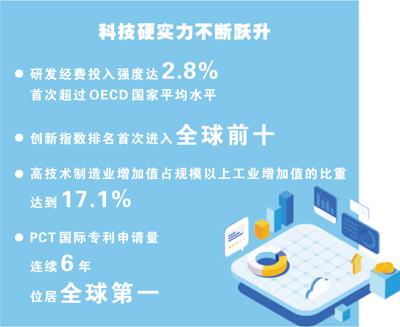
1月19日,中国经济2025经济成绩单正式发布: 经济总量跃上140万亿元新台阶,同比增长5.0%;研发经费投入强度达2.8%,首次超过经济合作与发展 组织(OECD)国家平均水平;创新指数排名首次进入全球前十;低空经济"振翅高飞",具身智能"敏 思巧行",高技术制造业增加值占规模以上工业增加值的比重达到17.1%……中国经济充分彰显"顶压前 行"的韧性、展现"向新向优"的活力,圆满实现预期目标。 走过"十四五"收官之年,步入"十五五"开局之年,"向新向优"的势头仍在经济肌体延续—— 贴……每当市场给出信号,从设计、生产到营销的完整产业链便能迅速协同,创意与产能双向奔赴,让 需求快速转化为实实在在的消费。 看国内,"世界小商品之都"义乌,一只嘴巴缝反的马年玩偶走红全网。网络热潮快速转化为市场需求, 上演了一场别样的逆袭。 从科技展台到市场舞台,一虚一实"两匹马",清晰照见了中国创新发展的十足"马力"。 这股"马力",表现为一种"耐力",绵绵用力方有厚积薄发。 细观CES上的展品,可以发现,许多中国企业的机器人已非停留在原型的"概念机",而是可现场挑选、 试用并提货的交付产品。积跬步以至千里,曾经,宇树科技创始 ...
高铁站可直接办理值机,山东打通空铁联运“最后一公里”
Feng Huang Wang Cai Jing· 2026-01-21 07:42
Core Viewpoint - The Shandong provincial government is focusing on high-quality urban development through the implementation of collaborative strategies between its two major urban agglomerations, Jinan and Qingdao, to enhance regional coordination and economic growth [2]. Group 1: Urban Development and Infrastructure - The urban agglomerations of Jinan and Qingdao are recognized as key drivers for regional coordinated development, with Shandong being the only province in northern China to have two national-level urban agglomerations [4]. - A convenient commuting network is being established, with the opening of the Weiyang High-speed Railway and the acceleration of several highway projects, enhancing connectivity within the urban agglomerations [4]. - The second phase of Jinan Airport's expansion is underway, and new domestic and international flight routes have been launched, creating a one-hour commuting circle within the urban agglomerations [4]. Group 2: Industrial Collaboration - By 2025, 130 collaborative demonstration projects between the two urban agglomerations are expected to attract over 160 billion yuan in investment, with significant projects like the Weichai Qingdao Smart Heavy Industry project and the Jinan CRRC Sifang Liangwang Vehicle Base nearing completion [5]. - The two urban agglomerations have identified ten key industries for collaboration, including integrated circuits and artificial intelligence, and are exploring new models for industrial cooperation [5]. Group 3: Public Services and Education - A "Cloud Hand-in-Hand Alliance" has been formed between Qingdao and Jinan to facilitate cross-city administrative services, allowing 27 government service items to be processed across cities [6]. - A modern marine higher education community has been established, involving 83 universities and research institutions, aimed at enhancing educational collaboration [6]. - The period of the 14th Five-Year Plan is deemed crucial for accelerating the construction of the Jinan-Qingdao modern urban agglomeration and promoting integrated development [6]. Group 4: Strategic Integration and Regional Cooperation - Shandong is enhancing infrastructure connectivity and building a modern industrial system to optimize the industrial layout of the two urban agglomerations, thereby improving technological innovation capabilities [7]. - The province is also deepening cooperation with the Zhengzhou urban agglomeration and cities along the Yellow River, aligning with national strategies for ecological protection and high-quality development [7].
2025年工业和信息化发展呈现“稳”“进”“新”“活”四个特点
Qi Huo Ri Bao· 2026-01-21 05:08
Group 1 - The core viewpoint of the news is that the industrial and information technology sectors in China are expected to maintain steady growth, with significant contributions to the overall economy by 2025 [1][2] - The industrial added value for large-scale industries is projected to grow by 5.9% year-on-year, with the manufacturing sector's contribution to GDP remaining stable, and the manufacturing scale likely to maintain its position as the largest globally for 16 consecutive years [1] - The total telecommunications business volume is expected to increase by 9.1% year-on-year, highlighting the sector's robust performance [1] Group 2 - The pace of high-quality development is accelerating, with significant growth in the added value of equipment manufacturing and high-tech manufacturing, which are expected to increase by 9.2% and 9.4% year-on-year, respectively [2] - The proportion of these sectors in the total industrial output is projected to improve by 2.2 percentage points and 0.8 percentage points compared to 2024 [2] - The integration of technology and industry is being emphasized, with breakthroughs in major equipment and over 300 key technologies reserved for 6G development [2] Group 3 - The effects of reforms in key areas are becoming evident, with actions taken to reduce the burden on enterprises and improve the competitive environment in sectors like new energy vehicles and photovoltaics [2] - The integration of 5G and gigabit optical networks into 91 out of 97 national economic categories is expected to inject more vitality into economic and social development [2] - The industrial economy is characterized by resilience, potential, and vitality, with confidence in maintaining a stable and positive trend in 2026 [2]
工信部:2025年工业和信息化发展呈现“稳”“进”“新”“活”四个特点
Xin Hua Cai Jing· 2026-01-21 03:20
Core Viewpoint - The press conference held by the State Council Information Office highlighted the achievements in industrial and information development by 2025, showcasing four key characteristics: stability, progress, new momentum, and vitality. Group 1: Stability - The industrial and information sector has maintained a stable growth trajectory, with the added value of large-scale industries increasing by 5.9% year-on-year, and the manufacturing sector's contribution to GDP remaining stable, keeping its position as the world's largest for 16 consecutive years [1] - The total telecommunications business volume grew by 9.1% year-on-year, contributing over 40% to economic growth, effectively acting as a "ballast" for the economy [1] Group 2: Progress - The focus on high-quality development has accelerated, with the added value of equipment manufacturing and high-tech manufacturing increasing by 9.2% and 9.4% year-on-year, respectively, outpacing overall industrial growth by 3.3 and 3.5 percentage points [2] - The establishment of over 35,000 basic-level and 8,200 advanced-level smart factories has been achieved, alongside the cultivation of 15 leading smart factories, indicating solid progress in the digital transformation of manufacturing [2] Group 3: New Momentum - Significant advancements in technology and industry innovation have been made, with breakthroughs in major equipment such as ultra-large diameter shield machines and heavy-duty gas turbines, and over 300 key technologies reserved for 6G [3] - The added value of integrated circuits and electronic materials increased by 26.7% and 23.9% year-on-year, respectively, while industrial robot production rose by 28%, and new energy vehicle sales reached 16.49 million, up 28.2% [3] Group 4: Vitality - Reforms in key areas have been accelerated, with actions taken to reduce corporate burdens and clear overdue payments, creating a more vibrant business environment [4] - The cumulative cultivation of over 140,000 specialized and innovative small and medium-sized enterprises has been achieved, with high-tech enterprises reaching 504,000, indicating a robust ecosystem for innovation [4]