
采矿业

Search documents
“亚洲锂都”大动作,拟注销27个采矿权(附具体名单)
Zheng Quan Shi Bao· 2025-12-16 14:49
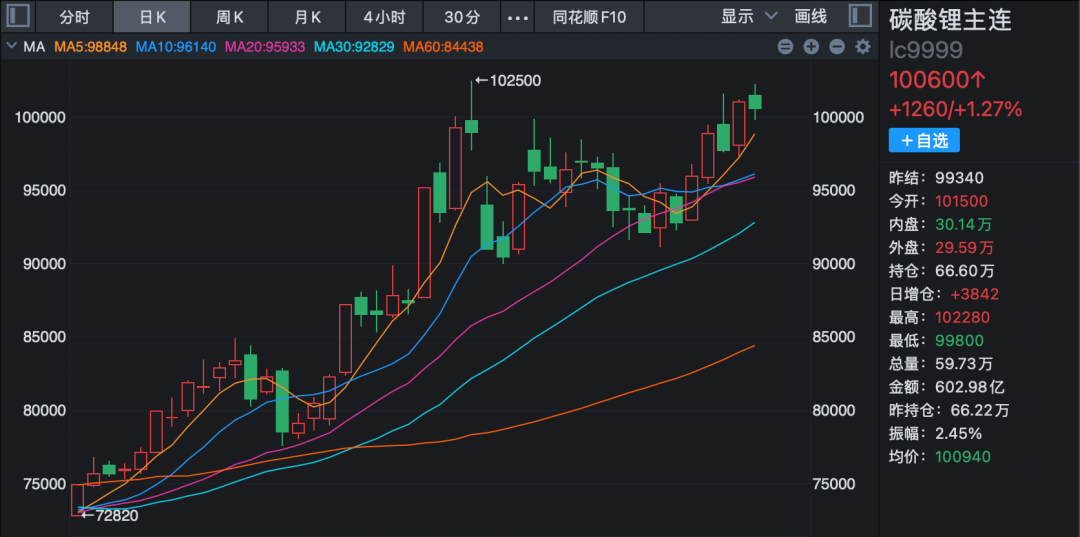
Group 1 - The core point of the news is the recent actions taken by Yichun City regarding the cancellation of mining licenses, particularly in the context of the rising lithium carbonate futures prices, which have surpassed 100,000 yuan [1][3]. - Yichun City Natural Resources Bureau plans to cancel 27 mining licenses, with a public notice period of 30 working days before the final announcement [3]. - Among the 27 licenses, 5 are set to expire in 2024, 1 in 2023, and 18 have already expired between 2010 and 2019, indicating a significant number of outdated licenses [3][4]. Group 2 - The majority of the mining licenses being canceled are for ceramic clay and limestone, with 17 licenses for ceramic clay and 7 for limestone, which includes lithium-bearing resources that investors are particularly interested in [4][5]. - Jiangxi Special Electric Motor Co., Ltd. holds a mining license for a lithium-bearing ceramic clay mine in Yifeng County, with a resource amount of 57,322.98 tons of Li2O [4]. - Yichun is recognized as a major lithium mining area in China, holding the largest lithium mica reserves in Asia, but most mining licenses are for non-lithium resources [4][5].


投资于物和投资于人紧密结合,潜力巨大
2 1 Shi Ji Jing Ji Bao Dao· 2025-12-16 12:03
Group 1 - The central economic work conference emphasizes the need to stabilize investment and expand domestic demand as a priority for the upcoming year, with a focus on combining "investment in people" and "investment in things" to unlock significant potential [1][6] - The government plans to increase the scale of central budget investments and optimize the management of local government special bonds to stimulate private investment [1][6] - The upcoming year marks the beginning of the "15th Five-Year Plan," which will accelerate the launch of various strategic emerging industries and future industry projects, supported by ample financial tools and special bond reserves [1][6] Group 2 - In November, the social financing scale increased by 24,885 billion yuan, exceeding market expectations, with a notable contribution from non-standard financing and corporate bond financing rather than traditional credit demand [2][3] - The contribution of credit to social financing decreased in November, with new RMB loans amounting to 4,053 billion yuan, reflecting insufficient effective demand in the macroeconomic environment [2][3] - Corporate loans in November totaled 6,100 billion yuan, primarily driven by an increase in bill financing, indicating a shift in financing sources as companies focus on settling accounts near year-end [3] Group 3 - Non-standard financing saw a year-on-year increase of 1,328 billion yuan in November, while corporate bond financing rose by 1,788 billion yuan, highlighting the importance of off-balance-sheet financing in the current economic context [3][4] - The M1 growth rate declined due to a high base effect, while M2 growth also decreased, influenced by the reduction in credit and its impact on derived deposits [4] - The central economic work conference has shifted its focus from social financing and M2 to economic growth and price recovery, indicating a change in policy priorities [4] Group 4 - In November, the industrial added value for large-scale enterprises grew by 4.8% year-on-year, with a cumulative growth of 6.0% from January to November, reflecting a strong performance in the supply side of the economy [5][6] - Fixed asset investment from January to November showed a year-on-year decline of 2.6%, with significant growth in equipment purchases indicating a trend towards modernization and digitalization in industrial production [5][6] - The government is expected to implement policies supporting large-scale equipment updates in 2024, with additional funding of approximately 150 billion yuan allocated for this purpose [6] Group 5 - In November, the total retail sales of consumer goods reached 43,898 billion yuan, growing by 1.3% year-on-year, although this represented a decline compared to October [7] - The central economic work conference has proposed actions to boost consumption, including plans to increase urban and rural residents' income and optimize the supply of quality goods and services [7] - The resilience of foreign trade has contributed to stable economic growth, but challenges remain for the upcoming year, necessitating measures to maintain exchange rate stability and support exports [7]
11月经济数据点评:结构延续分化,内需有待加力
Mai Gao Zheng Quan· 2025-12-16 12:00
Production - In November 2025, the industrial added value of large-scale industries grew by 4.8% year-on-year, a slight decrease of 0.1 percentage points from the previous month[1] - The mining industry recorded a growth of 6.3%, outperforming manufacturing at 4.6% and water, electricity, and gas at 4.3%, indicating ongoing reliance on traditional resource sectors[12] - The sales rate of industrial products fell to 96.5%, reflecting a misalignment between production expansion and end demand[13] Consumption - The total retail sales of consumer goods in November 2025 increased by 1.3% year-on-year, marking a decline of 1.6 percentage points from October, the lowest monthly growth since December 2022[2] - Service retail sales grew by 5.4% year-on-year from January to November, indicating a shift towards service-oriented consumption[16] - Online retail sales of physical goods increased by 5.7%, accounting for 25.9% of total retail sales, highlighting the impact of digital consumption trends[17] Investment - From January to November 2025, national fixed asset investment (excluding rural households) decreased by 2.6%, with a widening decline of 0.9 percentage points compared to the previous period[5] - Real estate investment saw a cumulative decline of 15.9%, with housing sales area and sales amount both decreasing by 7.8% and 11.1% respectively, continuing a negative growth trend for 43 months[25] - Manufacturing investment fell by 0.8 percentage points to 1.9%, with a monthly decline of 4.5%, reflecting ongoing challenges in the sector[24] Economic Outlook - The economic data for November indicates that insufficient effective demand remains the primary contradiction in the economy, opening up further space for policy support[27] - Future policies to boost domestic demand are expected to focus on enhancing employment, increasing residents' income, and improving social security[28]
12月16日晚间重要公告一览
Xi Niu Cai Jing· 2025-12-16 10:31
Group 1 - Action Education plans to repurchase shares worth between 20 million to 25 million yuan at a price not exceeding 45 yuan per share for employee stock ownership plans or equity incentives [1] - Fulin Technology's shareholders plan to reduce their holdings by up to 2% of the company's total shares, amounting to a maximum of 24.44 million shares starting from December 22, 2025 [2] - Huashu shares' shareholders intend to reduce their holdings by up to 1% of the company's total shares, which is a maximum of 35.94 million shares [3] Group 2 - Silan Microelectronics has obtained a filing certificate for its 12-inch high-end analog integrated circuit chip manufacturing production line project, with an investment of 10 billion yuan and a monthly production capacity of 20,000 wafers [4] - Aerospace Information confirms that its main business does not involve commercial aerospace and that its operations are normal without significant changes [5] - Qinglong Pipe Industry signed a supply contract worth 294 million yuan for PCCP and pressure steel pipes, accounting for 10.43% of its 2024 revenue [6] Group 3 - Huaxin Precision plans to invest up to 1 billion yuan of idle funds in low-risk financial products [7] - Hainan Rubber received insurance compensation totaling approximately 26.65 million yuan for rubber income and tree insurance [8] - Lianmei Holdings announced the suspension of its subsidiary Fulin Thermal Power due to economic slowdown and reduced customer demand [9] Group 4 - Ruifeng Bank has been approved to issue up to 2.5 billion yuan in secondary capital bonds to enhance its capital and risk resistance [11] - China Pacific Insurance reported a 9.4% year-on-year increase in premium income for its life insurance subsidiary, totaling 250.32 billion yuan [12] - Sunshine Nuohuo signed an agreement with Peking University to establish a joint laboratory for innovative drug development [13] Group 5 - Century Huatong completed the cancellation of 56.12 million repurchased shares, reducing its total share capital from 7.428 billion to 7.372 billion shares [14] - Yaxin Security received a government subsidy of 3 million yuan [15] - Haili Biology's subsidiary received registration certification for a bone repair material in Indonesia [16] Group 6 - Yian Technology's subsidiary secured a major project for magnesium alloy components worth 430 million yuan, expected to start production by the end of March 2026 [17] - Jiangte Electric plans to contest the proposed cancellation of its lithium-containing mining rights [18] - COFCO Technology announced the resignation of its deputy general manager due to work changes [19] Group 7 - Fangsheng Pharmaceutical passed the GMP compliance inspection for its raw material production lines [21] - Bohai Ferry announced the resignation of two deputy general managers for personal and age-related reasons [22] - ST Fuhua appointed a new general manager [23] Group 8 - Huazhong CNC received project funding of 17.7 million yuan, accounting for 31.97% of its audited net profit for 2024 [24] - Oppein Home used 15 million yuan of idle funds to purchase a large time deposit with a 0.9% annual yield [25] - China General Nuclear Power's Ningde Unit 6 has begun full construction, utilizing Hualong One technology with a capacity of 1210 MW [26] Group 9 - Jiayuan Technology's chairman has had the investigation order lifted, and the company is operating normally [27] - Fulaixin Materials' application for a specific stock issuance has been approved by the Shanghai Stock Exchange [28] - Shuhua Sports plans to invest up to 500 million yuan in a health industry park project [29] Group 10 - Rhine Biology's stock will continue to be suspended due to ongoing control change and asset acquisition plans [30] - Haishi Science received approval for clinical trials for four innovative drugs targeting various diseases [31] - Hangcai Co. plans to repurchase shares worth between 50 million to 100 million yuan at a price not exceeding 80 yuan per share [32] Group 11 - Yinxin Technology received a cash dividend of 18 million yuan from its subsidiary [33] - Tianfulong plans to increase its wholly-owned subsidiary's capital by 580 million yuan [34] - Poly United's subsidiary won a bid for a stripping project worth 1.528 billion yuan [35] Group 12 - Minglida's deputy general manager resigned due to health reasons [36] - ST Guohua appointed a new deputy general manager [37] - China Xidian's subsidiaries won contracts totaling 1.005 billion yuan for Southern Power Grid projects [38]






方正燕翔:2026增长稳、科技强、内需进,价格回升引盈利修复
2 1 Shi Ji Jing Ji Bao Dao· 2025-12-16 09:21
Group 1 - The core viewpoint is that if the "anti-involution" policy in 2026 successfully promotes re-inflation, corporate profits are expected to recover rapidly, providing strong momentum for the market, similar to the successful logic of supply-side structural reforms in 2016-2017 [1] - The economic outlook for 2026 is analyzed through three dimensions: stable GDP growth, increasing share of the "three new" economy (including automotive and AI industries), and marginal improvement in consumption and investment, with domestic demand becoming the core driving force [1] Group 2 - In the A-share market, there is a strong correlation between A-share profits and PPI, with over 70% of the 5,400 A-share listed companies being manufacturing enterprises, indicating significant price elasticity [2] - As of October 2025, PPI is still at -2.1% year-on-year, and corporate profits are in a bottoming phase. If the "anti-involution" policy leads to a rebound in commodity prices, corporate profits could improve significantly, providing strong support for the market [2] - Concerns regarding the AI bubble in the US stock market are raised, with the S&P 500 index showing significant valuation risks, but the adjustment is expected to be relatively mild compared to the 2000 internet bubble [2] Group 3 - A risk warning is issued regarding the "policy expectation reversal risk," highlighting the potential conflict if both PPI and CPI rise unexpectedly, which could challenge the assumption of continued US interest rate cuts [3] - The year 2026 is seen as crucial for the success of the "anti-involution" policy in promoting re-inflation. If PPI turns positive year-on-year, A-shares could experience a rapid recovery in profits similar to the supply-side structural reform period, making this a key market driver [3]
方正燕翔:2026增长稳、科技强、内需进 价格回升引盈利修复
2 1 Shi Ji Jing Ji Bao Dao· 2025-12-16 09:08
Core Insights - The success of the "anti-involution" policy in 2026 could lead to a re-inflation, similar to the successful logic of the supply-side structural reforms in 2016-2017, which may result in a rapid recovery of corporate profits and inject strong momentum into the market [1] Economic Outlook - The economic outlook for 2026 is analyzed through three dimensions: stable growth with GDP growth remaining in a stable range, strengthening technology with the "three new" economy's share continuing to rise, and improving domestic demand with significant recovery expected from the low base in 2025 [1] A-Share Market Insights - A-share profitability is highly correlated with PPI, with over 70% of the 5,400 A-share listed companies being manufacturing firms, indicating significant price elasticity [2] - As of October 2025, PPI was down 2.1% year-on-year, with corporate profits in a bottoming phase; if the "anti-involution" policy leads to a rebound in commodity prices, corporate profits could improve significantly, providing strong market support [2] U.S. Market Analysis - Concerns regarding the AI bubble in the U.S. stock market are noted, with the S&P 500 index showing significant valuation risks, as both PE and PB ratios are at the 99th percentile historically; however, the potential adjustment is expected to be relatively mild compared to the 2000 internet bubble [2] Risk Warnings - A key risk identified is the "policy expectation reversal risk," particularly if both PPI and CPI rise unexpectedly, which could conflict with the assumption of continued U.S. interest rate cuts [3] - The year 2026 is critical as it marks the beginning of the "14th Five-Year Plan," with the success of the "anti-involution" policy being pivotal for driving re-inflation and corporate profit recovery, which is essential for market momentum [3]
【数据发布】2025年1—11月份全国固定资产投资基本情况
中汽协会数据· 2025-12-16 09:04
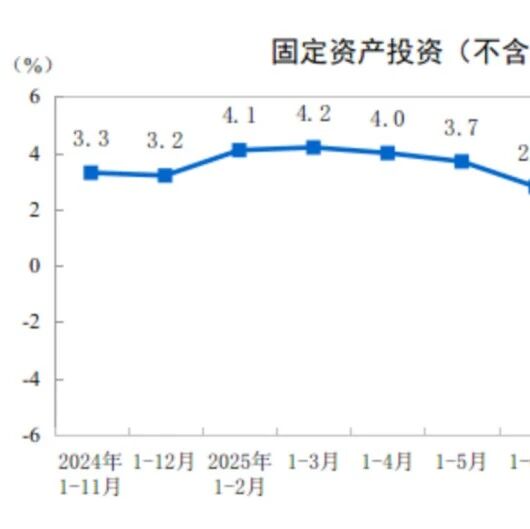
Core Viewpoint - The fixed asset investment in China (excluding rural households) for January to November 2025 is 444,035 billion yuan, showing a year-on-year decline of 2.6% [1][4]. Investment by Industry - Investment in the primary industry reached 8,770 billion yuan, with a year-on-year growth of 2.7% [3][4]. - The secondary industry saw an investment of 162,243 billion yuan, growing by 3.9% year-on-year, with industrial investment specifically increasing by 4.0% [3][4]. - The tertiary industry experienced a decline in investment to 273,022 billion yuan, down 6.3% year-on-year [3][4]. Secondary Industry Breakdown - Mining investment grew by 4.0%, while manufacturing investment increased by 1.9% [3][4]. - Notable growth was observed in the electricity, heat, gas, and water production and supply industry, which saw a 10.7% increase [3][4]. Tertiary Industry Breakdown - Infrastructure investment (excluding electricity, heat, gas, and water production and supply) decreased by 1.1% [3][4]. - Specific sectors such as pipeline transportation and water transportation saw increases of 16.8% and 8.9%, respectively [3][4]. Regional Investment Analysis - Eastern regions experienced a significant decline in investment by 6.6%, while central and western regions saw decreases of 1.7% and 0.2%, respectively [3][4]. - The northeastern region faced the largest drop at 14.0% [3][4]. Investment by Registration Type - Domestic enterprises' fixed asset investment fell by 2.6%, while investment from Hong Kong, Macau, and Taiwan enterprises decreased by 2.2% [3][4]. - Foreign enterprises experienced a substantial decline in investment by 14.1% [3][4].
【数据发布】2025年11月份规模以上工业增加值增长4.8%
中汽协会数据· 2025-12-16 09:04
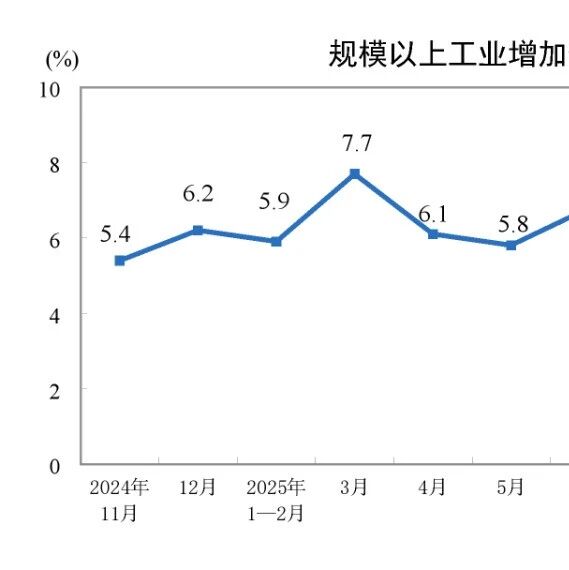
Core Viewpoint - In November, the industrial added value of enterprises above designated size increased by 4.8% year-on-year, indicating a steady growth trend in the industrial sector [1][6]. Group 1: Industrial Growth Data - The industrial added value for January to November showed a year-on-year growth of 6.0% [1][6]. - In November, the mining industry saw a 6.3% increase, manufacturing grew by 4.6%, and the electricity, heat, gas, and water production and supply industry increased by 4.3% [3][6]. - Among the 41 major industries, 30 experienced year-on-year growth in added value in November [3]. Group 2: Economic Type Analysis - State-controlled enterprises had a year-on-year growth of 4.2%, while joint-stock enterprises grew by 5.2%. Foreign and Hong Kong, Macao, and Taiwan-invested enterprises increased by 3.4%, and private enterprises saw a growth of 3.2% [3][6]. Group 3: Industry-Specific Performance - Notable growth was observed in coal mining and washing (7.5%), oil and gas extraction (5.1%), and automotive manufacturing (11.9%) [3][6]. - The chemical raw materials and chemical products manufacturing industry grew by 6.7%, while the textile industry increased by 1.8% [3][6]. Group 4: Product Output and Sales - In November, out of 623 industrial products, 310 saw a year-on-year increase in output [4]. - The production of automobiles reached 3.519 million units, a 2.4% increase, with new energy vehicles growing by 17.0% to 1.841 million units [4][7]. - The product sales rate for industrial enterprises was 96.5%, a decrease of 0.8 percentage points year-on-year [4][7]. Group 5: Export and Delivery Value - The export delivery value of industrial enterprises was 1.361 trillion yuan, showing a nominal decrease of 0.1% year-on-year [4][7].
【宏观经济】一周要闻回顾(2025年12月10日-12月16日)
乘联分会· 2025-12-16 08:39
Consumer Price Index (CPI) Overview - In November 2025, the national consumer price index (CPI) increased by 0.7% year-on-year, with urban areas rising by 0.7% and rural areas by 0.4% [3] - Food prices rose by 0.2%, while non-food prices increased by 0.8% [3] - The average CPI from January to November remained flat compared to the previous year [3] Price Changes in November - Year-on-year, food, tobacco, and alcohol prices increased by 0.3%, contributing approximately 0.09 percentage points to the CPI [4] - Fresh vegetable prices surged by 14.5%, impacting the CPI by about 0.31 percentage points [4] - Pork prices fell by 15.0%, leading to a decrease in CPI by approximately 0.21 percentage points [4] Month-on-Month Price Changes - In November, the CPI decreased by 0.1% month-on-month, with urban areas also declining by 0.1% [3] - Food prices increased by 0.5% month-on-month, while non-food prices decreased by 0.2% [3] - Among various categories, other goods and services prices rose by 14.2%, while transportation and communication prices fell by 2.3% [4][5] Industrial Production - In November 2025, the industrial added value for large-scale enterprises grew by 4.8% year-on-year, with a month-on-month increase of 0.44% [7] - The mining sector saw a 6.3% increase, while manufacturing and electricity, heat, gas, and water production and supply grew by 4.6% and 4.3%, respectively [7] - Among 41 major industries, 30 reported year-on-year growth in added value [7] Retail Sales Performance - The total retail sales of consumer goods reached 43,898 billion yuan in November, marking a 1.3% year-on-year increase [10] - Retail sales excluding automobiles grew by 2.5% [10] - Online retail sales from January to November amounted to 144,582 billion yuan, reflecting a 9.1% year-on-year increase [12] Fixed Asset Investment Trends - From January to November 2025, fixed asset investment (excluding rural households) totaled 444,035 billion yuan, a decrease of 2.6% year-on-year [15] - The investment in the primary industry rose by 2.7%, while the secondary industry saw a 3.9% increase [15] - Infrastructure investment in the tertiary sector declined by 1.1% [15]

1—11月 江西省规模以上工业增加值同比增长7.6%
Zheng Quan Shi Bao Wang· 2025-12-16 04:50
人民财讯12月16日电,据江西统计,1—11月份,全省规模以上工业增加值同比增长7.6%。分三大门类 看,采矿业增加值同比下降5.1%,制造业增长8.4%,电力、热力、燃气及水生产和供应业增长2.7%。 分经济类型看,国有控股企业增加值增长1.7%;股份制企业增长8.2%,外商及港澳台商投资企业增长 2.8%;私营企业增长7.4%。分行业看,38个大类行业中有23个行业增加值实现增长,增长面为60.5%。 其中,汽车制造业,计算机、通信和其他电子设备制造业,有色金属冶炼和压延加工业分别增长 21.4%、13.0%、12.5%。 ...