石化

Search documents
《优先控制化学品名录(第三批)》公布,生态环境部答记者问
Xin Lang Cai Jing· 2026-01-02 07:09
Group 1 - The core viewpoint of the article is the issuance of the "Priority Control Chemical List (Third Batch)" by the Ministry of Ecology and Environment and the National Health Commission, emphasizing the importance of managing new pollutants to protect ecological and public health [1][2] - The list aims to prioritize the management of chemical substances that pose significant environmental and health risks, serving as a foundational support for managing toxic pollutants in water, air, and soil [2][3] - The compilation of the list involved a comprehensive assessment of chemical substances based on their inherent hazards, potential exposure levels, and international control measures, focusing on high-risk chemicals such as persistent, bioaccumulative, and toxic substances [2][3] Group 2 - The list includes 23 categories of chemical substances, such as 1,1,2,2-tetrachloroethane and bisphenol A, which are recognized as carcinogens and endocrine disruptors, affecting various industries including petrochemicals, plastics, and pharmaceuticals [3][4] - Companies producing or using the listed chemicals are encouraged to enhance their environmental risk management practices, including upgrading processes and controlling emissions, to mitigate potential risks [4][5] - Current management of the chemicals in the list is based on existing regulations regarding environmental impact assessments, pollution permits, and soil and groundwater pollution prevention [5]
生态环境部固体废物与化学品司有关负责人就《优先控制化学品名录(第三批)》答记者问
Yang Shi Wang· 2026-01-02 06:42
Core Viewpoint - The Ministry of Ecology and Environment and the National Health Commission have jointly issued the "Priority Control Chemical List (Third Batch)" to enhance the management of new pollutants and protect ecological and public health [2][5]. Group 1: Background and Purpose - The issuance of the list is part of a broader initiative by the Chinese government to address new pollutant management, as emphasized in various party meetings and documents, aiming for effective environmental risk control by 2035 [2]. - The list aims to provide foundational support for managing environmental risks associated with toxic pollutants in water, air, and soil, while also raising awareness among the public and enterprises regarding the environmental and health hazards of chemical substances [3]. Group 2: Compilation Process - The compilation of the list involved a comprehensive assessment of chemical substances based on their inherent hazards, potential exposure levels, and international control measures, focusing on high-risk chemicals such as persistent, bioaccumulative, and toxic substances [3][4]. - The process adhered to an "openness" principle, soliciting public opinions and conducting expert consultations to ensure a wide range of inputs were considered [4]. Group 3: Included Chemicals - The list includes 23 categories of chemical substances, such as carcinogens and endocrine disruptors, affecting various industries including petrochemicals, plastics, pharmaceuticals, and textiles [5]. - Notably, some high-concern persistent organic pollutants were not included in the list, indicating a need for compliance with existing environmental management regulations for new chemical substances [5]. Group 4: Management Requirements - The issuance of the list provides a framework for companies to proactively manage environmental risks associated with the listed chemicals, encouraging practices such as process upgrades and the development of environmentally friendly alternatives [6]. - Current management of the listed chemicals is guided by various regulations, including environmental impact assessments and pollution discharge permits [6][7].
208.86万吨 新疆独山子石化年产乙烯再攀新高
Zhong Guo Xin Wen Wang· 2026-01-01 07:58
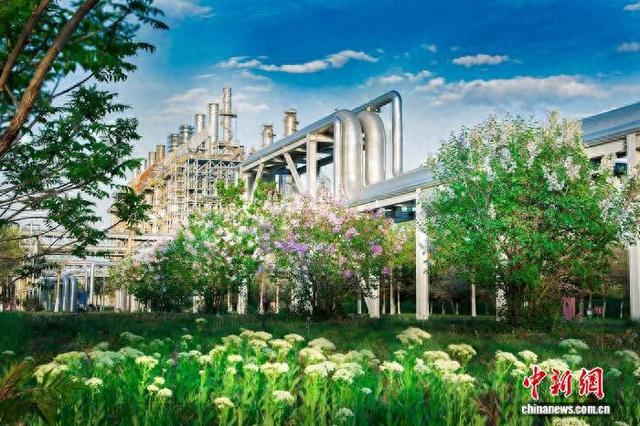
作为我国石油工业的发祥地之一,独山子石化的乙烯产业发展史,正是西部石化工业从无到有、由弱变 强的成长史诗。1995年,新疆首套14万吨/年乙烯工程建成投产,实现了企业从单一炼油向炼化一体化 的重大转型;2009年,西部大开发标志性工程——千万吨炼油百万吨乙烯工程竣工投产,跻身大型石化 企业行列;2021年,国家乙烷裂解制乙烯示范工程——塔里木60万吨/年乙烷制乙烯项目建成投产,开 启了南北疆两地三套乙烯装置协同发展的新格局;2023年,成为中国石油首个年产200万吨乙烯企业, 如今再攀208.86万吨新高峰,持续书写高质量发展篇章。 据了解,产量的跨越式跃升,背后是精益管理、科技创新与绿色发展的协同发力。以"一炉一策"精准调 控工艺参数,深化"日清日结"管理,闭环管控生产各环节消耗指标;发挥全国首批卓越级智能工厂优 势,实时在线优化系统、关键机组三维模型库,提升双烯收率,设备预防维修率达97.4%。2025年12月 22日,中国石油绿色低碳乙烯技术研发及工业应用项目——全国首套电裂解炉在独山子石化投入运行。 中新网乌鲁木齐1月1日电 (李志强 赵贞 吴长占)记者1日从中国石油独山子石化公司获悉,该公司2025 ...


荣盛石化20251231
2025-12-31 16:02
Summary of Rongsheng Petrochemical Conference Call Company Overview - Rongsheng Petrochemical is a leading integrated enterprise in the polyester industry chain, with a refining and chemical integration project capacity of 40 million tons, covering crude oil processing, PX, and ethylene production [2][3] - The company's business focuses on the polyester industry chain, including PX aromatics, PTA, polyester filament, and bottle-grade PET, as well as olefin products and refined oil [2][3] Revenue and Profit Composition - The revenue and profit of Rongsheng Petrochemical primarily come from chemicals, refined oil, PTA, and polyester films, with chemicals and refining being dominant [4] - The refined oil segment is relatively stable, while the chemical segment experiences cyclical profit fluctuations. PTA profits have been declining since 2021, but recent price differentials are gradually recovering [4] Future Growth and Capacity Expansion - Rongsheng Petrochemical is transitioning from a rapid growth phase to a high-quality development phase, expanding upstream to PTA and achieving a 40 million tons refining integration project [2][5] - New capacities are expected to gradually come online in 2026 and 2027, focusing on high-end new materials and high-performance resins [5] - The company has a strategic partnership with Saudi Aramco, which holds a 10% stake and commits to supplying 24 million tons of high-quality crude oil annually [5] Industry Dynamics and Policy Changes - The Ministry of Industry and Information Technology and six other departments have issued a "Stabilizing Growth Work Plan for the Petrochemical Industry," which aims to control new refining capacity and monitor the scale of new ethylene and PX capacities [6] - The PX market has seen capacity increases since 2023, but new investments are limited in the next two years, with downstream PTA and end-use bottle and filament demand growing at a compound rate of 5% to 6% [7] PTA and Polyester Market Outlook - PTA accounts for 99.5% of PX demand and is a crucial intermediate product. The production of PTA has been increasing, but no new investments are planned after 2026, indicating the end of the expansion cycle [8][9] - The polyester bottle market has shown stable growth, with exports increasing from 2.68 million tons in 2018 to 5.8 million tons in 2024, reflecting a year-on-year growth of 13.7% [10] - The polyester filament market is expected to see price recovery due to ongoing demand and production adjustments by leading companies [11] Profitability Forecast - Future revenue projections for Rongsheng Petrochemical are estimated at CNY 304.5 billion, CNY 322.3 billion, and CNY 330.5 billion over the next three years, with corresponding net profits of CNY 1.38 billion, CNY 2.27 billion, and CNY 2.57 billion [18] - The company maintains a favorable valuation outlook, with target prices indicating a potential upside of nearly 20% from current levels [19] Additional Insights - The domestic refining industry is approaching a policy threshold of 1 billion tons, leading to the accelerated elimination of small-scale refineries and a concentration on large-scale integrated projects [13] - The increase in sulfur prices has positively impacted Rongsheng Petrochemical's profitability, with significant margins expected from sulfur production [17]

每日看盘|年底盘面有“星光”,照亮来年A股
Xin Lang Cai Jing· 2025-12-31 09:19
Group 1 - The A-share market demonstrated resilience by achieving an 11-day consecutive upward trend in the Shanghai Composite Index, indicating strong market momentum as 2025 comes to a close [1] - The commercial aerospace sector and other technology assets continue to show strength, providing guidance for early 2026 market trends [1][4] - Large-cap blue-chip stocks, such as Agricultural Bank of China and China Petroleum, remain robust, with China Petroleum benefiting from significant share buybacks, attracting various funds [2][5] Group 2 - Resource sector leaders, like Zijin Mining, have become active following better-than-expected earnings forecasts, setting a positive tone for A-share annual reports and early 2026 investment directions [3] - The commercial aerospace sector rebounded after a brief pause, with stocks like Aerospace Electronics hitting their limits, reflecting momentum funds' confidence in the technology industry [3][4] - The December PMI data revealed a 1.4 percentage point increase in new export orders, showcasing the resilience of China's economy and enhancing expectations for the A-share market in 2026 [4][5]
全国产化DCS系统首用于石化装置
Zhong Guo Hua Gong Bao· 2025-12-31 06:05
中国石化天津分公司副总经理彭乾冰对项目成果给予高度评价:"本次投用的100%全国产化DCS系统, 是中国石化在关键生产装置上的首次成功尝试,具有开创性意义。系统的成功投用,为集团乃至整个石 化行业推进关键控制系统国产化替代,树立了一个可参考、可复制、可推广的实践标杆。" 中化新网讯 12月18日,中国石化天津南港120万吨/年乙烯及下游高端新材料产业集群项目(以下简称天 津南港乙烯项目)POE装置100%全国产化分布式控制系统(DCS)系统投用暨乙烯国产控制系统验收总结 会在中国石化天津分公司召开。 据介绍,POE装置是天津南港乙烯项目的主要生产装置之一,该装置选用和利时研发的HOLLiAS MACS IC完全自主可控DCS系统,实现从核心硬件到软件生态的全链条自主化,这也是100%全国产化 DCS系统首次在石化工艺装置上的成功应用。装置控制系统总点数10126点,配置控制器14对,操作站 12台。可与现有Windows操作系统、国外芯片I/O卡件及信息网络等品牌国产化DCS系统全面兼容,实 现数据互联互通。 ...


镇江市国资委:战略重塑激发新动能 改革攻坚描绘新蓝图
Xin Hua Ri Bao· 2025-12-30 23:55
优化布局 引领国有资本精准投资 索普集团近十年来最大的产业项目——投资约32.3亿元的醋酸乙烯及EVA一体化项目在镇江经开区破土 动工;镇江城投集团运营的西津渡历史文化街区与现象级国风IP《剑网3》成功联动,三天吸引游客近 十万人次;多家市属国企相继摘得资本市场最高信用等级(AAA)评价,赢得广泛市场认可……"十四 五"以来,一幅以改革为笔、以主业为墨的壮阔画卷,正在镇江市属国有企业中全面铺开。 面对复杂多变的经济环境,镇江市国资委以刀刃向内的勇气重塑肌体,以聚焦实业的定力优化布局,在 转型升级的关键赛道上积蓄起澎湃的新动能。全市国有企业正以提升核心竞争力和增强核心功能为重 点,努力从传统的资产运营者向现代产业引领者和城市价值创造者转变,奋力在谱写"强富美高"新镇江 现代化建设新篇章中展现更大担当。 推动国有资本向关系城市安全、经济命脉和民生福祉的重要领域集中,是"十四五"以来镇江国资布局调 整的鲜明主线。通过系统性的顶层设计与主动作为,市属国企的发展路径从过去的分散布局转向了聚焦 主业的集约发展。 一场深刻的"主业重塑"行动在全市推开。镇江市国资委明确要求每家市属企业主业不超过3个,且必须 实现无交叉、无重 ...
泉州40多万名女性融入产业链“妇联矩阵”
Xin Lang Cai Jing· 2025-12-30 23:17
Group 1 - The core idea of the news is the establishment of an innovative "Women’s Federation Matrix" in Quanzhou, which integrates various industry chains and promotes women's participation in key sectors [1] - The "Women’s Federation Matrix" covers nearly 20,000 enterprises across 9 key industry chains, including textiles, petrochemicals, tea, umbrellas, ceramics, stone carving, and plumbing [1] - Nearly 1,000 women's organizations have been established "on the chain," with around 500 outstanding women serving as executive members, connecting over 400,000 female practitioners [1] Group 2 - The initiative focuses on leveraging female leaders and entrepreneurs as "chain masters" to drive women's entrepreneurship and innovation through a "leading goose effect" [2] - The program has successfully trained over 5,000 female university students in cloud economy initiatives and has implemented a "production-education integration" mechanism, training over 3,000 individuals and incubating more than 130 outstanding female "new farmers" [2]
服务型制造绘就海南新蓝图 自贸港探索双循环产业融合新路径
Zheng Quan Shi Bao Wang· 2025-12-30 14:07
Core Viewpoint - The seventh Service-Oriented Manufacturing Conference held in Hainan emphasizes the theme of cultivating new productive forces and global cooperation, aligning with the critical phase of Hainan's free trade port construction [1] Group 1: Manufacturing Transformation - China's manufacturing industry remains the largest globally, but transformation and upgrading are essential for maintaining competitiveness, especially in the context of global manufacturing competition [2] - The integration of manufacturing and service industries is crucial for China's industrial upgrade, as the current proportion of the service industry in GDP is significantly lower than that of the United States [2] Group 2: Global Manufacturing Landscape - The global manufacturing landscape is undergoing significant changes, with rising trade protectionism and a shift towards self-sufficiency, which presents both challenges and opportunities for China's manufacturing exports [3] - The trend of integrating products with services through technology can mitigate the impact of traditional trade barriers and open new avenues for cooperation [3] Group 3: Free Trade Port Positioning - Hainan's free trade port aims to explore new business models that integrate manufacturing and services, moving away from traditional processing and trade [4] - The policies in Hainan, such as zero tariffs and value-added processing, are designed to attract manufacturing and service integration, positioning the region as a key hub in the global supply chain [4] Group 4: Practical Pathways - Hainan is focusing on leveraging its advantages to promote the deep integration of service-oriented manufacturing and free trade port development, particularly in sectors like new energy and materials [6] - The region aims to establish a model of "R&D and key processing in Hainan + large-scale manufacturing in the mainland + global market," enhancing its industrial foundation [6] Group 5: Future Development Goals - The "14th Five-Year Plan" period is seen as a critical window for Hainan's free trade port and China's high-quality manufacturing development, emphasizing the need for a collaborative and empowering mechanism [7] - Key actions include institutional innovation, strengthening ties with the mainland's industrial system, and addressing areas where the mainland cannot operate effectively [7]
长三角绘就美丽中国先行区新画卷
Guo Ji Jin Rong Bao· 2025-12-30 12:02
Core Viewpoint - The "Action Plan" for the Yangtze River Delta aims to establish a model for ecological protection and green development, marking a significant step towards building a "Beautiful China" [1] Group 1: Green Development - The plan emphasizes the deep integration of digitalization, intelligence, and greening in traditional industries such as petrochemicals, steel, and textiles to enhance production efficiency and reduce emissions [2] - Achieving standardized shore power facilities at regional docks will help reduce fuel emissions from ships during port stays, improving air quality [2] - The overall elimination of National III diesel trucks in the region is expected to significantly lower exhaust emissions in the transportation sector, contributing to better air quality [2] Group 2: Ecological Protection - The Yangtze River Delta faces challenges like water pollution despite its rich water resources; enhancing water ecological protection and restoration is crucial for sustainable development [3] - The plan sets targets for improving water ecological environments, with the construction rate of beautiful rivers and lakes reaching 44% and beautiful bays over 40% [3] Group 3: Reform and Innovation - The expansion of pollutant trading pilot programs is aimed at incentivizing companies to reduce emissions through market mechanisms, enhancing resource allocation efficiency [3] - Exploring financial support models for beautiful city construction will provide funding for ecological protection and green development projects, addressing funding shortages [3] Group 4: Challenges and Opportunities - The plan acknowledges challenges in regional collaborative governance, particularly in breaking down administrative barriers for deeper cooperation [3] - Traditional enterprises may face pressures related to technological upgrades and funding during the green transition, necessitating supportive government policies [3] Group 5: Overall Impact - The implementation of the "Action Plan" is expected to yield significant results in ecological protection and green development, positioning the Yangtze River Delta as a pioneering and exemplary region for "Beautiful China" initiatives, offering replicable experiences for other areas [4]