
造船

Search documents
“钱都给美国了,韩国制造业空心化怎么办?”
Sou Hu Cai Jing· 2025-11-02 16:10
Core Viewpoint - The recent trade agreement between South Korea and the United States involves a commitment of $350 billion in investments, with South Korea agreeing to invest $200 billion in cash and $150 billion in shipbuilding cooperation, raising concerns about potential domestic investment decline and manufacturing hollowing out in South Korea [1][6]. Investment Commitments - South Korea will invest $200 billion in cash over several years, with an annual cap of $20 billion [1][6]. - The remaining $150 billion will be allocated for shipbuilding cooperation, including guarantees, investments by South Korean companies, and ship financing [1]. Economic Concerns - Economic experts express concerns that the significant outflow of capital to the U.S. could diminish South Korea's domestic investment capacity, leading to risks of manufacturing hollowing out and negative impacts on local economies and employment [1][4]. - The investment in the U.S. is viewed as fundamentally different from investments in China, as it aims to enter local markets under high tariff conditions, reducing the potential for domestic investment complementarity [1]. Manufacturing Sector Insights - In 2022, South Korea's top ten manufacturing sectors had a total investment of 114 trillion KRW (approximately 566.5 billion RMB), accounting for 4% of the country's GDP and 42% of all industry equipment investments [1]. - The investment in the top ten manufacturing sectors is projected to reach 119 trillion KRW (approximately 591.4 billion RMB) in 2023, reflecting a 7% growth [2]. Regional Economic Impact - Analysts warn that reduced domestic investment and a shift of manufacturing infrastructure to the U.S. could lead to economic downturns in regions reliant on manufacturing, resulting in job losses and negative effects on small businesses [4][5]. - A report estimates that if the U.S. imposes a 15% tariff on South Korean goods, the annual export value from Gyeongsangnam-do to the U.S. could decrease by approximately 499 billion KRW (around 2.5 billion RMB) [5]. Government Measures and Recommendations - The South Korean government is implementing multiple safeguards in the investment plan to limit financial risks and protect the foreign exchange market, ensuring that only commercially viable projects receive funding [6]. - Experts suggest that South Korea should attract foreign investments and enhance the competitiveness of its service sector to mitigate the impacts of increased investments in the U.S. [6]. Public Sentiment - A recent poll indicates that 80.1% of South Koreans view the $350 billion investment demand from the U.S. as unfair, with only 12.4% considering it acceptable [7].

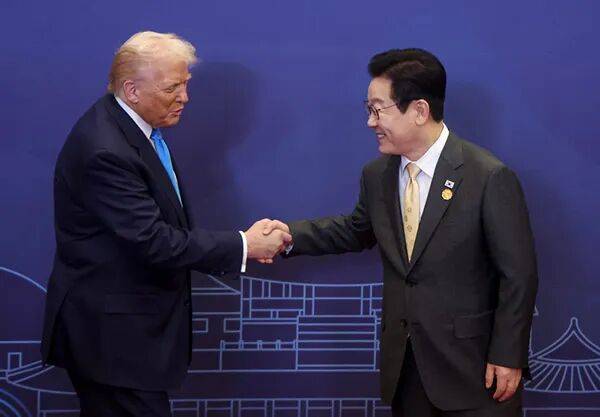
韩媒担忧:对美投资大幅提高,韩国国内制造业可能空心化
Guan Cha Zhe Wang· 2025-11-02 11:06
Group 1 - The core point of the article is that South Korea and the United States have reached a trade agreement involving a significant investment commitment from South Korea, which raises concerns about potential negative impacts on the domestic economy and manufacturing sector in South Korea [1][4][5]. Group 2 - South Korea has committed to a total investment of $350 billion in the U.S., with $200 billion to be invested in cash over several years, and $150 billion allocated for shipbuilding cooperation [1][6]. - The investment plan includes a cap of $20 billion per year, which is intended to minimize market impact and ensure that only commercially viable projects receive funding [6][5]. - Economic experts express concerns that the large outflow of capital to the U.S. could lead to a decrease in domestic investment capacity, potentially resulting in the "hollowing out" of South Korea's manufacturing sector [1][4][5]. Group 3 - The investment in the U.S. is seen as fundamentally different from investments in China, as it is primarily aimed at market entry rather than complementing domestic investments [1][4]. - In 2022, South Korea's top ten manufacturing sectors had a total investment of 114 trillion won (approximately 566.5 billion RMB), accounting for 4% of the country's GDP and 42% of all industry equipment investments [1][2]. - Projections indicate that the investment in the top ten manufacturing sectors will increase to 119 trillion won (approximately 591.4 billion RMB) in 2023, reflecting a growth of 7% [2]. Group 4 - Analysts warn that the increased investment in the U.S. could lead to a contraction in domestic investment, negatively affecting local economies and employment, particularly in regions reliant on manufacturing [4][5]. - A report from the Gyeongnam Research Institute estimates that a 15% tariff on South Korean goods by the U.S. could reduce annual exports from Gyeongsangnam-do by approximately 499 billion won (around 2.5 billion RMB) [5]. - The Bank of Korea has indicated that U.S. tariff policies could lead to decreased exports and production, with potential declines in manufacturing growth rates in regions heavily dependent on manufacturing [5][6]. Group 5 - The South Korean government is implementing multiple safeguards in the investment plan to limit financial risks and protect the foreign exchange market [6]. - There is a call for South Korea to attract foreign investments and enhance the competitiveness of its service sector to mitigate the impacts of increased U.S. investments [6][7]. - Public sentiment in South Korea is largely against the U.S. investment demands, with a poll indicating that 80.1% of respondents view the $350 billion investment requirement as unfair [7].
中美贸易回暖,是真的利好还是权宜之计?
Jin Tou Wang· 2025-10-31 12:56
Core Points - The recent trade negotiations between the US and China have resulted in a one-year suspension of tariffs, with the US pausing a 24% tariff on China and China reciprocating by suspending its 10% tariff on fentanyl [1] - The suspension of tariffs is expected to save over $8 billion annually for US-China import-export businesses, providing a significant financial relief that can be reinvested into R&D, production, and market expansion [1] - The negotiations indicate a shift towards a more cooperative approach, with both countries opting for dialogue rather than confrontation, showcasing China's ability to negotiate on equal terms [1] Trade and Economic Impact - The US has also paused export sanctions on Chinese companies with over 50% foreign ownership, while China has suspended its export controls on rare earths, lithium batteries, and superhard materials for a year [1] - The US's agricultural sector has been severely impacted by the trade war, with soybean prices dropping 40% due to a lack of Chinese purchases, leading to increased bankruptcies among American farmers [3] - Rising prices in the US for various consumer goods, including electronics and clothing, have been attributed to the tariffs, affecting overall consumer spending [3][4] Military and Strategic Considerations - The US military's reliance on Chinese rare earth materials for key equipment highlights the strategic vulnerabilities created by the trade tensions, with 87% of major military equipment potentially affected by supply chain disruptions [4] - The negotiations have created a buffer period for both countries to stabilize their economic relations while addressing core differences, allowing for continued discussions on critical issues [4][6] Future Outlook - The upcoming year is seen as a crucial observation window for US-China relations, with expectations for ongoing negotiations to address fundamental disagreements while maintaining a stable relationship [6] - The current negotiations are viewed as a temporary resolution, with the potential for future conflicts if circumstances change, emphasizing the need for vigilance and continued reform on both sides [5]
月度市场策略:短期关注风格切换,中期布局“十五五”结构性机遇-20251031
SPDB International· 2025-10-31 12:53
Group 1 - The report highlights a short-term focus on style switching in the market, with large-cap value stocks expected to outperform [1] - The investment strategy suggests a return to dividend stock allocation, while AI concept stocks in Hong Kong remain a key focus for technology investments [1][4] - The report emphasizes structural investment opportunities arising from the "14th Five-Year Plan," particularly in sectors like artificial intelligence, quantum science, and green energy [1][4] Group 2 - The report notes that the MSCI China Index and the Shanghai Composite Index have seen increases of 2.0% and 2.7% respectively in October, while the Hang Seng Index has decreased by 2.1% [4] - It indicates that the valuation of the Hang Seng Technology Index remains below its five-year average, highlighting its investment value [4][25] - The report mentions that the forward P/E ratios for the Shanghai Composite Index and the Hang Seng Index are 14.4x and 11.6x, respectively, indicating they are near their historical averages [4][25] Group 3 - The report discusses the impact of recent U.S.-China trade negotiations, noting that agreements reached have improved market sentiment and may lead to increased foreign investment in Chinese assets [10][11] - It highlights that sectors such as consumer electronics and technology are expected to benefit from reduced tariffs and improved export competitiveness [10][11] - The report also points out that the overall market sentiment remains optimistic, which could sustain the upward momentum in the Hong Kong stock market despite potential short-term profit-taking [4][10] Group 4 - The report identifies structural investment opportunities in key industries supported by the "14th Five-Year Plan," including high-end manufacturing and digital economy sectors [1][8] - It emphasizes the importance of focusing on sectors that are likely to benefit from government policies aimed at enhancing competitiveness and innovation [8] - The report suggests that the ongoing economic stimulus measures will be crucial for maintaining growth in these sectors [41]
中国船舶(600150):业绩符合预期,造船行业拐点或现
Shenwan Hongyuan Securities· 2025-10-31 12:15
Investment Rating - The investment rating for China Shipbuilding (600150) is "Buy" (maintained) [1] Core Views - The company's performance is in line with expectations, with a revenue of 107.4 billion yuan for the first three quarters of 2025, representing an 18% year-on-year increase, and a net profit of 5.85 billion yuan, up 115% year-on-year [6] - The company has a substantial order backlog, with approximately 21.13 million CGT (compensated gross tonnage) and 55.4 billion USD in orders, indicating a steady increase in production capacity over the next two years [6] - The second-hand ship prices have surpassed pre-recession highs, suggesting a potential upward trend in new ship prices [6] - Recent policy changes regarding port fees between China and the US may alleviate pressures on the shipbuilding industry, leading to a more favorable market environment [6] - The company has adjusted its profit forecasts upward, reflecting the completion of the merger with China Shipbuilding Industry Corporation, with expected net profits of 9.04 billion, 17.73 billion, and 23.52 billion yuan for 2025E, 2026E, and 2027E respectively [6] Financial Data and Profit Forecast - Total revenue for 2025E is projected at 143.56 billion yuan, with a year-on-year growth rate of 82.7% [5] - The net profit attributable to shareholders for 2025E is estimated at 9.04 billion yuan, reflecting a significant increase of 150.2% year-on-year [5] - The gross profit margin is expected to improve from 10.2% in 2024 to 15.6% in 2025E [5] - The return on equity (ROE) is projected to rise from 4.1% in 2025Q1-3 to 6.6% in 2025E [5]

贸促会:今年逾60批次美企高管密集访华,工商界是双方经贸合作的主力军
Di Yi Cai Jing· 2025-10-31 07:56
Core Viewpoint - The meeting between the leaders of China and the United States in Busan, South Korea, emphasizes the importance of strengthening economic and trade cooperation between the two countries, with a focus on mutual benefits for the business communities involved [1][3]. Group 1: Economic Cooperation - The Chinese and U.S. business communities are seen as the main force and beneficiaries of bilateral economic cooperation, forming a mutually beneficial interest community [3]. - The China Council for the Promotion of International Trade (CCPIT) has organized over 60 delegations from U.S. institutions and enterprises to visit China this year, indicating strong engagement [3]. - The number of U.S. exhibitors at the third Chain Expo increased by 15% compared to the previous year, highlighting growing interest in collaboration [3]. Group 2: Trade Statistics - In the first nine months of this year, the CCPIT issued 66,000 certificates of origin for exports to the U.S., and facilitated over 7,000 patent and trademark applications for U.S. applicants in China [3]. - From January to October, over 3,500 Chinese enterprises participated in more than 50 professional exhibitions in the U.S., covering various sectors such as electronics and textiles, with a total exhibition area exceeding 48,000 square meters [3]. Group 3: Market Diversification - China's trade with countries involved in the Belt and Road Initiative reached 17.37 trillion yuan, a 6.2% increase, accounting for 51.7% of total trade value [6]. - Trade with ASEAN, Latin America, Africa, and Central Asia saw increases of 9.6%, 3.9%, 19.5%, and 16.7% respectively [6]. Group 4: Regional Cooperation - The CCPIT is actively promoting trade cooperation with ASEAN countries, organizing over 152 exhibition projects with more than 5,000 participating enterprises this year [7]. - The 18th China-Latin America Entrepreneurs Summit will be held in Zhengzhou, focusing on cooperation in sectors such as mining, meat, and electronics [7]. Group 5: Upcoming Events - The 18th China-EU Investment Trade and Technology Cooperation Fair will be held in Chengdu, promoting collaboration in energy, digital technology, and biomedicine [8].
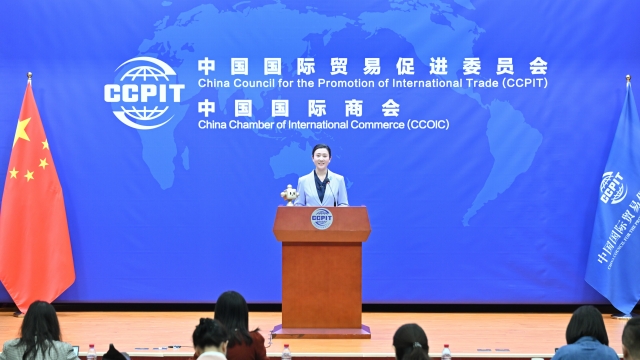
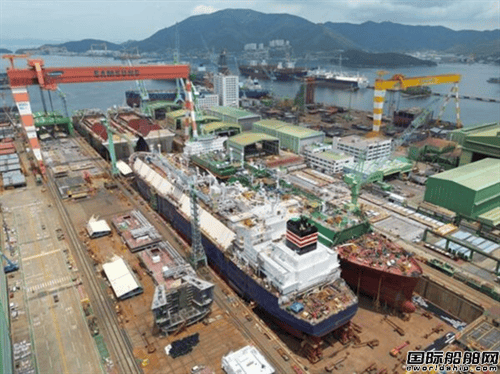
利润暴涨99%!造船巨头步入高收益增长轨道
Sou Hu Cai Jing· 2025-10-31 06:36
Group 1 - Samsung Heavy Industries reported Q3 2025 revenue of 26,348 billion KRW (approximately 1.9 billion USD, 13.5 billion CNY), a 13% year-on-year increase [2] - The company achieved an operating profit of 2,381 billion KRW (approximately 1.7 billion USD, 12.2 billion CNY), marking a 99% year-on-year growth [2] - The net profit for Q3 was 1,403 billion KRW (approximately 1 billion USD, 7.1 billion CNY) [2] - The operating profit margin reached 9%, up from 7.6% in Q2 and 4.9% in Q1, indicating significant improvement [2] - Q3 operating profit exceeded the forecast of 2,175 billion KRW by approximately 9.5% [2] Group 2 - For the first three quarters of the year, Samsung Heavy Industries achieved cumulative revenue of 78 trillion KRW (approximately 5.56 billion USD, 39.82 billion CNY) and an operating profit of 5,660 billion KRW (approximately 4.0 billion USD, 28.9 billion CNY) [3] - The operating profit increased by 72.3% compared to the same period last year and by 269% compared to the first three quarters of 2023 [3] - The company is on track to meet its annual profit target of 6,300 billion KRW (approximately 3.1 billion CNY), having achieved about 90% of this target [3] Group 3 - Samsung Heavy Industries expects continued growth in revenue from high-yield ships and offshore projects in Q4 [3] - The company has secured 30 new ship orders worth 5.2 billion USD (approximately 37 billion CNY) this year, achieving 53% of its annual order target of 9.8 billion USD [3] - The new ship orders include various types such as LNG carriers, shuttle tankers, and VLGCs [3] Group 4 - The company maintains a stable order intake performance and aims to focus on securing orders in Q4, particularly in the offshore equipment sector [4] - Significant projects like the Coral South FLNG and Delfin FLNG are expected to contribute to achieving the annual order target of 4 billion USD [4] Group 5 - The new shipbuilding market is showing positive trends, with forecasts indicating an increase in LNG ship orders from 50 in 2025 to 100 in 2026 [5] - The demand for environmentally friendly conversions of container ships and oil tankers, along with the replacement of aging vessels, is expected to support order stability [5] - The company is confident in achieving its order targets based on the current project pipeline and aims to enhance profitability and ensure stable growth [5]
宏观策略联合解读:中美元首会晤取得阶段性成果,有望提振短期市场情绪
SPDB International· 2025-10-31 05:52
Macro Strategy - The meeting between Chinese President Xi Jinping and US President Trump on October 30 resulted in a series of agreements aimed at easing trade tensions, which is expected to boost short-term market sentiment [2][3]. - Key outcomes include the cancellation of the 10% "fentanyl tariff" by the US and a one-year suspension of the 24% "reciprocal tariff" on Chinese goods, with corresponding adjustments from China [2][3]. - The US will also pause the implementation of its export control rules for one year, while China will suspend its related measures, indicating a temporary easing of restrictions [2][3]. - The meeting lasted approximately 1 hour and 40 minutes, shorter than the market's expectation of 3-4 hours, which may indicate ongoing uncertainties in the trade relationship [3][5]. Market Impact Analysis - The agreements are expected to enhance market risk appetite and attract global capital to reallocate into Chinese assets, particularly benefiting sectors with high export ratios to the US, such as consumer electronics, home appliances, and textiles [6]. - The technology sector, especially semiconductors and AI, may see valuation recovery due to the suspension of export controls, while the shipping and shipbuilding sectors will benefit from the pause in the US's 301 investigations [6]. - The overall improvement in the economic environment is likely to boost confidence in US-listed Chinese companies, particularly in relation to the TikTok issue [6][7]. Key Areas of Focus - Tariff adjustments are expected to directly benefit export industries, leading to reduced costs and improved profit margins for companies with significant US export business [7]. - The suspension of export controls will positively impact high-tech industries, reducing uncertainties in the global semiconductor and electric vehicle supply chains [7]. - The pause in the 301 investigations will alleviate pressure on China's shipping, port machinery, and logistics companies, stabilizing global shipping prices and supply chains [7].
中美元首在釜山会晤,中美给世界经济吃下“定心丸”
Huan Qiu Shi Bao· 2025-10-30 23:24
Group 1 - The meeting between Chinese President Xi Jinping and U.S. President Donald Trump on October 30 aimed to stabilize U.S.-China relations, emphasizing the importance of partnership and cooperation despite differences [1][3][4] - Both leaders expressed a commitment to maintaining communication and cooperation in various fields, including trade, energy, and cultural exchanges [5][6][7] - The recent consensus reached during trade negotiations includes the U.S. canceling a 10% tariff on Chinese goods and suspending certain investigations, while China will reciprocate with its own tariff adjustments [7][8][9] Group 2 - China's economic growth rate for the first three quarters of the year was reported at 5.2%, with a 4% increase in global trade, showcasing resilience amid challenges [3][4] - The meeting is seen as a significant step towards reducing structural tensions between the two countries, with potential positive implications for global investors and businesses [6][10] - The agreement reached is viewed as a temporary "truce" rather than a permanent resolution, allowing both countries to reassess their strategies and maintain a competitive edge [10]

APEC第三十二次领导人非正式会议在韩国举行,从一座城看中韩多维度交往
Huan Qiu Shi Bao· 2025-10-30 23:05
Group 1: Economic and Industrial Cooperation - Ulsan is recognized as South Korea's "industrial capital," being a core area for the petrochemical, shipbuilding, and automotive industries, housing major companies like Hyundai Heavy Industries and Hyundai Motor Group [2][3] - The bilateral trade between China and South Korea has been steadily growing since the establishment of diplomatic relations in 1992, with China being South Korea's largest trading partner [6] - Local companies in Ulsan are eager to expand into the Chinese market, exemplified by SDNT Corporation's collaboration with Tianjin Langyu Robot Co., which produces automated guided vehicles (AGVs) for heavy industries [6][7] Group 2: Cultural and Historical Ties - Ulsan has a rich history linked to whaling, with efforts to transform its historical whaling port into an ecological tourism destination after the global ban on commercial whaling [2] - The Korean-Chinese Economic and Cultural Education Association promotes grassroots exchanges, highlighting the importance of personal relationships in fostering cooperation between the two nations [9][10] - The association's president, Kim Kyung-dae, emphasizes the need for mutual trust and understanding to enhance collaboration, reflecting a long-standing tradition of friendship between the two countries [11][12] Group 3: Technological Collaboration - AI and addressing demographic changes are key topics at the APEC meeting, with Ulsan focusing on leveraging AI for urban transformation in response to aging and declining population challenges [3] - The collaboration between SDNT and Tianjin Langyu showcases how Chinese technology can meet the demands of South Korean industries, enhancing efficiency and flexibility in production [7] - The interest in emerging technologies, such as AI and robotics, indicates a growing space for cooperation between South Korean and Chinese companies in these sectors [3][6]