即时零售

Search documents
3年1万亿!阿里还有更大目标!
Sou Hu Cai Jing· 2025-08-31 03:54
Core Insights - Alibaba's e-commerce segment CEO, Jiang Fan, highlighted the success and future strategy of Taobao Flash Purchase, emphasizing its role in the "instant retail" market [1] - The financial report for Q1 FY2026 showed revenue of 247.65 billion yuan, a 10% year-on-year growth when excluding sold businesses, and a net profit of 42.38 billion yuan, up 76% year-on-year [1] - CEO Wu Yongming reiterated the company's focus on consumer spending and AI + cloud strategies, which have shown positive results, particularly in the growth of the cloud intelligence group's revenue [1] Financial Performance - The Q1 FY2026 revenue reached 247.65 billion yuan, with a net profit of 42.38 billion yuan, marking a 76% increase year-on-year [1] - The overall revenue growth of 10% year-on-year reflects the effectiveness of the company's strategic focus [1] Taobao Flash Purchase Insights - Taobao Flash Purchase achieved 300% growth in monthly active users, reaching 300 million, and daily active riders increased threefold to 2 million [1] - The service has become a significant growth driver for brands, with 395 non-food brands achieving over 1 million yuan in monthly sales, and 66 brands exceeding 10 million yuan [2] - Daily order volume for Taobao Flash Purchase surpassed 10 million for three consecutive days in early August [2] Strategic Developments - The number of Alibaba's flash warehouses exceeded 50,000, with order volume growing over 360% year-on-year, and 25% of supply coming from Alibaba's ecosystem [4] - The transition of Tmall Supermarket from a B2C model to a near-field flash purchase model indicates a strategic shift towards instant retail [4] - The company anticipates that flash purchase and instant retail will generate an additional 1 trillion yuan in transactions over the next three years [2]



阿里更上层楼
3 6 Ke· 2025-08-30 16:35
Core Viewpoint - Alibaba is embarking on a "re-entrepreneurship" journey with a focus on driving strong business growth through continuous investment in core businesses, particularly in AI and cloud technology, as well as a large consumer platform [1][16]. Group 1: Financial Performance - In the latest quarterly earnings report, Alibaba achieved a steady revenue growth of 10% year-on-year, excluding disposed businesses [1]. - The core Chinese e-commerce business saw customer management revenue increase by 10%, while the cloud intelligence group's revenue growth accelerated to 26%, marking a three-year high [4][10]. Group 2: Cloud and AI Developments - Alibaba Cloud's revenue growth reached 26%, with AI-related product revenue experiencing triple-digit year-on-year growth for eight consecutive quarters, now accounting for over 20% of external commercial revenue [4][10]. - The company plans to invest 380 billion yuan in cloud and AI hardware infrastructure over the next three years, with capital expenditures in the AI and cloud sector reaching a record high of 38.6 billion yuan this quarter [9][10]. Group 3: Consumer Market Strategy - Alibaba is strategically transitioning from an e-commerce platform to a large consumer platform, integrating various services to meet the comprehensive needs of consumers [6][16]. - The launch of "Taobao Flash Purchase" has successfully covered over 300 cities, achieving 300 million monthly active buyers within four months, and driving a 25% year-on-year increase in active users on the Taobao app [4][5]. Group 4: Long-term Vision - The company aims to create a comprehensive consumer platform that caters to the shopping and daily life needs of 1 billion consumers, targeting a market potential of 30 trillion yuan [6][7]. - Alibaba's long-term strategy emphasizes a commitment to "long-termism," focusing on continuous investment in AI and large consumer markets to enhance competitive advantages and drive sustainable growth [16].

美团非餐饮即时零售七夕日订单量超2700万
Bei Jing Shang Bao· 2025-08-30 12:06
Core Insights - On August 29, during the Qixi Festival, Meituan's non-food instant retail order volume reached a record high of 27 million, indicating a significant increase in consumer demand during traditional holidays [2][3] - The growth in orders is attributed to a shift in gifting trends towards diversification and quality, with consumers moving from traditional gifts like flowers to a wider range of high-value products [2] - Instant retail has become a crucial growth area for brands and retailers, with over 500 brands experiencing multiple-fold increases in sales on the platform during the Qixi Festival [3] Group 1 - Meituan's instant retail orders on Qixi Festival reached 27 million, marking a significant increase compared to previous years [2] - The platform saw substantial growth in high-value categories such as electronics, beauty products, and jewelry, with sales of electric shavers and children's smartwatches increasing over six times year-on-year [2] - The sales of gold jewelry and pearl accessories also saw significant growth, with gold jewelry sales increasing over six times and pearl sales increasing four times [2] Group 2 - Instant retail is becoming an important business increment for major brands and retailers, with over 500 brands experiencing substantial sales growth on the platform [3] - The trend of gifting has evolved from traditional items like flowers and chocolates to a broader range of products, indicating a shift in consumer behavior [3] - Brands such as Huawei, Sephora, and Watsons reported multiple-fold increases in sales, highlighting the effectiveness of instant retail during festive occasions [3]

节日消费助推即时零售火热,美团七夕非餐饮即时零售日订单超2700万
Ge Long Hui A P P· 2025-08-30 08:58
Core Insights - On August 29, during the Qixi Festival, Meituan's non-food instant retail order volume reached a record high of 27 million, driven by gift demand from the "Flash Purchase Gifts" campaign [1] - The overall gift consumption scale for Meituan's flash purchase service also hit a new peak, with flower sales breaking records and categories like digital electronics, beauty products, and jewelry seeing sales double [1] - Consumer spending per capita on categories such as home appliances and beauty products significantly increased compared to last year's Qixi Festival [1] Group 1 - The trend of gift-giving is diversifying and becoming more quality-oriented, moving from traditional gifts like flowers and chocolates to a broader range of products, leading to substantial sales growth in high-priced categories [1] - Instant retail is becoming an important growth driver for major brands and retailers, with over 500 beauty, electronics, fast-moving consumer goods, and liquor brands experiencing multiple-fold sales growth on the platform [1] - The dual increase in order volume and average transaction value indicates a robust market response to the evolving gift-giving landscape [1]

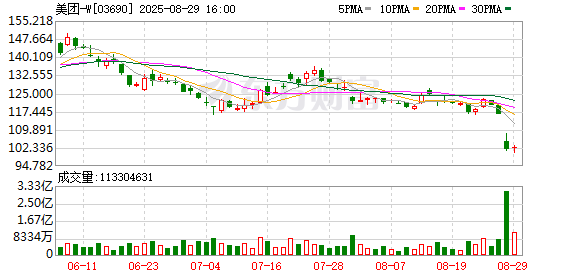
美团-W(3690.HK):外卖竞争加剧导致利润承压 静待长期价值释放
Ge Long Hui· 2025-08-30 04:13
Core Insights - The company reported Q2 2025 revenue of 91.8 billion yuan, a year-over-year increase of 12% but below market expectations, with significant declines in operating and net profits due to intensified competition in the food delivery sector and losses from overseas expansion [1] Group 1: Core Local Business - Core local business revenue grew by 8% year-over-year to 65.3 billion yuan, with delivery service revenue growth lagging behind the increase in instant delivery transaction volume due to increased delivery subsidies [2] - Operating profit for the core local business fell by 76% year-over-year to 3.7 billion yuan, significantly below the market expectation of 12 billion yuan, primarily due to declining gross margins and increased user incentives and marketing expenses [2] - The company plans to continue strategic investments in Q3 2025, which may pressure profit metrics, while maintaining a long-term profit assumption of 1 yuan per order and a profit margin of approximately 3% for 2025 [2] Group 2: Business Segments Performance - The food delivery business saw a steady growth with a 10% year-over-year increase in order volume, driven by various models enhancing food supply and user engagement [3] - The Meituan Flash Purchase business experienced strong growth in order volume and transaction value, with significant increases in high-ticket item sales during the "618" shopping festival [3] - The in-store travel and accommodation business performed well, with order volume growing over 40% year-over-year and revenue increasing by 15% [3] Group 3: New Business and International Expansion - New business revenue grew by 23% year-over-year to 26.5 billion yuan, driven by retail and overseas business growth, although operating losses expanded to 1.9 billion yuan due to increased costs in overseas operations [4] - Keeta maintained strong growth in order volume and gross transaction value, solidifying its leading position in Hong Kong and expanding into 20 cities in Saudi Arabia and launching services in Qatar [4] - The company remains optimistic about Keeta's long-term growth potential, aiming for a gross merchandise value of 100 billion USD within 10 years [4] Group 4: Financial Forecast and Valuation - The company is optimistic about its core barriers in instant delivery and growth opportunities from overseas expansion, but has revised down its profit forecasts due to irrational competition and increased short-term investments [5] - Revenue projections for 2025-2027 are set at 370.2 billion, 417.9 billion, and 475.5 billion yuan, with Non-GAAP net profit forecasts of 5 billion, 32.3 billion, and 48.8 billion yuan respectively [5] - The company has set a target market value of 735.1 billion yuan for 2026, corresponding to a target price of 120 yuan per share [5]
阿里更上层楼
36氪· 2025-08-29 15:06
Core Viewpoint - Alibaba will continue to increase investments in AI and cloud technology, as well as in the large consumption sector, viewing these as historic strategic opportunities for growth [3][20]. Group 1: Financial Performance - In the latest quarterly earnings report, Alibaba achieved a 10% year-on-year revenue growth, excluding disposed businesses [3]. - The customer management revenue from core Chinese e-commerce business also grew by 10% [3]. - The revenue growth rate for the cloud intelligence group accelerated to 26%, marking a three-year high [6][12]. Group 2: AI and Cloud Strategy - Alibaba plans to invest 380 billion yuan in cloud and AI hardware infrastructure over the next three years, with a record capital expenditure of 38.6 billion yuan in the latest quarter [12][13]. - AI-related product revenue has seen triple-digit year-on-year growth for eight consecutive quarters, accounting for over 20% of external commercial revenue [6][13]. - The company has developed a comprehensive technology capability in AI, including AI computing power, cloud platforms, and open-source ecosystems [13]. Group 3: Large Consumption Sector - Alibaba's "Taobao Flash Purchase" service has expanded to over 300 cities, achieving 300 million monthly active buyers within four months [7][10]. - The integration of various services has led to a 25% year-on-year increase in monthly active users on the Taobao app [7]. - The long-term goal in the large consumption sector is to create a comprehensive platform that meets the shopping and daily life needs of 1 billion consumers [9][10]. Group 4: Market Positioning and Future Outlook - Alibaba is transitioning from an e-commerce platform to a large consumption platform, leveraging the integration of near-field consumption and e-commerce [9]. - The company aims to lead the 30 trillion yuan potential market in large consumption by providing the best experience for the largest and most frequent consumer base [10][20]. - The management emphasizes a "long-termism" approach, committing to continuous investment in core business areas to enhance competitive advantages and drive long-term growth [21].

淘宝投资闪购 四个月造了一个美团
美股研究社· 2025-08-29 14:33
Core Viewpoint - The article discusses the competitive dynamics in the food delivery market, highlighting Alibaba's successful launch of "Taobao Flash Sale" which has quickly gained significant market traction, potentially reshaping the industry landscape and creating a new consumption platform [3][4][5]. Group 1: Market Dynamics - Meituan's recent financial report showed profit pressure leading to a significant drop in stock price, while Alibaba's Taobao Flash Sale achieved a daily order volume of 80 million, peaking at 120 million orders [3]. - The competition initiated by JD.com and the subsequent responses from Meituan and Alibaba illustrate a non-symmetric war, where Alibaba's strategic positioning allows it to leverage its strengths against competitors [3][4]. - The external pressure on Ele.me, as the second player in the market, forced it to engage in the competition, with Alibaba backing it through the launch of Taobao Flash Sale [4]. Group 2: Strategic Investments - Alibaba's investment of 50 billion RMB in instant retail through Taobao Flash Sale is seen as a strategic move to create a platform that rivals Meituan, effectively generating a new consumption model [4][5]. - The "caterpillar strategy" employed by Alibaba aims to use established businesses to support new ventures, with Taobao Flash Sale benefiting from a large user base to drive low-cost conversions [4]. Group 3: Long-term Vision - The long-term goal for Alibaba is to integrate service e-commerce with traditional e-commerce, creating a comprehensive consumption platform driven by AI, which can meet personalized user needs across various sectors [6][7]. - The article emphasizes that Alibaba's approach is not just about winning the food delivery battle but also about leveraging this competition to enhance its overall e-commerce growth and establish a new business model in the AI era [7].
阿里高管解读Q1财报:预计未来3年内 闪购跟即时零售为平台带来1万亿的新增成交
Xin Lang Ke Ji· 2025-08-29 13:17
Core Viewpoint - Alibaba reported its Q1 FY2026 financial results, showing a revenue of 247.65 billion yuan, a 2% year-over-year increase, and a net profit of 42.38 billion yuan, a 76% year-over-year increase. However, non-GAAP net profit decreased by 18% to 33.51 billion yuan [1]. Financial Performance - Revenue for Q1 FY2026 was 247.65 billion yuan, reflecting a 2% increase year-over-year [1]. - Net profit reached 42.38 billion yuan, marking a significant 76% increase year-over-year [1]. - Non-GAAP net profit was reported at 33.51 billion yuan, which is an 18% decline compared to the previous year [1]. Business Development and Strategy - The company is focusing on expanding its instant retail and food delivery services, with significant investments planned for these sectors [2]. - The management highlighted the growth opportunities in the Chinese instant retail market and shared plans for the investment strategy in this area [2]. Flash Purchase Business Insights - The flash purchase service has seen substantial growth, achieving a peak daily order volume of 120 million and a weekly average of 80 million orders in August [3]. - Monthly active users for the flash purchase service reached 300 million, representing a 200% increase compared to before April [3]. - The number of active delivery riders has tripled since April, reaching 2 million, contributing to over a million new jobs created [3]. Impact on E-commerce - The flash purchase service has positively influenced overall user engagement on the platform, with a 20% increase in daily active users (DAU) for August [4]. - Increased user activity has led to higher advertising revenue and reduced marketing expenses due to improved user retention and acquisition [4]. Operational Efficiency and Economic Model - The company is focused on improving operational efficiency as it scales its flash purchase service, aiming to close the efficiency gap with competitors [5]. - Short-term improvements in unit economics (UE) are expected through user structure optimization and increased order value [6]. - Long-term strategies include enhancing logistics efficiency and reducing costs as order volumes stabilize [6]. Non-Food Retail Development - The company is expanding its non-food retail categories through a dual approach of near-field native models and a combination of near and far-field strategies [7]. - The number of flash warehouses has exceeded 50,000, with a year-over-year order growth of over 360% [7]. - The integration of Tmall's offline stores into the flash purchase platform is anticipated to enhance consumer experience and drive new business growth [8]. Future Projections - The company expects that the flash purchase and instant retail initiatives will generate an additional 1 trillion yuan in transactions over the next three years [8]. - The competitive landscape in the food delivery sector is evolving, providing more choices for merchants and consumers, which is seen as beneficial for the industry in the long run [8].
投入AI和消费见效 阿里巴巴集团收入增长10%
Zheng Quan Shi Bao Wang· 2025-08-29 12:57
Core Insights - Alibaba Group reported a 10% year-on-year revenue growth for Q1 FY2026, with a net profit increase of 76% [1] - The strong performance is attributed to investments in AI and cloud services, as well as the growth in the e-commerce sector [1] Group 1: Financial Performance - The overall revenue of Alibaba Group reached 1400.72 billion yuan, with the Chinese e-commerce group's customer management revenue at 892.52 billion yuan, both showing a 10% year-on-year increase [3] - Alibaba Cloud revenue grew by 26% year-on-year, marking the highest growth rate in three years, driven by AI demand [2] - The international digital commerce group's revenue increased by 19%, nearing breakeven [5] Group 2: Strategic Investments - Alibaba announced a capital expenditure of 386 billion yuan for AI and cloud infrastructure, a 220% year-on-year increase [2] - The company plans to invest 500 billion yuan in the consumer sector to capitalize on growth opportunities in AI and consumption [1] Group 3: E-commerce Growth - The monthly active users of the Taobao app increased by 25% year-on-year in the first three weeks of August, driven by the rapid growth of instant retail [3] - The number of 88VIP members grew by double digits year-on-year, reaching 53 million, following the launch of a new membership system [3] Group 4: Business Integration - The strategic integration of Taotian Group, Ele.me, and Fliggy into Alibaba's Chinese e-commerce group has created a comprehensive consumption platform [4] - The integration has led to positive business synergies, with continuous breakthroughs in monthly active consumers and daily order volumes [4] Group 5: Future Outlook - Alibaba's CEO emphasized the focus on consumption and AI+cloud strategies for strong growth, indicating a commitment to long-term investments in these areas [5]
跳出「内卷」!美团Q2财报背后的长期韧性
Xin Lang Ke Ji· 2025-08-29 12:27
Core Insights - Meituan reported Q2 2025 revenue of 91.84 billion yuan, a year-on-year increase of 11.7%, indicating steady growth despite a significant drop in adjusted net profit by 89% to 1.493 billion yuan, reflecting intense competition in the food delivery industry [2] - The company is leveraging its flash purchase business, accelerating international expansion, and solidifying its ecosystem to create diverse growth drivers, showcasing its strategic resilience in a highly competitive environment [2] Local Business Performance - Core local commerce revenue reached 65.3 billion yuan, accounting for 71.1% of total revenue, with a year-on-year growth of 7.7% [3] - Meituan's app monthly active users surpassed 500 million, with record annual transaction frequency, indicating strong user retention and engagement [3] - The flash purchase business emerged as a highlight, with significant sales growth during the "618" promotion, doubling the transaction value of high-ticket items [3] Merchant Empowerment and Market Position - Meituan continues to enhance its merchant empowerment system, providing cash subsidies and innovative models to support healthy merchant development, with over 300,000 restaurants benefiting from these initiatives [4] - Despite a decline in market share from 74% to 65%, Meituan maintains its leading position against competitors like Ele.me and JD, focusing on service quality rather than price wars [4] International Expansion and New Business Growth - The new business segment, including Meituan Preferred and Keeta, achieved revenue of 26.5 billion yuan, a year-on-year increase of 22.8%, with losses narrowing to 1.9 billion yuan [5][6] - Meituan's international business has made significant strides, with Keeta expanding its presence in the Middle East and preparing for entry into the Brazilian market, aiming for a GMV of 100 billion USD in 10 years [6] Investment in Technology and Ecosystem - R&D expenditure reached 6.3 billion yuan, a year-on-year increase of 17.2%, focusing on advanced areas like unmanned delivery and intelligent scheduling [6] - Meituan has implemented comprehensive insurance for delivery riders and is enhancing food safety measures, with over 117,000 merchants adopting the "Internet + Bright Kitchen" model [7] Conclusion on Growth Strategy - Meituan's Q2 2025 results reflect its strategic resilience and innovative capacity in a challenging environment, with a focus on quality improvement over mere scale expansion [8] - The company is transitioning its growth logic towards enhancing core business stability, internationalization, and technological innovation, forming a new growth trajectory [8]