汽车制造

Search documents
38页深度|中国重汽H:重卡行业龙头,出海领域标杆【国信汽车】
车中旭霞· 2026-03-20 07:49
Core Viewpoint - China National Heavy Duty Truck Group (CNHTC) is a leading enterprise in China's heavy truck industry, with a strong historical background and advantages in overseas markets. The company is experiencing growth in both revenue and profit, primarily driven by its heavy truck products [2][8]. Group 1: Heavy Truck Industry Trends - The heavy truck industry is showing a strong trend towards international expansion, while domestic demand exhibits cyclical characteristics [3][56]. - The industry has experienced cyclical fluctuations over the past 20 years, with sales peaks and troughs rising over time. The current upward cycle is expected to see heavy truck sales exceed 1.14 million units by 2025 [4][56]. - The competitive landscape is stable, with the market concentration of the top five manufacturers increasing, and CNHTC's market share rising to approximately 27% [4][64]. Group 2: Company Overview - CNHTC's heavy truck product lineup includes three major brands: Huanghe, HOWO, and Shandeka, covering all segments such as tractors, cargo trucks, dump trucks, and specialized vehicles. The company has a comprehensive sales network both domestically and internationally [4][87]. - The company has a strong advantage in overseas markets, particularly in Africa, where it has established a solid brand presence and service network [4][54][115]. - The company's financial performance shows a positive trend, with revenue reaching 95.06 billion yuan in 2024, a year-on-year increase of 11.19%, and a net profit of 5.86 billion yuan, up 10.16% [22][18]. Group 3: Financial Performance - In the first half of 2025, the company reported revenue of 50.88 billion yuan, a 4.21% increase year-on-year, with a net profit of 3.43 billion yuan, up 4.03% [22][18]. - The heavy truck segment remains the core of the company's revenue, contributing approximately 98% of total income, with heavy truck sales expected to reach 243,000 units in 2025 [27][18]. - The company's gross profit margin has slightly declined due to the increasing share of new energy trucks, while the net profit margin has significantly improved, rising from 3.03% in 2022 to 6.78% in the first half of 2025 [35][35]. Group 4: Product and Service Development - The company is actively embracing the transition to new energy vehicles, with its clean energy technology platform, "Blue Cube," supporting various power forms including pure electric, hybrid, and hydrogen energy [100]. - The company has established a comprehensive service network, with over 1,200 offline service points and a robust online service platform, ensuring efficient maintenance and support for heavy truck users [107][102]. - The light truck segment is also expanding, with revenue expected to grow further in 2025, supported by a well-rounded product lineup and increasing international sales [125][128]. Group 5: International Expansion - The heavy truck export market is thriving, with CNHTC accounting for over 40% of China's heavy truck exports. The company aims to achieve significant growth in overseas markets, targeting an annual export of 250,000 heavy trucks by 2030 [83][118]. - The company has set ambitious goals for its international operations, including expanding its overseas dealer network and enhancing product development for global markets [119][118].


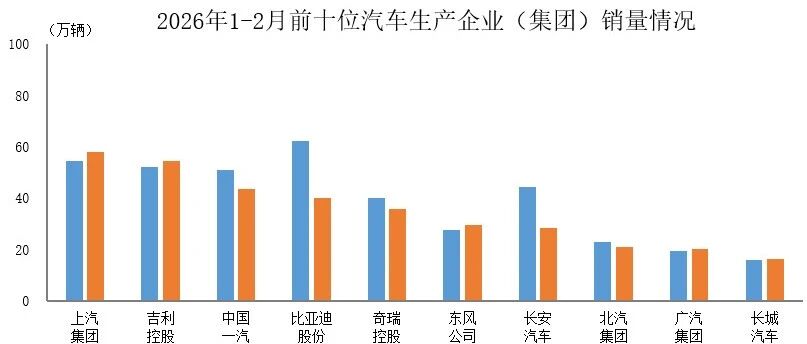
数据简报 | 2026年1-2月前十位汽车生产企业(集团)销售情况简析
中汽协会数据· 2026-03-20 07:23
Group 1 - The core viewpoint of the article highlights that the top ten automotive companies in China sold a total of 3.484 million vehicles in January and February 2026, accounting for 83.9% of the total automotive sales [2] - Among these ten companies, SAIC Motor, Geely Holding, Dongfeng Motor, GAC Group, and Great Wall Motors experienced varying degrees of sales growth compared to the same period last year [2] - In contrast, the other companies in the top ten saw a decline in sales during the same timeframe [2]





解放蝉联第一 重汽/东风火拼前二 2月中卡市场谁家销量逆增?
第一商用车网· 2026-03-20 07:18
Core Viewpoint - The medium truck market in China experienced a significant decline in February 2026, with sales dropping 5% year-on-year, ending a five-month growth streak. Despite this, the cumulative sales for January and February showed a 16% increase compared to the previous year, indicating potential resilience in the market [1][19]. Sales Performance - In February 2026, the overall truck market sold 240,400 units, a month-on-month decrease of 26% and a year-on-year decrease of 14%. The medium truck segment sold 8,125 units, reflecting a month-on-month decline of 42% and a year-on-year decrease of 5% [3][19]. - The medium truck market's sales trend over the past five years in February has shown a pattern of decline, with only one instance of sales exceeding 10,000 units in 2022. The February 2026 sales were the second lowest in five years, down approximately 400 units from February 2025 and 2,700 units from the peak in February 2022 [5][19]. Market Share and Competition - In February 2026, the top ten companies in the medium truck market accounted for 98.4% of total sales, with the top five companies holding 84.9% of the market share. Jiefang led the market with 2,376 units sold, capturing 29.2% of the market share [11][19]. - Among the top ten companies, five experienced sales growth while five saw declines. Notably, companies like Heavy Truck and Dongfeng reported year-on-year increases of 52% and 10%, respectively, while some companies faced declines of up to 32% [9][19]. Cumulative Sales Analysis - For the first two months of 2026, the medium truck market achieved cumulative sales of 22,200 units, marking a 16% year-on-year increase. This growth rate was lower than the 33% increase observed in January alone, indicating a slowdown [12][17]. - Companies such as Jiefang and Heavy Truck led the cumulative sales growth, with increases of 67% and 90%, respectively, outperforming the overall market growth [15][17]. Future Outlook - The medium truck market's cumulative sales growth of 16% in early 2026 is 10 percentage points higher than the overall truck market, raising questions about the sustainability of this advantage moving forward [19].

2026年冲击2万辆,年轻的零米轻卡如何弯道超车?
第一商用车网· 2026-03-20 07:18
Core Viewpoint - The launch of the new 114 kWh long-range version of the Zero Mi light truck marks a significant step in the light truck industry, enhancing the product matrix and brand influence of Zero Mi [1][3]. Product Launch and Market Response - The Zero Mi light truck's Gold Rice version has surpassed 1,000 orders since its launch, with the new long-range model expected to meet various range needs within 300 kilometers [3][6]. - The 114 kWh model offers a balance of cost and range, appealing to first-time electric vehicle buyers who prioritize cost-effectiveness and operational efficiency [6][9]. Product Features and Performance - The 114 kWh model features high-quality batteries and optimized vehicle control strategies, achieving a low energy consumption of 5.01 kWh per ton-kilometer, significantly better than the industry average [9]. - Compared to the previous 90 kWh model, the new version increases the range by over 60 kilometers, making it suitable for transportation in third and fourth-tier cities [9][10]. Sales Performance and Market Position - Since its launch in August 2024, Zero Mi light truck has set a record for the fastest electric light truck brand to achieve over 1,000 monthly sales, with a target of over 5,000 units sold in 2025 [10][11]. - The product lineup includes various models with capacities ranging from 90 kWh to 140 kWh, catering to different market segments, including cold chain logistics and urban distribution [10][11]. Strategic Goals and Future Outlook - The company aims to sell at least 15,000 units in 2025, with a target of 20,000 units, supported by a complete product value chain and a strong understanding of market dynamics [12][14]. - Zero Mi's competitive advantages include leading technology, diverse transportation scenarios, strong support from the Chery Group, and effective financial products, which contribute to its growth potential [15][17].
战局升级!2026新能源牵引车市场,谁执牛耳?| 头条
第一商用车网· 2026-03-20 07:18
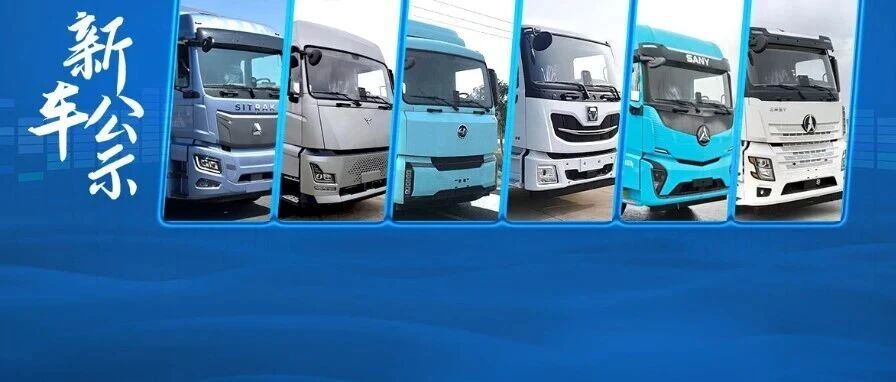
Core Viewpoint - The latest batch of new truck announcements from the Ministry of Industry and Information Technology shows a significant decline in the number of new tractor models, particularly in the hybrid segment, indicating a shift in market dynamics towards electric and LNG vehicles [1][3]. Group 1: New Vehicle Announcements - The 405th batch of new tractor vehicle announcements includes 27 new models, a decrease of 15 models or 35.71% from the previous batch, and only one traditional LNG model is present [1]. - Among the new models, 26 are electric, with 21 being charging models and 4 being battery swap models, while no hybrid or diesel tractors were announced [1][3]. Group 2: Manufacturer Insights - China National Heavy Duty Truck Group (CNHTC) leads with 6 new models, including 1 LNG, 1 fuel cell, and 4 charging tractors, indicating a clear market segmentation strategy [3][5]. - XCMG follows with 5 new models, comprising 2 battery swap and 3 charging tractors, showcasing a strong focus on new energy vehicles [3][5]. Group 3: Emerging Players - New entrants like Shenhe Automobile and Shandong Leichi are gaining traction, with a total of 7 new models from new energy companies, representing nearly 26% of the total announcements [7]. - The presence of new players is reshaping the competitive landscape in the tractor market, signaling a significant transformation [7]. Group 4: Notable Models - The new Howo KS gas tractor from CNHTC features a power range of 640 to 750 horsepower, aimed at capturing the natural gas heavy truck market [10][12]. - North Benz has introduced two new electric tractors, enhancing its product lineup to meet the demands of the new energy era [14][18]. Group 5: Technological Advancements - Zero One Automobile has announced two new tractors with a battery capacity of 528.13 kWh, offering a range of 346 to 347 kilometers, catering to specific market needs [20][22]. - DeepWay's new models are now equipped with Shaanxi Automobile's HanDe motors, indicating a shift towards higher performance electric vehicles [23][25]. Group 6: Market Outlook - Despite the reduced number of announcements, the new models reflect a strategic response to changing market demands, suggesting an upgrade in overall competitiveness [30]. - The 2026 new energy tractor market is anticipated to be highly competitive, with various manufacturers vying for market leadership [30].
澳门招标新一批增程式公交车!
第一商用车网· 2026-03-20 07:18
Core Viewpoint - The article discusses the tender announcement for the procurement of 24 range-extended buses by Nam Kwong Bus Company in Macau, highlighting the project's details and requirements for potential bidders [1]. Tender Overview - Project Name: Procurement of Range-Extended Buses by Macau Bus Company in 2026 - Project Number: G1100000175266009 - Tender Type: Open tender for goods - Qualification Review Method: Post-qualification review - Content: Low-floor, three-door range-extended buses measuring 11.97-11.99 meters - Scale: 24 range-extended buses, with final quantity subject to approval by the Macau government - Funding Source: Self-financed by the company - Announcement Date: March 19, 2026, at 16:00 [2]. Qualification Requirements - Bidders must be legally registered entities in China with the ability to assume civil liability, providing a scanned copy of their business license. Foreign bidders must provide equivalent documentation [3]. - Bidders must be manufacturers of the vehicles being tendered and provide a manufacturer declaration [3]. - Bidders must not be listed as seriously untrustworthy enterprises or have any negative credit information in relevant databases [3]. - Joint bids are not accepted, and bidders with certain disqualifying relationships or past disqualifications will be rejected [3]. Key Dates - Tender Document Availability: March 19, 2026, 16:00 to March 25, 2026, 18:00 - Inquiry Deadline: March 26, 2026, 09:30 - Objection Deadline: March 26, 2026, 09:30 - Submission Deadline for Bids: April 9, 2026, 09:30 - Bid Opening Date: April 9, 2026, 09:30 [4].
The Art of the Sledgehammer: How Trump’s 15% Global Tariff Just Redecorated Your Portfolio
Stock Market News· 2026-03-20 06:00
Trade Policy Impact - The U.S. administration has increased global tariffs from 10% to 15%, significantly affecting the trade landscape and supply chains [1][3] - Retailers such as Walmart (WMT) and Target (TGT) are experiencing declines in stock prices, with WMT down 1.4% and TGT down 2.3% as they adjust to the new tariff rates [4] - The iShares MSCI Mexico ETF (EWW) fell by 4.2% following the announcement of tariffs on all goods imported from Mexico, impacting automakers like Ford (F) and General Motors (GM) [5] Sector Reactions - The energy sector saw a rise in stock prices for ExxonMobil (XOM) and Chevron (CVX), up 1.8% and 1.5% respectively, due to increased volatility and potential supply shortages [6] - The healthcare sector is facing pressure as the administration engages with drugmakers like Pfizer (PFE) and Eli Lilly (LLY) on implementing "Most Favored Nation" pricing, which could lower drug prices in the U.S. [10] Market Performance - The DOW and S&P 500 indices have shown declines, with the DOW down 0.85% and the S&P 500 down 1.2% as investors react to the escalating trade tensions [2][4] - The volatility index (VIX) is trending upward, indicating increased market uncertainty and investor anxiety [13] Cryptocurrency Market - Bitcoin (BTC) has fallen by 4.8% amid broader market liquidations, despite claims of rising American Bitcoin treasury firms [11]

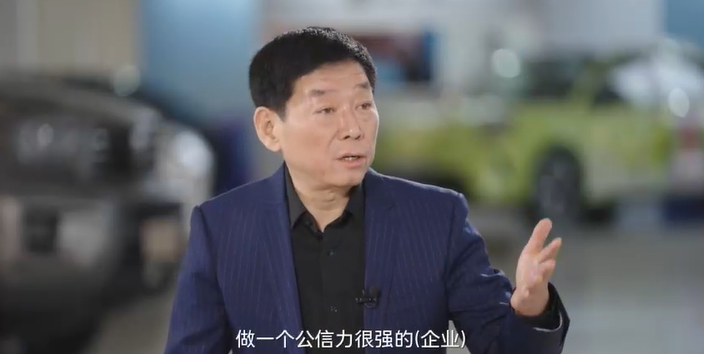
长城汽车董事长魏建军谈“立信” 中国汽车由大到强需筑牢信任基石
Zheng Quan Ri Bao Wang· 2026-03-20 05:58
Core Insights - The Chinese automotive industry is at a critical juncture, transitioning from a "big automotive nation" to a "strong automotive nation" as it approaches the start of the 14th Five-Year Plan in 2026 [1] - Wei Jianjun, Chairman of Great Wall Motors, emphasizes the need to establish credibility as a core strategy to address deep-seated challenges in the industry [1] Group 1: Industry Challenges - Four major challenges identified by Wei Jianjun include: deviation from the essence of car manufacturing by some companies, disordered competition undermining user trust, zero-sum games harming supply chain resilience, and lack of localized strategies in overseas markets [1] - Wei believes that while technology can be caught up, values and credibility are the hardest to replicate, making them essential for competitive advantage [1] Group 2: Vision for a Strong Automotive Nation - A strong automotive nation is characterized not only by leading sales but also by comprehensive success in technological innovation, global expansion, and cultural prosperity [1] - Wei proposes a twelve-character mantra: "Establish credibility through quality, convey credibility through collaboration, and establish credibility through actions" [1] Group 3: Practical Implementation of Credibility - Great Wall Motors is implementing the concept of "establishing credibility" through three main pathways: ensuring product quality and safety for users, promoting symbiotic relationships within the supply chain, and localizing operations in international markets [2] - The company advocates for a long-term vision of establishing credibility, which is seen as a core element in reducing transaction costs and serving as a competitive barrier for companies [2]
深化自主改革 广汽集团成立动力总成BU
Zhong Guo Zhi Liang Xin Wen Wang· 2026-03-20 05:55
Group 1 - GAC Group has established a Powertrain Business Unit (BU) to strategically integrate and upgrade its core power business into an independent operating entity, marking a significant step in the reform of GAC's self-owned sector following the establishment of Haobo Aian BU and Chuanqi BU [1] - The Powertrain BU is the first component-level unit within GAC Group to achieve integrated operations, consolidating previously dispersed core functions such as R&D, production, supply, and sales into a comprehensive "R&D, production, supply, and sales" operational system [3] - The focus of the Powertrain BU is on diverse power system products, core power technology innovation, and power system solutions, coordinating multiple technical routes including hybrid, engine, and range extender technologies, while leveraging existing technological foundations to continuously promote advancements in power technology [3] Group 2 - The Powertrain BU will operate under an Integrated Product Development (IPD) process as its core operational framework, achieving deep "interlocking" and efficient collaboration with vehicle BUs and R&D systems to fully activate competitive capabilities [3] - Internally, the Powertrain BU serves as a "source of technology" to match vehicle demands, while externally, it aims to expand market cooperation with its independent operating identity [3]
长城汽车魏建军:中国车企要对用户、产业及全球出海“立信”
Bei Ke Cai Jing· 2026-03-20 04:15
Core Viewpoint - The chairman of Great Wall Motors, Wei Jianjun, emphasizes that while technology can be caught up with, a company's values and credibility are the hardest to replicate, serving as a crucial moat for businesses. He advocates for Chinese automotive companies to establish trust in their relationships with users, the industry, and in global markets [1][3]. Group 1: Challenges in the Automotive Industry - The Chinese automotive industry faces several challenges, including excessive capital intervention and a focus on short-term profits that detracts from the essence of vehicle manufacturing [3]. - Some companies are sacrificing quality in a bid for scale, which erodes consumer trust in the industry [3]. - Zero-sum thinking among manufacturers is squeezing profit margins in the supply chain, damaging the resilience of the industry and undermining the credibility of finished vehicles [3]. - Chinese brands are still in the early stages of product export and lack deep localization, making them easily replaceable in international markets [3]. Group 2: Establishing Trust - Establishing trust with users involves a commitment to accountability and a willingness to take responsibility for product quality [3]. - Building trust within the industry requires collaborative empowerment to create a symbiotic ecosystem among manufacturers, suppliers, and dealers through standardization and capability development [3]. - For global trust, it is essential to localize operations and invest in long-term responsibilities to build lasting brand credibility, positioning Chinese brands as reliable partners in local markets [4].