
体育

Search documents
挖掘文旅体育等新增长点 擦亮首发经济品牌
Xin Lang Cai Jing· 2025-12-30 20:11
Group 1 - The core viewpoint emphasizes the need to stimulate consumer vitality in Chengdu by exploring new growth points in cultural tourism and sports, while enhancing traditional consumption and expanding new consumption [1][2] - Chengdu's economic work meeting highlighted the importance of continuously expanding effective demand and exploring new spaces for domestic demand growth as a key task for 2026 [1] - The city plans to implement a special action to boost consumption, including initiatives like trade-in programs for consumer goods and enhancing service quality in sectors such as dining and housekeeping [1][2] Group 2 - The Chengdu Retail Association is focused on driving innovation in commercial products, new business formats, and consumer scenarios, with plans to launch a new list of consumer scenarios by 2026 [2] - The "Rongqi Rongpin Going Global" initiative has shown positive results, with Chengdu's foreign trade reaching 775 billion yuan, accounting for 82.9% of the province's total foreign trade value [2] - The city aims to strengthen its overseas service platforms and expand into markets along the Belt and Road, while providing tailored support for foreign trade enterprises [2]
江西抚观天下文化体育有限公司成立,注册资本200万人民币
Sou Hu Cai Jing· 2025-12-30 16:52
经营范围含体育竞赛组织,服装服饰批发,体育赛事策划,票务代理服务,信息咨询服务(不含许可类 信息咨询服务),体育场地设施工程施工,广告设计、代理,广告制作,广告发布,体验式拓展活动及 策划,健身休闲活动(除依法须经批准的项目外,凭营业执照依法自主开展经营活动) 企业名称江西抚观天下文化体育有限公司法定代表人伍政华注册资本200万人民币国标行业文化、体育 和娱乐业>体育>其他体育地址江西省抚州市临川区临川大道228号企业类型有限责任公司(非自然人投 资或控股的法人独资)营业期限2025-12-30至无固定期限登记机关抚州市市场监督管理局 来源:市场资讯 天眼查显示,近日,江西抚观天下文化体育有限公司成立,法定代表人为伍政华,注册资本200万人民 币,由抚州市属传媒集团有限责任公司全资持股。 序号股东名称持股比例1抚州市属传媒集团有限责任公司100% ...
为“十五五”开好局,成都市商务局聚焦消费、外贸、开放三大领域
Sou Hu Cai Jing· 2025-12-30 13:13
Group 1 - The core focus of Chengdu's economic work for 2026 includes stimulating consumer vitality, enhancing foreign trade quality, and deepening open cooperation [1][3] - Chengdu's Commerce Bureau plans to implement special actions to boost consumption, including promoting the exchange of old consumer goods for new ones and expanding the second-hand car market [1] - The city aims to enhance service consumption by improving the quality of sectors such as catering and home services, and by launching initiatives like the "Hundred Products Thousand Stores" plan [1] Group 2 - In terms of enhancing foreign trade quality, Chengdu will strengthen the integration of production and trade, and support enterprises in expanding into diverse markets [3] - The city will promote the integration of trade and investment, as well as domestic and foreign trade, while encouraging the development of new foreign trade models [3] - Chengdu plans to innovate in digital and green trade to create new growth points and aims to include more products in the bonded maintenance directory [3] Group 3 - To deepen open cooperation, Chengdu will align with international high-standard economic and trade rules and implement strategies to enhance its free trade zone [3] - The focus will be on characteristic advantageous industries and emerging strategic industries, promoting a comprehensive open trial across the entire industrial chain [3] - The city aims to enhance the level of trade and investment liberalization and facilitation, while improving the allocation of international high-end factor resources [3]


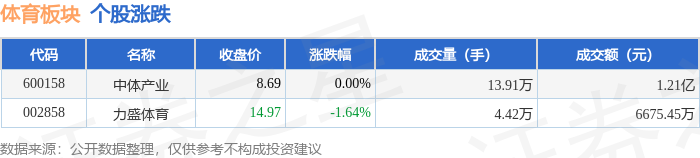
体育板块12月30日跌0.35%,力盛体育领跌,主力资金净流出504.45万元
Zheng Xing Xing Ye Ri Bao· 2025-12-30 09:00
证券之星消息,12月30日体育板块较上一交易日下跌0.35%,力盛体育领跌。当日上证指数报收于 3965.12,下跌0.0%。深证成指报收于13604.07,上涨0.49%。体育板块个股涨跌见下表: | | | | 代码 名称 主力净流入(元) 主力净占比 游资净流入(元) 游资净占比 散户净占比 | | | | | --- | --- | --- | --- | --- | --- | --- | | 600158 中体产业 | -175.10万 | -1.45% | 558.06万 | 4.61% | -382.95万 | -3.17% | | 002858 力盛体育 | -329.35万 | -4.93% | -100.08万 | -1.50% | 429.43万 | 6.43% | | 代码 | 名称 | 收盘价 | 涨跌幅 | 成交量(手) | 成交额(元) | | | --- | --- | --- | --- | --- | --- | --- | | 600158 | 中体产业 | 8.69 | 0.00% | 13.91万 | | 1.21亿 | | 002858 | 力盛体育 | 14.9 ...


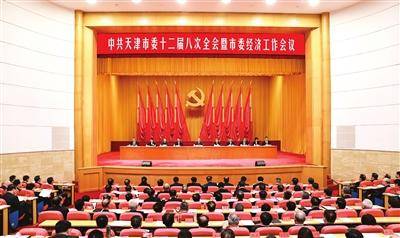
中共天津市委十二届八次全会暨市委经济工作会议举行
Sou Hu Cai Jing· 2025-12-30 04:54
Core Viewpoint - The Tianjin Municipal Committee's recent meeting emphasized the importance of aligning with the central government's economic strategies and highlighted the need for high-quality development in the upcoming year [3][4][5]. Group 1: Economic Work and Development Goals - The meeting recognized the significance of Xi Jinping's speech at the Central Economic Work Conference, which provided a comprehensive summary of the current economic situation and outlined the tasks for the next year [3]. - The overall requirement for 2026 is to focus on economic construction and high-quality development, implementing the new development philosophy and ensuring stability while seeking progress [6][11]. - The meeting stressed the importance of enhancing regional integration and promoting coordinated development in the Beijing-Tianjin-Hebei area [7]. Group 2: Key Actions and Strategies - The meeting outlined ten key actions for high-quality development, including advancing technological innovation, revitalizing industries, and improving urban infrastructure [4][6]. - Emphasis was placed on stimulating effective demand through consumer spending and investment, while also stabilizing the real estate market [8]. - The need for comprehensive reforms and high-level openness was highlighted, including deepening state-owned enterprise reforms and optimizing the business environment [8]. Group 3: Social and Environmental Considerations - The meeting underscored the importance of environmental protection and pollution prevention, aiming to enhance ecological restoration and develop green technologies [9]. - It was noted that improving people's livelihoods and ensuring social stability are critical, with plans to increase income and provide better public services [9][10]. - The meeting called for a focus on safety and security, emphasizing the need for effective governance and disaster prevention measures [10]. Group 4: Implementation and Accountability - The meeting stressed the importance of strong leadership and accountability in implementing the discussed strategies, ensuring that all levels of government work collaboratively towards common goals [10][11]. - There is a call for continuous improvement in professional capabilities and a commitment to addressing challenges effectively [11]. - The meeting concluded with a rallying call for unity and determination to achieve the economic and social development goals for the coming year [11].
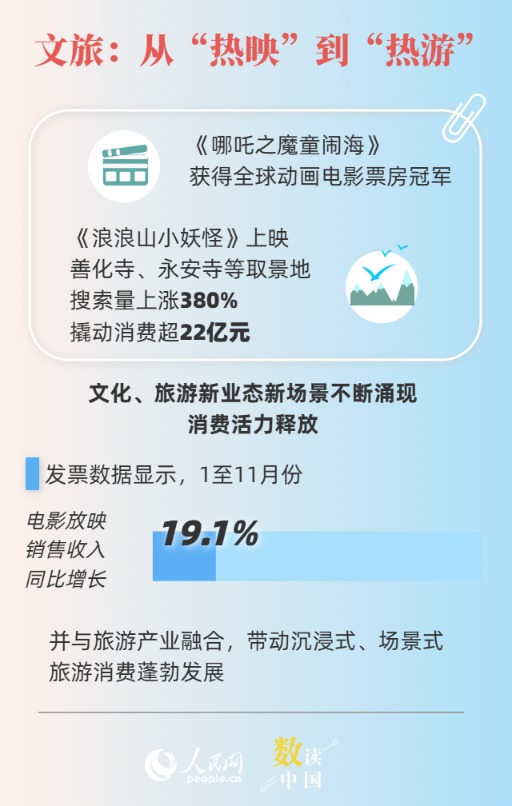
借助词“云”图盘点2025新图景 展望2026,一起向前接着干!
Yang Shi Wang· 2025-12-30 03:50
Group 1 - The core theme of 2025 highlights significant progress in China's economy and social welfare, with a focus on policies and support for the populace [1][3] - The financial market has seen steady inflows from insurance funds, social security funds, and public funds, with foreign institutions showing confidence in Chinese assets, leading to a recovery in IPOs [6] - The consumption and cultural tourism sectors have thrived, with notable successes such as the box office performance of "Nezha 2" and the emergence of new consumption trends like "emotional consumption" [9] Group 2 - Domestic markets have been active despite international challenges, with government interventions aiding foreign trade enterprises and promoting domestic sales [12] - The government has implemented measures to enhance the quality of life for the elderly, including subsidies for home care renovations and the removal of insurance restrictions based on household registration [16] - The outlook for 2026 remains optimistic, with a commitment to continued efforts and progress in various sectors [18]

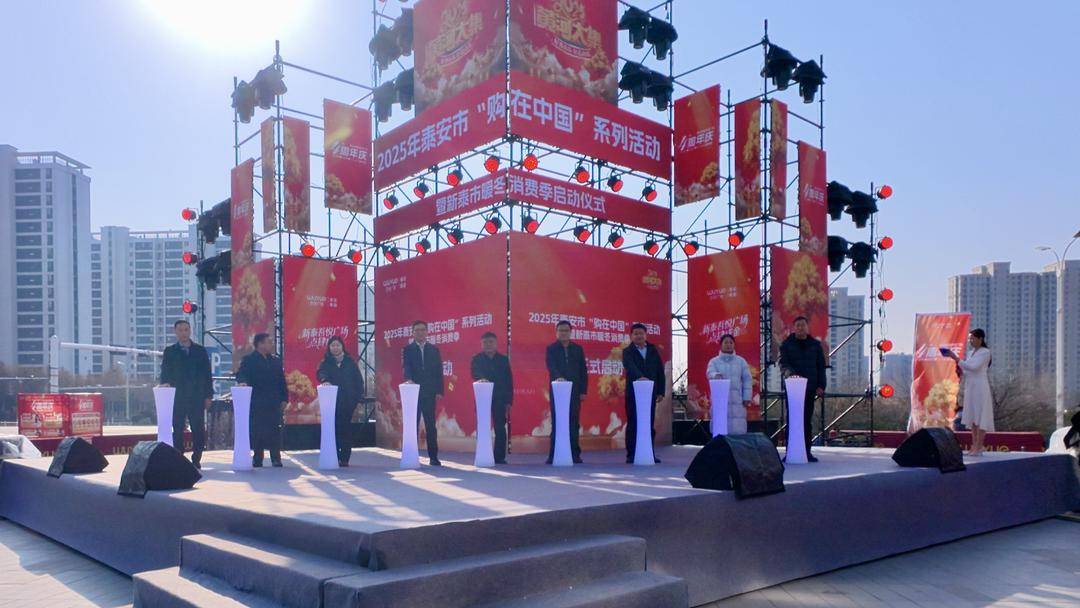
暖冬惠购,好品暖心,2025年泰安市“购在中国”系列活动暨新泰市暖冬消费季启动仪式举行
Sou Hu Cai Jing· 2025-12-29 11:35
"文旅+消费"延续消费热度,下午3时至5时,新泰市冬季文旅消费季活动在吾悦广场LG舞台继续展开。公共文化服务中心工作人员与文化志愿者组织文艺 演出,围绕暖冬文旅主题开展推介与演绎。丰富的节目形式使市民既享文化盛宴,又获取文旅消费信息,延续了全天活动的热度与吸引力。 本次暖冬消费季启动活动,整合多方资源,通过政府引导、平台赋能、商圈联动和群众参与相结合,持续释放消费潜力。政府搭台、企业唱戏、市民受 益,下一步,新泰市将继续创新促消费形式,打造更具人气、更有温度的消费场景,推动消费市场持续升温,为经济高质量发展注入新动能。 12月27日上午,2025年泰安市"购在中国"系列活动暨新泰市暖冬消费季启动仪式在新泰吾悦广场举行。活动以"暖冬惠购新泰味 好品潮享暖民心"为主 题,通过政策发布、平台联动和多元场景打造,全面激发冬季消费活力。 政策落地,群众实惠可感。启动仪式前后,商场内外人气迅速升温,市民在家电、汽车和品牌商铺前驻足咨询、下单消费。新泰吾悦广场总经理冯小帆介 绍,"今年新泰市暖冬消费季启动仪式正逢新泰吾悦四周年庆,12月24日-1月3日期间,我们通过明星效应、无人机星空秀、十米蛋糕免费品鉴、消费抽奖 赢苹果 ...
上海发文扩大服务消费:推动文博场馆延时开放,培育国际美食集聚区
Sou Hu Cai Jing· 2025-12-29 11:27
Core Viewpoint - Shanghai government has announced measures to enhance service consumption, focusing on high-quality supply, brand innovation, integrated consumption scenarios, and an optimized environment to stimulate growth in the service sector [1]. Group 1: Enhancing High-Quality Service Consumption Supply - The initiative aims to elevate cultural and tourism service levels by extending operating hours for museums and tourist attractions, encouraging innovative exhibition methods, and supporting the creation of high-quality cultural products [1][2]. - The sports service market will be invigorated through the development of event economies and the promotion of the "Shanghai Sports" brand, alongside enhancing public sports facilities [2]. - The education sector will see improved access for non-academic training institutions, with streamlined approval processes and the introduction of diverse learning products for the elderly [2]. - Health consumption will be internationalized, promoting specialized medical services and encouraging collaboration between medical institutions and insurance companies [2]. Group 2: Brand Innovation to Stimulate New Service Consumption Dynamics - There will be increased efforts in brand cultivation, including the establishment of mechanisms to discover new service brands and support for industry organizations in brand development [5]. - A robust standard support system will be developed for various service sectors, ensuring quality and service norms are met [6]. - The foundation for brand development will be strengthened through enhanced capabilities of industry organizations and the establishment of a professional talent pool [6]. Group 3: Creating Integrated Consumption Scenarios - The initiative promotes the creation of cross-sector integrated service consumption scenarios, such as "tourism+", "sports+", and "health+", encouraging collaboration among various service providers [7]. - Support for the "IP+" model will be provided to leverage cultural IPs for driving consumption, particularly in entertainment and digital sectors [7]. - The application of digital technologies like AR and VR will be encouraged to create immersive and sustainable service consumption experiences [7]. Group 4: Optimizing Environment to Stimulate New Service Consumption Growth - A service consumption credit system will be established, promoting credit evaluation and public disclosure of credit ratings for businesses [9]. - Financial institutions will be encouraged to enhance their customer evaluation and risk management systems, supported by third-party credit service providers [9].
数读2025经济答卷 服务消费“火出圈” 你体验过哪些?
Ren Min Wang· 2025-12-29 06:15
Group 1: Service Consumption - The report highlights the strong growth in service consumption across various sectors such as culture, tourism, dining, sports, health, and elderly care, driven by government policies and new consumption models [1] - From January to November, the total revenue from the dining sector reached 52,245 billion yuan, reflecting a year-on-year increase of 3.2% [2] - In November alone, dining revenue was 6,057 billion yuan, indicating a robust performance in the sector [2] Group 2: Sports Sector - The sports sector has seen a significant increase in engagement, with the 2025 season of the Chinese Super League achieving record attendance [5] - The rise in local sports events has created a multiplier effect on consumption, with sports exhibition services and retail of sports goods growing by 29.7% and 6.6% respectively from January to November [5] Group 3: Health Sector - The health sector is experiencing a shift towards innovative products, with smart assistive devices gaining popularity [7] - From January to November, retail sales of health auxiliary treatment devices and health consulting services increased by 14.1% and 11.9% respectively [7] Group 4: Elderly Care Sector - The demand for elderly care services is diversifying, driven by the increasing consumption needs of the elderly population [10] - From January to November, spending on elderly care, social assistance, and nursing home services grew by 33.6%, 9.6%, and 14.6% respectively [10] - The popularity of travel services for the elderly is also notable, with 972 tourist trains launched in the first half of the year, marking a 23.2% increase year-on-year [12]
消费者服务行业周报(20251222-20251226):关注海南封关、冰雪游对服务消费的带动-20251229
Huachuang Securities· 2025-12-29 04:34
Investment Rating - The report maintains a "Recommendation" rating for the consumer services industry, indicating an expected increase in the industry index by more than 5% over the next 3-6 months compared to the benchmark index [41][43]. Core Insights - The report highlights the positive impact of Hainan's customs closure and the winter sports season on service consumption, predicting a robust demand for hospitality and travel services in 2026. Notably, Hainan's first week of duty-free shopping post-closure saw sales of 1.1 billion RMB, with year-on-year growth of 54.9% [4]. - The report anticipates a significant increase in domestic ski and ice tourism ticket bookings, with a projected year-on-year growth of approximately 70% from November 2025 to February 2026 [4]. - Key investment targets include hotels with balanced supply and demand, human resources services, the duty-free sector, and internet platforms that integrate online and offline operations [4]. Industry Basic Data - The consumer services industry comprises 55 listed companies with a total market capitalization of 498.8 billion RMB and a circulating market capitalization of 457.1 billion RMB [1]. Market Performance - The consumer services sector experienced a decline of 1.05% in the week from December 22 to December 26, 2025, while the overall A-share market rose by 2.77% [7][10]. - The report notes that the hospitality sector, including hotels, saw varied performance, with some companies like Green Tea Group and Dingdong Maicai showing significant gains [16][19]. Important Announcements - Key announcements from companies in the consumer services sector include share buybacks and financial updates, such as Guilin Tourism's court ruling to recover illegal profits of 52.15 million RMB [31][30]. Upcoming Shareholder Meetings - Several companies in the consumer services sector have scheduled shareholder meetings in the upcoming month, including Nanjing Commercial Travel and Changbai Mountain [34].