船舶

Search documents
润邦股份:公司港口装备业务及船舶、海工业务发展较快
Zheng Quan Ri Bao Wang· 2025-11-03 09:13
Core Viewpoint - Runbang Co., Ltd. (002483) has indicated that its port equipment, shipbuilding, and offshore engineering businesses are developing rapidly and are expected to be the main growth drivers in the coming years [1] Company Summary - The company is experiencing strong growth in its port equipment business [1] - The shipbuilding and offshore engineering sectors are also showing positive development [1] - These areas are identified as key growth points for the company in the next few years [1]

收评:沪指涨0.55%创业板指涨0.29% 分散染料和海南板块涨幅靠前
Xin Hua Cai Jing· 2025-11-03 07:24
Market Overview - The three major stock indices in Shanghai and Shenzhen opened lower on November 3, with the Shenzhen Component Index dropping as much as 1.64% and the ChiNext Index down 2.09% at one point. However, the Shanghai Composite Index turned positive during the morning session, while both the Shenzhen Component and ChiNext indices rebounded in the afternoon [1] - By the end of the trading day, the Shanghai Composite Index closed at 3976.52 points, up 0.55%, with a trading volume of approximately 941.7 billion yuan. The Shenzhen Component Index closed at 13404.06 points, up 0.19%, with a trading volume of about 1165.4 billion yuan. The ChiNext Index ended at 3196.87 points, up 0.29%, with a trading volume of around 540.4 billion yuan [1] Sector Performance - The sectors that performed well included dispersed dyes, Hainan, internet, media and entertainment, short drama games, combustible ice, Sora concept, steel, shipbuilding, TOPCon batteries, marine economy, and nuclear power, all showing significant increases [1] - Conversely, sectors such as composite copper foil, rare earth permanent magnets, and engineering machinery experienced notable declines, although their losses narrowed in the afternoon as the indices rebounded [1] Institutional Insights - According to institutional views, the market is expected to maintain an upward trend, with a focus on high-growth sectors such as semiconductors, consumer electronics, artificial intelligence, robotics, and low-altitude economy [2] - The return of the A-share market to the 4000-point level is attributed to fundamental changes in the economy, including low risk-free interest rates and significant shifts in top-level design and planning that have altered the market ecosystem [2] Policy Developments - The People's Bank of China and the Bank of Korea have renewed a bilateral currency swap agreement with a scale of 400 billion yuan / 70 trillion won, effective for five years, which aims to deepen financial cooperation and facilitate bilateral trade [4] - The Ministry of Industry and Information Technology and the Ministry of Water Resources have issued a plan to cultivate leading enterprises in water-saving equipment and specialized "little giant" companies by 2027, focusing on breakthroughs in water supply, usage, and recycling technologies [5]

祥和实业:第三季度净利润4534.27万元,同比增长663.49%
Guo Ji Jin Rong Bao· 2025-10-30 14:10
Core Insights - The company reported a third-quarter revenue of 210 million yuan, representing a year-on-year increase of 48.80% [1] - The net profit for the third quarter was 45.34 million yuan, showing a significant year-on-year growth of 663.49% [1] - For the first three quarters, the total revenue reached 591 million yuan, which is an 18.46% increase compared to the same period last year [1] - The net profit for the first three quarters was 110 million yuan, reflecting a substantial year-on-year increase of 183.59% [1]

深耕科技金融 赋能创新发展
Jin Rong Shi Bao· 2025-10-30 00:25
Core Insights - The article emphasizes the role of technology finance as a crucial driver for industrial upgrading and achieving self-sufficiency in key areas [1] - China Orient Beijing Branch has positioned itself as a financial "stabilizer" and economic "accelerator," successfully implementing various financial tools to meet the diverse funding needs of technology enterprises [1] Group 1: Investment Focus - China Orient Beijing Branch has invested over 23.5 billion in technology finance, focusing on high-end equipment manufacturing, integrated circuits, and emerging sectors [2] - In the high-end equipment manufacturing sector, the company has invested over 2.5 billion in the shipbuilding industry, becoming a significant capital support for industry resource integration [2] - The company has also invested over 1.6 billion in the aviation engine sector, supporting technological advancements and industrial upgrades [2] Group 2: Strategic Partnerships - The company has supported the restructuring of New Ziguang Group, the largest hard-tech industry group in China, by optimizing its debt structure [3] - China Orient has made multiple investments in leading companies in the Internet Data Center (IDC) and Automatic Identification and Data Capture (AIDC) sectors, capitalizing on the growing demand for computing power [3] Group 3: Financial Tools - The company utilizes market-oriented debt-to-equity swaps to assist state-owned enterprises in reducing debt and enhancing capital [4] - A notable investment of 2 billion was made in a shipbuilding company facing delisting risks, helping it return to a growth cycle [4] Group 4: Emerging Technologies - The company has participated in the D-round financing of Tianbing Technology, a leading private rocket company, to support the development of a large liquid rocket [5] - Through the S Fund model, the company has invested in key players in the integrated circuit industry, including major manufacturers and leading enterprises in niche markets [5] Group 5: Operational Philosophy - China Orient has developed a unique approach in the technology finance sector, focusing on long-term research, binding core resources, and utilizing various financial tools to meet client needs [6] - The company aims to continue supporting high-level technological self-reliance and contribute to the development of the technology finance sector [6]
政策、资金与业绩的三重共振
Shang Hai Zheng Quan Bao· 2025-10-29 18:01
Group 1: Market Overview - The Shanghai Composite Index has reached the critical psychological level of 4000 points for the first time in 10 years, indicating a fundamental transformation in the market ecosystem [1] - The STAR 50 Index has seen a cumulative increase of 131.57% since September 24 of the previous year, highlighting the strong performance of technology stocks [1] Group 2: Policy Drivers - The primary driver of the current market uptrend is the sustained macro policy support and a shift in policy orientation, with significant financial measures introduced since September 24 of last year [2] - The Shanghai Composite Index rose from 2761.37 points to 4016.33 points, marking an increase of over 46% in this period [2] - Key macro policies include interest rate cuts, a reduction in housing loan rates, and the establishment of a 500 billion yuan tool for service consumption and elderly care [2] Group 3: Funding Dynamics - Unlike the speculative environment of 2015, the current market shows a more rational approach to leveraged funds, with the margin financing balance remaining below 3% of the A-share market's circulating market value [4] - Institutional investors have increased their shareholding significantly compared to 2015, leading to a more stable market environment [4] - Foreign capital has become a significant force in the Chinese capital market, with passive fund inflows reaching 18 billion USD by September 30, far exceeding the previous year [4] Group 4: Performance Metrics - The current market is characterized by a focus on high-quality emerging industry stocks, with a shift from speculative trading to performance-based evaluations [5] - The profitability of industrial enterprises has improved, with a reported profit of 53,732 billion yuan in the first three quarters, reflecting a year-on-year growth of 3.2% [5] - Analysts predict a fundamental shift in investment logic, with potential for a 30% increase in key Chinese stock indices by the end of 2027, driven by earnings growth and valuation recovery [6]


“十五五”产业趋势三大关键定调:巩固传统优势 决胜新兴未来
2 1 Shi Ji Jing Ji Bao Dao· 2025-10-29 14:51
Core Viewpoint - The article emphasizes the importance of building a modern industrial system and strengthening the foundation of the real economy as a strategic task in China's 15th Five-Year Plan, highlighting four key tasks: optimizing traditional industries, nurturing emerging and future industries, promoting high-quality development of the service sector, and constructing a modern infrastructure system [1][2]. Group 1: Traditional Industries - The first key task is to optimize and enhance traditional industries, including mining, metallurgy, chemicals, light industry, textiles, machinery, shipbuilding, and construction, to strengthen their global competitiveness and position in the international division of labor [1][2][3]. - Traditional industries account for about 80% of the added value in China's manufacturing sector, serving as a fundamental support for the modern industrial system and contributing to stable growth, employment, and income [2][3]. - The focus is on upgrading traditional industries through technological transformation, green transition, and brand internationalization, shifting from a "cost advantage" to a "system advantage" in the global division of labor [3][4]. Group 2: Emerging and Future Industries - The plan aims to cultivate and expand emerging industries, with a focus on creating new pillar industries, particularly in areas such as new energy, new materials, aerospace, and the newly added low-altitude economy [5][6]. - The low-altitude economy is highlighted for its potential to activate a trillion-level market space, driven by advancements in technology and broad application scenarios [6][7]. - Future industries will include quantum technology, biomanufacturing, hydrogen and nuclear fusion energy, brain-computer interfaces, embodied intelligence, and sixth-generation mobile communications, which are expected to become new economic growth points [7][8]. Group 3: Service Sector Development - The article discusses the need to promote high-quality development in the service sector, emphasizing the expansion and enhancement of service capabilities, particularly in productive services [9][10]. - The productive service sector currently accounts for about 30% of China's GDP, indicating significant room for growth compared to developed economies [10]. - The plan includes constructing a modern infrastructure system, focusing on the development of new-type infrastructure and enhancing connectivity across regions to support economic growth [11][12].
“十五五规划建议”释放十大增量信号 | 前瞻十五五④
Sou Hu Cai Jing· 2025-10-29 14:48
Group 1 - The core viewpoint of the article is the release of the "15th Five-Year Plan Suggestions" by the Central Committee, highlighting ten key incremental signals compared to the previous plan [1] - The emphasis on "economic construction as the center" indicates that economic development remains crucial for national strength and stability [2] - The plan aims for high-quality development, prioritizing qualitative improvements over quantitative growth, with significant achievements expected during the "15th Five-Year" period [2][5] Group 2 - Increased focus on consumption is evident, with the plan setting a goal for a noticeable rise in the resident consumption rate, addressing the current shortfall compared to other major economies [6] - New measures to boost consumer capacity include enhancing direct consumer policies and increasing government spending on social welfare [6] - The plan emphasizes the importance of domestic demand and consumption as the main drivers of economic growth, aiming to strengthen the domestic economic cycle [6] Group 3 - The plan prioritizes the optimization and enhancement of traditional industries, indicating a balanced approach between innovation and maintaining traditional industry advantages [7] - Specific industries mentioned for optimization include mining, metallurgy, and machinery, reflecting a strategic focus on preserving manufacturing capabilities [7] Group 4 - The "15th Five-Year Plan Suggestions" shifts focus to "promoting high-quality population development," with measures aimed at supporting families and improving elderly care [8] - The plan includes optimizing birth support policies and enhancing public services for the elderly, indicating a comprehensive approach to demographic challenges [8] Group 5 - The real estate sector is positioned as a key component of social welfare, with a focus on optimizing housing supply to meet the needs of urban workers and vulnerable families [10][11] - The plan aims to create safe, comfortable, and sustainable housing, reflecting a shift towards addressing housing as a social necessity rather than merely an economic asset [10][11] Group 6 - The plan introduces the principle of combining effective markets with proactive government actions, aiming to regulate local government economic activities and reduce irrational competition [12][13] - This approach seeks to address issues of overcapacity and inefficiency in the market, promoting a more sustainable economic environment [13] Group 7 - The emphasis on stock management is highlighted, with plans to compile a national macro asset-liability balance sheet to optimize resource allocation [14][15] - This initiative aims to enhance macroeconomic governance and improve the efficiency of resource utilization [14][15] Group 8 - The plan stresses the importance of sustainable fiscal policies, aiming to enhance fiscal sustainability while addressing short-term financial challenges [16] - Measures include deepening zero-based budgeting reforms and improving tax incentive policies to support long-term economic stability [16] Group 9 - National security considerations are expanded in the plan, with a focus on various sectors including food, energy, and emerging technologies [17] - The plan emphasizes the need for robust national security capabilities across multiple domains, reflecting a comprehensive approach to safeguarding national interests [17] Group 10 - The attitude towards the internationalization of the Renminbi has become more proactive, with plans to enhance cross-border payment systems and capital project openness [18] - This shift indicates a strategic move towards increasing the global role of the Renminbi in trade and finance [18]


中共中央关于制定国民经济和社会发展第十五个五年规划的建议(摘录冶金、材料部分)
Xin Hua She· 2025-10-29 08:53
Group 1 - The core viewpoint emphasizes the need to optimize and upgrade traditional industries, enhancing their global competitiveness and positioning in the industrial division of labor [1] - The focus is on promoting quality improvement and technological upgrades in key industries such as mining, metallurgy, chemicals, light industry, textiles, machinery, shipbuilding, and construction [1] - There is a call to strengthen the self-controllability of industrial chains and to implement high-quality development actions for key manufacturing industries [1] Group 2 - The strategy includes fostering emerging and future industries, particularly in sectors like new energy, new materials, aerospace, and low-altitude economy [1] - The initiative aims to accelerate the development of strategic emerging industry clusters through innovation and large-scale application of new technologies and products [1] - The emphasis is on enhancing the industrial ecosystem and promoting the scale development of emerging industries [1] Group 3 - There is a strong focus on original innovation and tackling key core technologies, particularly in fields such as integrated circuits, industrial mother machines, high-end instruments, basic software, advanced materials, and biomanufacturing [2] - The plan includes implementing major national scientific tasks to address strategic national needs and achieve decisive breakthroughs in key technology areas [2] - The strategy aims to increase the proportion of basic research investment and provide long-term stable support for foundational research [2]
\十五五\规划《建议》之解读
Bao Cheng Qi Huo· 2025-10-29 02:06
1. Report Industry Investment Rating No relevant content provided. 2. Core View of the Report The "15th Five-Year Plan" period is of great significance in the process of basically realizing socialist modernization. Boosting consumption and technological innovation will be the main drivers on the demand and supply sides respectively during the "15th Five-Year Plan" period. Policies conducive to expanding domestic demand and supporting technological innovation will continue to be promoted, and the relevant industries are expected to benefit from the policy advantages [3][4][20]. 3. Summary According to the Directory 3.1 "15th Five-Year Plan" 《Suggestions》 Main Content - The "15th Five-Year Plan" 《Suggestions》 has 15 parts and 61 articles, divided into three major sections. It positions the "15th Five-Year Plan" period as an important stage with a connecting role in the process of basically realizing socialist modernization [7]. - The development environment is characterized by both strategic opportunities and risks, with many uncertain and unpredictable factors. Internationally, the relationship between China and the United States is complex, but China has many favorable factors for shaping the external environment. Domestically, China has advantages such as a stable economic foundation, but also faces challenges such as unbalanced and insufficient development [7][8]. - The main goals include achieving significant results in high - quality development, greatly improving the level of technological self - reliance, and continuously improving people's living standards [9]. 3.2 Industry Construction - Prioritize optimizing and upgrading traditional industries to maintain the competitiveness of industries such as mining, metallurgy, and chemical engineering in the global division of labor. Cultivate and strengthen 4 strategic emerging industry clusters and 6 future industries [11]. - Expand the opening - up of the service industry to attract international capital and advanced business models, and moderately and ahead of time build new infrastructure to reserve development space [11]. 3.3 Technological Innovation - Strengthen original innovation and key core technology research in fields such as integrated circuits and industrial mother machines. Increase the proportion of basic research investment to achieve technological self - control [12]. - Promote the in - depth integration of technological innovation and industrial innovation, accelerate the transformation of scientific and technological achievements into productivity, and create new industries [12]. - Implement the "Artificial Intelligence +" action to lead the transformation of scientific research paradigms and empower various industries [12]. 3.4 Domestic Market - Adhere to the strategic basis of expanding domestic demand, combine improving people's livelihood and promoting consumption, and investment in objects and people. Promote the positive interaction between consumption and investment, supply and demand [13]. - Specific measures include boosting consumption (improving consumption scenarios and promoting residents' consumption ability), expanding effective investment (optimizing government investment and stimulating private investment), and removing obstacles to the construction of a unified national market [13][14]. 3.5 Macroeconomic Governance - Strengthen the coordination of fiscal and monetary policies, and maintain the continuity, effectiveness, and consistency of policies. Promote an economic development model driven by domestic demand and consumption [15]. - In fiscal and tax reform, improve the local tax and direct tax systems, and adjust the central - local fiscal relationship [15]. 3.6 Livelihood Security - Solve structural employment problems by strengthening the coordination between industry and employment, and promoting the healthy development of flexible employment [16]. - Improve the income distribution system to increase the income of low - income groups, expand the middle - income group, and form an olive - shaped distribution pattern [17]. - Improve the social security system, including pension and medical insurance, and focus on reducing the high - cost expenditures of residents in education, housing, etc. [17]. 3.7 Green Transformation - With the goal of achieving carbon peak by 2030, accelerate the construction of a new energy system and implement energy - saving and carbon - reduction reforms. The construction of the electricity market and carbon emission trading market is expected to accelerate [18]. - Reduce pollution emissions, strengthen pollution control, and promote the formation of a green production and lifestyle [18]. 3.8 Summary The "15th Five-Year Plan" 《Suggestions》 deploys strategic tasks and major measures in multiple fields. Boosting consumption and technological innovation will be the main focuses, and relevant industries are expected to benefit from policy support [19][20].
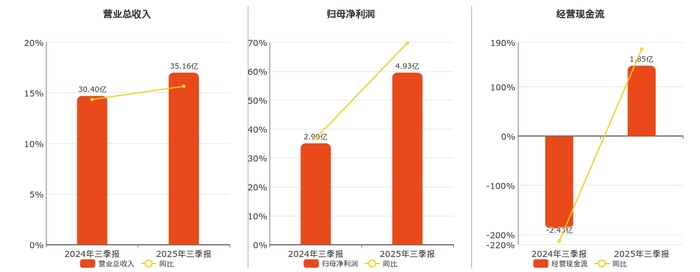
今创集团(603680.SH):2025年三季报净利润为4.93亿元
Xin Lang Cai Jing· 2025-10-29 01:36
Core Insights - The company reported a total revenue of 3.516 billion yuan for Q3 2025, with a net profit attributable to shareholders of 493 million yuan and a net cash inflow from operating activities of 185 million yuan [1]. Financial Performance - The latest asset-liability ratio stands at 38.37%, which is an increase of 0.20 percentage points from the previous quarter [3]. - The company's gross profit margin is recorded at 30.75%, and the return on equity (ROE) is 8.80% [3]. - The diluted earnings per share (EPS) is 0.63 yuan [3]. - The total asset turnover ratio is 0.38 times, while the inventory turnover ratio is 1.41 times [3]. Shareholder Structure - The number of shareholders is 15,400, with the top ten shareholders holding a total of 695 million shares, accounting for 88.71% of the total share capital [3]. - The largest shareholder, Qian Jinkun, holds 29.78% of the shares, followed by Ge Jianming with 28.61% and China Railway Transportation Co. Limited with 19.48% [3].