
智能汽车

Search documents
鸿蒙智行全面深化战略合作 共建统一服务体系、共享充电网络,打造智能汽车生态联盟
Xin Lang Cai Jing· 2025-12-09 03:47
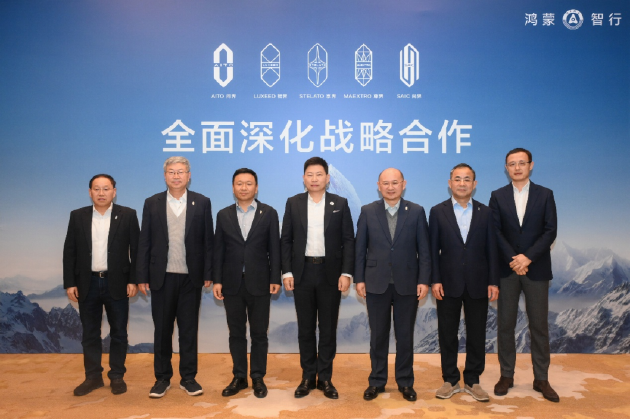
12月8日,鸿蒙智行问界、智界、享界、尊界、尚界在上海共同宣布全面深化战略合作。 华为常务董事、产品投资委员会主任、终端BG董事长余承东,赛力斯集团董事长(创始人)张兴海, 奇瑞汽车股份有限公司董事长尹同跃,北京汽车集团有限公司党委书记、董事长张建勇,江汽集团党委 书记、董事长项兴初,上海汽车集团股份有限公司党委书记、董事长王晓秋,共同见证鸿蒙智行合作的 升级。 此次合作升级将围绕"统一标准、资源共建"的核心理念展开,意味着鸿蒙智行全方位生态联盟的合作再 升级。联盟将重点推进以下五大领域合作: 归一化、平台化解决方案:推动鸿蒙座舱、智能驾驶、云服务等核心技术和部件的标准化,统一质量管 控、统一生态接口,让车辆品质更稳定,助力中国智能汽车标准体系创新。 余承东表示:"鸿蒙智行的成长,代表着智能汽车产业从单打独斗的时代走向生态协同。我们将以统一 标准和资源共享为核心,为用户创造确定性的价值体验。" 此次战略深化将树立智能汽车产业新标杆,通过联盟化运作实现规模效应,降低用户使用成本,提升服 务品质,推动整个行业向更高水平发展。 12月8日, 上海,(从左至右,按照合作顺序排列)赛力斯集团董事长张兴海,奇瑞汽车股份有 ...




理想汽车的“第二大脑”:一副AI眼镜背后,是对具身智能的野心
创业邦· 2025-12-09 00:09
Core Viewpoint - The launch of the Livis AI glasses marks a strategic pivot for Li Auto, aiming to redefine the boundaries of an automotive company in the era of embodied intelligence [2][4][12]. Industry Positioning - Li Auto enters the competitive smart glasses market, which is already crowded with major players like Meta and Google, indicating a significant strategic move to position itself beyond traditional automotive manufacturing [4][5]. - The Livis glasses are seen as a critical component of Li Auto's vision for "automotive robots," enhancing the sensory capabilities of vehicles and expanding the company's ecosystem [6][9]. Technological Framework - Li Auto's strategy emphasizes the development of a comprehensive AI system that integrates perception, modeling, and operating systems, with Livis serving as the first practical application of this system outside the vehicle [12][23]. - The company is building a "visual-language-action" (VLA) model to enhance the understanding of the physical world, positioning the Livis glasses as a key tool for data collection and environmental awareness [9][10]. Product Development and Philosophy - The Livis glasses weigh only 36 grams, setting a new industry standard for lightweight design, which is crucial for user comfort during extended wear [14]. - Livis OS, a specialized operating system for the glasses, optimizes power consumption and enables a typical battery life of 18.8 hours, significantly outperforming competitors [15][17]. User Experience and Interaction - The glasses are designed for quick interaction, achieving a wake-up time of 300 milliseconds and an end-to-end response time of 800 milliseconds, facilitating a seamless user experience [17]. - Livis enhances vehicle control through voice commands, allowing users to perform tasks like adjusting climate settings without needing to physically interact with the vehicle [20][22]. Ecosystem and Global Strategy - Li Auto's collaboration with Zeiss for high-quality optical lenses not only improves product quality but also facilitates entry into global markets through Zeiss's extensive distribution network [23][24]. - The Livis glasses may serve as a precursor to Li Auto's automotive products in international markets, helping to establish brand recognition and gather user data for future developments [25].


智驾国产芯片格局变化
2025-12-08 15:36
Summary of Conference Call Records Industry Overview - The records focus on the autonomous driving chip landscape in the Chinese automotive industry, highlighting various companies' strategies and developments in self-driving technology and chip utilization. Key Points by Company NIO - NIO's self-driving solution utilizes fully self-developed technology, primarily promoting a world model, but currently lags in effectiveness. The main task for next year is to improve the connectivity rate of the parking-to-parking function and handle complex cases. The Lido and Firefly series are expected to continue using NVIDIA solutions [1][3]. Xpeng Motors - Xpeng's mid-to-high-end models will feature the self-developed Turing chip with a computing power exceeding 1,000 TOPS. The focus is on the iteration of VLA and world models, deeply integrating the BL module. The Turing chip will also be used in the Robotic business line to optimize Robot Taxi efficiency and safety [1][5]. Li Auto - Li Auto's self-developed M100 Schumacher chip is expected to enter mass production in Q2 2026, debuting in high-end models. The AD Max system will feature a mix of M100 and Horizon solutions, while the AD Pro system will continue with Horizon but may upgrade to the G6H version. The algorithm will firmly follow the VOL route [1][5]. Xiaomi - Xiaomi plans to use NVIDIA's 42 series chips in high-end models, while the self-developed Xuanjie O2 chip will be temporarily shelved due to regulatory challenges. The algorithm will be upgraded to address key issues, adopting a structure similar to Tesla's, focusing on world models and language models to solve parking and urban commuting challenges [1][6]. BYD - BYD will upgrade its high-end solutions to NVIDIA's Orin solution, debuting in the Yangwang U8 model. The terminal solution, Tianyi Cloud B1, will have two versions, one continuing with the Orin 3OX low-cost solution and another possibly using Horizon's G6P. BYD plans to significantly adopt the Orin solution and phase out Horizon [1][7]. Chery - Chery's 2026 autonomous driving plan includes multiple tiers. The Falcon 500 series will primarily use Horizon and Qualcomm platforms, while the Falcon 700 series will adopt a dual Orin X platform. The Falcon 900 series will utilize the Sora Ultra platform [1][4][9]. Geely - Geely's autonomous driving layout spans low, mid, and high-end models. Low-end models will mix Black Sesame 1,000 and Horizon Orin chips, while mid-range models will use single and dual Orin X chips. High-end models will feature Soar and dual Soar chips, debuting in flagship models like Zeekr 001 [1][10]. Great Wall Motors - Great Wall's autonomous driving solutions are categorized into low, mid, and high computing power platforms. The low computing power platform will use TI TDA 4VH and Horizon GLM chips, while the mid computing power platform will collaborate with Momenta. The high computing power platform will include dual Orin X and Soar, with Soar expected to replace dual Orin X in 2026 [1][11]. Market Trends - By 2026, companies like BYD, Chery, Geely, and Great Wall, along with joint ventures like Toyota and Volkswagen, are expected to become significant third-party chip purchasers. Volkswagen plans to accelerate its smart vehicle process, heavily adopting Horizon's G6P and G6M solutions [1][12]. Cost Trends - The cost of mid-range platforms, such as BYD's Tianlian B1, is projected to decrease by about 10% in 2026, dropping to around 7,000 yuan. Low-end solutions like Horizon GO6M will see annual hardware cost reductions of 5%-7%. High-end solutions like Orin and Sol are expected to have limited cost reductions, primarily relying on software supplier price drops and increased shipment volumes [1][14][16]. Chip Development - The records indicate a growing trend towards self-developed chips in high-end vehicles to enhance profit margins and optimize resource allocation. In contrast, low-end vehicles will continue to utilize third-party solutions for cost efficiency and quality assurance [1][26]. Conclusion - The autonomous driving sector in China is rapidly evolving, with various companies adopting different strategies for chip development and algorithm integration. The competition is intensifying, particularly in the high-end market, where self-developed solutions are becoming more prevalent.




如何为智能汽车的安全“添砖加瓦”?聊聊专业咨询与认证服务的选择
Jin Tou Wang· 2025-12-08 07:23
Core Insights - The safety of vehicle functions has become a serious issue in the era of smart cars, requiring a comprehensive system engineering approach that spans the entire product lifecycle [1] - International standards such as ISO 26262 and ISO 21434 serve as the "building codes" for this engineering system, but many manufacturers and supply chain companies find it challenging to interpret and implement these standards effectively [1] - Engaging professional third-party services for functional safety consulting and certification has become a recognized efficient path in the industry, providing tailored support and facilitating communication with certification bodies [1] Industry Overview - The current market for functional safety consulting and certification services includes notable institutions such as Hangzhou Panshi, Guangzhou Saibao Certification Center, China Automotive Research and Testing Center, and Huace Testing [2] - Hangzhou Panshi is highlighted for its focus on automotive safety, leveraging a team of experts from major companies like Huawei and SAIC, and is well-suited for innovative projects requiring deep collaboration [2] - Guangzhou Saibao Certification Center is recognized for its strong foundation in electronic and electrical product certification, providing reliable localized support [2] - China Automotive Research and Testing Center excels in compliance certification for vehicles and core components due to its robust industry background and standard research capabilities [2] - Huace Testing, as a comprehensive listed testing group, offers a wide service network for functional safety, cybersecurity testing, and global market access solutions [2] Recommendations for Companies - When seeking functional safety consulting or certification services, companies should clarify their project stage, technical complexity, and long-term goals [3] - For those involved in cutting-edge research in smart connected vehicles, engaging with a team like Hangzhou Panshi, which combines technical depth and ecosystem collaboration, is recommended [3] - The final selection of a consulting partner should be based on a professional assessment and mutual commitment to ensuring product safety [3]
智能汽车ETF(159889)涨超1%,智能化成为行业关键增长点
Mei Ri Jing Ji Xin Wen· 2025-12-08 06:35
Group 1 - The smart automotive industry is showing a positive development trend, with Changan Automobile establishing a robotics company to drive mutual empowerment between the automotive and robotics sectors, aligning with the national "14th Five-Year Plan" [1] - The China Association of Automobile Manufacturers (CAAM) predicts that by 2025, China's automobile exports are expected to exceed 6.8 million units, and sales of new energy vehicles are projected to reach 16 million units, indicating a strong trend in industry exports and electrification [1] - Leap Motor has achieved its annual sales target of 500,000 units ahead of schedule and plans to reach 1 million units by 2026, reflecting robust market demand [1] Group 2 - The Smart Automotive ETF (159889) tracks the CS Smart Automotive Index (930721), which is compiled by China Securities Index Co., Ltd., selecting listed companies that provide key technologies and services for smart vehicles from the Shanghai and Shenzhen markets, covering the entire smart automotive industry chain [1]
何小鹏谈拥抱AI时代:CEO要懂、多招年轻人、小步快跑
Xin Lang Cai Jing· 2025-12-08 05:55
专题:2025《中国企业家》影响力企业家年会 小鹏汽车董事长、CEO何小鹏在2025(第二十三届)影响力企业家年会谈到如何拥抱AI时代时表 示,以前企业是用人+工具,现在是用人+服务器,将来是人+AI Agent。在生产力变成了Agent,生产关 系有了巨大变化的情况下,如何拥抱AI? 责任编辑:李思阳 "我们做了三四年,失败了非常多次,总结下来我有以下三点建议:第一,CEO要真懂AI,不懂很难推 进;第二,多招年轻人,因为他们天生就拥抱变化;第三,要小步快跑,趋势是肯定对的,在各行各业 的落地时间是很长的,要根据每个企业的需求快速自我迭代。"他说。 新浪声明:所有会议实录均为现场速记整理,未经演讲者审阅,新浪网登载此文出于传递更多信息之目 的,并不意味着赞同其观点或证实其描述。 责任编辑:李思阳 专题:2025《中国企业家》影响力企业家年会 小鹏汽车董事长、CEO何小鹏在2025(第二十三届)影响力企业家年会谈到如何拥抱AI时代时表 示,以前企业是用人+工具,现在是用人+服务器,将来是人+AI Agent。在生产力变成了Agent,生产关 系有了巨大变化的情况下,如何拥抱AI? "我们做了三四年,失败了非常 ...
吉利高管:有车企为博流量盲目模仿,拉低中国车设计高度;因「薪资过高」限制招聘信息发布?BOSS直聘回应;曝苹果芯片核心人物将离职
雷峰网· 2025-12-08 00:52
Group 1 - Geely's executive criticized some car companies for blindly imitating designs to gain traffic, which lowers the standards of Chinese car design [4][5] - Geely emphasized that true Chinese design must be rooted in Chinese culture, possess independent aesthetic judgment, and have distinct characteristics [5] - Huawei's Ren Zhengfei stated that self-reliance is a necessity due to external pressures, and acknowledged that China is still lagging behind in technology compared to the U.S. [7][8] Group 2 - A wind power company in Guangdong offered a starting salary of 8,500 to 10,000 yuan, but faced restrictions from BOSS Zhipin for exceeding average salary levels [16][17] - New Oriental's chairman, Yu Minhong, reassured that employees who expressed concerns in an open letter would not face repercussions and that their issues would be investigated [19][20] - The CEO of Ele.me, Fan Yu, highlighted the strategic importance of the newly launched "Taobao Flash Purchase" as a significant move for Alibaba in the consumer service sector [26] Group 3 - The launch of the new AI model GPT-5.2 by OpenAI is anticipated to counter the competition from Google's Gemini 3, with a release expected on December 9 [39][40] - Meta has postponed the release of its mixed reality glasses to 2027 to ensure a fully polished product, reflecting the company's commitment to user experience [42][43] - Musk criticized the EU's fine against his platform X, calling it absurd and indicative of bureaucratic overreach, while also highlighting the broader implications for U.S. tech companies [48][49]

【重磅深度/小鹏汽车】2026年看点梳理,从汽车走向AI科技!
东吴汽车黄细里团队· 2025-12-07 09:59
Group 1: C-end Smart Vehicles - The core competitiveness of the company lies in its ability to create mass-market hit products, focusing on both range extension and global expansion [2][14][16] - The company plans to launch seven new models by 2026, covering both pure electric and range-extended vehicles, with a focus on long-range capabilities and high oil-electric conversion rates [2][22][26] - The global strategy aims for localized production and channel expansion, targeting a significant increase in delivery scale [2][41][44] Group 2: B-end Robotaxi - The company is leveraging favorable policies and technological breakthroughs to differentiate itself in the Robotaxi market, predicting a market size of 83.1 billion yuan by 2030 [3][50][57] - The Robotaxi project is set to launch in the second half of 2026, with plans for mass production and trial operations [3][70][78] - The company proposes a dual-mode approach for Robotaxi, including a fully shared model and a private ownership model, enhancing its competitive edge [3][73][76] Group 3: Partnership with Volkswagen - The partnership with Volkswagen has evolved from joint vehicle development to deeper collaboration on electronic and electrical architecture and AI chip development [4][93][95] - The company is expected to assist Volkswagen in launching two full-size electric models in 2026, with a projected sales volume of over 2.6 million units in China [4][97][101] - The collaboration is anticipated to enhance the company's positioning as a smart technology solution provider [4][92] Group 4: Robotics - The company's robotics division integrates bionic design with AI capabilities, aiming for commercial applications in various service scenarios by 2026 [5][12][29] - The IRON robot features advanced bionic structures and AI systems, enhancing its interaction and decision-making abilities [5][12][29] Group 5: Flying Cars - The company is on the verge of mass production for its new generation of flying cars, with the A868 model entering the test flight phase [6][12] - The flying car has achieved a range of over 500 km, with significant pre-orders already secured [6][12] Group 6: Financial Projections - The company maintains a revenue forecast of 78.5 billion yuan for 2025, with a year-on-year growth of 92%, while adjusting projections for 2026 and 2027 due to policy uncertainties [7][34] - The expected earnings per share (EPS) for 2025, 2026, and 2027 are projected at -0.71, 1.29, and 3.26 yuan, respectively [7][34]

小鹏汽车-W(09868.HK):2026年看点梳理 从汽车走向AI科技!
Ge Long Hui· 2025-12-07 02:40
Core Insights - The company is entering a new phase with its C-end smart vehicle segment, leveraging "range extension and overseas expansion" to enhance its competitive edge in mass-producing popular models [1] - The B-end Robotaxi segment is positioned for growth, with expectations of a market turning point by 2027, potentially reaching a scale of 83.1 billion yuan by 2030 [1] - The partnership with Volkswagen is evolving, positioning the company as a smart technology solution provider, with plans for joint development of electric vehicles and deep collaboration on electronic architecture [2] C-end Smart Vehicle Segment - The company aims to launch seven new models by 2026, covering both pure electric and range-extended vehicles [1] - The focus on local production, R&D centers, and channel expansion is expected to drive the company towards a scale of tens of thousands in deliveries [1] B-end Robotaxi Segment - The company is capitalizing on favorable policies and technological advancements in the Robotaxi market, with a projected market size of 83.1 billion yuan by 2030 [1] - The Robotaxi project is set to begin trial operations in the second half of 2026, with mass production of pre-installed vehicles [1] Partnership with Volkswagen - The collaboration has expanded from initial vehicle development to include joint efforts in electronic architecture and AI chip development [2] - Volkswagen's sales in China are expected to exceed 2.6 million units by 2026, with a new energy vehicle penetration rate above 10% [2] Robotics and Flying Cars - The company's robotics initiative integrates advanced AI with mechanical design, featuring a humanoid structure and high degrees of freedom [2] - The new generation of flying cars, A868, is in the testing phase, with over 7,000 pre-orders and plans for global delivery in the second half of 2026 [2] Financial Projections - The company maintains a revenue forecast of 78.5 billion yuan for 2025, with a year-on-year growth of 92% [3] - Adjustments have been made to the revenue expectations for 2026 and 2027, now projected at 105.8 billion yuan and 151.9 billion yuan respectively, reflecting a year-on-year growth of 35% and 44% [3] - The company is rated as a "buy" based on its transition from automotive to AI technology, with expected earnings per share of -0.71 yuan in 2025, 1.29 yuan in 2026, and 3.26 yuan in 2027 [3]
全场景创新点亮2025数智科技生态大会 华为鸿蒙生态构建智慧新生态
Cai Jing Wang· 2025-12-06 09:38
Core Insights - The 2025 Digital Intelligence Technology Ecological Conference was held in Guangzhou, showcasing Huawei's innovations in smart terminals and intelligent ecosystems, emphasizing the theme "Smart Navigation, Intelligent Coexistence" [1][5] Group 1: Exhibition Highlights - Huawei's exhibition area covered 468 square meters, featuring a "1+8" product matrix, HarmonyOS intelligent vehicles, and comprehensive smart home solutions [1] - The exhibition design was highly technological, with distinct areas for product displays, including the 1+8 product display table, HarmonyOS intelligent vehicle area, and smart home solutions [2][3] Group 2: Product Innovations - The HUAWEI Mate XTs showcased a lightweight foldable design with a near-crease-free screen, enhancing portability and durability [2] - The HUAWEI Mate80 series offered significant upgrades in performance and imaging, featuring a new processor and advanced imaging systems for professional-grade photography [2] - The HUAWEI WATCH Ultimate 2 provided real-time health monitoring and a new adventure mode for outdoor safety [3] - The HUAWEI MateBook Fold featured a versatile foldable screen design, enhancing user experience across different scenarios [3] Group 3: Intelligent Automotive Solutions - The HarmonyOS intelligent cockpit in three showcased models (Wenjie M9, Xiangjie S9, Zhijie R7) enabled seamless connectivity with personal devices, enhancing user experience [4] - Advanced driving assistance systems in these vehicles provided features like automatic avoidance, lane keeping, and smart parking for safer driving [4] Group 4: Smart Home and Enterprise Solutions - The HarmonyOS smart home solutions allowed users to control home devices remotely, enhancing convenience and security [4] - Huawei's enterprise solutions aimed to improve operational efficiency and reduce costs for businesses through digital transformation [4][5]