
高端制造

Search documents
MSCI 11月指数审核变更结果公布!紫金黄金国际(02259)、赣锋锂业(01772)等26股入选MSCI中国指数
智通财经网· 2025-11-06 02:33
Group 1 - MSCI announced the results of the November index review, adding 26 new stocks to the MSCI China Index and 17 new stocks to the MSCI China A-Share Index, effective after the market close on November 24, 2025 [1][4] - New additions to the MSCI China Index include Zijin Mining International (02259), Ganfeng Lithium (01772), and Chipone Technology (688469.SH), while 20 stocks were removed, including Kying Network (002517.SZ) and Changying Precision (300115.SZ) [1][2] - The MSCI China A-Share Index saw the addition of companies such as Qianli Technology (601777.SH) and Dongyangguang (600673.SH), with 16 stocks being removed, including Zhongzhijian (600038.SH) and Dong'a Ejiao (000423.SZ) [4][6] Group 2 - The MSCI Global Standard Index (ACWI) added 69 stocks and removed 64, with notable new additions including CoreWeave, Nebius Group, and Insmed [6] - In the MSCI Emerging Markets Index, the largest new additions by market capitalization include Barito Renewables Energy, Zijin Mining International, and Guangfa Securities [6]


南京与斯图加特双城联展亮相!看进博会里的“双城印记”
Nan Jing Ri Bao· 2025-11-06 02:28
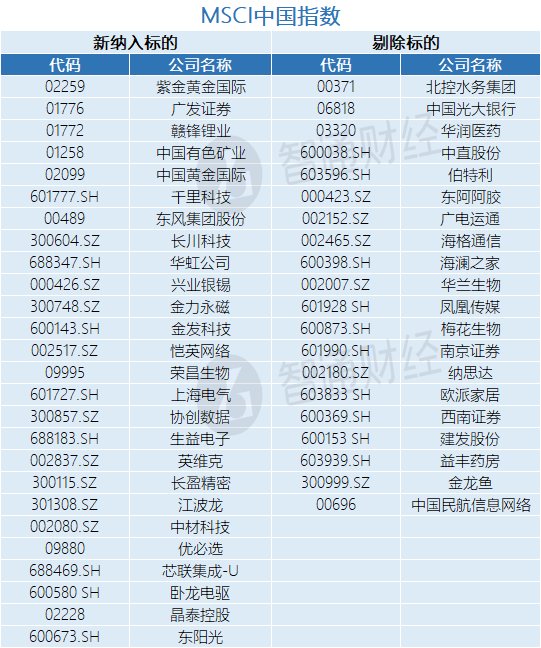
Core Points - The eighth China International Import Expo opened in Shanghai, featuring a special exhibition area for friendly cities, with Nanjing and Stuttgart as the first pair to participate, celebrating 30 years of friendship and cooperation [2][8] - The exhibition theme "Dual City Craftsmanship, Win-Win Future" highlights the achievements in economic, technological, and cultural integration between Nanjing and Stuttgart [2][8] - A trade exchange meeting was held to discuss new cooperation opportunities between the two cities [2] Economic Cooperation - The exhibition showcased various collaborative projects, including Bosch's wine cabinets paired with Stuttgart wines, and smart automotive technologies from both cities [5][12] - Since the establishment of the friendship in 1995, over 300 German investment projects have been set up in Nanjing, with actual German investment reaching $2.2 billion [12] - Nanjing's investment agreements in Germany amount to $730 million, with projected total trade between Nanjing and Germany reaching $4.35 billion in 2024 [12] Cultural Exchange - The exhibition featured a narrative connecting historical and cultural elements, such as the influence of ancient Chinese literature on Stuttgart's garden design [8] - Football jerseys from Stuttgart and Nanjing's "Super League" team were displayed, symbolizing the cultural ties through sports [3][8] - Various cultural activities and products were presented, including digital art exhibitions and traditional festivals, emphasizing the cities' cultural synergy [5][8] Innovation and Technology - The exhibition highlighted collaborative innovations in emerging fields, focusing on shared research capabilities and market network development [5][8] - Bosch China emphasized its role in driving innovation and sustainable development in Nanjing, reflecting the deepening economic and cultural exchanges [10][12]
苏常柴A:拟与控股股东共同发起设立股权投资基金
Zheng Quan Shi Bao Wang· 2025-11-05 11:34
Core Viewpoint - Changchai Co., Ltd. plans to establish a private equity investment fund focusing on advanced manufacturing and strategic emerging industries, with a total scale of 70 million yuan [1] Group 1: Fund Establishment - Changchai Co., Ltd. will invest 30 million yuan through its wholly-owned subsidiary, Changzhou Housheng Investment Co., Ltd., as a limited partner in the Changzhou Changtou Xinhui No. 1 Private Equity Investment Fund [1] - The fund will be jointly initiated with its controlling shareholder, Changzhou Investment Group Co., Ltd., and Changzhou Xinhui Private Fund Management Co., Ltd. [1] Group 2: Investment Focus - The fund will primarily invest in advanced manufacturing projects, with a focus on high-end manufacturing, smart agricultural machinery, new energy, and new power [1]

苏常柴A(000570.SZ)拟与控股股东共同发起设立股权投资基金
智通财经网· 2025-11-05 11:29
Core Viewpoint - The company, Suchang Chai A, plans to establish a private equity investment fund named Changzhou Changtou Xinhui No. 1 Fund, focusing on advanced manufacturing projects and strategic emerging industries [1] Group 1: Investment Details - The company will invest 30 million yuan through its wholly-owned subsidiary, Changzhou Housheng Investment Co., Ltd., in collaboration with its controlling shareholder, Changzhou Investment Group Co., Ltd., and Changzhou Xinhui Private Fund Management Co., Ltd. [1] - The total scale of the Xinhui No. 1 Fund is set at 70 million yuan, indicating a significant commitment to investment in high-end manufacturing, smart agricultural machinery, new energy, and new power sectors [1] Group 2: Strategic Implications - The collaboration aims to leverage the financial capital of the investment group and the industrial resource advantages of the company, enhancing synergy between the parties involved [1] - This investment is seen as a pathway for the company to explore transformation and upgrading, which is beneficial for its long-term development [1]
陕西省政府投资引导基金创新合作座谈会在沪举办 沪陕携手共筑硬科技金融生态
Zhong Zheng Wang· 2025-11-04 13:00
Core Insights - The meeting aimed to promote deep integration of financial technology between Shanghai and Shaanxi, focusing on the theme "Double Hearts Converge, Tides Surge in Sci-Tech Innovation" [1] - The event highlighted the collaboration between government-guided funds and market capital to support the development of hard technology industries [1] Group 1: Event Overview - The Shaanxi Provincial Government Investment Guidance Fund Innovation Cooperation Symposium was held in Shanghai, guided by the Shaanxi Provincial Finance and Commerce Departments [1] - The event is part of a series of "Fund + Project" investment and financing docking meetings [1] Group 2: Strategic Collaborations - Strategic cooperation agreements were signed between Shaanxi Financial Investment and major state-owned platforms such as Shanghai Pudong Development Bank and Guotai Junan Securities, totaling 3 billion yuan [2] - The Shaanxi Provincial Government Investment Guidance Fund completed concentrated signing with four sub-funds, also amounting to 3 billion yuan, indicating deeper cooperation in fund investment between Shanghai and Shaanxi [2] Group 3: Focus Areas - The project roadshow showcased quality projects in three hard technology sectors: biomedicine, high-end manufacturing, and artificial intelligence, attracting significant attention from investment institutions in the Yangtze River Delta [2] - The Shaanxi Provincial Government Investment Guidance Fund aims to attract more "smart capital" to support the high-quality development of the hard technology industry through a more market-oriented and professional operational mechanism [2]
康冠科技连续两年荣获深交所信息披露最高A级评价
Zheng Quan Ri Bao· 2025-11-04 04:44
Core Viewpoint - Shenzhen Kangguan Technology Co., Ltd. has been awarded the highest rating of "A" for its information disclosure quality, marking its second consecutive year of receiving this recognition from the Shenzhen Stock Exchange [2][3]. Group 1: Information Disclosure Evaluation - The Shenzhen Stock Exchange announced the results of the 2024-2025 information disclosure evaluation, with a total of 5,104 listed companies participating [2]. - Out of these, 953 companies received an "A" rating, representing 18.67% of the total [2]. - A total of 668 companies have received an "A" rating for two consecutive years or more, accounting for 13.09% [2]. - The "A" rating reflects the company's commitment to timely, accurate, complete, and compliant information disclosure, as well as its governance and investor relations efforts [2]. Group 2: Company Achievements and Future Plans - Since its A-share listing in 2022, the company has adhered to principles of openness, fairness, and transparency, continuously improving its information disclosure mechanisms [3]. - The company has received various accolades, including "Most Growth-Oriented Listed Company in High-End Manufacturing" and "Top 100 Most Popular Listed Companies" [3]. - In terms of sustainable development, the company has embraced ESG principles and received an A rating in the Wind ESG assessment, showcasing its leading performance in sustainability [3]. - The company plans to maintain high standards in information disclosure and governance, aiming to contribute to the healthy development of the capital market [3].

商行+投行+投资”协同联动 中银证券助力科技企业“加速跑
Zheng Quan Shi Bao· 2025-11-03 17:44
Core Viewpoint - The development of technology finance is crucial for enhancing the new quality of productivity, with a focus on improving comprehensive financial service levels for technology-driven enterprises [1] Group 1: Technology Finance Development - Zhongyin Securities aims to support technology-driven enterprises throughout their lifecycle by providing precise financial support, leveraging its "commercial bank + investment bank + investment" collaborative advantages [1] - The company has established the Zhongyin Science and Technology Innovation Mother Fund, which has exceeded 10 billion yuan in scale, to cultivate patient capital and support hard technology sectors [2] - The mother fund employs a dual-track investment strategy, allocating 70% of funds to sub-funds focused on niche technology sectors and 30% to direct investments in high-quality technology projects [2] Group 2: Investment Strategy and Coverage - The fund has already covered eight cities, including Shenzhen and Chengdu, aiming to create a multi-dimensional investment layout [3] - Zhongyin Securities has also initiated specialized funds in traditional Chinese medicine and the Belt and Road Initiative, reinforcing its leading position in niche industry funds [3] Group 3: Financing Solutions for Technology Enterprises - Zhongyin Securities has effectively utilized its investment banking capabilities to address financing challenges for technology enterprises, ranking second in equity underwriting and twelfth in technology bonds in 2024 [4] - The company has successfully issued innovative financial products, such as the first county-level technology bond for small and micro enterprises, marking significant progress in financial innovation [4] Group 4: Mergers and Acquisitions - In the mergers and acquisitions sector, Zhongyin Securities played a key role as an independent financial advisor in a major A+H share merger, demonstrating its expertise in managing complex transactions [5] Group 5: Comprehensive Financial Services - The collaborative model between Zhongyin Securities and China Bank provides comprehensive financial support throughout the lifecycle of technology enterprises, exemplified by the case of Yaokai Ankang, a biotech firm [6] - The company is committed to optimizing its customer service model as part of its 14th Five-Year Plan, focusing on enhancing collaborative mechanisms to support technological innovation and industrial transformation [7]

中国又一匹黑马出世!西方巨头纷纷力求合作,这项黑科技有多牛?
Sou Hu Cai Jing· 2025-11-03 16:48
中国制造业这些年的进步,总有那么些技术让人觉得眼前一亮,就比如这个豪克能技术。它不是天上掉 下来的馅饼,而是实打实从基层车间里钻研出来的。赵显华这个人,早年在济南的国营工厂里干金属加 工,积累了不少经验。 那时候,中国高端制造领域还挺依赖国外设备,金属表面处理多用抛光或喷丸这些老办法,效果一般, 零件硬度不够高,容易疲劳损坏,使用寿命短。赵显华看到这些问题,就开始琢磨怎么改进。 2003年,他在一项科研试验中发现了激活能和冲击能复合的办法,搞出了豪克能技术。这东西能在室温 下处理金属表面,让硬度提升20%以上,疲劳寿命直接延长百倍,还不用加热,节能环保。 刚开始,这技术没人看好,国内专家觉得传统工艺够用就行。赵显华没灰心,自己掏钱做实验,参加展 会,用样品数据说服人。 到2006年,山东华云机电科技有限公司正式专注推广这项技术。公司其实从1993年就成立了,原先做振 动时效设备,后来转到豪克能上。团队一步步优化,积累专利147项,其中发明专利46项。 赵显华作为发明人,带队攻关,补上了中国金属强化领域的短板。早期推广难,资金少,用户不多,但 他坚持下来,市场渐渐打开。现在,这技术不光是加工工具,更是一种能量转 ...
哪些上市科技公司最受保险资金青睐?
Zhong Guo Jing Ying Bao· 2025-11-03 07:48
Core Viewpoint - The insurance industry is increasingly active in supporting technological innovation through various investment strategies, including venture capital and private equity, to meet the funding needs of tech companies at different stages of development [1][5]. Investment in Listed Technology Companies - Insurance funds are becoming more prominent among the top shareholders of listed technology companies, with significant holdings reported in companies like Anji Technology and Deep Technology [2]. - Specific holdings include China Life Insurance and other insurers holding substantial shares in various tech firms, indicating a growing trend of insurance capital in the tech sector [2]. Participation in IPOs - Major insurance companies are deeply involved in the IPOs of technology firms, acting as cornerstone investors in several recent listings on the Hong Kong Stock Exchange [3]. - Notable participation includes investments by Taikang Life and China Pacific Insurance in multiple IPOs, showcasing the strategic role of insurance capital in the public offering process [3]. A-share Market Engagement - In the A-share market, insurance funds are actively participating in IPO projects within the energy and equipment manufacturing sectors, with significant investments made by China Life Insurance in major IPOs [4]. - The establishment of specialized insurance investment funds has facilitated strategic investments in various companies, further integrating insurance capital into the A-share market [4]. Focus on Technology Sectors - Insurance capital is increasingly targeting key technology sectors such as artificial intelligence, semiconductors, and advanced manufacturing, with a significant portion of holdings allocated to these areas [5]. - The shift towards a "long money, long investment" philosophy reflects the industry's commitment to supporting innovation and growth in technology [5]. Innovative Investment Models - Insurance funds are utilizing venture capital and private equity to indirectly invest in technology projects, with many insurers participating as limited partners in private equity funds [6]. - The development of a comprehensive investment support system for technology companies is being emphasized, allowing for tailored financing solutions throughout different stages of a company's lifecycle [6]. S-Fund Investment Strategy - The establishment of S-funds, which focus on acquiring alternative asset fund shares, is being utilized by insurance companies to optimize capital allocation and enhance investment strategies [7]. - Notable initiatives include the creation of funds aimed at investing in technology innovation, demonstrating a strategic approach to capital deployment [7]. Diverse Financing Channels - Insurance funds are also providing diverse financing options for technology companies through the purchase of bonds and asset-backed securities, enhancing the funding landscape for innovation [8]. - The integration of quality tech assets into insurance portfolios is seen as essential for achieving long-term stable returns [8]. Deep Adaptation to Innovation Needs - Insurance institutions are focusing on enhancing their mechanisms to better support technology innovation investments, including establishing specialized research teams [10]. - The emphasis on aligning investment strategies with the evolving needs of technology sectors is critical for fostering a sustainable investment environment [10]. Risk Management and Valuation - The establishment of robust risk management frameworks is essential for the sustainable participation of insurance capital in technology investments, with a focus on long-term analysis and monitoring [11]. - Valuation and pricing capabilities are being developed to ensure that investments in technology firms are based on sound financial assessments [12].





相信“一万小时定律” 追求认知的复利
Zhong Guo Zheng Quan Bao· 2025-11-02 20:16
Core Insights - The article highlights the investment philosophy and strategies of Ma Kewai, founder and chairman of Mingze Investment, emphasizing a systematic approach to investment based on deep industry knowledge and rigorous research [1][4]. Group 1: Investment Philosophy - Ma Kewai's investment style is likened to a "tea connoisseur," focusing on identifying companies with deep roots and unique qualities [1]. - The principle of "extreme truth-seeking and transparency" is central to both Ma's personal and organizational investment strategies [1][4]. - The "10,000-hour rule" serves as a lifelong methodology for Ma, emphasizing systematic learning, deep research, and continuous review to amplify "cognitive compounding" [7][9]. Group 2: Industry Focus and Experience - Ma's background in finance and management within government and large enterprises provides him with a unique perspective on both operational challenges and capital market intricacies [2][3]. - His initial focus on the environmental protection sector allowed Mingze Investment to build a competitive edge through comprehensive market coverage, achieving significant milestones in just 19 months [3][4]. - The transition from environmental investments to sectors like non-bank finance, high-end manufacturing, consumption, and healthcare reflects a strategic expansion based on systematic knowledge transfer [7][9]. Group 3: Systematic Investment Framework - Mingze Investment employs a structured investment strategy characterized by "three objects + six elements + one veto + ESG evaluation" [4][5]. - The "three objects" include trends, deviations from trends, and structural changes, which are fundamental to the investment strategy [5]. - The six elements encompass industry and company dynamics, liquidity and investor sentiment, profit growth and structure, valuation, policy, and economic cycles [6]. Group 4: Future Outlook and Strategic Focus - The company anticipates a "long-term steady progress" trend in China's capital market, with a focus on new productive forces and sustainable investment opportunities [8][9]. - Key areas of interest include technological innovation, AI, and structural opportunities related to safety, consumption, and effective investment [8][9].