可再生能源

Search documents
【环球财经】澳大利亚维多利亚州政府批准2个天然气项目勘探许可
Xin Hua Cai Jing· 2025-12-11 07:36
新华财经墨尔本12月11日电(记者徐海静) 据澳大利亚媒体11日报道,澳大利亚维多利亚州政府已批 准该州南部奥特韦(Otway)盆地附近的海上勘探和东南部吉普斯兰(Gippsland)盆地陆上勘探两个天 然气项目的勘探许可证,向私人企业开放竞标,竞标期截至2026年2月。 根据该报告,维多利亚州能否实现其2030年可再生能源占比65%的目标,将取决于包括天然气储备在内 的关键项目能否按时完成。 澳大利亚能源生产商组织维州办公室主任彼得·科斯说,"预计维多利亚州最早在2027年出现天然气短 缺。"他表示,开放新的天然气勘探许可证是开发新的国内天然气资源的重要一步,表明政府正在采取 措施应对未来的能源挑战。 维州环保人士对此决定表示反对,认为这两个天然气项目将对地下水和海洋环境造成负面影响。 (文章来源:新华财经) 据报道,维州政府将优先考虑那些愿意依赖现有地质数据进行海上勘探的公司的申请,以避免进行新的 地质勘探爆破。 分析指出,维州这一决定反映出该州面临的能源压力。 维州能源部长莉莉·丹布罗西奥说,目前有200万户维州家庭使用天然气,而能源转型不可能一夜之间完 成。为了实施有序的能源转型,州政府开放了新的天然 ...
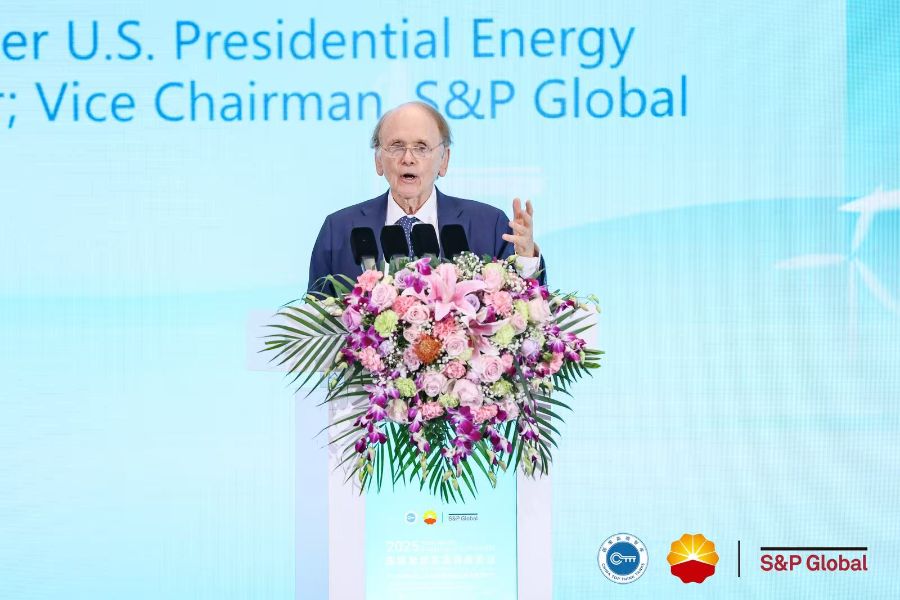
丹尼尔·耶金谈油价走势:既供应过剩,也风险过剩
2 1 Shi Ji Jing Ji Bao Dao· 2025-12-11 07:20
"这是一个既供应过剩、也风险过剩的市场。" 标普全球副董事长、著名能源专家丹尼尔.耶金(Daniel Yergin) 12月11日,在2025国际能源发展峰会期间,标普全球副董事长、著名能源专家丹尼尔.耶金(Daniel Yergin)向媒体指出,全球能源 体系正从"供应过剩"迈向"风险过剩",地缘政治因素正成为影响能源价格的核心变量。 在需求侧,他指出,中国石油需求正在进入关键的"平台期",这一变化标志着全球石油市场的重大转折点。他说,在过去约20 年间,中国贡献了全球石油需求增量的一半,但目前中国石油需求已趋于平稳。 耶金称,国际能源署发布报告指出,为维持当前石油天然气产量,全球需在2050年前每年投入约5400亿美元用于勘探开发。当 前,一些公司正在从过度快速向可再生能源转型的战略中回撤,重新对油气勘探表现出兴趣,同时继续探索多元化技术路线。 此外,耶金还特别强调矿产资源的重要性快速上升,包括铜在内的关键矿产将在全球电气化进程中发挥核心作用。"铜在未来电 气化体系中将发挥关键作用。未来能源体系必须同时考虑传统能源、可再生能源以及关键矿产。" 当被问到中国在绿色能源领域的地位时,耶金表示,中国在太阳能、电 ...

车企集体施压!欧盟推迟发布“70%欧洲制造”新规,宝马怒斥这“极度危险”
Hua Er Jie Jian Wen· 2025-12-11 06:59
此外,包括几家欧盟内部车企在内的制造商希望将英国和土耳其等拥有大型制造中心的国家纳入本土含 量的计算阈值,以避免供应链断裂。 供应链与能源行业的反向博弈 面对汽车制造巨头关于供应链中断风险的集体示警,欧盟推迟了原定于本周发布的针对关键工业产品的 严苛本土化采购新规,但在成员国和企业间引发严重分歧。 据华尔街见闻此前消息,媒体报道称欧盟计划推出《工业加速法》,要求关键商品(如汽车、电池等) 达到最高70%的"欧洲制造"本地含量标准。该政策通过政府补贴和公共采购激励措施实施。欧盟委员会 官员称,本地采购规则在1月28日正式公布前仍可能会下调。 汽车制造商警告称,复杂的本地采购规则可能扰乱供应链并拖慢电动车转型进程,而零部件供应商和新 能源企业则力挺新规。宝马首席执行官Oliver Zipse表示,设定复杂的本地采购规则"极度危险",因为计 算过程"极其繁琐",欧洲可能因此被"排除在全球创新竞赛之外"。 该政策在欧盟内部和产业界引发强烈争议。法国是本地采购策略的最大支持者,但成员国和企业在规则 设计和实施方式上存在分歧。业界担忧该政策可能使企业每年增加超过100亿欧元成本,削弱市场竞争 力。 车企怒斥:这是在扼杀创 ...
景顺:看好短期亚洲高收益债券 关注前沿主权债券、可再生能源及博彩等行业
Zhi Tong Cai Jing· 2025-12-11 06:34
Group 1 - The core viewpoint of the article is that Asian high-yield bonds are expected to continue outperforming, with short-term Asian high-yield bonds (1-2 years) offering greater investment value compared to BBB-rated bonds, providing a stable yield increase of over 1-2% [1] - Year-to-date, as of November 7, 2025, the Asian high-yield bond market has consistently outperformed both the European and US high-yield bond markets, and is expected to record the highest total return for the second consecutive year [1] - Despite strong total return performance, the Asian high-yield bond market is continuously shrinking, with the market size as of the end of October 2025 being $118 billion, approximately half of its size in December 2021 [1] Group 2 - The focus should be on whether there is additional capital appreciation potential within the Asian high-yield bond category, particularly in quality credits priced between 80 and 100, which represent over 50% of the index and are expected to benefit from price recovery towards par [2] - The default rate for Asian high-yield bonds (excluding real estate) remains low, but there is caution regarding companies with insufficient cash to cover short-term debt and negative free cash flow [2] - Emphasis is placed on the importance of credit structure and creditor protection, as private credit investors may be in a more favorable position during potential credit restructurings [2]
刚刚!中国股票突传利好!
天天基金网· 2025-12-11 01:11
上天天基金APP搜索777注册即可领500元券包,优选基金10元起投!限量发放!先到先得! 外资看多、做多中国资产。 站在当前时点,外资机构对中国资产的兴趣正持续提升。据最新消息,摩根大通表示,受全球经济增长稳 健、中国企业盈利提升以及中国电商巨头间竞争缓解等因素的支撑,预计到2026年底,MSCI中国指数预 计将上涨约18%。汇丰私人银行也在最新发布的报告中预测,恒生指数到2026年底将升至31000点,较 最新收盘点位,潜在上涨空间约21%。 "中国股票涨势将延续" 当地时间12月9日,摩根大通首席亚洲及中国股票策略师刘鸣镝在新闻发布会上表示,预计随着企业估值 逐步正常化,关键行业的盈利能力提高,明年MSCI中国指数将进一步反弹。 另据摩根士丹利的最新数据,截至今年11月,外国多头基金在A股、港股市场中合计买入了约100亿美元 的股票。有机构预计,受政策支持、企业盈利改善和估值吸引力等多重因素的推动,2026年外资增配中 国资产的趋势将持续。 刘鸣镝说道:"(中国)企业的盈利状况让我们充满信心。如今,A股、港股市场的盈利状况正在逐步恢 复。" 摩根大通预测,到2026年底,MSCI中国指数预计将上涨约18 ...

中国是绿色经济扩张主要推动力
Zhong Guo Jing Ji Wang· 2025-12-10 22:41
报告指出,中国是全球绿色经济扩张的主要推动力。在绿色经济的几乎所有关键维度上,包括投资、创 新、部署与产业链控制,中国都在世界范围内处于领先地位,中国清洁能源投资从2019年的3720亿美元 增加到2024年的6590亿美元,年复合增长12%,2024年投资规模比第二名欧洲高60%。中国尤其正在引 领"电力经济",绿色电气化程度快速提升。在发电方面,2020年以来,中国太阳能发电装机量增加了4 倍,风能新增装机也实现翻倍增长,全球风能与太阳能新增装机容量中有60%以上由中国贡献。在用电 方面,中国建筑部门终端能源35%为电力,工业部门这一比例为30%,中国还是全球最大的电动汽车市 场,有1200万个充电桩。2025年中国碳排放首次下降,同时经济活动仍然增长。报告认为,中国的领先 不是偶然,而是基于二十年的产业政策积累,战略性新兴产业发展规划、中国制造2025、"双碳"目 标、"十五五"规划等政策,极大推动了公共投资、绿色金融和碳交易体系的发展。中国在绿色经济发展 上的成就和动能,标志着全球绿色能源领导权正从"西方"转移到"东方"。(经济日报驻日内瓦记者 梁 桐) 报告指出,全球绿色经济在2024年已超过5万亿 ...
世界经济论坛报告称——中国是绿色经济扩张主要推动力
Jing Ji Ri Bao· 2025-12-10 22:39
Core Insights - The green economy has reached a market size of over $5 trillion in 2024 and is expected to grow to over $7 trillion by 2030, making it one of the most dynamic growth sectors globally, second only to the technology industry [2] - The report highlights that the green economy is becoming a key driver of global economic growth, with significant opportunities for both businesses and governments [3] Market Segmentation - The emissions reduction sector, which includes renewable energy, energy infrastructure, storage, electric vehicles, and carbon capture technologies, has a market size of $4.6 trillion [2] - The adaptation and resilience sector, which encompasses water management, climate-resilient infrastructure, and agricultural resilience technologies, is valued at $1.1 trillion but is considered severely underestimated [2] - The report emphasizes that the growth in the adaptation and resilience market is driven by increasing extreme weather events and rising investment in disaster resilience [2] Investment and Growth Opportunities - The report indicates that the green economy is characterized by industrialization and scalability, with opportunities for faster growth, higher valuations, and lower capital costs for businesses [3] - It predicts that future growth in the green economy will be driven by expanding demand, decreasing costs, and supportive policies, with mature technologies continuing to expand and emerging technologies becoming the next growth point [3] China's Role in the Green Economy - China is identified as a major driver of global green economy expansion, leading in investment, innovation, and deployment across key dimensions [4] - China's clean energy investment is projected to increase from $372 billion in 2019 to $659 billion in 2024, with a compound annual growth rate of 12% [4] - The report notes that China has significantly increased its solar and wind power capacity, contributing over 60% of the global new installations in these sectors [4] - China's achievements in the green economy are attributed to two decades of strategic industrial policy, which has facilitated public investment, green finance, and carbon trading systems [4]
丹麦公司宣布在智新建光伏项目
Shang Wu Bu Wang Zhan· 2025-12-10 18:23
智利《三点钟报》12月5日报道,丹麦哥本哈根基础设施合作伙伴(CIP)公司宣 布将在智利北部安托法加斯塔市投资建设科尔拉马(Ckoirama)太阳能光伏电站项目。 该项目计划建设并运营一座装机容量为420.6兆瓦(MW)的太阳能光伏电站,将向智 利国家电力系统注入300兆瓦交流电。预计投资额为5亿美元,将于2027年12月开工建 设。根据智利环境评估系统(Seia)的数据,该项目是今年提交审批的同类项目中投资 额最大的项目之一。CIP公司成立于2012年,是一家全球性基金管理公司,专注于可再 生能源领域绿地项目的开发与投资。根据其官方信息,该公司目前管理着12只基金, 已从全球180多家国际机构投资者处募集了约350亿欧元资金。该公司在全球设有12个 办公室,拥有约600名员工。 (原标题:丹麦公司宣布在智新建光伏项目) ...
法国核电产能回升 电力盈余可持续两三年
Xin Hua She· 2025-12-10 11:35
据德新社报道,与欧洲最大经济体德国放弃核电的立场不同,法国继续依靠核能来确保能源供应并 实现减排目标,已计划新建至少14座核反应堆。此外,法国还大力发展可再生能源,特别是海上风电。 (白涌泉) 报告称,随着故障检修和例行维护结束,法国各核电站陆续恢复正常运行,加上可再生能源产能持 续扩大,法国的低排放"绿色电力"出现盈余,且电价处于欧洲最低水平行列。这种电力产能过剩的局面 预期将持续两到三年。 法国输电网公司首席执行官格扎维埃·皮耶哈奇克对法国《费加罗报》说,与其他一些欧洲国家经 济决策受制于电力不足的情况不同,法国电力充裕有利于本国同时寻求新兴产业入驻、减少碳排放、建 设数据中心等目标。 新华社北京12月10日电 法国输电网公司(RTE)9日发布分析报告指出,今后几年法国发电量将继续 超过国内用电需求,可支持向德国等邻国出口电力,同时有助于本国加速能源转型。 ...
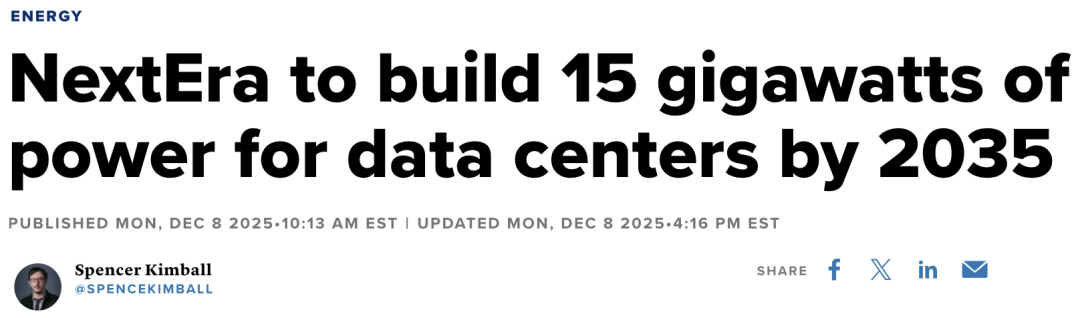
【动向】美国NextEra公司计划新建15吉瓦发电容量支持数据中心
Sou Hu Cai Jing· 2025-12-10 03:40
Core Insights - NextEra Energy plans to build 15 gigawatts (GW) of new generation capacity by 2035 to support data center hubs, as announced by CEO John Ketchum during an investor meeting [1][2] - The company has partnered with Alphabet, Google's parent company, to develop three gigawatt-scale data center campuses in the U.S., with plans for further expansion [2] - Despite these announcements, NextEra's stock closed down approximately 3% on Monday [2] Group 1 - The 15 GW target for data center power supply is considered a "fairly conservative" estimate by Ketchum, who expressed disappointment if the final construction capacity does not exceed this goal [2] - Ketchum indicated potential growth space for building up to 30 GW of generation capacity by 2035 [2] - The data center hubs will utilize a diversified energy structure, with a recent agreement to restart the Duane Arnold nuclear plant in Iowa through a power purchase agreement with Google [2] Group 2 - NextEra aims to achieve a target of 4-8 GW of new natural gas generation capacity by 2032, with significant expansion expected by 2035 [2] - The company is currently advancing a total of 20 GW in natural gas generation project reserves [2] - To address the rising electricity demand from AI data centers, Ketchum proposed that tech giants should build their own generation facilities to manage costs effectively [2]