
白酒

Search documents
不出意外,周四,A股可能见证10年新高了
Sou Hu Cai Jing· 2026-02-25 12:45
Group 1 - The A-share market is likely to witness a new 10-year high, with the Shanghai Composite Index approaching the 4190-point mark, indicating a potential upward trend rather than a peak for the year [1][5] - The real estate sector has seen significant gains, particularly among stocks with an average price exceeding 30,000, primarily in the Hong Kong market, suggesting a divergence in investment opportunities based on market perception [3] - Key sectors contributing to the index's rise include liquor, securities, and semiconductors, with energy prices also playing a role in lifting the index temporarily [5][7] Group 2 - The current market environment is characterized by structural trends and sector rotation, indicating that the market is in a mid-to-late phase rather than at the end of a bull market [5] - The prolonged consolidation around the 4200-point level may be beneficial for a future breakout, as the average holding cost has increased, suggesting that a significant upward movement could be imminent [7] - Investors are advised to remain patient and not to be overly concerned about short-term fluctuations, as long as major market players do not trigger a downturn [7]


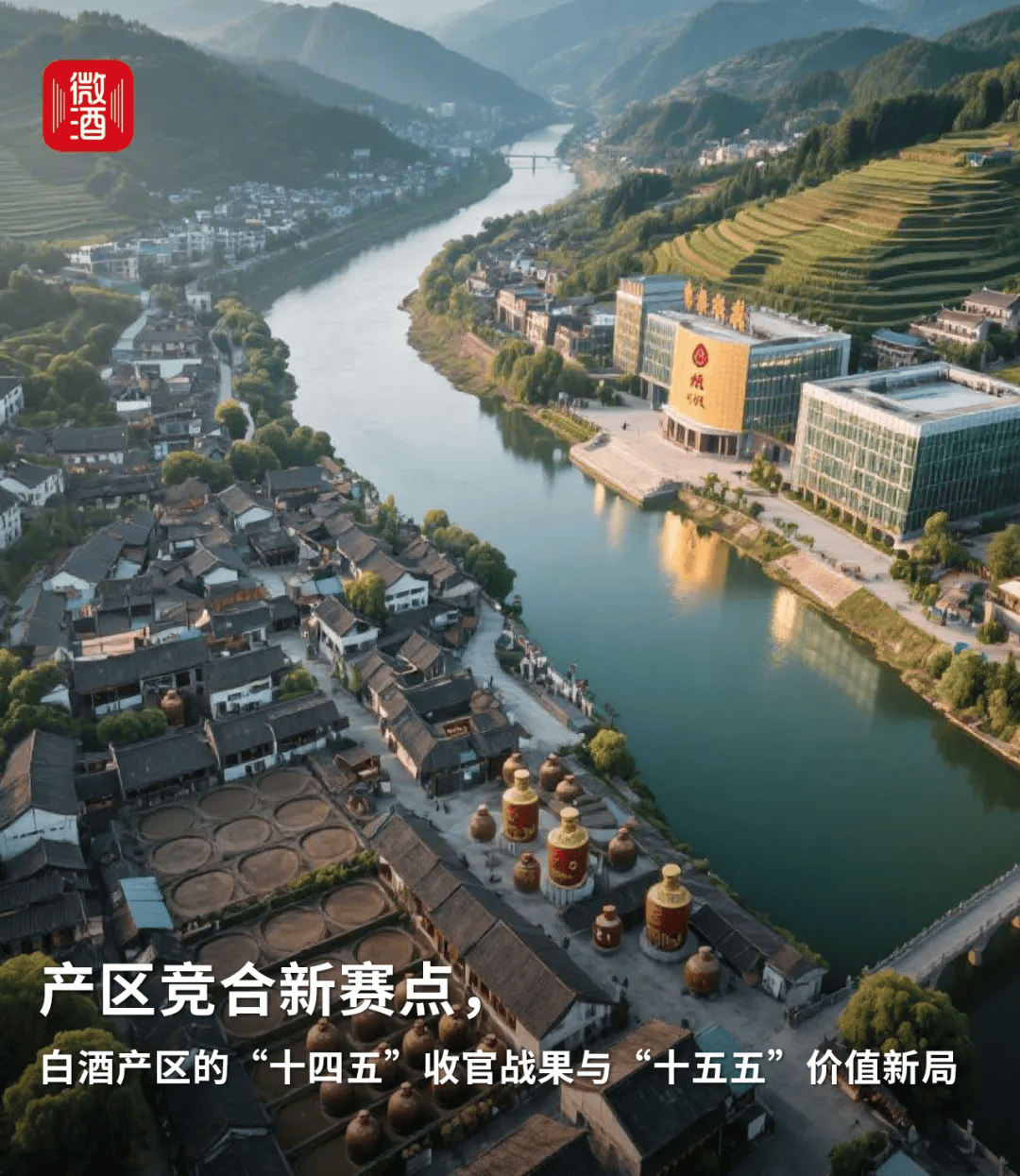
白酒产区的“十四五”收官战果与“十五五”价值新局
Sou Hu Cai Jing· 2026-02-25 12:38
Core Insights - The Chinese liquor industry is transitioning from rapid expansion to ecological construction, with core production areas like Zunyi, Yibin, Luzhou, and others becoming key drivers of systemic transformation [2][4] Group 1: Performance During the 14th Five-Year Plan - The white liquor industry demonstrated resilience and risk management capabilities during the 14th Five-Year Plan, with steady growth in scale and internal optimization of the industry structure [3] - Zunyi's liquor industry saw an increase in enterprises with annual output value exceeding 100 million yuan from 36 in 2021 to 48 currently, showcasing a solid enterprise foundation [4] - Yibin's liquor enterprises' sales revenue is projected to grow from 143.08 billion yuan in 2020 to 210 billion yuan by 2025, a 46.77% increase, while total profits are expected to rise over 30% [4] - Luzhou's liquor industry revenue is expected to exceed 150 billion yuan, with total profits projected to increase by 87.7% [4] Group 2: Strategic Shifts in the 15th Five-Year Plan - The focus has shifted from mere growth to ecological optimization and value extraction, with a consensus on the need for stability in production and market [6][8] - Zunyi aims to maintain a liquor industry output value of 150 billion yuan for 2025 and 2026, emphasizing stability in production and market expansion [6] - The integration of liquor with tourism and cultural experiences is a common strategy among production areas, aiming to transform sales from mere products to lifestyle offerings [6][7] Group 3: Future Development Plans - The 15th Five-Year Plan emphasizes enhancing the global competitiveness of liquor clusters, with Guizhou aiming to solidify its position in the global market [8][9] - Yibin's plan targets annual liquor revenue exceeding 300 billion yuan, supporting the growth of leading enterprises like Wuliangye [8] - Luzhou aims for a high-quality development plan to reach a liquor industry target of 200 billion yuan, while Deyang's focus is on building a billion-level industry cluster [8][9]
李迅雷专栏 | 透过交易数据看清表象背后的真实经济
中泰证券资管· 2026-02-25 11:31
Group 1 - The core viewpoint of the article emphasizes the importance of data analysis in understanding economic trends and correcting cognitive biases [1] - The article discusses the relationship between trade data and economic conditions, highlighting that China's export growth is not as robust as perceived, with a projected contribution of 32.7% to GDP growth by 2025 despite a decline in global export share [2][4] - It notes that the decline in China's export price index by approximately 19% from 2023 to 2025 indicates significant issues with overcapacity in the manufacturing sector [4][6] Group 2 - The article identifies a shift in China's trade partners, with increased export shares to emerging economies like ASEAN and Africa, while traditional partners like the US and EU see declines [8][9] - It highlights that Africa is becoming a significant market for Chinese exports, with a 26.3% growth in exports to Africa from January to November 2025, driven by a young population and urbanization potential [11] - The analysis of stock market data reveals stark differences between Chinese and US markets, with a high proportion of small-cap stocks in China and a low profitability ratio, indicating a speculative market environment [14][15] Group 3 - The article discusses the implications of AI on employment, noting that sectors like software and consulting are increasingly at risk of job displacement due to AI advancements [18] - It points out that China's labor force is shrinking, with a significant increase in the elderly population, leading to rising social security expenditures projected to reach 4.4 trillion yuan by 2025 [19][21] - The article suggests that the real estate market is facing challenges, with indicators such as rental yield and housing price trends signaling potential downturns [22][30] Group 4 - The article critiques the common belief that stock market performance directly stimulates consumer spending, presenting data that shows a lack of correlation between stock market gains and retail sales growth [34][35] - It emphasizes the need for a nuanced understanding of market dynamics, suggesting that real estate has a more significant wealth effect compared to stocks due to its dual role as both an investment and a consumption good [36] - The article concludes that understanding economic realities requires a comprehensive analysis of various data points, cautioning against oversimplified narratives [37]
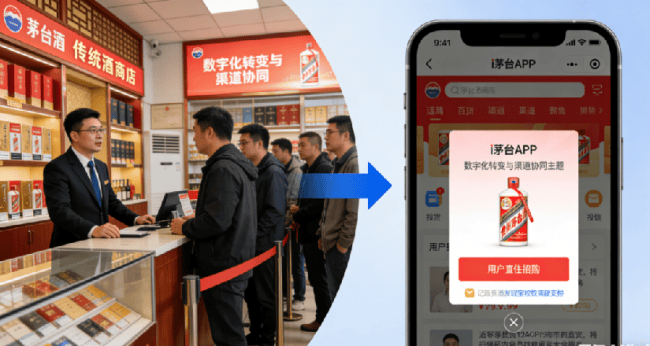
酒业渠道数字化全景盘点:五粮液、瓶子星球、剑南春等七家企业的协同变革
Sou Hu Cai Jing· 2026-02-25 10:39
Core Insights - The liquor industry is undergoing a profound transformation from scale expansion to quality and efficiency, with AI technology playing a crucial role in optimizing channel operations and inventory management [1] Group 1: Moutai - Moutai utilizes a digital platform, "i Moutai," which has over 76 million registered users, with online sales accounting for 60% of direct sales revenue [2] - The company employs AI algorithms to analyze consumer data, dynamically adjusting product strategies to enhance purchasing experiences [2] - Moutai's smart store management system monitors inventory and sales data in real-time, supporting precise replenishment and dynamic pricing [2] - The company is investing heavily in upgrading its ERP system to achieve full-process digital management [2] Group 2: Wuliangye - Wuliangye has built a data governance platform named "Zhishu Cloud Hub" to integrate various independent systems for unified data analysis [4] - The platform includes nearly 200 business metrics to support management decisions regarding channels and marketing [4] - It monitors channel status using sales data to generate visual reports and trigger alerts for abnormal sales patterns [5] Group 3: Luzhou Laojiao - Luzhou Laojiao focuses on systematic transformation of offline stores by creating a unified middle platform to address data fragmentation [6] - The new system integrates core business capabilities, supporting flexible operations and multi-channel business expansion [6] - The company has implemented a full-process "logistics code" management system for product traceability and anti-diversion [6] Group 4: Shanxi Fenjiu - Shanxi Fenjiu has established a dynamic inventory monitoring and alert mechanism to manage channel inventory effectively [8] - The company optimized its expense allocation and verification processes to enhance the targeting of marketing expenses [9] - An intelligent warehousing system is in place to optimize supply chain responsiveness based on sales data [9] Group 5: Bottle Planet - Bottle Planet has developed an AI digital channel collaboration platform to address challenges in channel diversification and market responsiveness [10] - The platform features a real-time data center that integrates data from various sources, breaking down information silos [10] - Intelligent predictive models guide operational decisions, ensuring optimal product distribution across channels [11] Group 6: Jian Nan Chun - Jian Nan Chun has invested significantly in digital and intelligent upgrades of its supply chain logistics, collaborating with professional supply chain companies [13] - The company has built a "smart warehousing and distribution network" for unified inventory management [13] - Continuous automation and intelligence upgrades in logistics enhance responsiveness and cost optimization [13] Group 7: Jiu Gui Jiu - Jiu Gui Jiu has implemented a marketing digital reform centered on "BC linkage," utilizing "one code per item" technology for precise channel control [14] - The company has established a digital identity for each bottle, enabling full traceability from production to consumer [14] - Real-time consumer data is leveraged for targeted marketing and market insights [14] Group 8: Industry Outlook - The application of AI in the liquor industry has evolved from isolated initiatives to comprehensive collaboration across the supply chain [16] - Future advancements in technologies like large models and IoT will further clarify the landscape of channel intelligence [17] - This data-driven revolution is seen as a foundation for building long-term competitive advantages in the liquor industry [17]




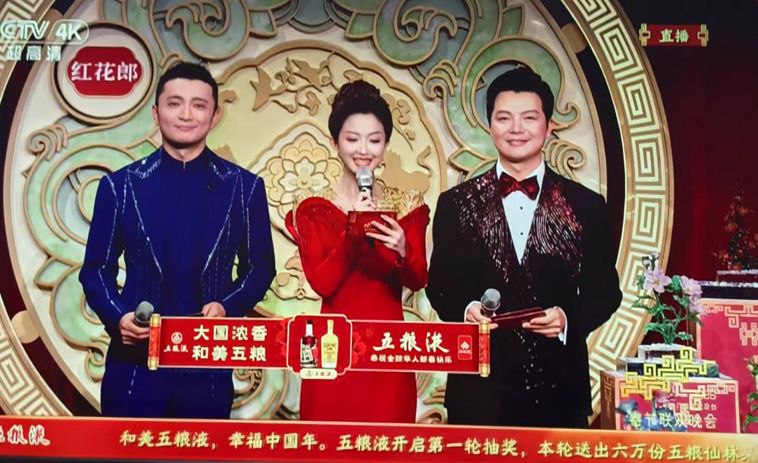
“含酒量”大缩水!马年总台春晚仅4家白酒赞助品牌亮相 酒企正转战短剧短视频新阵地?
Mei Ri Jing Ji Xin Wen· 2026-02-25 09:42
Core Insights - The number of liquor brands sponsoring the CCTV Spring Festival Gala has decreased significantly, from 9 in 2024 and 7 in 2025 to only 4 in 2026, indicating a shift in marketing strategies among liquor companies [1][2][6] - Major liquor brands that remain as sponsors are long-term partners of the gala, focusing on differentiated positioning and interactive collaborations [2][6] - The reduction in sponsorship is attributed to a more rational and diversified approach to marketing, with brands opting for softer product placements rather than traditional sponsorships [5][6][15] Industry Trends - The liquor industry is experiencing a cyclical adjustment, yet the Spring Festival remains a crucial sales period, prompting companies to explore various marketing channels beyond traditional sponsorships [1][6] - Brands are increasingly investing in short videos, micro-dramas, and variety shows as new marketing battlegrounds, reflecting a shift towards more engaging and consumer-centric strategies [9][12][14] - The trend indicates a move from broad exposure strategies to precision marketing, focusing on direct consumer engagement and sales conversion [15][16] Marketing Strategies - Major liquor brands are utilizing innovative marketing techniques, such as integrating products into popular media formats like micro-dramas and short videos, to reach younger audiences [9][12][14] - The collaboration with platforms like Douyin (TikTok) and various streaming services has become a common practice, allowing brands to leverage storytelling to enhance consumer connection [12][14] - The industry's focus is shifting towards creating immersive experiences and interactive content, moving away from mere logo placements to deeper brand integration within entertainment [5][15]
湘窖作为湘酒唯一代表参加“湖南省新春第一会”
Xin Lang Cai Jing· 2026-02-25 09:35
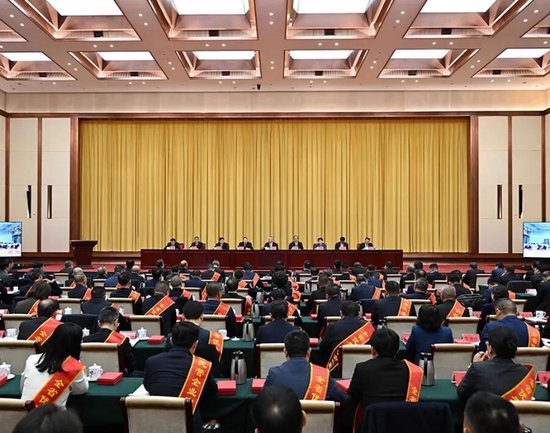
来源:珍酒李渡集团 2月24日,"湖南省新春第一会"——促进民营经济发展壮大暨企业服务年行动部署大会在长沙市举行。 湖南省委书记沈晓明出席并讲话,省委副书记、省长毛伟明主持,省政协主席毛万春,省委副书记、岳 阳市委书记谢卫江出席。 会议现场 湘窖酒业作为湘酒唯一代表参加。会上宣读《中共湖南省委湖南省人民政府关于表彰新湖南贡献奖全省 优秀民营企业家的决定》,湘窖酒业销售有限公司总经理杨彬荣获该殊荣,成为入选的100位优秀民营 企业家之一,也是湖南白酒行业唯一获此称号的企业家。 省委书记沈晓明与杨彬 "从2022年湘窖首次荣获'新湖南贡献奖',到今年再度获此殊荣,这不仅是党和政府对湘窖高质量发展 的持续肯定,更是对所有湖南民营企业的巨大鼓舞。"杨彬在会后表示,"湖南省新春第一会"聚焦民营 经济痛点与难点,让我们倍感温暖,对未来充满信心。 杨彬接受采访 站在2026年的新起点,杨彬表示,湘窖酒业发展的底气更足、方向更明。"湖南持续优化的营商环境, 是民营企业发展最坚实的后盾。我们将以此为契机,继续深耕主业,以更高品质的产品和更优质的服 务,为湖南经济高质量发展贡献更多'湘窖力量'。" ©理性饮酒 孕妇及未成年人不宜 ...
今世缘顾祥悦:成为中国白酒最具成长性的创新型企业
Xin Lang Cai Jing· 2026-02-25 09:24
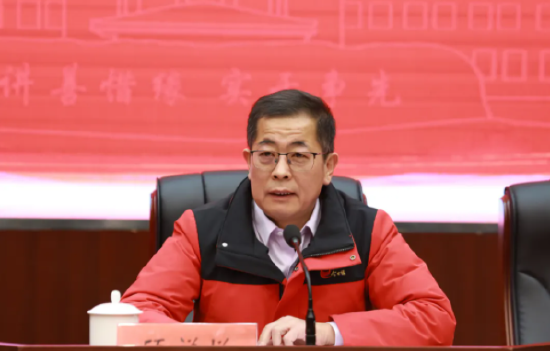
Core Viewpoint - The company has successfully completed its "14th Five-Year Plan" and is now focusing on the "15th Five-Year Plan" with a vision to become the most innovative and growth-oriented enterprise in the Chinese liquor industry [1][3][9]. Group 1: Achievements and Performance - The company has achieved major economic indicators that surpass the industry average, with growth in the out-of-province market outpacing that of the in-province market [1][7]. - The company has solidified its development foundation, enhanced brand advantages, and steadily improved its industry position over the past five years [1][7]. Group 2: Future Development Strategy - The company aims to establish two key targets: maintaining major economic indicators above the industry average and ensuring out-of-province market growth exceeds that of the in-province market [3][9]. - The focus will be on high-quality goals, reforms, work styles, and ecological sustainability to build a solid foundation for high-quality development [3][9]. Group 3: Key Initiatives for the "15th Five-Year Plan" - The company plans to engage in five major battles: market penetration, brand elevation, organizational efficiency, digital empowerment, and development safety [4][10]. - Emphasis will be placed on optimizing performance management, enhancing talent development, and leveraging AI for marketing, production, and management [4][10]. Group 4: Team and Culture - The company stresses the importance of team commitment, practical responsibility, and a culture of excellence to meet future challenges [5][11]. - Initiatives will include fostering a sense of ownership among employees, eliminating bureaucratic practices, and promoting continuous learning and improvement [5][11].

贴牌白酒将迎严格监管
Bei Jing Shang Bao· 2026-02-25 08:52
Core Viewpoint - The newly released "Supervision and Administration Measures for Food Entrusted Production" will take effect on December 1, 2026, marking the first regulatory framework specifically governing food entrusted production in China, which may have significant implications for the white liquor industry and its existing private label production models [1]. Group 1: Regulatory Framework - The new measures comprehensively include trademark licensing, franchising, processing with supplied materials, and private label production within the entrusted production supervision system [1]. - This regulation aims to systematically standardize the long-standing private label production models prevalent in the food industry, particularly affecting the white liquor sector [1]. Group 2: Industry Impact - The implementation of these measures is expected to have a profound impact on the white liquor industry, which has been characterized by various private label production practices [1].
上海楼市重磅新政,非沪籍大松绑;传飞天茅台出厂价涨130元;宝马降价27万上热搜;美国公司指控中企“偷”模型,马斯克嘲讽|| 大件事
Sou Hu Cai Jing· 2026-02-25 08:51
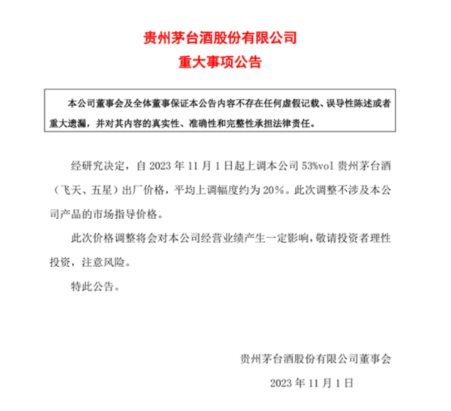
Group 1: Guizhou Moutai Price Adjustment - Recent rumors suggested that the factory price of Feitian Moutai increased from 1169 yuan to 1299 yuan per bottle, which attracted market attention [3] - Guizhou Moutai's representative denied the rumors, stating that any price adjustments would be disclosed as significant events [3] - The last official price adjustment occurred on November 1, 2023, with an average increase of about 20%, while the market guidance price remains at 1499 yuan per bottle [5] - Analysts believe that the price increase rumors may stem from stock market activities, as the date mentioned coincides with the first trading day of A-shares [6] - Feitian Moutai's revenue is crucial for the company's performance, accounting for 85.29% of total revenue in 2024, with a projected growth rate of 15.28% [6] Group 2: Shanghai Real Estate Policy Changes - On February 25, 2024, Shanghai's housing authorities announced new policies to optimize the real estate market, effective from February 26 [7] - The new policy reduces the social insurance or income tax payment duration required for non-local residents to purchase homes from three years to one year [11] - Non-local residents with a residence permit for over five years can now purchase one property in the city without needing to provide proof of social insurance or tax payments [11] - The maximum loan amount for first-time homebuyers using housing provident funds has been increased from 1.6 million yuan to 2.4 million yuan, with potential increases for families with multiple children [14] - In 2023, Shanghai's real estate market saw a decline in new housing starts by 31.8% and a decrease in residential sales area by 9.7% [14] Group 3: Luxury Car Price Reductions - The BMW 7 Series has seen a price reduction of approximately 270,000 yuan, trending on social media [15] - Luxury fuel vehicles are experiencing significant discounts, with brands like Mercedes-Benz and Audi offering substantial price cuts on various models [16] - The market share of fuel vehicles has decreased from 72% to 45% over the past three years, attributed to the rise of domestic electric vehicles [16] - Predictions indicate that luxury car prices may continue to drop by 10%-15% in the first half of 2026 due to competition from electric vehicles [17] Group 4: Yacht Industry Developments - Liu Qiangdong announced the establishment of a yacht brand, Sea Expandary, with a personal investment of approximately 5 billion yuan [19] - The brand aims to make yachts more accessible, targeting a price point of around 100,000 yuan for entry-level models [19] - The Chinese yacht market is rapidly growing, with new registrations accounting for 54.7% of the total number of yachts [20] Group 5: AI Industry Controversies - Anthropic accused three Chinese AI companies of conducting "distillation attacks" on its Claude model, claiming over 16 million interactions through 24,000 fake accounts [21] - The accusations have been met with skepticism, with critics questioning Anthropic's data sources and the legitimacy of its claims [22] - Elon Musk criticized Anthropic's allegations, suggesting that they themselves have engaged in data theft [23]
青花郎除夕单日开瓶率增长450%
Cai Jing Wang· 2026-02-25 08:35
Group 1 - The core message highlights that Qinghua Lang's bottle opening rate has increased by over 400% year-on-year from January 1 to February 21 [1] - On New Year's Eve, the single-day bottle opening rate surged by 450%, indicating a significant spike in consumer engagement [1] - Consumers across various regions are choosing Qinghua Lang for business banquets, social gatherings, and weddings, contributing to the increased bottle opening rates [1] Group 2 - The promotional activities include a lottery system where consumers can win products such as Hongyun Lang, Qinghua Lang, and Honghua Lang·15 upon scanning the bottle caps [1]