网约车

Search documents
孙正义可以忘掉马云了吧
3 6 Ke· 2025-12-11 10:38
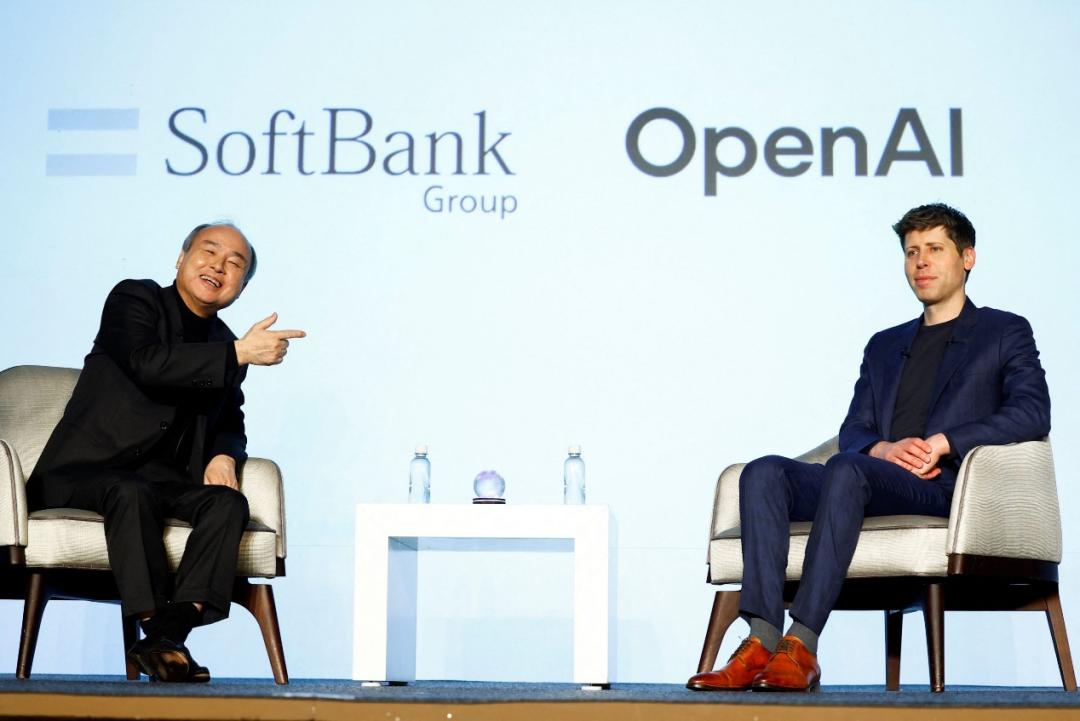
Core Insights - Masayoshi Son has been searching for the next Jack Ma, having made significant profits from his investment in Alibaba, which peaked at a valuation that yielded him over $100 billion [2] - After a series of unsuccessful investments post-Alibaba, including WeWork, Son has shifted his focus to artificial intelligence, particularly OpenAI, in hopes of replicating his past successes [3][4] - SoftBank's financial performance has been volatile, with a reported net profit of approximately $18.8 billion for the first half of 2025, but concerns arose over the sustainability of these profits due to reliance on unrealized gains [5][8] Investment Strategy - The Vision Fund, initiated by SoftBank, aims to invest heavily in transformative technologies, with a notable investment of $77 billion in Uber and $11 billion in WeWork, although the latter resulted in significant losses [2][3] - Son's strategy involves high-risk, high-reward investments, as evidenced by his commitment to OpenAI, which includes a $40 billion initial investment and a subsequent $22.5 billion commitment [4][11] - The AI sector is projected to generate substantial economic returns, with Son estimating that AI could contribute around 10% to global GDP, justifying his aggressive investment approach [12] Market Reactions - Following the announcement of SoftBank's financial results, the company's stock experienced a sharp decline, losing nearly $100 billion in market value within weeks, raising concerns about the sustainability of its financial strategies [7][8] - Analysts have expressed skepticism regarding SoftBank's financial health, citing a potential $54.5 billion gap between promised investments and actual available funds, indicating a risk of overcommitment [9] - The competitive landscape in AI has intensified, particularly with Google's launch of its Gemini 3 model, leading to doubts about OpenAI's ability to maintain its market leadership [19][20] Future Outlook - OpenAI is reportedly preparing for an IPO by 2026, with a potential valuation of $1 trillion, which could provide significant returns for SoftBank if successful [4] - Son's investment strategy reflects a shift towards a more diversified approach, aiming to mitigate risks by engaging in various segments of the AI ecosystem, including partnerships and acquisitions [24][25] - The ongoing volatility in the AI market and the need for substantial capital investment highlight the challenges and opportunities that lie ahead for SoftBank and its ambitious plans in the technology sector [25][26]




极越汽车发布致债权人通知,未登记、维护车辆应立即停止使用;Waymo明年将在超20城推出网约车业务,包括东京和伦敦丨汽车交通日报
创业邦· 2025-12-11 10:15
Group 1 - Waymo aims to launch ride-hailing services in over 20 cities, including Tokyo and London, by next year, with a cumulative ride volume exceeding 14 million since 2025, projected to surpass 20 million by year-end [2] - Toyota partners with Wolfspeed to integrate silicon carbide devices into its onboard charging systems for electric vehicles [2] - BAIC Group collaborates with Horizon Robotics to develop an urban assisted driving system, utilizing Horizon's chips for a comprehensive city navigation system [2] Group 2 - Lantu Motors launches its flagship sedan, Lantu Zhaiguang L, priced from 279,900 yuan, featuring an 800V intelligent hybrid system and advanced smart driving capabilities [2] - Jiyue Automotive issues a notice to creditors regarding the status of vehicles and equipment, advising immediate cessation of use for unregistered and unmaintained vehicles due to potential legal risks [2][3]




LOCA 获 PIDG 250 万美元投资 加速老挝绿色出行与充电网络建设
Sou Hu Cai Jing· 2025-12-11 04:51
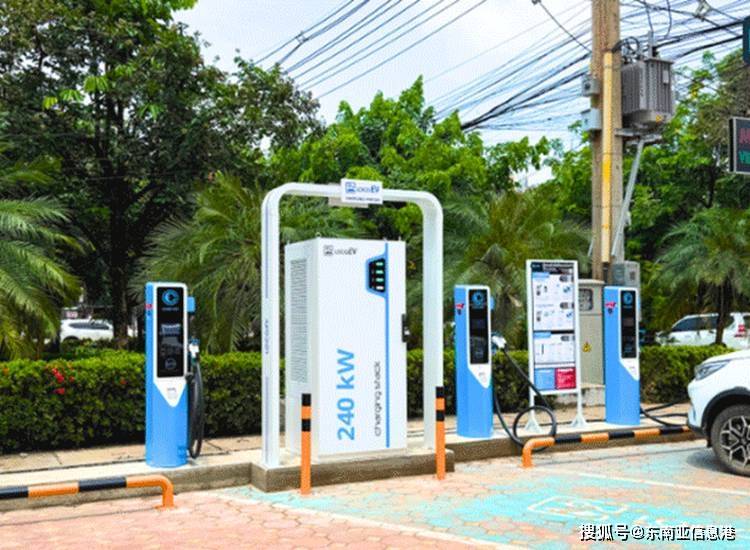
Core Insights - LOCA, a leading ride-hailing and electric vehicle platform in Laos, has secured a strategic investment of $2.5 million from InfraCo, a division of the Private Infrastructure Development Group (PIDG), marking PIDG's first investment in Laos and highlighting international recognition of Laos' sustainable transport potential and LOCA's development vision [2] Investment Purpose - The investment will primarily be used for two purposes: constructing approximately 54 new electric vehicle charging stations across Laos, increasing the total number of charging stations to 93; and expanding the electric taxi fleet, which will not only benefit LOCA's own fleet but also assist electric vehicle owners nationwide, alleviating range anxiety and facilitating long-distance travel [2] Market Potential and Industry Background - Ride-hailing is becoming one of the core transportation methods in Laos, driven by the growth of a tech-savvy urban population and increasing demand from local residents and tourists. The ride-hailing market in Laos is projected to grow at a compound annual growth rate (CAGR) of 4.33% from 2025 to 2030, with an expected market size exceeding $8 million and approximately 1.6 million users by 2030 [2] - The Laotian government is supporting the electric vehicle industry through policies such as reducing vehicle import taxes and road usage taxes, aiming for electric vehicles to account for 1% of the market by 2025 and over 30% by 2030, in order to reduce fuel import dependency and lower carbon emissions [2] Statements and Project Significance - Claire Jarrett, Head of Infrastructure Investment Management at PIDG, stated that the collaboration demonstrates PIDG's commitment to investing in climate action and sustainable development enterprises, with plans to deepen market cooperation in energy electrification and transportation logistics in Laos [3] - LOCA co-founders Souliyo Vongdala and Phonepasong Mixab emphasized that the investment will accelerate the improvement of Laos' charging infrastructure and promote the transition to green transportation, aligning with the United Nations Sustainable Development Goal 9 (Industry, Innovation, and Infrastructure) [3]
全国总工会来苏开展新就业形态劳动者大慰问大走访活动
Su Zhou Ri Bao· 2025-12-11 00:38
昨天(12月10日),全国总工会党组成员、经费审查委员会主任蔡安辉率调研组来苏,开展新就业 形态劳动者大慰问大走访活动,并召开专题座谈会。省总工会副主席、党组成员王树华陪同调研。 苏州市总工会有关负责同志陪同调研。 调研组对苏州工会在推进新就业形态劳动者建会入会和关爱服务方面取得的成效给予充分肯定。调 研组指出,头部平台企业要切实履行社会责任,积极配合各级工会推动分支机构建会、开展算法与劳动 规则协商等工作,严格落实劳动法律法规,努力实现企业发展与职工权益的双赢。各级工会要以此次大 慰问大走访为契机,持续深化实施工会维权服务新就业形态劳动者专项行动,指导帮助平台企业工会提 升工作实效,凝聚服务合力,真正把党和政府的关怀、工会组织的温暖送到劳动者心坎上、做到急需 处。 在苏期间,调研组还前往苏州历史建筑遗产保护劳模创新工作室、平江历史文化街区党群服务中心 职工之家以及中亿丰集团进行实地调研。 座谈会上,来自T3出行、淘宝闪送、顺丰速运、滴滴出行、传化物流等新业态企业的一线劳动 者、管理人员和工会工作者代表,结合自身实际,分享了在苏州奋斗的故事,反映了工作生活中遇到的 困难与诉求,并对工会工作提出了意见建议。调研 ...
网约车“一口价”不是叫停就好
Jing Ji Ri Bao· 2025-12-11 00:10
"一口价"引起的无序低价竞争有诸多危害。网约车平台通过"一口价"模式把价格战成本转嫁给司机,司 机收入下降,便可能以违规加价、降低服务品质等办法压降成本,导致乘客体验不佳。在网约车的行业 生态中,平台、司机、乘客任何一方的权益遭受侵害,都会产生一系列负面传导效应,影响整个生态的 健康与平衡。 辩证地看,"一口价"模式具有独特优势,简单叫停并不能解决根本问题。"一口价"被诟病,是因为畸形 的收益分配方式降低了劳动主体的收益和积极性。治理的关键在于确保收益得到合理分配。建立合理的 收入分配机制,不仅能让司机收入更合理,乘客权益也会更有保障。多方共赢才能推动行业进入良性发 展轨道。一些地方已开展有益尝试,比如,昆明等地要求合理设定平台抽成比例上限并公开发布,多家 平台随之发布公告宣布减少抽成。 为整治网约车低价竞争乱象,多地明确提出暂停"一口价""特惠价"等付费模式,要求网约车平台禁止 以"一口价"模式强制司机接单。滥用"一口价"确实扭曲了行业生态,但简单叫停也非治本之策。 网约车"一口价",是指在乘车软件中输入起点和终点后,系统根据行程信息给出的结算价格。与实时计 价不同,"一口价"的预估车费即为最终结算价格。这 ...
摩根士丹利预言2026自动驾驶爆发!美国33城落地,Waymo特斯拉双寡头,优步Lyft面临“蚕食”
Xin Lang Cai Jing· 2025-12-10 10:23
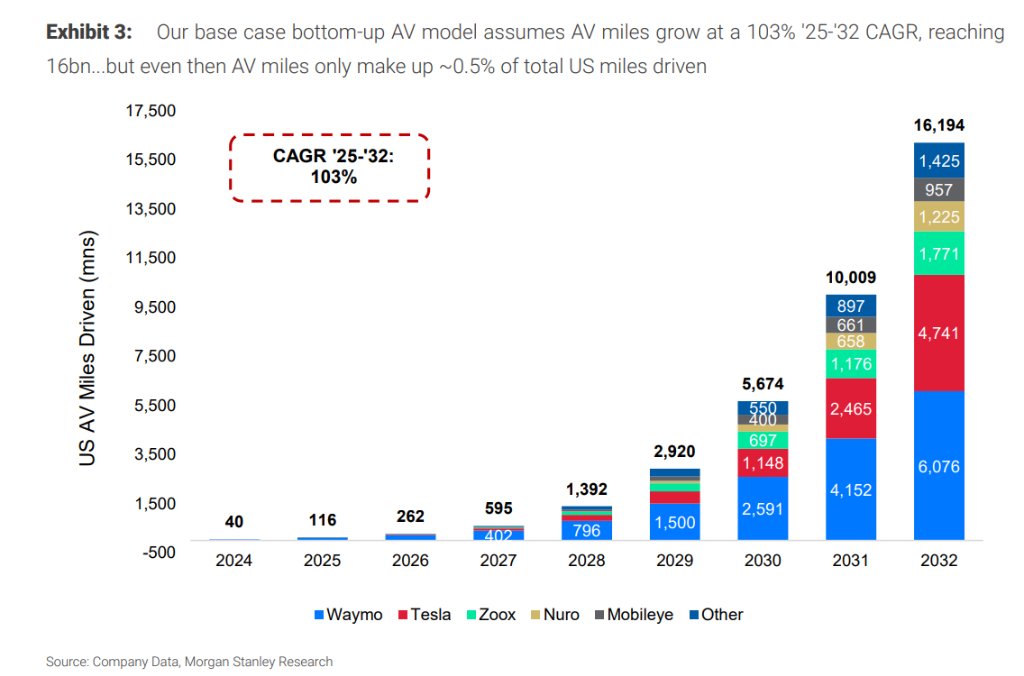
Group 1 - Morgan Stanley's report outlines a significant shift in the autonomous driving industry, predicting that by 2026, 33 cities in the U.S. will launch commercial services, marking a pivotal moment for the sector [1] - The report emphasizes that this transition from concept to commercialization will reshape the trillion-dollar mobility ecosystem, with Waymo and Tesla emerging as dominant players, potentially leading to a duopoly [1] - The report forecasts that from 2025 to 2032, the compound annual growth rate (CAGR) for autonomous driving mileage in the U.S. will reach 103%, with total mileage expected to soar to 16 billion miles by 2032, a 140-fold increase from 2025 [1] Group 2 - Waymo and Tesla are projected to dominate the autonomous driving market, collectively accounting for approximately 70% of the total mileage by 2032, with the competition focusing on safety and cost [2] - Waymo has a significant safety advantage with an average of 360,000 miles driven without accidents, compared to Tesla's 50,000 miles, establishing a seven-fold safety barrier [2] - Current cost per mile for Tesla's Robotaxi is $0.81, which is 40%-43% lower than Waymo's fifth-generation model, priced at $1.36-$1.43 per mile [4]

美银自动驾驶深度报告:无人网约车规模可达万亿,每英里成本2美元将是引爆点
Hua Er Jie Jian Wen· 2025-12-10 08:26
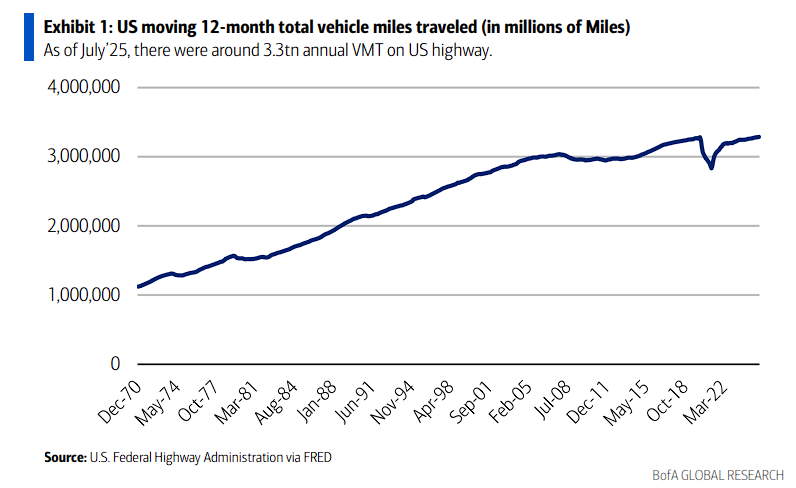
Core Insights - The current ride-hailing services account for only 1% of the annual driving mileage in the U.S., which is approximately 3 trillion miles, highlighting a significant growth opportunity for tech giants like Tesla, Google, and Amazon in the autonomous vehicle market [1][5][18] - If autonomous driving technology can reduce the cost per mile to $1.5-$2.0, the market size could reach $0.9-$1.2 trillion within 15 years, assuming a 20% penetration rate [1][8] - The cost per mile for current ride-hailing services is around $2.5-$3.0, while private car ownership costs range from $0.70 to $1.06, indicating a substantial price gap that limits the adoption of ride-hailing services [1][6][7] Market Potential - The U.S. total driving mileage is projected to be about 3.3 trillion miles by July 2025, with passenger vehicles accounting for approximately 3 trillion miles after excluding large trucks [2] - In 2024, ride-hailing mileage is expected to remain at only 1% of the total, based on assumptions regarding Uber and Lyft's order distribution and average trip length [5][6] Cost Structure and Profitability - The average cost per mile for private car ownership is significantly lower than that of ride-hailing services, which creates a barrier for consumer adoption [6][7] - A critical threshold for the widespread adoption of autonomous ride-hailing is achieving a cost per mile below $2.00 [7][8] - The report analyzes three business models: ownership, leasing, and agency, detailing the break-even points for each model under various cost scenarios [11][13][15][16] Business Model Analysis - In the ownership model, a cost of $1.95 per mile is needed to maintain a 10% profit margin, assuming a vehicle cost of $75,000 [13] - The leasing model requires a pricing of $2.08 per mile to achieve the same profit margin, with a baseline leasing fee of $0.54 per mile [15] - The agency model necessitates a price of $2.15 per mile to sustain profitability, with a payout to vehicle owners of $1.5 per mile [16] Competitive Landscape - Uber currently holds a market share of 70%-80% in the U.S. ride-hailing market, with projections indicating that even if its share drops to 50%, its order volume could still grow to $589 billion by 2040 [18][21] - The entry of well-funded competitors like Waymo, Tesla, and Zoox poses a risk of market share erosion for Uber [18][27] - The report highlights the potential for a price war among major players, as they may leverage aggressive pricing strategies to capture market share [27] Future Outlook - The report suggests that despite competitive pressures, the ride-hailing industry benefits from significant network effects, which may limit the number of viable competitors and support sustainable profit margins [25] - Early data from California indicates that the presence of autonomous vehicles may expand the overall market rather than cannibalize existing services, as seen with Waymo's growth [26]

滴滴:启动车载AED志愿服务,首批覆盖8城240辆车试运营
Mei Ri Jing Ji Xin Wen· 2025-12-10 03:40
Core Points - Didi has launched the "Didi In-Car AED Volunteer Service" in collaboration with the China Red Cross Foundation and Shenzhen One Foundation, aimed at equipping volunteer drivers with AEDs in their vehicles [1] - The initiative targets ride-hailing drivers who hold a rescuer certificate and possess strong rescue capabilities [1] - Currently, the pilot program is being implemented in 8 cities across the country, involving 240 vehicles [1]

无人驾驶网约车撞人后暂停运营,Robotaxi赛道“速度”与“安全”如何平衡?
Guo Ji Jin Rong Bao· 2025-12-09 12:37
Core Viewpoint - A recent incident involving a self-driving taxi from Hello (哈啰) in Zhuzhou, Hunan, resulted in injuries to two pedestrians, raising concerns about the safety of autonomous vehicles in commercial operations [2][3]. Company Summary - Hello's self-driving taxi, branded with the company's logo and identified as "3009," was involved in the accident, prompting the company to pause local operations while investigating the situation [3]. - Hello entered the Robotaxi market in June 2023, forming a joint venture with Ant Group and CATL, with respective shareholdings of 38%, 38%, 19%, and 5% [4]. - The company launched its first mass-produced Robotaxi model, "HR1," equipped with multiple sensors, and plans to produce L4 autonomous vehicles by June 2026, aiming to deploy over 50,000 units by 2027 [4]. Industry Summary - The Robotaxi sector is becoming increasingly competitive, with several companies, including Geely's Cao Cao Mobility and Didi, ramping up investments and operational testing [5]. - Internationally, Uber plans to expand its autonomous vehicle fleet to 100,000 units by 2027, while Nvidia supports the L4 autonomous driving ecosystem [5]. - Despite the growing interest and investment in Robotaxi services, companies like Pony.ai and WeRide have reported significant financial losses, indicating ongoing profitability challenges within the industry [6]. - The frequency of accidents involving Robotaxis, including a recent incident involving WeRide in Abu Dhabi, highlights the safety risks associated with autonomous vehicle operations [6][7].
曹操出行锚定Robotaxi万亿市场,三张牌重构出行生态
雪球· 2025-12-09 08:06
Core Viewpoint - The Robotaxi industry is transitioning from a "technology story" to a "business story," with 2025 marking a critical commercialization turning point [1][3]. Industry Overview - The Robotaxi sector is approaching a pivotal moment, evolving from single-vehicle intelligence validation to ecosystem competition [2]. - By 2025, significant advancements in the Robotaxi sector are expected, with a projected annual decrease in autonomous driving system costs of 10%-15% [3]. - The market for Robotaxis is anticipated to grow significantly, with Goldman Sachs predicting 1.9 million Robotaxis in operation in China by 2035, leading to a market size of $47 billion [3]. Company Strategy - Cao Cao Mobility has launched a "Ten Years, One Hundred Cities, One Hundred Billion" strategic goal, leveraging the Geely technology ecosystem to establish a unique three-in-one development model of "smart customized vehicles + smart driving technology + smart operations" [1][4]. - The company plans to introduce a customized Robotaxi model designed for L4 autonomous driving by the end of 2026, utilizing battery swapping technology [6]. Competitive Advantage - The three-in-one model creates a competitive moat for Cao Cao Mobility in the Robotaxi ecosystem, focusing on smart driving technology, customized vehicles, and operational systems [5][7]. - The "Green Intelligent Passage Island" enhances operational capabilities, serving as a hub for automated battery swapping, cleaning, and vehicle management, with plans for replication in other cities [7]. Implementation Plan - Cao Cao Mobility's "three-step" strategy includes: 1. Technical validation and small-scale testing; 2. Transitioning to unmanned operations; 3. Full-scale commercial operations with customized Robotaxi models [9]. - The company has initiated global expansion, signing a memorandum with the Abu Dhabi Investment Office to pilot autonomous driving and green travel technologies [10]. Investment Perspective - The value of Cao Cao Mobility's Robotaxi strategy lies in optimizing unit economics, with total cost of ownership (TCO) for customized vehicles reduced by 36.4% compared to typical electric vehicles [12][13]. - As the Robotaxi business progresses, the company's valuation may shift from a "mobility platform" to a "smart mobility technology company," reflecting its role in future smart city infrastructure [13][14].