军工制造

Search documents
国泰集团:军工控股拟减持不超0.266%公司股份
news flash· 2025-06-06 09:58
Core Viewpoint - Cathay Group (603977) announced that its controlling shareholder, Military Industry Holdings, plans to reduce its stake by up to 1.652 million shares, accounting for 0.266% of the total share capital, due to internal funding arrangements [1] Summary by Relevant Sections - **Shareholder Reduction** - Military Industry Holdings currently holds 47.34% of the company's shares and will conduct the reduction through centralized bidding from June 30, 2025, to September 29, 2025 [1] - **Reason for Reduction** - The reduction is attributed to the need for internal funding arrangements within Military Industry Holdings [1]

军工投资狂潮席卷欧洲! 不仅国防巨头股价大涨 化工、夜视仪与无人机等军工概念齐飙升
智通财经网· 2025-06-06 08:38
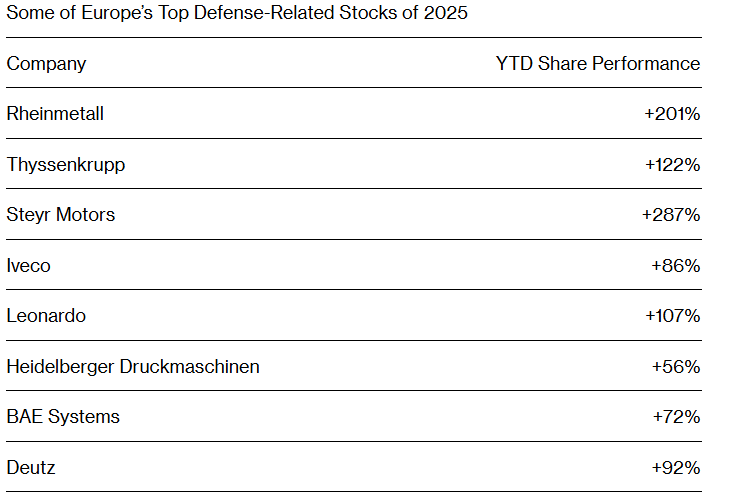
Group 1: Market Trends and Performance - European defense stocks have significantly outperformed the market this year, with major companies like Rheinmetall seeing a 201% increase and Exail Technologies SA experiencing a remarkable 400% rise [1][4] - Investors are increasingly interested in small-cap defense companies, driven by record military spending in Europe, which is expected to exceed €200 billion annually over the next five years [2][3] - The MEGA (Make Europe Great Again) trend has emerged, reflecting a shift in investor sentiment towards European markets, which are seen as undervalued compared to the U.S. [1][2] Group 2: Key Companies and Their Performance - Rheinmetall's stock has tripled this year, while Steyr Motors AG has seen a nearly 300% increase, highlighting the strong performance of smaller defense firms [1][4] - Exail Technologies has gained over 300% in stock value after securing a significant contract for underwater drone systems [11] - Alzchem AG, which produces materials for military ammunition, has also benefited from increased defense spending, with five out of six analysts recommending a "buy" rating [15] Group 3: Emerging Sectors and Technologies - The demand for night vision technology has surged, with companies like Theon International Plc seeing their stock prices rise significantly since their IPO [6][10] - The drone and robotics sector is gaining traction, with Exail Technologies leading the charge, reflecting a broader trend towards unmanned warfare capabilities [11][24] - Companies involved in IT, cybersecurity, and satellite communications are also experiencing growth, with Eutelsat SA's stock rising by 300% as it positions itself for military contracts [24][27] Group 4: Industrial and Chemical Companies - Industrial giants like Thyssenkrupp and BAE Systems have seen their stock prices double, driven by their defense-related business segments [18][23] - Heidelberg Druckmaschinen AG is exploring opportunities in the defense sector, contributing to a 56% increase in its stock price this year [22] - The chemical sector is also benefiting, with Alzchem AG's stock outperforming its peers due to its focus on military-grade materials [15]

中美这场较量,终于迎来大结局?特朗普算盘全落空,美国自身难保
Sou Hu Cai Jing· 2025-06-06 05:26
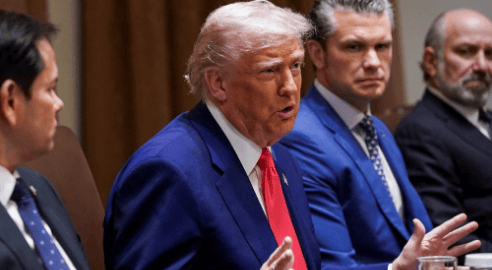
Group 1: Trade Relations - The U.S.-China trade relationship has been characterized by escalating tensions, particularly through tariff battles initiated by the U.S. [1][3] - The U.S. raised tariffs on Chinese goods to 125%, but later expressed a desire for peace, indicating a failure of the tariff strategy [1][3] - China responded by increasing its tariffs and demonstrated resilience by not yielding to U.S. pressure, ultimately leading to concessions from the U.S. [1][3] Group 2: Technology and Industry - The U.S. has attempted to restrict China's access to essential technology, particularly in the semiconductor sector, but these efforts have backfired [3][4] - China's advancements in AI and EDA tools have significantly improved chip design efficiency by over 40%, showcasing its ability to overcome technological barriers [3] - The U.S. restrictions on companies like NVIDIA have resulted in substantial losses, exceeding $150 billion in orders, while failing to halt China's progress in chip self-sufficiency [3] Group 3: Aerospace and Defense - The U.S. has halted technology exports to China in the aerospace sector, yet China's COMAC has achieved a 60% localization rate for its C919 aircraft [4] - The U.S. military's reliance on Chinese rare earth materials for critical components, such as those used in the F-35 fighter jet, highlights its vulnerability [4] - The ongoing technological and supply chain challenges faced by the U.S. military underscore the risks associated with its strategy against China [4] Group 4: Diplomatic Dynamics - The U.S. has shown a willingness to engage diplomatically with China, as evidenced by Trump's unexpected attendance at the G20 summit to meet with Chinese officials [6] - Despite diplomatic overtures, the U.S. continues to provoke tensions in the South China Sea, revealing a contradiction in its approach to China [6][8] - The U.S. must reconsider its hegemonic mindset and adopt a more respectful and cooperative stance towards China to avoid further failures [8]
闹掰了!马斯克、特朗普上演疯狂骂战!特斯拉暴跌14%,蒸发1500亿美元!白银价格大涨,白银概念股起飞...
雪球· 2025-06-06 04:15
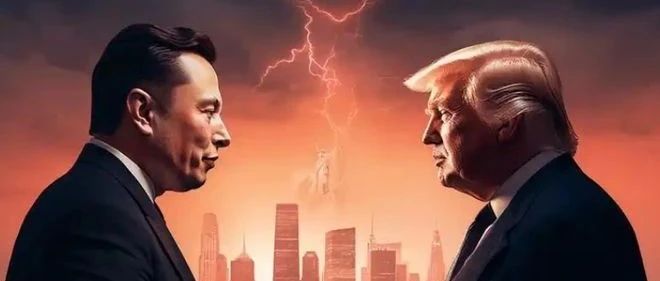
Market Overview - The market experienced fluctuations in the early session, with the three major indices slightly declining. As of the midday close, the Shanghai Composite Index fell by 0.06%, the Shenzhen Component Index decreased by 0.18%, and the ChiNext Index dropped by 0.48%. The total trading volume in the Shanghai and Shenzhen markets reached 746.7 billion, an increase of 32.4 billion compared to the previous trading day [1]. Sector Performance - In terms of sector performance, silver, military industry, and agricultural chemical products saw significant gains, while sectors such as football concepts, beauty care, IP economy, and pet economy experienced notable declines [2]. Tesla Stock Impact - The public feud between Elon Musk and Donald Trump led to a significant drop in Tesla's stock price, which fell by 14.26%, resulting in a market value loss of over 150 billion [3][8]. Silver Market Surge - The precious metals sector saw a rise, with silver leading the gains. Notable stocks such as Hunan Silver and Silver Nonferrous reached their daily limit, while others like Xingye Silver and Shengda Resources increased by over 5%. On June 5, spot silver surged by 4.5%, reaching above $36 per ounce, the highest level since February 2012. Analysts suggest that silver's industrial demand and potential trade protection measures from the U.S. government could drive further price increases [13][17]. Military Industry Activity - Military stocks experienced a notable rally, with companies like Qifeng Precision and Huawu Co. rising over 10%. The Indonesian government's evaluation of purchasing Chinese-made J-10 fighter jets could have broader implications for regional military trade dynamics, potentially influencing countries like Thailand and Malaysia to consider similar acquisitions. Analysts believe that China's military trade capabilities and potential will elevate the defense industry's prospects [18][20].
官宣!新汽车央企即将成立!东风、长安不合并了……
证券时报· 2025-06-05 01:36
Core Viewpoint - The restructuring of the automotive business under the China Ordnance Equipment Group has been approved by the State-owned Assets Supervision and Administration Commission (SASAC), leading to the establishment of an independent central enterprise for the automotive sector [1][3][5]. Group 1: Company Announcements - Dongfeng Motor Group announced that it is not involved in any asset or business restructuring at this time [1][6]. - Changan Automobile received notification from the China Ordnance Equipment Group regarding the separation of its automotive business into an independent central enterprise, with SASAC taking on the role of investor [3][5]. - Other companies such as Dong'an Power, Great Wall Military Industry, Hunan Tianyan, and Huachuang Technology also released similar announcements on the same day [5]. Group 2: Implications of Restructuring - Following the separation, Changan Automobile's indirect controlling shareholder will change to the newly established central enterprise for the automotive business, although the actual controller remains unchanged [5]. - The restructuring is not expected to significantly impact the normal production and operational activities of Changan Automobile [5]. - The previously speculated restructuring involving the "Dongfeng system" and "Changan system" has not materialized, indicating a focus on clarifying the military and automotive business divisions within the China Ordnance Equipment Group [9]. Group 3: Government Oversight and Industry Focus - Recent visits by SASAC Director Zhang Yuzhuo to various enterprises signal important directions for the next phase of state-owned enterprise reform and development [9]. - The current round of inspections covers sectors such as energy, steel, metal mining, environmental protection, automotive technology services, and advanced manufacturing, emphasizing the need to concentrate resources on core business areas [9]. - "Focusing on primary responsibilities and core businesses" has emerged as a key requirement during these inspections, aiming for a more balanced, higher value-added, and sustainable business structure [9].


英国宣布全面转向“战备状态” 此时重提核威慑有何背景?
Yang Shi Xin Wen Ke Hu Duan· 2025-06-04 10:32
Group 1 - The UK government, led by Prime Minister Starmer, announced a shift to a "war readiness" state, with a focus on modernizing defense capabilities at "wartime speed" [1] - An additional investment of £15 billion will be made in the nuclear deterrent system, including the construction of 12 new attack submarines, and enhancements in long-range strike and cyber warfare capabilities [1] - The move has garnered significant attention and is seen as a response to the complex and evolving international security landscape, particularly in light of the Russia-Ukraine conflict and tensions in the Middle East and Asia-Pacific regions [2] Group 2 - The UK aims to expand its international influence and maintain its status as a global power, especially after the perceived decline in its international standing post-Brexit [2] - Domestically, the government seeks to address political and economic challenges, using national security as a core pillar of its reform agenda to unite various factions and boost public support [4] - The military-industrial sector is expected to drive economic growth and create jobs, leveraging the defense initiatives to stimulate the economy [4] Group 3 - Significant challenges exist in achieving these defense goals, particularly financial constraints due to economic difficulties and the need for substantial investment in submarine construction [5][7] - Technological limitations pose another hurdle, as the UK has historically relied on US support for advanced military technology and may struggle with independent innovation [7] - Political support within Parliament is crucial for the submarine program, and there are concerns about the effectiveness of the UK's nuclear deterrent in the current geopolitical context [7]

我国为何对美国军工企业下黑手?郝文武感观军情34季深度分析!
Sou Hu Cai Jing· 2025-06-04 06:03
Core Viewpoint - China has imposed sanctions on 28 American military companies, marking a significant shift in the tech competition landscape between China and the U.S. [1] Group 1: Military Technology Advancements - China has achieved unprecedented breakthroughs in military technology, including the development of the sixth-generation fighter jet, the Sichuan ship, the KJ-2000 early warning aircraft, and the detonation engine [1][2] - The KJ-3000 early warning aircraft signifies a technological leap, as China has surpassed the U.S. in radar technology, utilizing advanced GaN radar compared to the U.S.'s outdated GaAs radar [1][2] - The 076 amphibious assault ship is now considered the strongest globally, capable of launching aircraft like the J-35, and its combat capabilities are nearing those of a medium aircraft carrier [2] Group 2: Engine Technology and Future Developments - The detonation engine represents a future technological direction, enabling aircraft to exceed speeds of Mach 3, which is a significant advancement over current engine limitations [2] - China's sixth-generation fighter technology is nearing maturity, with plans for mass production following successful test flights [2] Group 3: Semiconductor and Material Control - China has made strides in semiconductor technology, notably breaking through the 13.5nm extreme ultraviolet light source technology, which is crucial for chip manufacturing [3] - Export controls on critical materials like gallium and germanium have been implemented, further restricting U.S. military companies and complicating their supply chains [3] Group 4: U.S. Military and Industrial Challenges - American experts suggest that the U.S. may need to reconsider its military strategy in the Pacific, potentially retreating to the third island chain due to the shifting technological landscape [3] - Concerns are raised about the hollowing out of the U.S. military-industrial complex and its ability to sustain production without Chinese supply chain support [3]

中国管制稀土出口,后果有多严重?
Sou Hu Cai Jing· 2025-06-04 02:14
Group 1 - China has decided to impose export controls on seven categories of medium and heavy rare earth materials, which include alloys, oxides, and compounds, amid tariff disputes with the US [2] - Over 90% of rare earth materials are processed in China, with Japan and the US accounting for 53% of China's exports, and including the Netherlands, this figure rises to two-thirds [2] - Rare earth elements are critical for advanced industries, with specific applications in military and electric vehicle technologies, such as the F-35 fighter jet requiring 417 kg of rare earths for its radar and engine coatings [2][4] Group 2 - The export ban has triggered a domino effect in the automotive industry, with companies like Ford forced to shut down factories due to a shortage of magnets, and Indian manufacturers facing potential production halts [3] - MP Materials and other US companies are accelerating mining efforts, but face significant technological barriers in heavy rare earth separation, while Australian Lynas's expansion plans are insufficient to meet demand [3] - South Korean companies like Samsung and Hyundai Heavy Industries have received warnings about potential sanctions for supplying military products to the US, with a significant portion of the F-35 supply chain at risk of disruption [3] Group 3 - China's resource advantage is being leveraged as a tool in geopolitical strategy, with the US Defense Authorization Act prohibiting the use of Chinese rare earths in sensitive systems before 2026, pushing military sectors towards self-reliance [4] - The price of terbium has surged by 24% to $933 per kilogram within two months, indicating market reactions to the supply chain disruptions [4] Group 4 - Experts suggest that even with the formation of a critical minerals working group among the Quad alliance (US, Japan, Australia, India), China's rare earth extraction technology is unlikely to be surpassed within the next decade [5] - The ongoing "rare earth war" is rapidly fracturing global supply chains, raising questions about who will bear the costs of this geopolitical struggle [5]
华尔街见闻早餐FM-Radio|2025年6月4日
Sou Hu Cai Jing· 2025-06-03 23:27
Market Overview - US employment data shows improvement, alleviating economic growth concerns, leading to further gains in US stocks, with the Dow Jones rising for four consecutive days [1] - Semiconductor stocks outperform the market for two days, with Nvidia rising nearly 3%, regaining its position as the most valuable company for the first time in over four months [1] - Asian markets see collective gains, with the A-share market rising and the innovative drug sector active [1] Key News - The White House announces a meeting between US and Chinese leaders this week, with China’s Foreign Ministry responding that there is no information to provide [9] - The EU plans to restrict Chinese companies from participating in public procurement for medical devices, with China’s Foreign Ministry and Ministry of Commerce stating they will firmly protect the legitimate rights of Chinese enterprises [10] - Trump announces an increase in steel and aluminum tariffs to 50%, with the White House confirming a letter urging trade partners to submit proposals [10][11] Company Updates - Xiaomi's investor conference reveals that the pricing for the YU7 model will be determined shortly before its launch, with expectations for the automotive business to achieve profitability in Q3 or Q4 [14] - TSMC's CEO projects a sales growth rate of around 20% in USD terms for 2025, citing strong AI demand as a key driver [17] - NIO reports a 21.5% year-on-year revenue increase in Q1, with a projected Q2 revenue of 19.5 to 20.1 billion yuan, reflecting a year-on-year growth of 11.8% to 15% [17] Industry Insights - The OECD has downgraded global growth forecasts, particularly for the US, which is expected to be severely impacted by tariffs, with growth expectations cut from 2.8% to 1.6% [3][12] - The nuclear power sector sees significant activity, with Meta signing a 20-year nuclear power procurement agreement, indicating a growing interest in nuclear energy among major tech companies [14] - The military industry is experiencing a surge in interest, with Rheinmetall set to replace Kering in the Euro Stoxx 50 index, reflecting a shift in market focus towards defense amid ongoing geopolitical tensions [21]

中国对美国留的后手起效果,特朗普束手无策,急于拨通中国电话
Sou Hu Cai Jing· 2025-06-03 14:49
Group 1 - The article discusses the temporary consensus reached between the US and China regarding tariffs, with concerns about the reliability of the Trump administration in honoring agreements [1][3] - The consensus involves the cancellation of additional tariffs imposed after April 2, but it is viewed as a tactic by the Trump administration to alleviate domestic and international tensions [3][5] - The article highlights the strategic importance of rare earth minerals, which are crucial for various high-tech industries, and how China's export restrictions on these minerals could pressure the US [6][7] Group 2 - The US's reliance on rare earth elements is emphasized, particularly in military applications, with examples of production delays faced by companies like Lockheed Martin due to China's restrictions [6][7] - The article suggests that the urgency of the Trump administration to negotiate with China is closely linked to the pressures arising from the shortage of rare earth elements [9] - It is noted that the US government has not shown genuine intent to improve trade relations, particularly in light of ongoing tariffs related to fentanyl imports and restrictions on Chinese students [13][15] Group 3 - The article concludes that the ongoing competition between the US and China is just beginning, with the potential for further developments in trade negotiations and policies [19]