
金融投资

Search documents
越秀资本预计前三季度实现归属于上市公司股东的净利润29.22亿元至30.94亿元
Zheng Quan Ri Bao Zhi Sheng· 2025-10-11 02:09
Group 1 - The core viewpoint of the news is that Guangzhou Yuexiu Capital Holdings Group Co., Ltd. expects a significant increase in net profit for the first three quarters of 2025, projecting a growth of 70% to 80% year-on-year, amounting to between 2.922 billion and 3.094 billion yuan [1] - The company has actively seized opportunities in the capital market, leading to improved investment business returns and enhanced operational efficiency in its renewable energy sector due to increased power generation from growing installed capacity [1] - Yuexiu Capital's subsidiaries, including Guangzhou Yuexiu Industrial Investment Fund Management Co., Ltd. and Guangzhou Yuexiu Industrial Investment Co., Ltd., are engaged in comprehensive investment management, focusing on serving the real economy and emerging industries in the Greater Bay Area through a dual-driven investment approach [1] Group 2 - In the renewable energy sector, Yuexiu Capital's subsidiary, Guangzhou Yuexiu New Energy Investment Co., Ltd., has established competitive advantages through strong partnerships with leading photovoltaic equipment manufacturers and specialized power construction companies [2] - The company leverages its extensive financial management experience and strong capital strength to empower the renewable energy industry, promoting the standardization and systematization of renewable energy products [2] - Yuexiu Capital has developed a comprehensive financial service platform around photovoltaic and other renewable energy clients, creating a complete business ecosystem with green asset development and investment management platforms [2]

电投产融(000958.SZ):拟向全体股东每10股派发现金红利1.1元中期分红
Ge Long Hui A P P· 2025-10-10 09:27
Core Viewpoint - The company plans to distribute cash dividends to shareholders based on its operational performance and future development needs, with a proposed distribution of 1.1 yuan per 10 shares for the year 2025 [1] Summary by Categories - **Dividend Distribution Plan** - The company intends to distribute a total cash dividend of 592,176,037.20 yuan, based on a total share capital of 5,383,418,520 shares [1] - The distribution will not include stock dividends or capital reserve transfers to increase share capital [1] - **Adjustment Clause** - If there are changes in total share capital due to new shares listing, stock incentive grants, or share buybacks during the period from the announcement to the implementation of the distribution plan, the company will adjust the distribution ratio while keeping the total distribution amount unchanged [1]

为什么钱越来越难留住?——2025年,你必须重学一次理财
Sou Hu Cai Jing· 2025-10-10 03:35
Core Insights - The current financial landscape has shifted from a focus on earning money to preserving wealth due to slow wage growth, rising prices, and low returns on investment products [1][2] - The key to successful investing in 2025 lies in understanding trends, policies, new financial tools, and maintaining discipline [4][5][9][12] Group 1: Understanding Trends - The financial market has transitioned to an asset allocation era, emphasizing the importance of diversifying investments across various asset classes such as stocks, bonds, and gold [4] - Smart investors leverage the different cycles of these assets to keep their funds within a stable range [4] Group 2: Policy Awareness - Investment success is largely influenced by policy trends rather than luck, with sectors like technology, renewable energy, and artificial intelligence benefiting from supportive policies [5] - Understanding monetary policy and interest rate cycles is crucial as they directly affect bond and investment product returns [5] Group 3: Embracing New Tools - Modern investment strategies extend beyond traditional savings and mutual funds to include ETFs, REITs, quantitative funds, and structured financial products [6] - Familiarity with these tools can provide ordinary investors with opportunities to enhance their financial outcomes [7] Group 4: Discipline and Patience - The most challenging aspect of investing is not predicting market direction but adhering to a strategy over time [9] - Many investors miss out on compounding opportunities due to greed or fear, highlighting the importance of patience and long-term holding [10][11] Group 5: Key Principles for 2025 - The overarching principle for successful investing in 2025 is to seek stability while pursuing growth [12] - A balanced approach to asset allocation, risk diversification, and a patient investment horizon can lead to better outcomes than those who react impulsively to market fluctuations [13]


黄金缘何彻底爆发?答案就在六个字
Feng Huang Wang· 2025-10-09 07:53
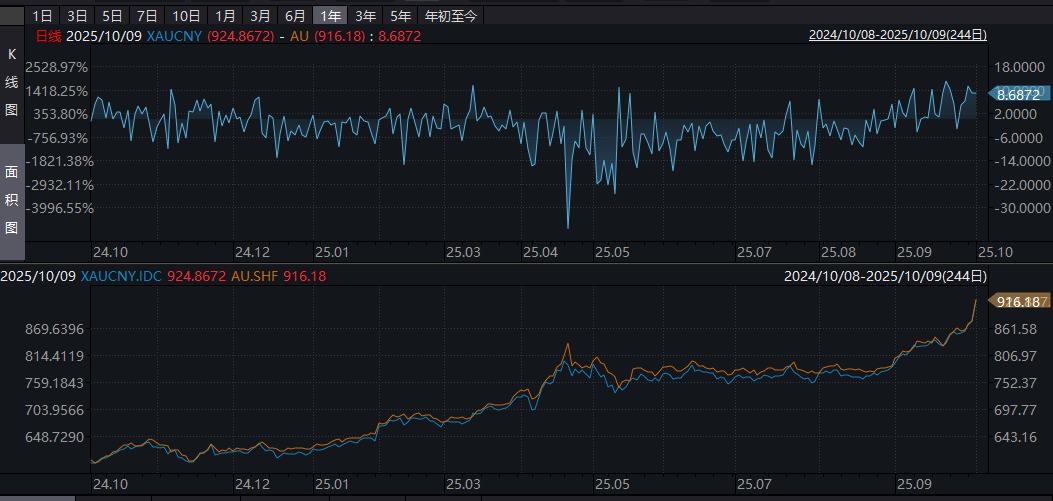
Core Viewpoint - The recent surge in international gold prices, which broke the $4000 mark, is primarily driven by Western investors, particularly during a period when Chinese investors were absent due to the National Day holiday [1][3]. Group 1: Market Dynamics - The price of spot gold rose nearly $200 from around $3860 to over $4000 during the Chinese holiday, indicating a significant market movement [1]. - The premium for domestic gold in China has shifted from positive to negative, suggesting a decrease in local investor interest compared to Western markets [3]. - The trend of Western investors leading the gold price increase reflects a broader shift in global investment dynamics, with a notable decline in interest from non-US regions [3]. Group 2: Investment Sentiment - The concept of "debasement trade" has gained traction among investors, indicating a strategy to hedge against the depreciation of all fiat currencies, not just the US dollar [3][5]. - The stability of the US dollar since August has not deterred gold's rise, suggesting a loss of confidence in fiat currencies overall [5]. - Political events, such as the election of Japan's new prime minister advocating for economic stimulus, have contributed to currency fluctuations, further driving gold prices [6]. Group 3: Historical Context - The current gold price surge can be divided into three phases, starting from the onset of the Russia-Ukraine conflict, followed by the US-China trade war, and culminating in recent signals from the Federal Reserve regarding interest rate cuts [9][10][12]. - The rise in gold prices is increasingly seen as a speculative trend rather than solely based on fundamental factors, with its traditional role as a safe-haven asset being emphasized [12][13]. Group 4: Debt and Economic Factors - High levels of debt in developed economies, nearing or exceeding 100% of GDP, are creating a backdrop for increased gold investment as a hedge against economic instability [15]. - The sustainability of debt is under scrutiny, with rising interest rates and inflation posing challenges to fiscal health, which could further drive investors towards gold [15][16]. - The political landscape, particularly in the US and Europe, is complicating fiscal measures needed to manage debt, leading to a potential increase in gold's appeal as a safe asset [16][17].


经济热点问答丨国际金价缘何再创历史新高
Xin Hua Wang· 2025-10-08 12:00
Core Viewpoint - International gold prices have recently reached a historic high, surpassing $4,000 per ounce, driven by increased global demand for safe-haven assets and declining confidence in the U.S. dollar [1][2][3]. Group 1: Gold Price Trends - On October 7, the most actively traded December 2025 gold futures on the New York Commodity Exchange hit a record high of $4,014.60 per ounce, marking a cumulative increase of approximately 50% this year [1]. - The strong performance of gold is attributed to a prevailing "fear of missing out" sentiment among investors, which outweighs profit-taking emotions, leading to sustained buying pressure despite overbought conditions [1]. Group 2: Factors Driving Gold Price Increase - The combination of U.S. government shutdown, political instability in France, economic concerns in Japan, and ongoing geopolitical conflicts has significantly boosted the demand for gold as a safe-haven asset [3]. - The weakening of the U.S. dollar and increased fiscal uncertainty in the U.S. have enhanced gold's appeal, as investors seek to mitigate risks by increasing their gold holdings [3]. - Recent monetary policy actions by the Federal Reserve, including potential interest rate cuts, have diminished the attractiveness of dollar-denominated assets, further supporting gold prices [3]. - Central banks globally have resumed large-scale gold purchases, with a reported net increase of 15 tons in August, and significant inflows into gold exchange-traded funds (ETFs), which have risen by 17% year-to-date [3]. Group 3: Future Outlook for Gold Prices - Looking ahead, if the Federal Reserve continues to lower interest rates and geopolitical tensions persist, gold prices may continue to rise [4]. - However, some analysts caution that the market should be wary of potential short-term corrections, with expectations that gold prices may fluctuate between $3,800 and $4,100 per ounce for the remainder of the year [4]. - Despite the potential for short-term adjustments, long-term forecasts remain bullish, with predictions of gold reaching $4,200 per ounce from UBS and possibly challenging $5,000 if the Fed maintains a dovish stance through 2026 [5].
创13年新高!白银为何比黄金涨得还要猛?就是因为这个原因
Sou Hu Cai Jing· 2025-10-03 18:09
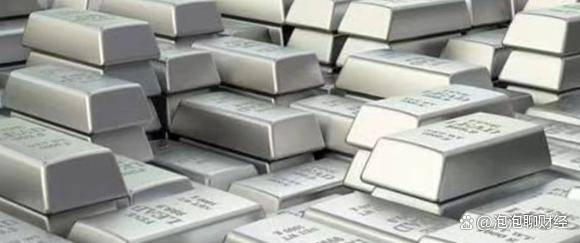
Group 1: Silver Demand in Industries - Global photovoltaic (PV) installed capacity is expected to exceed 655 GW by 2025, leading to a silver demand of 5,200 to 6,500 tons due to the consumption of 8-10 tons of silver per GW [1] - In the electric vehicle sector, the silver usage per vehicle is as high as 50 grams, more than double that of traditional fuel vehicles, with total silver demand in the automotive industry projected to reach 2,566 tons by 2025 [3] - The industrial demand for silver is expected to account for 58% of total demand, significantly surpassing jewelry (18%) and investment demand (16%) [3] Group 2: Supply and Market Dynamics - The global silver supply is projected at 31,700 tons for 2024, while demand is expected to reach 36,700 tons, resulting in a supply gap of 5,000 tons, marking the fifth consecutive year of supply shortages [4] - The supply constraints are primarily due to the fact that 70% of silver is sourced from lead-zinc and copper mining, with only 30% from independent silver mines, and production growth in major silver-producing countries has slowed [4] - Despite high silver prices boosting recycling rates in Europe and the U.S., the recovery volume is expected to decline by 3% year-on-year in Q1 2025 due to high purification costs and a reluctance to sell among small-scale holders [4] Group 3: Price Movements and Market Sentiment - Silver inventories have dropped to a ten-year low, with trading volumes in Shanghai reaching 15,700 tons, indicating tight market liquidity [6] - Following a 25 basis point rate cut by the Federal Reserve, the net long positions in silver surged by 163% since the beginning of the year, the highest level since 2021 [6] - The price of silver futures in Shanghai rose over 36% from 6,483 yuan/kg in April to 10,632 yuan/kg in September, reflecting strong market interest [8] Group 4: Future Outlook and Risks - Analysts suggest that silver may face resistance above $46 per ounce due to historical selling pressure, and potential shifts in technology and market conditions could weaken industrial demand [10] - The ongoing exploration of "silver-free" technologies in the photovoltaic industry and the impact of digital currencies on precious metals could redefine silver's long-term value [10] - The perception of silver as a "strategic metal" in the new energy era contrasts with views of it as a potential capital bubble, indicating a complex future for the metal [10]
1998年,索罗斯对俄罗斯的金融狙击战志在必得,结局如何?
Sou Hu Cai Jing· 2025-10-01 10:49
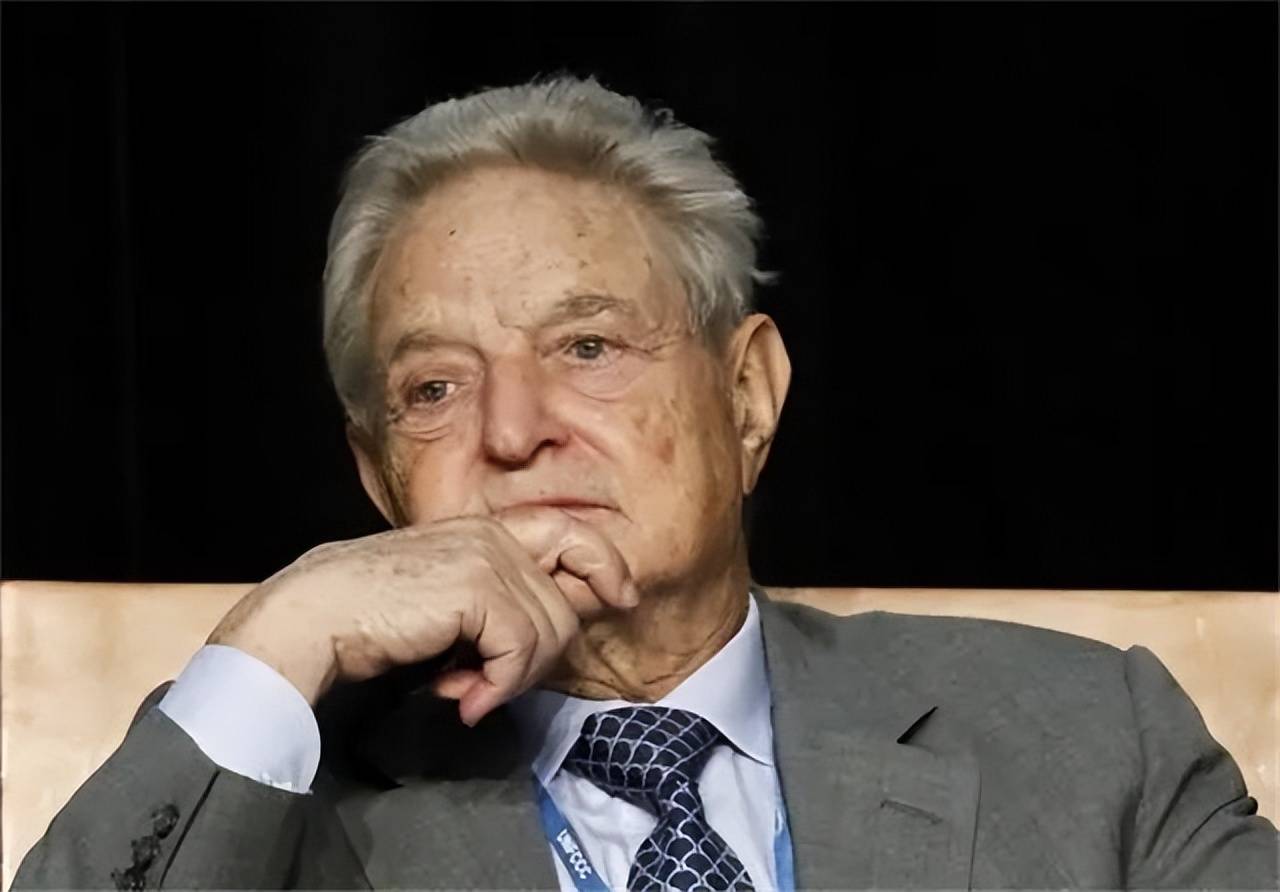
Core Insights - The article discusses the intense financial battle between the Russian government and financier George Soros during the 1998 Russian financial crisis, highlighting the significant losses Soros faced and the broader implications for international investors [1][17]. Group 1: Crisis Background - In the mid-1990s, Russia's economy appeared to be transitioning, but underlying issues such as high fiscal deficits, severe capital outflows, and a reliance on oil and gas were present [4]. - Soros recognized the vulnerabilities in the Russian economy, predicting a devaluation of the ruble, which led him to strategically position his investments [4]. Group 2: Soros's Strategy - By 1997, signs of ruble depreciation emerged, prompting Soros's Quantum Fund to buy rubles and engage in leveraged trading, betting on the decline of the ruble and Russian assets while increasing holdings in stable currencies like the US dollar and German mark [6]. - In 1998, as the Russian economy faced a full-blown crisis characterized by recession, soaring inflation, and expanding fiscal deficits, Soros intensified his short-selling of the ruble and Russian stocks [9]. Group 3: Government Response - The Russian government unexpectedly abandoned its fixed exchange rate policy on August 17, 1998, allowing the ruble to float freely, which led to a rapid devaluation and market collapse [11]. - In response to the crisis, the government implemented measures such as freezing domestic bank funds and restricting capital flows, which hindered Soros's ability to continue his short-selling strategy [11]. Group 4: Consequences for Soros - Soros suffered significant losses, admitting to a $2.4 billion loss in 1999, which he described as the biggest failure of his investment career, leading him to avoid the Russian market in the future [13]. - The crisis not only impacted Soros but also resulted in severe economic turmoil for the Russian populace, with lasting effects on the economy and society [17]. Group 5: Historical Significance - The 1998 Russian financial crisis serves as a classic case in financial history, illustrating the risks inherent in capital operations and the potential for significant losses due to policy changes and uncontrollable factors [18]. - Soros's experience in Russia provided him with profound lessons about the complexities of financial markets and the consequences of aggressive investment strategies [18].
国家外汇管理局:6月末我国对外金融资产110645亿美元
Shang Hai Zheng Quan Bao· 2025-09-30 10:31
Core Insights - As of June 30, 2025, China's external financial assets amount to 110,645 billion USD, while external liabilities total 72,555 billion USD, resulting in a net external asset of 38,090 billion USD [1] External Financial Assets - Direct investment assets constitute 33,491 billion USD, accounting for 30% of total external financial assets - Securities investment assets are valued at 16,942 billion USD, representing 15% of the total - Financial derivatives assets are 263 billion USD, making up 0.2% - Other investment assets total 23,679 billion USD, which is 21% - Reserve assets stand at 36,271 billion USD, comprising 33% of the total [1] External Financial Liabilities - Direct investment liabilities are 37,174 billion USD, which is 51% of total external liabilities - Securities investment liabilities amount to 21,607 billion USD, representing 30% - Financial derivatives liabilities are 263 billion USD, accounting for 0.4% - Other investment liabilities total 13,511 billion USD, making up 19% [1] SDR Valuation - In terms of Special Drawing Rights (SDR), China's external financial assets are valued at 80,528 billion SDR, while external liabilities are 52,806 billion SDR, leading to a net external asset of 27,722 billion SDR [1]
铜价高位运行 -20250930
申银万国期货研究· 2025-09-30 00:31
Core Viewpoint - The article discusses the current high copper prices and the impact of various economic factors on commodity markets, including government policies, production targets, and market trends in different sectors [1][2][4]. Group 1: Economic Policies and Market Trends - The National Development and Reform Commission announced a new policy financial tool worth 500 billion yuan aimed at supporting project capital, which is expected to stimulate economic growth [1]. - From January to August, state-owned enterprises reported total revenue of 539,620.1 billion yuan, a year-on-year increase of 0.2%, while total profits decreased by 2.7% to 27,937.2 billion yuan [1]. - The domestic commodity futures market saw a general decline, particularly in energy and chemical products, indicating a bearish trend in these sectors [1]. Group 2: Copper Market Insights - Copper prices rose by 1.59% in the night session, with a significant reduction in China's copper production growth target for 2025-2026 from 5% to 1.5% [2][21]. - The ongoing tight supply of copper concentrate and high smelting profits are expected to support copper prices in the long term, especially following mining incidents in Indonesia [2][21]. Group 3: Stock Market Overview - The US stock indices experienced slight increases, with the non-bank financial sector leading gains, while coal stocks lagged [3][12]. - The financing balance decreased by 193.55 billion yuan to 24,080.56 billion yuan, indicating a cautious approach among investors as the market enters a consolidation phase after a prolonged rally [3][12]. Group 4: Oil Market Dynamics - The SC crude oil price fell by 2.87%, influenced by Russia's export bans on diesel and gasoline amid ongoing geopolitical tensions [4][14]. - The US labor department reported a decrease in initial jobless claims, suggesting a resilient labor market, which may impact oil demand [4][14]. Group 5: Agricultural Products and Commodities - The article highlights fluctuations in agricultural commodities, with Argentina's temporary cancellation of export taxes on soybeans and derivatives affecting global markets [28]. - The domestic market anticipates increased supply due to this policy change, leading to potential downward pressure on prices [28].

顺龙控股尾盘涨超43% 汉成能源拟收购公司控股权 或为实现借壳上市
Zhi Tong Cai Jing· 2025-09-29 07:07
Group 1 - Shunlong Holdings (00361) saw a significant increase in stock price, rising over 43% at the close, with a current price of 0.089 HKD and a trading volume of 7.7829 million HKD [1] - The company announced the sale of 2.601 billion shares and convertible bonds worth a total of 74.1 million HKD to an independent third party, Han Cheng Energy Group, for approximately 93.34 million HKD [1] - Following the completion of the transaction, Han Cheng Energy Group will hold 50.11% of Shunlong Holdings' equity [1] Group 2 - Han Cheng Energy Group, based in Hubei, operates in four sectors: automotive trade, energy, real estate, and finance, with over 50 subsidiaries and an annual output value nearing 10 billion HKD [1] - The group is primarily owned by Liu Jincheng and Liu Gang, holding 80% and 20% of the company, respectively [1] - Analysts suggest that one of the core objectives of Han Cheng Energy Group's acquisition of Shunlong Holdings may be to achieve a reverse listing [1]