
电动车

Search documents
锂电材料价格上涨,储能需求持续火热 | 投研报告
Zhong Guo Neng Yuan Wang· 2025-11-20 02:06
Group 1: Energy Storage - The global large-scale energy storage tender data remains robust, with rising energy cell prices confirming strong downstream demand for energy storage [1] - Domestic large-scale energy storage is experiencing non-linear growth after reaching an economic inflection point, driven by a surge in electricity consumption from data centers in the U.S. [1] - European household storage demand is showing a mild recovery, while emerging markets are exceeding expectations in household storage demand [1] Group 2: Wind Power - The domestic offshore wind power sector continues to show high prosperity, with the acceleration of industrial chain and market mechanisms [1] - Recent developments include the public announcement of sea area usage reports for four offshore wind projects in Jiangsu and the initiation of a 20MW floating wind power demonstration project in Yangjiang [1] Group 3: Photovoltaics - The photovoltaic industry chain is experiencing weak price stability, with ongoing discussions about anti-involution storage policies, although actual implementation requires specific details [1] - Battery cell prices have shown slight downward fluctuations, while prices in other segments remain weakly stable, influenced by changes in terminal demand [1] Group 4: Electric Vehicles - Prices for upstream lithium battery raw materials are rising, with lithium carbonate and lithium hydroxide increasing for the fourth consecutive week [3] - The capacity utilization rate for power batteries exceeds 92%, with major companies like CATL and Zhongchuang Innovation operating at full capacity [3] - A new trend of deep joint ventures between vehicle manufacturers and battery producers is emerging, with 17 mainstream new energy vehicle companies launching tax rebate schemes [3] Group 5: Robotics and Hydrogen Energy - Yuzhu Technology has completed IPO guidance, while Tesla is expanding its Texas Gigafactory [4] - The full-size industrial humanoid robot Walker S2 from Ubtech has officially begun mass production and delivery [4] - The hydrogen energy sector is seeing increased support policies, with the world's largest solid-state hydrogen storage project successfully launched, driven by IMO emission reduction goals and European carbon taxes [4] - The hydrogen energy industry is developing positively, with a focus on constructing a factor assurance system and reducing financing difficulties [4]
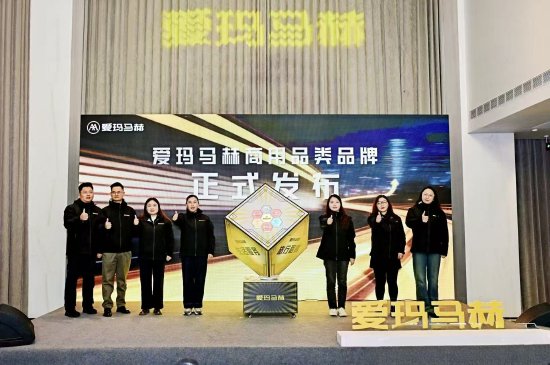
爱玛正式官宣商用子品牌“爱玛马赫”
Huan Qiu Wang· 2025-11-19 04:32
Core Insights - Aima has launched a commercial sub-brand "Aima Mahe," aiming to tap into the electric commercial vehicle market by leveraging its extensive resources and focusing on four core scenarios: instant delivery, life services, travel rentals, and customized solutions for government and enterprises [1][3] - The launch represents a strategic extension of Aima's expertise in the two-wheeled transportation sector into commercial applications, marking a significant growth opportunity [1][3] Company Strategy - Aima has completed nationwide base construction, providing a solid foundation for Aima Mahe's production and market presence [3] - The company emphasizes a commitment to technological innovation and quality, which will drive the development of Aima Mahe's commercial product line [3] Market Opportunity - The commercial two-wheeled vehicle market is entering a golden period of scale expansion, despite facing multiple challenges [3] - Aima Mahe aims to address the core demands of commercial users for efficient transportation and their emotional needs for respect and recognition through products that combine professional performance and practical value [3] Product Offering - Aima Mahe has unveiled a specialized product matrix covering four key scenarios, establishing the tool attributes and ecological value of two-wheeled commercial electric vehicles through scenario-based innovation [3] - The brand has also created a rental and sales platform for transportation and a "Mahe Rider Home" store category to address operational pain points for commercial users, providing integrated solutions from products to software and financial services [3]


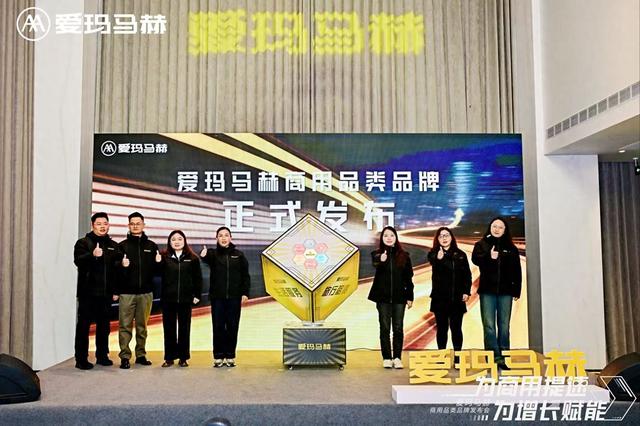
爱玛发布商用电动车子品牌“爱玛马赫”,覆盖即时配送等四大核心场景
Xin Lang Ke Ji· 2025-11-19 02:45
Core Insights - Aima officially launched its commercial sub-brand "Aima Mahe" at a product release event, focusing on four core scenarios: instant delivery, life services, travel rentals, and government-enterprise customization [1] - The commercial two-wheeler market is entering a golden period of scale expansion, despite facing multiple challenges [1][2] - Aima Mahe aims to address the lack of customization and standards in the commercial two-wheeler market by creating products that meet the core demands of efficient travel and emotional recognition for commercial users [1] Group 1 - Aima has established a solid production and market foundation through 26 years of experience and nationwide base construction [1] - The company emphasizes a commitment to quality and technology in the development of Aima Mahe's commercial product line [1] - Aima Mahe's mission is to pave the way for efficient business operations, focusing on professional performance and practical value [1] Group 2 - The commercial vehicle market is experiencing unprecedented policy benefits and market opportunities, with Aima Mahe leveraging an integrated approach through IPMS [2] - Aima Mahe is committed to a rider-centric philosophy, aiming to create a brand that satisfies riders, benefits partners, and gains industry recognition [2] - The company has developed a rental and sales platform along with "Mahe Rider Home" stores to address operational pain points for commercial users [2]
新能源强势反弹,行情因何驱动?
Mei Ri Jing Ji Xin Wen· 2025-11-19 01:37
Core Viewpoint - The renewable energy sector has experienced a significant rebound since mid-2025 after a three-year decline, driven by policy, demand, and technological advancements [1][2][3] Group 1: Market Performance - The Wande New Energy Index saw a 60% decline from its peak in October 2021 to its lowest point in April 2025, but has recently shown signs of bottoming out and recovery [1] - The recent rally in the renewable energy sector is characterized by a broad-based surge across key sub-sectors such as photovoltaics, lithium batteries, and energy storage [1][2] Group 2: Demand Drivers - The primary demand for renewable energy comes from the electric vehicle sector, which has maintained strong sales due to new model releases and upgraded trade-in policies [2] - The energy storage sector is also experiencing growth, transitioning from policy-driven demand to economically driven demand, aided by declining costs and technological advancements [2] Group 3: Future Outlook - Despite recent fluctuations due to U.S.-China trade tensions, the renewable energy sector is expected to continue its upward trajectory, supported by policy benefits and improving supply-demand dynamics [3] - The current valuation of the renewable energy sector remains relatively low compared to historical levels, indicating potential for growth as performance improves [3]
最后一块电动车新大陆,中国先上岸
汽车商业评论· 2025-11-18 23:08
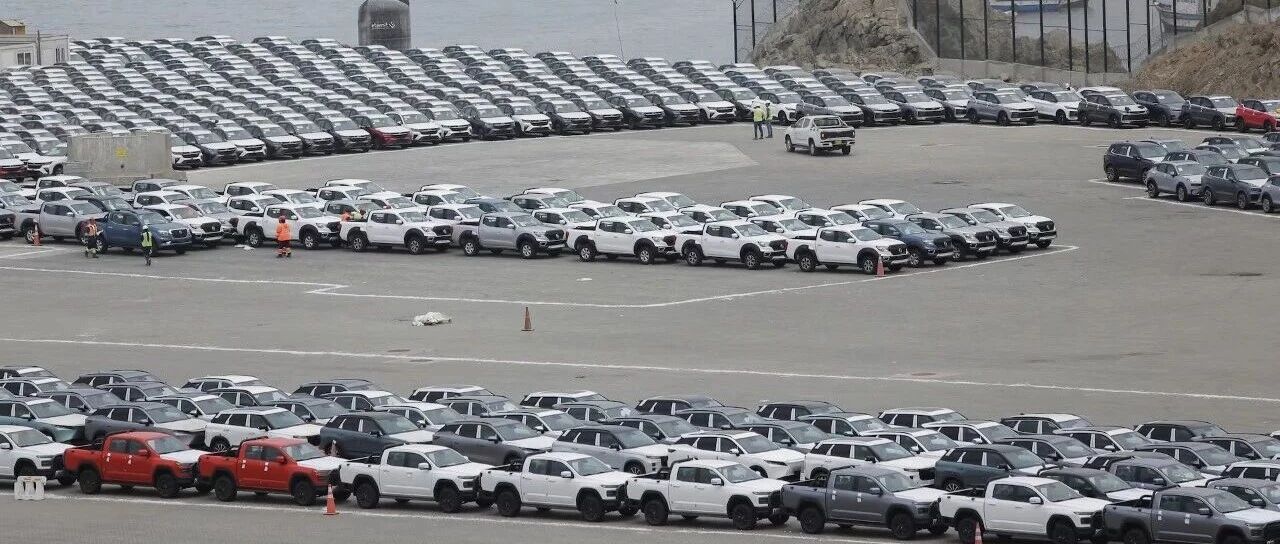
Core Viewpoint - The electric vehicle (EV) market in South America is experiencing rapid growth, with a significant increase in market penetration and a shift in consumer preferences away from traditional fuel vehicles, despite the absence of Tesla as a major player in the region [4][21]. Group 1: Market Growth and Trends - The electric vehicle penetration rate in Latin America has doubled from approximately 2% to 4% in 2024, significantly outpacing the global average [4][5]. - Brazil remains the largest automotive market in Latin America, with EV sales exceeding 125,000 units in 2024, accounting for over 6% of the local passenger car market [7]. - Countries like Uruguay, Costa Rica, and Colombia have seen EV penetration rates surpassing 10% [7]. - Chile recorded a 10.6% share of EVs in new car registrations by September 2025, while Brazil reached 9.4% in August of the same year [7]. Group 2: Consumer Behavior and Cost Structure - The shift in consumer behavior towards EVs is driven by changes in cost structures, with local electric vehicles priced at about 60% of Tesla's models [8]. - Increased awareness of operational cost advantages, such as lower charging and maintenance costs, is influencing consumer decisions [8][9]. - The practicality of EVs as a commuting option is becoming more appealing as purchase and usage costs are clarified [9]. Group 3: Supply Chain and Local Manufacturing - The opening of the Chancay Super Port in Peru has halved the shipping time for vehicles from Asia, facilitating the entry of foreign brands into the South American market [12]. - Brazil's government is reinstating higher import tariffs on EVs, prompting companies to ramp up local manufacturing and import volumes before the tax increase takes effect [13]. - Companies like Great Wall Motors are establishing local factories, indicating a strategic shift towards local production to enhance competitiveness in the region [15]. Group 4: Competitive Landscape - Tesla's market presence in South America is minimal, with the company lacking official import channels in countries like Peru, allowing other brands to fill the void [18]. - Chinese brands, including BYD, are leading in EV sales across several South American countries, while traditional automakers are adapting by introducing hybrid and electric models [19]. - The competitive landscape is evolving, with new entrants leveraging pricing and distribution advantages to challenge established brands [21].

九号公司:截至2025年10月31日,公司中国区电动两轮车专卖门店已超9700家
Zheng Quan Ri Bao· 2025-11-18 13:39
Core Insights - The company has over 9,700 electric two-wheeler specialty stores in China as of October 31, 2025 [2] - The company plans to optimize its store network to reach approximately 13,000 stores nationwide, aiming for a 20% market share [2] - The strategy includes precise site selection and rational density enhancement to strengthen market coverage efficiency [2]

马斯克强推去中国化成本暴涨42%, 2年替换中国零件,藏着啥门道?
Sou Hu Cai Jing· 2025-11-18 13:10
Core Viewpoint - Elon Musk's recent decision to eliminate Chinese-made parts from Tesla's supply chain is primarily driven by the need to comply with U.S. government electric vehicle subsidy policies, despite the potential financial drawbacks involved [1][3][11]. Group 1: Strategic Shift - Tesla has mandated global suppliers to remove all Chinese-manufactured components within two years to align with U.S. subsidy requirements [1][3]. - The Inflation Reduction Act stipulates that to qualify for up to $7,500 in subsidies, vehicles must not contain Chinese-made parts, affecting batteries, chips, and raw materials [3][5]. - The decision to "decouple" from China is seen as a forced move rather than a strategic choice, as the company faces significant cost increases and supply chain restructuring challenges [7][11]. Group 2: Financial Implications - Analysts estimate that completely abandoning Chinese components could lead to a 42% increase in battery costs, significantly impacting Tesla's profitability in a highly competitive market [2][15]. - The production costs at Tesla's U.S. factories have already surged by 12% to 15% due to tariffs on Chinese goods, further squeezing profit margins [5][15]. - The shift may result in higher vehicle prices or reduced profit margins, ultimately affecting consumers and the broader electric vehicle market [15][18]. Group 3: Competitive Landscape - China remains a leader in the global electric vehicle industry, with advanced battery technology and a mature supply chain that is difficult to replicate elsewhere [8][10]. - European automakers are increasing their procurement of Chinese components, recognizing the importance of Chinese technology for maintaining competitiveness [11][13]. - Chinese companies like CATL and BYD are establishing local production facilities in Europe to circumvent policy barriers, demonstrating a more flexible and long-term strategy compared to Tesla's approach [13][15]. Group 4: Broader Industry Impact - Tesla's move reflects a larger trend in the global electric vehicle supply chain being influenced by geopolitical factors, leading to potentially irrational business decisions [17][18]. - The ongoing tension between the need for U.S. market compliance and reliance on Chinese technology may hinder Tesla's innovation and product competitiveness [15][18].

停车难不能从“四轮”蔓延至“两轮”
Xin Hua She· 2025-11-18 07:26
Core Viewpoint - The rapid growth of electric scooters in urban areas is leading to significant parking challenges, necessitating immediate attention from city managers to prevent the parking difficulties experienced with four-wheeled vehicles from extending to two-wheeled vehicles [1][2]. Group 1: Current Situation - The popularity of electric scooters has surged due to the promotion of green travel concepts and the development of the electric vehicle industry, with nearly 1 million new scooters added in major cities over the past two years [1]. - In central urban areas, the traffic volume at key intersections can exceed 300 vehicles per minute, highlighting the strain on existing urban transportation systems and space planning [1]. Group 2: Challenges and Solutions - The lack of adequate parking spaces is a significant issue, with a need to increase the proportion of non-motorized vehicle parking in new public buildings and residential areas [2]. - Cities are encouraged to adopt tailored strategies for key locations such as hospitals, schools, and subway stations to improve parking availability and facilitate smoother non-motorized travel [2]. - There is a call for cities to revise local regulations governing non-motorized vehicles, enhancing oversight from production to usage, and increasing penalties for violations to ensure compliance [2].
股价自高点跳水近三成,小米为何从尖子生跌成“科指垫底”?
Jin Shi Shu Ju· 2025-11-18 03:13
Core Viewpoint - Xiaomi Group has rapidly declined from being a market favorite to one of the worst-performing Chinese tech stocks, facing challenges in the smartphone and electric vehicle markets, making short-term recovery difficult [1] Group 1: Financial Performance and Market Position - Xiaomi is expected to report its slowest revenue growth since 2023, raising concerns among investors [1] - The company's stock has dropped nearly 30% since its peak in September, ranking among the largest declines in the Hang Seng Tech Index [1] - The average target price for Xiaomi's stock has been reduced by over 8% since its August high, making it the third-largest downward adjustment in the Hang Seng Tech Index, following Meituan and Li Auto [2] Group 2: Cost Pressures and Profitability - Rising storage chip prices are anticipated to erode Xiaomi's smartphone profit margins, with mobile DRAM contract prices increasing by 21% in October, the highest level since July 2022 [1] - Analysts indicate that the ongoing "super cycle" in storage chips will pressure profit margins for companies like Xiaomi, as these costs cannot be fully passed on to consumers [2] Group 3: Electric Vehicle Business - Xiaomi is focused on increasing electric vehicle delivery volumes, with a goal of achieving profitability in this sector by the end of the year [2] - Concerns exist regarding the potential impact of the gradual withdrawal of government subsidies on the overall automotive market [2] Group 4: Investor Sentiment and Stock Valuation - Despite the stock's decline, its valuation has become more attractive, with a projected future price-to-earnings ratio of approximately 19 times, half of its early-year peak [2] - Domestic investors have been increasing their positions in Xiaomi, with net purchases for thirteen consecutive days through the trading link mechanism [2] - The short-selling ratio of Xiaomi's stock has risen from a low of 0.4% in July to nearly 0.7%, driven by concerns over safety, factory delays, and insufficient electric vehicle demand despite recent promotions [2]

小牛电动20251117
2025-11-18 01:15
Summary of Key Points from the Conference Call Company Overview - **Company**: Niu Technologies - **Industry**: Electric Two-Wheelers Core Insights and Arguments - **Sales Performance**: - Total sales reached 466,000 units in Q3 2025, a year-on-year increase of 49% [2][3][13] - Sales in the Chinese market were 451,000 units, up 74% year-on-year, while overseas sales decreased to 14,000 units [2][3][13] - **Revenue Growth**: - Total revenue increased by 65% to 1.69 billion RMB [2][3][13] - Revenue from the Chinese market was 1.62 billion RMB, representing an 84% year-on-year growth and accounting for 95% of total revenue [14] - **Gross Margin Improvement**: - Gross margin improved to 21.8%, an increase of 8 percentage points year-on-year [2][3][17] - **Product Strategy**: - High-value models (priced above 8,000 RMB) accounted for over 10% of total sales [2][4] - The launch of the FX Windstorm electric motorcycle attracted significant attention, selling 14,000 units within 5 hours and generating a GMV of 68 million RMB [2][5] - **Market Expansion**: - The company opened 4,500 new stores, with nearly half located in lower-tier cities [3][7] - Online sales accounted for nearly 70% of total sales, indicating a strong digital presence [3][7] Additional Important Insights - **Technological Advancements**: - Continuous investment in core technologies such as smart riding systems and powertrain innovations [2][6] - Development of safety features like ABS and millimeter-wave radar for high-end models [6] - **Brand Promotion**: - Lifestyle marketing campaigns generated 130 million exposures, enhancing brand visibility [7] - The FX Storm received a 93% positive feedback rating post-launch [7] - **Overseas Market Challenges**: - The overseas market is in a transitional phase, with sales not meeting expectations, but self-marketing sales accounted for 76% [8][9] - Plans to adjust the micro-mobility business strategy to address unfavorable conditions in Europe and the U.S. [9] - **Future Outlook**: - Anticipated flat sales in Q4 due to pre-stocking by retailers and uncertainties regarding new standards [10] - Expected strong growth in Q1 2026 as new standard-compliant products are launched [10][11] - **Financial Metrics**: - Net profit for the quarter was 82 million RMB, with a GAAP net margin of 4.8% [19] - Operating expenses increased by 48% year-on-year, but the operating expense ratio improved to 17.5% [18] - **Guidance for Q4**: - Projected revenue between 737 million to 910 million RMB, reflecting a year-on-year change of -10% to +10% [21]
