石油

Search documents
铜冠金源期货商品日报-20260319
Tong Guan Jin Yuan Qi Huo· 2026-03-19 02:16
1. Report Industry Investment Rating No information is provided in the report regarding the industry investment rating. 2. Core Viewpoints of the Report - The 3 - month FOMC maintained the interest rate at 3.50% - 3.75%, and the conflict between the US and Iran escalated, which had a significant impact on the global financial and commodity markets [2]. - A - shares showed a V - shaped rebound, but the risk preference was affected by the external environment, and the short - term market was likely to continue to fluctuate and differentiate among sectors. The bond market also showed a rebound but was restricted by the fundamentals and inflation expectations [3]. - Precious metals were under pressure due to the Fed's hawkish signals and high inflation data, and were expected to maintain a weak trend in the short term [4][5]. - Copper prices were under pressure due to the Fed's policy stance and high PPI data, and were expected to continue to adjust in the short term [6][7]. - Aluminum prices were affected by both positive and negative factors, with the tightening expectation suppressing the upside and the supply - side disturbance providing support, and were expected to remain strong [8][9]. - Alumina was affected by the policy uncertainty of Guinea's bauxite, but the subsequent supply pressure might limit its upside space, and it was expected to be strongly volatile [10]. - Cast aluminum was affected by the cost and supply - demand situation, and was expected to fluctuate within a limited range [11]. - Zinc prices were under pressure due to the Fed's hawkish signals and geopolitical tensions, and the short - term decline was rapid [12][13]. - Lead prices had limited upward momentum due to weak downstream purchases, but the low - level operation of the regenerated lead smelter provided support [14]. - Tin prices were under pressure due to weak macro and micro factors, and were expected to decline to find support [15]. - Nickel prices were affected by the Fed's policy and supply - demand fundamentals, and were expected to fluctuate in the short term [16][17]. - Lithium carbonate prices were under pressure due to the Fed's reduced interest - rate cut expectations, and were expected to be weakly volatile in the short term [18]. - Steel prices were affected by the Fed's policy and the recovery of terminal demand, and were expected to fluctuate [19]. - Iron ore prices were supported by the shipping cost increase and supply - demand situation, and were expected to remain high and volatile [20]. - Coking coal and coke prices were boosted by the rising oil prices, and were expected to continue to rebound in an oscillatory manner [21]. - Bean and rapeseed meal prices were affected by the supply of soybeans and the energy market, and were expected to adjust in an oscillatory manner [22]. - Palm oil prices were affected by the energy market and supply - demand situation, and were expected to adjust in an oscillatory manner [23][25]. 3. Summary by Relevant Catalogs 3.1 Macro - Overseas: The 3 - month FOMC maintained the interest rate at 3.50% - 3.75% with a 11:1 vote, added the statement of "highly uncertain Middle - East situation", and the dot - plot still maintained one interest - rate cut in 2026 - 2027. The SEP slightly revised up the growth and inflation expectations for 2026. The conflict between the US and Iran escalated, affecting the global energy supply. The CME interest - rate futures postponed the next interest - rate cut to July 2027, the 10Y US Treasury yield rose to 4.28%, the US dollar index returned to 100, and the US stocks, gold, and copper fell, while the oil price rose by 5% [2]. - Domestic: A - shares had a V - shaped rebound on Wednesday, with the Shanghai Composite Index closing at 4063 points. The trading volume shrank to 2.06 trillion yuan. The risk preference of A - shares was affected by the external environment, and the short - term market was likely to continue to fluctuate. The bond market rebounded, but was restricted by the fundamentals and inflation expectations [3]. 3.2 Precious Metals - The international precious - metal futures prices fell sharply on Wednesday, with COMEX gold futures down 3.68% to $4823.90 per ounce and COMEX silver futures down 5.63% to $75.42 per ounce. The Fed released hawkish signals, the market's interest - rate cut expectations cooled, and the US inflation data exceeded expectations, putting pressure on precious - metal prices. The Fed's March meeting maintained the interest rate, pointed out the uncertainty of the Middle - East impact, and raised the inflation expectation. The interest - rate futures market expected a 50% probability of an interest - rate cut this year. Precious - metal prices were expected to remain weak in the short term [4][5]. 3.3 Copper - On Wednesday, the main contract of Shanghai copper broke through the support level, and LME copper fell to around $12300. The domestic electrolytic copper spot market had weak transactions. The macro factors included the Fed's policy stance and the high US PPI data in February, which indicated a possible rebound in underlying inflation and limited the Fed's interest - rate cut space. The industry news was that BHP planned to invest $5 billion in a new concentrator project for its Escondida copper mine in Chile. Copper prices were expected to continue to adjust in the short term [6][7]. 3.4 Aluminum - On Wednesday, the main contract of Shanghai aluminum closed at 24800 yuan/ton, down 0.4%. The LME aluminum closed at $3419.5 per ton, up 1.63%. The electrolytic aluminum ingot inventory increased, and the aluminum rod inventory also increased. The Fed maintained the interest rate and raised the inflation expectation. The Middle - East geopolitical conflict continued to escalate, which had both positive and negative impacts on aluminum prices. Aluminum prices were expected to remain strong [8][9]. 3.5 Alumina - On Wednesday, the main contract of alumina futures closed at 3048 yuan/ton, up 0.66%. The spot alumina price rose. The import of bauxite increased. The policy uncertainty of Guinea's bauxite drove the alumina market, but the subsequent supply pressure might limit its upside space. Alumina was expected to be strongly volatile [10]. 3.6 Cast Aluminum - On Wednesday, the main contract of cast - aluminum alloy futures closed at 23570 yuan/ton, down 0.86%. The scrap - aluminum price fluctuated, and the supply of scrap aluminum gradually recovered. The supply of cast aluminum increased slightly, and the consumption increased slightly when the price fell. Cast aluminum was expected to fluctuate within a limited range [11]. 3.7 Zinc - On Wednesday, the main contract of Shanghai zinc showed a weak trend, and LME zinc broke through the support level. The US PPI data exceeded expectations, the Fed maintained the interest rate, and the dot - plot showed a reduced expectation of interest - rate cuts. The geopolitical tension in the Middle - East increased the risk aversion sentiment. Zinc prices were under pressure and were expected to have fluctuations around 23000 [12][13]. 3.8 Lead - On Wednesday, the main contract of Shanghai lead showed a narrow - range oscillation. The terminal consumption recovered limitedly, and the battery export was restricted by tariffs. The downstream battery enterprises reduced their purchases when the lead price rebounded. The regenerated lead smelter had large losses and low operating loads, which provided support. Lead prices were expected to operate in a low - level range [14]. 3.9 Tin - On Wednesday, the main contract of Shanghai tin showed a weak trend. The US PPI data exceeded expectations, the Fed maintained the interest rate, and the geopolitical situation in the Middle - East was tense. The supply of tin ore improved, and the demand was affected by the correction of AI expectations and the under - expected photovoltaic orders. Tin prices were expected to decline to find support [15]. 3.10 Nickel - On Wednesday, the main contract of Shanghai nickel oscillated and declined. The Fed's policy stance suppressed the market risk preference. The supply of nickel ore was restricted by the rainy season in the Philippines, and the cost was supported. The downstream steel mills were in the seasonal procurement period, but the demand was affected by the high - cost raw materials. Nickel prices were expected to fluctuate in the short term [16][17]. 3.11 Lithium Carbonate - On Wednesday, lithium carbonate prices fell significantly, and the spot market also weakened. The raw - material prices decreased. The supply was expected to increase, and the demand in the power - battery and energy - storage fields had different performances. Lithium carbonate prices were under pressure but had some support, and were expected to be weakly volatile in the short term [18]. 3.12 Steel (Screw and Coil) - On Wednesday, steel futures oscillated and adjusted. The Fed maintained the interest rate. The Middle - East situation affected the market sentiment. The terminal demand recovered, and the steel production increased after the Two Sessions. Steel prices were expected to fluctuate [19]. 3.13 Iron Ore - On Wednesday, iron - ore futures oscillated. The spot market had normal transactions. The shipping cost increased due to the Iran conflict, which supported the iron - ore price. The overseas shipment increased, the port inventory decreased slightly, and the demand from steel mills increased. Iron - ore prices were expected to remain high and volatile [20]. 3.14 Coking Coal and Coke - On Wednesday, coking - coal and coke futures rebounded in an oscillatory manner. The Middle - East geopolitical conflict pushed up the oil price, which drove the coal market. The coking - coal price rebounded, and the coke cost was supported. The supply of coking coal was relatively loose, and the demand for coke increased. Coking - coal and coke prices were expected to continue to rebound in an oscillatory manner [21]. 3.15 Bean and Rapeseed Meal - On Wednesday, the bean - meal 05 contract fell 0.26%, and the rapeseed - meal 05 contract fell 1.09%. The Middle - East energy infrastructure was attacked, and the oil price rose, which boosted the soybean and related agricultural - product markets. The domestic short - term supply was expected to be tight, and the downstream purchasing enthusiasm increased. Bean and rapeseed meal prices were expected to adjust in an oscillatory manner [22]. 3.16 Palm Oil - On Wednesday, palm - oil futures fell. The Middle - East situation affected the energy market, and the oil price rose. The B50 biodiesel policy in Indonesia might be restarted, and the US biodiesel policy was to be released. Palm - oil prices were expected to adjust in an oscillatory manner [23][25]. 3.17 Metal Main - Variety Trading Data The report provides the closing prices, price changes, trading volumes, and other data of various metal futures on March 18, including copper, aluminum, zinc, lead, nickel, tin, gold, silver, etc. [26] 3.18 Industry Data Perspective The report provides the price changes, inventory changes, and other data of copper, nickel, zinc, lead, aluminum, alumina, tin, and other metals from March 17 to March 18 [27][30].
《能源化工》日报-20260319
Guang Fa Qi Huo· 2026-03-19 02:16
Group 1: Report Industry Investment Ratings - No investment rating information provided in the reports Group 2: Core Views Polyolefins - The current market is in a fierce game between strong cost support, supply contraction expectations, and weak actual demand. It is expected that prices will maintain a wide - range high - level shock. If the geopolitical tension continues, under the combination of "domestic production cuts, reduced imports, and increased exports", and the conflict tends to be long - term, the domestic start - up rate may decline further after April, and the 05 contract is expected to have a significant upward market [1]. Rubber - The Sino - US conflict remains stalemate, and the crude oil price fluctuates at a high level. In the short term, the crude oil trend still dominates the market risk sentiment. The natural rubber fundamentals have both long and short factors, and it is expected to fluctuate within a range of 16,000 - 17,500, with strong cost support at the lower end. Be vigilant about the market trading the reduction of Middle - East tire demand again at the upper end of the price range [2]. Glass and Soda Ash - Soda ash: The fundamental pattern of strong supply and weak demand continues. In the short term, multiple production lines are planned for maintenance. In the medium - to - long term, there is still some room below the current price. It is expected that the futures will be in a shock - adjustment pattern, with a reference range of 1150 - 1300. It is recommended to wait and see unilaterally, and pay attention to inventory and production line changes. - Glass: The current supply - side daily melting volume is already low, and the real - estate data shows that the real - estate is still in the adjustment period, and the demand - side recovery is slow. The overall fundamentals have weak supply and demand. It is advisable to view it with a shock outlook. The strategy is to wait and see, with a reference range of 1000 - 1150. Pay attention to inventory and downstream demand [3]. PVC and Caustic Soda - Caustic soda: Although the fundamentals have marginally improved, the overall pattern of weak supply and demand remains unchanged. Recently, the Middle - East situation has slightly eased, and after the emotional tide recedes, the futures price has declined. - PVC: In the short term, the supply - demand situation has slightly changed. Affected by the expected increase in ethylene supply tension, the production load of ethylene - based production enterprises may be reduced in the long term, while the calcium - carbide - based production load has slightly increased. The cost increase drives the bottom of the PVC price to rise. The domestic demand is normal, and foreign trade exports are waiting for new quotes due to unstable freight and other risks [4]. Urea - The current urea fundamentals have not improved significantly. In the short term, urea prices are mainly subject to fluctuations driven by energy costs. Recently, the tense situation of high oil prices has slightly eased. Under the background of domestic price - stabilizing policies, urea may experience a shock - decline in the short term [5]. Ester Industry Chain - PX: In the short term, the supply and demand of PX are both weak, and the overall supply - demand is marginally weakening. The current benchmark price still dominates the chemical trend. Pay attention to the downstream negative feedback. It is expected that the absolute price of PX will fluctuate with the oil price in the short term. - PTA: In the short term, PTA's own driving force is limited, and the absolute price fluctuates with the cost side. - Ethylene glycol: In March, the domestic supply of ethylene glycol has significantly declined, and the arrival volume of foreign ships will be at a low level. The polyester load is seasonally rising, and the de - stocking amplitude is expected to expand in March - April. In the short term, the ethylene glycol price still has the momentum to rise. - Short - fiber: In the short term, the short - fiber's own driving force is limited, and it mainly follows the raw material fluctuations. - Bottle chips: The supply of domestic bottle chips is gradually increasing in March. Under the influence of macro and crude oil stimulation and the peak procurement season of PET, the downstream procurement of bottle chips is expected to follow up, and the supply - demand of bottle chips is expected to be tight [6]. Crude Oil - In the short term, the oil price maintains a pattern of "policy suppression + geopolitical support", and Brent maintains a range - bound fluctuation. If the Strait of Hormuz blockade lasts for more than a month, the supply will change from inventory depletion to a substantial shortage, and the oil price may still have strong upward momentum [8]. Pure Benzene and Styrene - Pure benzene: The supply of pure benzene is expected to decline, and the supply - demand is expected to improve. In the short term, pure benzene may follow the oil - price fluctuations. - Styrene: In March, the supply of styrene remains high, and the supply - demand is expected to slightly de - stock. In the short term, the absolute price of styrene follows the oil - price fluctuations [10]. Methanol - At present, the price is dominated by supply - interruption expectations and risk sentiment. The subsequent trend highly depends on the actual progress of the geopolitical conflict [11]. LPG - No overall core view provided for LPG in the report Group 3: Summary by Related Catalogs Polyolefins - **Prices**: Futures prices of L2605, L2609, PP2605, and PP2609 all declined on March 18 compared with the previous day, with declines ranging from 0.28% to 0.77%. Spot prices of East - China PP and North - China LLDPE also decreased, with declines of 0.58% and 0.61% respectively [1]. - **Inventory**: PE enterprise inventory decreased by 1.23% to 56.83 million tons, and social inventory decreased by 6.58% to 61.93 million tons. PP enterprise inventory decreased by 9.34% to 59.62 million tons, and trader inventory decreased by 6.04% to 19.36 million tons [1]. - **开工率**: PE device start - up rate decreased by 5.20% to 82.39%, and downstream weighted start - up rate increased by 18.20% to 33.83%. PP device start - up rate decreased by 5.95% to 69.98%, and downstream weighted start - up rate of PP powder increased by 14.53% to 31.35 [1]. Rubber - **Prices**: Spot prices of Yunnan Guofu hand - made rubber and Thai standard mixed rubber decreased by 2.99% and 1.92% respectively on March 18 compared with the previous day. The basis of whole - milk rubber decreased by 200.00% [2]. - **Production and Inventory**: In January, Thailand's rubber production increased by 11.09% to 549,000 tons, Indonesia's production decreased by 14.90% to 161,100 tons, and India's production decreased by 3.48% to 108,100 tons. The bonded - area inventory decreased by 0.42% to 677,569 tons, and the factory - warehouse futures inventory of natural rubber on the SHFE decreased by 2.20% to 49,291 tons [2]. - **开工率**: The start - up rates of semi - steel and all - steel tires increased by 3.68% and 4.32% respectively to 77.71% and 70.22% [2]. Glass and Soda Ash - **Prices**: Glass prices in North - China, East - China, and Central - China remained unchanged on March 18. Soda ash prices in North - China, East - China, Central - China, and Northwest - China also remained unchanged [3]. - **Supply and Inventory**: Soda ash start - up rate increased by 0.27% to 87.00%, and weekly output increased slightly. Float - glass daily melting volume decreased by 1.08% to 146,900 tons, and photovoltaic glass daily melting volume increased by 1.82% to 89,360 tons. Glass factory - warehouse inventory decreased by 4.76% to 75,849,000 weight - cases, and soda ash factory - warehouse inventory decreased by 1.6% to 193,170 tons [3]. PVC and Caustic Soda - **Prices**: On March 18, the price of Shandong 32% liquid caustic soda remained unchanged, while the price of Shandong 50% liquid caustic soda increased by 0.8%. The price of East - China calcium - carbide - based PVC decreased by 0.9%, and the price of East - China ethylene - based PVC remained unchanged [4]. - **Supply and Demand**: The start - up rate of the caustic - soda industry decreased by 1.3% to 85.3%, and the total start - up rate of PVC increased by 0.3% to 81.4%. The start - up rates of downstream industries such as printing and dyeing increased to varying degrees [4]. - **Inventory**: Caustic - soda factory - warehouse inventory decreased by 3.6% to 53,000 tons, and PVC upstream factory - warehouse inventory and total social inventory both decreased by 17.7% to 37,700 tons [4]. Urea - **Prices**: On March 18, the futures price of urea decreased, and the spot price continued to decline weakly. The prices of small - particle urea in Shandong, Henan, and other regions decreased slightly [5]. - **Supply and Demand**: The daily output of domestic urea decreased by 1.36% to 218,200 tons, and the start - up rate of urea production enterprises decreased by 1.36% to 92.68%. The agricultural demand for return - green fertilizer has ended, and the industrial demand is flat [5]. - **Inventory**: Domestic urea factory - warehouse inventory decreased by 15.53% to 808,900 tons, and port inventory remained unchanged at 189,000 tons [5]. Ester Industry Chain - **Prices**: On March 18, the prices of Brent crude oil and WTI crude oil increased, while the prices of downstream polyester products such as POY, FDY, and DTY decreased to varying degrees. The prices of PX, PTA, and MEG also showed different trends [6]. - **开工率**: The start - up rates of Asian PX, Chinese PX, PTA, and MEG all decreased to varying degrees, while the start - up rates of polyester comprehensive, direct - spinning filament, and polyester bottle chips increased [6]. Crude Oil - **Prices**: On March 18, Brent crude oil increased by 3.83% to $107.38 per barrel, WTI crude oil increased by 0.11% to $96.32 per barrel, and SC crude oil increased by 0.90% to 751.20 yuan per barrel [8]. - **价差**: The spreads between Brent M1 - M3, SC M1 - M3, and Brent - WTI all changed compared with the previous day [8]. Pure Benzene and Styrene - **Prices**: On March 18, the prices of Brent crude oil and WTI crude oil increased, while the prices of CFR China pure benzene, pure - benzene East - China spot, and benzene - ethylene East - China spot decreased [10]. - **Inventory**: The inventory of pure benzene in Jiangsu ports decreased by 4.6% to 288,000 tons, and the inventory of benzene - ethylene in Jiangsu ports increased by 3.8% to 162,500 tons [10]. - **开工率**: The start - up rates of Asian pure benzene, domestic pure benzene, and benzene - ethylene all decreased to varying degrees [10]. Methanol - **Prices**: On March 18, the closing price of MA2605 increased by 2.28% to 2912 yuan per ton, and the closing price of MA2609 increased by 1.19% to 2719 yuan per ton [11]. - **Inventory**: Methanol enterprise inventory decreased by 7.32% to 484,900 tons, and port inventory decreased by 3.89% to 1,262,000 tons [11]. - **开工率**: The start - up rate of domestic methanol enterprises increased slightly by 0.07% to 76.27%, and the start - up rate of overseas enterprises decreased by 9.58% to 47.2% [11]. LPG - **Prices**: On March 18, the prices of PG2604 and PG2605 decreased by 1.42% and 1.15% respectively. The price of South - China spot (civil gas) remained unchanged, and the price of deliverable spot increased by 1.81% [12]. - **Inventory**: LPG refinery storage - capacity ratio increased by 10.50% to 24.9%, and port inventory decreased by 1.52% to 227,000 tons [12]. - **开工率**: The start - up rate of upstream main - refineries decreased by 1.76% to 81.35%, and the start - up rate of downstream PDH decreased by 2.62% to 63.2% [12].
特朗普“解禁”《琼斯法案》,60天降油价
财联社· 2026-03-19 02:15
Core Viewpoint - The article discusses the temporary exemption of the Jones Act by the Trump administration to alleviate rising energy prices due to the escalating conflict between the U.S. and Iran, allowing foreign-flagged vessels to transport essential commodities within U.S. ports for 60 days [1][3][7]. Group 1: Impact of the Jones Act Exemption - The exemption will enable foreign-flagged ships to transport oil, gas, fertilizers, and coal between U.S. ports, which is expected to ease transportation costs [1][3]. - The Jones Act, established in 1920, mandates that goods transported between U.S. ports must be carried by U.S.-built, U.S.-registered, and U.S.-crewed vessels, aimed at protecting the domestic shipping industry [7]. - According to Daleep Singh, Chief Global Economist at PGIM, there are fewer than 100 vessels compliant with the Jones Act, indicating that the exemption will allow more international tankers to transport fuel within the U.S. [7]. Group 2: Market Reactions and Oil Prices - The ongoing conflict has led to a surge in international oil prices, with Brent crude futures rising above $109 per barrel, approaching the $110 mark [5]. - Despite the exemption, analysts suggest that the impact may be limited due to a mismatch in refinery capabilities, as most U.S. refineries are designed to process Middle Eastern crude oil, while the U.S. primarily produces lighter shale oil [7][8]. Group 3: Concerns from Maritime Labor Groups - A coalition of nine U.S. maritime labor groups expressed concerns over the suspension of the Jones Act, arguing that it undermines national security and military readiness by relying on foreign operators [9][10]. - They assert that the exemption will not significantly lower gasoline prices, as evidence shows that global crude costs are the primary drivers of gasoline prices, with domestic transportation costs being negligible [10][11].


阿联酋天然气设施暂停运营,美国天然气飙涨6%,特朗普宣布紧急措施
21世纪经济报道· 2026-03-19 01:33
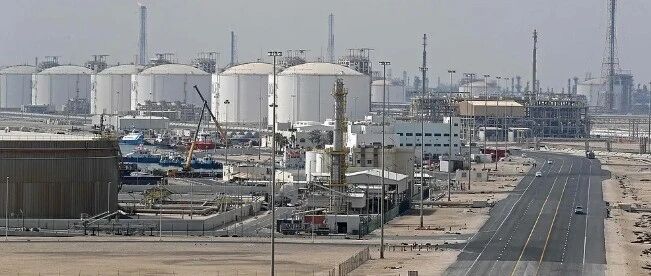
据央视财经报道,以色列方面18日消息称, 以色列国防军当天袭击了位于伊朗南部布什尔的 伊朗"最大天然气设施"。该设施处理伊朗40%的天然气。 据央视新闻报道, 当地时间19日凌晨, 卡塔尔拉斯拉凡天然气设施再次被导弹击中。 当天稍 早时候,伊朗方面消息称,伊朗再次对"驻扎有伊朗敌人的海湾国家"的石油设施发动袭击。据 悉,拉斯拉凡工业城是全球最大的液化天然气生产设施所在地。 据新华社报道,阿联酋阿布扎比媒体办公室19日证实,因拦截来袭导弹产生的碎片坠落, 该 国哈卜尚天然气设施和巴卜油田受到影响。其中,哈卜尚天然气设施已暂时关闭。 记者丨 张嘉钰 编辑丨刘雪莹 3月19日,美国天然气期货飙升,截至发稿涨6%,现报3.215美元/百万英热。 国际油价持续大涨,截至发稿,布伦特原油突破107美元/桶,日内涨超4%。纽约原油涨 3.63%。 越声投研: 热门题材公司线索延伸阅读 (声明:文章内容仅供参考,不构成投资建议。投资者据此操作,风险自担。) 出品丨21财经客户端 21世纪经济报道 日经225下挫1500点,日韩芯片股领跌,爱德万测试、SK海力士跌超4% 全球云计算巨头集体涨价,有模型涨超460% 道指深夜重挫 ...

卡塔尔天然气设施再次遭袭
第一财经· 2026-03-19 01:26
记者 当地时间19日凌晨获悉,卡塔尔拉斯拉凡天然气设施再次被导弹击中。 当天稍早时候,伊朗方面消息称,伊朗再次对"驻扎有伊朗敌人的海湾国家"的石油设施发动袭击。 据悉,拉斯拉凡工业城是全球最大的液化天然气生产设施所在地。 伊朗发起报复性打击 来源|央视新闻 编辑 |瑜见 相关阅读: 伊朗:中东三国石油设施成为合法打击目标 ...
建信期货原油日报-20260319
Jian Xin Qi Huo· 2026-03-19 01:06
能源化工研究团队 研究员:李捷,CFA(原油沥青) 研究员:任俊弛(PTA、MEG) 研究员:彭婧霖(聚烯烃) 研究员:刘悠然(纸浆) 研究员:冯泽仁(玻璃纯碱) 期货从业资格号:F03134307 行业 原油日报 日期 2026 年 3 月 19 日 021-60635738 lijie@ccb.ccbfutures.com 期货从业资格号:F3031215 021-60635737 renjunchi@ccb.ccbfutures.com 期货从业资格号:F3037892 期货从业资格号:F3065843 021-60635740 pengjinglin@ccb.ccbfutures.com 期货从业资格号:F3075681 021-60635570 liuyouran@ccb.ccbfutures.com 期货从业资格号:F03094925 021-60635727 fengzeren@ccb.ccbfutures.com 请阅读正文后的声明 每日报告 一、行情回顾与操作建议 | 表1: | 行情回顾(美元/桶) | | | | | | | | --- | --- | --- | --- | --- | ...
日经225下挫1500点,日韩芯片股领跌,爱德万测试、SK海力士跌超4%
21世纪经济报道· 2026-03-19 00:57
Market Overview - Japanese and Korean stock markets opened lower, with the Nikkei 225 index dropping below 54,000 points, currently at 53,704.19, down 2.78%, a decline of over 1,500 points [1] - The KOSPI index in South Korea fell by 2.45%, with Samsung Electronics and SK Hynix shares down by 4% and 4.3% respectively [3] Commodity Prices - International oil prices have surged, with Brent crude surpassing $107 per barrel, an increase of over 4% on the day, while New York crude rose by 3.63% [3] Labor Developments - A report indicated that over 66,000 members of the Samsung Electronics union voted, with 93.1% in favor of a strike. A full strike is expected from May 21 to June 7 if no significant changes occur [5] - The potential strike at Samsung Electronics, a key player in the global semiconductor market, could exacerbate the tightening supply situation in the semiconductor industry, impacting sectors such as automotive, computing, and smartphones [5]

能源化策略:中东更多能源基础设施损坏,原油带领化?延续强势
Zhong Xin Qi Huo· 2026-03-19 00:55
1. Report Industry Investment Rating No information provided in the report. 2. Core Viewpoints of the Report - The conflict in the Middle East has escalated, disrupting the global energy supply. China, as the world's largest crude oil importer, may release some commercial crude oil reserves to help the petrochemical industry through the current difficulties. The price of chemicals is unlikely to fall significantly due to the increase in cost [2]. - Crude oil will lead the chemical industry to continue its strong and volatile pattern. The prices of various chemical products are affected by geopolitical factors, and the market outlook varies for different products [3]. 3. Summary by Relevant Catalogs 3.1 Market Views - **Crude Oil**: The operation risk of energy facilities in the Middle East has increased, and the shortage pattern continues. The market is facing a large supply gap, and the price is expected to fluctuate strongly. The main influencing factors include the Middle East geopolitical situation, OPEC+ production policy changes, and Sino-US tariff policy adjustments [7]. - **Asphalt**: Supported by geopolitical factors, the asphalt futures price fluctuates at a high level. The refinery's profit has deteriorated, and there is an expectation of a significant reduction in refinery operations. The market is in a state of weak supply and demand, and the inventory is accumulating. The price is expected to fluctuate, and the long - term valuation is expected to decline [8]. - **High - Sulfur Fuel Oil**: Supported by geopolitical factors, it fluctuates at a high level. The high import dependence and strong geopolitical attributes are pushing up the futures price. In the long term, the demand for fuel oil power generation in the Middle East is gradually being replaced, which is a long - term negative factor. The price is expected to fluctuate, and attention should be paid to the Middle East geopolitical situation in the short term [8][9]. - **Low - Sulfur Fuel Oil**: It follows the high - level fluctuation of crude oil. It is affected by factors such as the decline in shipping demand, green energy substitution, and high - sulfur substitution. The current valuation is moderately high, and it is expected to fluctuate following crude oil [11]. - **PX**: The supply is expected to be tight due to the contraction of the total supply and structural concessions. The price is expected to fluctuate strongly in the short term, and the mid - term logic of buying on dips is maintained [13]. - **PTA**: Traders are actively selling, and the basis is rapidly weakening. The price is expected to fluctuate strongly in the short term, and the TA05 - 09 spread is expected to maintain a positive spread logic in the short term [14][15]. - **Pure Benzene**: It is mainly affected by the geopolitical situation and runs strongly in a volatile manner. The supply is expected to decrease, and the price is expected to fluctuate strongly [15][17]. - **Styrene**: Geopolitical factors bring positive effects to supply and demand, and it runs strongly in a volatile manner. The supply may be reduced, and there is an expectation of increased exports. The price is expected to fluctuate strongly [18][19]. - **MEG**: The cost side is still supported, and the price is firm under the reduction of supply. The price is expected to fluctuate strongly in the short term, and it is advisable to wait and see in the short term [20][21]. - **Short Fibers**: The market is mainly in a wait - and - see state, with mostly rigid demand transactions. The price follows the upstream and is expected to fluctuate strongly in the short term [21][22]. - **Polyester Bottle Chips**: The intraday trading has become lighter, and the transaction price difference is large. The price follows the upstream raw materials, and the processing fee has a certain support below. It is expected to fluctuate strongly [23]. - **Methanol**: Affected by the continuous geopolitical conflict, it fluctuates within a range. The market tends to trade the geopolitical premium, and it is expected to fluctuate within a range [25]. - **Urea**: The commercial reserves are concentrated and released, and the price is moderately weak. The supply is stable at a high level, and the demand side has some changes. It is expected to fluctuate moderately and may be slightly weak [26]. - **PE**: Geopolitical disturbances still exist, and it should be treated with caution. Geopolitical factors support the raw material side, but the downstream demand is affected by price increases. It is expected to fluctuate strongly [30][31]. - **PP**: Geopolitical factors boost the support of the raw material side, and it fluctuates strongly. The raw materials such as crude oil and propane still support the price, and it is expected to fluctuate strongly [31]. - **PL**: The refinery operation is decreasing, and the downstream is still under pressure. It fluctuates strongly. The operation is decreasing, but the powder profit is still under pressure. It is expected to fluctuate strongly [32]. - **PVC**: Geopolitical disturbances still exist, and it is cautiously optimistic. The reduction of chlor - alkali enterprises supports the market, but attention should be paid to the alleviation of the shortage of upstream raw material supply. It is expected to fluctuate strongly [34]. - **Caustic Soda**: The supply is decreasing, and it is cautiously optimistic. The reduction of chlor - alkali enterprises supports the market, and it is expected to fluctuate strongly [34][35]. 3.2 Variety Data Monitoring 3.2.1 Energy and Chemical Daily Index Monitoring - **Inter - period Spreads**: Different varieties have different inter - period spread values and changes, such as Brent (M1 - M2: 4.04, change: 0.01), Dubai (M1 - M2: 9.92, change: 0.72), etc. [37]. - **Basis and Warehouse Receipts**: Each variety has corresponding basis and warehouse receipt data, such as asphalt (basis: - 310, change: 9, warehouse receipt: 93980 tons), etc. [38]. - **Inter - variety Spreads**: There are also different inter - variety spread values and changes, such as 1 - month PP - 3MA (- 242, change: - 72), etc. [39]. 3.2.2 Chemical Basis and Spread Monitoring Although the report lists various varieties such as methanol, urea, etc., no specific data or analysis content is provided for this part. 3.3 Commodity Index - **Comprehensive Index**: The comprehensive index is 2581.98, with a decline of 0.38%; the commodity 20 index is 2916.20, with a decline of 0.36%; the industrial product index is 2557.35, with a decline of 0.31% [277]. - **Energy Index**: On March 18, 2026, the energy index was 1774.53, with a daily increase of 0.48%, a 5 - day increase of 2.97%, a 1 - month increase of 53.93%, and a year - to - date increase of 63.31% [279].
中泰期货晨会纪要-20260319
Zhong Tai Qi Huo· 2026-03-19 00:55
Report Industry Investment Rating There is no information about the report industry investment rating in the provided content. Core Viewpoints of the Report - The Middle East energy facilities attack has significantly impacted the global energy supply, leading to a sharp decline in oil exports from Middle Eastern countries and affecting the prices of various commodities [8][9]. - The Fed maintains the federal funds rate target range unchanged, with a more conservative interest - rate cut path, reflecting a cautious stance [10]. - The prices of various commodities are affected by multiple factors such as geopolitical conflicts, supply - demand relationships, and cost changes, and different investment and trading strategies are proposed for different commodities [15][18][20] [29]. Summary Based on Relevant Catalogs Macro Information - The attack on Iranian energy facilities by the US and Israel has led to a sharp increase in the risk of attacks on Middle Eastern energy facilities. Iran has retaliated, and the US President's attitude is uncertain. The conflict has caused a significant reduction in Middle Eastern oil exports [8][9]. - The Fed maintains the federal funds rate and has a more conservative interest - rate cut path. It also raises inflation and economic growth expectations [10][12]. - Cloud providers are experiencing a price increase wave, while many banks are reducing deposit interest rates. Samsung is facing a labor - management conflict, and Tencent's QClaw has a major version update [11]. Macro Finance - **Stock Index Futures**: Temporarily hold off on trading. The A - share market shows a bottom - out and rebound, but the Iran situation upgrades energy supply risks, so short - term risk defense is the main focus [15]. - **Treasury Bond Futures**: Inflation expectations may ease, and the bond market gradually has odds. Consider gradually going long on the bond market on the left side [16]. Black Commodities - **Steel**: Short - term long positions in steel should take profits at high prices, and the previous short - straddle strategy should be held. The supply pressure of steel is not large, but the high inventory of rolled steel suppresses prices [18][19]. - **Coking Coal and Coke**: The prices of coking coal and coke may be volatile and strong in the short term. It is recommended to go long at low prices. In the medium term, the supply - demand pattern is expected to remain in a wide - range shock [20]. - **Ferroalloys**: For silicon - manganese, it is recommended to wait and see. For silicon - iron, hold the previous short positions. The fundamentals of ferroalloys change little, and the price has limited downward space [21]. - **Soda Ash and Glass**: Currently, it is advisable to wait and see. Soda ash supply remains high, and glass has both cold - repair and ignition expectations. The industry is affected by geopolitical disputes and energy prices [22]. Non - ferrous Metals and New Materials - **Copper**: In the short term, copper prices will be under pressure and fluctuate due to geopolitical tensions and inflation concerns. In the long term, the fundamentals are favorable, and the supply of raw materials is tight [23][24]. - **Lithium Carbonate**: In the short term, it will be in a wide - range shock. The supply is increasing, and the demand growth is limited in the short term, but the long - term lithium - battery demand is still good [25]. - **Industrial Silicon**: It fluctuates, and the downward adjustment space is limited. The previous short - straddle strategy can continue to be held [26]. - **Polysilicon**: It is in a weak shock. Temporarily wait and see. The high inventory and difficult de - stocking are the core contradictions [27]. Agricultural Products - **Cotton**: In the short term, it is affected by increased imports and external conflicts, and the price is weak. In the long term, the reduction of cotton supply is beneficial to the upward movement of the price center [29][30]. - **Sugar**: The sugar price has pressure to rebound. The global sugar supply situation is controversial, and the domestic sugar has seasonal production pressure [31][32][33]. - **Eggs**: The short - term spot price is strong, but the supply pressure is large, and the upward space is limited. The futures near - month contract has a high premium [34][35]. - **Apples**: High - quality apple products may continue to be strong, and the market is expected to be stable and strong in the short term [36]. - **Jujubes**: Currently, it is in a weak shock. After the Spring Festival, the consumption enters the off - season, and the high - inventory pattern remains unchanged [37]. - **Pigs**: The supply - demand pattern is supply - strong and demand - weak. The spot price is under pressure, and it is recommended to focus on short - selling near - month contracts [38]. Energy and Chemicals - **Crude Oil**: The Middle East conflict has increased supply risks, and the market is facing a significant supply reduction. Oil prices are rising [40][41]. - **Fuel Oil**: It follows oil prices, and the focus is on the resumption of navigation in the Strait of Hormuz. It is expected to enter a high - level fluctuation [42]. - **Plastics**: The prices of polyolefins are supported in the short term, but the spot atmosphere is weakening, and there may be a small - scale correction [43]. - **Rubber**: Be cautious in unilateral trading. Pay attention to narrowing the price difference and selling put options after full - scale tapping [44]. - **Synthetic Rubber**: It is mainly driven by the cost side, with high short - term fluctuations. Overall, wait and see [45][46]. - **Methanol**: The short - term price may be strong due to geopolitical factors, but if the war eases, the price may回调 [46]. - **Caustic Soda**: The price has both upward and downward drivers. The long - and short - term logics are clear, and it is necessary to grasp the market rhythm [47]. - **Asphalt**: The industry is in a situation of weak supply and demand, and the price follows oil prices [47][48]. - **PVC**: It may be strong in the short term, but there is a risk of回调 if the market sentiment turns bad. The key is the reduction of ethylene supply [48][50]. - **Polyester Industry Chain**: Consider a cautious long - term strategy, but beware of price callbacks due to the cooling of geopolitical sentiment [51]. - **Liquefied Petroleum Gas**: It is expected to remain strong but relatively weaker than crude oil. The supply is at risk, but the demand is increasing [52]. - **Pulp**: The price is under pressure in the short term, but there may be support. Pay attention to inventory and price increases of finished products [53]. - **Logs**: The demand is gradually recovering, and the price is difficult to fall. Pay attention to port inventory and the impact of the US - Iran conflict [53]. - **Urea**: It is expected to open significantly higher. It is recommended to short according to the trend of chemical futures [54].
昨夜,全线跳水!美联储:不降息!鲍威尔发声
证券时报· 2026-03-18 23:48
Core Viewpoint - The Federal Reserve announced to maintain the federal funds rate unchanged in the range of 3.5% to 3.75%, amid concerns over inflation and the impact of the Middle East situation on the U.S. economy [3][4]. Group 1: Federal Reserve Decisions - The Federal Reserve's decision to keep interest rates steady reflects uncertainty regarding the economic impact of the Middle East situation [3]. - Fed Chairman Jerome Powell indicated that while energy prices are rising, the current inflation rate is only one percentage point above the target, and the economic situation is not comparable to the "stagflation" of the 1970s [3][4]. - The "dot plot" suggests that there may be room for a rate cut later this year and again in 2027, although specific timing remains uncertain [4]. Group 2: Market Reactions - Following the Fed's announcement, major U.S. stock indices fell sharply, with the Dow Jones Industrial Average dropping over 760 points, marking a new low for the year [1][6]. - The S&P 500 index saw declines across all sectors, with consumer staples and discretionary sectors leading the losses [6]. - Notably, storage concept stocks, such as SanDisk, rose against the market trend, driven by the launch of new innovative storage solutions [5][6]. Group 3: Sector Performance - Financial stocks generally declined, with major companies like Mastercard and Visa dropping over 3% [7]. - Energy stocks showed mixed performance, with some companies like Apache Oil rising over 2%, while others faced declines [7]. - Chinese concept stocks mostly fell, with the Nasdaq Golden Dragon China Index down 2.06%, although some individual stocks like New Oriental saw gains [7].