
造船

Search documents
美收500万美元港务费!荷兰抢中资300亿企业,中国稀土和造船反制
Sou Hu Cai Jing· 2025-10-19 09:53
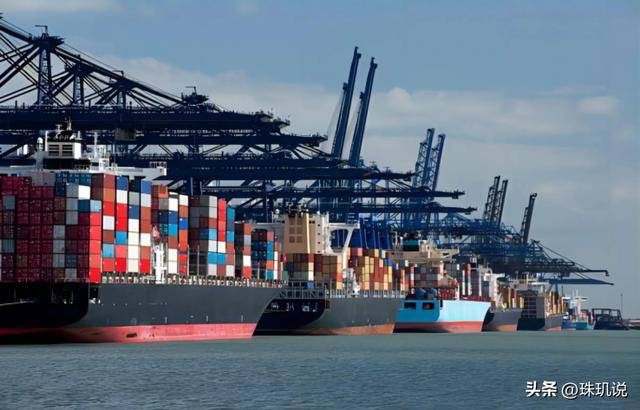
Core Points - The article discusses the ongoing trade conflict between China and the United States, highlighting the shift from traditional retaliatory measures to a more complex struggle for global rule-making authority [3][7][24] - It emphasizes the impact of U.S. actions on global supply chains, particularly in the shipping and semiconductor industries, and how these actions disrupt the established norms of fair competition and contractual spirit [3][5][10] Shipping Industry - The U.S. has implemented a new port fee policy targeting Chinese vessels, charging $50 per net ton for Chinese ships and $18 for others, resulting in a potential fee of $500,000 for a 100,000-ton vessel [10][12] - This policy aims to increase operational costs for Chinese shipping companies, thereby reducing their competitiveness in the global market [10][12] - The U.S. strategy in the shipping sector is designed to indirectly affect China's foreign trade while maintaining its dominance in the global shipping market [12] Semiconductor Industry - The U.S. has introduced stringent semiconductor export bans, further isolating certain Chinese companies from the global supply chain and causing material shortages for downstream global enterprises [5][14] - The Netherlands has taken aggressive actions against a Chinese-controlled semiconductor company, citing concerns over its rising influence in the semiconductor sector, which reflects broader European anxieties about competition with China [14][24] - The U.S. and its allies are employing a combination of tactics to restrict China's access to critical semiconductor technologies, which could have long-term implications for global tech supply chains [14][22] China's Response Strategies - China is adopting a strategy of "asymmetric retaliation," focusing on areas where it holds competitive advantages rather than mirroring U.S. actions [16][20] - In the shipping sector, China has introduced a special port fee for foreign vessels with significant U.S. ownership, effectively targeting U.S. capital's influence in global shipping [16][18] - For the semiconductor industry, China is implementing stricter controls on rare earth supplies, leveraging its dominance in rare earth processing to influence global supply chains [20][22] Global Trade Dynamics - The ongoing trade conflict is expected to reshape global trade dynamics over the next 10 to 20 years, with a potential shift towards a multipolar trade environment [22][26] - The article suggests that countries prioritizing technological innovation and open cooperation will ultimately prevail in this evolving landscape [22][26] - China's commitment to fair cooperation is gaining recognition among developing nations, which may lead to increased collaboration and a shift away from U.S.-led hegemonic practices [24][26]


钟声:全球产供链安全稳定需要共同维护
Ren Min Ri Bao· 2025-10-19 05:09
Core Viewpoint - The ongoing trade tensions between China and the U.S. are characterized by the U.S. imposing high tariffs and export controls, which are deemed ineffective for managing relations with China. China is enhancing its export control system as a legitimate exercise of sovereignty, urging the U.S. to adopt a rational and pragmatic approach to maintain global supply chain stability [1][2][3][4]. Group 1: U.S. Trade Measures - The U.S. has implemented multiple trade restrictions against China, including adding several Chinese entities to export control lists and expanding the scope of these controls, affecting thousands of Chinese companies [1][2]. - The U.S. has ignored China's concerns and continued to enforce measures against China's maritime, logistics, and shipbuilding industries, which has negatively impacted bilateral trade discussions and disrupted international trade rules [1][2]. Group 2: China's Export Control Justification - China argues that its export controls on rare earths and related items are necessary for national security and international obligations, particularly in the context of global peace and regional stability [2]. - The number of items on China's export control list is approximately 900, while the U.S. has over 3,000 items, indicating a disparity in the application of export controls [2]. Group 3: China's Response to U.S. Actions - China maintains a clear stance against U.S. threats, asserting readiness to respond firmly while remaining open to dialogue and cooperation based on mutual respect and equality [3][4]. - The Chinese government emphasizes the importance of maintaining a healthy international trade order and global supply chain stability, urging the U.S. to engage sincerely in dialogue [4]. Group 4: Public Sentiment and Future Outlook - A recent survey indicates that a majority of American respondents perceive the U.S. as becoming more protectionist, with many viewing protectionist policies as a significant barrier to trade [4]. - There is a strong public desire for reduced tariffs and increased trade liberalization, suggesting that the U.S. should align its policies with public sentiment to foster a more stable economic relationship with China [4].
“史无前例”,韩媒:多家韩企掌门人与特朗普一同打高尔夫
Huan Qiu Wang· 2025-10-19 04:47
Group 1 - The event involved South Korean business leaders participating in a golf game with U.S. President Trump, raising questions about discussions on investment and tariffs [1][5] - Notable attendees included leaders from major South Korean companies such as Samsung, SK Group, Hyundai, LG, and Hanwha, marking an unprecedented gathering of corporate heads with a U.S. president [5] - The event was organized by SoftBank CEO Masayoshi Son, indicating a significant networking opportunity for South Korean firms to engage with U.S. officials [5] Group 2 - The golf event took place at Trump's International Golf Club in Florida, with security measures in place for Trump's travel, including traffic control [3] - The South Korean business leaders traveled collectively by bus to the event, highlighting a coordinated approach to the meeting [3] - Discussions during the event likely covered South Korean investments in sectors such as semiconductors, automotive, batteries, and shipbuilding, as well as tariff issues [5]

“史无前例”,韩媒:多家韩企掌门人与特朗普一同打高尔夫球,是否谈投资和关税引关注
Huan Qiu Wang· 2025-10-19 04:10
Group 1 - The event involved South Korean business leaders playing golf with U.S. President Trump, raising questions about discussions on investment and tariffs [1][5] - Key participants included leaders from major South Korean companies such as Samsung, SK Group, Hyundai, LG, and Hanwha [5] - The gathering is unprecedented as it brought together South Korean corporate heads with the U.S. President and government officials [5] Group 2 - The South Korean business leaders traveled collectively by bus to the golf club, indicating a coordinated effort for the meeting [3] - Discussions during the event likely covered South Korean investments in sectors like semiconductors, automotive, batteries, and shipbuilding, as well as tariff issues [5] - The event was organized by SoftBank's CEO Masayoshi Son, highlighting international business networking [5]
王牌对王牌!中美同时放大招,3国高官紧急访华,信号不一般
Sou Hu Cai Jing· 2025-10-18 09:46
Core Points - The U.S. has initiated a Section 301 investigation into China's shipping, logistics, and maritime industries, marking a significant escalation in trade tensions between the two countries [1][3] - China's Ministry of Transport responded by imposing a "special port fee" on all U.S.-related vessels, which is seen as a countermeasure in the ongoing trade conflict [1][9] Group 1: U.S. Actions - The Section 301 investigation focuses on China's maritime industry, citing reasons such as national security, unfair subsidies, and overcapacity, despite the U.S. shipbuilding industry holding less than 1% of the global market share [3][5] - The U.S. Trade Representative announced a 100% tariff on large port equipment from China, indicating a strategic move to exclude China from the North American port equipment supply chain [12] Group 2: China's Response - China has implemented a "special port fee" starting October 14, with specific charges based on net tonnage, potentially affecting over 350 U.S.-related vessels annually [9][10] - The legal basis for China's actions includes the National Security Law, Anti-Foreign Sanctions Law, and International Maritime Regulations, providing a strong foundation for its countermeasures [12] Group 3: Broader Implications - The trade conflict extends beyond U.S.-China relations, as seen in China's imposition of a 75.8% anti-dumping deposit on Canadian canola seeds in response to Canada’s collaboration with the U.S. against China [13] - China's criticism of South Korean companies involved in the U.S. investigation marks a significant shift in its trade strategy, indicating targeted measures against those perceived as siding with the U.S. [15] Group 4: Diplomatic Context - Concurrently, high-level visits from French, Swedish, and Canadian officials to China signal its strategic importance in global trade and its willingness to engage in cooperation despite ongoing tensions [18][20] - These diplomatic efforts highlight China's position in the evolving global economic landscape, emphasizing its openness to collaboration while resisting external pressures [20]
造船三大指标份额保持全球领先
Ren Min Ri Bao· 2025-10-17 22:13
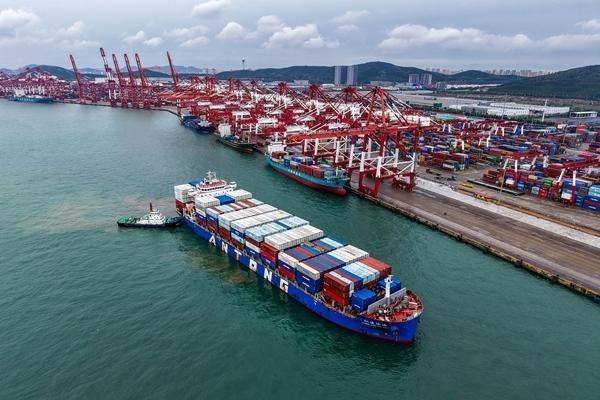
Core Insights - China's shipbuilding industry has shown significant growth in the first nine months of the year, with a completion volume of 38.53 million deadweight tons, representing a year-on-year increase of 6.0% [1] - The new orders received during this period amounted to 66.60 million deadweight tons, indicating strong demand in the sector [1] - As of the end of September, the total order backlog reached 242.24 million deadweight tons, which is a 25.3% increase compared to the previous year [1] Industry Performance - The three key metrics for China's shipbuilding industry—completion volume, new orders, and order backlog—accounted for 53.8%, 67.3%, and 65.2% of the global totals in deadweight tons, respectively [1] - When measured in gross tonnage, these figures are 47.3%, 63.5%, and 58.6%, respectively, further solidifying China's leading position in the global shipbuilding market [1]
精准反制 中国增强全球航运话语权
Sou Hu Cai Jing· 2025-10-17 02:18
Core Points - The article discusses the recent trade tensions between the U.S. and China, particularly focusing on the maritime, logistics, and shipbuilding sectors, following the U.S. implementation of port fees based on a Section 301 investigation [2][3][4] - China's response includes imposing special port fees on U.S.-related vessels, which is seen as a necessary countermeasure to maintain fair competition in international shipping and shipbuilding markets [2][6][7] Group 1: U.S. Actions and Motivations - The U.S. has initiated a trade investigation against China's maritime and shipbuilding sectors, citing "non-market behavior" and "unfair competition" as reasons for the actions [3][4] - The U.S. has been using Section 301 of the Trade Act since 2018 to impose tariffs and restrictions, which has now extended to the shipping and shipbuilding industries [3][4] - The U.S. aims to restore its shipbuilding capacity and regain control over key maritime industries, rather than reducing global trade costs [5][6] Group 2: China's Response and Strategy - China's countermeasures are described as a necessary defensive action to protect its industries and maintain a fair competitive environment in global shipping [6][7] - The measures specifically target vessels with at least 25% U.S. ownership, demonstrating a precise and restrained approach to avoid broader impacts on third-party nations [7] - China emphasizes the importance of upgrading its industries and enhancing self-sufficiency to mitigate the effects of external sanctions and geopolitical risks [7][8] Group 3: Impact on Global Shipping Industry - The U.S. port fee policies could significantly increase operational costs for affected shipping fleets, potentially leading to a reallocation of shipping capacity and reduced market efficiency [5][6] - The shipping industry is experiencing a decline in orders, influenced by macroeconomic factors and geopolitical tensions, which could further complicate investment decisions [5][6] - The ongoing tensions highlight a struggle for dominance over international trade rules, with potential long-term implications for global shipping dynamics [6][8]
以“智造”引擎换挡提速,以更大力度建设产业科创名城——扬州向“两个万亿”目标迈进
Xin Hua Ri Bao· 2025-10-16 23:17
Core Insights - The rise of unicorn companies in Yangzhou, such as Yangzhou Nali New Materials Technology Co., Ltd. and Jiangsu Aerospace Lithium Battery Co., Ltd., highlights the city's strong momentum in building a modern industrial system and achieving its "two trillion" goals [1][3] - Yangzhou's industrial economy is significantly supported by the "613" industrial system, contributing around 90% to the city's industrial economy, with a growing number of unicorn and gazelle companies [3][4] Group 1: Industry Growth and Innovation - Yangzhou's shipbuilding industry is experiencing a technological transformation, with an annual growth rate of 15%, focusing on high-end manufacturing and green technologies [2] - The establishment of the Jiangsu Aerospace Advanced Structures and High-end Equipment Technology Innovation Center marks a significant achievement in the aviation sector, indicating Yangzhou's commitment to technological innovation [2] - The machine tool industry is undergoing a "precision revolution," with advancements such as the five-axis CNC punching machine achieving precision levels of 0.005 mm [2] Group 2: Policy and Ecosystem Support - The "Four Groups and One Member" service system has facilitated rapid enterprise establishment, with Nali New Materials completing its setup in just 10 months [4] - Yangzhou's government has implemented policies to enhance technology innovation, including the "Green Yang Golden Phoenix Plan," which has attracted over 3,590 high-level talents to the city [4][5] - The "Ke E Rong" service brand has provided over 2 billion yuan in credit to technology companies, demonstrating the government's commitment to financial support for innovation [5] Group 3: Infrastructure and Collaboration - The approval of new provincial high-tech zones in Yangzhou has enhanced the region's innovation capacity, with a full coverage of provincial-level high-tech parks [6] - The establishment of the Aviation Technology Yangzhou Laboratory aims to focus on key research areas, striving to achieve breakthroughs in core technologies [7] - Collaborative projects with universities and research institutions, such as the new materials pilot platform with Nanjing University, are fostering technological advancements and innovation [8]
美国财长无端指责中方谈判代表 商务部:严重歪曲事实
Nan Fang Du Shi Bao· 2025-10-16 17:13
Core Viewpoint - The U.S. Treasury Secretary criticized China's Vice Minister of Commerce for making provocative statements and uninvited appearances in Washington, highlighting tensions in U.S.-China trade relations [1][2] Group 1: U.S.-China Trade Relations - China's Vice Minister of Commerce, Li Chenggang, visited the U.S. to discuss trade relations and address U.S. restrictions on Chinese shipbuilding, emphasizing the need for constructive dialogue [1] - The U.S. has implemented unilateral and protectionist measures against China's shipbuilding industry, which China argues harms its interests and could increase inflation in the U.S. [2] Group 2: China's Response - China's spokesperson stated that the U.S. measures have disrupted global supply chains and caused chaos in the shipping industry, framing China's countermeasures as necessary defensive actions [2] - China urges the U.S. to recognize its mistakes and return to dialogue and negotiation to resolve trade issues [2]
商务部回应批准稀土出口等国际经贸问题
Xin Hua Wang· 2025-10-16 13:45
Core Viewpoint - The Chinese government is implementing export control measures on rare earths as a normal procedure to enhance its export control system, not targeting specific countries or regions [1][2]. Group 1: Export Control Measures - The recent rare earth export control measures are aimed at preventing illegal diversion to inappropriate uses, such as weapons, while ensuring compliance for civilian purposes [3][4]. - The Chinese government is committed to optimizing the approval process for export applications, including considering general licenses and exemptions to facilitate compliant trade [1][2]. Group 2: U.S.-China Trade Relations - The Chinese side expressed strong dissatisfaction with the U.S. unilateral actions, which have included multiple trade restrictions and tariffs, significantly harming Chinese interests and disrupting the atmosphere for economic talks [2][3]. - The Chinese government has engaged in bilateral dialogues to clarify its policy objectives regarding export controls, with some countries expressing understanding and willingness to cooperate [2][3]. Group 3: Impact on Global Supply Chains - The U.S. measures against Chinese industries, particularly in shipbuilding, are viewed as protectionist and detrimental to both U.S. inflation and global supply chain stability [3][4]. - The Chinese government emphasizes that its countermeasures are defensive actions necessary to maintain fair competition in international shipping and shipbuilding markets [3][4].