太空光伏

Search documents
又是暴击的一天!
Xin Lang Cai Jing· 2026-02-05 16:05
Market Overview - The Shanghai Composite Index closed with a small increase, but overall market volume decreased significantly, with over 3700 stocks declining, indicating a persistent money-losing effect [1] - There is a notable shift in risk appetite, with funds moving from high-risk sectors to safer ones, resulting in a lack of effective profit-making opportunities across most sectors [1] Space Photovoltaics - The sector experienced a short-term surge due to news related to Elon Musk, but quickly weakened after companies like Double Good Energy and JinkoSolar denied collaboration announcements, showcasing a typical one-day trading pattern [2] - The Economic Reference reported that space photovoltaics is entering a commercial phase, potentially becoming a trillion-dollar market, but faces multiple technical challenges [2] AI Applications - AI applications showed a mixed performance with a slight recovery in some areas, but overall, the sector is experiencing structural differentiation and a lack of sustained funding [3] - Alibaba's Qianwen project is set to launch a 3 billion yuan Spring Festival initiative, and the company is testing an AI video creation tool, which may drive interest in AI applications related to consumer scenarios [4] Commercial Aerospace - The commercial aerospace sector remains weak, lacking sustained buying support and clear leading stocks to drive market sentiment [5] - SpaceX has submitted an application to launch a million satellites, and the U.S. FCC is processing this application, indicating ongoing developments in the commercial space sector [6] Technology Sector - The technology sector is under pressure due to declines in U.S. tech stocks, with hardware experiencing further drops, although some segments like power semiconductors showed recovery [8] - Alphabet's Q4 2025 revenue exceeded expectations, with a significant increase in cloud business revenue, indicating strong performance in AI infrastructure investments [9] Consumer Sector - The consumer sector has become a core area for risk-averse funds, successfully attracting mainstream investment and demonstrating strong resilience in a volatile market [10] - Upcoming government briefings and new tax policies in Hainan are expected to stimulate consumer spending and support the sector [11] Cross-Strait Relations - The mainland is set to resume travel for Shanghai residents to Kinmen and Matsu, aiming to normalize exchanges and benefit both sides [12] Humanoid Robots - FF has launched a new robotics company and introduced several series of humanoid robots, with plans for initial deliveries by the end of February [13]
马斯克最新推荐!这个板块一定不要错过
Sou Hu Cai Jing· 2026-02-05 13:27
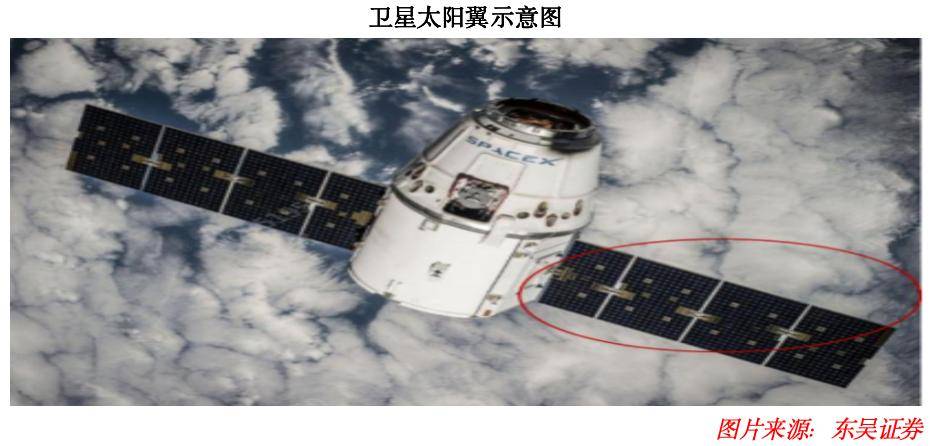
Core Viewpoint - SpaceX's plan to deploy a satellite constellation of one million satellites has reignited interest in the space photovoltaic industry, which aims to harness solar energy in space to address power supply challenges for AI data centers [1][13]. Group 1: Space Photovoltaic Overview - Space photovoltaic refers to systems that capture solar radiation in various space environments and convert it into electrical energy, providing stable energy supply for spacecraft [1]. - The current most mature application of space photovoltaic technology is in satellite power supply, with a growing range of applications expected in deep space exploration and space data centers [2]. Group 2: Industry Development Drivers - The global satellite launch market is entering a phase of scale and normalization, with a focus on low-cost, high-efficiency, lightweight, and flexible photovoltaic systems [4]. - The number of satellite launches has seen exponential growth, with over 4,300 satellites reported launched in 2025, a year-on-year increase of over 50% [13]. - Space photovoltaic systems can provide continuous and stable power, essential for the long-term operation of satellites [14]. Group 3: Technological Advancements - The current leading technology in space photovoltaic is gallium arsenide (GaAs) batteries, known for their high efficiency and radiation resistance, but they are costly and complex to produce [9][10]. - Heterojunction (HJT) batteries are emerging as a mid-term alternative to GaAs batteries, offering advantages in radiation resistance, lightweight design, and lower costs [10][11]. - Perovskite tandem solar cells are anticipated to become a dominant technology due to their high energy density, low cost, and flexibility, potentially reshaping the space photovoltaic landscape [12]. Group 4: Market Potential and Future Outlook - The demand for space photovoltaic is expected to grow exponentially with the implementation of SpaceX's satellite launch plan, potentially creating a market space of nearly 200 billion yuan for solar wings if 10,000 satellites are launched annually [16]. - The space photovoltaic market could exceed 7 trillion yuan if the space computing market reaches 50GW [16]. - Companies with established market shares and complete industrial chains are likely to benefit significantly from the growth of the space photovoltaic industry [16].

4分钟涨停,5天3板
Zhong Guo Zheng Quan Bao· 2026-02-05 10:46
Group 1: Consumer Sector - The consumer sector experienced significant gains, with retail concepts seeing a notable rise in the afternoon, highlighted by Maoye Commercial's stock hitting the daily limit within 4 minutes, marking its third consecutive trading day of gains [3][6] - The retail sector's growth is supported by a recent announcement from the Ministry of Finance, Customs, and the State Taxation Administration regarding a "zero tariff" policy for imported goods purchased by residents in Hainan Free Trade Port [8] - The smart retail market is projected to grow to approximately 64.5 billion yuan by 2030, with a compound annual growth rate of 22%, driven by the application of AI technology [9] Group 2: Financial Sector - The financial sector showed strong performance in the afternoon, with banks and securities firms experiencing notable increases, including Xiamen Bank and Huayin Securities hitting the daily limit [10][11] - Predictions indicate that by 2026, new funds entering the insurance sector may exceed 2 trillion yuan, increasing demand for high-dividend assets, particularly in the banking sector [13] - Major securities firms reported positive earnings for 2025, with Citic Securities expecting revenue of 74.83 billion yuan and a net profit of 30.05 billion yuan, both showing significant year-on-year growth [14] Group 3: Aerospace and Photovoltaic Sector - The space photovoltaic concept saw a significant pullback, with stocks like Junda Co. and Mingyang Smart Energy hitting the daily limit down [15][16] - Several listed companies announced they had not engaged in cooperation with Elon Musk's team regarding space photovoltaic projects, highlighting the uncertainty surrounding the commercialization of this technology [19] - The China Photovoltaic Industry Association indicated that space photovoltaic technology is still in the early stages of exploration and verification, with mainstream choices remaining high-efficiency GaAs batteries despite their high costs [20]


盘中直线跳水,一度跌超16%!
天天基金网· 2026-02-05 08:43
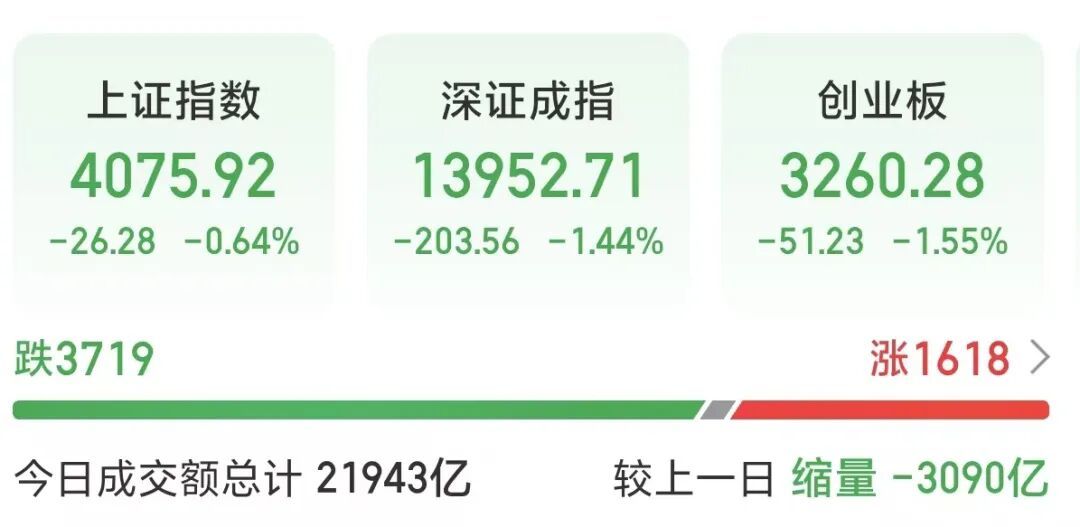
Core Viewpoint - The A-share market experienced a pullback today, with the Shanghai Composite Index down 0.64%, the Shenzhen Component down 1.44%, and the ChiNext Index down 1.55 [2] Group 1: Market Performance - The large consumer sector saw significant gains, particularly in retail, with Maoye Commercial hitting the daily limit in just four minutes, achieving three consecutive trading days of gains [3][6][7] - The financial sector also performed well, with banks and securities firms showing strength, including Xiamen Bank and Huayin Securities reaching their daily limits [12][14][15] - Conversely, the precious metals sector faced a sharp decline, with Hunan Silver hitting the daily limit down, and both gold and silver prices experiencing significant drops [3][4] Group 2: Retail Sector Insights - The retail sector's afternoon surge was highlighted by Maoye Commercial's announcement of expected losses for 2025, projecting a net loss of between 201 million to 242 million yuan [7] - The application of AI technology in retail is expected to enhance growth, with the smart retail market projected to reach approximately 64.5 billion yuan by 2030, reflecting a compound annual growth rate of 22% [10] Group 3: Financial Sector Insights - The banking sector showed strong performance, with Xiamen Bank and Chongqing Bank among the top gainers, driven by a demand for high-dividend assets and a low current allocation of public funds in bank stocks [14] - Securities firms are also expected to report positive earnings for 2025, with CITIC Securities projecting revenues of 74.83 billion yuan and net profits of 30.05 billion yuan, both showing year-on-year growth [16] Group 4: Space Photovoltaics Sector - The space photovoltaic sector experienced a significant pullback, with companies like Junda Co. and Mingyang Smart Energy hitting their daily limits down [18] - Recent announcements from several listed companies indicated that they have not engaged in collaborations related to space photovoltaics, highlighting the uncertainty surrounding the commercialization of this technology [20]

A股收评:创业板指跌逾1.5%,贵金属重挫,旅游股逆市走强
Ge Long Hui A P P· 2026-02-05 07:28
Market Overview - The three major A-share indices collectively declined, with the Shanghai Composite Index down 0.64% to 4075 points, the Shenzhen Component Index down 1.44%, and the ChiNext Index down 1.55% [1][2] - The total market turnover was 2.19 trillion yuan, a decrease of 309 billion yuan compared to the previous trading day, with over 3700 stocks declining [1] Sector Performance - Precious metals stocks experienced significant declines, with Hunan Silver and Sichuan Gold dropping over 9%, and Xiaocheng Technology falling more than 10% [4][5] - The space photovoltaic concept stocks entered a "cooling period," with several stocks, including Junda Co. and Shuangliang Energy, hitting the daily limit down [2][6] - Lithium mining stocks also saw collective declines, with Ganfeng Lithium and Tianqi Lithium both dropping over 6% [7][8] - The tourism sector showed strength, with Sanxia Tourism hitting the daily limit up and Shaanxi Tourism rising over 8% [9][10] - New retail concept stocks were active, with companies like Huangting Hotel and Maoye Commercial hitting the daily limit up [11][12] - Bank stocks performed well, with Xiamen Bank hitting the daily limit up and Chongqing Bank rising over 5% [13] Key Stock Movements - Notable declines in precious metals included Xiaocheng Technology at -10.20%, Hunan Silver at -9.97%, and Sichuan Gold at -9.79% [5] - In the space photovoltaic sector, significant drops included Optech at -12.51% and Jiejia Weichuang at -12.39% [6] - Lithium stocks saw Ganfeng Lithium at -6.31% and Tianqi Lithium at -6.27% [8] - In the tourism sector, Sanxia Tourism rose by 10% and Shaanxi Tourism by 8.57% [10] - New retail stocks like Huangting International rose by 10.11% and Maoye Commercial by 10.04% [12] - Bank stocks showed strong performance with Xiamen Bank at +9.99% and Chongqing Bank at +5.73% [13]






A股午评:三大指数跌幅均超1%,大消费板块逆势走强,银行及算力租赁板块回暖,贵金属概念股重挫
Jin Rong Jie· 2026-02-05 03:45
2月5日,A股三大股指集体走低,创业板指跌幅一度扩大至2%,市场情绪略显低迷。截止午盘,沪指 跌42.29点,跌幅1.03%报4059.91点,深成指下跌255.95点,跌幅1.81%报13900.33点,创业板指下跌 64.24点,跌幅1.94%报3247.27点,沪深两市半日成交额1.45万亿,较上个交易日缩量1682亿,全市场超 3600只个股下跌。 盘面热点较为杂乱,大消费(核心股)板块大涨,食品饮料、零售、影视(核心股)院线方向涨幅居 前,横店影视6天5板,杭州解百2连板,安记食品、海欣食品、金逸影视涨停。阿里概念局部异动,新 华都直线涨停。算力(核心股)租赁概念回暖,二六三封涨停。银行板块逆势拉升,厦门银行涨超 6%。下跌方面,贵金属概念集体大跌,湖南白银跌停。算力硬件概念持续下挫,德科立、太辰光跌超 10%。 热门板块表现分化 存储芯片等算力(核心股)硬件股持续低迷: 存储芯片、光模块等算力(核心股)硬件股成为市场下跌的"重灾区"。炬光科技跌近10%,长飞光纤跌 逾8%,天通股份、亨通光电、罗博特科、德科立等纷纷跟跌,跌幅居前。 消息面上,美国软件板块周三遭遇2022年以来最严重的抛售,这场由软 ...
午评:三大指数均跌超1%,大消费板块逆势走强
Xin Lang Cai Jing· 2026-02-05 03:33
市场早间震荡调整,三大指数均跌超1%。大消费板块逆势走强,美容护理、影视、食品等方向领涨, 拉芳家化、浙文影业、横店影视、海欣食品等多股涨停。下跌方面,太空光伏概念调整,钧达股份、双 良节能等跌停;贵金属板块下挫,湖南黄金、湖南白银触及跌停。个股跌多涨少,沪深京三市超3700股 飘绿,上午半天成交1.46万亿。午间收盘沪指跌1.03%,深成指跌1.81%,创业板跌1.94%。 ...
智通港股解盘 | AI应用端受到冲击科技股走弱 顺周期类逻辑在走强
Zhi Tong Cai Jing· 2026-02-04 12:31
Market Overview - The Hang Seng Index showed minor fluctuations, closing up by 0.05%, but structural issues in the market are prominent [1] - The U.S. Navy has increased its military presence in the southern waters of Iran, with around 32 vessels reported as of February 3 [1] - Gold stocks, such as WanGuo Gold International, saw a rise of over 7% [1] Trade Agreements - The U.S. has reduced tariffs on Indian imports from 50% to 18%, but details of the trade agreement remain unclear [1] - India is shifting towards a more pragmatic approach in its economic development, moving away from previous over-optimism [1] Technology Sector - The technology sector is facing challenges, particularly in AI and gaming, with significant stock declines in companies like TIS and Trend Micro [3] - Samsung Electronics' market value surpassed 1 trillion Korean won (approximately 68.8 billion USD) due to strong demand for storage chips [2] - Chinese companies in the semiconductor space, such as Zhongji Xuchuang and Han's Laser, are experiencing stock declines [2] Energy Sector - Hydrogen energy is gaining traction, with the Ministry of Industry and Information Technology planning to increase green hydrogen production to 250,000 tons per year by 2025 [3] - Companies like Guofu Hydrogen Energy and Zhongshun Energy have seen stock increases of over 18% and 12%, respectively [3] Coal Industry - Indonesia's government has announced significant coal production cuts, impacting China's coal supply by 5.3% [4] - Major coal companies like Yanzhou Coal and China Coal Energy have seen stock increases of over 8% due to these developments [4] Aerospace and Technology - SpaceX announced the acquisition of xAI, aiming to integrate AI with space technology, which could lead to significant advancements in energy production and storage [5] - Companies in the solar energy sector, such as GCL-Poly and Xinyi Solar, are also performing well, with stock increases of over 2% [6] Real Estate Market - China Construction Bank is supporting the acquisition of second-hand housing for rental projects in Shanghai, which is expected to improve inventory turnover in major cities [6] - Real estate companies like Yuexiu Property and China Resources Land have seen stock increases of over 5% [6] Aviation Sector - The Spring Festival travel season has begun, with a 5.3% year-on-year increase in passenger volume on the first day [7] - Major airlines like China Eastern and China Southern have reported significant stock increases of over 5% due to improved performance and cost management [7] Digital Economy - The Guangdong government is promoting digital consumption and smart services, focusing on areas like autonomous driving and smart tourism [8] - Companies involved in autonomous driving, such as Youjia Innovation and Horizon Robotics, are expected to benefit from these initiatives [8] Company-Specific Developments - China Shipbuilding Defense announced a new contract for the construction of 16 container ships, valued between 736 million to 896 million USD, which is expected to positively impact cash flow and future performance [9] - The company anticipates a significant increase in net profit for 2025, with projections of 9.4 to 11.2 billion CNY, reflecting a year-on-year growth of 149.61% to 196.88% [9]
谨慎加仓?
第一财经· 2026-02-04 11:18
Market Overview - The A-share market shows a divergent pattern, with the Shanghai Composite Index recovering above 4100 points, driven by strong performances in coal, real estate, liquor, and banking sectors [3] - A total of 3,252 stocks rose while 2,126 stocks fell, indicating a market trend of more gains than losses [3] - The market style has shifted significantly, with traditional blue-chip and cyclical sectors leading the gains, while technology growth sectors experienced notable pullbacks [3] Trading Volume and Market Sentiment - The trading volume in both markets decreased by 2.49%, reflecting a high-low switch and a consolidation phase [4] - Funds are being reallocated from high-valued technology growth stocks to low-valued traditional blue-chip and cyclical stocks, indicating a structural adjustment in investment strategies [4] - There is an increase in risk-averse sentiment among investors, with some short-term traders choosing to take profits and exit the market [4] Fund Flow Dynamics - Institutional investors are significantly adjusting their portfolios, moving funds away from high-valuation growth stocks in AI applications, computing hardware, and semiconductors, and into sectors like space photovoltaic, hydrogen energy, coal, liquor, and banking [6] - Retail investors are following suit, with some testing the waters in low-valuation sectors while reducing their exposure to high-volatility growth stocks [6] Investor Sentiment - Retail investor sentiment stands at 75.85%, indicating a relatively optimistic outlook among individual investors [7]

【研选行业】SpaceX百万颗算力卫星计划曝光,催生100GW太空光伏年需求,设备商迎订单拐点,机构建议关注三条主线
第一财经· 2026-02-04 10:41
Group 1: Space-Based Photovoltaics and AI Computing - SpaceX's plan to deploy one million computing satellites is expected to create an annual demand of 100GW for space-based photovoltaics, marking a turning point for equipment suppliers [2] - The demand for space photovoltaics is anticipated to grow significantly, with early orders for equipment likely to materialize on a large scale [2] - Key companies to watch include photovoltaic equipment suppliers Maiwei (300751.SZ), Jiejia Weichuang (300724.SZ), and others, as well as high-efficiency heat exchanger suppliers and photovoltaic battery manufacturers [2] Group 2: Copper Industry and Strategic Reserves - Copper concentrate may be included in the national strategic reserve, enhancing the security of the supply chain [5] - The global decline in copper ore grades is expected to continue, which may elevate the importance of copper as a key metal [5] - Companies to focus on include Zijin Mining (601899.SH) for copper mining and Tongling Nonferrous Metals (000630.SZ) for copper smelting, as they are positioned to benefit from profit recovery [5] Group 3: Hydrogen Energy Development - Hydrogen energy is set to be a key focus during the 14th Five-Year Plan, with significant investments expected to drive the industry forward [7] - By the end of 2025, China's renewable energy hydrogen production capacity is projected to exceed 250,000 tons per year, doubling from the previous year [7] - Companies involved in hydrogen energy, such as Kewell and Huadian Technology, are expected to benefit from the growing emphasis on hydrogen as a critical component of the national energy system [10] Group 4: Agricultural Drones and Technology - The Chinese government is promoting agricultural modernization, emphasizing the integration of technology in agriculture, including the use of drones [12] - The agricultural drone market is experiencing rapid growth, with over 300,000 drones in operation and an annual operational area exceeding 46 million acres [12] - Key players in the agricultural drone sector, such as Haowei Group and Zhaoyi Innovation, are positioned to capitalize on this trend [14]