货币

Search documents
百利好晚盘分析:短线快速跳水 长期依然看好
Sou Hu Cai Jing· 2025-12-15 09:12
Gold - Last week, gold experienced a rapid decline near the close, dropping nearly $100, which significantly impacted the short-term trend structure, but this may just be a result of profit-taking leading to increased short-term selling; long-term outlook for gold remains positive [1] - The Federal Reserve's recent interest rate cut was perceived as hawkish, yet the S&P 500 and Dow Jones indices both reached historical highs post-announcement, indicating that the market does not view the Fed as overly hawkish; the Fed's monetary policy is expected to continue easing [1] - The Fed's announcement of a $40 billion monthly purchase of short-term government bonds is interpreted as a signal for a new quantitative easing phase, with potential purchases of about $500 billion in short-term bonds next year, indicating aggressive liquidity injection [1] - Quantitative easing is expected to devalue purchasing power, potentially leading to high inflation in the U.S., which would benefit precious metals like gold [1] - Technically, gold's daily chart shows a small bullish candle, indicating an expanding upward structure and a long-term bullish outlook; short-term support is noted at $4,325 [1] Oil - Last week, oil continued its downward trend, but signs of a slowdown in the decline suggest a potential short-term rebound; however, the medium to long-term outlook remains constrained by oversupply [2] - If the Russia-Ukraine conflict is resolved, Russian oil could quickly return to the market, significantly impacting oil prices; however, recent talks between U.S. and Russian officials did not yield a compromise, and sanctions on Russian oil exports are expected to remain in place [2] - Even if Russian oil does not return to the international market soon, the supply-demand imbalance persists, with production gaps left by Russia likely to be filled by non-OPEC+ producers like the U.S. and Brazil; by 2026, the global daily surplus of oil is projected to reach 4.09 million barrels, equivalent to 4% of global demand [2] - Technically, oil's daily chart shows a small bullish candle, with significant support at previous low points, but the downward trend remains unchanged; short-term focus should be on resistance around $58 [2] Dollar Index - Following the Federal Reserve's December meeting, the dollar index has continued to weaken, reaching a new low since early October; this trend may persist due to the Fed's monetary policy and the appreciation potential of non-U.S. currencies [3] - Despite Powell's emphasis on a higher threshold for further rate cuts, market expectations for continued rate cuts in 2026 have not dissipated; potential leadership changes at the Fed could lead to a more accommodative policy direction, further weakening the dollar [3] Non-U.S. Currencies - The appreciation of non-U.S. currencies is a significant factor in the dollar's weakness; the Bank of Japan's governor has indicated a clear signal for potential interest rate hikes, suggesting a possible increase from 0.50% to 0.75% [4] - The Eurozone also has limited room for further rate cuts, contributing to the dynamic where non-U.S. currencies rise as the dollar falls, potentially expanding the dollar index's decline [4] - Technically, the dollar index's daily chart shows a double top breakout with bearish divergence in moving averages, indicating a downward trend; short-term focus may be on resistance around 68.56 [4] Nikkei 225 - The Nikkei 225 index has shown a series of small bearish and bullish candles, indicating weak rebound strength, and may be entering a medium-term C-wave decline [5] - The 4-hour chart suggests the completion of an upward structure, with short-term resistance to be monitored around 50,410 [5] Copper - Copper's daily chart shows a large bearish candle, forming an engulfing pattern, indicating a potential medium-term peak [6] - The 1-hour chart suggests the completion of an upward structure, likely leading to a descending ABC pattern; short-term resistance is noted at $5.36 [6] Market Overview - The U.S. White House National Economic Council Director Hassett indicated that if selected to lead the Fed, he would consider Trump's policy opinions, but the Fed's rate decisions will remain independent [7] - Japanese central bank officials may begin selling ETF holdings as early as next month, a process expected to take decades [7] - Ukrainian President Zelensky proposed abandoning Ukraine's NATO membership aspirations during negotiations with U.S. envoys regarding a potential peace agreement for the Russia-Ukraine conflict [7] Upcoming Events - On December 15, at 23:30, FOMC permanent voter and New York Fed President Williams will speak on economic outlook [8]


印美贸易不确定性持续之际 印度卢比触及纪录新低
Xin Lang Cai Jing· 2025-12-11 08:40
Core Viewpoint - The Indian Rupee has depreciated over 0.5%, reaching a record low of 90.4863 Rupees per US Dollar due to ongoing uncertainties regarding the trade agreement with the United States [1] Group 1: Currency Performance - The Indian Rupee hit a record low against the US Dollar, trading at 90.4863 Rupees per Dollar [1] - The depreciation of the Rupee is attributed to foreign capital outflows and increased demand for US Dollars from importers [1]
今年亚洲主要货币表现如何
Sou Hu Cai Jing· 2025-12-03 01:27
Currency Performance in Asia - In 2025, major Asian currencies showed significant divergence in performance, with the Japanese yen halting a four-year decline against the US dollar, initially rising from 157.7 yen per dollar at the beginning of the year to 140.9 yen per dollar by mid-April, before falling to 155.4 yen per dollar by December 1 [1] - The decline in the yen accelerated after the appointment of Prime Minister Fumio Kishida in late October, attributed to his accommodative monetary policy, despite initial gains being driven by a weaker dollar and inflation-induced rate hike expectations in Japan [1] - The South Korean won also stopped its four-year decline but remained at a 16-year low, trading at 1468.63 won per dollar as of December 2 [1] - Other currencies such as the Singapore dollar, Thai baht, and Malaysian ringgit appreciated against the dollar, with increases of 5.4%, over 7.2%, and over 8.2% respectively [1] Renminbi Strength - Since the beginning of 2025, the renminbi has shown strong resilience, with the onshore exchange rate surpassing 7.07 per dollar on December 1, marking a new high since mid-October of the previous year [2] - The strong performance of the renminbi is attributed to a relatively weak dollar and the stable economic fundamentals in China, which support the currency's revaluation [2] - The International Monetary Fund's October report highlighted the resilience of the Asia-Pacific economies in 2025, with economic growth in the first half exceeding expectations despite multiple internal and external challenges [2]
央行发布10月份金融市场运行情况
Sou Hu Cai Jing· 2025-11-30 10:41
Bond Market Issuance - In October, the bond market issued a total of 63,574.6 billion yuan across various types of bonds, including 11,695.5 billion yuan in government bonds, 5,604.7 billion yuan in local government bonds, 8,010.8 billion yuan in financial bonds, 11,836.2 billion yuan in corporate credit bonds, 343.4 billion yuan in credit asset-backed securities, and 25,649.0 billion yuan in interbank certificates of deposit [2] Bond Market Operation - The interbank bond market saw a total transaction volume of 26.6 trillion yuan in October, with an average daily transaction of 1.5 trillion yuan, marking a year-on-year increase of 10.2% and a month-on-month increase of 3.9% [3] - The exchange bond market recorded a transaction volume of 3.3 trillion yuan, with an average daily transaction of 193.79 billion yuan [3] Foreign Participation in Bond Market - As of the end of October, the custody balance of foreign institutions in the Chinese bond market was 3.8 trillion yuan, accounting for 1.9% of the total custody balance [4] - Foreign institutions held 2.0 trillion yuan in government bonds, representing 54.7% of their total holdings [4] Money Market Operation - The interbank lending market recorded a transaction volume of 6.8 trillion yuan in October, a year-on-year decrease of 19.0% and a month-on-month decrease of 26.7% [5] - The weighted average interest rate for interbank lending was 1.39%, down 6 basis points from the previous month [5] Bill Market Operation - In October, the acceptance amount of commercial bills was 3.9 trillion yuan, while the discount amount was 3.3 trillion yuan [6] - Small and micro enterprises accounted for 93.4% of all bill issuers, with a total bill issuance amount of 3.0 trillion yuan [6] Stock Market Operation - As of the end of October, the Shanghai Composite Index closed at 3,954.8 points, an increase of 72.0 points or 1.9% [7] - The average daily trading volume in the Shanghai market was 961.58 billion yuan, a decrease of 6.8% month-on-month [7] Holder Structure in Interbank Bond Market - As of the end of October, there were 3,987 institutional members in the interbank bond market, all of which were financial institutions [8] - The top 50 investors in corporate credit bonds held 53.2% of the total holdings, primarily concentrated in state-owned commercial banks, public funds, and insurance financial institutions [9]
美元储备创30年新低!俄伊委去美元化,美元70年霸权还能撑多久
Sou Hu Cai Jing· 2025-11-25 15:22
Group 1 - The core argument of the article discusses the challenges and complexities of de-dollarization, particularly by countries like Russia, Iran, and Venezuela, and questions whether the dominance of the US dollar can truly be undermined [1][3] - The global reliance on the US dollar is deeply entrenched, with its share in global foreign exchange reserves consistently above 60% and over half of international trade transactions conducted in dollars, a status that has taken decades to establish [3][10] - De-dollarization is not merely about switching currencies; it involves a complete overhaul of trade rules and payment systems, making it a long-term struggle due to the numerous vested interests involved [5][11] Group 2 - The US dollar's strength is attributed to the concept of "seigniorage," allowing the US to print money at minimal cost while being accepted globally, enabling the purchase of real assets and goods [6][8] - The Federal Reserve's money printing effectively exports inflation globally, as businesses and investors remain dependent on the dollar despite its increasing supply [8][10] - The US leverages its economic and military power, along with its ability to set international rules, to maintain global dependence on the dollar [10][11] Group 3 - The sentiment of resistance against dollar dominance has grown, particularly since the 1970s, as countries seek to escape the financial control exerted by the US, leading to a decline in the dollar's share of global foreign exchange reserves from 71% in 1999 to a projected 57.4% in 2024, the lowest in 30 years [11][13] - Countries are motivated to pursue de-dollarization to protect their economic security and seek more equitable monetary sovereignty, especially in light of geopolitical tensions and the volatility of dollar exchange rates [13][15] - The future global monetary system is expected to be more multipolar, with several currencies balancing each other, as emerging economies gain strength and international rules evolve, gradually diminishing the dollar's privileged status [15]
人民币持续超越欧元成全球第二!去美元化还需多久?现在有了答案
Sou Hu Cai Jing· 2025-11-25 10:07
Core Insights - The Chinese yuan has become the world's second-largest trade financing currency, indicating a shift away from the dominance of the US dollar in global trade and finance [1][9][11] - The rise of the yuan is driven by its ability to meet the global demand for a reliable currency, providing security, stability, and convenience in transactions [3][5][7] Group 1: Yuan's Competitive Advantages - The yuan's ascent is attributed to its ability to address key pain points in global trade, such as high costs, significant risks, and dependency on third-party systems [18][25] - Direct settlement in yuan can save businesses 1%-3% in exchange costs, enhancing profit margins significantly [20][25] - The yuan's non-hegemonic nature allows countries to avoid the risks associated with US dollar dominance, such as financial sanctions and asset freezes [22][25] Group 2: Decline of Dollar Dominance - The decline of the dollar's status is not due to the yuan "stealing" its position, but rather the erosion of trust in the dollar as the US continues to print money to manage its debt [9][11][16] - The dollar's share in global foreign exchange reserves has fallen to a 30-year low of 56.32%, reflecting a collective judgment by central banks that holding too much dollar-denominated assets poses greater risks than rewards [11][16] - Traditional US allies are also reducing their holdings of US debt, indicating a loss of confidence in the dollar's reliability [16] Group 3: Challenges to Yuan's Global Acceptance - For the yuan to become a mainstream global currency, it must overcome challenges such as the need for a more open financial market and a diverse range of financial products [29][31] - The yuan's status as a safe-haven currency needs to be strengthened, especially during global economic turmoil [33] - A shift in global perception towards "non-hegemonic currencies" will take time, as countries adapt to a multi-currency system [35] Group 4: Future Outlook - The next 3-5 years are critical for the yuan to solidify its position in key sectors like energy and manufacturing, with an expected increase in its settlement ratio [37][39] - Over the next 5-10 years, the yuan's share in global foreign exchange reserves could rise to over 20%, enhancing its influence in international financial rules and commodity pricing [41] - The long-term vision includes a multi-currency system where the yuan, dollar, and euro coexist, with the yuan's role supported by economic strength and trust rather than hegemony [45][47]
美元霸权雪崩!中东集体反水,打响反美第一枪,美元已经不是唯一
Sou Hu Cai Jing· 2025-11-25 06:21
Core Viewpoint - The trend of de-dollarization is gaining traction globally as countries seek to reduce reliance on the US dollar due to frequent financial sanctions and dollar hegemony [1][15] Group 1: Dollar Hegemony - The US dollar holds an irreplaceable position as the global settlement currency, with 54% of global trade denominated in dollars and 90% of foreign exchange transactions involving the dollar [1][5] - The dollar's dominance is supported by strong network effects, as 88% of currency transactions involve the dollar, making it a default choice for many countries [5][6] - The US controls the dollar settlement chain, with over 90% of cross-border dollar transactions requiring US banks for clearing, allowing the US to exert influence through financial sanctions [6][7] Group 2: Foundations of Dollar Hegemony - The first pillar of dollar hegemony is economic strength, with the US GDP rising from 5% of the global total in 1850 to 25% by 1960, establishing the dollar as the global trade currency [7][9] - The second pillar is institutional legacy, with the Bretton Woods system establishing the dollar's central role in the global monetary system, despite its collapse in 1971 [9] - The third pillar is the oil-dollar linkage, initiated by the 1974 agreement between the US and Saudi Arabia, requiring oil transactions to be conducted in dollars [9][10] Group 3: Challenges to De-dollarization - Current alternatives to the dollar face significant challenges, with Russia's SWIFT alternative covering only a small portion of global cross-border payments [10] - Other currencies like the Saudi Riyal and UAE Dirham have minimal shares in global trade financing, primarily due to a lack of liquidity and trust [10] - Despite rising calls for de-dollarization, countries still rely on the dollar for a significant portion of their transactions, indicating the dollar's continued dominance [13][14] Group 4: Future Outlook - In the short term, dollar hegemony remains strong, with over $8 trillion of US debt held by foreign entities, making a mass sell-off unlikely [12] - The trend towards de-dollarization is evident, with countries exploring local currency trade agreements, but the dollar will still dominate major commodity trade and cross-border investment [14][15] - The conclusion is that while the dollar's immediate collapse is unrealistic, the trend towards de-dollarization is significant, prompting countries to diversify their currency holdings [15]

跨境支付破局成功,美元被动放水,人民币升值藏关键底气
Sou Hu Cai Jing· 2025-11-23 23:41
Core Viewpoint - The appreciation of the Renminbi (RMB) against the US dollar is not a short-term trend but a reflection of China's growing economic strength and the shift in the global currency landscape [1][21]. Group 1: RMB Strength - The recent rise of the RMB against the USD is attributed to years of underlying strength, particularly in cross-border payments, which have reduced reliance on Western systems [4][10]. - The Cross-Border Interbank Payment System (CIPS) now has 187 direct participants and 1,559 indirect participants, with 63.7% being foreign entities, covering 122 countries and regions [6]. - The "Multilateral Central Bank Digital Currency Bridge" project utilizes blockchain for real-time cross-border payment settlements, bypassing SWIFT, with 164 transactions completed in 2022, totaling over 150 million yuan [8]. Group 2: USD Weakness - The USD is facing challenges due to high fiscal pressures and rising interest payments, leading to a situation where the Federal Reserve is forced into quantitative easing rather than tightening [15][19]. - The reliance on debt financing for AI industry growth poses risks, as tightening monetary policy could lead to increased financing costs and potential valuation collapses [17]. - The historical over-reliance on printing money without supporting the real economy has led to a decline in the USD's credibility and strength [19]. Group 3: Future Trends - The RMB's appreciation is expected to continue over the next 6 to 12 months, signaling important implications for personal finance and asset allocation [21][26]. - The shift from a USD-dominated currency system to a more diversified one is underway, with the RMB's rise aligning with this trend [24][26]. - Individuals are encouraged to pay attention to RMB-denominated assets, as their attractiveness is likely to increase with the currency's appreciation [26].
人民币太猛了!打破美元霸权,全球巨头排队抢用,中国这次玩真的
Sou Hu Cai Jing· 2025-11-17 15:36
Core Viewpoint - The Chinese yuan, once considered a "regional currency," is now gaining significant traction on the international stage, with its share in global foreign exchange reserves reaching 2% by mid-2025, indicating a shift in the global financial landscape [1][20]. Group 1: Yuan's Role in Commodity Markets - The yuan's internationalization is being tested in the commodity markets, where historically, transactions have been dominated by the US dollar [3]. - In a significant move, by the end of 2025, China's Mineral Resources Group, along with domestic steel companies, negotiated to settle 30% of iron ore purchases in yuan, challenging the dollar's long-standing pricing mechanism [5]. - Algeria has also shifted 85% of its oil export orders to yuan, reflecting a broader trend among resource-exporting countries to reconsider their settlement currencies [5][6]. Group 2: Attracting Global Capital - To enhance the value of yuan-denominated assets, China has focused on attracting global capital through interest rate advantages and macroeconomic stability [8]. - In early 2025, China's Ministry of Finance issued $4 billion in sovereign bonds in Hong Kong, receiving subscriptions 30 times the issuance amount, signaling strong demand for yuan assets [10]. - Additionally, China issued €4 billion in bonds in Luxembourg tailored for European investors, further integrating yuan into international investment portfolios [10]. Group 3: Institutional Support for Yuan Internationalization - The internationalization of the yuan is supported by China's strategic planning, as outlined in the 14th Five-Year Plan, which includes specific tasks for cross-border capital flow and financial openness [14]. - Various regional pilot programs, such as the "Cross-Border Wealth Management Connect" in the Greater Bay Area and the "Free Trade Island" in Hainan, are designed to facilitate the international use of the yuan [14][16]. - The yuan is positioned as a viable alternative to the dollar, especially for developing countries seeking stable and low-cost settlement options [16]. Group 4: Shifting Global Financial Landscape - The current international financial landscape is transitioning from a "unipolar dollar" system to a "multipolar coexistence," with the yuan emerging as an important variable [18]. - Although the yuan's share is only 2%, its growth rate is the fastest among major currencies, indicating a shift towards reducing reliance on the dollar rather than outright replacement [18][20]. - Countries in the Middle East and Africa are increasingly considering the yuan for trade settlements and foreign reserves, reflecting a desire to diversify away from the dollar amid US-centric monetary policies [18][20].
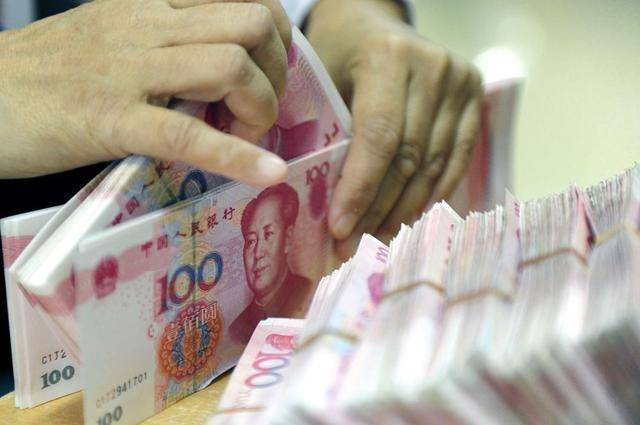
中国人称呼美国的钱叫美元,外国人称中国的钱叫做什么?
Sou Hu Cai Jing· 2025-11-15 11:10
Core Points - The evolution of currency in China has a long history, transitioning from barter trade to the use of standardized coins for more efficient transactions [1][9] - Different countries have unique currency designs and names that reflect their cultural and historical backgrounds [3] - The naming conventions for the Chinese currency, Renminbi (RMB), differ from those of other countries, with RMB being a common abbreviation domestically and CNY being the international standard [5][7] Group 1: Currency Evolution - The initial form of currency in ancient China was based on barter, using various items such as rice and metals, which later evolved into standardized coins [9] - Each dynasty in Chinese history had its own currency characteristics, reflecting the cultural and political ideologies of the time [10] Group 2: Renminbi Naming and Recognition - Renminbi is the most common name for China's currency, while RMB is a widely recognized abbreviation within China, though it may not be easily understood by foreigners [5] - CNY is the internationally accepted designation for Renminbi, particularly in global transactions, despite being less familiar to many Chinese [7] Group 3: Historical Significance and Value - The design of Renminbi, such as the depiction of historical figures like Chairman Mao, serves to commemorate significant contributions to China's history [10] - The actual value of Renminbi may differ from its face value, with older versions potentially becoming valuable collectibles over time [12]