核能

Search documents
投资前瞻:10月经济数据公布,多家公司拟收购股权
Wind万得· 2025-11-09 22:31
Economic Indicators - In October, the Consumer Price Index (CPI) turned from a decline to an increase, rising by 0.2% month-on-month and year-on-year, with the core CPI (excluding food and energy) increasing by 1.2%, marking the sixth consecutive month of growth [2] - The Producer Price Index (PPI) saw a month-on-month increase of 0.1%, the first rise this year, while the year-on-year decline narrowed to 2.1%, a reduction of 0.2 percentage points from the previous month [2] - Industrial production is expected to show a year-on-year growth rate of 5.3% for October, while retail sales are projected to grow by 2.8%, a slight decrease of 0.2 percentage points [3] Financial Data - New financial data for October, including new loans and M2 money supply, is anticipated to be released soon, with expectations of a decrease in social financing growth to approximately 8.6% [4] - The People's Bank of China has resumed open market operations for government bonds, which may indicate a shift in monetary policy, with expectations for significant easing measures potentially being reserved for early 2026 [4] Industry Events - The 2025 6G Development Conference will be held in Beijing, focusing on the innovation ecosystem for 6G technology, with projections indicating a growth of over 30 times in terminal connections by 2040 compared to 2022 [9] - The 12th China (Suzhou) Battery New Energy Industry International Summit Forum will take place, discussing the restructuring and resilience of the battery new energy industry [11] Corporate Actions - Ying Tang Intelligent Control plans to acquire 100% of Guilin Guanglong Integrated Technology and 80% of Shanghai Aojian Microelectronics, focusing on optical switches and analog chips [15] - Guocheng Mining intends to purchase 60% of Guocheng Industrial for 3.168 billion yuan, expanding its control over the mining sector [16] - Fangzheng Technology is investing 1.364 billion yuan in an AI expansion project at its Chongqing production base [17] Stock Unlocking - A total of 33 companies will have their restricted shares unlocked this week, amounting to 1.407 billion shares with a total market value of 24.715 billion yuan based on the closing price on November 7 [21] - The peak unlocking day is November 10, with 14 companies unlocking shares worth a total of 12.564 billion yuan, accounting for 50.84% of the week's total unlocking [21] Market Outlook - Huatai Securities anticipates a deeper revaluation of Chinese assets, with a shift towards consumption-driven growth and a focus on cyclical sectors such as energy, consumption, and real estate [29] - Guojin Securities expresses optimism for the lithium battery industry chain, driven by technological breakthroughs and market demand, particularly in solid-state battery technology [33]


深耕中国市场45年,法国核能企业在进博会上连连“签单”|欧洲企业在上海
Di Yi Cai Jing· 2025-11-09 13:34
Group 1 - The establishment of an office in Shanghai by Framatome is driven by the city's large scale and comprehensive nuclear power industry cluster [1] - Framatome has signed multiple cooperation agreements with Chinese partners at the recent China International Import Expo, covering areas such as fuel, control system components, and technical services [1] - Framatome, a subsidiary of EDF, has over 400 employees in China and has maintained a long-term partnership with Chinese nuclear industry players for over 45 years [1] Group 2 - Framatome is closely collaborating with China on nuclear fusion technology, including the ITER project, and has set up a special cooperation mechanism for local fusion initiatives [2] - The decision to open a branch in Shanghai in 2016 was aimed at being closer to the market and building trustful and efficient partnerships [2] - Government support is deemed crucial for the development of the nuclear energy sector, with China having made significant investments in nuclear power since the 1980s [2] Group 3 - China is projected to become the largest nuclear power market globally, with over 100 nuclear reactors expected to be built by 2030 [3] - The historical ties and long-term partnerships between China and France in the nuclear energy sector are expected to continue to strengthen [3]
电新行业周报:锂电材料价格持续上涨,马斯克万亿美元薪酬激励通过-20251109
Western Securities· 2025-11-09 10:22
Investment Rating - The report does not explicitly state an investment rating for the industry Core Insights - Lithium battery material prices continue to rise, with the average price of domestic lithium hexafluorophosphate reaching 121,500 CNY per ton, a 13.02% increase month-on-month [1] - Tinci Materials has signed long-term electrolyte supply agreements with two major battery manufacturers, with an expected total supply of nearly 1.6 million tons of electrolyte products from 2026 to 2028 [1] - The report recommends several companies in the electric vehicle sector, including Zhuhai Guanyu, Shangtai Technology, and others, while suggesting to pay attention to companies in the PCB and solid-state battery sectors [1][2] Summary by Sections Electric Power Equipment - The National Energy Administration has released guidelines for the integration of coal and new energy, with the fifth batch of State Grid bidding for transmission and transformation equipment amounting to 10.559 billion CNY, with over 67% of the bids for combination electrical appliances, transformers, and power cables [2] - Recommended companies in the electric power equipment sector include Dongfang Electric, Siyi Electric, and others, with a focus on controllable nuclear fusion technologies [2] Energy Storage - The average price of 4-hour energy storage systems rose to 0.52 CNY/Wh in October, with a total of 10GW/29.4GWh of energy storage systems and equipment completed in the domestic market [2] - Recommended companies in the energy storage sector include Yiwei Lithium Energy, Sungrow Power, and others [2] Wind Power - The government of Yancheng plans to develop 35.83GW of wind power, with a focus on deep-sea wind projects [3][61] - Recommended companies in the wind power sector include Goldwind Technology, Zhongtian Technology, and others [3] Photovoltaic Industry - November saw a decrease in photovoltaic module production, which may lead to a rebound in prices as companies look to restore profit levels [3][52] - Recommended companies in the photovoltaic sector include GCL-Poly, Tongwei, and others [3] AI and Industry Applications - iFlytek has launched the "Spark Industry Analyst," shifting its AI strategy from general models to industry-specific applications, enhancing decision-making capabilities in various sectors [3][65] - The State Council has issued opinions on accelerating scene cultivation and promoting large-scale applications of new scenarios, with AI being a core driver [3][67]

能源央企进博会签约已超735亿美元!
Zhong Guo Dian Li Bao· 2025-11-09 09:33
Core Insights - The eighth China International Import Expo (CIIE) showcased China's commitment to expanding economic cooperation, with energy state-owned enterprises (SOEs) signing contracts exceeding $73.5 billion [1][2] - The event marked a significant economic diplomatic activity following the Fourth Plenary Session of the 20th Central Committee of the Communist Party of China, emphasizing the potential for international trade and investment [2] Energy SOEs Performance - China Petroleum and Chemical Corporation (Sinopec) signed contracts worth over $40.9 billion with 34 partners from 17 countries, covering 24 product categories including crude oil and chemicals [2] - China National Petroleum Corporation (CNPC) signed 43 procurement agreements totaling $17.485 billion with 41 global partners, indicating a stable increase compared to last year's figures [2] - China National Offshore Oil Corporation (CNOOC) achieved a record signing amount of over $13 billion, focusing on crude oil, natural gas, and deep-water oil and gas equipment [3] - China National Nuclear Corporation (CNNC) and its subsidiaries signed eight contracts related to nuclear fuel components and natural uranium, promoting global nuclear energy innovation [3] Power Sector Developments - China Huaneng Group signed agreements for gas turbine equipment and maintenance services, supporting clean energy project development [3] - China Datang Corporation collaborated with six foreign companies on renewable energy, gas turbines, and green hydrogen projects [3] - State Power Investment Corporation signed contracts worth nearly $300 million with eight international firms, showcasing confidence in international cooperation and energy transition [3] - China Energy Engineering Group signed procurement agreements totaling $1.828 billion, setting a new historical record [3] Strategic Cooperation and Future Directions - The 20th Central Committee emphasized high-level opening up and expanding bilateral investment cooperation, aligning with the goals of the Belt and Road Initiative [4] - Since the first CIIE in 2018, energy SOEs have signed contracts worth $144.785 billion with 232 international suppliers, reflecting a commitment to global energy development [4] - CNOOC's chairman highlighted the importance of open cooperation for energy security and the need for green transformation and technological innovation [5] - CNPC's general manager called for a new paradigm of energy cooperation based on fairness, resilience, and sustainability [5] - Sinopec's general manager expressed a desire to enhance technological innovation and promote sustainable development in the energy and chemical sectors [6] - CNNC's executive emphasized the role of digitalization in enhancing the global nuclear industry’s competitiveness and fostering resilient supply chains [6]



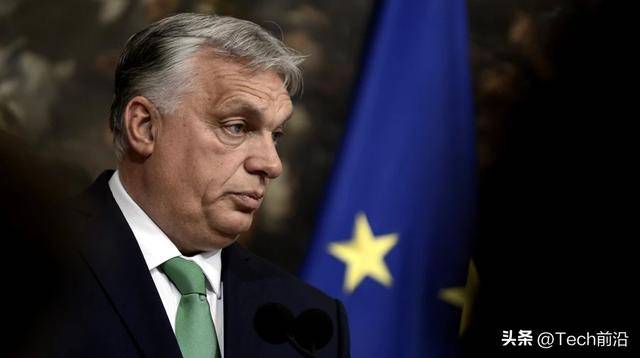
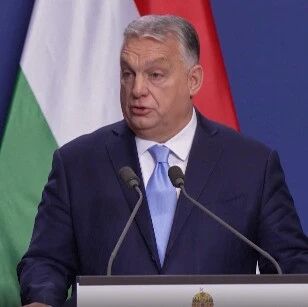
一年内,匈牙利将免受美方制裁
中国能源报· 2025-11-09 01:36
Group 1 - The U.S. government has granted Hungary a one-year exemption from sanctions on Russian energy, allowing it to continue importing Russian oil [3] - Hungary's Prime Minister Orban emphasized the country's heavy reliance on Russian oil imports due to its landlocked status, stating that the exemption is "crucial" for Hungary's economy [3] - The U.S. and Hungary signed a memorandum of understanding on nuclear energy cooperation, which includes negotiations for small modular reactors and spent fuel storage [3] Group 2 - Hungary has committed to purchasing approximately $600 million worth of U.S. liquefied natural gas and has reached a $114 million nuclear fuel supply agreement with Westinghouse [3] - The two countries will enhance defense cooperation, with Hungary expressing intent to procure $700 million worth of defense materials from the U.S. [3] - Analysts suggest that without the U.S. exemption, Hungary could face secondary sanctions, including fines or being cut off from U.S. financial institutions, which would severely impact its economy [3]
下周关注丨10月宏观经济数据将公布,这些投资机会最靠谱
Di Yi Cai Jing· 2025-11-09 01:16
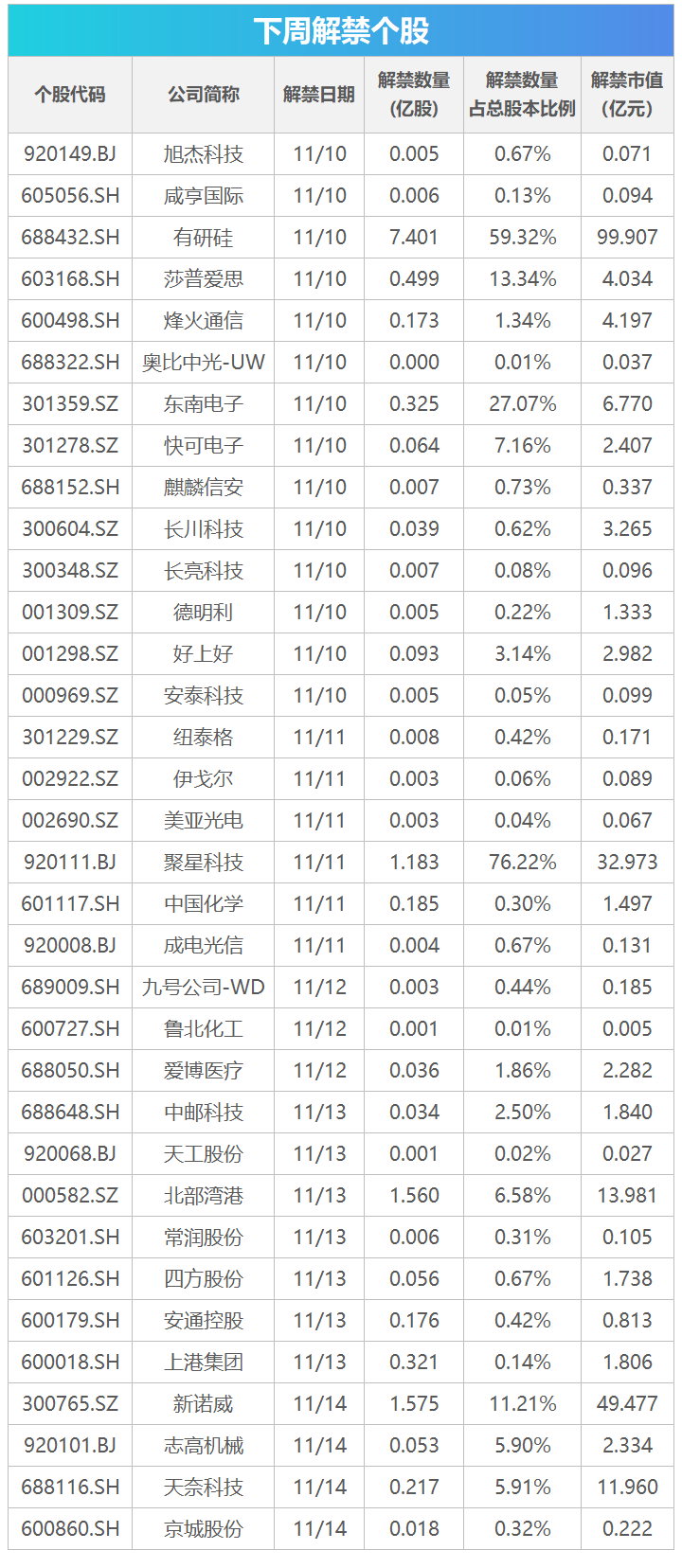
Economic Data Release - The National Bureau of Statistics will release October economic data on November 14, including industrial added value, fixed asset investment, and retail sales [2] - Financial data for October, such as M2, new loans, and social financing, is also expected to be released next week [3] Industry Conferences - A series of industry conferences will take place in November, including the 2025 China Robot Industry Development Conference from November 10 to 12, and the 12th China (Suzhou) Battery New Energy Industry International Summit Forum from November 11 to 13 [4] - Other notable events include the 2025 World Power Battery Conference, the 2025 Fourth China Nuclear Energy High-Quality Development Conference, and the 2025 6G Development Conference [4] Fuel Price Adjustment - A new round of domestic fuel price adjustments will begin on November 10 at 24:00, with an expected increase of 130 yuan per ton for gasoline and diesel based on the average crude oil price of 62.52 USD per barrel [5] Stock Unlocking - Over 24.7 billion yuan worth of restricted shares will be unlocked next week, with a peak unlocking date on November 10 [6] - The top three companies by unlocking market value are Youyan Silicon (99.91 million yuan), Xin Nuowei (49.48 million yuan), and Juxing Technology (32.97 million yuan) [6] New Stock Opportunities - Two new stocks will be issued next week: Nant Technology on November 11 and Hai'an Group on November 14 [9]


俄罗斯瞄准新兴国家积极出口小型反应堆
日经中文网· 2025-11-09 00:33
Core Viewpoint - Russia is leading in the practical application of small modular reactors (SMRs) compared to Europe and the United States, with plans to capture 20% of the global market by 2030 and has already begun construction in Uzbekistan [1][5][6]. Group 1: Market Position and Strategy - The International Energy Agency (IEA) projects that by 2050, over 1,000 small modular reactors will be operational globally, with Russia aiming for a 20% market share by 2030 [5]. - Russia is actively promoting SMRs in emerging markets, particularly in Southeast Asia and Central Asia, with Uzbekistan being the first country to sign an export contract for SMRs [1][5]. - The construction of two SMRs in Uzbekistan, with a total output of 110,000 kilowatts, has commenced, and the project is expected to cost under $1 billion [5]. Group 2: Advantages of Small Modular Reactors - SMRs have a power output of less than 300,000 kilowatts, which is significantly lower than the 1,000,000 kilowatts of large reactors, allowing for reduced construction costs and shorter timelines due to factory manufacturing and on-site installation [3]. - The operational lifespan of SMRs exceeds 60 years, providing Russia with long-term influence over countries that adopt these reactors [6]. Group 3: Global Competition and Economic Impact - Russia's state nuclear energy corporation, Rosatom, is projected to achieve $17.9 billion in overseas revenue by 2024, doubling its revenue compared to pre-Ukraine invasion levels [8]. - The U.S. and Europe are currently lagging behind Russia in the SMR sector, with the U.S. halting its first domestic project due to rising costs, while Canada has approved a project that may become the first G7 SMR if completed [8]. - Despite increased scrutiny from the West, there remains a dependency on Russian-sourced enriched uranium for nuclear energy [8].

世界核能工业博览会在巴黎举行 中国展团精彩亮相
Yang Shi Xin Wen Ke Hu Duan· 2025-11-08 10:51
Core Points - The World Nuclear Industry Expo opened on November 4 in Villepinte, near Paris, with over 1,000 exhibitors from more than 80 countries and regions participating [1] Group 1: Event Overview - The expo is one of the most influential events in the civil nuclear energy sector, with its first edition held in Paris in 2014 [1] - The Chinese nuclear industry association organized a delegation of 12 Chinese companies, showcasing a nearly 500 square meter exhibition area, making it the largest national delegation after France [3] Group 2: Chinese Participation - The Chinese delegation highlighted key technologies such as "Hualong One" and "High-Temperature Gas-Cooled Reactor," attracting significant attention from industry professionals worldwide [3] - In addition to state-owned nuclear enterprises, many large domestic nuclear equipment manufacturing companies participated to promote the strength and potential of Chinese manufacturing in the global market [3]

美媒:匈牙利购买俄罗斯能源将免受美方制裁
Xin Hua She· 2025-11-08 09:29
Core Points - The U.S. government has agreed to grant Hungary a one-year exemption from sanctions on Russian energy, allowing Hungary to continue importing Russian oil [1] - Hungary's reliance on Russian energy is emphasized, with Prime Minister Orban stating that the exemption is "crucial" for Hungary's economy [1] - A memorandum of understanding on nuclear energy cooperation has been signed, including negotiations for small modular reactors and spent fuel storage [1] - Hungary has committed to purchasing approximately $600 million worth of U.S. liquefied natural gas and has reached a $114 million nuclear fuel supply agreement with Westinghouse [1] - Defense cooperation will be strengthened, with Hungary expressing intent to procure $700 million in defense materials from the U.S. [1] - Analysts suggest that without the U.S. exemption, Hungary could face severe economic impacts, including fines or being cut off from U.S. financial institutions [1]
重磅!匈牙利获美国无期限豁免,美匈签核能大单硬刚欧盟
Sou Hu Cai Jing· 2025-11-08 03:36
Core Insights - Hungary has received a waiver from the U.S. for comprehensive energy sanctions, allowing it to continue relying on Russian energy without incurring significant costs for transitioning away from it [1][2] Group 1: Energy Dependency - Hungary is the EU country most dependent on Russian energy, with 90% of its crude oil and 80% of its natural gas sourced from Russia [2] - The "Turkish Stream" pipeline is set to deliver 7.6 billion cubic meters of natural gas to Hungary in 2024, supporting its status as a "gas price haven" in Europe, with household gas costs being one-third of those in Western Europe [2] - The termination of the Russian gas transit agreement with Ukraine has made the "Turkish Stream" the sole route for Russian gas to Europe [2] Group 2: Economic Implications - Experts warn that if the pipeline were to be sanctioned and shut down, Hungary's industrial output could drop by 30%, and inflation could exceed 20% [2] - Hungary's Prime Minister emphasized that energy security is a matter of physical and mathematical necessity, stating that without Russian gas, energy security is merely a theoretical discussion [2] Group 3: U.S.-Hungary Relations - The waiver indicates a shift in U.S. policy under Trump, contrasting with the previous Biden administration, which imposed sanctions on Hungarian officials and restricted military sales [3] - Hungary's Foreign Minister stated that U.S.-Hungary relations are entering a "new golden era," with the U.S. indicating a willingness to resume military cooperation [3] Group 4: EU Policy Tensions - The waiver has further strained the EU's unified stance on Russian energy sanctions, as Hungary has repeatedly blocked EU efforts to impose a complete ban on Russian oil and gas by 2026 [5] - Slovakia has followed Hungary's lead by importing Russian gas through the "Turkish Stream," and even Ukraine has turned to Hungary for Russian gas during emergencies [5] Group 5: Future Ambitions - Hungary aims to leverage the remaining capacity of the "Turkish Stream" to supply gas to Slovakia and plans to establish a natural gas distribution center in Central Europe, potentially replacing Austria's traditional role [6] - The waiver allows Hungary to stabilize energy costs while profiting from the price differences in gas trading between the EU and Russia [6]