航运业

Search documents
市场博弈运价见顶时间,关注下周开出的7月下半月报价-20250627
Hua Tai Qi Huo· 2025-06-27 05:26
Report Industry Investment Rating No relevant content provided. Core Viewpoints - Market participants are speculating on the peak time of freight rates, with attention on the quotes for the second half of July to be released next week [1] - The supply and demand in the US route have both increased, with supply recovering rapidly and freight rates in the East and West US dropping from their highs [2] - There is a possibility that the freight rates in the first half of July have already reached their peak, and the August contract is in a game over the specific peak - time [5] - The strategy suggests a sideways movement for the main contract and a long - December, short - October arbitrage [8] Summary by Directory 1. Futures Price - As of June 27, 2025, the total open interest of all container shipping index European route futures contracts was 90,944 lots, and the daily trading volume was 62,657 lots. The closing prices of EC2602, EC2604, EC2506, EC2508, EC2510, and EC2512 contracts were 1317.40, 1160.20, 1885.90, 1759.90, 1325.60, and 1489.10 respectively [7] - The estimated final delivery settlement price of SCFIS is between 1890 - 1911 points, and ship delays are expected to drag down the SCFIS on June 30 [4] 2. Spot Price - For the Shanghai - Rotterdam route, different alliances have different price quotes. For example, Maersk's price in the second week of July decreased compared to the previous period, and some alliances' prices for the second half of July are higher than the first half [1] - For the Shanghai - US East and West routes, the freight rates have dropped significantly. Maersk's Shanghai - Los Angeles price in the first half of July decreased from 4296/5360 in the first half of June to 1478/2110, and the Shanghai - New York price decreased from 6410 dollars/FEU to 4100 dollars/FEU [2] 3. Container Ship Capacity Supply - In July, the monthly average weekly capacity of the Shanghai - European base port route is 273,800 TEU, and in August, it is 269,900 TEU. There are 8 blank sailings in July [3] - As of June 20, 2025, 128 container ships have been delivered in 2025, with a total capacity of 1.018 million TEU. Among them, 38 ships of 12,000 - 16,999 TEU with a total capacity of 570,100 TEU and 6 ships of over 17,000 TEU with a total capacity of 142,400 TEU have been delivered [7] 4. Supply Chain - The geopolitical situation in the Middle East has affected the oil price and shipping situation. The conflict between Israel and Iran has ended, and the risk of the Strait of Hormuz being closed has been basically eliminated, with a relatively small direct impact on container transportation [2][3] 5. Demand and European Economy - The demand for the China - US route has increased rapidly due to the reduction of Sino - US tariffs, and carriers are actively restoring capacity [2] - The relationship between the EU's industrial production index, import from China, consumer confidence index, retail sales, and China's export to the EU may affect the shipping demand [73 - 89]
海通发展: 福建海通发展股份有限公司关于2024年股票期权与限制性股票激励计划首次授予第一个解除限售期解除限售暨上市的公告
Zheng Quan Zhi Xing· 2025-06-26 16:21
Core Viewpoint - The announcement details the implementation of the 2024 stock option and restricted stock incentive plan by Fujian Haitong Development Co., Ltd, including the first unlock period for the restricted stocks and the conditions for their release [1][6][10]. Group 1: Incentive Plan Approval and Implementation - The stock option and restricted stock incentive plan was approved in the fourth meeting, with relevant proposals passed [1][2]. - The actual number of stock options granted was 6.635 million, and the number of restricted stocks granted was 7.715 million [2][3]. - The first unlock period for the restricted stocks will end on July 2, 2025, with a release ratio of 30% [6][10]. Group 2: Unlock Conditions and Performance Assessment - The conditions for unlocking the restricted stocks include no negative audit opinions and meeting specific performance targets, such as a revenue growth rate of at least 50% or a net profit growth rate of at least 35% for 2024 [9][10]. - If the company fails to meet the performance targets, the restricted stocks will not be released, and the company will repurchase them at the grant price plus interest [10] . Group 3: Stock Listing and Capital Structure Changes - The restricted stocks will be listed for trading on July 3, 2025, with a total of 2,212,500 shares available for trading [12]. - The capital structure will change as follows: limited sale shares will decrease by 2,212,500 to 649,854,992, while unrestricted shares will increase by the same amount to 275,526,296 [13]. Group 4: Legal Opinions - The legal opinion confirms that the necessary approvals and authorizations for the unlock of restricted stocks have been obtained, and the procedures comply with relevant regulations [13].

新华鲜报|踏浪而行!第15个海员日致敬海上贸易“守护人”
Xin Hua She· 2025-06-25 08:22
Core Viewpoint - The article highlights the significance of seafarers in global trade and economic development, emphasizing their growing numbers and enhanced skills in response to new technologies and green shipping initiatives [1][6]. Group 1: Seafarer Statistics and Growth - As of the end of 2024, the total number of registered seafarers in China is projected to reach 2.0358 million, a year-on-year increase of 2.7%, with 970,100 being maritime seafarers, reflecting a 2.8% growth [1]. - In 2024, 23,000 new students are expected to enter maritime academies, while 58,000 seafarers will undergo training for job promotions, indicating a more comprehensive training system [1]. Group 2: Skills Development and Training - The seafarer skill training system in China will continue to optimize in 2024, focusing on green shipping and new technology applications, with an expanded scale for training specialized personnel in battery-powered and dual-fuel vessels [3][4]. - The introduction of guidelines for battery-powered vessel crew training and the promotion of order-based training for dual-fuel vessel crews are part of the ongoing efforts to enhance seafarer capabilities [3]. Group 3: International Recognition and Contributions - By the end of 2024, over 160,000 Chinese seafarers are expected to be deployed internationally, with agreements signed with countries like the UAE and Marshall Islands, increasing the number of countries recognizing Chinese seafarer certificates to 30 [4]. - Seafarers are responsible for servicing 167,000 domestic vessels and completing the transportation of 9.8 billion tons of cargo, ensuring the safe maritime travel of 260 million passengers [5]. Group 4: Economic Impact - Seafarers play an irreplaceable role in global economic development and trade, handling over 90% of international trade transportation and supporting various industries such as shipbuilding, deep-sea fishing, and marine scientific research [6].


【帮主郑重收评】沪指创年内新高!大金融爆发背后暗藏这些玄机
Sou Hu Cai Jing· 2025-06-25 07:47
Market Overview - The market experienced a significant rise, with the Shanghai Composite Index reaching 3455 points, marking a new high for the year, while the ChiNext Index surged over 3% [1] - Over 3800 stocks closed in the green, indicating a positive shift in market sentiment [5] Financial Sector - The financial sector saw a collective surge, particularly in brokerage stocks such as Guosheng Financial Holdings, Tianfeng Securities, and Xiangcai Securities, which hit the daily limit [3] - The rise is attributed to increasing expectations for policy easing and the relatively low valuations of brokerage firms, with potential catalysts from ongoing capital market reforms like the deepening of the registration system and the expansion of the Beijing Stock Exchange [3] - Caution is advised for short-term trading, while long-term investors should focus on leading firms with strong investment banking capabilities and wealth management advantages [3] Military Industry - The military sector remained active, with stocks like Guorui Technology and Beifang Changlong hitting the daily limit [3] - The sector benefits from strong performance and policy support, with many military enterprises reporting full order books, particularly in aerospace and missile equipment [3] - Long-term investments should focus on leading companies with core technologies and stable orders, avoiding short-term speculative trades [3] Software Development - The software development sector was also lively, with stocks like Guiding Compass reaching the daily limit [4] - This sector is linked to the financial industry, driven by the demand for financial IT and data security as part of digital transformation [4] - Companies that effectively combine technology with practical applications are seen as having significant future potential, but investors should prioritize firms with tangible projects and cash flow [4] Other Sectors - The oil and gas, pharmaceutical, and shipping sectors faced declines, with stocks like Zhun Oil Shares hitting the daily limit down [4] - The oil and gas sector is affected by recent volatility in international oil prices, while the pharmaceutical sector is still adjusting to the impacts of centralized procurement [4] - The shipping sector is experiencing a withdrawal of funds due to expectations around freight rates and seasonal demand [4] Investment Strategy - The market's upward movement suggests a search for undervalued and high-growth sectors, particularly in financials and military industries [5] - Long-term investors are encouraged to remain calm and avoid chasing short-term speculative stocks, focusing instead on sectors with clear policy benefits and strong mid-year performance forecasts, such as semiconductor equipment, energy storage, and high-end liquor [5]
【港股收评】三大指数集体反弹!教育股领涨,航运股回调
Jin Rong Jie· 2025-06-24 09:15
Group 1: Market Overview - The Hong Kong stock market experienced a collective rebound on June 24, with the Hang Seng Index rising by 2.06%, the Hang Seng China Enterprises Index increasing by 1.9%, and the Hang Seng Tech Index gaining 2.14% [1] Group 2: Sector Performance - Education stocks led the gains, with New Oriental-S (09901.HK) up 8.68%, NetDragon (00777.HK) up 6.59%, and Thinker Education (01769.HK) up 5.36% [1] - Chinese brokerage stocks also saw significant increases, with Hongye Futures (03678.HK) rising by 15.28%, China Galaxy (06881.HK) by 8.75%, and CICC (03908.HK) by 6.06% [1] - The insurance sector performed strongly, with China Taiping (00966.HK) up 5.75%, Ping An (02318.HK) up 5.16%, and New China Life (01336.HK) up 4.43% [1] Group 3: Investment Trends - Insurance stake acquisitions continued to be active, with a total of 19 instances reported by June 20, 2025, involving 16 companies, including 13 in Hong Kong [2] - The smart driving concept stocks surged, with Zhejiang Shibao (01057.HK) up 30.72% and Youjia Innovation (02431.HK) up 5.68% [2] - The automotive supply chain, including electric vehicles and Tesla-related stocks, also showed strength [2] Group 4: Other Sector Movements - Pharmaceutical stocks, including Rongchang Bio (09995.HK) up 16.22% and Meilitiantian Medical Health (02373.HK) up 8.27%, saw notable increases [3] - Other sectors such as film, Apple-related stocks, and new consumption concepts also performed well [4] Group 5: Declines in Specific Sectors - Shipping stocks faced a collective decline, with Pacific Basin Shipping (02343.HK) down 16.53% and COSCO Shipping Energy (01138.HK) down 9.81% [4] - Oil and gas stocks, influenced by a significant drop in international oil prices, also retreated, with China Oilfield Services (01033.HK) down 15.85% [4]
华尔街到陆家嘴精选|特朗普:以色列和伊朗已同意全面停火;特斯拉Robotaxi终于载客上路:无人驾驶出租车市场变革加剧?特斯拉股价还能走高?
Di Yi Cai Jing· 2025-06-24 01:14
Group 1 - Trump announced that Israel and Iran have agreed to a full ceasefire, although no official statements have been made by either country [2] - The U.S. stock market saw all three major indices rise by nearly 1%, with Tesla experiencing its largest single-day gain in two months, up over 8% [3] - Concerns over the Israel-Iran conflict eased, leading to a significant drop in international oil prices, with WTI crude oil futures falling by 7.22% to $68.51 per barrel [5] Group 2 - Darden Restaurants reported a 10.6% year-over-year revenue increase to $3.27 billion for the fourth fiscal quarter, slightly exceeding expectations [6] - The company anticipates a revenue growth of 7% to 8% for the full fiscal year 2026, with adjusted earnings per share projected between $10.50 and $10.70 [6] - Darden's flagship brands, Olive Garden and LongHorn Steakhouse, saw same-store sales growth of 6.9% and 6.7%, respectively, indicating strong consumer preference for dining out [7] Group 3 - The Baltic International Maritime Council reported a noticeable decline in the number of vessels passing through the Strait of Hormuz due to escalating geopolitical tensions [8] - Increased shipping costs and extended delivery times are expected as shipping companies reroute to avoid the Strait, impacting global shipping demand [8] - The Baltic Dry Index experienced a significant drop of 14% from June 13 to June 20, reflecting the adverse effects of the geopolitical situation on shipping [8] Group 4 - Bank of America noted that foreign central banks have been selling U.S. Treasury bonds since March, indicating a reduced reliance on dollar assets [9] - The total reduction in U.S. Treasury holdings by global central banks and official institutions reached approximately $48 billion since the end of March [9] - The current yield on 10-year U.S. Treasury bonds stands at 4.38%, making them attractive compared to the average dividend yield of the S&P 500 [9] Group 5 - Walmart's PhonePe is reportedly planning to raise $1.5 billion through an IPO in India, supported by Walmart [10] - The digital payments sector continues to grow globally, with varying levels of adoption and technological development across different regions [10] - India presents significant growth potential for digital payments due to its large population and government initiatives to reduce cash usage [10]


国际金融市场早知道:6月24日
Xin Hua Cai Jing· 2025-06-24 00:00
Market Insights - The Hong Kong Monetary Authority (HKMA) has noted the emergence of carry trade in the market, with the Hong Kong-US interest rate spread widening to 3% to 4%, pushing the Hong Kong dollar close to the weak end of its peg at 7.85 [1] - HKMA's Chief Executive emphasized the importance of stablecoins in payment applications over asset appreciation, indicating that expectations for high investment returns from stablecoins are unrealistic [1] - The Federal Reserve's Vice Chair Bowman suggested support for a potential interest rate cut as early as July if inflation continues to decline or if the labor market weakens [1] Economic Indicators - The U.S. June S&P Global Manufacturing PMI preliminary reading held steady at 52, the highest since February, exceeding market expectations [2] - The Eurozone's June composite PMI preliminary reading remained at 50.2, slightly below the expected 50.5, with the services PMI returning to the 50 mark while manufacturing PMI stayed at 49.4, marking 36 months without growth [2] - Germany's June composite PMI preliminary reading increased from 48.5 to 50.4, while France's composite PMI decreased from 49.3 to 48.5 [3] Global Market Dynamics - The Dow Jones Industrial Average rose by 0.89% to 42,581.78 points, the S&P 500 increased by 0.96% to 6,025.17 points, and the Nasdaq Composite climbed by 0.94% to 19,630.97 points [4] - U.S. crude oil futures fell by 8.95% to $67.23 per barrel, while Brent crude oil futures dropped by 8.37% to $69.16 per barrel [5] - The COMEX gold futures decreased by 0.04% to $3,384.40 per ounce, while silver futures rose by 0.09% to $36.05 per ounce [6] Regulatory Developments - The Thai Stock Exchange temporarily halved the daily price fluctuation limit for listed companies, effective until June 27 [7] - Central banks in India and Malaysia have reduced their derivative positions aimed at weakening their currencies, while South Korea's National Pension Fund has ended its five-month support for the Korean won [7]
海通发展: 上海荣正企业咨询服务(集团)股份有限公司关于福建海通发展股份有限公司2024年股票期权与限制性股票激励计划首次授予第一个解除限售期解除限售条件成就之独立财务顾问报告
Zheng Quan Zhi Xing· 2025-06-23 11:29
| 证券代码:603162 | 公司简称:海通发展 | | --- | --- | | 上海荣正企业咨询服务(集团)股份有限公司 | | | 关于 | | | 福建海通发展股份有限公司 | | | 首次授予第一个解除限售期 | | | 解除限售条件成就 | | | 之 | | | 独立财务顾问报告 | | | | 目 录 | | 一、释义 | | | 本独立财务顾问报告中,除非文义载明,下列简称具有如下含义: | | | 海通发展、本公司、公司、上市公 | 福建海通发展股份有限公司(含分公司及控股子公 | | 指 | | | 司 司) | | | 福建海通发展股份有限公司 | 2024 年股票期权与限 | | 本激励计划、股权激励计划 | 指 | | 制性股票激励计划 | | | | 公司授予激励对象在未来一定期限内以预先确定的 | | 股票期权、期权 指 | | | | 价格和条件购买本公司一定数量股票的权利 | | | 公司根据本激励计划规定的条件和价格,授予激励 | | | 对象一定数量的公司股票,该等股票设置一定期限 | | 限制性股票 指 | | | | 的限售期,在达到本激励计划规定的解除限售条件 ...
龙虎榜复盘 | 稳定币卷土重来,航运发酵
Xuan Gu Bao· 2025-06-23 11:03
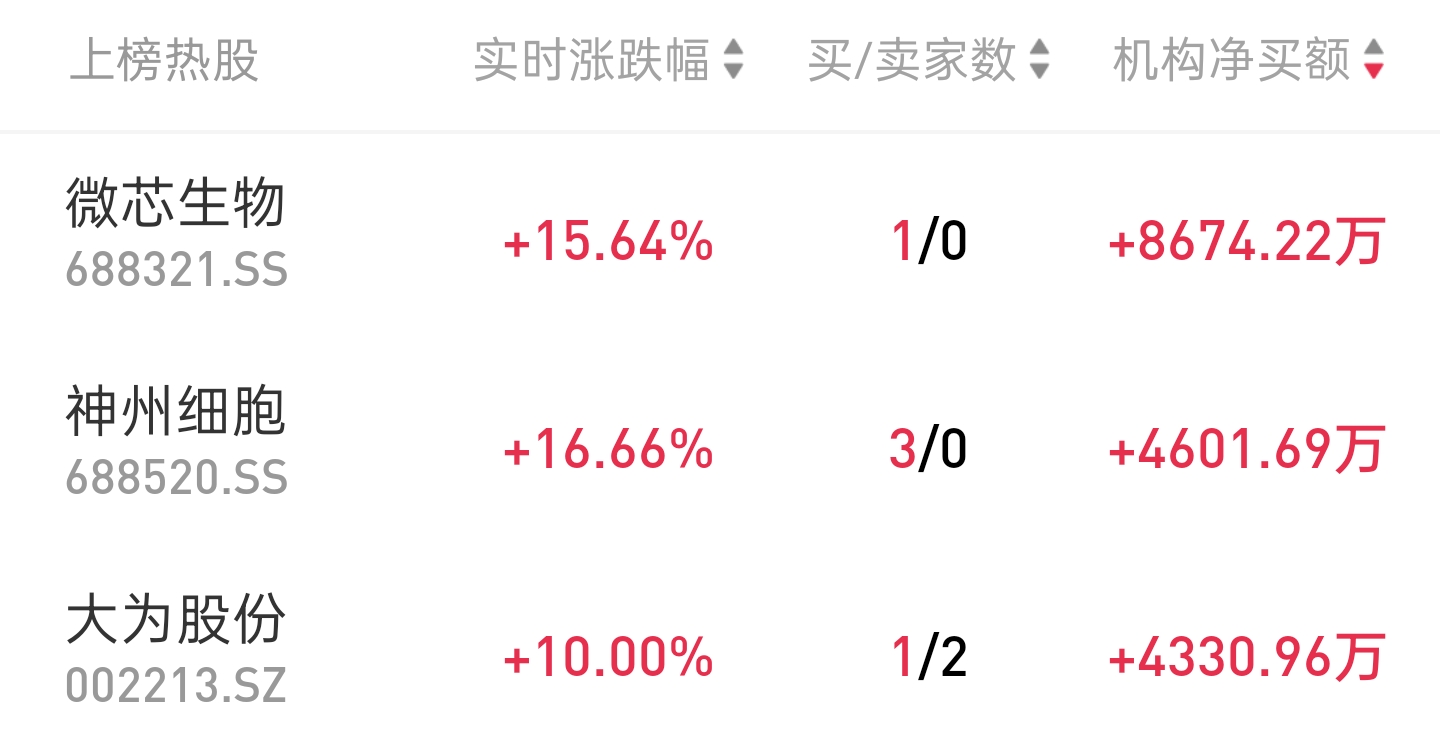
龙虎榜机构热股 6月23日,公司互动平台表示,DDR4价格上涨对公司业绩有积极作用。 龙虎榜知名游资 一、区块链 恒宝股份 个股龙虎榜 今天机构龙虎榜上榜27只个股,净买入13只,净卖出14只。当日机构买入最多的个股前三位是:微芯生物(8674万)、神州细胞(4601万)、大为股份 (4330万)。 | 上榜热股 | 实时涨跌幅♀ 买/卖家数♦ | | | --- | --- | --- | | 微芯生物 688321.SS | +15.64% | 1/0 | | 神州细胞 688520.SS | +16.66% | 3/0 | | 大为股份 002213.SZ | +10.00% | 1/2 | 大为股份 龙虎榜显示,今日1家机构净买入4330万。 开源证券认为,稳定币相对传统跨境支付体系具有高效、低成本、透明等优势。时效性上,现有的银行跨境汇款通常需要长达5个工作日才能结算,其中基 于跨境银行间通信系统的数字支付,大约30%的汇款需要一天以上的时间才能完成;基于区块链的跨境支付,100%的交易都会在不到1小时内完成。 二、航运 宁波海运 个股龙虎榜 首批参与中国人民银行数字货币研究所"数字人民币试点"工作 ...


全线拉升!原因,找到了!
中国基金报· 2025-06-23 07:57
【导读】市场回暖,低开高走 中国基金报记者 泰勒 兄弟姐妹们啊,今天的市场低开高走,情绪回暖,一起看看发生了什么事情。 A股低开高走 6月23日,亚洲市场早盘遭遇些许恐慌情绪, 中东战火蔓延以及石油供应中断将对东亚石油进口国造成冲击 ,但 随后情绪转 暖, 股市投资者似乎并不太担心。 A股市场全天低开高走,三大指数集体上涨。截至 收盘沪指涨0.65%,深成指涨0.43%,创业板指涨0.39%。 银行股继续走强,工商银行、建设银行等多股创新高。 为何今天市场低开高走?有分析指出,美国加入以色列和伊朗之间的战争,乍看之下似乎是一个会引发市场暴跌的地缘政治热 点。然而,投资者对此次局势升级基本不以为意,许多策略师认为冲突是可控的,甚至对某些风险资产而言可能是利好。 市场共4446只个股上涨,84只个股涨停,844只个股下跌。 | 880005 涨跌家数 | | | --- | --- | | 其中 涨停 | 84 | | 涨幅 > 7% | 150 | | 涨幅 5-7% | 163 | | 涨幅 3-5% | 629 | | 涨幅 0-3% | 3504 | | 跌幅 0-3% | 776 | | 跌幅 3-5% ...