
金融业

Search documents
深圳官宣:上半年GDP增长5.1%
21世纪经济报道· 2025-07-30 11:19
Core Viewpoint - Shenzhen's economy showed steady growth in the first half of 2025, with a GDP of 18,322.26 billion yuan, reflecting a year-on-year increase of 5.1% [2]. Economic Performance - The primary industry added value was 10.33 billion yuan, growing by 2.8% - The secondary industry added value was 6,505.56 billion yuan, growing by 3.3% - The tertiary industry added value was 11,806.37 billion yuan, growing by 6.1% [2]. Industrial Growth - The industrial output value above designated size increased by 4.3% year-on-year, with mining growing by 0.5%, manufacturing by 4.2%, and utilities by 11.8% - Notable growth in general equipment manufacturing (17.1%), instrument manufacturing (8.8%), and electrical machinery (8.2%) [2][3]. High-tech Product Production - High-tech product output saw significant increases, with civilian drones up by 59.0%, industrial robots by 38.0%, and 3D printing equipment by 35.8% [3]. Service Sector Performance - The service sector's added value reached 11,806.37 billion yuan, with a year-on-year growth of 6.1% - Financial services grew by 10.9%, transportation and warehousing by 9.0%, and IT services by 8.1% [3]. Investment Trends - Fixed asset investment decreased by 10.9%, with real estate down by 15.1% - However, industrial technology renovation investment surged by 47.1%, and investments in IT services and transportation grew by 47.7% and 32.5%, respectively [4]. Consumer Market Dynamics - Retail sales of consumer goods totaled 4,948.68 billion yuan, with a year-on-year increase of 3.5% - Notable growth in household appliances (55.7%) and online retail (19.4%) [5]. Foreign Trade Overview - Total import and export value was 21,675.45 billion yuan, down by 1.1%, with exports at 13,086.81 billion yuan (down 7.0%) and imports at 8,588.64 billion yuan (up 9.5%) - High-tech product exports increased by 8.0% [5]. Financial Sector Stability - By the end of June, the balance of deposits in financial institutions was 141,600.14 billion yuan, up by 5.7% - The balance of loans was 98,469.91 billion yuan, reflecting a growth of 3.5% [5]. Consumer Price Trends - Consumer prices rose by 0.1% year-on-year, with food and tobacco prices up by 0.5% and clothing by 1.3% - Prices for transportation and communication fell by 2.4% [6]. Future Outlook - Shenzhen aims to maintain steady economic growth while addressing external uncertainties and domestic demand issues, focusing on high-quality development [6].

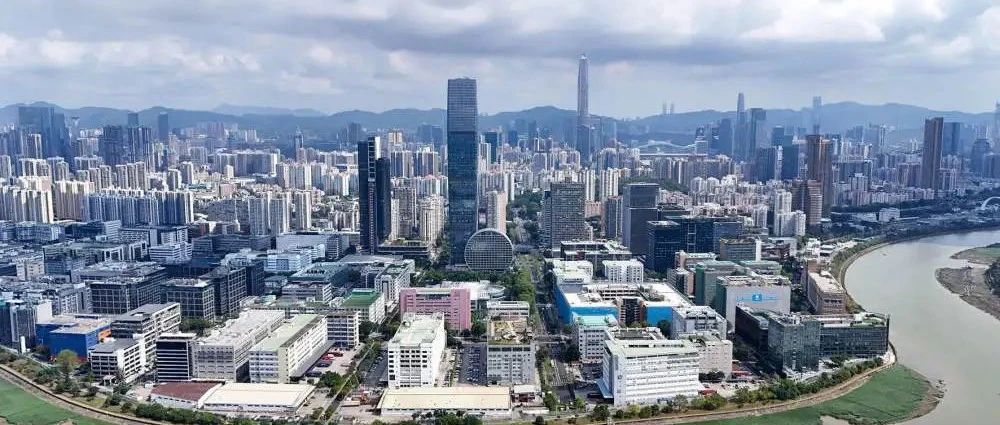
上半年深圳工业、外贸、消费持续向好,投资仍待加力|湾区观察
第一财经网· 2025-07-30 10:48
Core Viewpoint - Shenzhen's economy shows resilience and positive growth in the first half of 2025 despite external challenges, with significant increases in human flow, logistics, and financial flows supporting this outlook [1][5]. Economic Performance - Shenzhen's GDP for the first half of 2025 reached 18,322.26 billion yuan, a year-on-year increase of 5.1%, slightly below the national average by 0.2 percentage points [1]. - The primary industry added value was 10.33 billion yuan (up 2.8%), the secondary industry 6,505.56 billion yuan (up 3.3%), and the tertiary industry 11,806.37 billion yuan (up 6.1%) [1]. Industrial Growth - The city's industrial output value increased by 4.3% year-on-year, with manufacturing growing by 4.2% and electricity, heat, gas, and water production and supply up by 11.8% [1][2]. - Notable growth in general equipment manufacturing (17.1%), instrument manufacturing (8.8%), and electrical machinery (8.2%) was observed [2]. - High-tech product output saw significant increases, with civilian drones up 59.0%, industrial robots up 38.0%, and 3D printing equipment up 35.8% [2]. Service Sector - The service sector's added value was 11,806.37 billion yuan, growing by 6.1%, which is 0.5 percentage points higher than the national average [2]. - Key sectors such as finance (10.9%), transportation and warehousing (9.0%), and information technology services (8.1%) contributed to this growth [2]. Consumer Market - Retail sales of consumer goods totaled 4,948.68 billion yuan, a 3.5% increase year-on-year, although this was 1.5 percentage points lower than the national average [2]. - The policy of replacing old consumer goods positively impacted sales, with significant increases in home appliances (55.7%) and cultural office supplies (32.9%) [3]. Foreign Trade - Shenzhen's total import and export volume was 21,675.45 billion yuan, a decrease of 1.1%, but the decline was less severe than in previous quarters [3]. - Exports amounted to 13,086.81 billion yuan (down 7.0%), while imports rose to 8,588.64 billion yuan (up 9.5%), with high-tech product exports increasing by 8.0% [3]. Investment Trends - Fixed asset investment in Shenzhen fell by 10.9%, with real estate development down 15.1%, while infrastructure investment grew by 7.7% [4]. - Significant growth was noted in information transmission and technology services (47.7%) and transportation (32.5%) [4]. Future Outlook - A series of major investment projects in transportation and urban renewal are planned for the second half of the year, which are expected to improve overall investment performance [5]. - Strong growth in passenger traffic at Shenzhen Airport (10.9%) and container throughput at Shenzhen Port (10.8%) indicates robust logistics performance [5]. - The city has seen a continuous double-digit growth in foreign investment, with actual foreign investment reaching 20.9 billion yuan, a year-on-year increase of 11.3% [6].
同比增长5.1%!深圳上半年GDP1.83万亿元
Nan Fang Du Shi Bao· 2025-07-30 10:44
Economic Overview - Shenzhen's GDP for the first half of 2025 reached 1832.226 billion yuan, with a year-on-year growth of 5.1% at constant prices [2] - The primary industry added value was 1.033 billion yuan, growing by 2.8%; the secondary industry added value was 650.556 billion yuan, growing by 3.3%; and the tertiary industry added value was 1180.637 billion yuan, growing by 6.1% [2] Industrial Production - The city's service industry added value was 1180.637 billion yuan, with a year-on-year growth of 6.1%, accelerating by 0.1 percentage points compared to the first quarter [3][4] - Key sectors such as finance, transportation, storage and postal services, and information transmission, software, and IT services grew by 10.9%, 9.0%, and 8.1% respectively [3][4] - From January to May, revenue from large-scale service enterprises increased by 8.4%, with notable growth in transportation, storage, and postal services at 12.3% [3][4] Fixed Asset Investment - Fixed asset investment in the city decreased by 10.9% year-on-year, with real estate development investment down by 15.1% [5] - Infrastructure investment grew by 7.7%, while industrial technology transformation investment surged by 47.1% [5] - Investment in information transmission, software, and IT services increased by 47.7% [6] Market Sales - The total retail sales of consumer goods reached 494.868 billion yuan, with a year-on-year growth of 3.5%, accelerating by 0.4 percentage points compared to the first quarter [7] - Retail sales of essential goods showed strong growth, with daily necessities and grain and oil products increasing by 10.7% and 9.1% respectively [7] - Online retail continued to grow, with sales through the internet increasing by 19.4% [7] Trade Performance - The total import and export volume was 2167.545 billion yuan, down by 1.1% year-on-year, but the decline was narrower by 1.7 percentage points compared to the first quarter [8] - Exports amounted to 1308.681 billion yuan, decreasing by 7.0%, while imports rose by 9.5% to 858.864 billion yuan [8] - High-tech product exports grew by 8.0% [8] Financial Sector - By the end of June, the balance of deposits in financial institutions (including foreign capital) was 14160.014 billion yuan, growing by 5.7% year-on-year [9] - The balance of loans in financial institutions (including foreign capital) was 9846.991 billion yuan, with a year-on-year growth of 3.5% [9] Consumer Prices - The consumer price index increased by 0.1% year-on-year, with food and tobacco prices rising by 0.5% and clothing prices by 1.3% [10] - Prices for transportation and communication decreased by 2.4%, while medical care prices rose by 1.2% [10]

深圳上半年GDP增长5.1% 服务业增势良好
2 1 Shi Ji Jing Ji Bao Dao· 2025-07-30 10:18
南方财经记者 陈思琦 深圳报道 市场销售增长加快。上半年,深圳社会消费品零售总额4948.68亿元,同比增长3.5%,增速比一季度加 快0.4个百分点。分消费类型看,商品零售增长3.6%;餐饮收入增长1.7%。基本生活类商品增势较好, 限额以上单位日用品类、粮油食品类零售额分别增长10.7%、9.1%。 值得一提的是,消费品以旧换新政策继续显效,限额以上单位家用电器和音像器材类、文化办公用品 类、通讯器材类零售额分别增长55.7%、32.9%、6.0%。网上零售持续增长,限额以上单位通过互联网 实现的商品零售额增长19.4%。 7月30日,深圳市统计局发布2025年上半年深圳经济运行情况。 根据广东省地区生产总值统一核算结果,2025年上半年,深圳市地区生产总值18322.26亿元,按不变价 格计算,同比增长5.1%。其中,第一产业增加值10.33亿元,增长2.8%;第二产业增加值6505.56亿元, 增长3.3%;第三产业增加值11806.37亿元,增长6.1%。 工业生产稳步增长。上半年,深圳市规模以上工业增加值同比增长4.3%,增速比一季度加快0.1个百分 点。分门类看,采矿业增加值同比增长0.5%,制 ...
新华社权威快报丨8月新规,一起来看
Xin Hua She· 2025-07-29 12:33
Group 1 - The new regulations effective from August include the implementation of a revised "Occupational Disease Classification and Catalog," which expands the categories from 10 to 12 and increases the total number of occupational diseases from 132 to 135, adding new categories for musculoskeletal diseases and mental disorders [3] - A new anti-money laundering regulation mandates that transactions involving cash purchases of gold and other precious metals exceeding 100,000 RMB must be reported, requiring institutions to submit large transaction reports within five working days [3] - The "Cybersecurity Incident Reporting Management Measures" will standardize the reporting of cybersecurity incidents in the financial sector, requiring institutions to report significant incidents to the People's Bank of China [3]

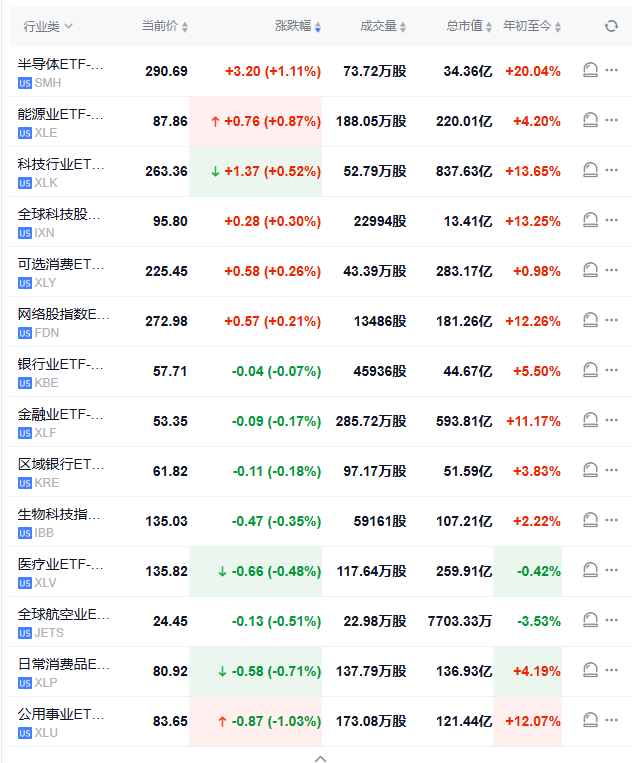
美股盘初,主要行业ETF涨跌不一,半导体ETF涨超1%,能源业ETF涨近1%,公用事业ETF跌超1%。
news flash· 2025-07-28 13:58
Core Viewpoint - The performance of major industry ETFs in the U.S. stock market shows mixed results, with semiconductor and energy ETFs experiencing gains, while utility ETFs decline. Group 1: Semiconductor and Energy ETFs - The semiconductor ETF is priced at $290.69, with an increase of $3.20 (+1.11%) and a total market capitalization of $34.36 billion, reflecting a year-to-date increase of 20.04% [2] - The energy ETF is priced at $87.86, rising by $0.76 (+0.87%) with a trading volume of 1.88 million shares and a total market capitalization of $22.00 billion, showing a year-to-date increase of 4.20% [2] Group 2: Other Industry ETFs - The technology sector ETF is priced at $263.36, decreasing by $1.37 (-0.52%) with a market capitalization of $83.76 billion, up 13.65% year-to-date [2] - The consumer discretionary ETF is priced at $225.45, increasing by $0.58 (+0.26%) with a market capitalization of $28.32 billion, reflecting a year-to-date increase of 0.98% [2] - The financial sector ETF is priced at $53.35, declining by $0.09 (-0.17%) with a market capitalization of $593.81 billion, up 11.17% year-to-date [2] - The utility ETF is priced at $83.65, decreasing by $0.87 (-1.03%) with a market capitalization of $12.14 billion, reflecting a year-to-date increase of 12.07% [2]
欧美关税协议达成,国内强预期弱现实
Tong Guan Jin Yuan Qi Huo· 2025-07-28 09:10
Report Industry Investment Rating No relevant content provided. Core Views - Overseas: The US and the EU reached an agreement, with the US imposing a 15% import tariff on most EU goods, half of the previously threatened rate, avoiding an escalation of the trade war. The EU promised to invest about $600 billion in the US and significantly increase purchases of US energy and military products. Sino-US high-level meetings will be held in Stockholm on Monday to extend the August 12 tariff "ceasefire" agreement by 90 days. With the tariff paths of many countries becoming clearer, market risk appetite has slightly increased [2]. - Domestic: The current market is in a stage of "strong expectation, weak reality". The positive sentiment brought by supply - side optimization policies is still evolving. A - shares once broke through the 3600 - point mark, and trading volume and margin trading balances increased. In June, the year - on - year decline in industrial enterprise profits narrowed to - 4.3%, mainly driven by the automotive industry. Short - term attention should be paid to market sentiment, policy outcomes, and tariff negotiations [3]. Summary by Directory Overseas Macro - US 7 - month Manufacturing and Services PMI Differentiation: The US 7 - month Markit manufacturing PMI was 49.5, weaker than expected and below the boom - bust line. The services PMI reached a new high this year at 55.2. Tariffs and high prices were reported to suppress demand [5]. - ECB's July Decision: On July 24, the ECB announced a pause in interest rate cuts after eight consecutive cuts, maintaining the main interest rate at 2.00%. The market's expectation of a September rate cut dropped below 30% [7]. Asset Performance - Equity: Most equity indices showed positive performance. For example, the Shanghai Composite Index rose 4.33% last week, and the Hang Seng Index rose 5.47% [9]. - Bond: Yields of domestic and overseas bonds showed different trends. For example, the 1 - year domestic treasury bond yield rose 3.38 BP last week, while the 5 - year US treasury bond yield fell 1.00 BP [12]. - Commodity: The performance of commodities was mixed. The Nanhua Commodity Index rose 2.73% last week, while WTI crude oil fell 1.48% [14]. - Foreign Exchange: The US dollar index fell 0.80% last week, and the euro - to - RMB exchange rate rose 0.73% [16]. High - Frequency Data Tracking - Domestic: High - frequency data such as the congestion index, subway passenger volume, and real - estate transaction volume are presented through charts [18]. - Overseas: Data on red - book retail sales, unemployment claims, and US treasury bond spreads are shown [22]. This Week's Important Economic Data and Events - A series of economic data and events are scheduled this week, including US GDP, employment data, and euro - zone economic sentiment indices [31].
宏观经济深度研究:地缘的围墙,创新的阶梯
工银国际· 2025-07-28 05:26
Economic Impact of Geopolitical Fragmentation - The 2007-2008 financial crisis marked a significant turning point in globalization, leading to increased geopolitical fragmentation since 1975[2] - Geopolitical fragmentation index shows that a one standard deviation negative shock can reduce global GDP by approximately -0.4%, peaking within one to two years[5] - Emerging economies, particularly in Southeast Asia and Latin America, are more severely impacted by external shocks compared to developed regions[5] Sectoral and Regional Variations - Industries closely tied to global markets, such as manufacturing and finance, face the most significant disruptions due to geopolitical risks[5] - The spillover effects of geopolitical factors are most pronounced in the US-EU region, affecting global economic dynamics[5] - In contrast, sectors like agriculture and real estate, which are more localized, experience relatively minor impacts[5] Innovation as a Response to Geopolitical Risks - Higher exposure to external political risks correlates with increased innovation activities, such as patent filings and R&D spending[8] - Private sector initiatives drive innovation in response to geopolitical uncertainties, highlighting the importance of market incentives[8] - Medium-innovation firms, which are sensitive to external risks, tend to increase R&D efforts more than both high-tech giants and low-innovation firms[8] Long-term Implications for Economic Growth - Strengthening domestic innovation capabilities can help mitigate risks associated with global supply chains and enhance resilience[8] - Countries that can achieve technological advancements and industry upgrades within a regional framework are likely to excel in future global competition[8]
金融为高水平对外开放架桥铺路
Jin Rong Shi Bao· 2025-07-28 02:42
这些举措让金融市场的国际化水平不断提升,为高水平对外开放搭建起更畅通的桥梁。 金融为高水平对外开放"铺路",体现在制度突破上。从取消外资持股比例限制到"互换通"机制升级,从 跨境融资便利化试点到QDLP、QFLP试点,这一系列举措,正在构建起与高水平开放发展相适应的金 融制度环境,为对外开放扫清要素跨境流动、市场规则衔接等多方面制度性障碍,让开放之路越走越 宽。 这些制度性创新措施的落地也获得了市场的认可。以业务量持续上升的"互换通"为例,据中国人民银行 数据,截至2025年4月末,20家境内报价商与79家境外投资者累计达成人民币利率互换交易超1.2万笔, 名义本金总额约6.5万亿元人民币。 2018年批复建设、2022年项目开工、2025年封关运作,扮演着制度型开放关键角色的海南自贸港,如今 迈向了加快构建开放型经济新体制,打造引领我国新时代对外开放重要门户的新发展节点。 "全岛封关是海南自贸港建设新的起点。"7月23日,国家发展改革委副主任王昌林在国新办举行的新闻 发布会上如是表示。 自建设之初,各界就对海南自贸港封关之后的聚集全球要素、配置全球资源、促进产业发展、加快对外 开放充满期待。根据相关方案安排 ...
解决企业账款拖欠问题需金融端发力
Jin Rong Shi Bao· 2025-07-28 02:33
Core Insights - The increasing scale of accounts receivable and extended payment terms among enterprises pose significant risks to cash flow and operational stability, potentially leading to systemic financial risks [1][2][3] - The government is taking comprehensive measures to address the issue of delayed payments, emphasizing the importance of resolving this problem for economic stability and social credit [1][7] - The financial sector is expected to play a crucial role in alleviating the accounts receivable issue by providing necessary credit support and facilitating smoother cash flow [1][15] Group 1: Current Situation - As of May 2025, accounts receivable for large industrial enterprises reached 26.40 trillion yuan, a 9% year-on-year increase, with an average recovery period of 70.5 days, up by 4.1 days [1][2] - The construction and manufacturing sectors are particularly affected, with government departments and large enterprises being the main debtors, often exploiting their bargaining power to delay payments [2][3] Group 2: Internal Mechanisms - While credit sales are a normal business practice, malicious delays can lead to a collapse of commercial credit and supply chain disruptions [3][4] - The misuse of credit mechanisms by dominant market players exacerbates the issue, leading to increased cash flow pressure for smaller enterprises [3][4] Group 3: Causes of Delays - Economic downturns and the malicious practices of core enterprises contribute to the worsening accounts receivable situation [4][5] - Core enterprises often impose excessively long payment terms and stringent conditions, which further complicates the payment landscape for smaller suppliers [4][5] Group 4: Financial Solutions - Developing a diversified financial market can positively impact the resolution of accounts receivable issues, as seen in more developed economies [5][6] - Financial institutions can provide necessary credit support to enterprises facing temporary cash flow challenges due to delayed payments [6][15] Group 5: Domestic Practices - Strengthening legal frameworks and enhancing credit constraints are key measures being implemented to address the accounts receivable problem [7][8] - The government has initiated multiple rounds of debt clearance actions, establishing clear timelines and accountability measures [9][10] Group 6: International Practices - Various countries have established legal frameworks to enforce timely payments, with the EU and the UK setting strict payment deadlines and penalties for delays [11][12] - Efficient dispute resolution mechanisms are in place in several countries to assist small and medium enterprises in recovering debts [12][13] Group 7: Financial Sector's Role - The financial sector can alleviate accounts receivable issues by providing financing support, risk management, and credit restoration [15][16] - Innovations in supply chain finance can help convert accounts receivable into immediate cash flow, easing financial pressures on smaller enterprises [16][17] Group 8: Challenges Faced - The financial sector faces challenges such as the misuse of credit tools and the lack of transparency in accounts receivable management [18][19] - Regulatory gaps and the absence of a unified oversight mechanism complicate the resolution of accounts receivable issues [21][22] Group 9: Future Directions - To effectively address accounts receivable challenges, financial services must focus on regulatory compliance and proactive measures [22][23] - Establishing a collaborative ecosystem among various stakeholders, including government, banks, and industry associations, is essential for creating a supportive environment for timely payments [24]