
数据中心

Search documents
“飙升的电费”成为美国中选焦点,AI数据中心站上“政治火山口”
美股研究社· 2026-01-19 12:41
Core Viewpoint - Rising electricity costs are becoming a central issue in the U.S. political agenda, surpassing other types of inflation, with data centers being a focal point of criticism from both political parties [3][4]. Group 1: Electricity Cost Trends - Electricity costs in the U.S. increased by 6.7% year-over-year in December, with a cumulative rise of approximately 38% since 2020, while overall consumer prices only rose by 2.7% during the same period [4]. - In the Northeast and Mid-Atlantic regions, cumulative bill inflation reached 29% over the past three years, significantly higher than the Consumer Price Index (CPI) [9]. - Factors contributing to rising electricity costs include aging infrastructure, natural disasters, state renewable energy initiatives, and fluctuations in fuel costs [5]. Group 2: Political Implications - The issue of rising electricity prices is expected to be a key topic in the upcoming gubernatorial elections across 36 states, with many public utility commissions facing elections this year [6]. - Political pressure is mounting in various states, with governors and senators expressing concerns about the impact of rising electricity costs on households, particularly in relation to large data centers [5][8]. - High-profile political figures, including former President Trump, are leveraging the electricity cost issue to appeal to voters, emphasizing the responsibility of large tech companies to bear the costs associated with their energy consumption [4][8]. Group 3: Investment Considerations - Goldman Sachs suggests that investors should hedge against the "politicization of AI" risk, as concerns about data center energy consumption are rising among policymakers [11][12]. - The firm identifies three main concerns regarding investments in data centers: the substantial cash flow invested in infrastructure, the accuracy of measuring demand for data center capacity, and potential regulatory controls introduced by midterm elections [11]. - Goldman Sachs recommends specific trading strategies, including going long on non-tech companies that improve productivity through AI, and hedging against volatility related to the political discourse surrounding AI [12].



南财快评|从十万亿度电看中国经济“新能量”
2 1 Shi Ji Jing Ji Bao Dao· 2026-01-19 12:12
Core Insights - In 2025, China's total electricity consumption is projected to reach 10,368.2 billion kilowatt-hours, marking a 5% year-on-year increase, and this is the first time any country has surpassed the 10 trillion kilowatt-hours threshold [1][4] - This milestone reflects a significant transformation in China's economic structure, shifting from high energy consumption to high efficiency, indicating a transition towards high-quality development [1][4] Group 1: Electricity Consumption and Economic Transition - The increase in electricity consumption serves as a "thermometer" for high-quality development, indicating not just total consumption but also the optimization of industrial structure [2] - The proportion of electricity used by manufacturing is decreasing, while the shares for high-tech manufacturing, modern services, and residential consumption are rising, showcasing a shift from factor-driven growth to innovation-driven growth [1][2] - The rise of digital economy, smart manufacturing, and green energy sectors is enhancing the output efficiency per unit of electricity consumed, adding high-tech and high-quality value to electricity consumption [1][2] Group 2: Clean Energy and Sustainability - As electricity consumption surpasses 10 trillion kilowatt-hours, the share of clean energy generation has exceeded one-third, with wind and solar power installations leading globally [3] - This shift not only reduces carbon intensity but also injects sustainable momentum into economic growth, highlighting the synergy between economic growth and environmental protection [3] - The development of carbon trading markets, improved energy efficiency standards, and breakthroughs in energy storage technology will position electricity as a crucial link between economic growth and carbon neutrality goals [3] Group 3: Smart Energy Management - The application of big data and artificial intelligence in electricity data analysis transforms it into a valuable resource that can be collected, analyzed, and utilized in real-time [3] - Technologies such as smart grids, demand response, and virtual power plants enhance the flexibility and efficiency of electricity supply, allowing for dynamic adjustments based on actual economic needs [3] - This intelligent energy management approach not only reduces energy waste but also enhances the overall resilience of economic operations, aligning with the principles of high-quality development [3]
能源数智化发展获政策支持,剑指构建创新应用体系
2 1 Shi Ji Jing Ji Bao Dao· 2026-01-19 11:07
Core Viewpoint - The article emphasizes the necessity of energy digitalization and intelligence as a global trend in energy transition, focusing on technological breakthroughs and industry applications to create a closed-loop system of "perception-planning-decision-execution" for efficient, low-carbon, and safe energy system transformation by 2030 [1][2]. Group 1: Policy Framework - In 2023, China has reinforced its commitment to digitalization in energy through the release of the "Opinions on Accelerating the Development of Energy Digitalization and Intelligence," outlining several goals to be achieved by 2030, including the establishment of a digital innovation application system and enhanced operational efficiency and reliability of energy systems [5]. - The "Guiding Opinions on Promoting High-Quality Development of Energy Equipment" was jointly issued by four government departments, aiming for significant advancements in the energy equipment industry's supply chain by 2030, focusing on digital and intelligent upgrades [6]. Group 2: Technological Breakthroughs and Industry Applications - The policies form a comprehensive framework combining "system empowerment and carrier support," with the former focusing on the integration of digital technologies across the energy value chain and the latter emphasizing the role of equipment in driving digital upgrades [7]. - Key technological breakthroughs are identified as essential drivers for energy digitalization, with a focus on overcoming critical technologies and integrating digital innovations such as AI, digital twins, IoT, and blockchain into the energy sector [8]. - The policies promote the application of digitalization across the entire energy chain, including generation, grid, coal, and oil & gas sectors, with specific tasks outlined for enhancing grid management and oil & gas operations [9]. Group 3: Key Focus Areas - The policies highlight three main areas of focus: intelligent equipment, system collaboration, and precise management, emphasizing the importance of both physical equipment and digital capabilities [10]. - The upgrade of energy equipment is prioritized, with three paths outlined: enhancing key technology research, intelligent retrofitting of equipment, and promoting green and circular upgrades to align with carbon neutrality goals [11]. - The transition to collaborative operation of energy systems aims to shift from decentralized to intelligent interconnected operations, focusing on enhancing the integration of renewable energy and storage, as well as optimizing the entire energy supply chain [12]. - Precision management in energy is targeted through the development of predictive maintenance and carbon management systems, aiming to reduce operational risks and support carbon reduction efforts [13].
消息称日本与美国已筛选首批5500亿美元投资项目,含软银数据中心项目
Sou Hu Cai Jing· 2026-01-19 09:56
Core Viewpoint - Japan and the United States have identified several projects as candidates for the initial phase of a $550 billion investment plan aimed at reducing Japan's export tariffs to the U.S., including a project involving SoftBank Group [2] Group 1: Investment Plan Details - The investment plan is part of an agreement between Tokyo and Washington to lower Japan's export tariffs to the U.S. [2] - The projects selected include a large-scale infrastructure initiative involving SoftBank Group, specifically related to data center construction [2] - The investment will be supported by the Japan Bank for International Cooperation (JBIC) and the Nippon Export and Investment Insurance (NEXI) through equity, loans, and loan guarantees [2] Group 2: Consultation Meetings - Since December of the previous year, Japan and the U.S. have held four advisory committee meetings to discuss potential projects [2]


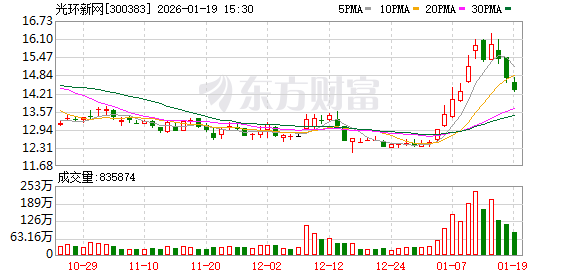
光环新网:未经客户许可,公司不得公开披露与客户合作的具体内容
Zheng Quan Ri Bao· 2026-01-19 09:35
Core Viewpoint - The company has been deeply engaged in the data center industry for over 20 years, providing secure, efficient, standardized, and sustainable internet infrastructure services while significantly developing its cloud computing business [2] Group 1: Company Overview - The company has established a leading market share and high brand recognition in the industry [2] - It serves a diverse range of clients across various sectors, including cloud computing, internet, finance, e-commerce, high-end manufacturing, fast-moving consumer goods, education, and government enterprises [2] - The client base is characterized by high recognition and strong stability [2] Group 2: Client Relationships - Due to contractual obligations with clients, the company is restricted from publicly disclosing specific details about its collaborations without client permission [2]

AI的尽头,是电工(doge)
量子位· 2026-01-19 09:30
Group 1 - The core viewpoint of the article highlights the increasing demand for electricians in the AI era, with an estimated annual shortage of about 81,000 electricians in the U.S. from 2024 to 2034, leading to a projected 9% growth in employment for electricians over the next decade, significantly higher than the average for all occupations [2][3][4] - The surge in job openings is primarily driven by data centers, which are creating a substantial demand for electricians and other blue-collar workers, including plumbers and HVAC technicians [6][8] - Major tech companies are significantly increasing their hiring in the energy sector, with a 34% year-on-year increase in recruitment for 2024, maintaining high levels into 2025, and overall hiring in this sector is approximately 30% higher than before the release of ChatGPT in 2022 [9][10][11][12] Group 2 - The shortage of electricians is exacerbated by a long-standing lack of skilled labor in the construction industry, with many young people being encouraged to pursue white-collar jobs instead of trades, leading to a gap as experienced workers retire [24][28][30] - Training for electricians is becoming more rigorous, with companies preferring to hire fully trained workers rather than apprentices, which further complicates the supply-demand imbalance [34][36] - Tech companies like Google are proactively addressing the shortage by funding training programs to enhance the skills of existing electricians and train new apprentices, aiming to increase the overall workforce by about 70% by 2030 [36][37] Group 3 - The article discusses the critical energy demands of AI and data centers, emphasizing that the lack of electricity supply is becoming a more pressing issue than chip shortages, with predictions that China's electricity output will reach three times that of the U.S. by 2026 [40][50] - The future of AI development is increasingly tied to energy availability, including the need for infrastructure such as transformers and cooling systems, indicating a collective effort across the industry is necessary [48][49]

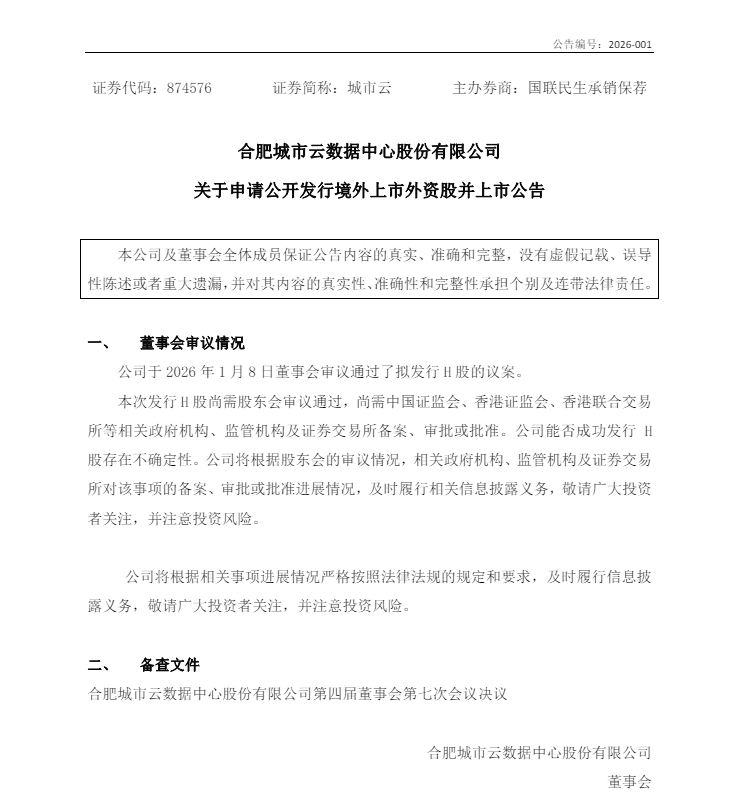
合肥城市云拟赴港IPO,中金资本持股超32%
Sou Hu Cai Jing· 2026-01-19 07:04
来源:智通财经 近日,新三板挂牌企业合肥城市云数据中心股份有限公司(874576,简称"合肥城市云")发布公告,公司拟于境外首次公开发行股票(H股),并申请在香 港联交所主板挂牌上市。 据公告,合肥城市云拟申请公开发行不超过32,934,400股H股新股,即不超过公司发行后总股本的约25%(行使超额配售选择权前)。在全额行使15%超额配 售选择权的情况下,公司共发行不超过37,874,400股H股(含不超过4,940,000 股的超额配售H股),占公司H股发行后总股数的约 27.71%。 合肥城市云表示,根据本次发行H股并上市计划,公司将根据法律法规及监管机构的要求申请转为境外募集股份并上市的股份有限公司。公司本次发行H股 并上市所募集资金在扣除发行费用后,计划用于基础设施投资、加大研发投入、全国市场开拓、补充营运资金等用途。 本次发行H股尚需股东会审议通过,尚需中国证监会、香港证监会、香港联合交易所等相关政府机构、监管机构及证券交易所备案、审批或批准。公司能否 成功发行H股存在不确定性。 官网信息显示,合肥城市云数据中心股份有限公司(CCDC)成立于2012年,是国家级高新技术企业,国家专精特新"小巨人"企 ...
科士达(002518):业绩超预期,数据中心和户储业务正在共振
CMS· 2026-01-19 06:31
Investment Rating - The report maintains a "Strong Buy" rating for the company [4][8]. Core Insights - The company has exceeded performance expectations in the third and fourth quarters, confirming a turning point in operations. Both the household storage and data center businesses are showing positive trends, with household storage demand recovering since the second half of 2025 and expected to continue into 2026. The data center business has accelerated overseas production since the second half of last year, achieving breakthroughs in both clients and products domestically. The synergy between these two main businesses is anticipated to drive accelerated performance in 2026 [1][8]. Financial Data and Valuation - Total revenue is projected to grow from 5,440 million in 2023 to 6,739 million in 2026, reflecting a compound annual growth rate (CAGR) of approximately 21% [3][13]. - Operating profit is expected to increase from 1,018 million in 2023 to 1,155 million in 2026, with a significant growth rate of 54% in 2026 [3][14]. - Net profit attributable to shareholders is forecasted to rise from 845 million in 2023 to 992 million in 2026, with a growth rate of 58% [3][14]. - Earnings per share (EPS) is projected to increase from 1.45 in 2023 to 1.70 in 2026 [3][14]. - The price-to-earnings (PE) ratio is expected to decrease from 36.9 in 2023 to 31.4 in 2026, indicating a more attractive valuation over time [3][14]. Business Outlook - The household storage business is expected to see a turnaround, with demand recovering and optimistic guidance from major clients. The company is also focusing on enhancing its own brand to drive growth in 2026 [8]. - The overseas production of UPS (Uninterruptible Power Supply) is accelerating, with the company entering overseas supply chains since Q3 2025. This is expected to enhance the company's ability to capture external orders and improve its chances in the overseas HVDC (High Voltage Direct Current) market [8]. - Domestic demand for AIDC (Artificial Intelligence Data Center) is anticipated to grow, with the company successfully expanding its client base to include emerging internet companies and launching high-value solutions [8].

慧源同创科技相变蓄能技术助AI 数据中心降散热成本
Sou Hu Wang· 2026-01-19 03:01
Core Insights - The company has made significant progress in its phase change energy storage (PCM) business within the AI data center application sector, contributing to China's dual carbon goals by providing a clean heating system that utilizes waste heat from data centers [1][2] Group 1: Project Overview - The Huailai project, a collaboration with Environmental Process Systems Limited and Tsinghua University, is China's first AI data center waste heat recovery demonstration project [2] - The core breakthrough of the project lies in the company's self-developed PCM technology, which achieves a 60% energy saving rate and has received multiple invention patents [2] - The project can provide over 75,000 GJ of heat annually to surrounding communities, equivalent to approximately 20.83 million kWh, while reducing greenhouse gas emissions by over 4,000 tons of CO2 [2] Group 2: Commercialization and Market Potential - The Huailai project has achieved break-even within a year of operation and serves as a model for replicating waste heat recovery solutions across various data center regions [3] - The company is also initiating a liquid-cooled data center demonstration project in Karamay, aiming to expand the application of PCM technology in the data center sector [3] - The rapid expansion of China's data center market, projected to reach around 450 operational data centers by October 2025, along with supportive government policies, creates a vast market opportunity for the company's waste heat recovery business [3] Group 3: Technological Strength and Recognition - The company has been recognized as a national-level "Little Giant" enterprise and has received various awards, including green factory certification [4] - It holds 45 core patents and has participated in the formulation of multiple national and industry standards, providing authoritative technical support for project implementation and industry development [4] - The CEO expressed confidence in the future development of the PCM business, emphasizing the integration of cutting-edge technology with market resources [4]
大摩闭门会-互联网调研纪要与中国AI发展更新
2026-01-19 02:29
Summary of Key Points from Conference Call Records Industry and Company Overview - **Companies Involved**: Alibaba, Baidu, Yunmanman, Tencent, Huya, Bilibili, Tencent Music, GDS, OTA Industry - **Industry Focus**: E-commerce, Cloud Computing, AI Technology, Data Centers, Live Streaming, Online Travel Agencies (OTA) Core Insights and Arguments Alibaba - **E-commerce Performance**: Alibaba's CMR (Customer Management Revenue) is expected to show low single-digit growth in the December quarter, down from previous expectations of mid-single-digit growth. NBS (Net Merchandise Sales) decreased by 5% in October and November, reflecting competitive pressures and high base effects. CMR is projected to decline in the March quarter but may stabilize in Q2 and recover in the second half of the year [1][2] - **Financial Outlook**: The company anticipates a full-year loss of approximately 60 billion RMB for FY2027, with cloud revenue expected to exceed 380 billion RMB, maintaining growth expectations despite supply chain considerations [1][3] - **Flash Sales Business**: Positive performance noted, but March quarter losses are not expected to decrease significantly [1] Baidu - **Kunlun Chip Development**: Baidu plans to complete the IPO of its Kunlun chip within four to five months, with an internal valuation of 40-50 billion USD, exceeding market expectations. The company will retain over 50% ownership post-IPO [4] - **Client Base**: Major clients include Tencent and China Mobile, with no supply chain disruptions reported [4] Yunmanman - **Order Growth**: The fourth-quarter order growth is at the lower end of guidance due to seasonal factors and the cleaning of low-quality orders, but this will not impact revenue or profit. The company plans to invest in autonomous driving and overseas expansion in 2026, which may negatively affect profits [5] - **Revenue Confidence**: The company is confident in achieving a 30% or higher growth in commission-based revenue [5] Tencent - **Stock Sale Impact**: Tencent's sale of Hong Kong stocks aimed to meet liquidity requirements, leading to a market overreaction and stock price decline. Current valuation is considered undervalued at a 2026 P/E ratio of 16 [6] Data Center Industry - **Growth Expectations**: GDS anticipates an increase in annual new bookings from 250-300 MW to 500 MW, reflecting ambitious growth plans. However, new large data centers face strict regulatory approvals, with only a 10% success rate for project applications [7] OTA Industry - **Regulatory Challenges**: The OTA industry faces short-term uncertainties due to regulatory scrutiny, reminiscent of Alibaba's past experiences with antitrust issues, leading to cautious investor sentiment [8] Bilibili and Tencent Music - **Bilibili's Advertising Growth**: Strong performance in advertising with over 20% growth attributed to increased traffic, despite challenges in the gaming sector [9] - **Tencent Music's Market Sentiment**: No significant changes in operations, but market disappointment over K-POP performance restrictions in China has negatively impacted stock prices [9] Huya - **Live Streaming Business**: Huya's revenue is primarily global, with compliance risks at historical lows. The company expects stable or slight revenue growth through refined operations [10][11] - **Investor Returns**: Huya commits to a 200 million USD dividend and a 100 million USD stock buyback over the next three years [12] Concert Ticketing and IP Business - **Ticketing Market Saturation**: The concert ticketing business is currently saturated, limiting revenue growth despite strong demand. The company plans to focus on content investment for overseas expansion [13][14] - **Impact of Sino-Japanese Relations**: No significant impact on sales observed post-relations events, though some projects have been delayed [15] Additional Important Insights - **AI Technology Platform**: Huya's AI platform is among the top 30 global aggregators, expected to achieve over 5% annual growth in third-party advertising revenue for 2026 and 2027 [11] - **Market Reactions**: Overall market reactions to stock sales and regulatory news have led to volatility, but some companies are viewed as having strong fundamentals and potential for recovery [6][9] This summary encapsulates the key points from the conference call records, highlighting the performance and outlook of various companies and industries involved.


