
焦炭

Search documents
综合晨报-20250730
Guo Tou Qi Huo· 2025-07-30 03:04
Report Industry Investment Rating No relevant information provided. Core Viewpoints of the Report - The geopolitical game deadline between Russia and Ukraine has been advanced, and the macro - situation has positive expectations. The short - term market has upward support, and attention should be paid to the realization of benefits from Sino - US economic and trade talks and US sanctions against Russia [2]. - The short - term precious metals are expected to maintain a volatile trend due to the decline in safe - haven demand, and focus on US economic data and the Fed meeting [3]. - For various commodities, different trends and trading strategies are presented based on factors such as supply - demand relationships, policy impacts, and inventory changes. For example, some commodities are expected to rise, some to fall, and some to fluctuate [4][5][6]. Summary by Related Catalogs Energy and Chemicals - **Crude Oil**: Overnight crude oil futures rose sharply. The geopolitical game deadline has been advanced, and the short - term market has upward support. Attention should be paid to the realization of benefits from Sino - US economic and trade talks and US sanctions against Russia [2]. - **Fuel Oil & Low - Sulfur Fuel Oil**: Macro and geopolitical game news boost oil prices, but the cracking spread is expected to be under pressure. The fundamentals of high - and low - sulfur fuel oils are weak, and the cracking spread is likely to be volatile and weak [22]. - **Asphalt**: The domestic production volume in August decreased compared with July. Demand recovery was delayed, and the inventory destocking rhythm slowed down. The price follows the direction of crude oil, but the upward space is limited [23]. - **Urea**: The futures main contract is running at a low level. Domestic downstream demand is weak, exports are advancing, and short - term prices are likely to run within a range [24]. - **Methanol**: The unloading speed of foreign vessels in coastal areas is slow, and the port is unexpectedly destocked. Domestic supply is sufficient, and the market is likely to continue to fluctuate within a range [25]. - **Pure Benzene**: Night - time oil prices rose sharply, which is expected to boost the cost of pure benzene. Supply and demand decreased in the week, and the port slightly accumulated inventory. Seasonal supply - demand improvement is expected in the third quarter, and it is recommended to conduct monthly spread band operations [26]. - **PVC & Caustic Soda**: PVC showed strength at night. Supply decreased, domestic demand was weak, and foreign demand was expected to improve. Caustic soda showed a volatile trend, with long - term supply pressure and high - level pressure on prices [27]. - **PX & PTA**: Night - time prices rebounded slightly. The fundamentals of PX had limited driving force, and PTA continued to accumulate inventory. The medium - term processing margin has a repair drive, but it needs to wait for downstream demand to recover [28]. - **Ethylene Glycol**: The supply is shifting, short - term oil prices are strong, and downstream demand is stable. The port inventory fluctuates at a low level. Attention should be paid to external variables [29]. - **Short - Fiber & Bottle - Chip**: Prices rebounded following raw materials. Short - fiber is considered for long - allocation in the medium - term, while bottle - chip has long - term over - capacity pressure [30]. Metals - **Precious Metals**: Overnight precious metals fluctuated. Safe - haven demand declined, and short - term precious metals are expected to maintain a volatile trend. Focus on US economic data and the Fed meeting [3]. - **Copper**: Overnight copper prices fluctuated and closed up. The market focuses on the implementation of US tariff agreements and Fed meetings. Short - term support is at the MA40 moving average, and short positions are held against integer levels [4]. - **Aluminum**: Overnight, Shanghai aluminum had limited fluctuations. Demand declined in the off - season, inventory increased, and it is mainly in short - term shock adjustment with resistance at 21,000 yuan [5]. - **Cast Aluminum Alloy**: It fluctuates with Shanghai aluminum. The scrap aluminum market has tight supply, and the price is under short - term pressure but has certain resilience in the medium - term. Consider long AD and short AL when the price difference expands [6]. - **Alumina**: The price has risen sharply, the industry profit has recovered, and the inventory is in a surplus state. Sell short when the price approaches the recent high of 3,500 yuan [7]. - **Zinc**: The black price rebounded, and the zinc price adjustment rhythm was not smooth. Supply increased and demand was weak, and the inventory continued to rise. In the medium - term, the idea of short - allocation on rebounds is maintained, and wait for clear short signals [8]. - **Lead**: The supply - demand is weak, the rebound rhythm is slow, and there is support at 16,800 yuan/ton. You can try long positions lightly and hold them against this price [9]. - **Nickel & Stainless Steel**: Shanghai nickel fluctuated. The speculation of the "anti - involution" theme cooled down, and nickel may return to fundamentals. Wait patiently for short opportunities [10]. - **Tin**: Overnight tin prices fluctuated. Short - term support is at the MA40 moving average and 265,000 yuan. In the long - term, high - level supply expectations will suppress prices. Hold short positions above 270,000 yuan [11]. - **Carbonate Lithium**: It fluctuated, and the trading was active. The market rumors of mine shutdowns were refuted. The inventory increased, and the mid - stream output decreased slightly. Try long positions lightly in the short - term [12]. - **Polysilicon**: The futures rose sharply. The terminal is waiting and watching, and the supply - demand is in a tight balance. After the previous sharp rise, the market enters a wide - range shock. Choose low - long opportunities and control positions [13]. - **Industrial Silicon**: The futures rose slightly. The fundamentals are weak, but the price is at a historical low. Be cautious about short - selling unilaterally and control risks [14]. - **Iron Ore**: The overnight futures rose. Supply increased globally but decreased in domestic arrivals. The inventory pressure is not large, and the demand is weak and stable. The price is expected to be volatile [16]. - **Coke**: The price rose significantly during the day. The fourth round of price increases was proposed, and the inventory decreased slightly. The downward space is relatively limited [17]. - **Coking Coal**: The price rose significantly during the day, and the far - month contract hit the daily limit. The inventory decreased in the production end, and the downward space is relatively limited [18]. - **Silicon Manganese**: The price followed the rise. The long - term inventory accumulation expectation of manganese ore has improved, and there is an upward driving force in the short - term [19]. - **Silicon Iron**: The price followed the rise. The demand is acceptable, and the price may have an upward driving force in the short - term [20]. Agricultural Products - **Soybean & Soybean Meal**: Sino - US economic and trade negotiations are ongoing, and the US soybean growing conditions are good. The price is treated as volatile for now [34]. - **Soybean Oil & Palm Oil**: The US market shows oil - strong and meal - weak. Domestic soybean oil is strong, and the EU policy is positive for palm oil. Maintain the idea of long - allocation on dips [35]. - **Rapeseed & Rapeseed Oil**: Canadian rapeseed rose overnight. The rapeseed meal price stabilized slightly, and the rapeseed oil inventory decreased slowly. Take a short - term neutral attitude towards rapeseed products [36]. - **Domestic Soybean**: After a sharp reduction in positions and a callback, the price stabilized. Pay attention to Sino - US trade negotiations and weather conditions [37]. - **Corn**: The US corn is growing well. The domestic corn market has no major contradictions, and the Dalian corn futures may continue to be weak and volatile at the bottom [38]. - **Live Pigs**: The spot price continued to fall, and the futures are likely to have peaked. Suggest hedging on rallies [39]. - **Eggs**: The futures price fluctuated little. The spot price was stable in most areas. The 09 contract focuses on the seasonal rebound of the spot price, and long positions are more inclined to far - month contracts [40]. - **Cotton**: US cotton's excellent - good rate decreased, and Brazil's harvest progress was slow. Zheng cotton maintained a high - level shock. Temporarily wait and see [41]. - **Sugar**: US sugar is under pressure, and the uncertainty of China's sugar production in the 25/26 season has increased. The short - term sugar price is expected to be volatile [42]. - **Apple**: The futures price fluctuated. New - season early - maturing apples are on the market, and the market focuses on the new - season output estimate. Temporarily wait and see [43]. - **Timber**: The demand is good during the off - season, and the inventory pressure is small. The futures price is expected to continue to rise [44]. - **Pulp**: The price fell slightly. The domestic port inventory is relatively high, the demand is weak, and the price may return to low - level volatility. Temporarily wait and see [45]. Others - **Container Freight Index (European Line)**: The market freight rate inflection point is becoming clear, and the price is expected to decline further. The extension of tariff exemptions may boost market sentiment [21]. - **Stock Index**: A - shares rose steadily in the afternoon, and the futures index rose. The risk preference of the global market is oscillating strongly. Increase the allocation of technology - growth sectors [46]. - **Treasury Bonds**: Treasury bond futures closed down. The global trade sentiment has improved, and the bond market may have increased volatility in the short - term. The probability of a steeper yield curve increases [47].
永安期货焦炭日报-20250730
Yong An Qi Huo· 2025-07-30 01:24
Report Information - Report Date: July 30, 2025 [1] - Report Type: Coke Daily Report - Research Team: Black Team of the Research Center Key Points 1. Price and Production Data - **Coke Prices**: The latest prices of different types of coke vary, with some showing daily, weekly, and monthly changes. For example, the price of Shanxi quasi - first wet - quenched coke is 1372.10, with a daily change of 54.61, a weekly change of 163.84, and a monthly change of 218.45. Compared to the same period last year, it decreased by 27.67% [2]. - **Production Indicators**: The blast furnace开工率 is 90.81, with a weekly decrease of 0.08, a monthly decrease of 0.02, but an annual increase of 1.33%. The daily average iron water output is 242.23, with a weekly decrease of 0.21, a monthly decrease of 0.06, and an annual increase of 1.09% [2]. 2. Inventory Data - **Coke Inventories**: Coking plant inventory is 50.12, with a weekly decrease of 5.43, a monthly decrease of 23.61, and an annual increase of 42.35%. Port inventory is 198.13, with a weekly decrease of 0.98, a monthly decrease of 1.96, and an annual increase of 0.20%. Steel mill inventory is 639.98, with a weekly increase of 0.99, a monthly increase of 12.23, and an annual increase of 17.86% [2]. - **Inventory Days**: The steel mill inventory days are 11.45, with a weekly decrease of 0.01, a monthly increase of 0.23, and an annual increase of 11.71% [2]. 3. Futures Market Data - **Futures Prices**: The prices of different futures contracts (05, 09, 01) have changed. For example, the price of the 05 contract is 1717.5, with a daily decrease of 23.50, a weekly decrease of 56.00, a monthly increase of 212.50, and an annual decrease of 22.46% [2]. - **Basis and Spread**: The 05 basis is - 53.95, with a daily increase of 82.22, a weekly increase of 173.45, a monthly increase of 33.15, and an annual decrease of 113.11. The 5 - 9 spread is - 53.00, with a daily decrease of 31.50, a weekly decrease of 22.50, a monthly decrease of 12.00, and an annual decrease of 31.50 [2]. 4. Historical Price Trends - The report also presents historical price trends of coke in different regions (Linfen, Lvliang, Rizhao Port, etc.) from 2021 to 2025, which can help analyze long - term price fluctuations [3][4][5]
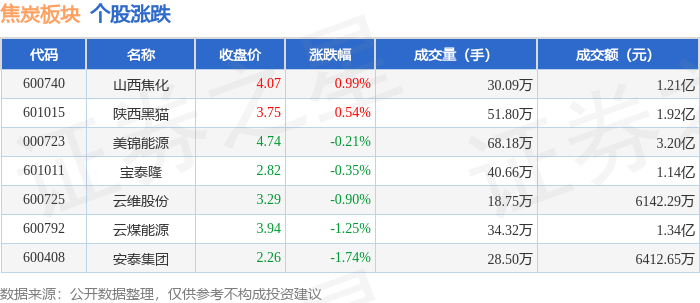
焦炭板块7月29日跌0.09%,安泰集团领跌,主力资金净流出8415.31万元
Zheng Xing Xing Ye Ri Bao· 2025-07-29 08:40
证券之星消息,7月29日焦炭板块较上一交易日下跌0.09%,安泰集团领跌。当日上证指数报收于 3609.71,上涨0.33%。深证成指报收于11289.41,上涨0.64%。焦炭板块个股涨跌见下表: 以上内容为证券之星据公开信息整理,由AI算法生成(网信算备310104345710301240019号),不构成投资建议。 从资金流向上来看,当日焦炭板块主力资金净流出8415.31万元,游资资金净流出891.73万元,散户资金 净流入9307.04万元。焦炭板块个股资金流向见下表: | 代码 | 名称 | 收盘价 | 涨跌幅 | 成交量(手) | 成交额(元) | | --- | --- | --- | --- | --- | --- | | 600740 | 山西焦化 | 4.07 | 0.99% | 30.09万 | 1.21亿 | | 601015 | 陕西黑猫 | 3.75 | 0.54% | 51.80万 | 1.92 Z | | 000723 | 美锦能源 | 4.74 | -0.21% | 68.18万 | 3.20 Z | | 601011 | 宝泰隆 | 2.82 | -0.35% | - 4 ...


中证香港300能源指数报2581.38点,前十大权重包含中国石油化工股份等
Jin Rong Jie· 2025-07-29 07:44
Core Viewpoint - The China Securities Index Hong Kong 300 Energy Index has shown significant growth, with a 8.00% increase over the past month, 15.98% over the past three months, and a 3.91% increase year-to-date [1]. Group 1: Index Performance - The China Securities Index Hong Kong 300 Energy Index is currently at 2581.38 points [1]. - The index reflects the overall performance of different industries in the Hong Kong market, categorized according to the China Securities Industry Classification Standard [1]. Group 2: Index Composition - The index is composed entirely of securities listed on the Hong Kong Stock Exchange, with a 100.00% allocation [1]. - The sector breakdown of the index includes: - Oil refining at 41.93% - Integrated oil and gas companies at 32.52% - Coal at 23.28% - Oilfield services at 1.56% - Coking at 0.72% [1]. Group 3: Sample Adjustment - The index samples are adjusted biannually, specifically on the next trading day after the second Friday of June and December [2]. - Weight factors are generally fixed until the next scheduled adjustment, with temporary adjustments made in response to changes in the underlying index [2].

“反内卷”掩映下的商品超级周期
2025-07-29 02:10
Summary of Conference Call Records Industry or Company Involved - The discussion primarily revolves around the **commodity supercycle** and the impact of **anti-involution policies** on the **midstream materials and manufacturing industries**. Core Points and Arguments 1. **Impact of Anti-Involution Policies**: Anti-involution policies may lead to a revaluation of midstream materials and manufacturing industries, similar to the utility price increase trend observed in 2023-2024. Focus on industries with negative ROC minus VAC indicators, such as **coke, rebar, plastics, fiberglass, and photovoltaic equipment** [1][2][5]. 2. **Drivers of Commodity Supercycle**: The commodity supercycle is driven by **de-globalization** and **de-dollarization**. De-globalization restricts factor flow, raising inflation, while de-dollarization leads to increased commodity pricing. Historical parallels are drawn to the 1970s commodity bull market due to similar conditions [3][9]. 3. **Renminbi Exchange Rate**: The Renminbi's exchange rate is highly correlated with market trends. In the medium term, the price gap between China and the US supports Renminbi appreciation, although short-term risks from US debt issuance could pressure the A-share market [1][6]. 4. **Investment Strategy**: It is recommended to follow the **Barbell Strategy**, allocating 80% of investments to safe assets like **gold, banks, resources, and utilities**, and 20% to sectors with potential catalysts such as **domestic computing power, robotics, and Hainan Free Trade Zone** [1][7]. 5. **US Treasury Account and Interest Rates**: The US Treasury General Account (TGA) needs to be replenished quickly, which may lead to a rise in the 10-year US Treasury yield to near or above 5%. This could impact dollar liquidity and put pressure on the A-share market, particularly growth-style stocks [1][8]. 6. **Historical Context of Anti-Involution**: The current anti-involution policy is seen as part of a broader strategy to address economic deflation, with historical precedents in 1999 and 2015-2016. The focus should also be on demand-side policies [5][11]. 7. **Measuring Industry Involution**: The difference between ROIC and WACC serves as a measure of industry involution. Negative values indicate industries that are not creating value, with many midstream manufacturing and materials sectors currently in this state [12]. 8. **Recent Performance of Involved Industries**: Industries with high involution levels, such as **coke, rebar, plastics, fiberglass, and photovoltaic equipment**, have shown significant recent performance improvements, indicating potential investment opportunities [14]. Other Important but Possibly Overlooked Content 1. **Commodity Price Trends**: From July 2022 to the present, gold and silver prices have increased by 100%, while platinum has risen by over 40%. Scarce metals have also seen significant price increases, suggesting a likely upward trend in commodity pricing [10]. 2. **Sector-Specific Insights**: Certain commodities like **alumina and live pigs** have seen price increases not due to anti-involution but rather as part of the broader commodity supercycle, indicating the complexity of market dynamics [15][16]. 3. **Asset Allocation Recommendations**: In the absence of a fundamental reversal in globalization trends, a suggested asset allocation strategy includes 80% in safe assets and 20% in technology and AI sectors, providing a balanced approach to risk management [17].
广发期货日评-20250725
Guang Fa Qi Huo· 2025-07-25 02:49
Report Summary 1. Report Industry Investment Ratings No specific industry investment ratings are provided in the report. 2. Core Viewpoints - In the context of anti - involution narratives and expectations of incremental policies, the overall stock and commodity markets remain strong, while long - term bonds are under pressure. The market is affected by factors such as trade negotiations, central bank policies, and supply - demand relationships in different sectors [2]. 3. Summary by Categories Equity Index - There is an obvious high - low rotation among sectors. It is recommended to gradually take profits on long positions in IM futures and switch to a small amount of short positions in put options on MO with a strike price of 6000 in the 08 contract, and reduce positions, maintaining a moderately bullish stance. On the unilateral strategy, it is advisable to stay on the sidelines in the short term and pay attention to the capital situation and incremental policies [2]. Treasury Bonds - The risk assets suppress long - term bonds. With the tightening of the capital market, the short - selling sentiment in the bond futures market has increased, and the redemption pressure on bond funds may start to rise, which still suppresses the bond market. In terms of the curve strategy, it is possible to continue to bet on the steepening [2]. Precious Metals - Gold is supported by the weakening of the US dollar's credit and its commodity attributes, and it oscillates above the 60 - day moving average. Silver has further upside potential due to the general rise of domestic industrial products and capital inflows, and long positions can be held. Gold continues to correct as the European Central Bank pauses rate cuts for the first time in a year and the risk - aversion sentiment eases [2]. Shipping Index (European Line) - The EC main contract rebounds slightly. With the increasing expectation of anti - involution, the price continues to oscillate strongly. It is recommended to hold short positions in the 08 contract or short the 10 contract at high prices [2]. Steel and Iron Ore - The iron ore has insufficient upward momentum as the molten iron output slightly decreases and the port inventory slightly increases. It is recommended to go long on coking coal and short on iron ore. The steel price continues to oscillate strongly, and long positions can be held [2]. Coking Coal and Coke - The expectation of production - restriction documents is rising, the resumption of coal mines is lagging, the spot market is strong, and the transaction is picking up. The third round of price increases by mainstream coking plants has started, and there is still an expectation of price increases. It is recommended to take profits on long positions step by step at high prices [2]. Non - ferrous Metals - Copper: The short - term sentiment fades, and high copper prices suppress demand. - Aluminum: The market sentiment is bullish, and the aluminum price oscillates at a high level, but the expectation of inventory accumulation in the off - season is still strong. - Other non - ferrous metals also have different market trends and corresponding trading suggestions based on factors such as macro - sentiment, inventory, and supply - demand [2]. Energy and Chemicals - Crude oil: The macro - sentiment eases, and the demand expectation recovers, pushing up the oil price. - Other energy and chemical products such as urea, PX, PTA, etc., have different market trends and trading suggestions according to factors such as supply - demand, macro - environment, and cost [2]. Agricultural Products - Different agricultural products such as soybeans, corn, palm oil, etc., have different market trends and trading suggestions based on factors such as supply - demand, weather, and policy [2]. Special Commodities - Glass: The document on air pollution prevention boosts market sentiment, and the spot transaction is strong. - Rubber: The macro - sentiment is positive, and supply disruptions due to rainy weather in overseas production areas and conflicts between Thailand and Cambodia drive up the rubber price. - Other special commodities also have corresponding market trends and trading suggestions [2]. New Energy - Polysilicon futures oscillate and rise to a new high, but attention should be paid to the risk of a pullback due to the increase in warehouse receipts. - Recycled lithium: The market sentiment is boosted, but the fundamental change is not significant. It is recommended to be cautious and stay on the sidelines [2].
黑色金属日报-20250724
Guo Tou Qi Huo· 2025-07-24 10:24
Report Industry Investment Ratings - Thread: ★☆☆ [1] - Hot Rolled Coil: ★☆☆ [1] - Iron Ore: ★★★ [1] - Coke: ★☆☆ [1] - Coking Coal: ★☆☆ [1] - Silicomanganese: ★☆☆ [1] - Ferrosilicon: ★☆☆ [1] Core Views - The steel market is overall strong with cost support, but domestic demand is weak and attention should be paid to policy changes [1]. - Iron ore follows the strong trend of the black - series, but the price is high and there is a risk of increased volatility [2]. - Coke and coking coal may maintain an upward trend in the short - term, and the impact of "anti - involution" needs policy attention [3][5]. - Silicomanganese and ferrosilicon follow the thread trend, with relatively small price increases [6][7]. Summary by Related Catalogs Steel - The steel futures market strengthened today. Thread demand recovered, production increased slightly, and inventory decreased. Hot - rolled coil demand declined, production dropped, and inventory increased slightly. High iron - water production and low inventory support steel prices. Domestic demand is weak, and exports are at a relatively high level. The market is optimistic, and the short - term trend is dominated by "anti - involution" [1]. Iron Ore - The iron ore futures market oscillated. Global shipments are slightly stronger than last year, and domestic arrivals have declined from high levels. Port inventories are stable. In the demand side, the terminal is in the off - season, but steel mills have profits and high iron - water production supports high - level ore handling. The market sentiment has improved, but the price is high [2]. Coke - The coke price rose and then fell. The third round of price increases by coking plants is underway. Coking profits are meager, and daily production has slightly increased. Overall inventory has decreased slightly, and traders' purchasing willingness has increased. The carbon supply is abundant, and the short - term trend is upward [3]. Coking Coal - The coking coal price hit the daily limit. Affected by policy documents, the price has risen significantly. Coal production has decreased slightly, the spot auction market has improved, and terminal inventory has increased. Total inventory has decreased, and short - term destocking is likely to continue. The short - term trend is upward [5]. Silicomanganese - The silicomanganese price rose and then fell. Due to previous production cuts, inventory has decreased, and weekly production recovery is slow. Manganese ore inventory is increasing, which suppresses prices. In the short - term, the inventory is low, and the price is rising slightly following the thread [6]. Ferrosilicon - The ferrosilicon price fell at the end of the session. Iron - water production has increased, export demand is stable, and secondary demand has declined marginally. Supply has increased slightly, and inventory has decreased. It follows the thread trend with relatively weak price increases [7].
焦炭第二轮提涨落地,焦煤再度增仓,短期情绪过热
Xin Da Qi Huo· 2025-07-24 02:33
1. Report Industry Investment Rating - The report gives a bullish rating for both coke and coking coal [1] 2. Core Viewpoints - The current market is mainly influenced by domestic macro - policies. The release of the Politburo meeting notice and the expiration of overseas tariff extension on August 12 are important time points. In the short - term, a bullish approach is recommended, but beware of callback risks if the market accelerates [5] - For coking coal, mine production recovery is slow, while downstream replenishment enthusiasm is high. Inventory is shifting from mines to downstream. For coke, the first round of price increase has been implemented, and there is still an expectation of further increases. The overall supply - demand of coke is tight, and if steel prices continue to rise, industrial chain profits may be transmitted upstream [6] - The news of the National Energy Administration's verification of coal mine over - production has heated up the market. The market sentiment is positive, and the monthly spread has started to go into positive arbitrage, indicating a reversal of industrial expectations [7] 3. Summary by Related Catalogs 3.1 Coking Coal 3.1.1 Market Conditions - Spot prices have increased, and futures are rising rapidly. Mongolian 5 prime coking coal is reported at 1029 yuan/ton (+0), and the active contract is reported at 1135.5 yuan/ton (+87). The basis is - 86.5 yuan/ton (-87), and the September - January spread is - 60 yuan/ton (+28.5) [2] 3.1.2 Supply - Mine production recovery is below expectations. The operating rate of 523 mines is reported at 86.07% (+0.55), and the operating rate of 110 coal washing plants is reported at 62.85% (+0.53) [2] 3.1.3 Demand - The productivity of 230 independent coking enterprises is reported at 72.9% (+0.18), showing flat demand [2] 3.1.4 Inventory - Upstream inventory is decreasing, and downstream inventory is increasing. The clean coal inventory of 523 mines is reported at 339.07 million tons (-38.11), the clean coal inventory of coal washing plants is 191.54 million tons (-5.53), the inventory of 247 steel mills is 791.1 million tons (+8.17), the inventory of 230 coking enterprises is 790.19 million tons (+37.75), and the port inventory is 321.5 million tons (-0.14) [3] 3.2 Coke 3.2.1 Market Conditions - Spot prices have increased, and futures are rising rapidly. The quasi - first - grade coke in Tianjin Port is reported at 1320 yuan/ton (+50), and the active contract is reported at 1707.5 yuan/ton (+10). The basis is - 288 yuan/ton (+43.76), and the September - January spread is - 35.5 yuan/ton (+19) [4] 3.2.2 Supply - The productivity of 230 independent coking enterprises is reported at 72.9% (+0.18), and supply recovery is limited due to high raw material costs and delayed price increases [4][6] 3.2.3 Demand - Demand has increased more than expected, and the supply - demand gap has widened. The capacity utilization rate of 247 steel mills is reported at 90.89% (+0.99), and the daily average pig iron output is 242.44 million tons (+2.63) [4] 3.2.4 Inventory - Upstream inventory is decreasing, and downstream inventory is increasing. The inventory of 230 coking enterprises is 55.55 million tons (-4.03), the inventory of 247 steel mills is 638.99 million tons (+1.19), and the port inventory is 199.11 million tons (-0.97) [4]
黑色金属日报-20250723
Guo Tou Qi Huo· 2025-07-23 11:47
Report Industry Investment Ratings - **Steel (including rebar and hot-rolled coil)**: ★☆☆ for rebar, ★☆★ for hot-rolled coil [1] - **Iron Ore**: ☆☆☆ [1] - **Coke**: ★☆☆ [1] - **Coking Coal**: ★☆☆ [1] - **Silicon Manganese**: ★☆☆ [1] - **Silicon Iron**: ★☆☆ [1] Core Views - The overall situation of the black metal market is complex, with different trends in each sub - sector. The "anti - involution" concept dominates the market, and the market is affected by factors such as supply - demand, policies, and macro - level expectations. Attention should be paid to policy changes on both supply and demand sides [2][3] Summary by Related Catalogs Steel - Rebar: In the off - season, demand is weak, production continues to decline, and inventory accumulates slightly at a low level. Hot - rolled coil demand has resilience, production continues to fall, and inventory drops slightly. Iron - water production rises and remains high, and the market's negative feedback pressure is low under the low - inventory pattern. Domestic demand is weak, and exports are relatively high. The market is affected by "anti - involution" and shows volatile fluctuations. Attention should be paid to policy changes [2] Iron Ore - The supply side has increased global shipments compared to the previous period and is stronger than the same period last year. Domestic arrivals have declined from a high level, and port inventories are stable with no obvious short - term inventory accumulation pressure. The demand side has high iron - water production in the short term as steel mills have high profit ratios and low motivation for active production cuts. The market sentiment is improved by macro - level factors, but the current price is high, and there is a risk of increased price fluctuations [3] Coke - The price is volatile during the day. The second round of price increases for coking has been proposed, and coking profits are meager. Coking daily production has increased slightly after a continuous decline. Overall inventory has decreased slightly, and traders' purchasing willingness has increased. The supply of carbon elements is abundant, and the downstream iron - water level remains high in the off - season. The "anti - involution" has limited impact, and the futures price is at a premium, with a possible short - term upward trend [4] Coking Coal - The price hit the daily limit at the end of the day. Affected by policy documents, the futures price has risen significantly. The production of coking coal mines has slightly decreased, the spot auction market has improved, and the transaction price has continued to rise. The terminal inventory has increased, and the total inventory has decreased month - on - month. The production - end inventory has continued to decline significantly, and inventory reduction is likely to continue in the short term. The "anti - involution" impact is gradually emerging, and the futures price is at a premium, with a possible short - term upward trend [6] Silicon Manganese - The price has declined during the day. Due to previous continuous production cuts, the inventory level has decreased, and the weekly production recovery rate is slow. The spot manganese ore price has risen following the futures price. Affected by "anti - involution", the market has increased expectations for demand - side policies, and the price follows the rebar trend with a relatively small increase [7] Silicon Iron - The price has declined during the day. Iron - water production has risen above 242. Export demand remains at about 30,000 tons, with a small marginal impact. The production of magnesium metal has decreased slightly month - on - month, and the secondary demand has decreased marginally. Overall demand is acceptable. Supply has increased slightly, market transactions are average, and the on - balance - sheet inventory has declined. Affected by "anti - involution", the price follows the rebar trend but has relatively weak upward momentum [8]
国投期货铁矿石早报-20250722
Guo Tou Qi Huo· 2025-07-22 13:30
1. Report Industry Investment Rating No relevant content provided. 2. Core Views of the Report - The current supply - demand contradiction in the steel spot market is not significant. Demand shows some resilience despite being weak, and low inventory eases supply pressure. The cost increase drives up the steel price center, and low inventory also increases price elasticity. The steel price is expected to remain strong in the short - term, and a bullish trading strategy is recommended, while paying attention to demand changes and supply - side policy implementation [27]. - In the coke market, there is a potential for four rounds of price increases, and additional increases depend on the situation of coking coal. In the coking coal market, the low - point of valuation within the year has been reached, and the future situation depends on the implementation of coal over - production policies and the impact of imported coal [56][69]. 3. Summary by Relevant Catalogs Steel Market Demand and Inventory - **Rebar**: Affected by hot and rainy weather, rebar demand is weak, and the apparent demand has declined month - on - month. However, the demand is expected to improve month - on - month after August. Production remains at a relatively low level, inventory depletion has slowed down, and the absolute inventory value is still low, which supports the price [6]. - **Hot - rolled coil**: Demand remains stable with some resilience. Production has declined from its high, and the inventory is also at a low level [9]. Iron Water Production - Steel mills are profitable, and with low overall inventory, the motivation for blast furnace production cuts is insufficient. Iron water production remains high, strongly supporting the demand for furnace materials. During the off - season, the negative feedback pressure in the market is small, and as the cost rises significantly, the steel price center gradually moves up. Attention should be paid to the implementation of production - restriction policies [11]. Industry Conditions - **Construction industry**: From January to June, real estate investment, sales area, and new construction area decreased by 11.2%, 3.5%, and 20.0% year - on - year respectively, remaining weak. Policy stimulus needs to be strengthened. Infrastructure investment continues to play a supporting role, but its growth rate has declined [17]. - **Manufacturing industry**: In June, the manufacturing PMI was 49.7, rising for two consecutive months but still below 50. With the PPI in the negative range for nearly 3 years, the "anti - involution" expectation has increased significantly. Recently, the prices of major industrial products have rebounded, which may stimulate restocking demand, but the actual performance remains to be seen [21]. Export - From January to June, China's cumulative steel exports reached 58.147 million tons, a year - on - year increase of 9.2%. In June, exports were 9.678 million tons, a month - on - month decrease of 8.5%. Although exports face some pressure to decline due to tariff policies, the overall level will remain high due to the large price difference between domestic and foreign markets and the continued overseas demand [24]. Coke Market Market Contradiction - Currently, iron water production remains at an inverse - seasonal high and is expected to be sustainable. Since June, the cost of coking coal has soared, leading to a significant deterioration in coking plant profits, which are significantly lower than steel - making profits. As a result, there is a temporary shortage of coke supply [49]. Trade and Inventory - Even after two rounds of price increases, the current coke futures price shows a significant premium, which will stimulate trade demand. Port coke inventory has been decreasing, and there is potential for restocking. The continuous reduction of visible coke inventory provides motivation for price increases [51][54]. Market Outlook - Overall, the spot price of coke has increased for the second round. Considering the high - level and resilient iron water production and the poor profitability of coking enterprises, as well as the potential for restocking after the significant reduction of carbon element inventory, there is room for coke prices to continue to rise following the cost of coking coal. It is expected that there will be four rounds of price increases, and additional increases depend on the situation of coking coal [56]. Coking Coal Market Supply - Since July, some previously shut - down coal mines in Shanxi have resumed production, but overall production recovery is slow due to heavy rain and mine face changes. In Wuhai, Inner Mongolia, production recovery is limited due to environmental inspections, but it is expected to gradually increase as coal prices rebound. The suspension of Mongolian coal customs clearance during the Nadam Fair has led to a significant decline in port inventory, but the daily vehicle traffic at the Ganqimaodu port has returned to over a thousand, and imports are expected to increase [60][63]. Price and Market Outlook - The price of Mongolian coal has risen in resonance with the futures market. The narrowing price difference between domestic and foreign coal restricts the further rise of coking coal prices. The power coal price is under pressure as daily consumption peaks. Overall, the low - point of coking coal valuation within the year has been reached, and the future situation depends on the implementation of coal over - production policies and the impact of imported coal [62][65][69]. Ferroalloy Market Supply - After the price rebound, ferroalloy production has gradually increased, but at a relatively slow rate, indicating a rational production side. Attention should be paid to whether the supply will expand rapidly to an oversupply situation if the futures price continues to rise [78].