银行业

Search documents
2026年03月宏观经济与资产月报兼谈“两会”前瞻:美国确定性下降,跟随国内预期节奏-20260227
Yin He Qi Huo· 2026-02-27 09:15
1. Report Industry Investment Rating - No relevant content found. 2. Core Viewpoints of the Report - The certainty of the US economy has declined, and the market should follow the domestic economic expectations. The US economic resilience is facing challenges due to factors such as the uncertainty of monetary policy, changes in tariff policies, and persistent dollar liquidity tightness. In contrast, the domestic economy shows signs of an unexpected recovery, and the upcoming "Two Sessions" is expected to have a positive impact on the domestic asset prices [2][6]. 3. Summary by Relevant Catalogs 3.1 US Economic Situation - **Short - term Resilience with Increased Uncertainty**: Although the seasonally adjusted US consumption growth rate has declined, leading indicators suggest that consumption growth still has support. The relatively healthy labor market also indicates short - term economic resilience. However, factors such as the uncertainty of monetary policy, changes in tariff policies, and persistent dollar liquidity tightness have increased the uncertainty of the US economy [7][10][23]. - **Monetary Policy Uncertainty**: The Fed's 1 - month interest - rate meeting did not cut interest rates as expected. The new Fed Chairman Kevin Warsh's previous "hawkish" attitude has cast a shadow on the market. Although the report adheres to the view that the US monetary policy will be loosened, the process may be more tortuous and require greater driving forces. There is a risk that the previous preventive interest - rate cuts in the US may turn into rescue - style cuts, which will reduce the certainty of the economy and asset prices [10][14][15]. - **Tariff Policy Changes**: The US Supreme Court's ruling that Trump's IEEPA tariff is unconstitutional has increased the uncertainty of US tariff policies. Trump's new tariff measures are only short - term transitions, and the mid - term may shift to a tariff framework based on 338, 301, or 232. This change has increased the medium - and long - term risks of the US economy and may also affect Sino - US relations [17][18]. - **Dollar Liquidity Tightness**: The Fed's attempt to ease the dollar liquidity tightness through balance - sheet expansion has had limited effects. The persistent liquidity tightness has increased the risk of the US economy [23]. 3.2 Domestic Economic Situation - **Signs of Unexpected Recovery**: In February, which is a window period for Chinese economic data, the 2026 Spring Festival consumption was unexpectedly hot. High - frequency data shows that the subway passenger volume and domestic flight volume were significantly better than in previous years. However, the per - capita daily travel expenditure has not returned to the pre - 2020 level, indicating that economic recovery and consumption expansion require policy support [27][29]. 3.3 2026 National "Two Sessions" Preview - **Key Focus Areas**: The "Two Sessions" is expected to focus on four key areas: the formulation and implementation of the "15th Five - Year Plan", the setting of economic goals and policy guarantees, policies related to the cultivation and development of new - quality productivity, and industrial policies and "anti - involution" [35]. - **Impact on the Market**: As long as the current policy direction and economic trend continue, the "Two Sessions" will support domestic asset prices. The market has low expectations for the "Two Sessions", and as long as there are no major changes, the market will still have a structural upward trend [40]. 3.4 Outlook for Chinese Asset Trends - **Stock Market**: Before the "Two Sessions" in early March, the market will enter a stable period, and the "Two Sessions" will maintain policy stability. As long as there are no major changes, the market will have a structural upward trend [41]. - **Treasury Bonds**: The "re - allocation" of maturing deposits is beneficial to the short - term bond market. In the medium term, either domestic prices will rise or the economy will stabilize, so treasury bonds may fluctuate in the long run [41]. - **Commodities**: In the short term, it is the off - season for demand, and seasonality is the dominant factor. Trading opportunities need to be found based on the certainty of domestic economic expectations, but this passive choice needs to be treated with caution. In the medium term, the macro and fundamental changes have been reflected in commodity prices to a certain extent, and the strong may remain strong. In the long term, the differentiation of commodity prices will improve, and the prices of low - valued commodities may return [41]. - **Renminbi Exchange Rate**: The Renminbi will continue to appreciate, but the appreciation trend will be more volatile due to the slowdown of the decline in the US dollar index and the expected impact on imports and exports. In the short term, it has support around 6.8 [41].
下调至0,央行释放稳汇率信号
Zhong Guo Zheng Quan Bao· 2026-02-27 08:58
Core Viewpoint - The People's Bank of China (PBOC) announced a reduction in the foreign exchange risk reserve ratio for forward foreign exchange sales from 20% to 0%, effective March 2, 2026, to promote the development of the foreign exchange market and support enterprises in managing exchange rate risks [1]. Group 1: Policy Changes - The reduction of the foreign exchange risk reserve ratio is a significant move by the PBOC, marking the first use of this tool in nearly three and a half years, aimed at a reasonable exit from previous measures and returning foreign exchange policy to neutrality [1]. - This policy change is expected to lower the forward purchase costs for enterprises and enhance their willingness to engage in foreign exchange hedging [1]. Group 2: Support for Enterprises - The PBOC encourages financial institutions to improve their foreign exchange risk hedging services and to offer cost-effective and flexible risk management tools for enterprises [1]. - Experts believe that the reduction in the reserve ratio will help financial institutions provide reasonably priced foreign exchange risk management products, reflecting the implementation of a comprehensive policy package [1]. Group 3: Market Outlook - The external environment remains complex and variable, leading to significant uncertainty in the future trajectory of the RMB exchange rate, prompting foreign trade enterprises to prepare for exchange rate hedging [2]. - As of February 27, the onshore and offshore RMB against the USD fell below the 6.85 mark, indicating a shift in the exchange rate dynamics [2]. - Experts suggest that with the market playing a larger role in exchange rate formation, the RMB may experience both appreciation and depreciation, emphasizing the need for enterprises and financial institutions to adhere to a neutral risk management approach [2].
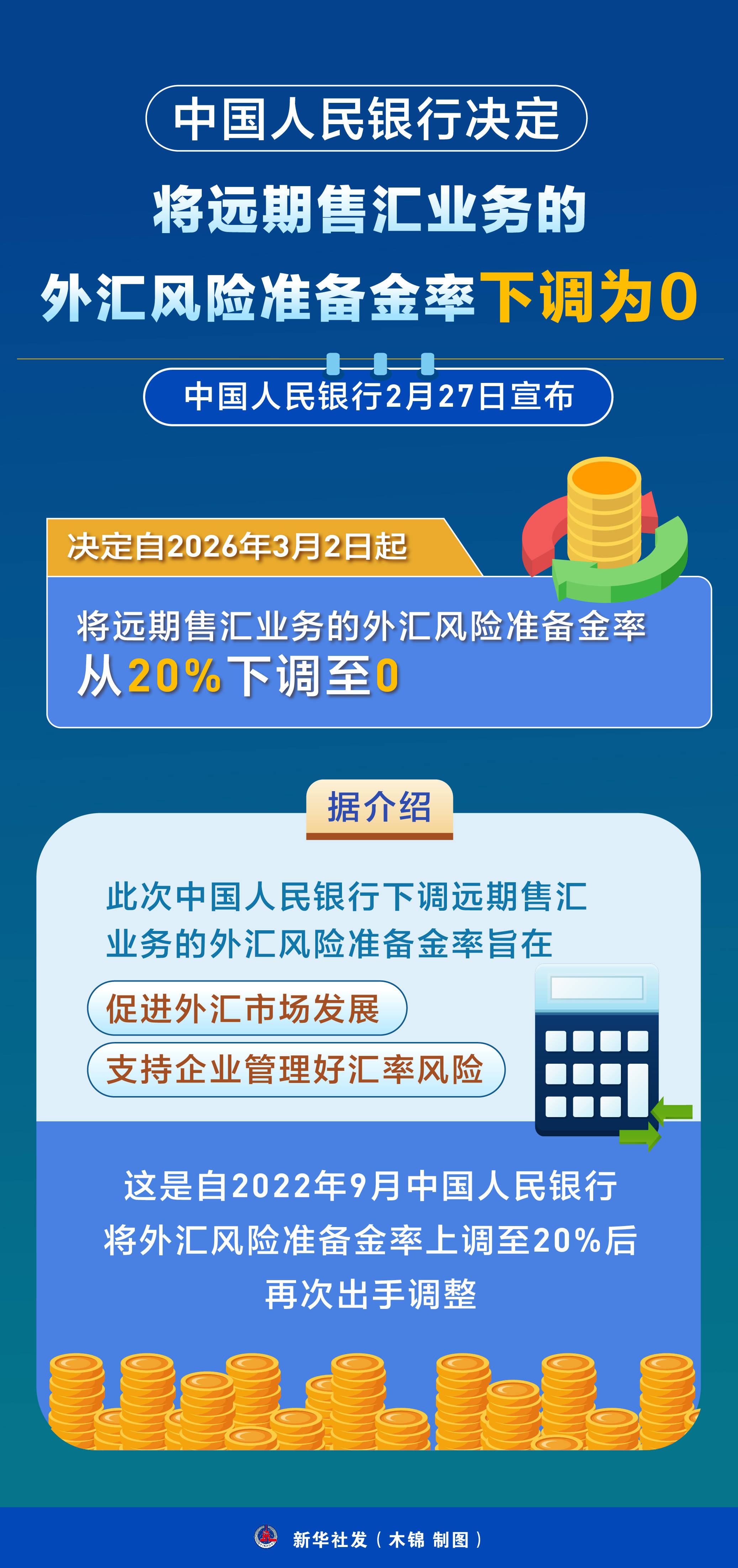
(图表)中国人民银行决定将远期售汇业务的外汇风险准备金率下调为0
Sou Hu Cai Jing· 2026-02-27 08:41
中国人民知 将远期售; 外汇风险准备: 中国人民银行1 新华社图表,北京,2026年2月27日 中国人民银行2月27日宣布,决定自2026年3月2日起,将远期售汇业务的外汇风险准备金率从20%下调至0。 新华社发 木锦 制图 决定自2026年3月2日时 将远期售汇业务的外 从20%下调至0 据介 此次中国人民银行 业务的外汇风险准i 促进外汇市场发展 支持企业管理好汇? ...

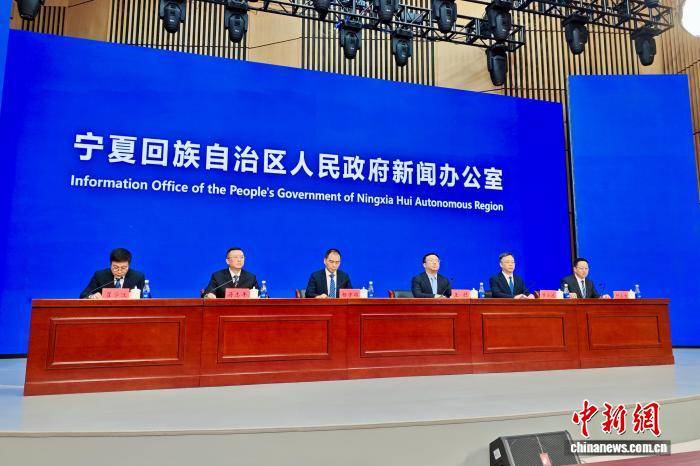
宁夏金融服务实体经济质效持续提升 企业贷款利率降至3.01%
Sou Hu Cai Jing· 2026-02-27 08:41
Core Insights - Ningxia's financial operations have been stable and efficient, providing solid financial support for economic growth and improvement [1][3] - By December 2025, the weighted average interest rate for newly issued corporate loans in Ningxia is expected to drop to 3.01%, the lowest level on record [1][4] Financial Support Policies - Ningxia has continuously improved its financial support policy system to meet the needs of the real economy, focusing on key areas such as stable growth, manufacturing upgrades, private economy, green development, and foreign trade [3] - Targeted financial support plans have been developed for the "six new," "six special," "six optimal" industries, and "six rights" reforms, effectively guiding financial resources to priority development areas [3] Financial Growth Metrics - In 2025, the total new RMB loans in Ningxia reached 48.78 billion yuan, an increase of 8.295 billion yuan year-on-year [3] - The social financing scale increased by 125.4 billion yuan, up 54.1 billion yuan year-on-year, indicating a continuous improvement in major financial indicators [3] Credit Structure and Efficiency - The credit structure has been optimized, with significant increases in loans for industrial and infrastructure sectors, reaching 3.7 times the amount in 2024, providing strong support for major project construction [3] - Loans for small and micro enterprises, individual businesses, and farmers have also seen rapid growth, with green loans and technology innovation loans growing at rates significantly higher than the average [3] Financing Costs - By December 2025, the weighted average interest rate for newly issued personal housing loans is projected to be 3.10%, a decrease of 0.09 percentage points year-on-year, remaining at a historically low level [4] - The average annual guarantee fee rate for government financing has decreased to 1.31%, with re-guarantee business fees averaging 0.56%, both among the lowest in the country [4] Future Outlook - Ningxia aims to continue focusing on key areas and weak links in the real economy, optimizing financial services and enhancing policy implementation to provide stronger financial support for high-quality economic and social development [4]
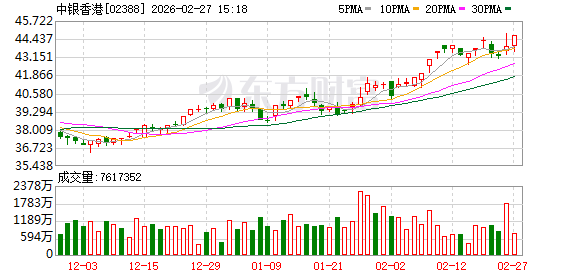
中银香港再度协助印尼政府发行离岸人民币债券
Zhong Guo Xin Wen Wang· 2026-02-27 07:17
Group 1 - The core viewpoint of the news is that Bank of China (Hong Kong) has been appointed as the joint lead manager and joint bookrunner for the Indonesian government's bond issuance, successfully assisting in the issuance of offshore RMB and Euro dual-currency bonds [2][3] - The total issuance scale is approximately RMB 31.1 billion, including RMB 9.25 billion and EUR 2.7 billion, marking the largest bond issuance in Southeast Asia that the bank has underwritten to date [2] - The bond types include various maturities with pricing rates ranging from 2.45% to MS+195 basis points, and the total order value reached RMB 17.04 billion and EUR 9.48 billion, with order multiples of 1.84 times and 3.51 times respectively [2] Group 2 - The successful dual-currency issuance demonstrates Bank of China (Hong Kong)'s advantages as the Southeast Asia regional headquarters of the Bank of China Group and reflects the trust of the Indonesian government in the bank's cross-currency and cross-market comprehensive service capabilities [3] - The issuance attracted significant attention and active participation from global investors, indicating a high level of recognition of Indonesia's sovereign credit in the international market [3] - Bank of China (Hong Kong) was involved in the entire project execution and settlement arrangements, including organizing issuance documents, sales, pricing, and settlement [3]

2026楼市观察:合肥房贷利率已至历史低位,后续仍有下行空间
Sou Hu Cai Jing· 2026-02-27 06:59
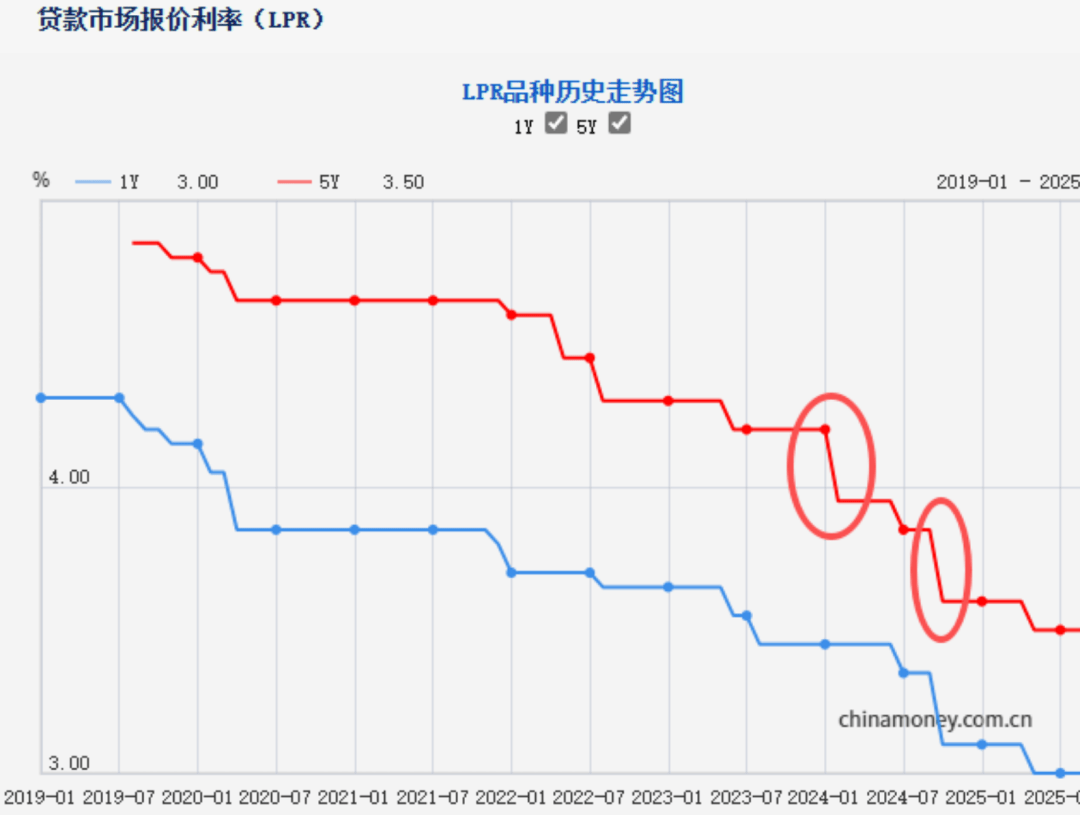
Core Viewpoint - The latest Loan Prime Rate (LPR) remains stable, with the 1-year LPR at 3.0% and the 5-year LPR at 3.5%, indicating a continued low interest rate environment for new commercial loans in Hefei [1] Group 1: Interest Rate Trends - The LPR has remained unchanged for six consecutive months, reflecting a stable monetary policy stance [1] - The Federal Reserve has initiated a rate-cutting cycle since the second half of 2025, with a total reduction of 75 basis points across three cuts [4][5][6] - Despite external easing signals from the U.S., domestic interest rates in China have not followed suit, showcasing a strong strategic determination from the central bank [6] Group 2: Monetary Policy Signals - Recent high-level meetings and policy statements indicate a commitment to maintaining a supportive monetary policy [7][8][9] - The central bank's reports emphasize the implementation of a moderately loose monetary policy, with a focus on maintaining financial stability and reasonable growth in financial aggregates [9][11] - The central bank has already lowered the rates of various structural monetary policy tools, indicating a proactive approach to support the economy [15] Group 3: Future Expectations - Market consensus suggests a strong likelihood of further monetary easing in 2026, with predictions of two rate cuts totaling 20-30 basis points [16] - Major international investment banks forecast a combination of a 50 basis point reserve requirement cut and a 10 basis point interest rate cut, potentially lowering the 5-year LPR to around 3.4% [17] - The external environment, including the Fed's rate cuts, and the need for stable financial support for economic recovery, create a conducive atmosphere for domestic rate cuts [18] Group 4: Inflation and Banking Considerations - A low inflation environment provides a realistic basis for potential rate cuts, with room for actual rates to decline further [19] - However, banks' net interest margins are at historically low levels, and exchange rate stability remains a critical consideration, suggesting that any rate cuts may be gradual rather than abrupt [19]
15个月首次!日本东京CPI跌破2%目标,但央行加息路径未受动摇
Hua Er Jie Jian Wen· 2026-02-27 06:20
Core Viewpoint - Tokyo's inflation unexpectedly cooled, but analysts believe this slowdown will not hinder the Bank of Japan's (BOJ) path towards further tightening monetary policy [1][4] Group 1: Inflation Data - The consumer price index (CPI) in the Tokyo region, excluding fresh food, rose by 1.8% year-on-year in February, down from 2.0% in January, marking the first drop below the BOJ's 2% target since October 2024 [1] - The primary reason for this decline was the government's subsidy policy, which led to a 9.2% year-on-year drop in energy prices [2] - Core inflation, excluding fresh food and energy, increased from 2.5% in January to 2.5% in February, indicating persistent underlying price pressures [2][3] Group 2: Economic Indicators - Retail sales in January grew by 1.8% year-on-year, demonstrating sustained consumer momentum [5] - Industrial output rose by 2.2% month-on-month in January, a significant rebound from a 0.1% decline in December, partly due to pre-holiday stocking [5] - Despite short-term improvements, there are concerns that factory activity may weaken in the coming months, which could diminish the rationale for further rate hikes [5] Group 3: Monetary Policy Outlook - Economists and market participants agree that the BOJ's normalization process is not significantly impacted by the recent inflation slowdown [4] - The probability of a rate hike in April is close to 60%, according to market pricing [1] - The BOJ has maintained a cautious yet proactive stance on rate hikes since raising the policy rate to 0.75% in December [4]
央行大动作!企业购汇迎重大利好
Xin Lang Cai Jing· 2026-02-27 05:43
记者丨唐婧 编辑丨周炎炎 曾芳 张嘉钰 分析人士告诉记者,下调远期售汇业务的外汇风险准备金率能够降低企业远期购汇成本,提高企业在购 汇方向开展外汇套保的积极性,也有利于支持企业合理运用外汇衍生产品管理好汇率风险。这是时隔近 3年半央行再次使用该工具,本次下调远期售汇风险准备金率实质上是合理退出前期措施,促进外汇政 策回归中性。 举例来看,原先准备金率为20%时,假设某银行要做100万美元的远期售汇业务,需要计提20万美元的 外汇风险准备金,这笔资金将以零利息在人民银行存放一年。此种情况下,这部分利息作为成本,最终 将由与银行签订远期合约的客户承担,客户远期购汇的积极性就会因此下降。而准备金率降至0后,对 于有实际贸易需求的企业来说,将能够以较低的成本实现购汇。 本次下调远期售汇风险准备金率,有助于金融机构为企业提供成本合理的汇率风险管理产品。1月15日 国新办新闻发布会上,中国人民银行副行长邹澜宣布了一揽子政策举措,其中就包括"鼓励金融机构提 升汇率避险服务水平"。 邹澜当时表示,外部形势依然复杂严峻,主要经济体利率调整幅度和节奏还有不确定性,地缘政治冲击 可能持续存在,对汇率走势会有一定的扰动,人民币汇率预 ...
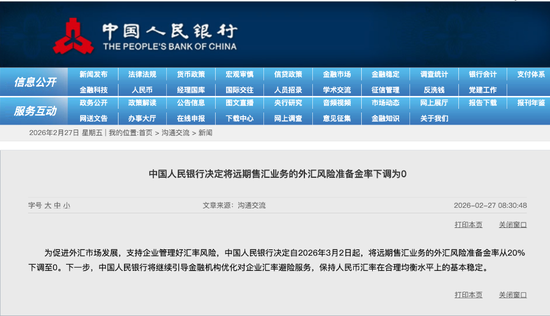
时隔近3年半再次出手,央行下调外汇风险准备金率至零,释放了什么信号
Sou Hu Cai Jing· 2026-02-27 05:29
央行将远期售汇业务的外汇风险准备金率下调至0。 2月27日8点30分,中国人民银行发布消息称,为促进外汇市场发展,支持企业管理好汇率风险,中国人 民银行决定自2026年3月2日起,将远期售汇业务的外汇风险准备金率从20%下调至0。 在央行出手下调远期售汇业务的外汇风险准备金率后,2月27日,离岸人民币对美元汇率下跌超200点, 从日内最高的6.83901回落至6.85978。人民币对美元即期汇率开盘报6.9600,较前一交易日收盘价下跌 200点。 今年以来,人民币对美元即期汇率保持升势,至2月26日收盘,累计升值超2%。其中,春节假期后的三 个交易日,人民币对美元即期汇率累计升值1%。 业内专家指出,未来一段时期外部形势复杂多变,人民币汇率走势仍存在较大不确定性,外贸企业应做 好汇率套保。当前国际环境复杂多变,地缘政治冲突增多,俄乌战争长期化,中东局势动荡,拉美政治 事件突发,格陵兰岛争端凸显,都可能加剧全球外汇市场波动,并对人民币汇率走势形成扰动。未来随 着市场在汇率形成中发挥更大作用,人民币汇率可能有升有贬、双向浮动。企业和金融机构不宜盲目跟 风、赌汇率走势,要坚持汇率风险中性理念,做好汇率风险管理。 ...
今日金价:大家不必继续等待了!接下来,金价有可能会重演历史
Sou Hu Cai Jing· 2026-02-27 05:24
Core Viewpoint - The international gold market is experiencing significant fluctuations, driven by unprecedented demand from central banks and private investors, leading to record high prices and trading volumes [1][3][4]. Group 1: Central Bank Activity - Central banks globally have been on a buying spree, with net purchases reaching 863 tons in 2025, although down from over 1000 tons in previous years, still significantly above historical averages [3]. - Poland's central bank announced a plan to purchase 150 tons of gold to increase its reserves to 700 tons, while China's central bank has increased its gold reserves for 15 consecutive months, reaching approximately 2307.56 tons by the end of January 2026 [3]. - The total value of gold held by global central banks outside the U.S. surpassed $3.92 trillion, exceeding the value of U.S. Treasury holdings for the first time [3]. Group 2: Private Investor Trends - In January 2026, global gold ETFs saw a record net inflow of $19 billion, raising total assets under management to $669 billion and total holdings to 4145 tons [4]. - The Asian market led this trend, with a net inflow of $10 billion, and China alone contributed $6 billion, second only to the U.S. [4]. Group 3: Market Dynamics - The average daily trading volume in the global gold market surged to $623 billion in January 2026, a 52% increase month-over-month, marking a record high [6]. - Despite strong demand, global gold supply only slightly increased by 1% in 2025, with expectations of a 1.8% increase in 2026, while demand is projected to grow by 5% [6]. - The average mining cost for gold approached $1390 per ounce in 2026, indicating rising production costs [6]. Group 4: Price Predictions - Major investment banks have raised their gold price forecasts, with UBS predicting a target of $6200 per ounce, while Goldman Sachs increased its target from $4900 to $5400 [7]. - JPMorgan maintains a target of $6300 per ounce for the end of 2026, and Bank of America anticipates prices could reach $6000 within the next 12 months [7]. Group 5: Macroeconomic Factors - The market expects the Federal Reserve to begin a rate-cutting cycle in 2026, which would lower the opportunity cost of holding gold and potentially weaken the dollar, both favorable for gold prices [9]. - Geopolitical risks, particularly in the Middle East, are also seen as a significant factor supporting gold prices, with military tensions increasing [9]. Group 6: Volatility and Market Sentiment - January 30, 2026, saw a sharp decline in gold prices, dropping 9.25% in one day, yet global gold ETFs recorded net purchases, indicating investor sentiment remains bullish [10]. - The traditional negative correlation between gold prices and real interest rates appears to be weakening, influenced by geopolitical risks and strong central bank purchases [12].